BBKA Module 5 study group
Module 5: Honey Bee Biology
The slides from my 2026 Module 5 study group, session by session. Click any slide to see it full size.
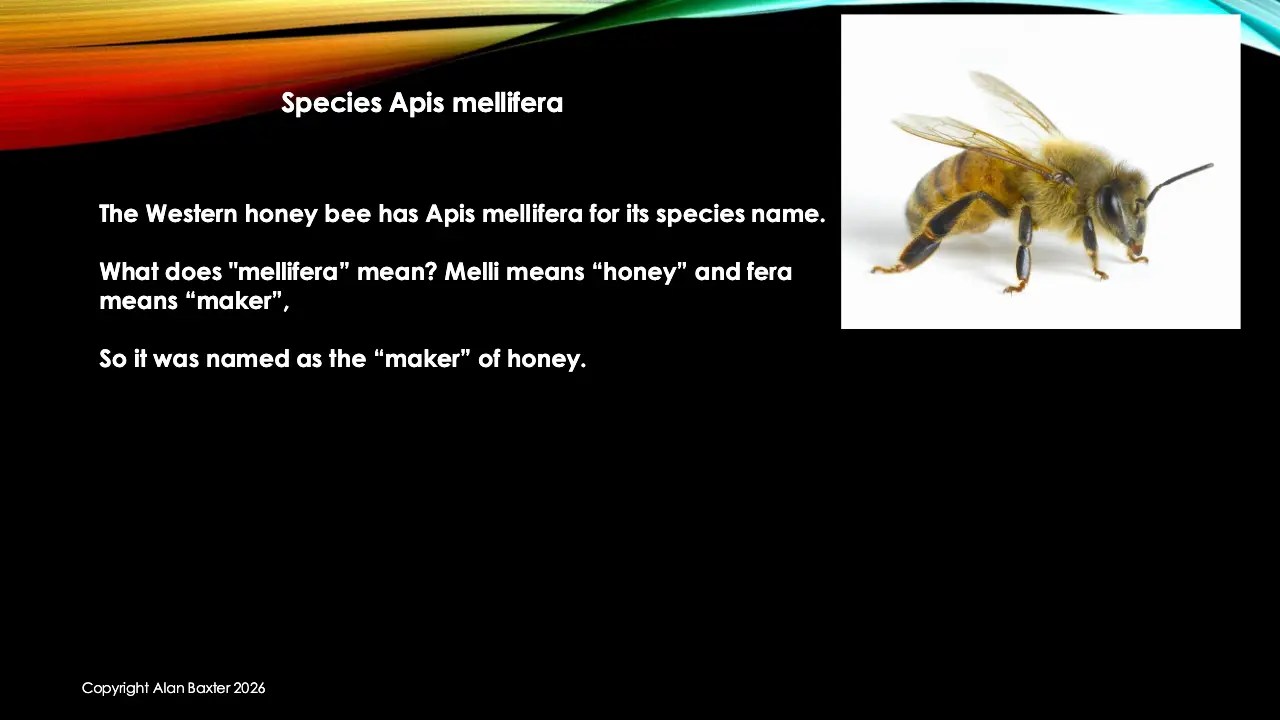
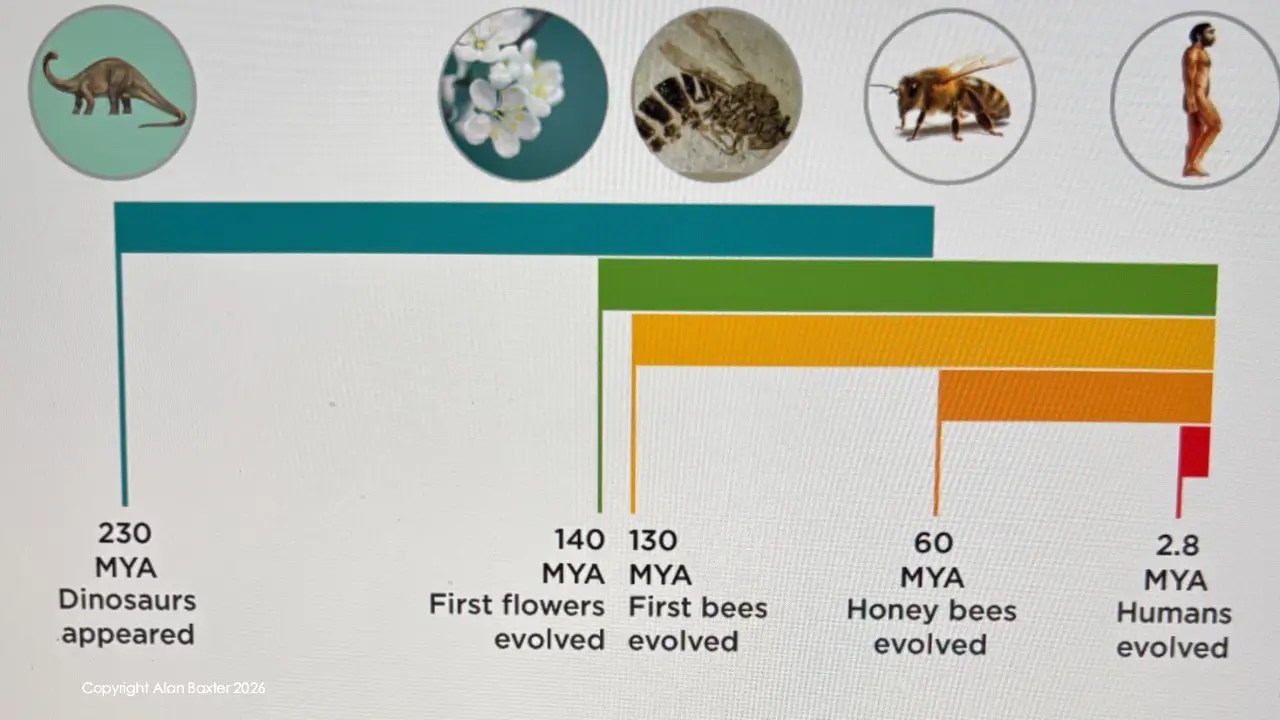
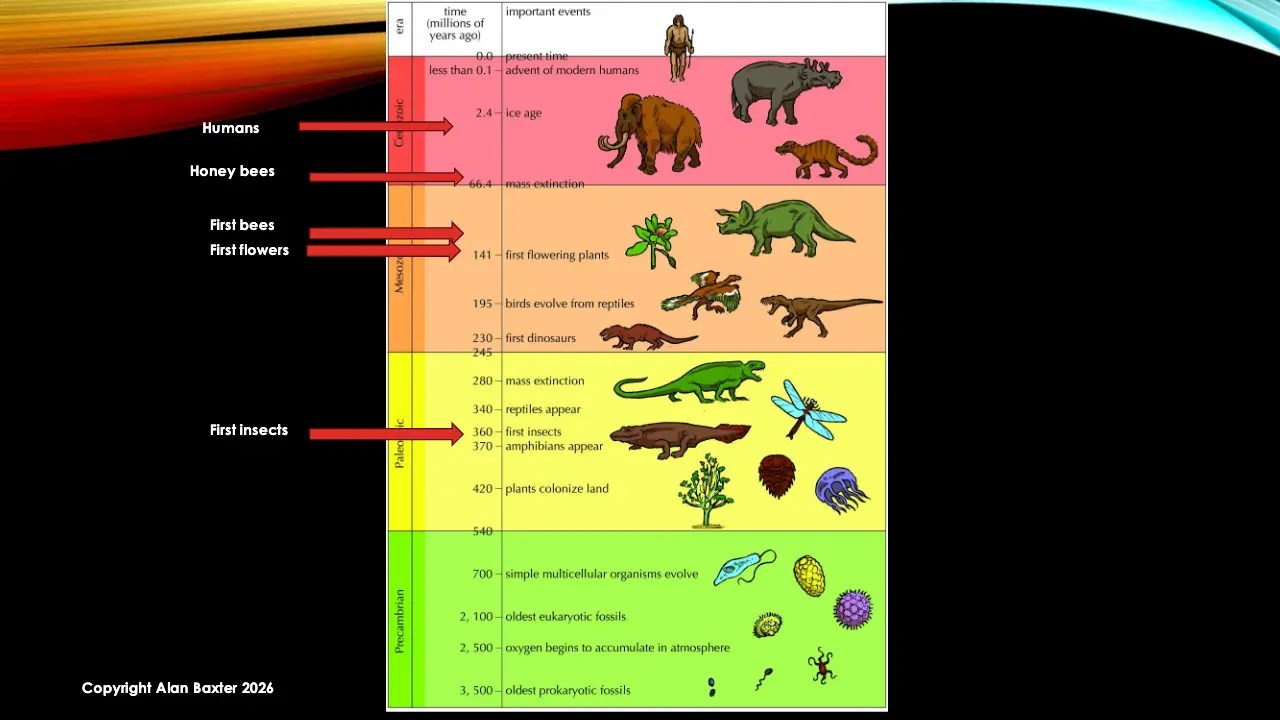
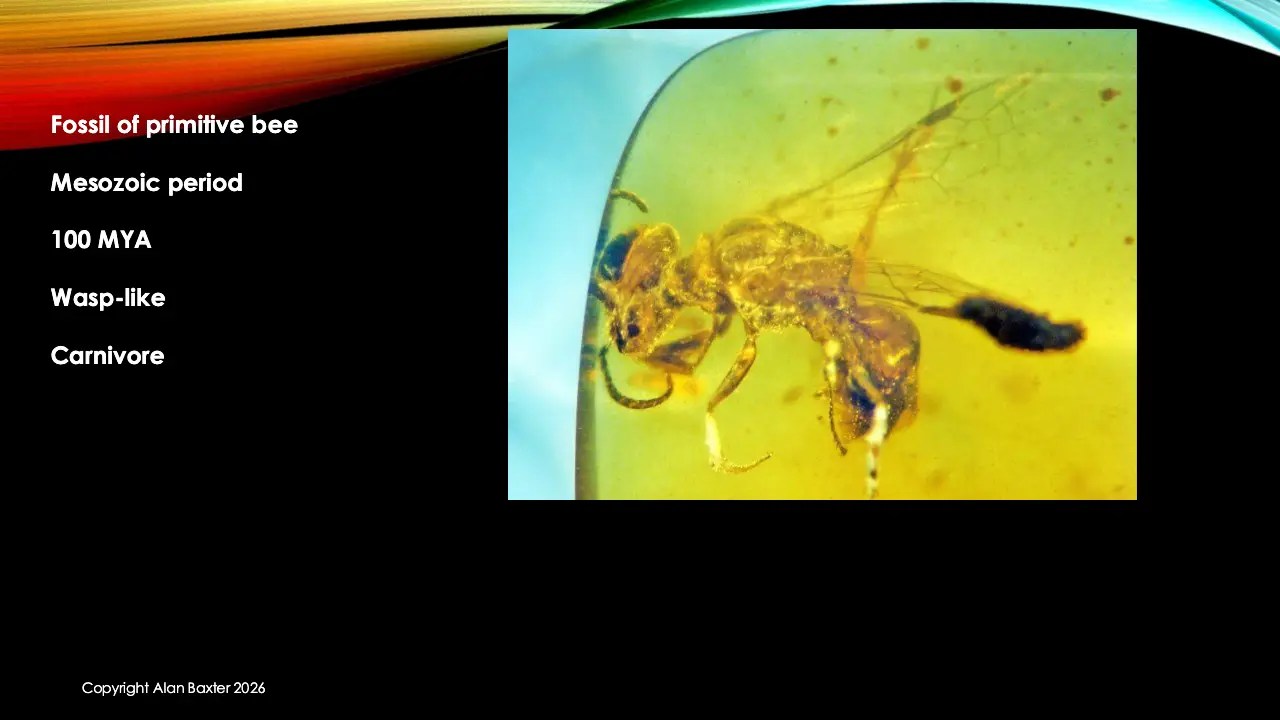
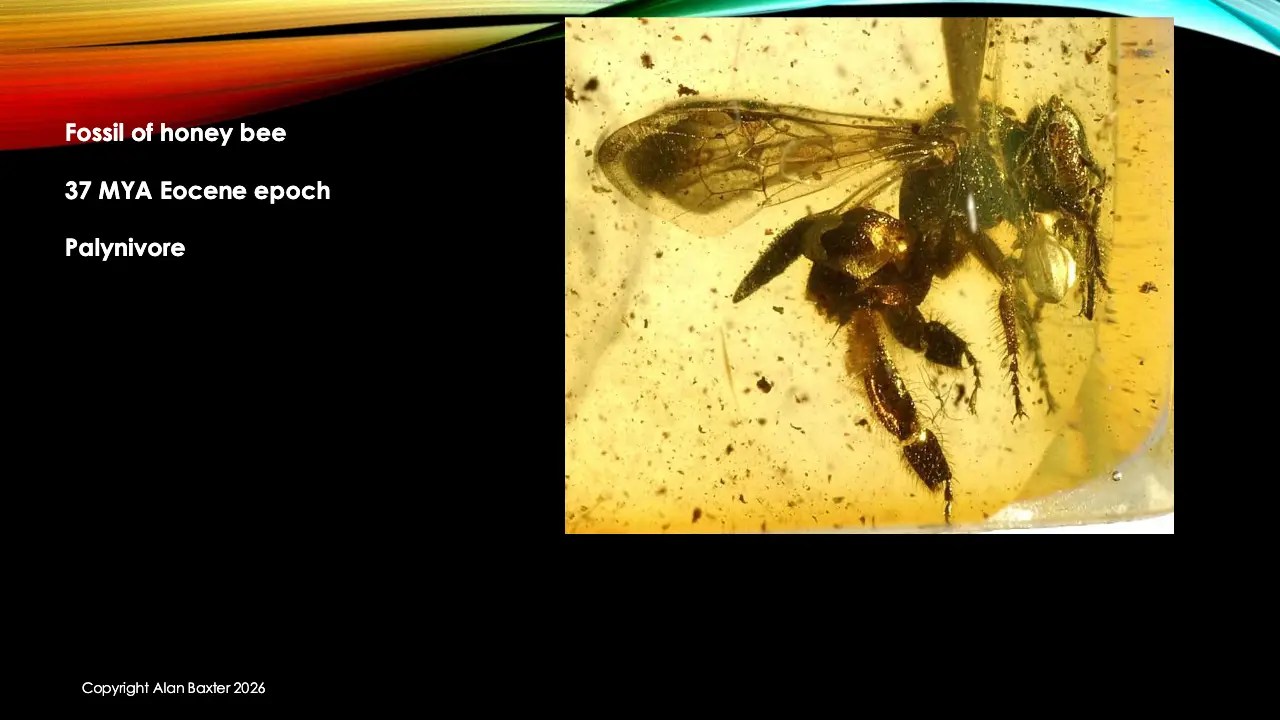
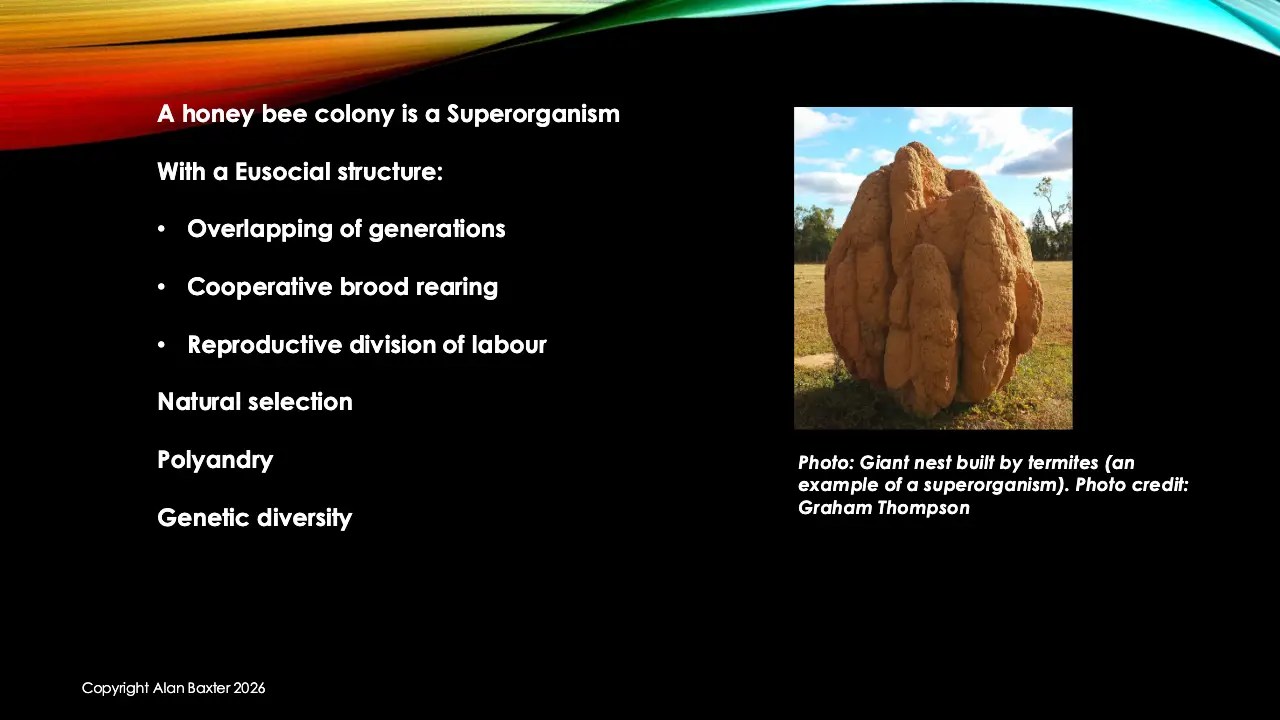
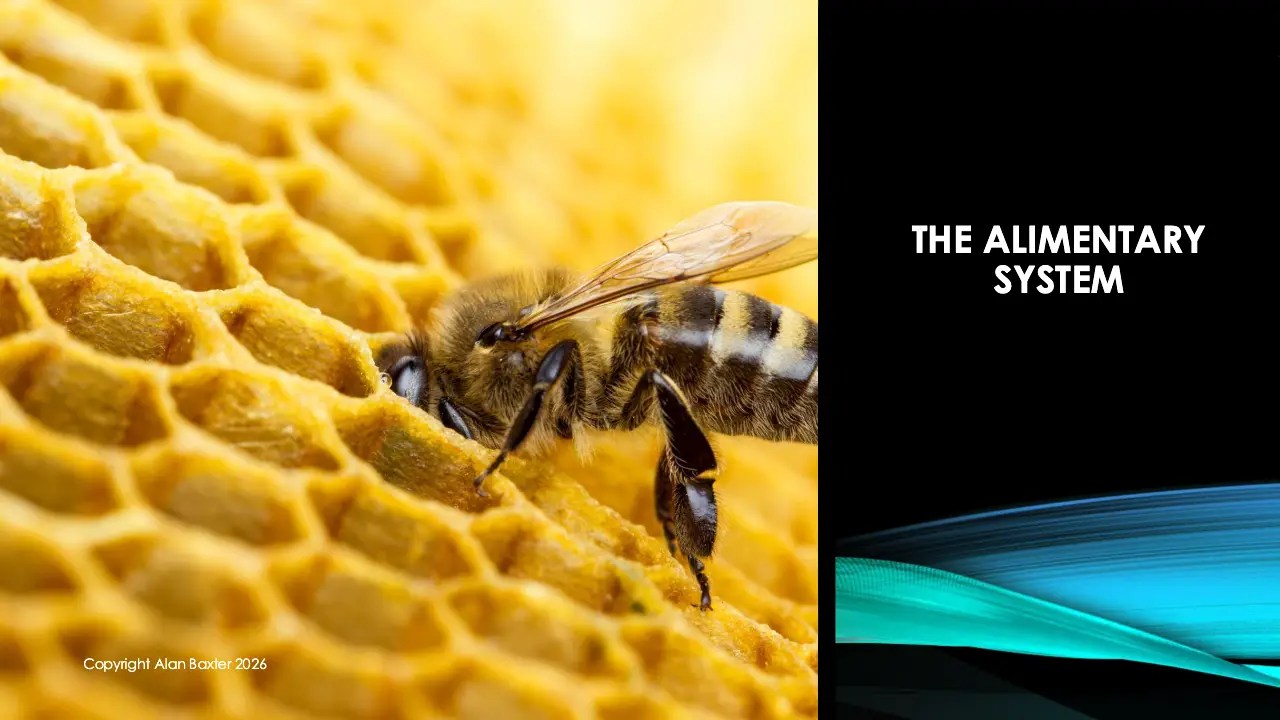
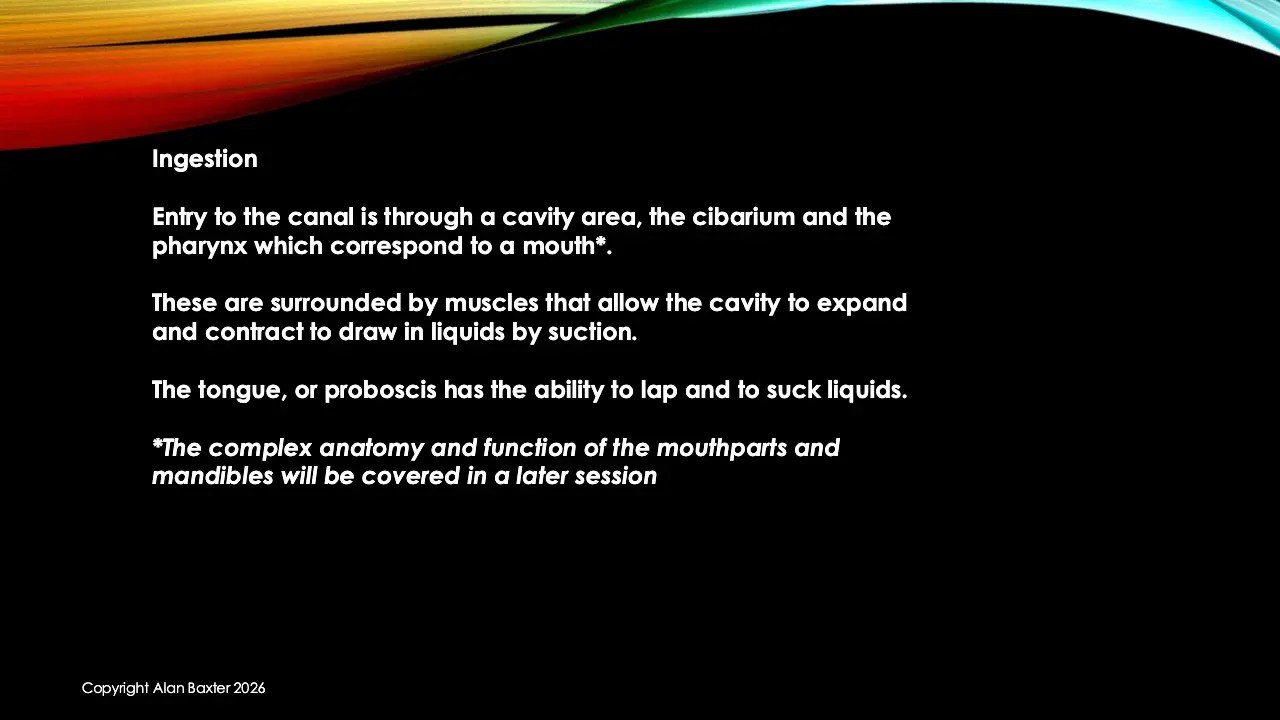
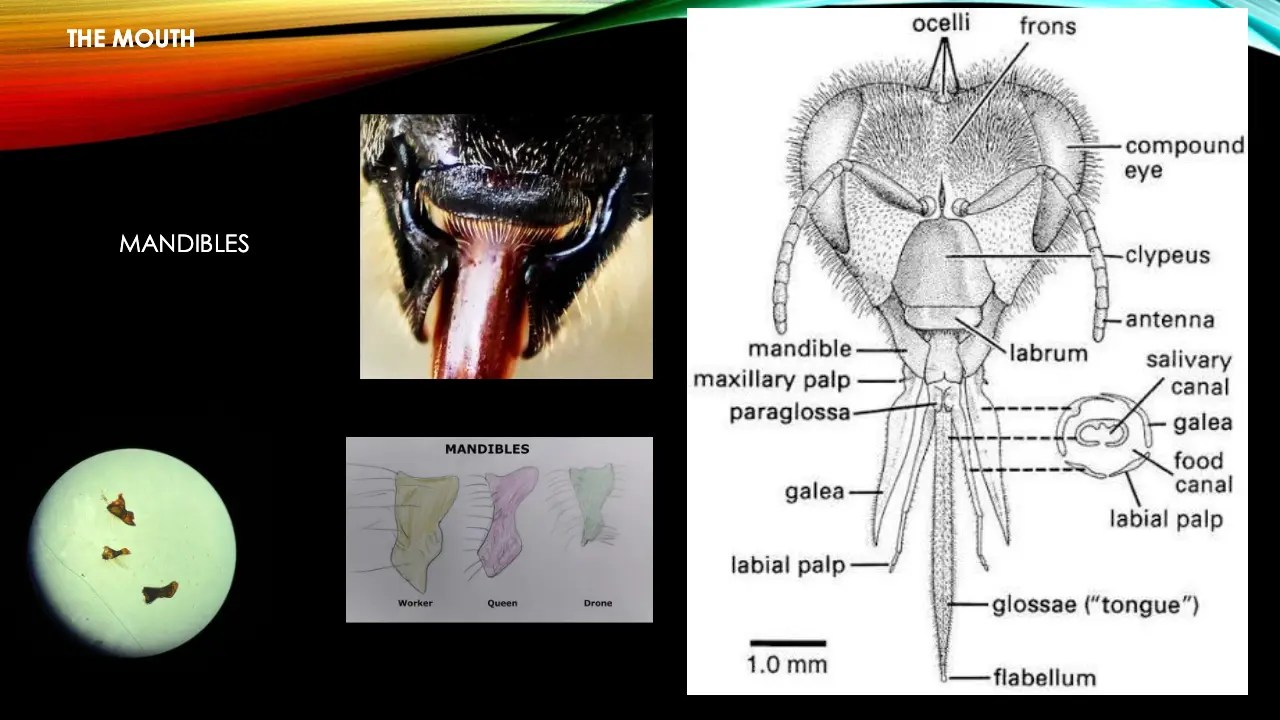
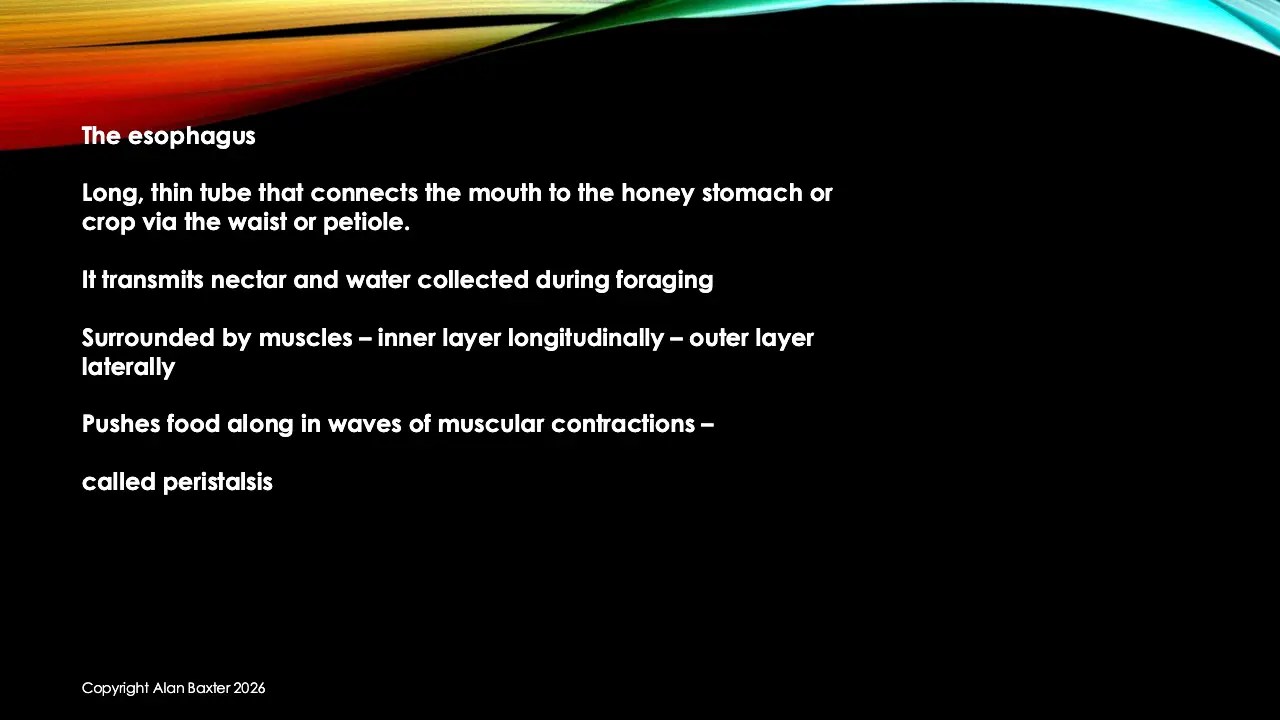
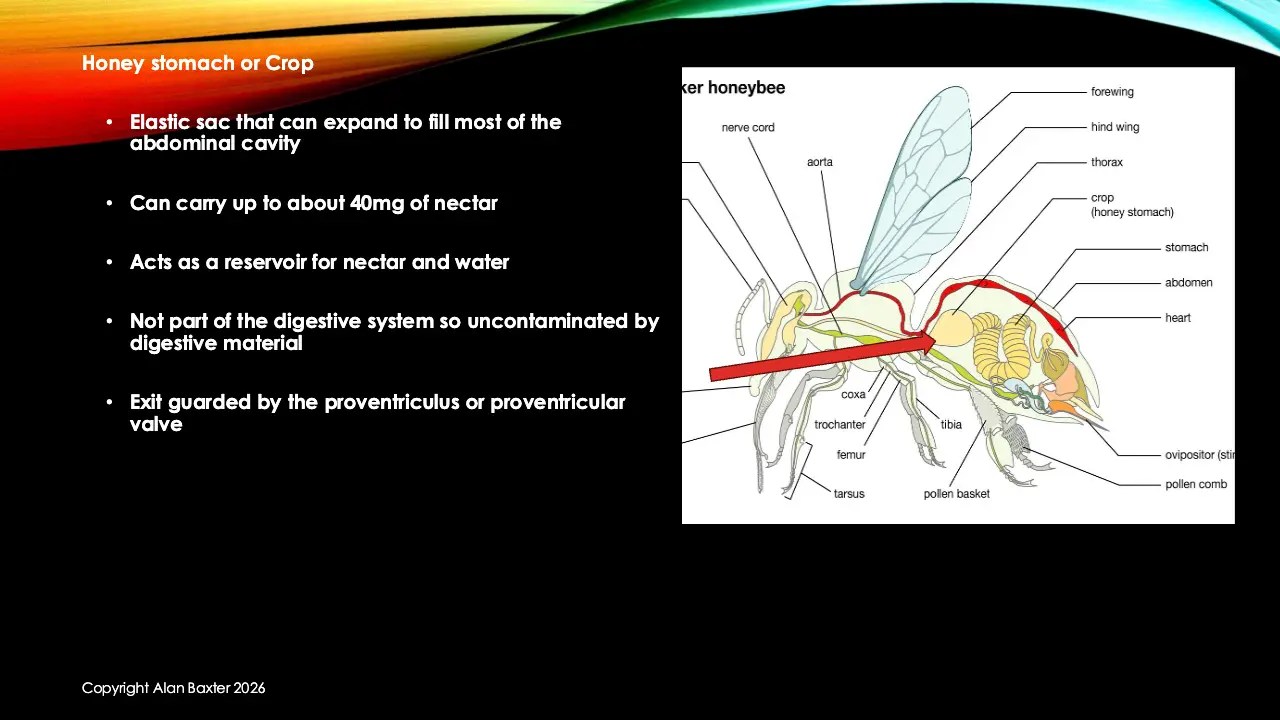
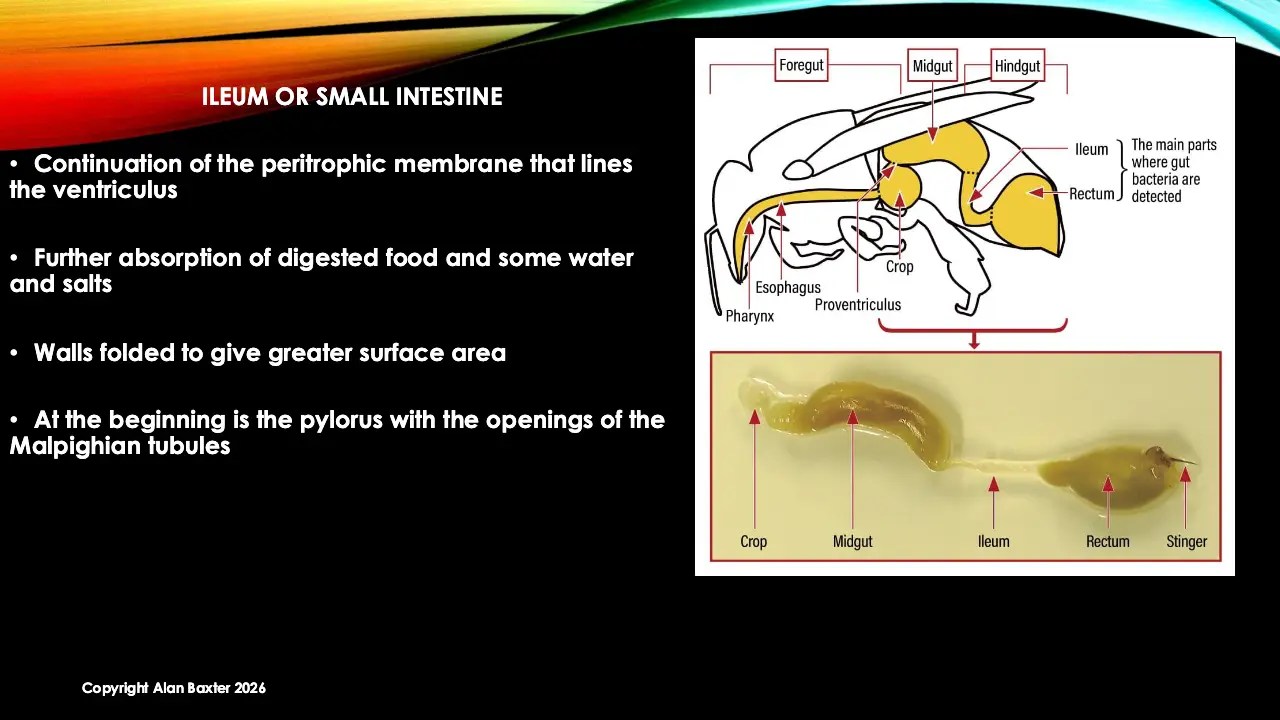
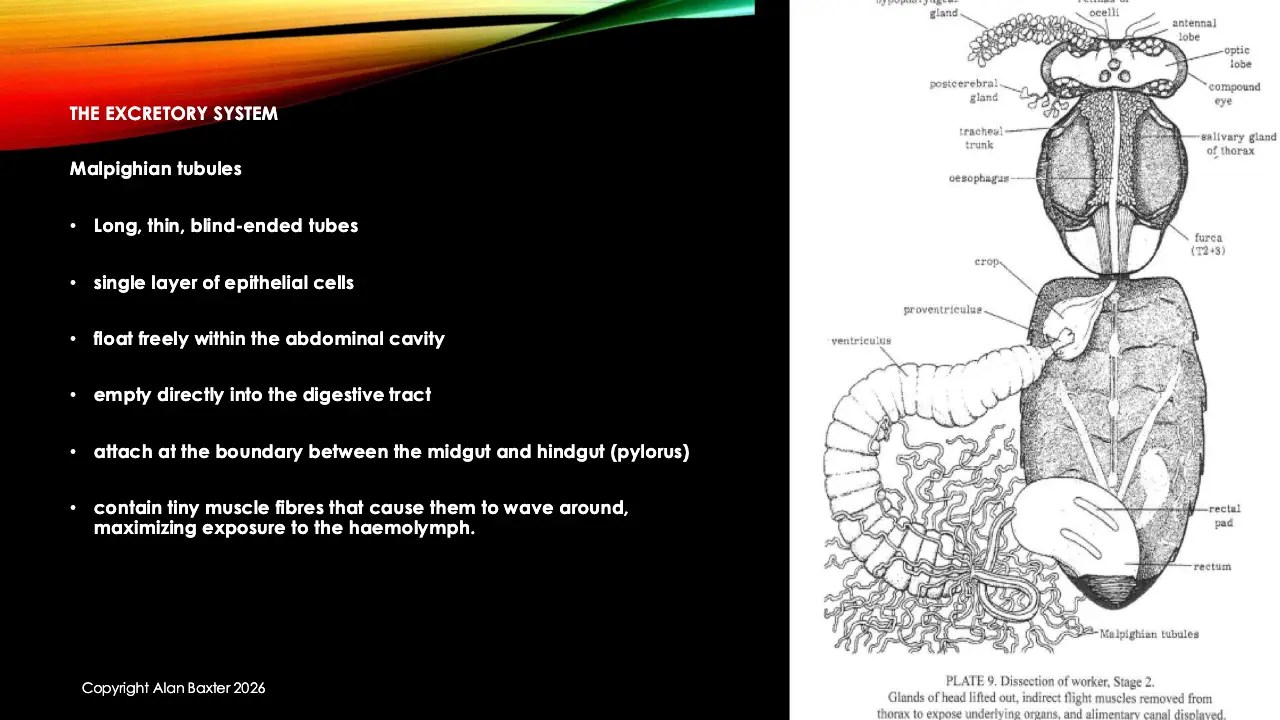
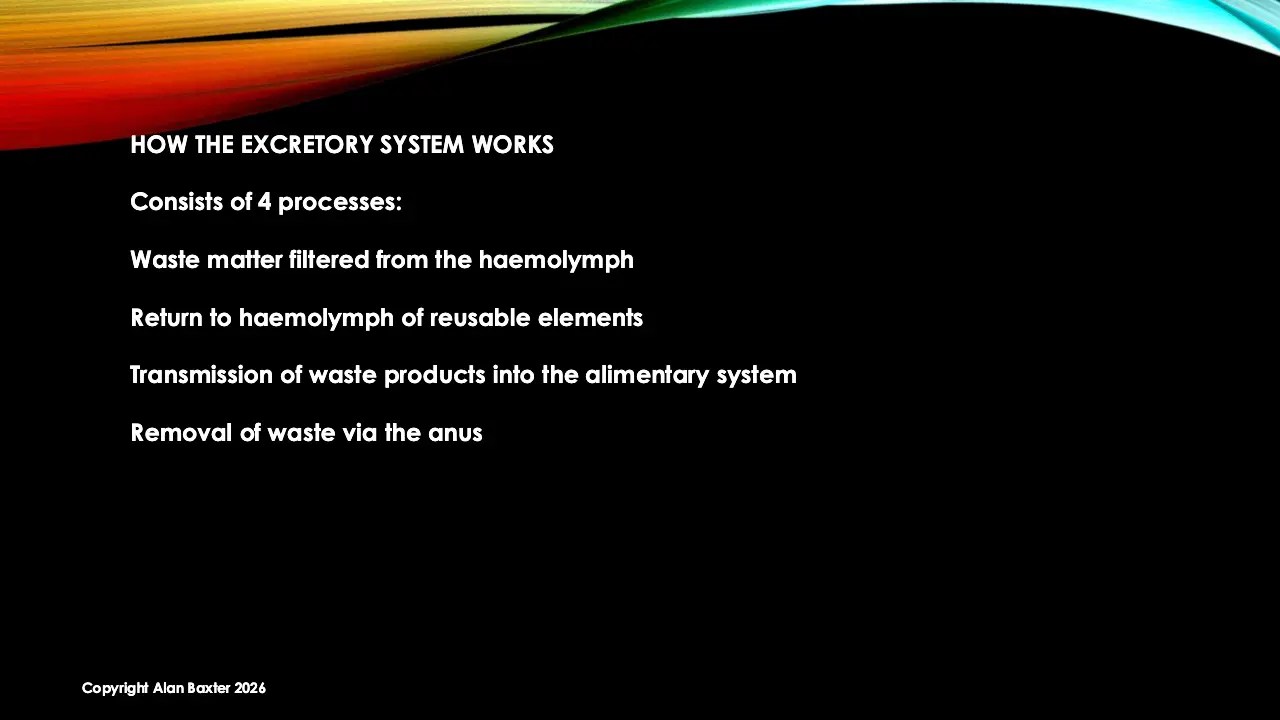
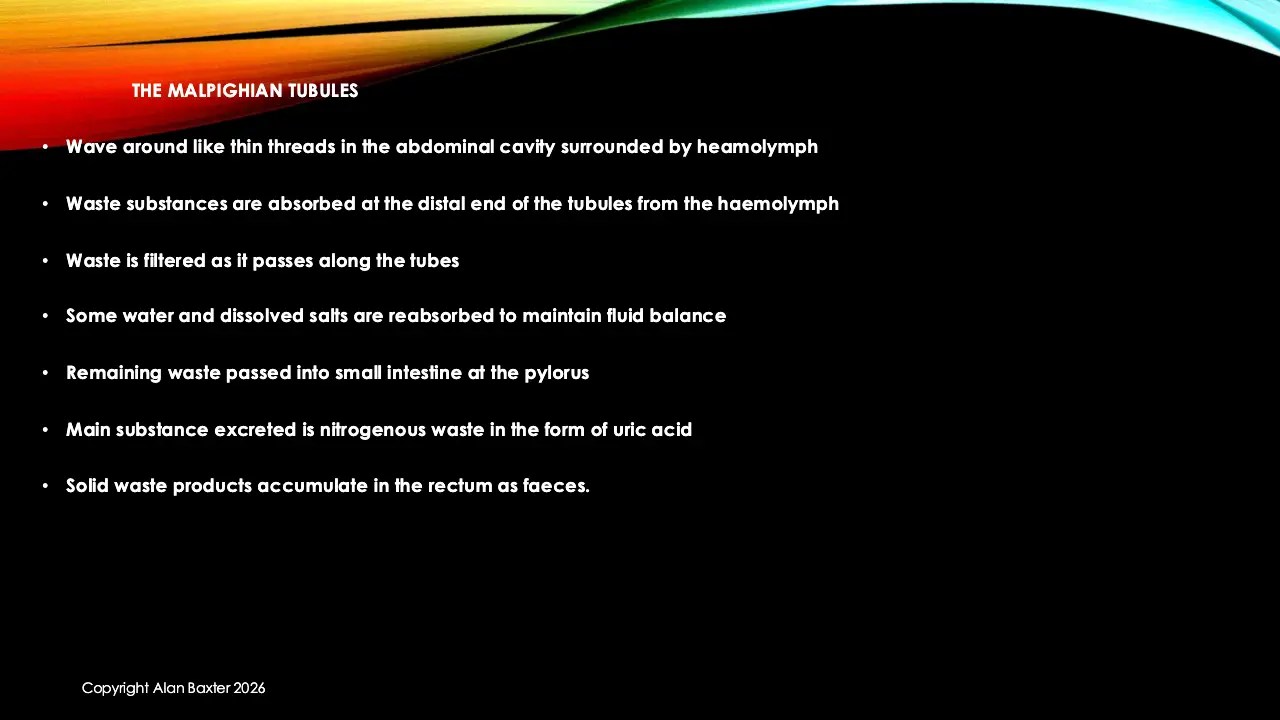
- Session 1: Introduction, evolution of the honey bee, and the alimentary and excretory systems
- Session 2: The respiratory system
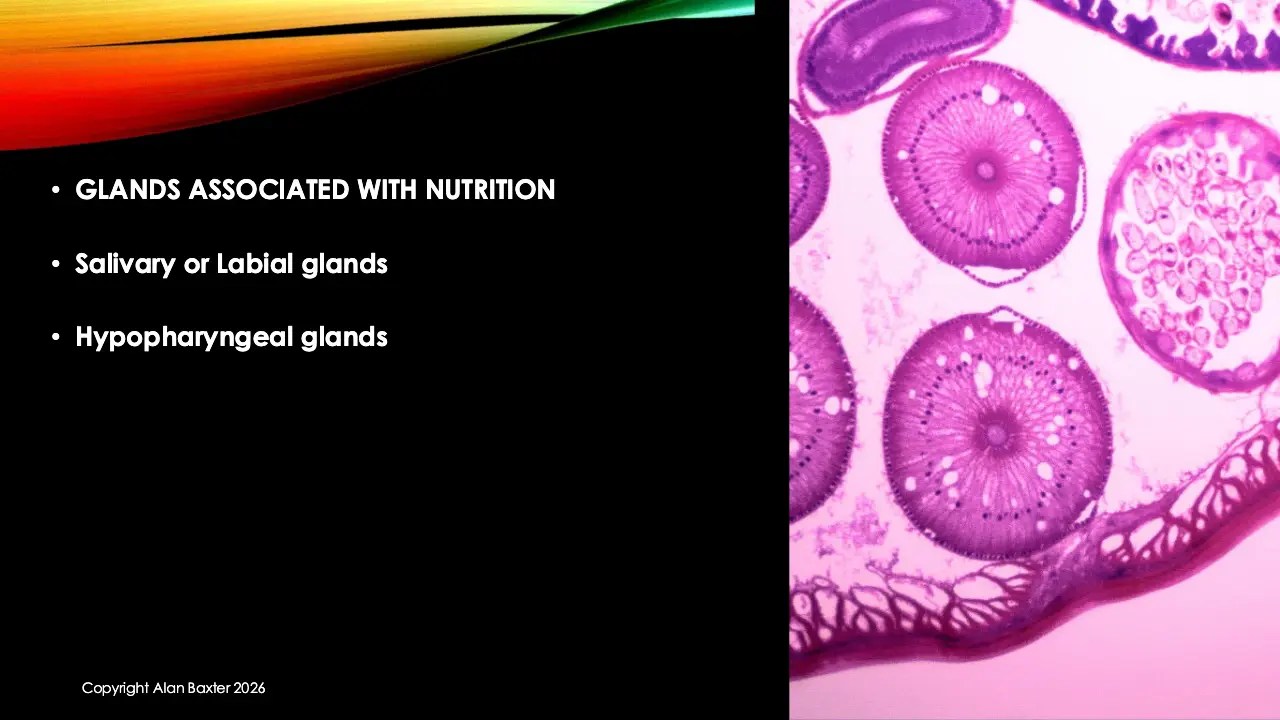
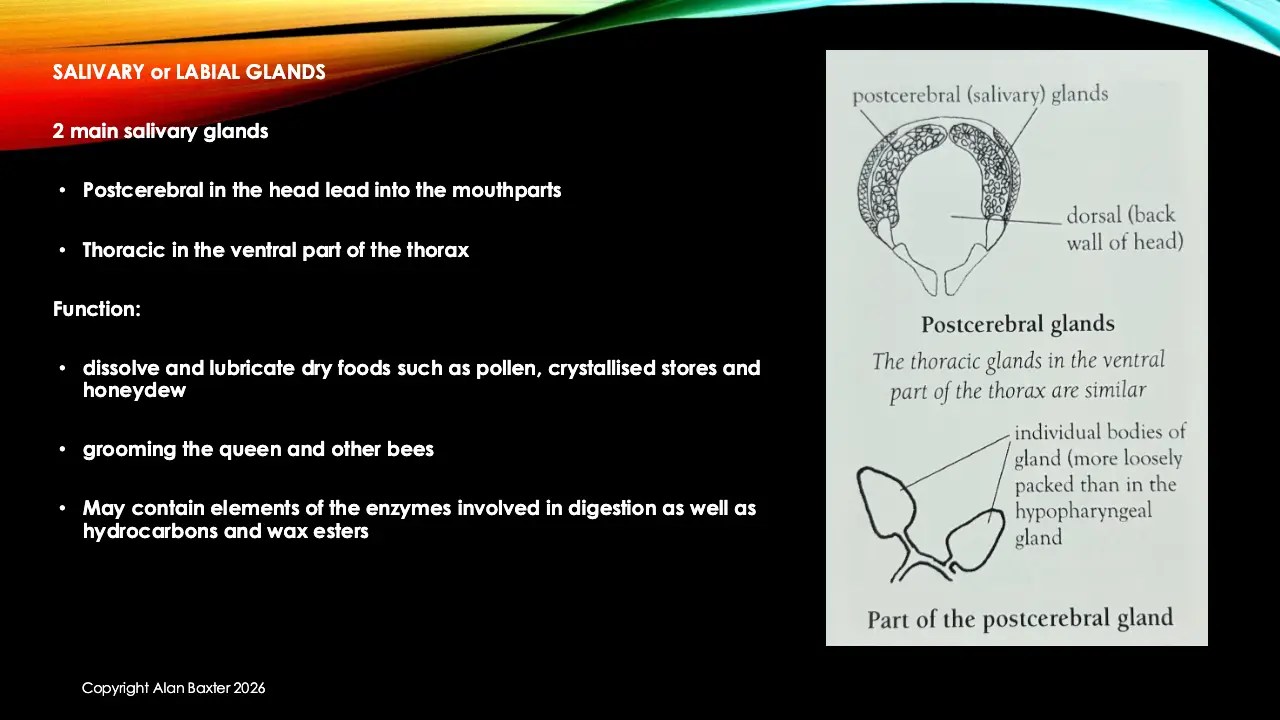
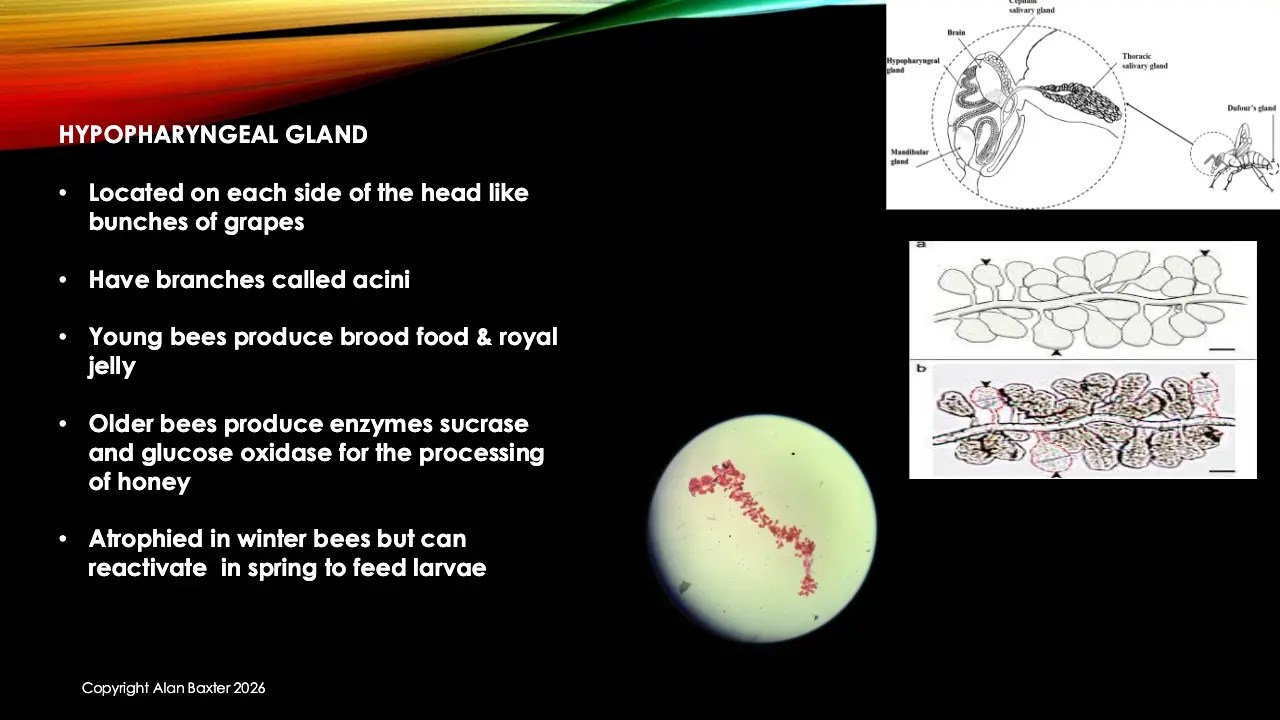
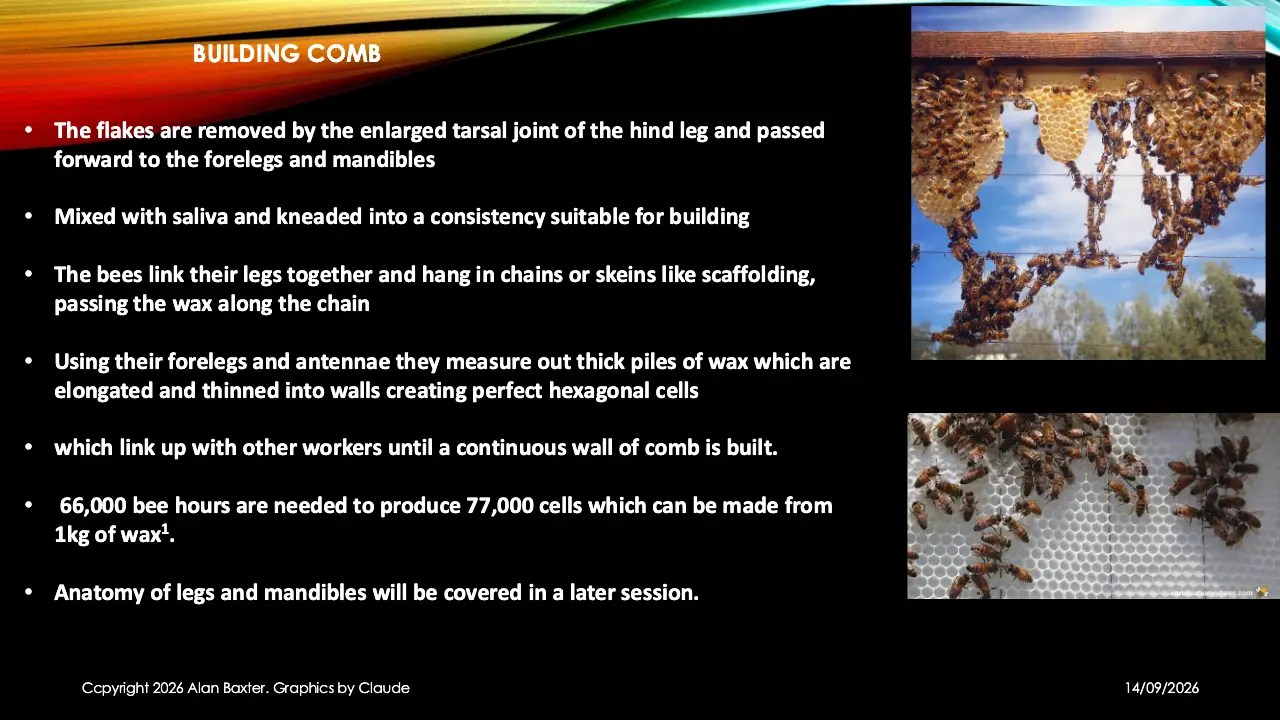
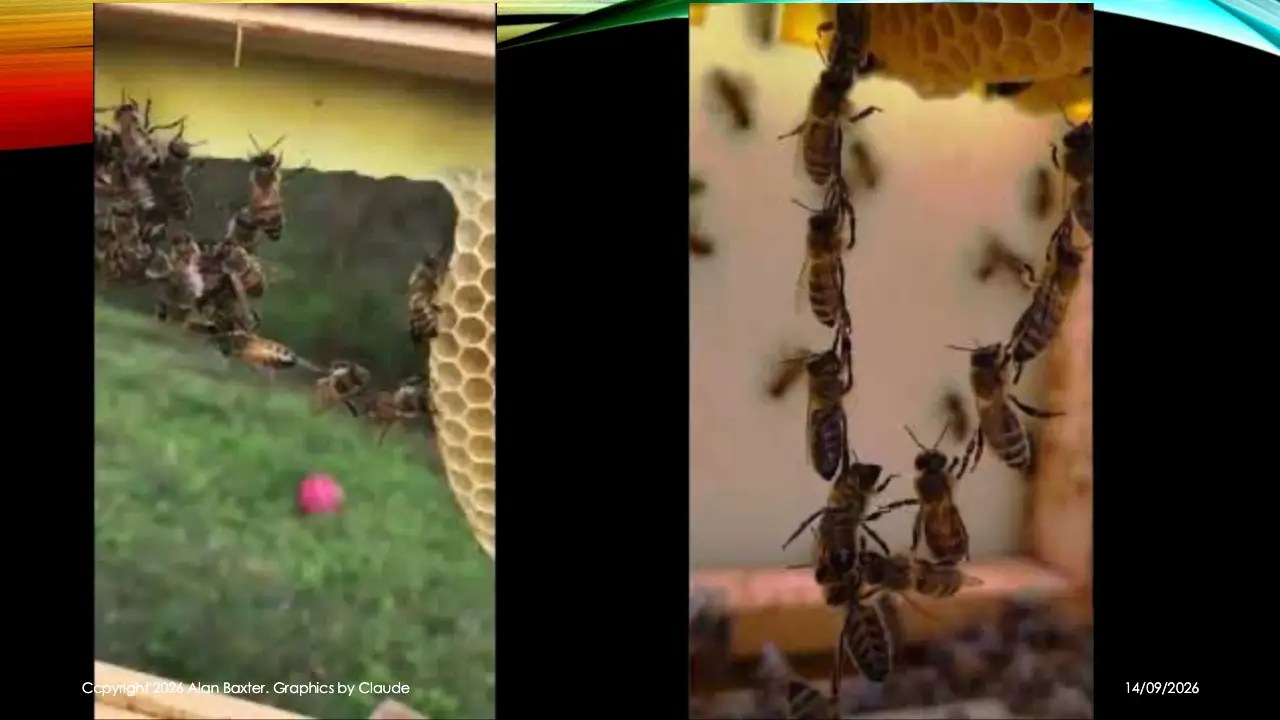
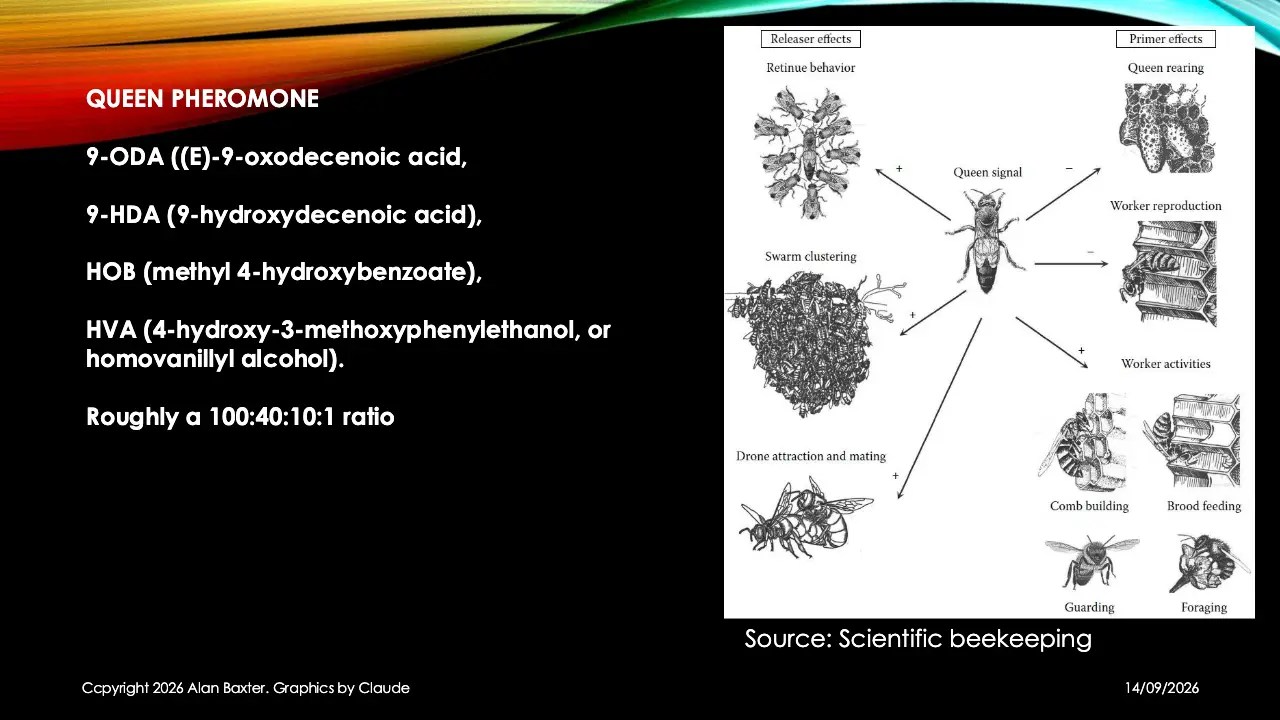
- Session 3: The circulatory system and the exocrine glands
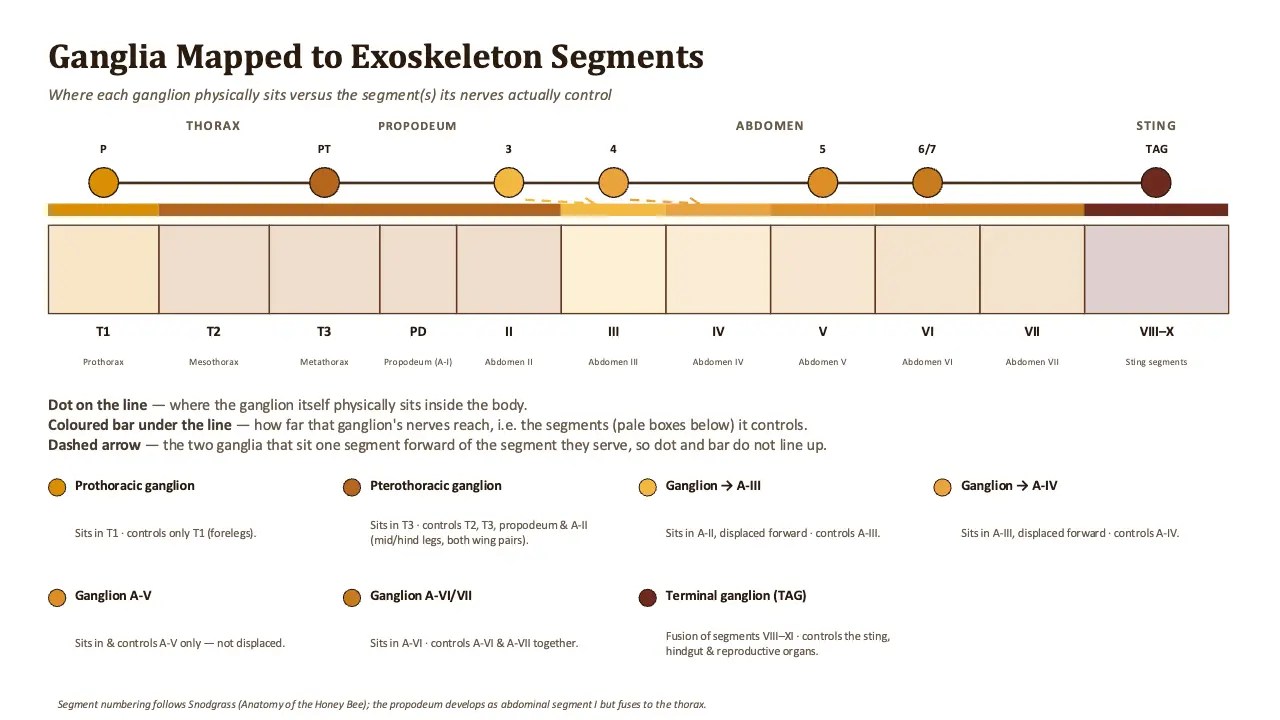
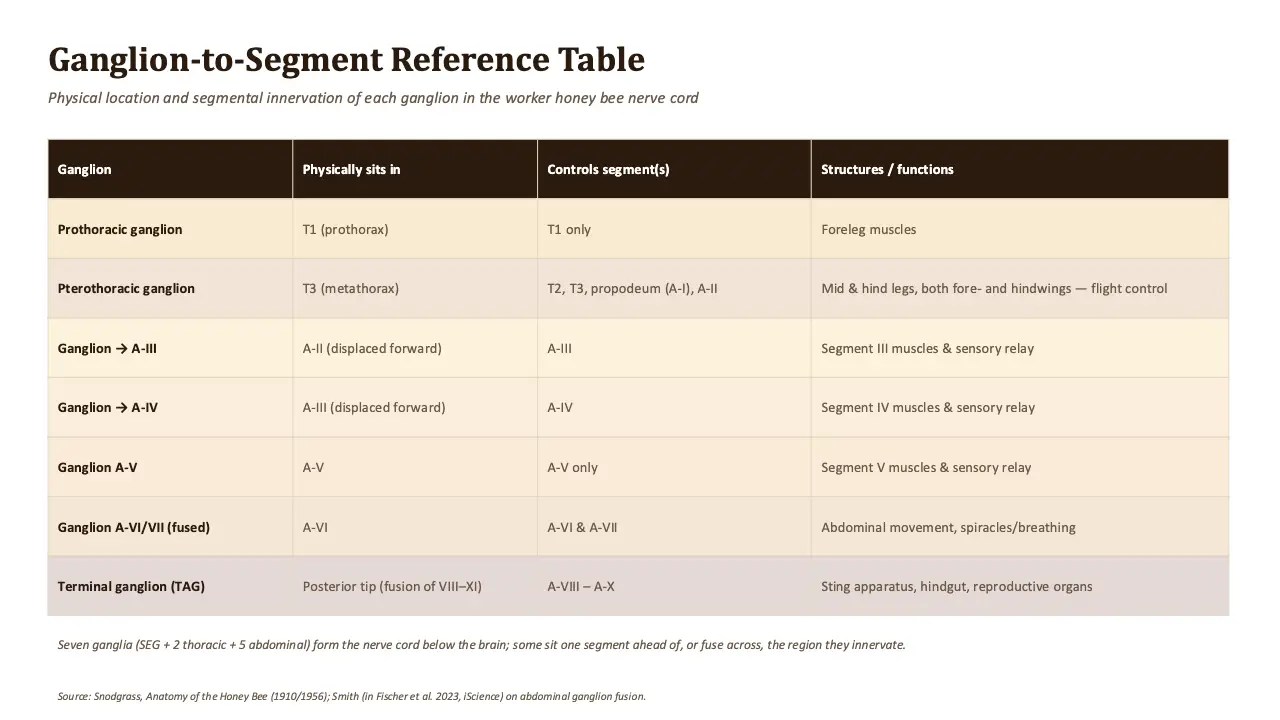
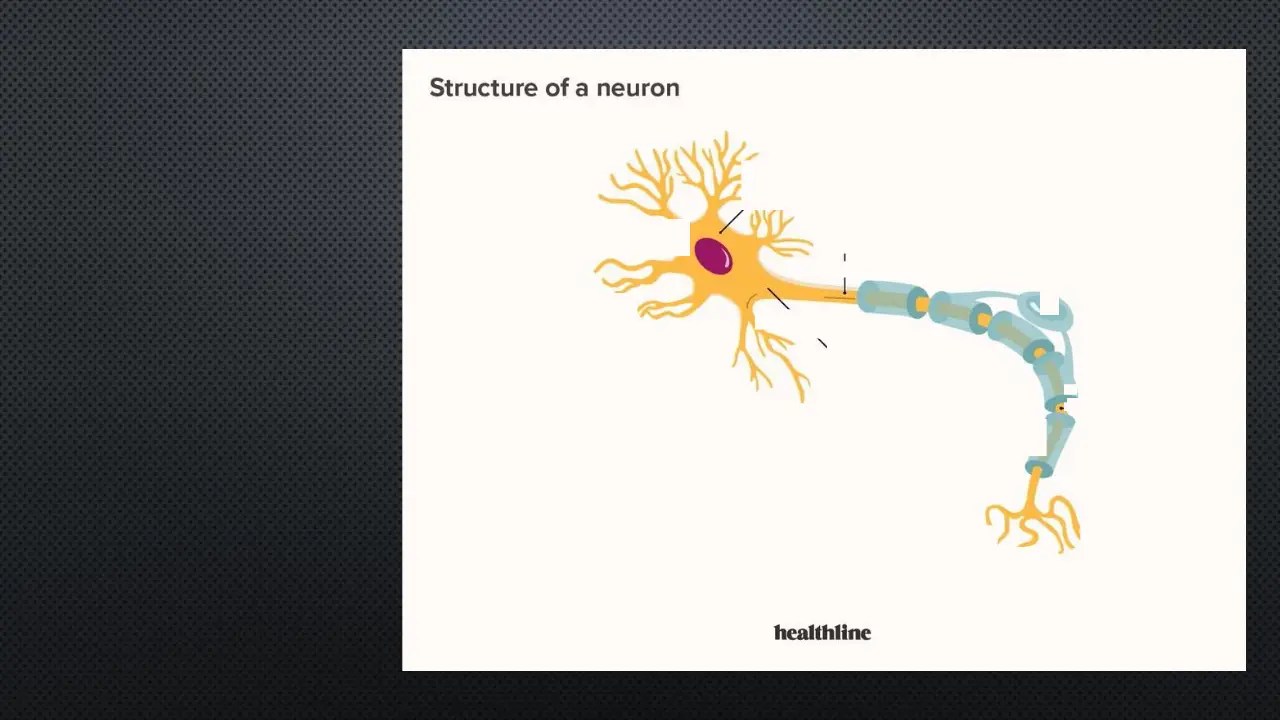
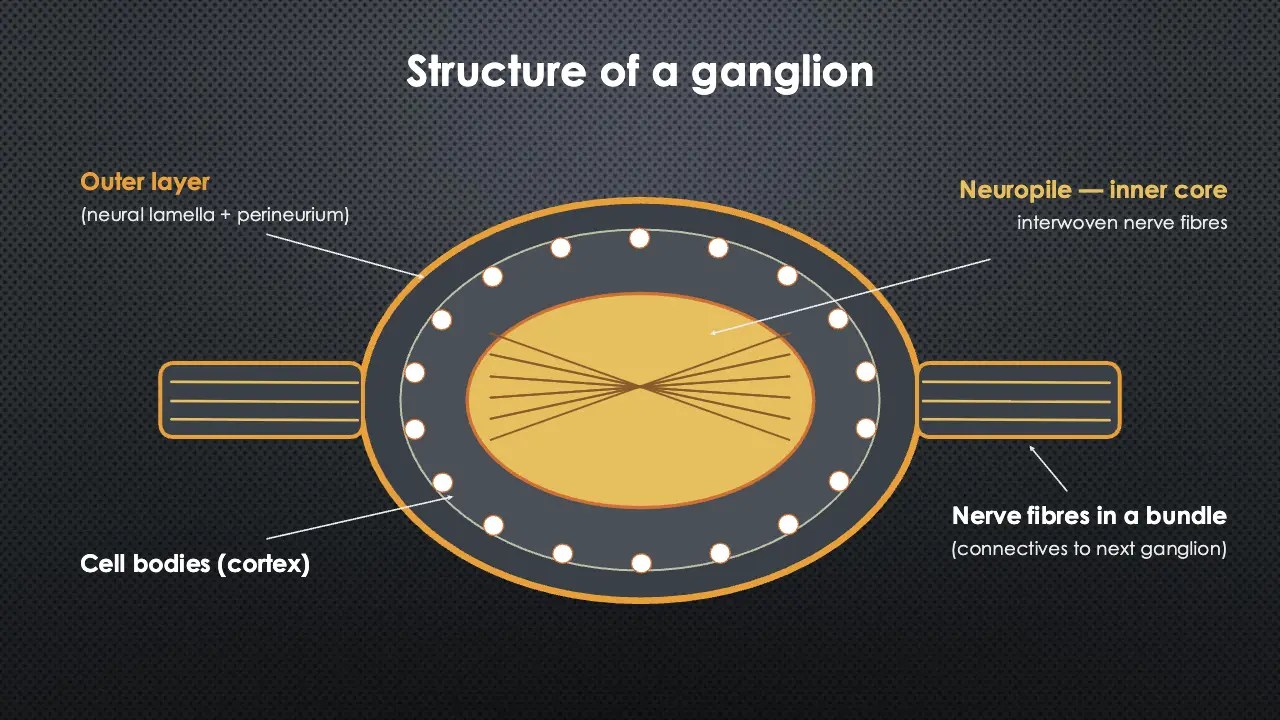
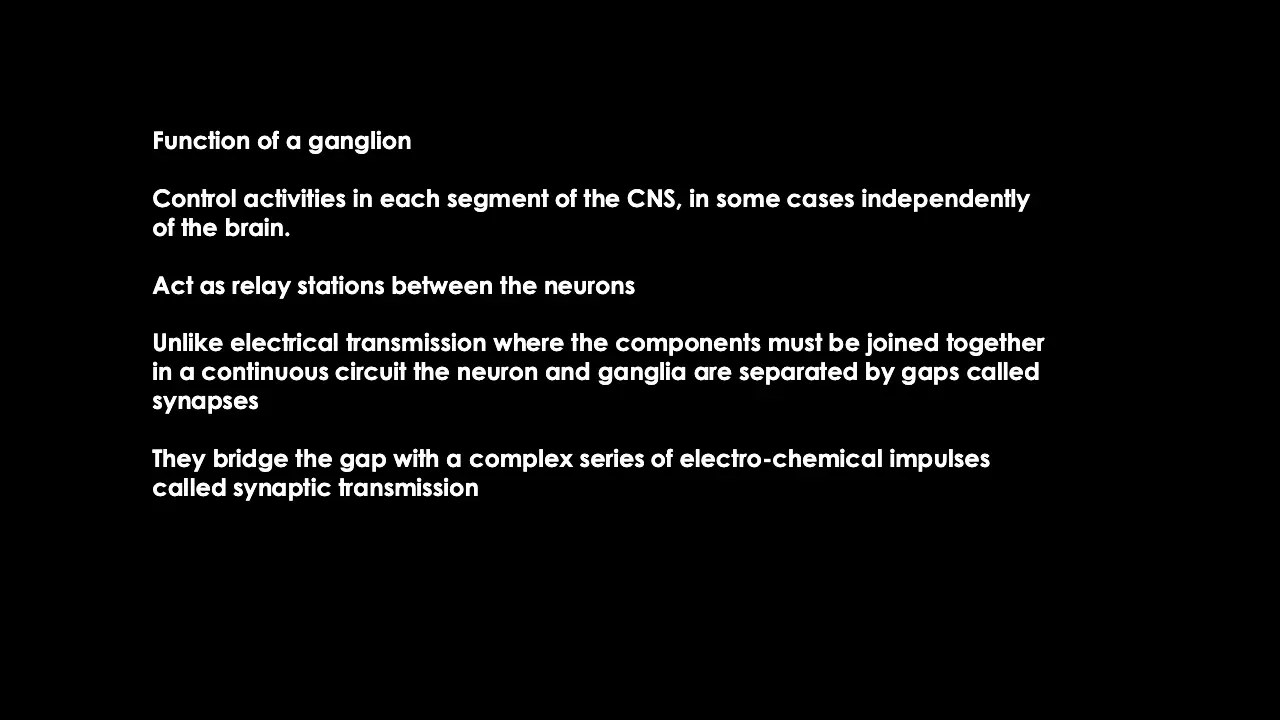
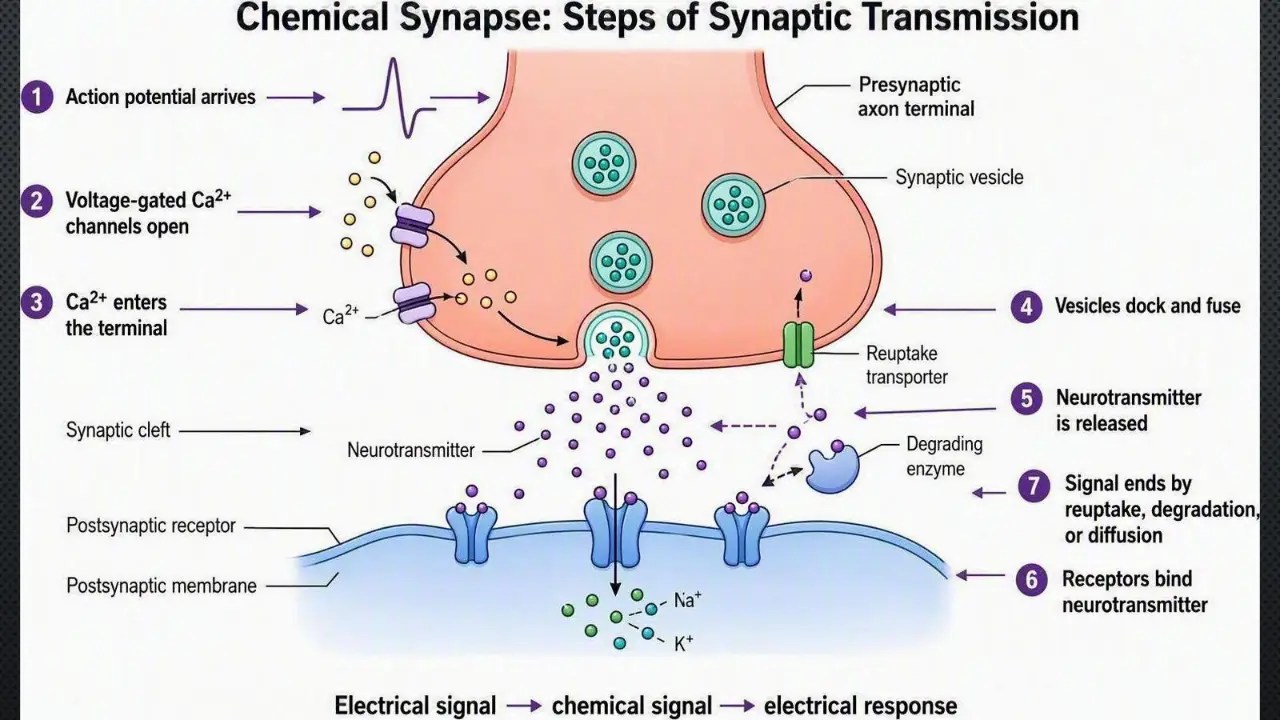
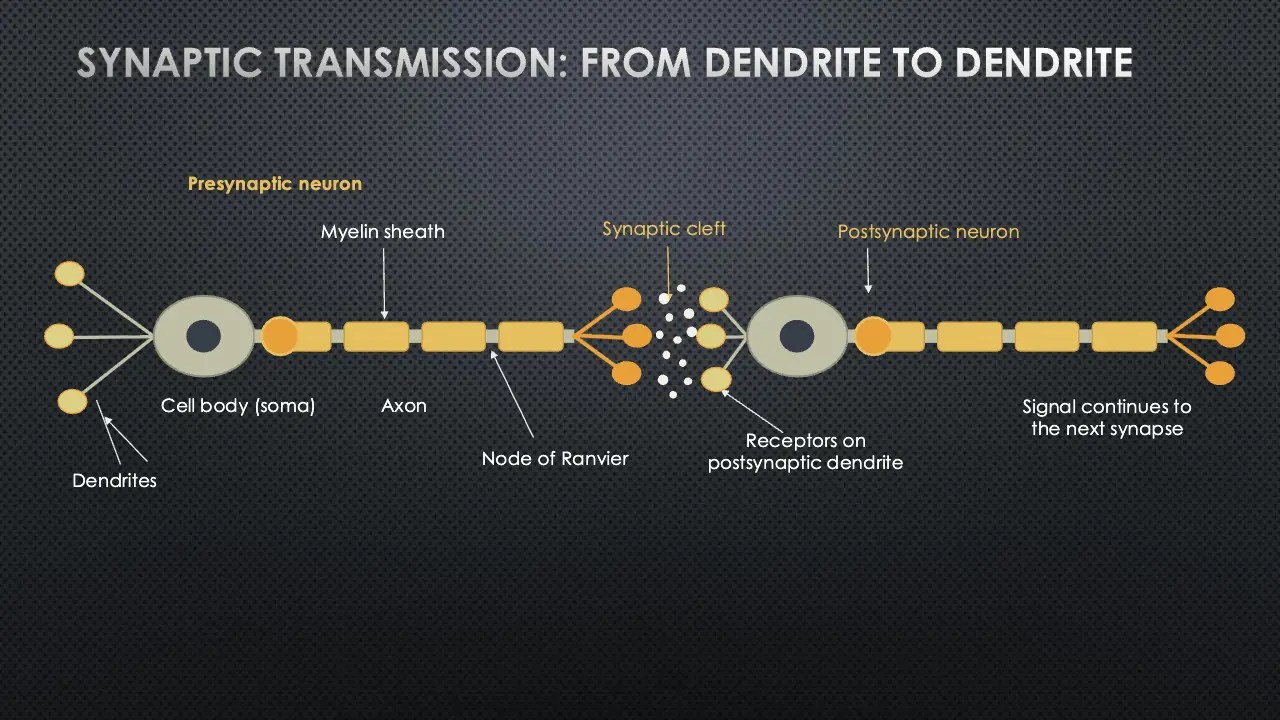
- Session 4: The nervous system and sense organs
- Session 5: The endocrine glands and the sting
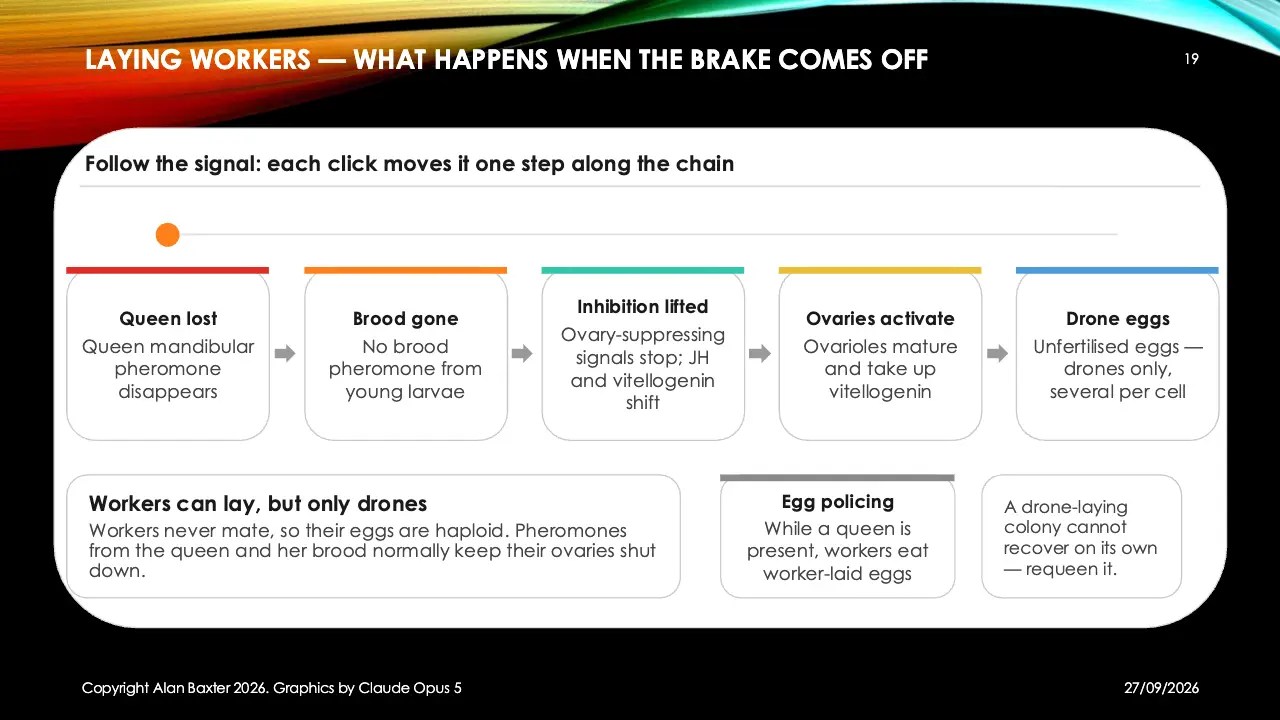
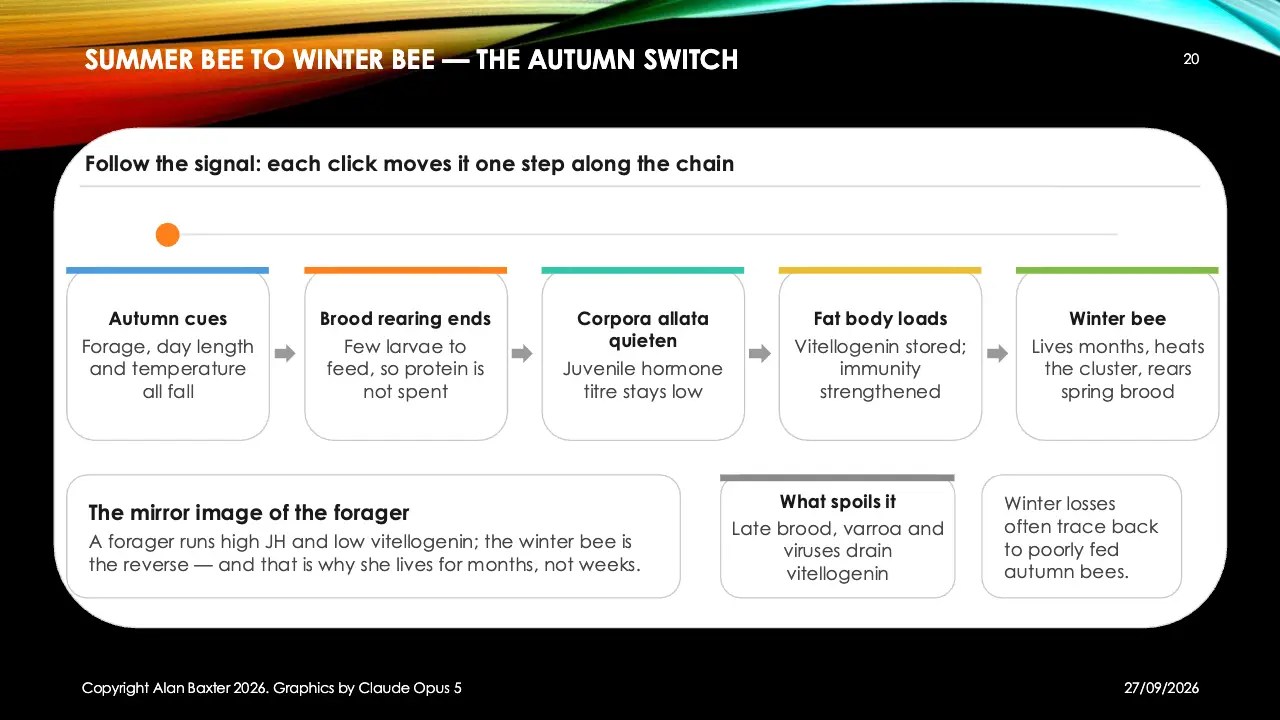
- Session 6: The fat body, summer and winter bees, and laying workers
- Session 7: Reproduction, development of the embryo and caste determination
- Session 8: The cuticle, external anatomy and flight
- Revision: Course summary
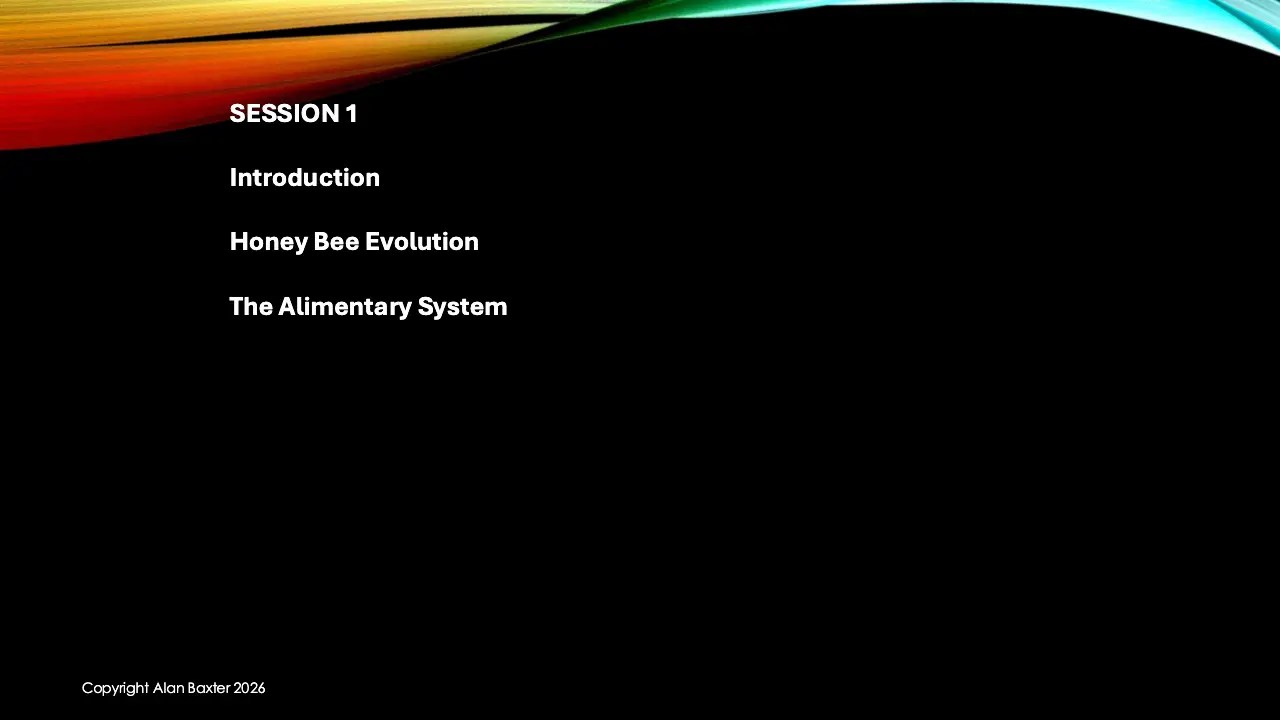
Session 1
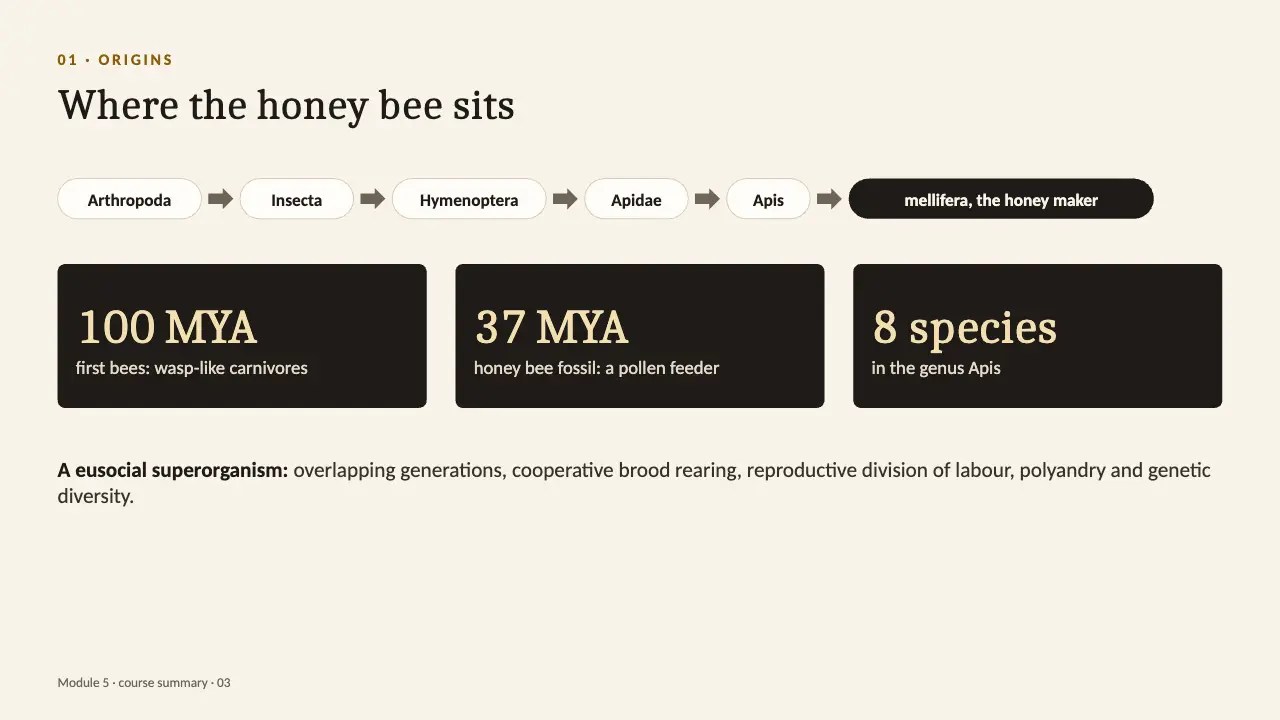
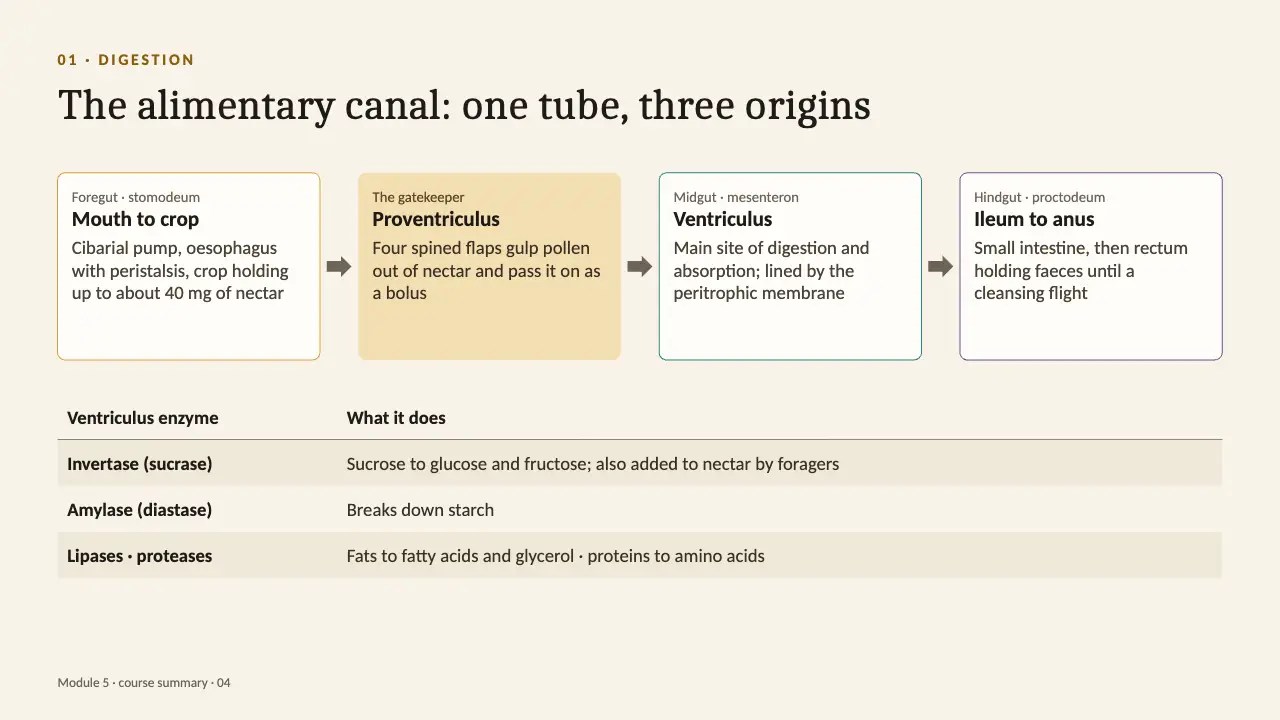
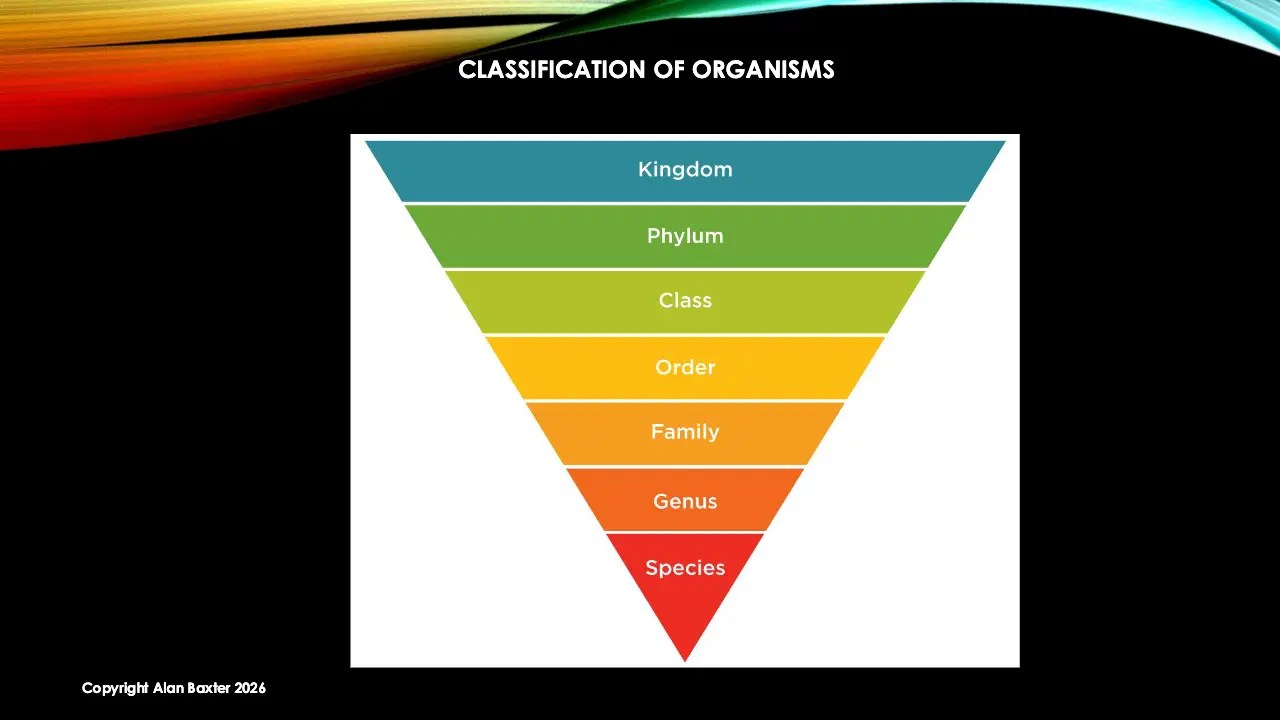
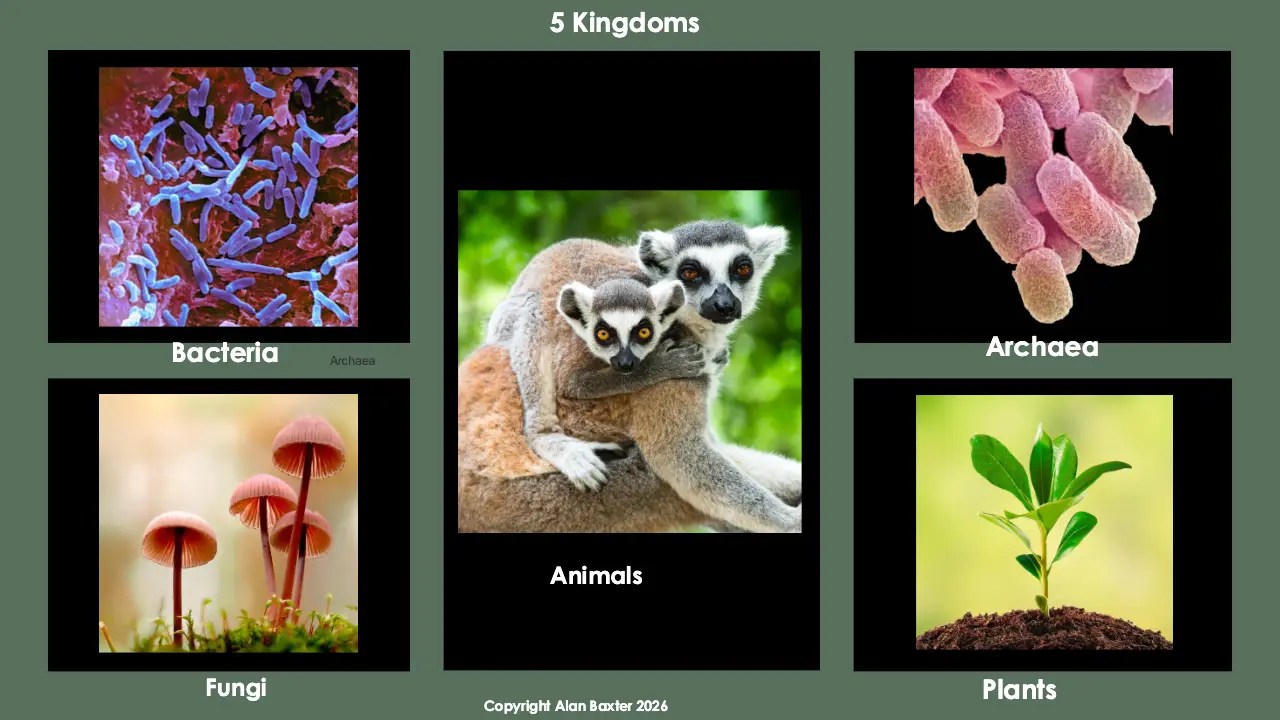
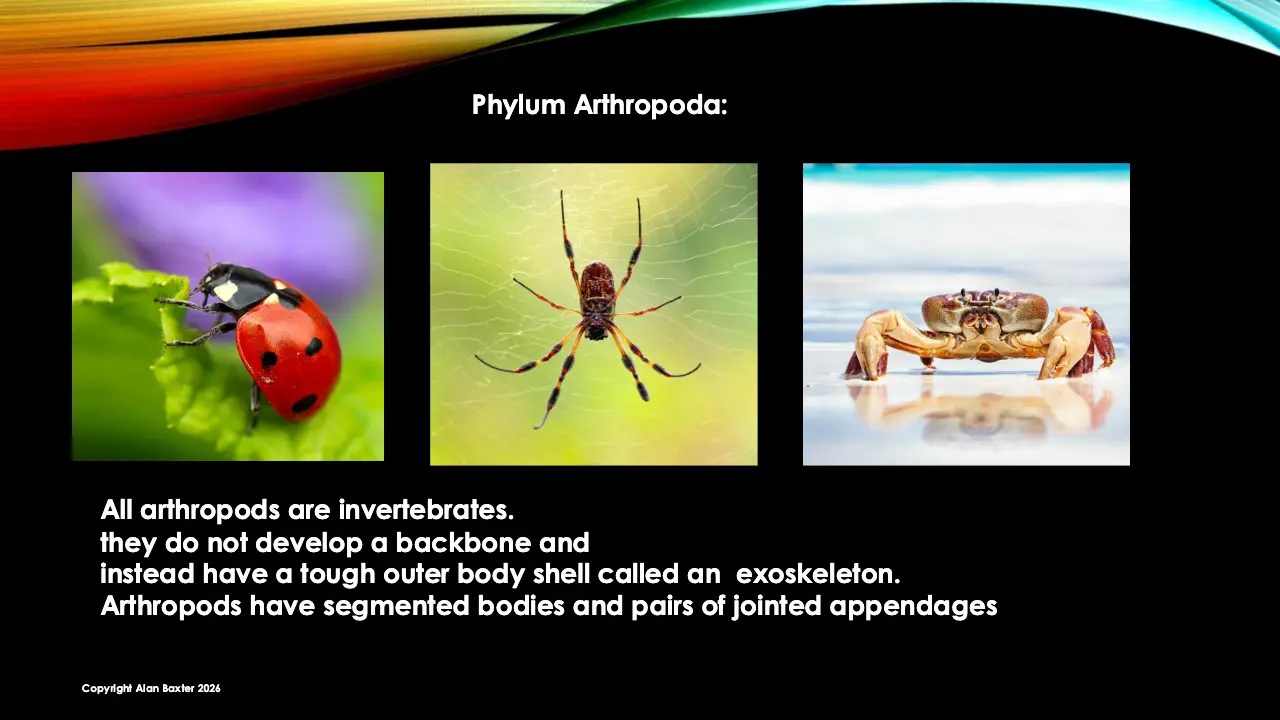
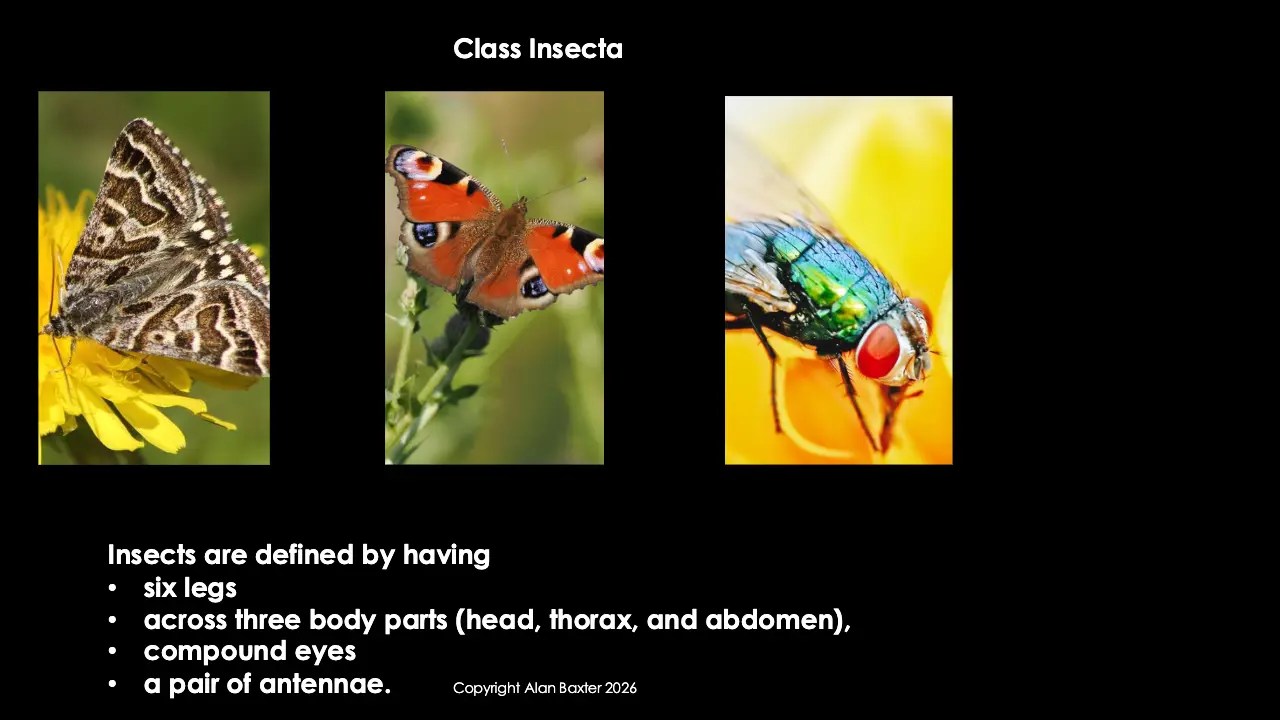
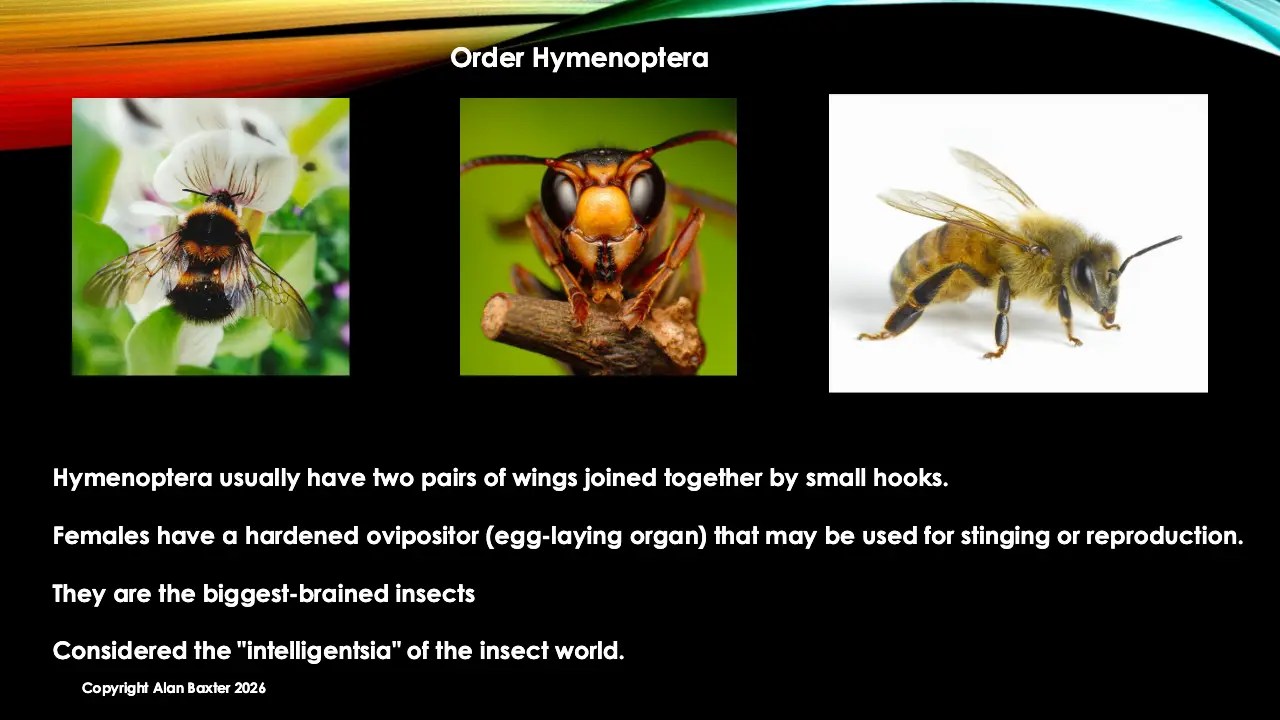
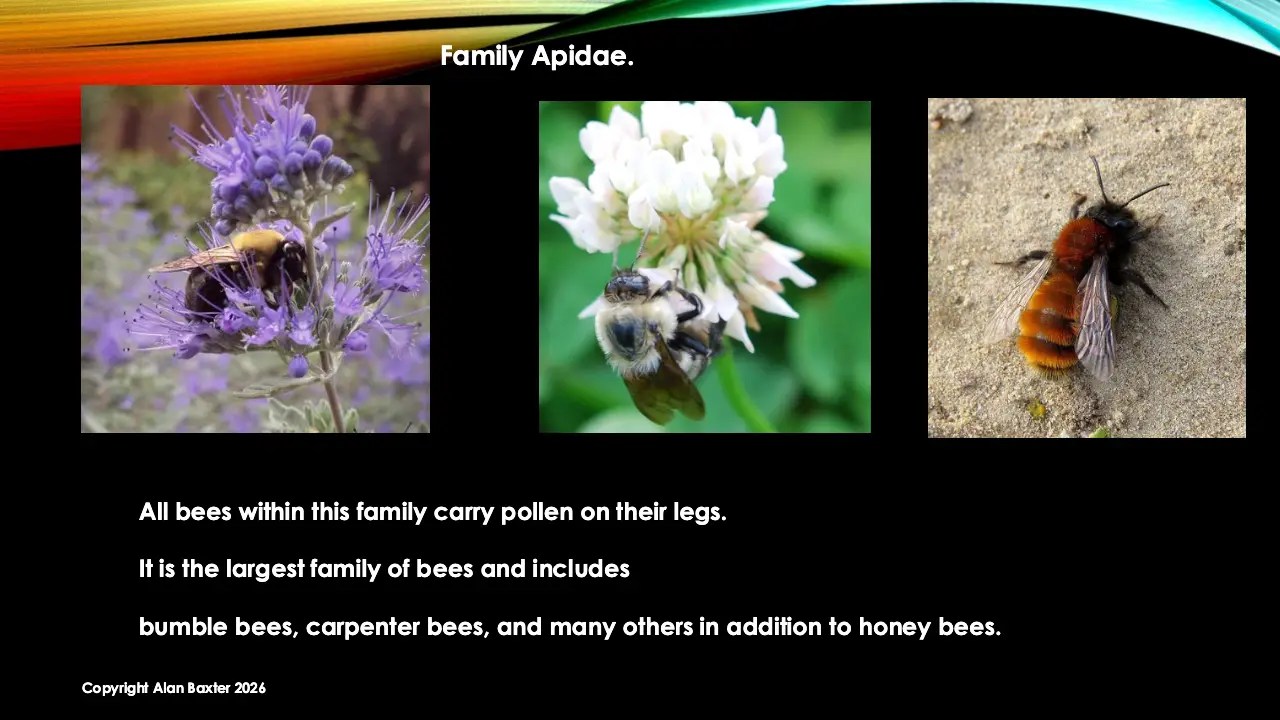
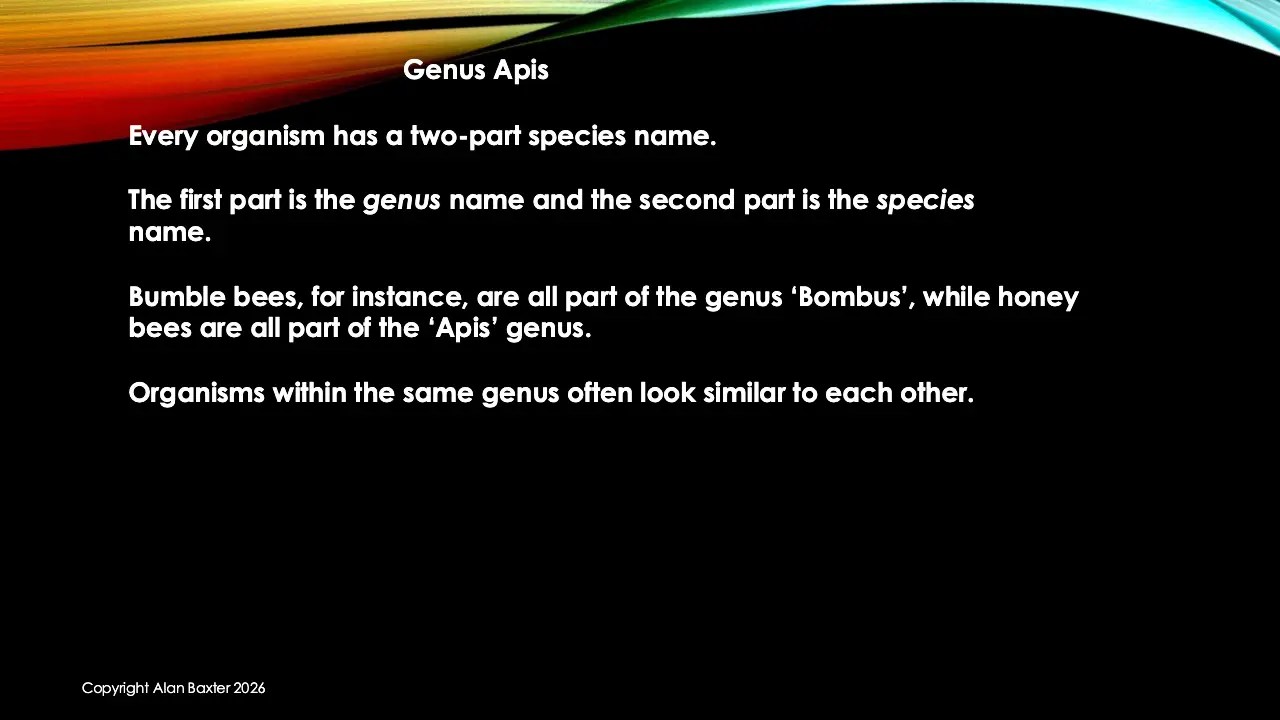
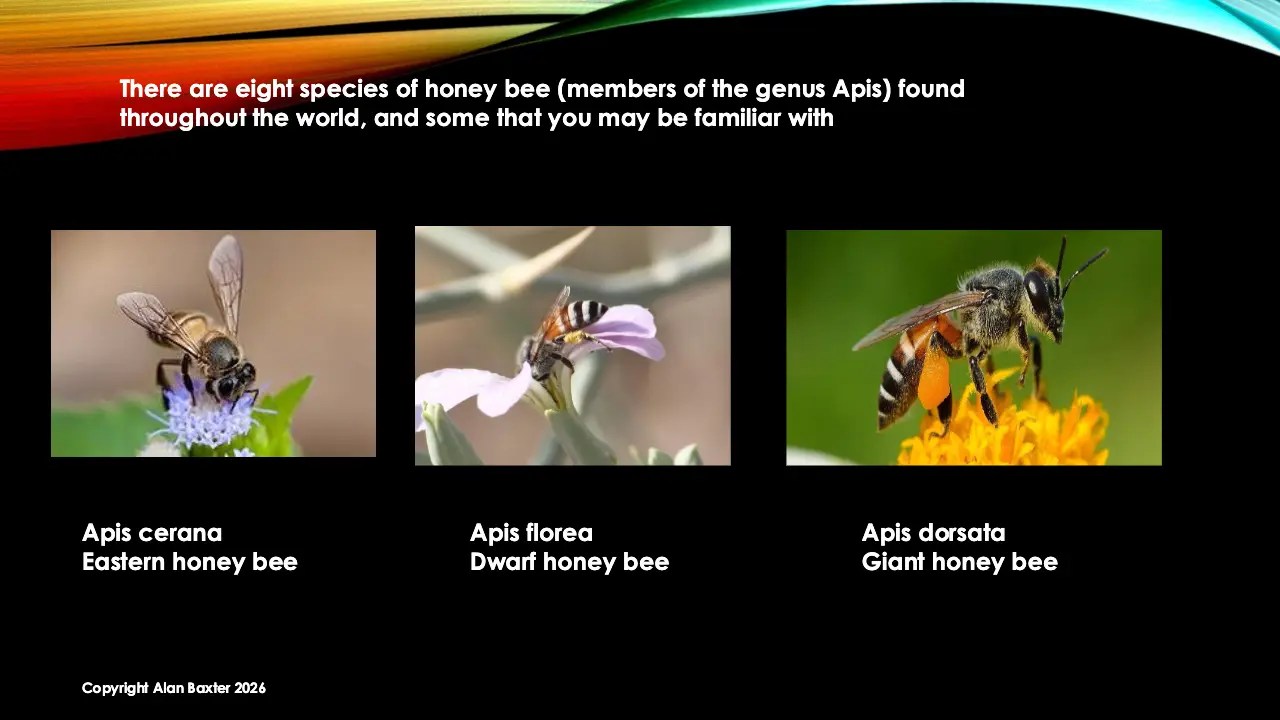
Introduction, evolution of the honey bee, and the alimentary and excretory systems
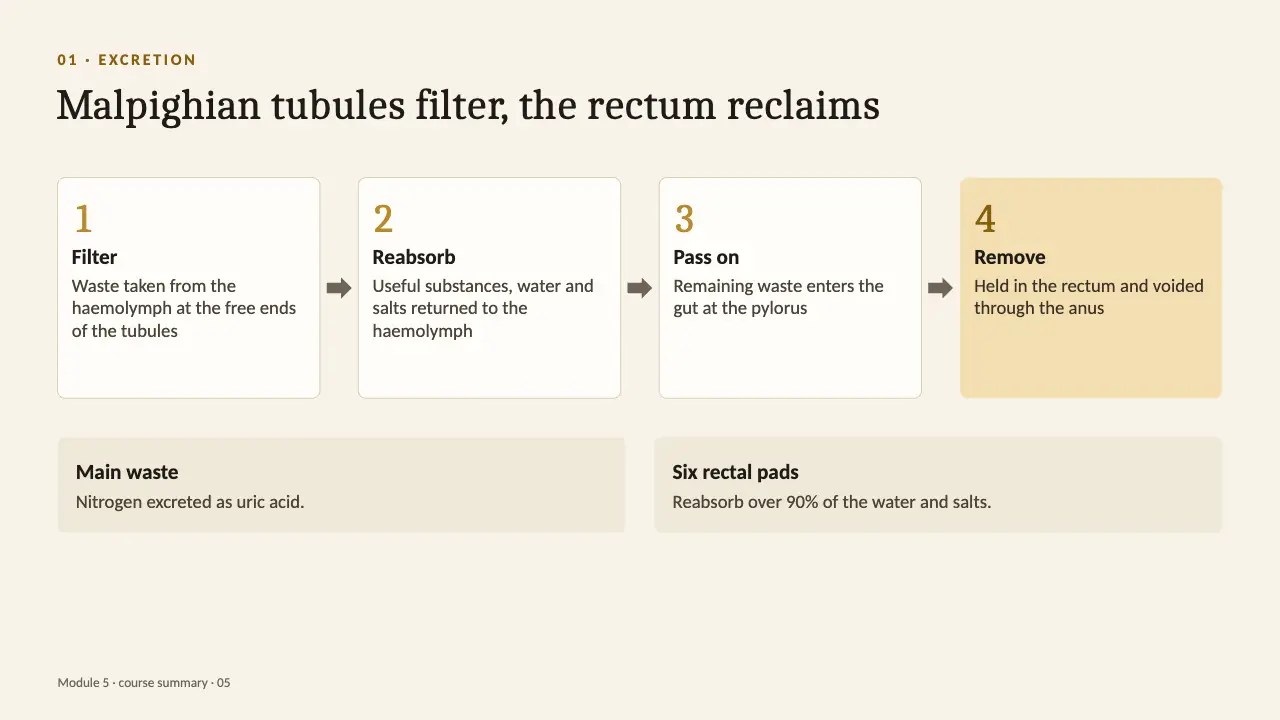
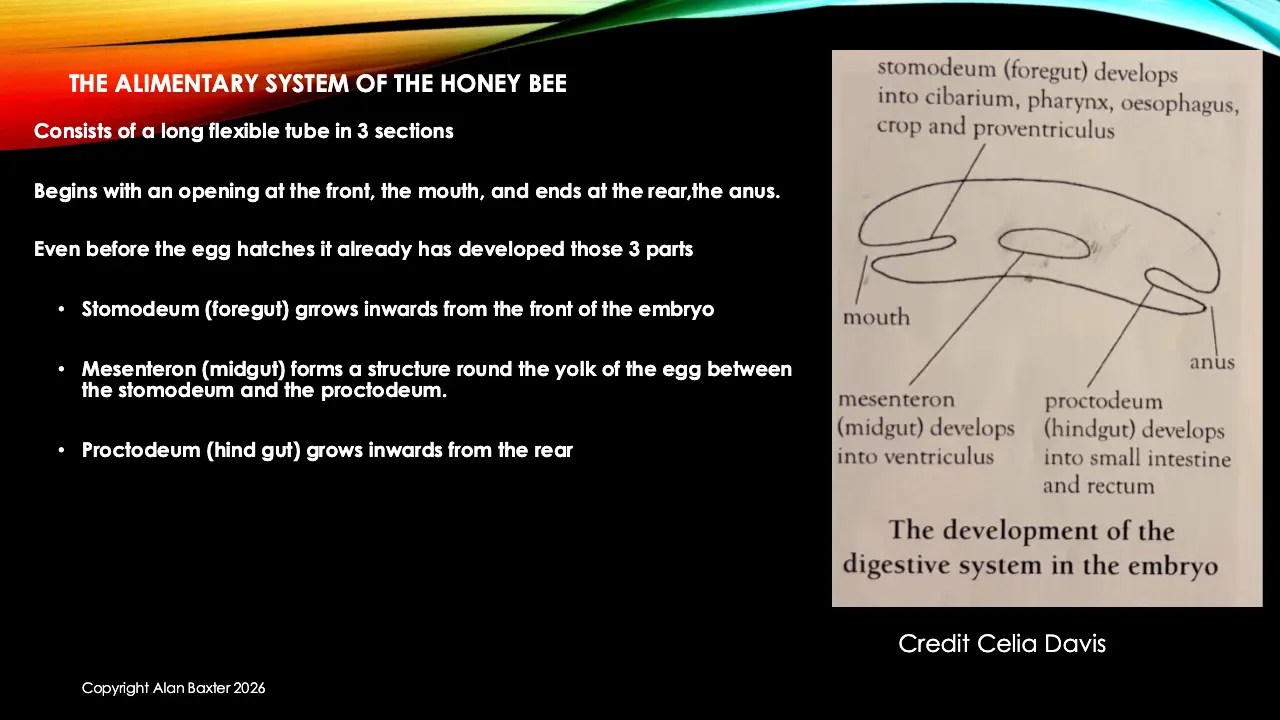
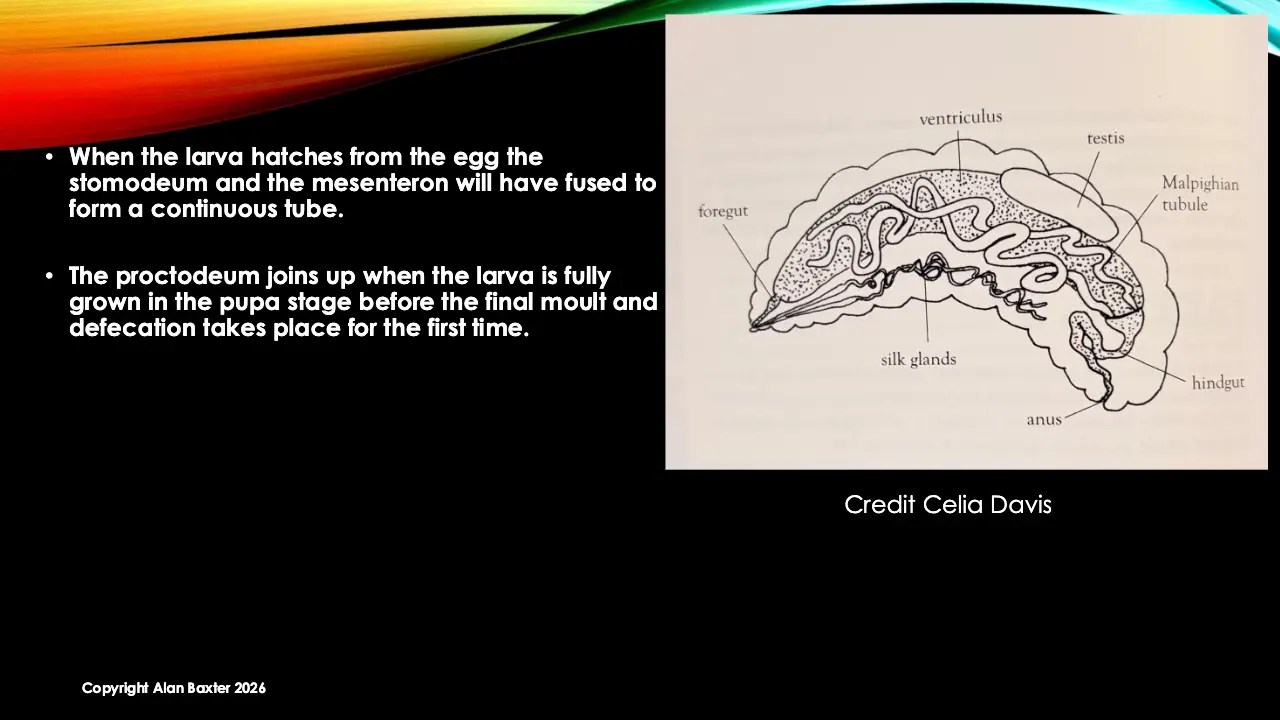
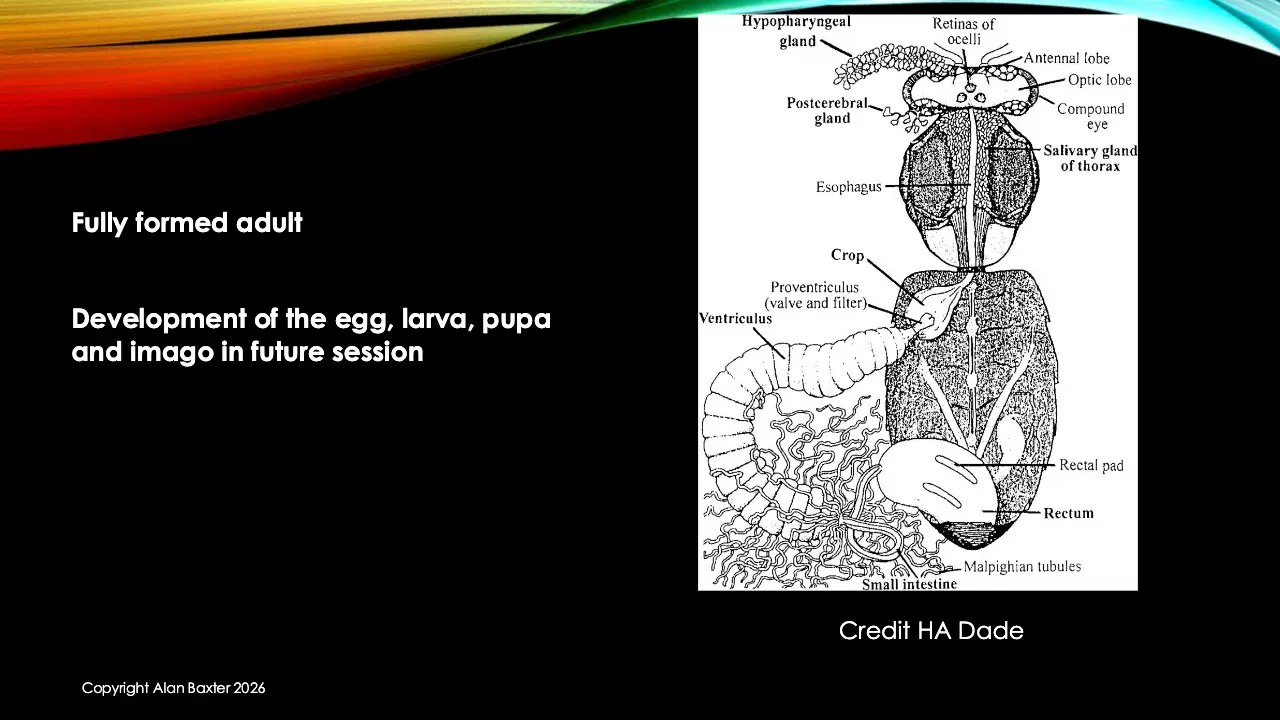
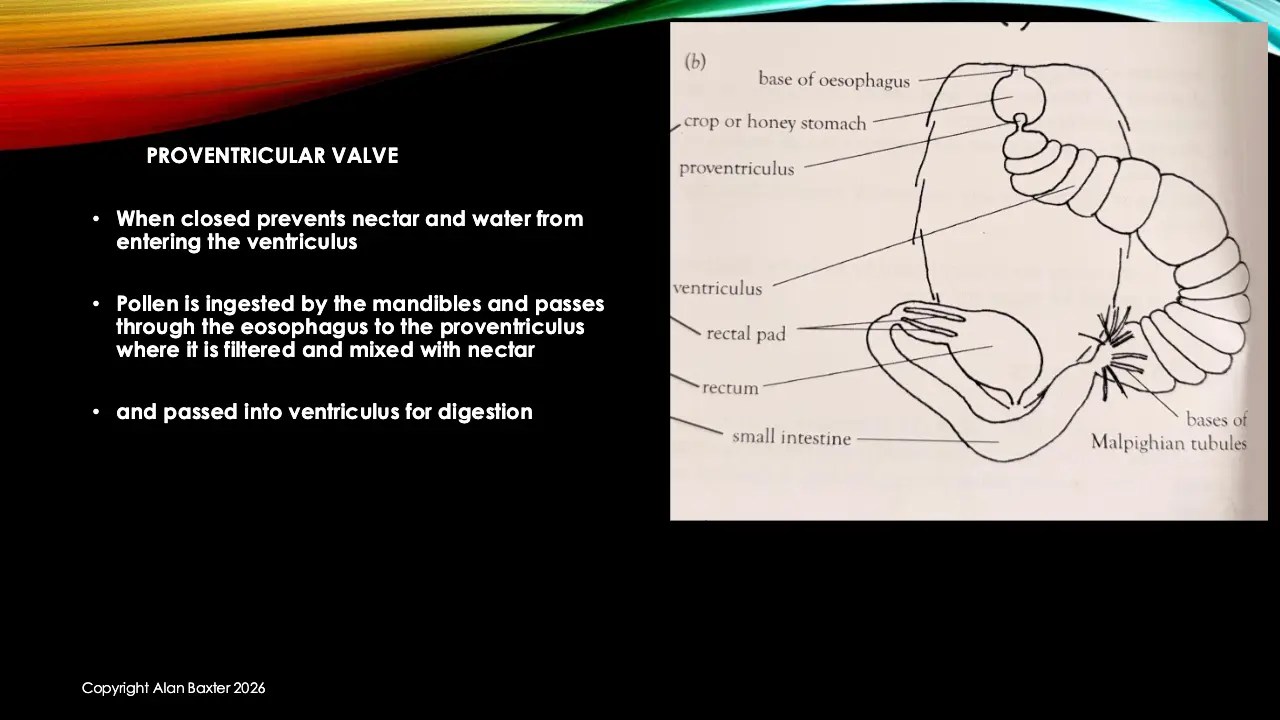
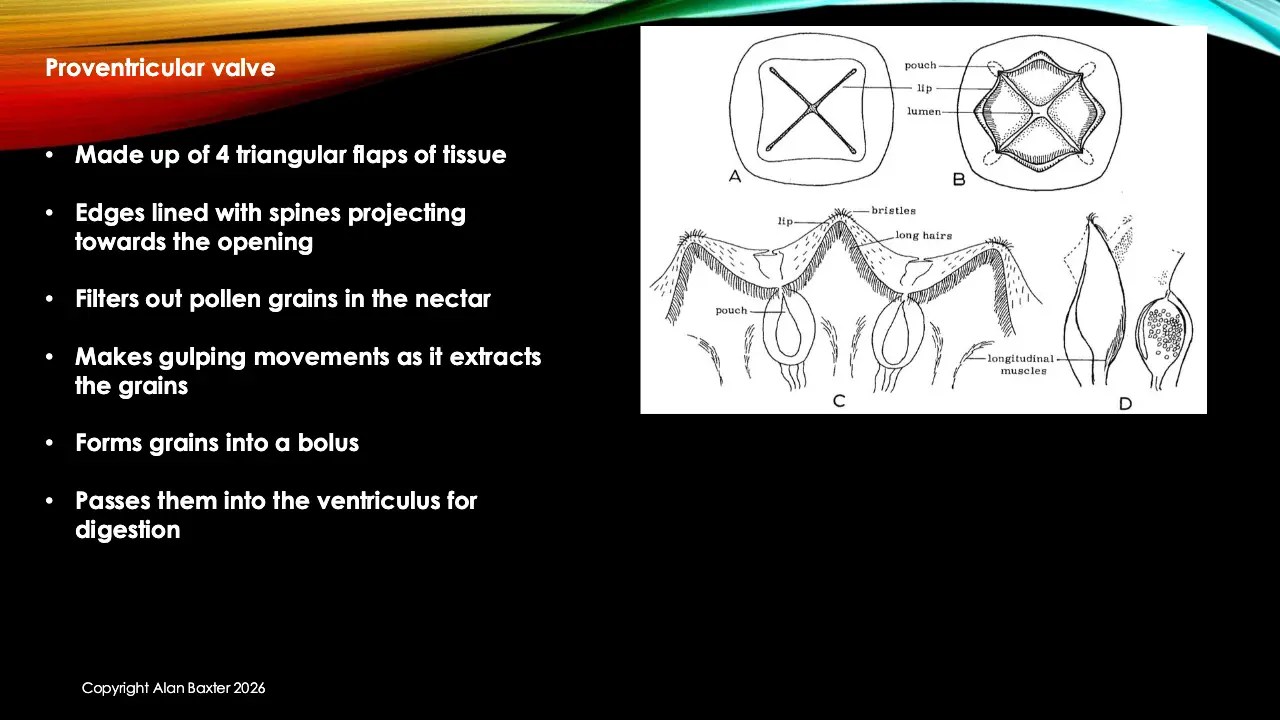
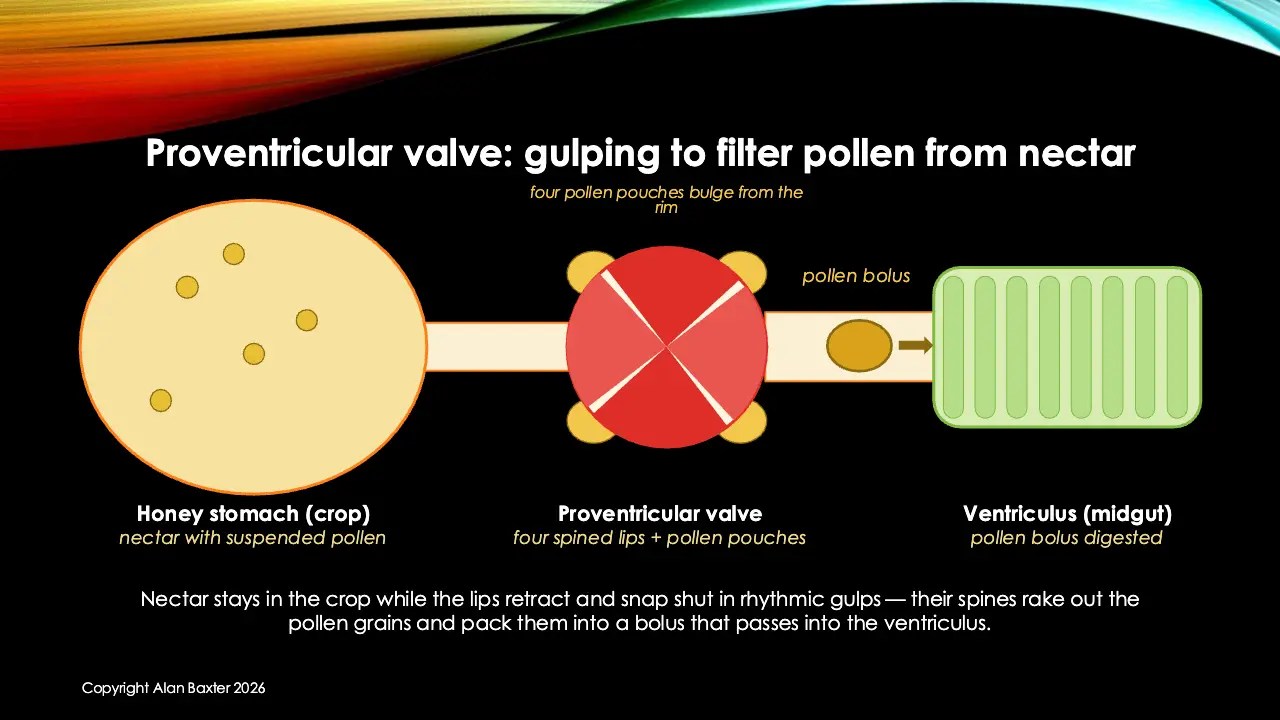
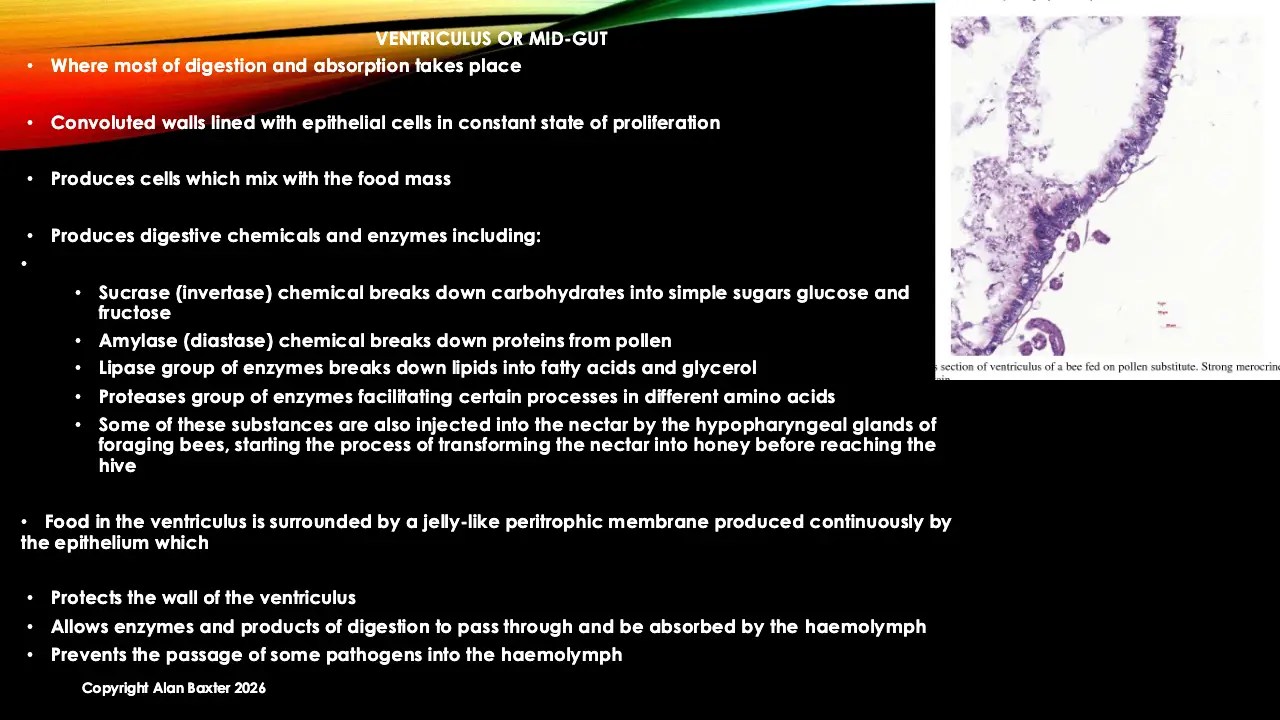
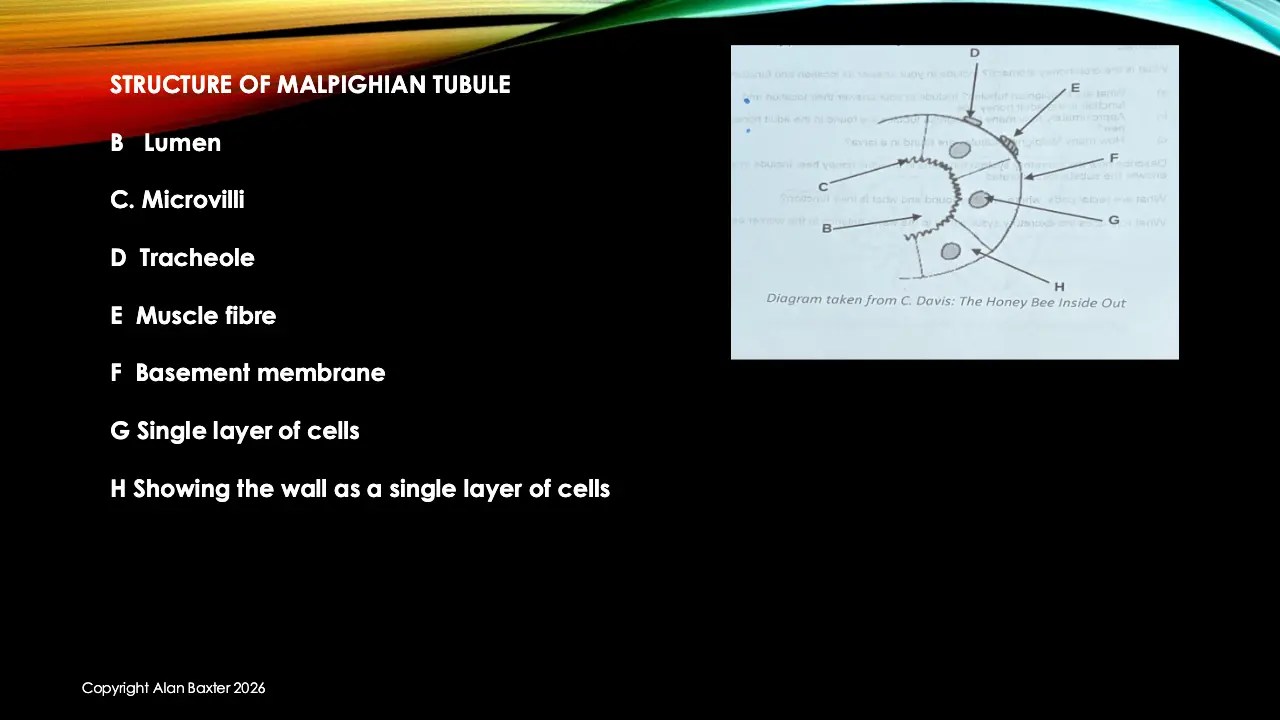
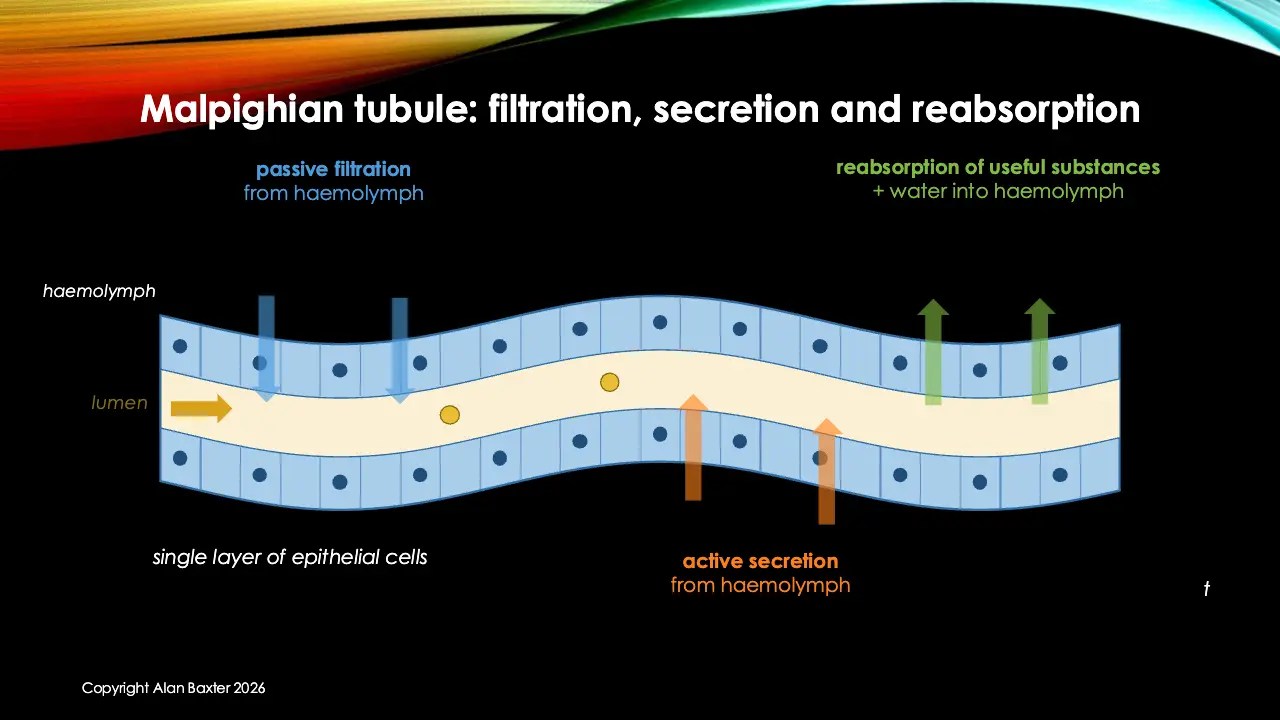
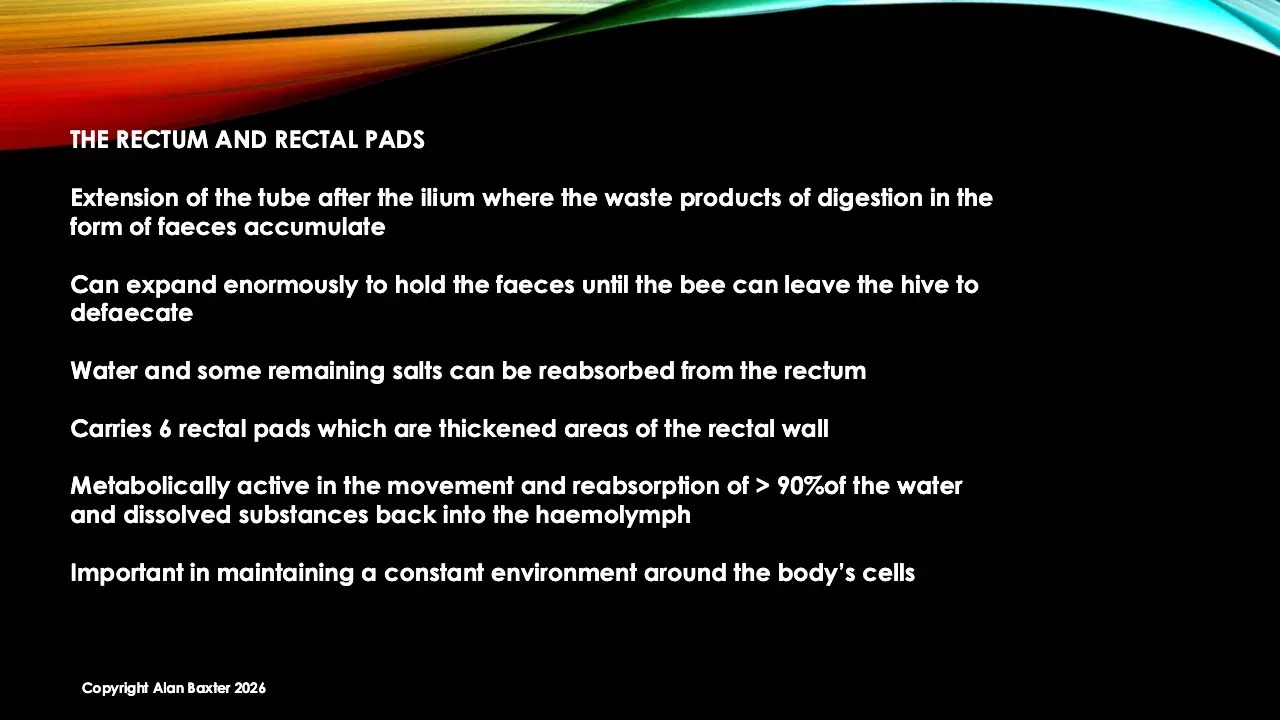
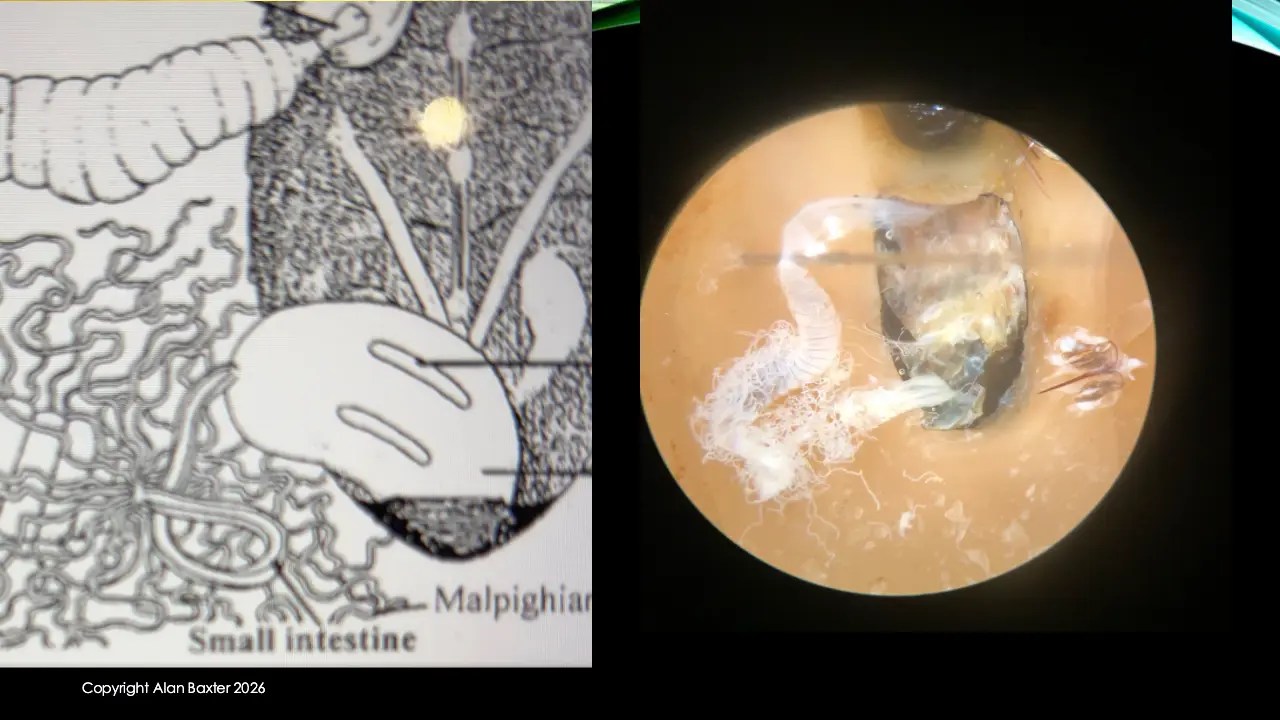
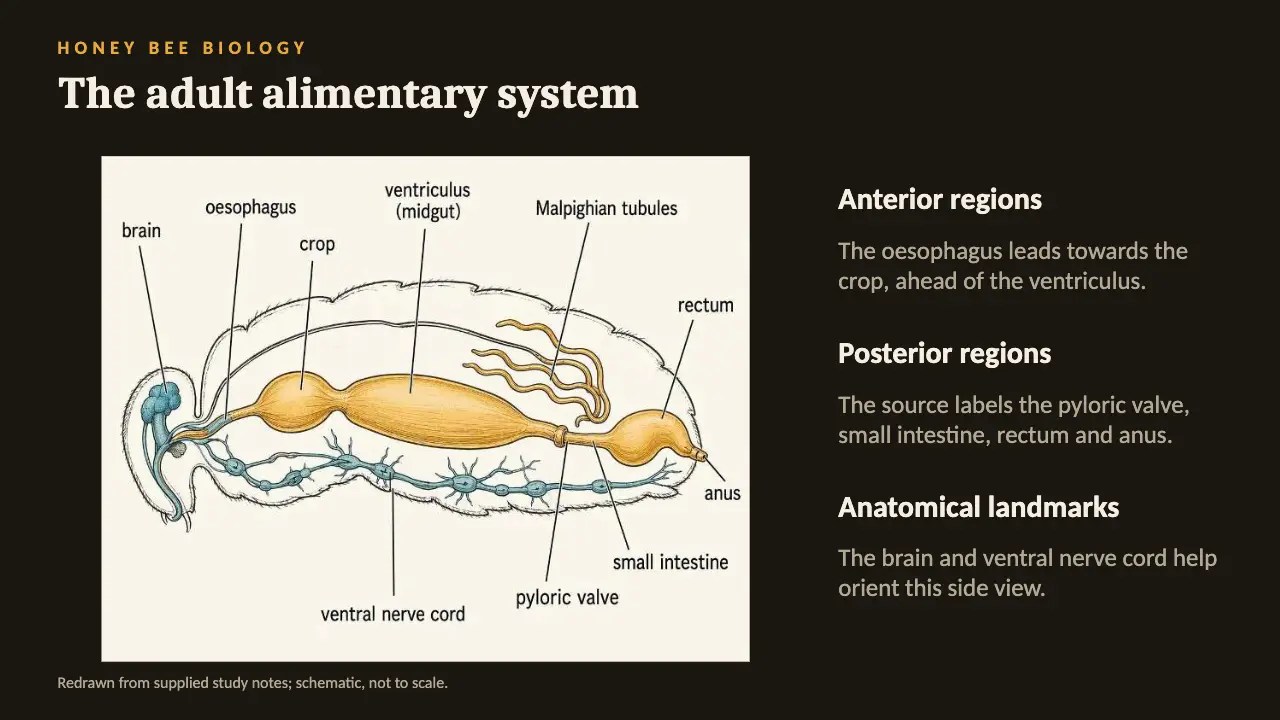
How social behaviour evolved; digestion by enzymes, absorption and assimilation; what is excreted and how. Download the slides (PDF)


Session 2
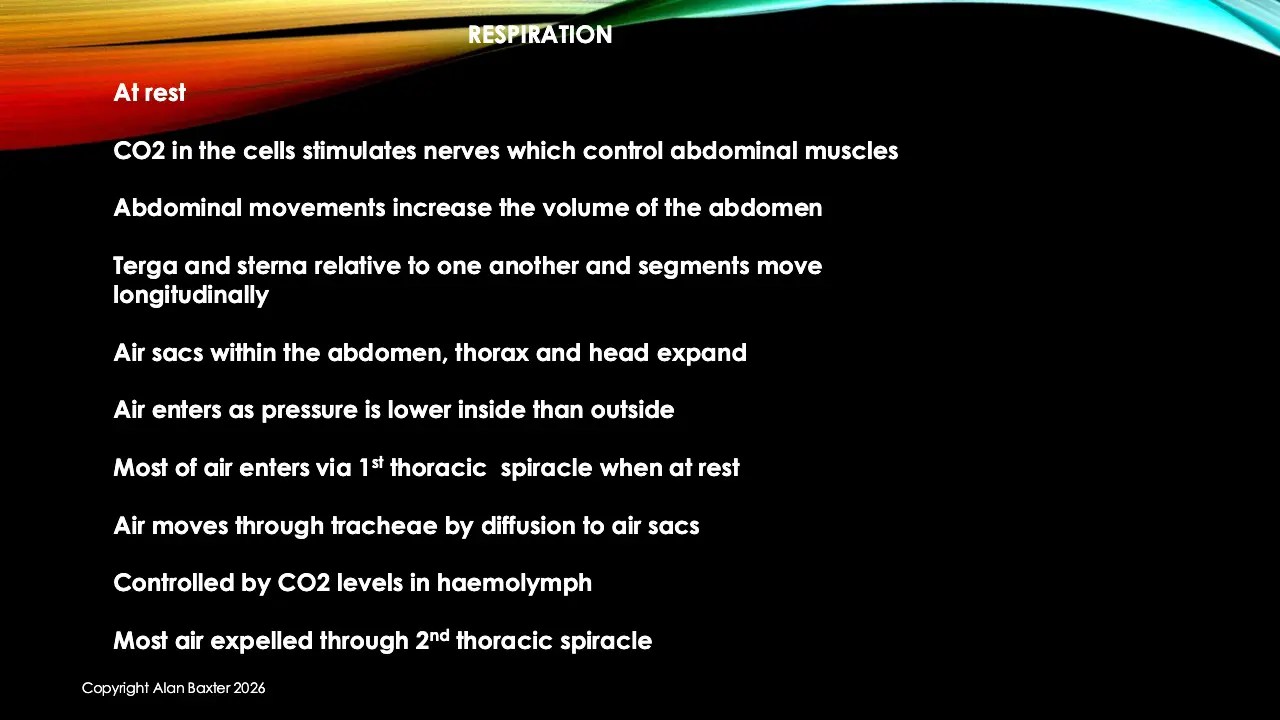
The respiratory system
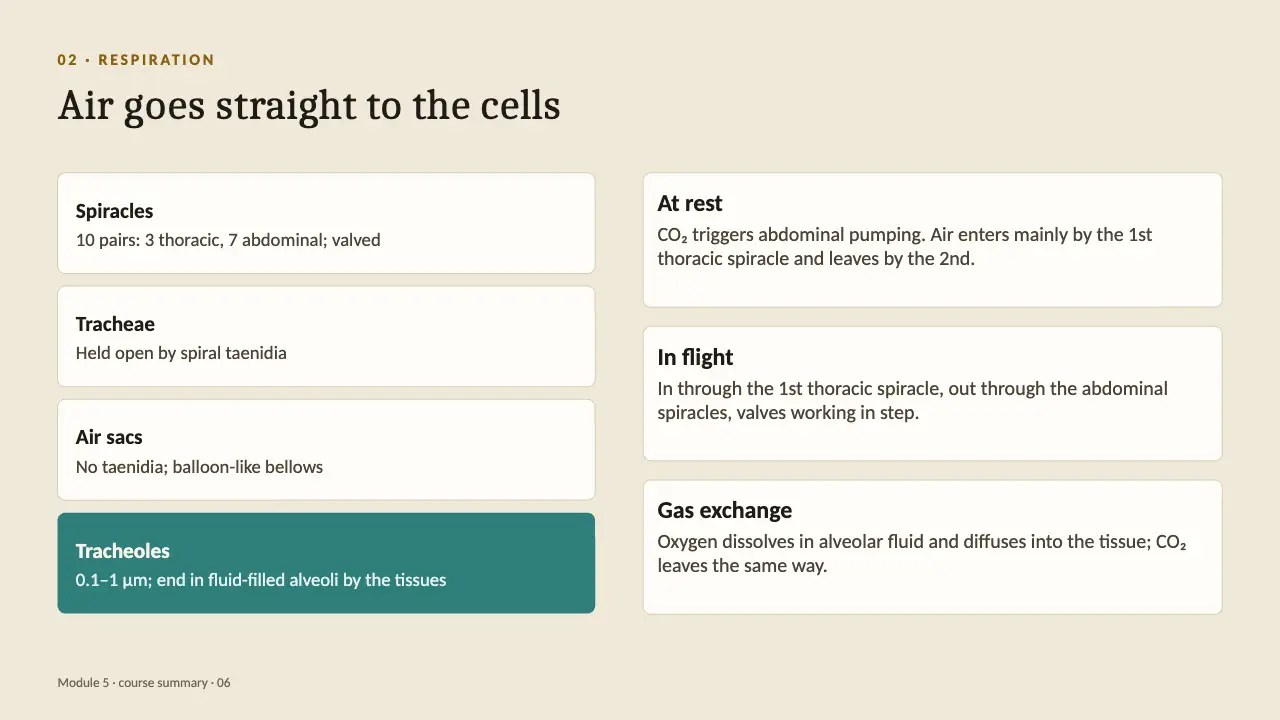
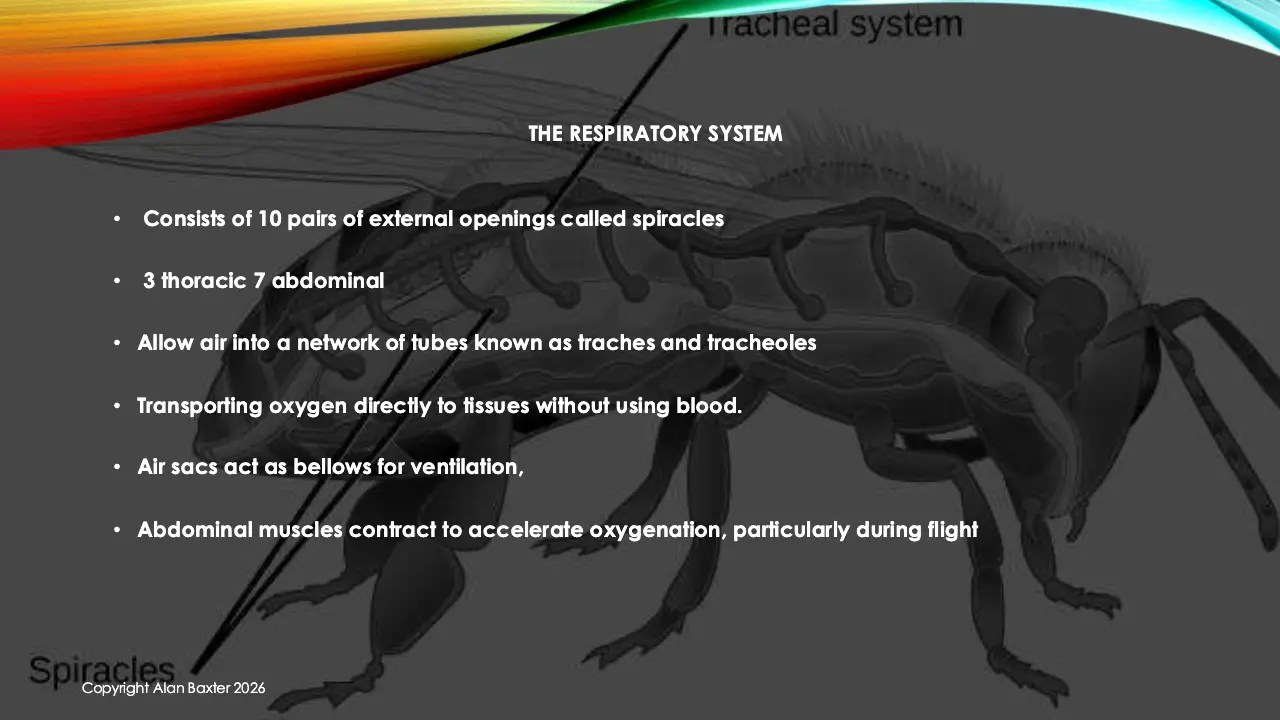
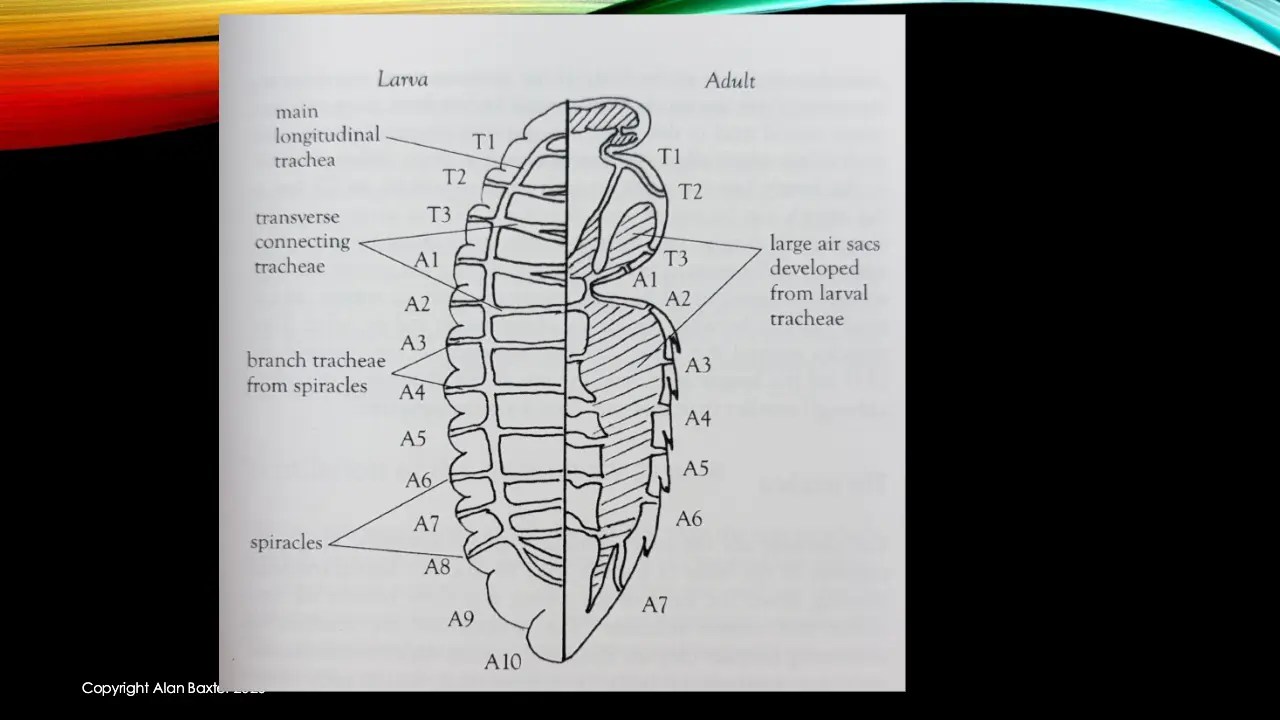
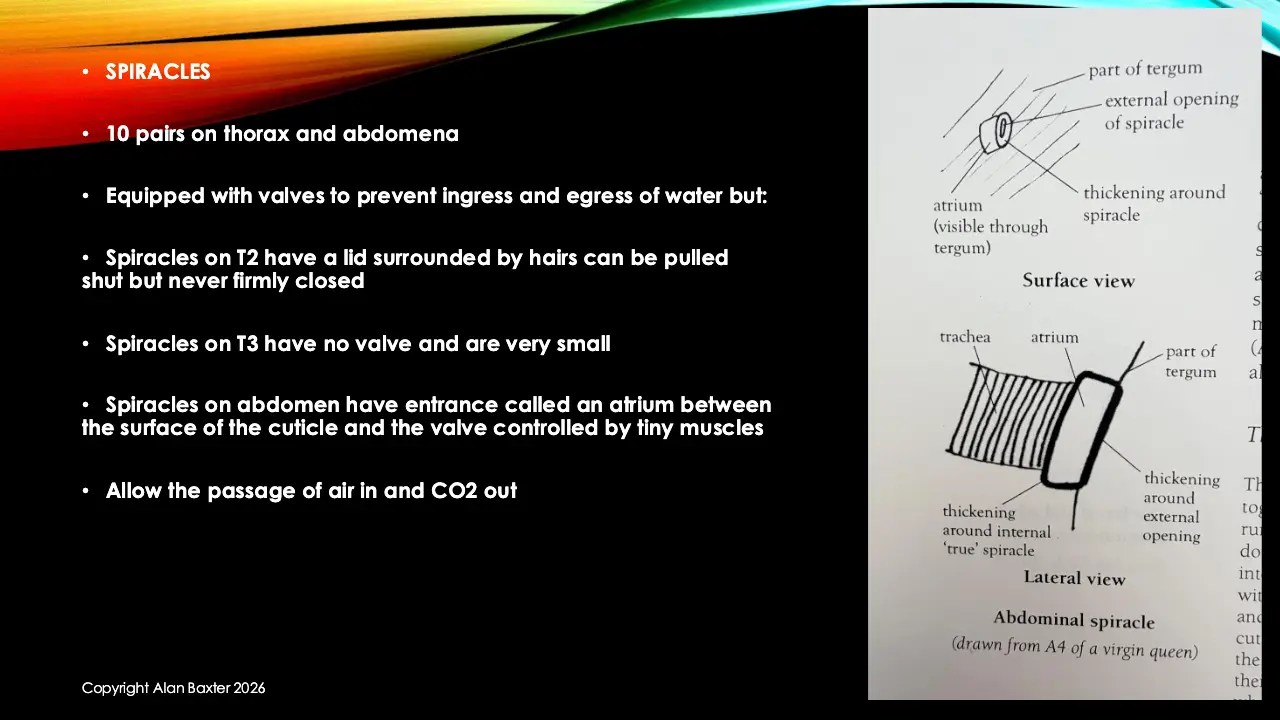
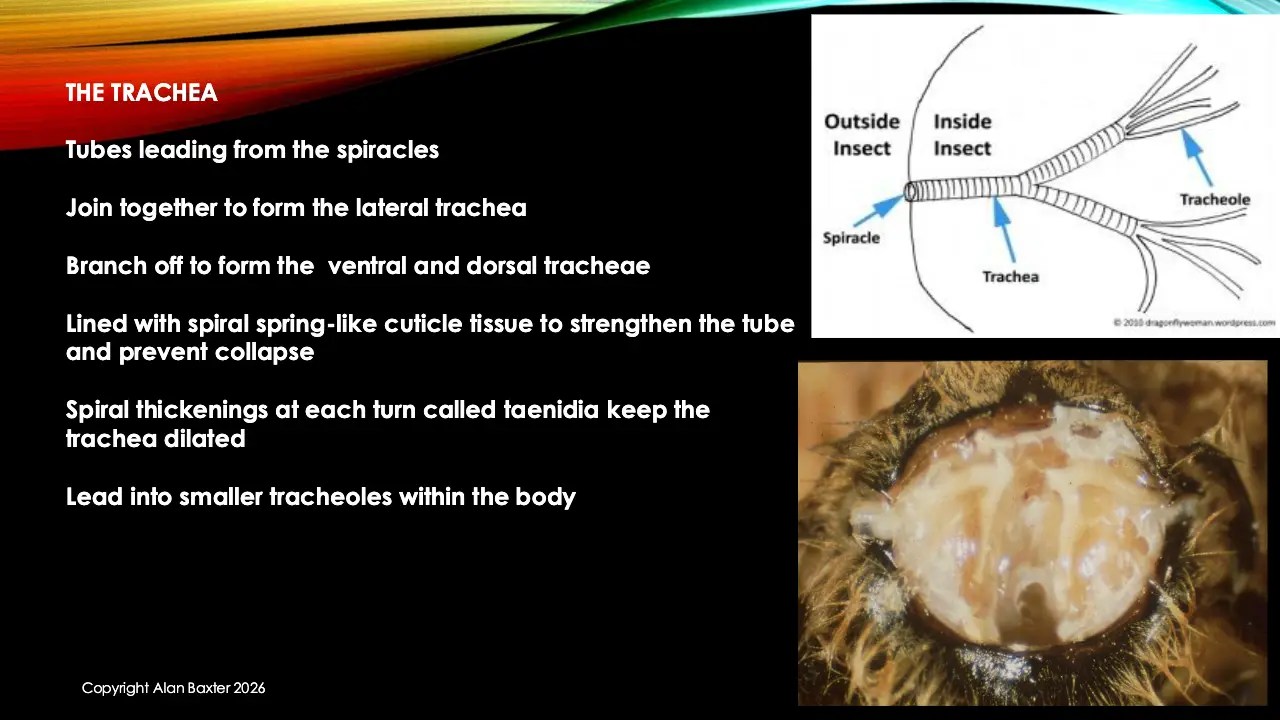
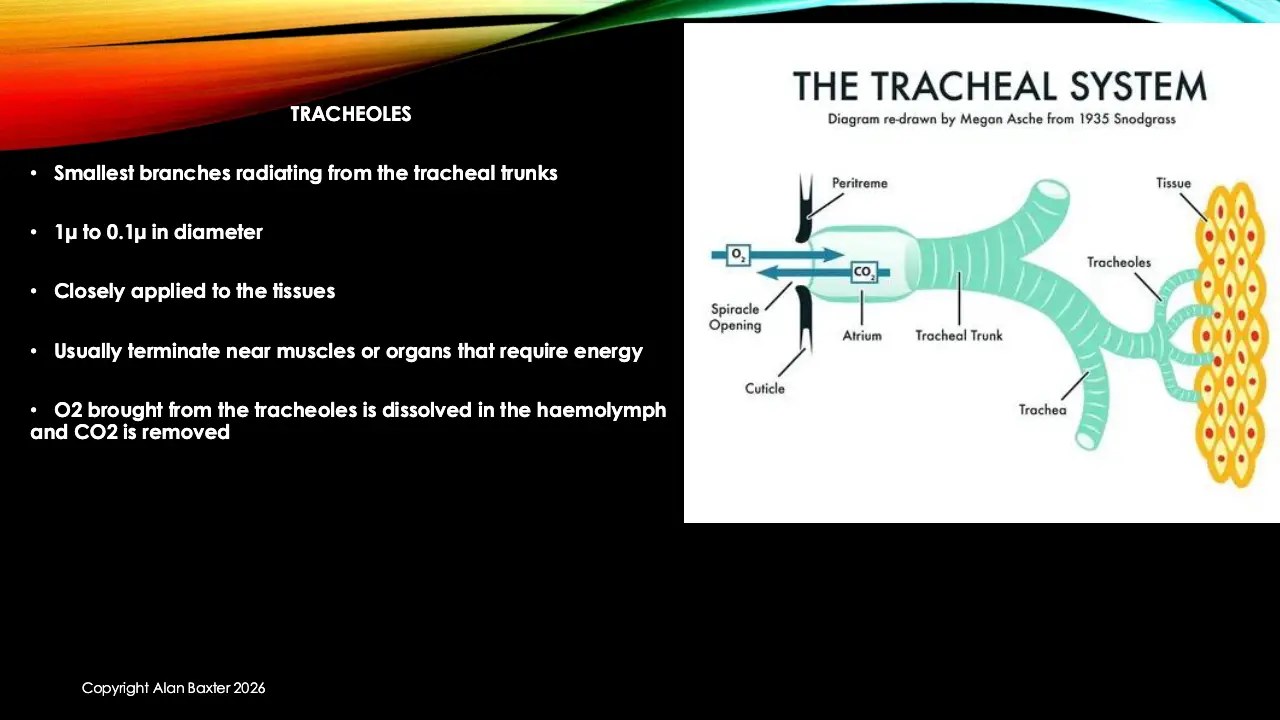
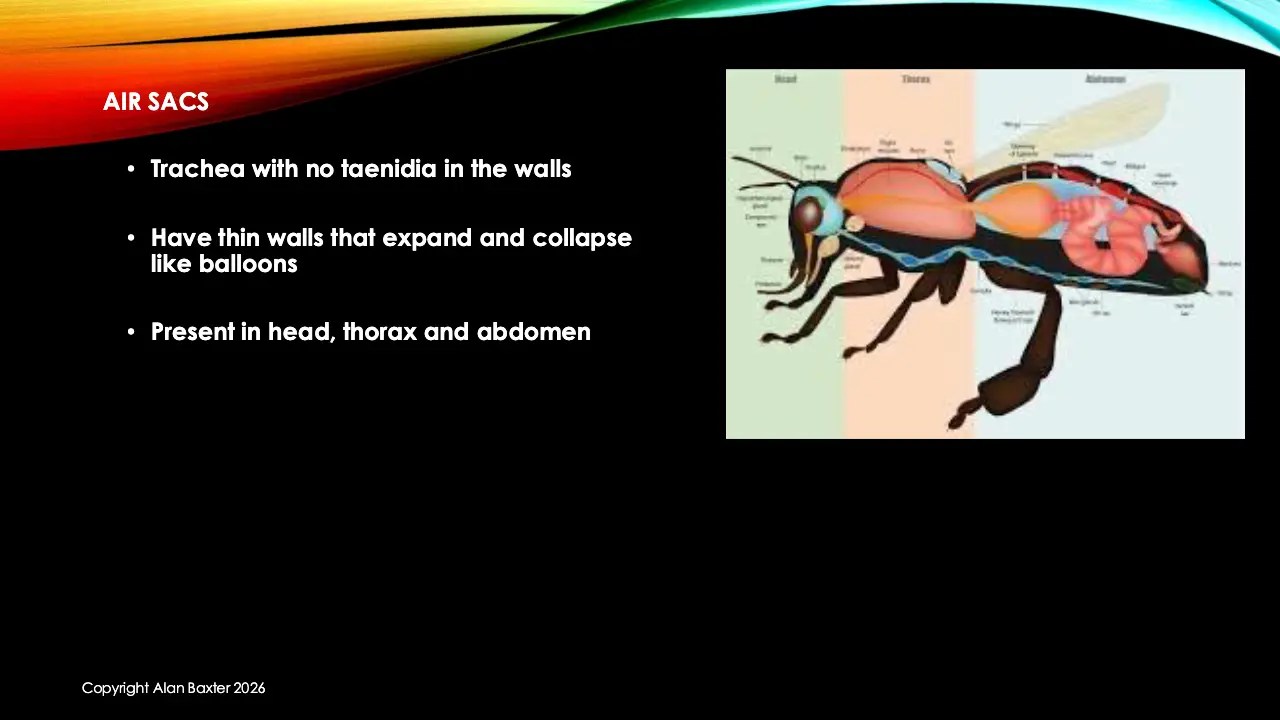
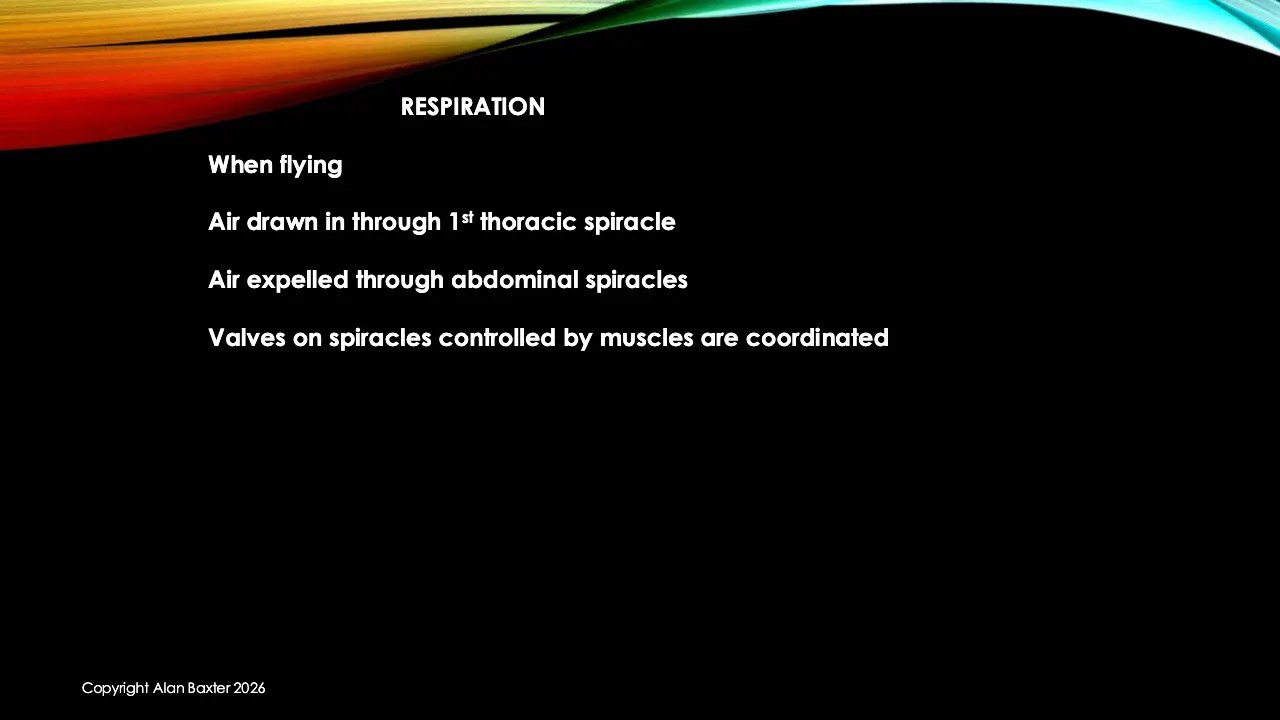
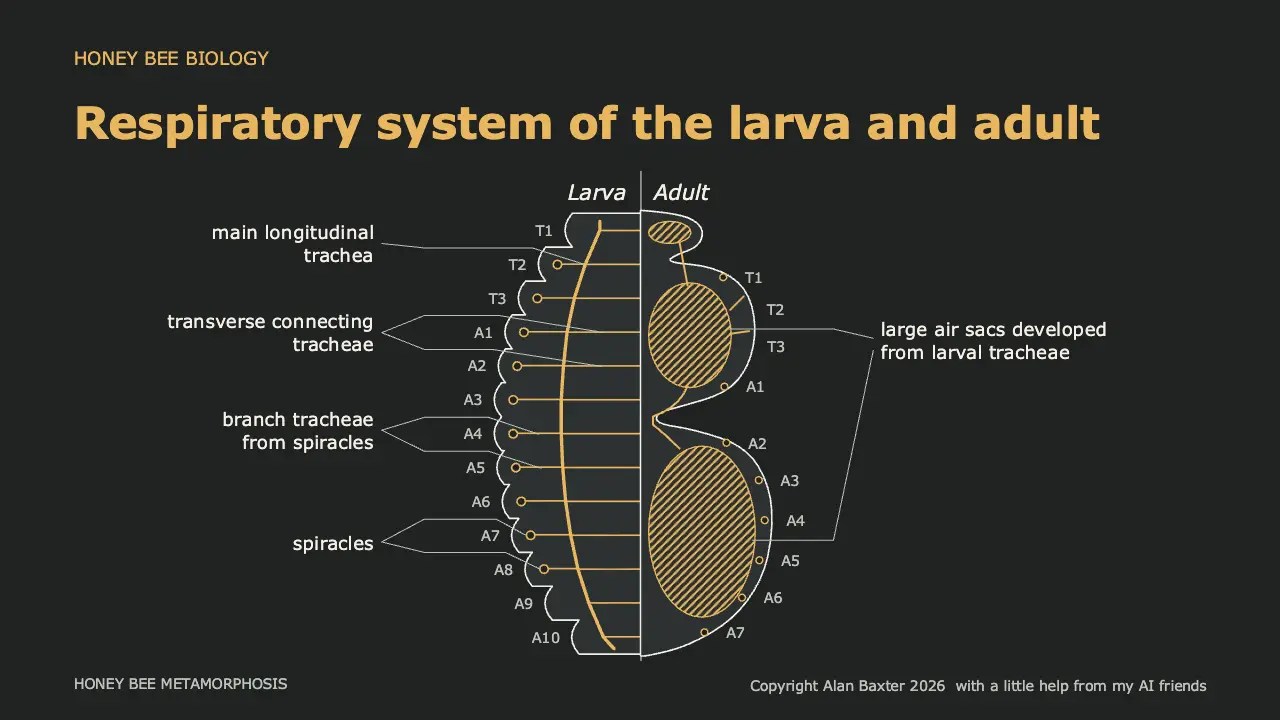
Spiracles, tracheae and air sacs, muscular ventilation and gas exchange at rest and in flight. Download the slides (PDF)


Session 3
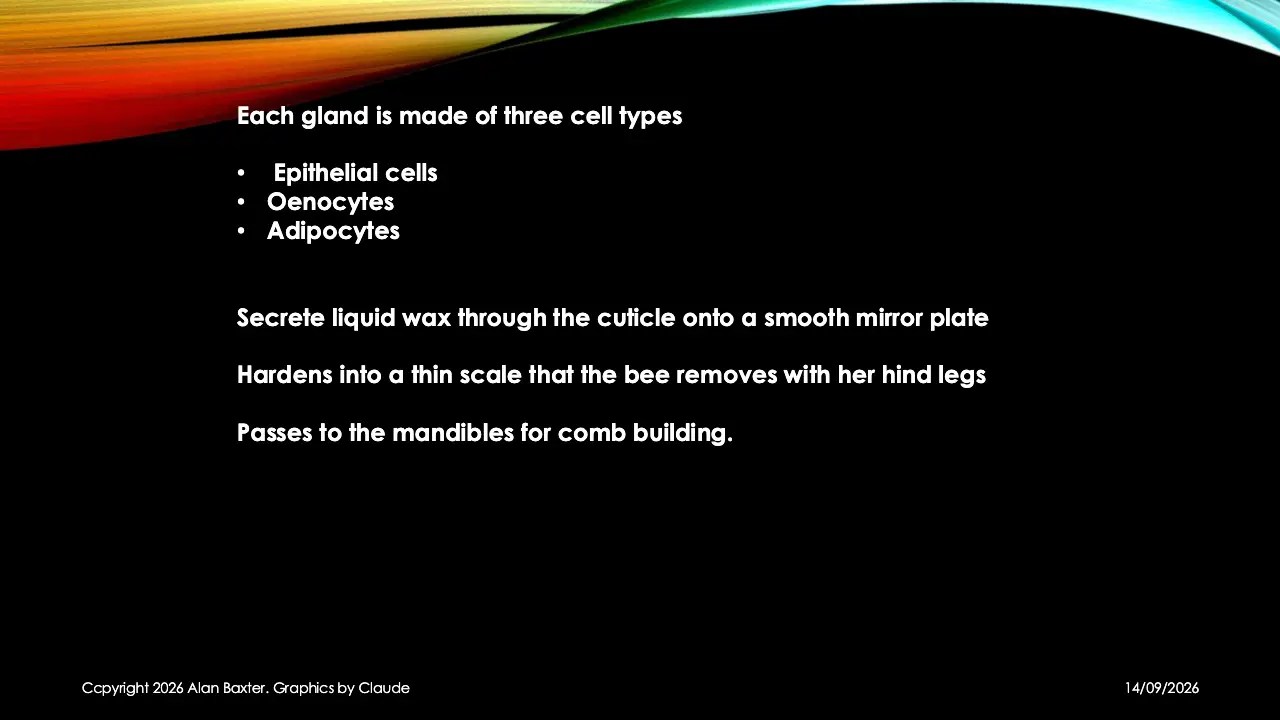
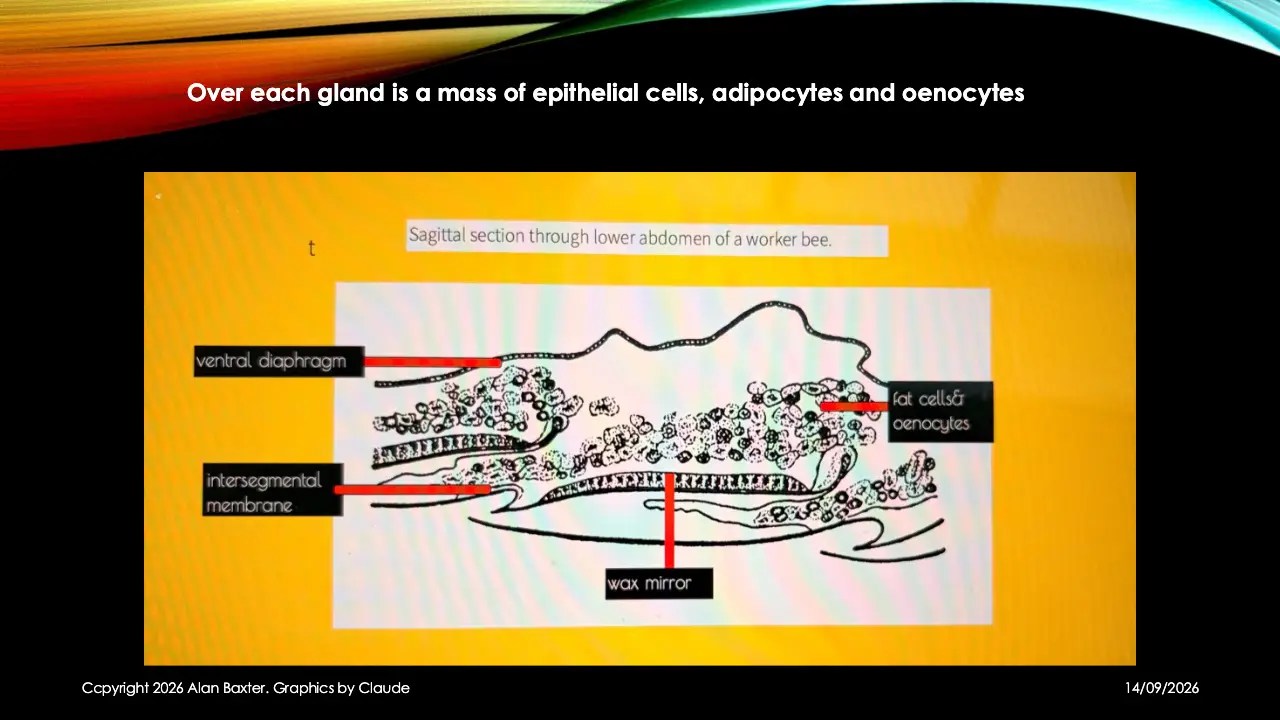
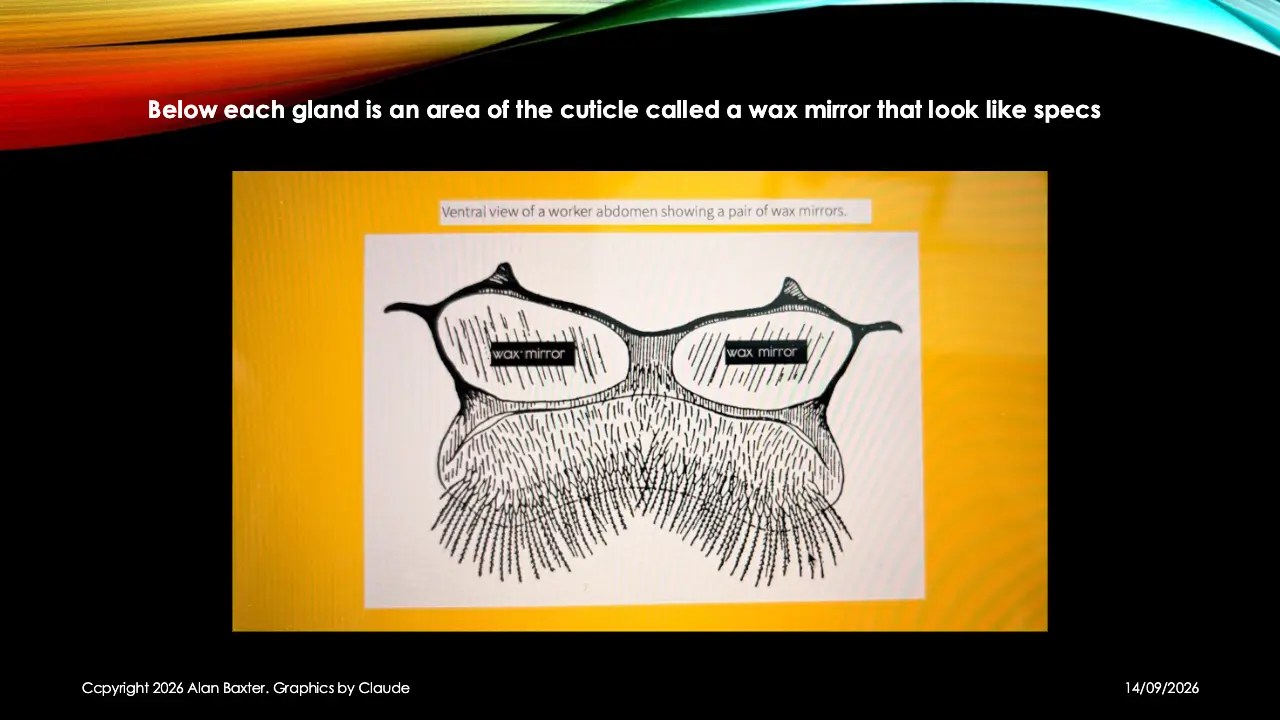
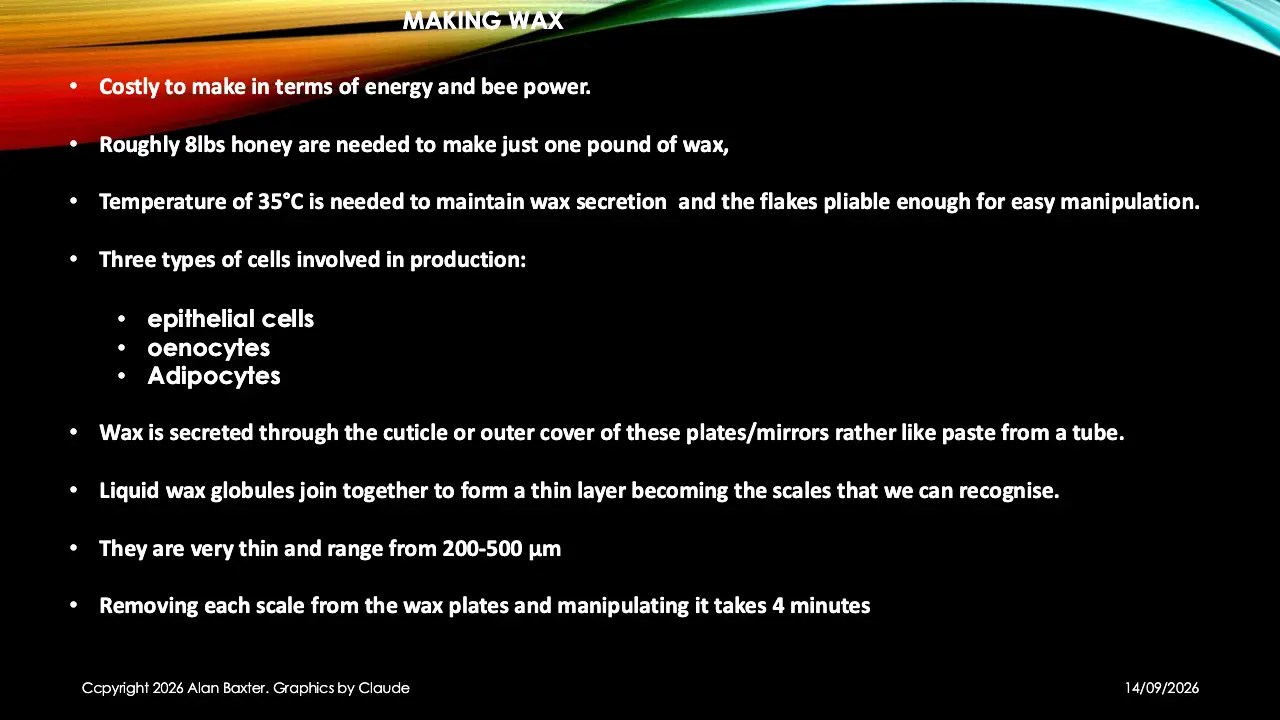
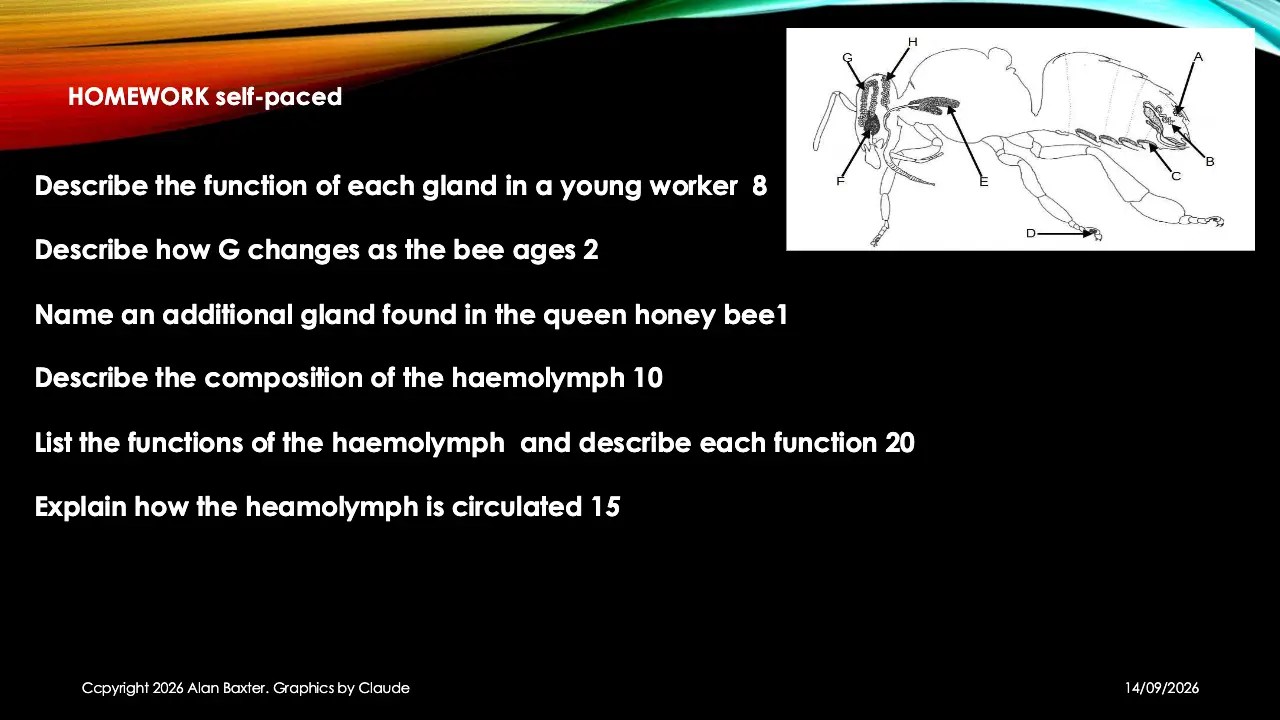
The circulatory system and the exocrine glands
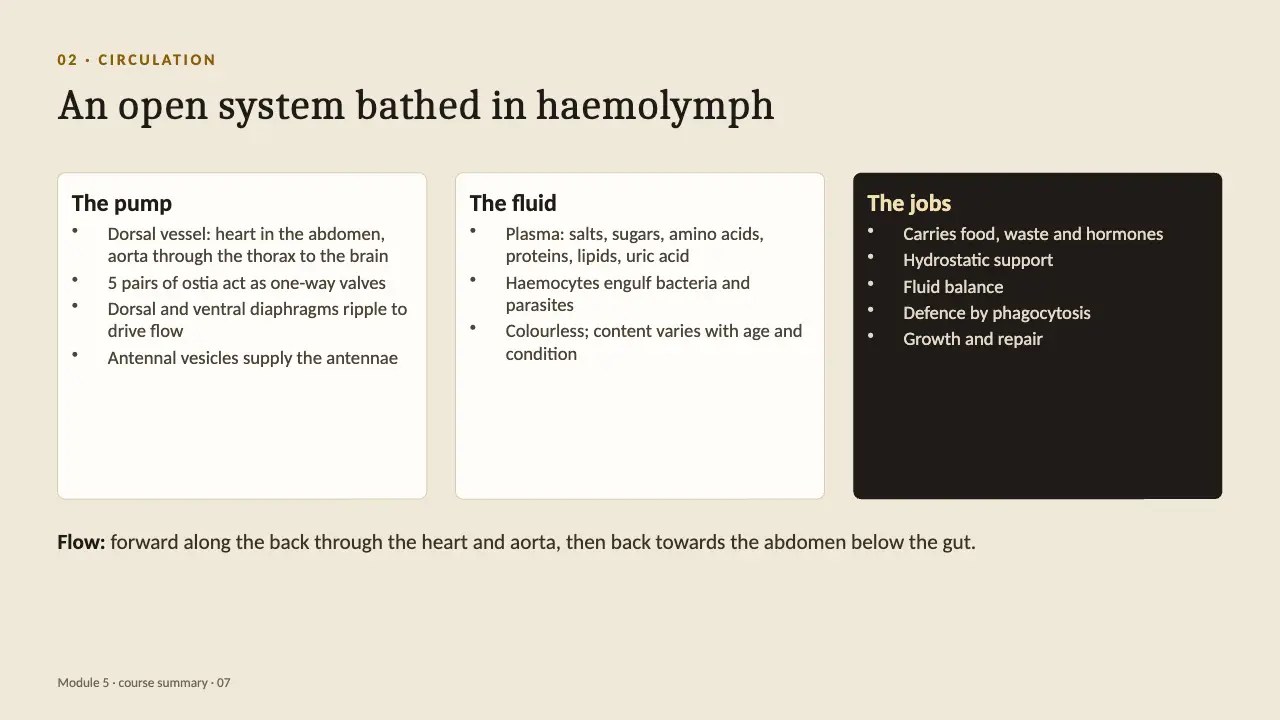
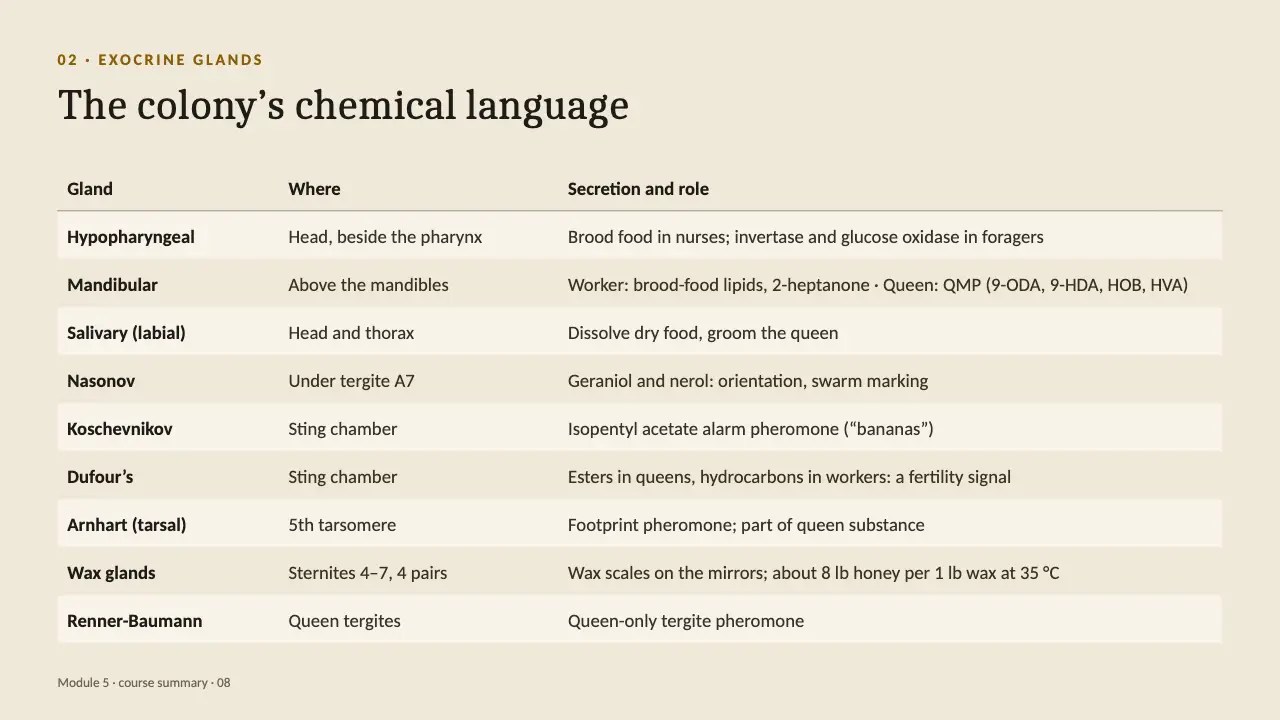
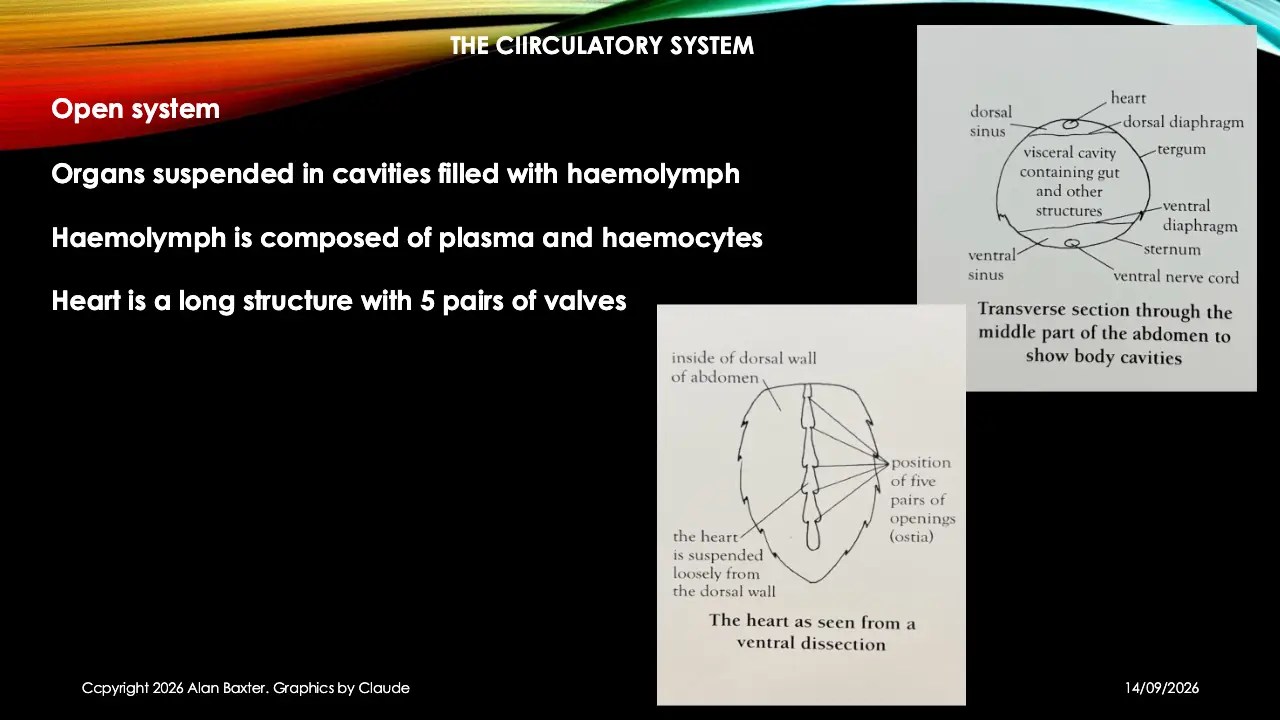
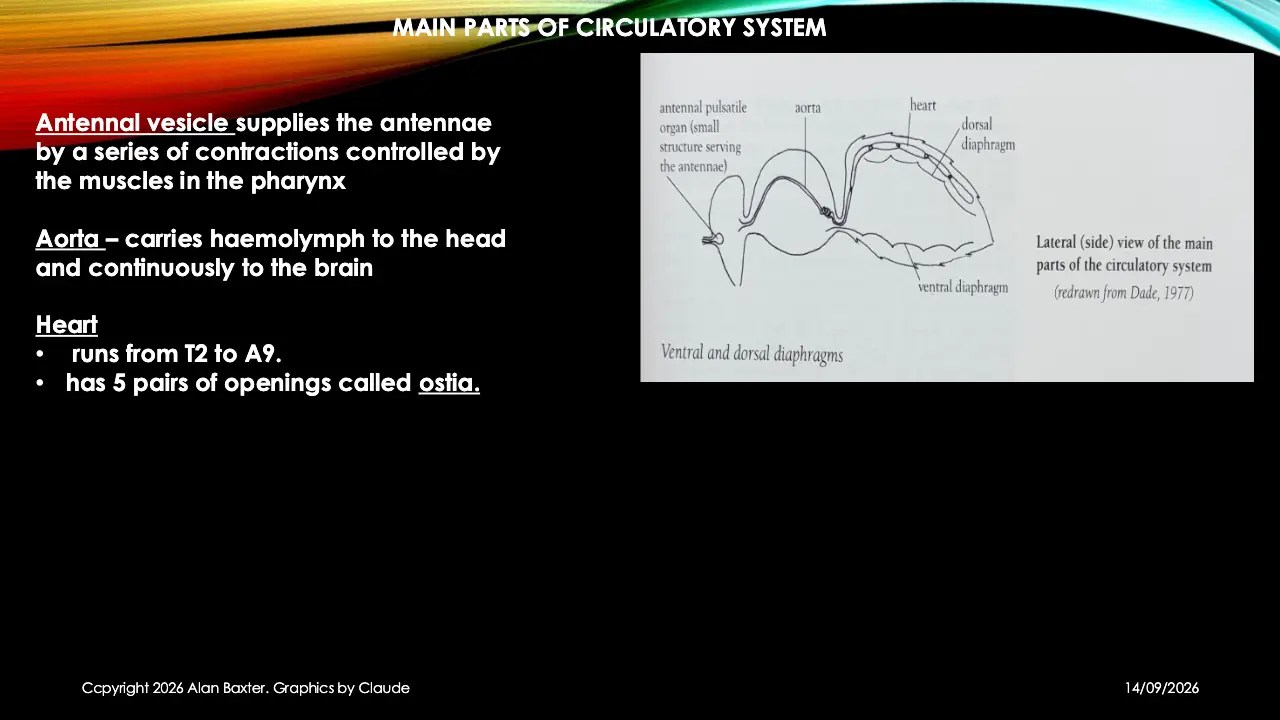
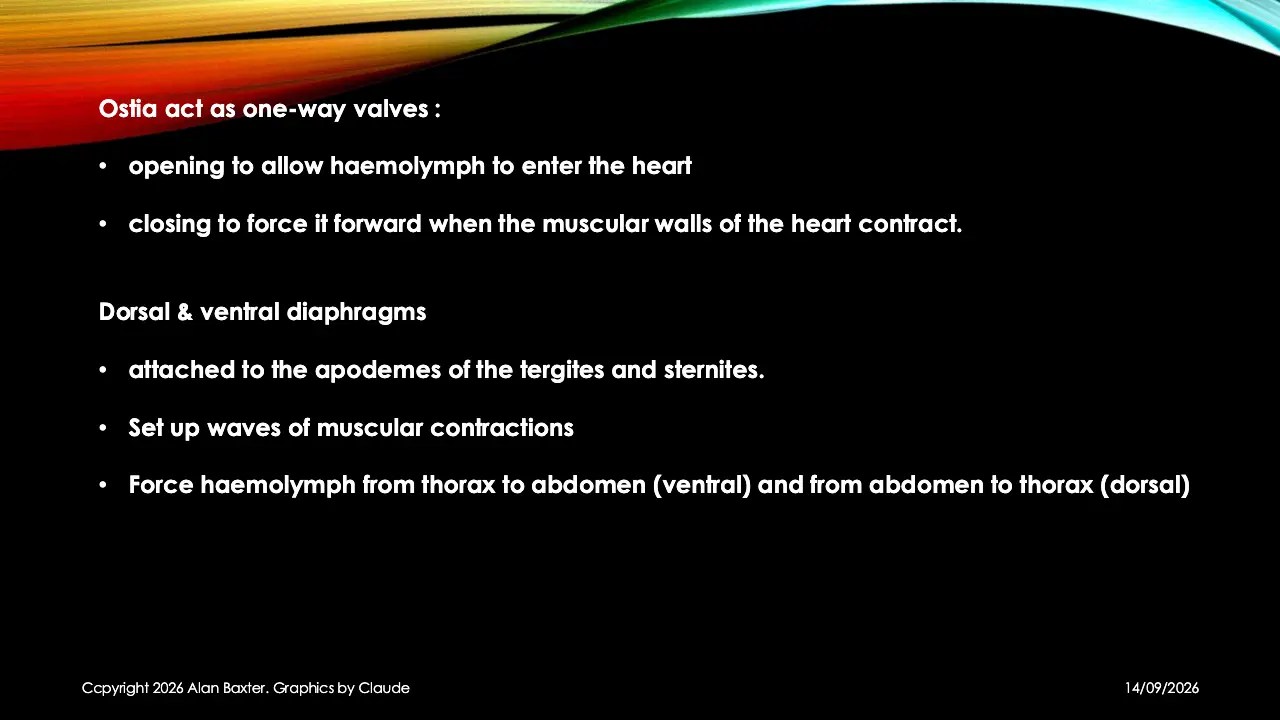
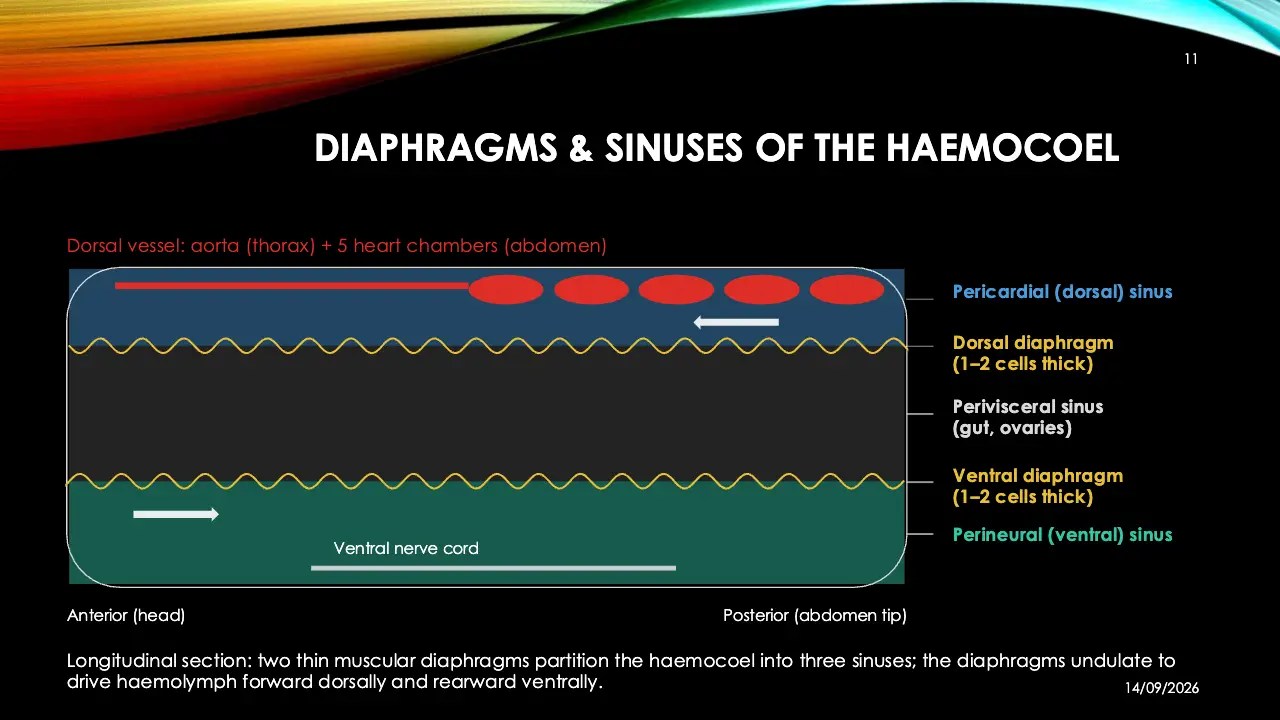
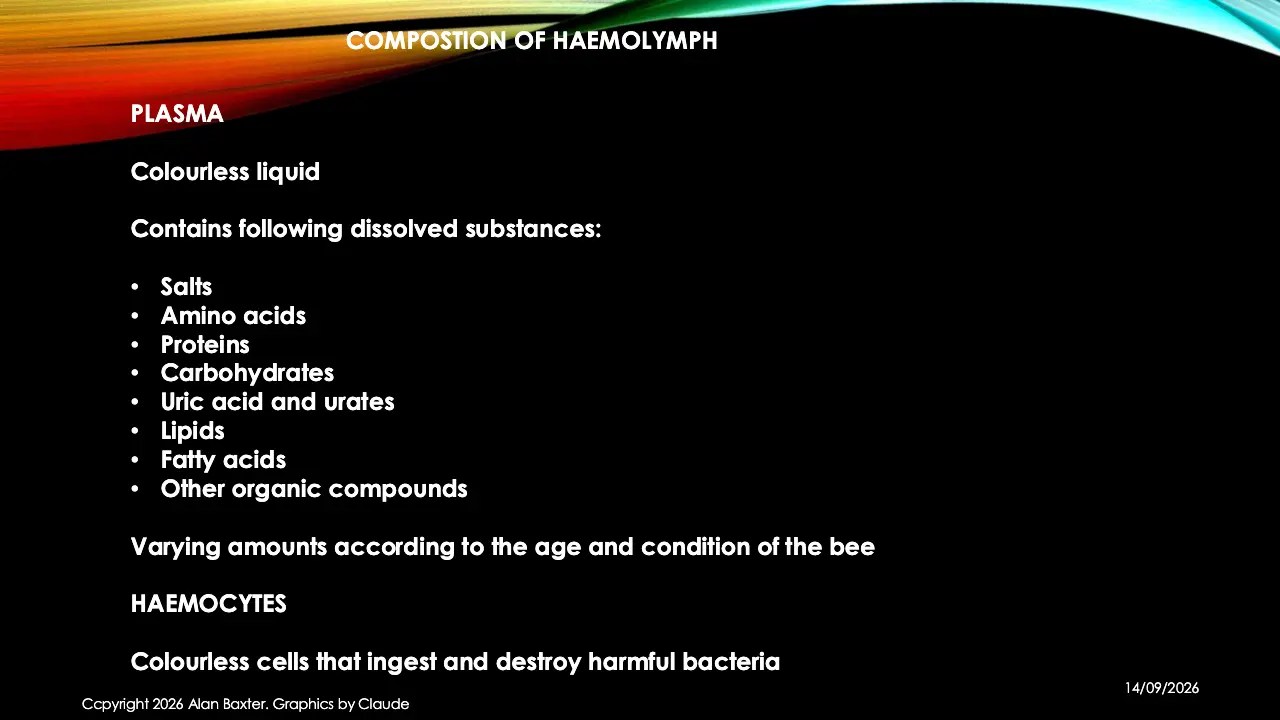
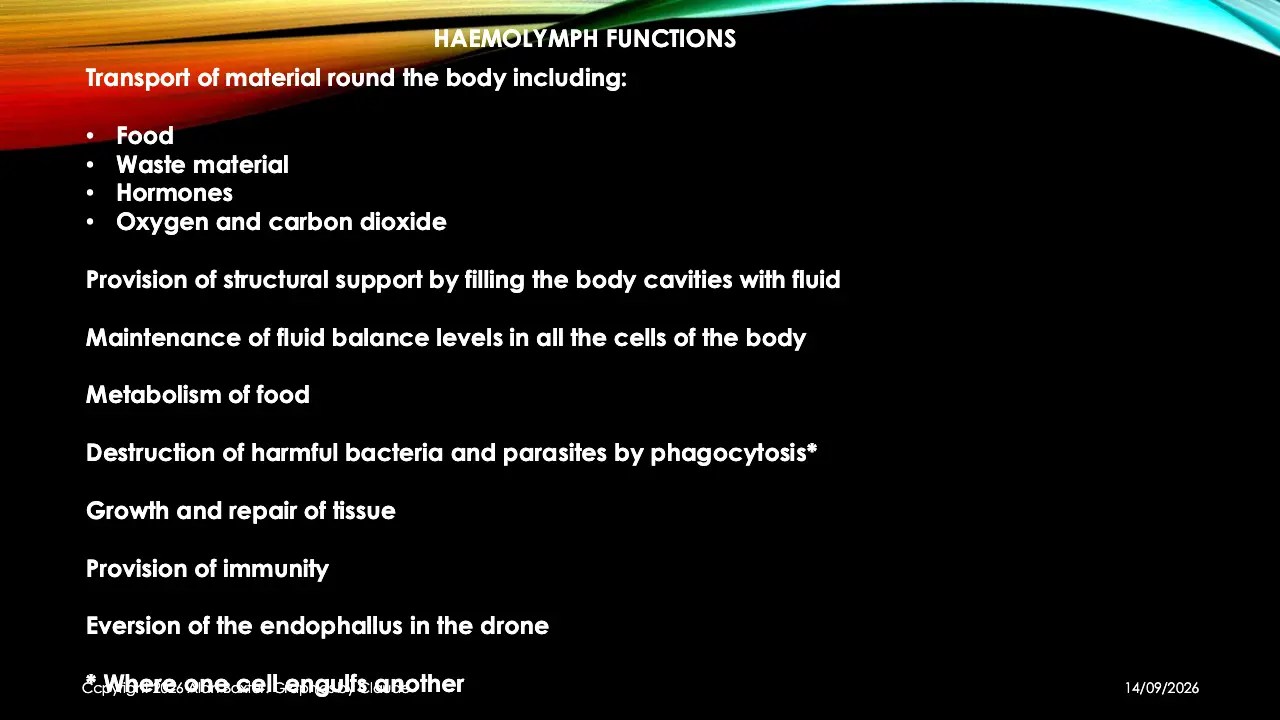
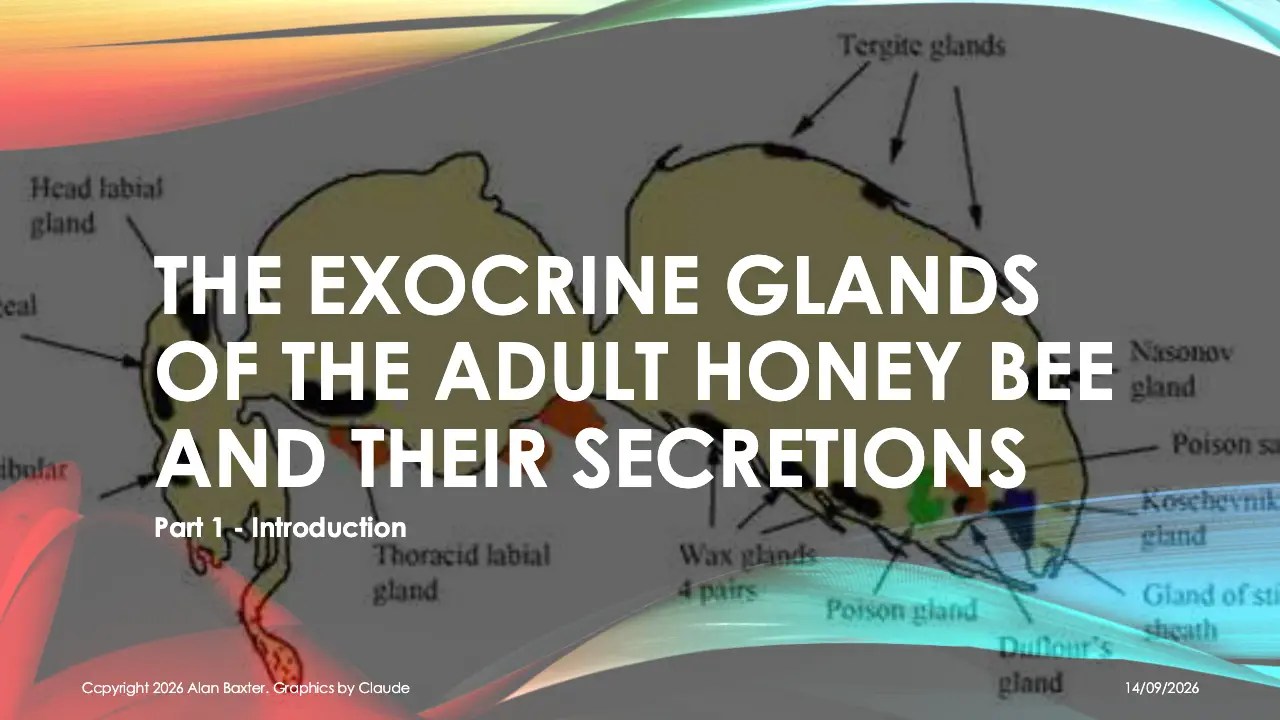
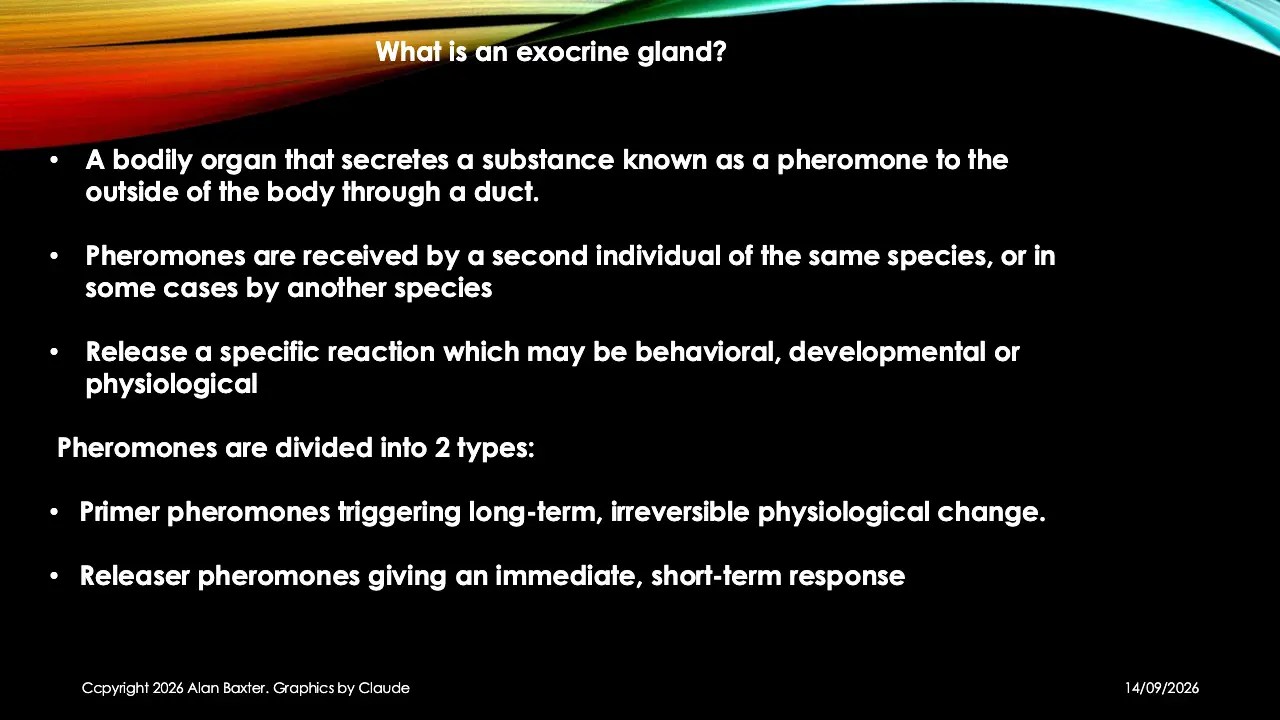
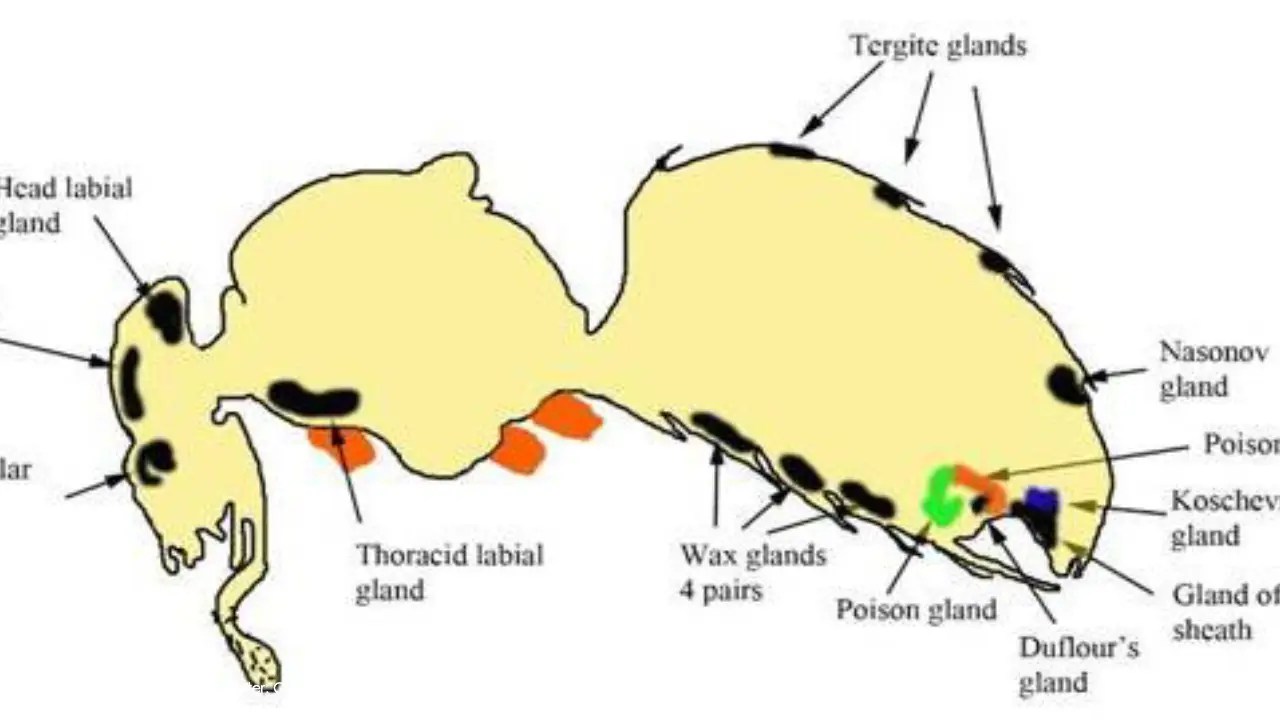
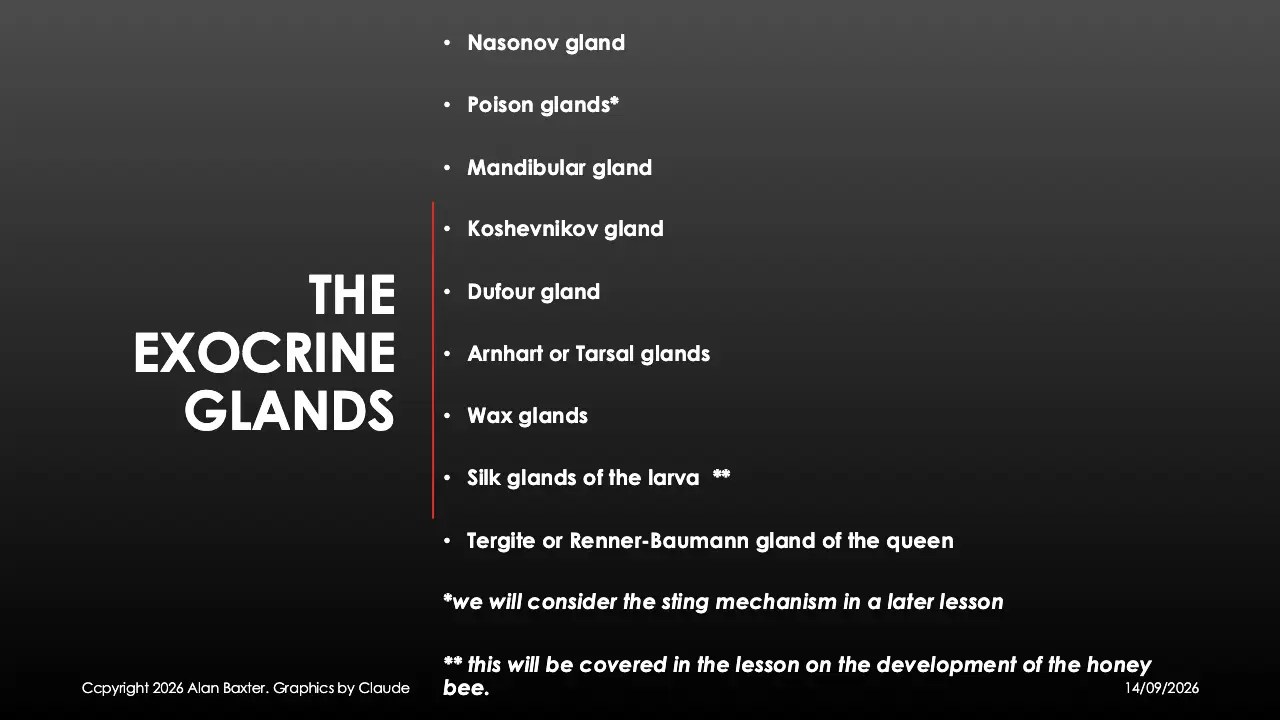
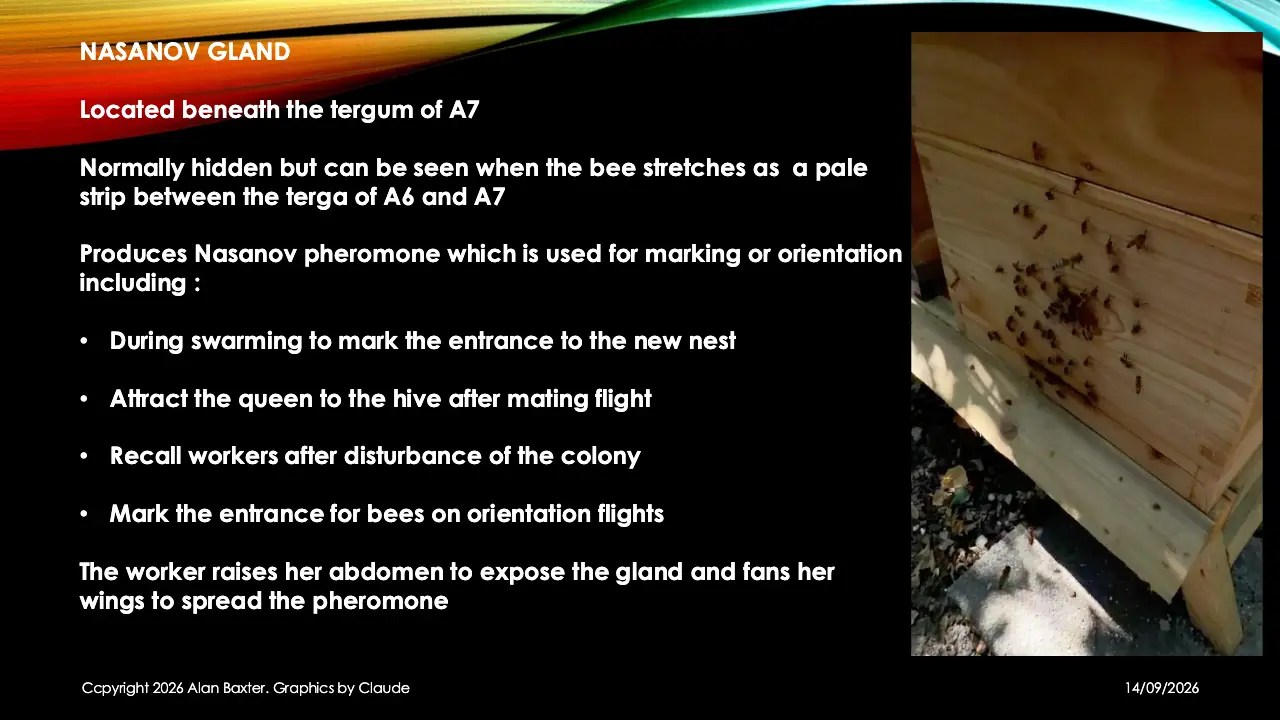
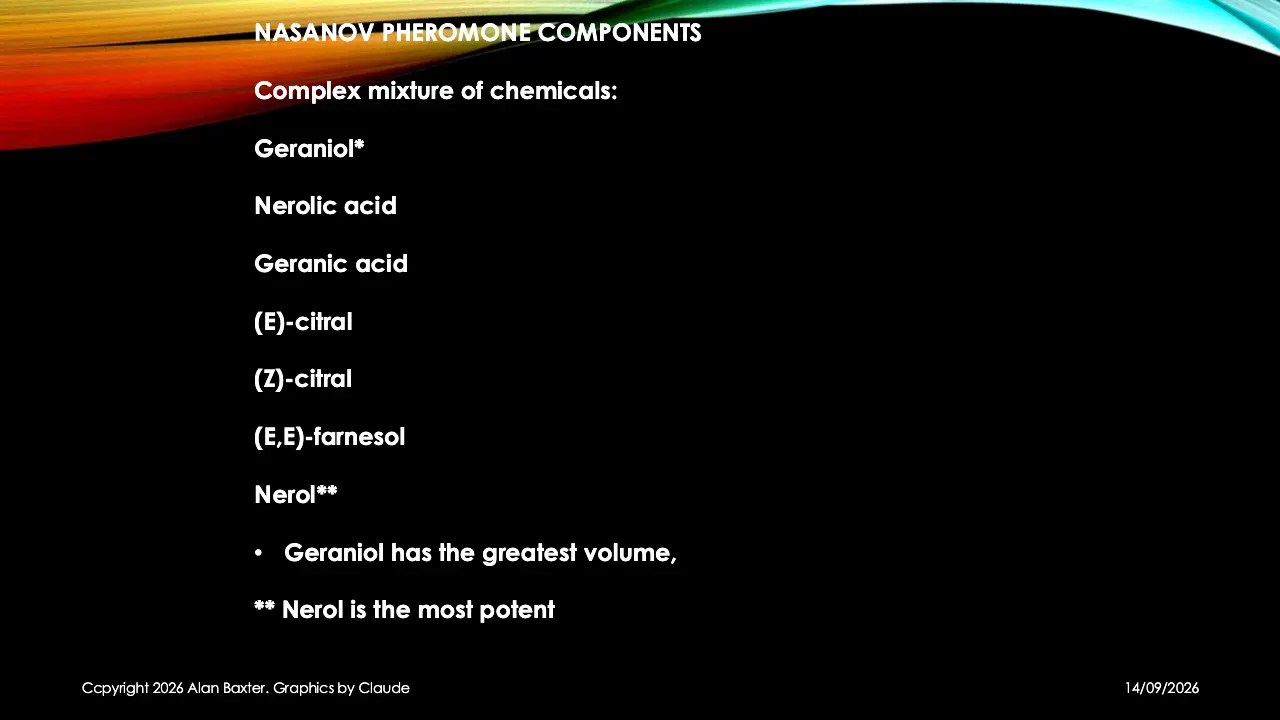
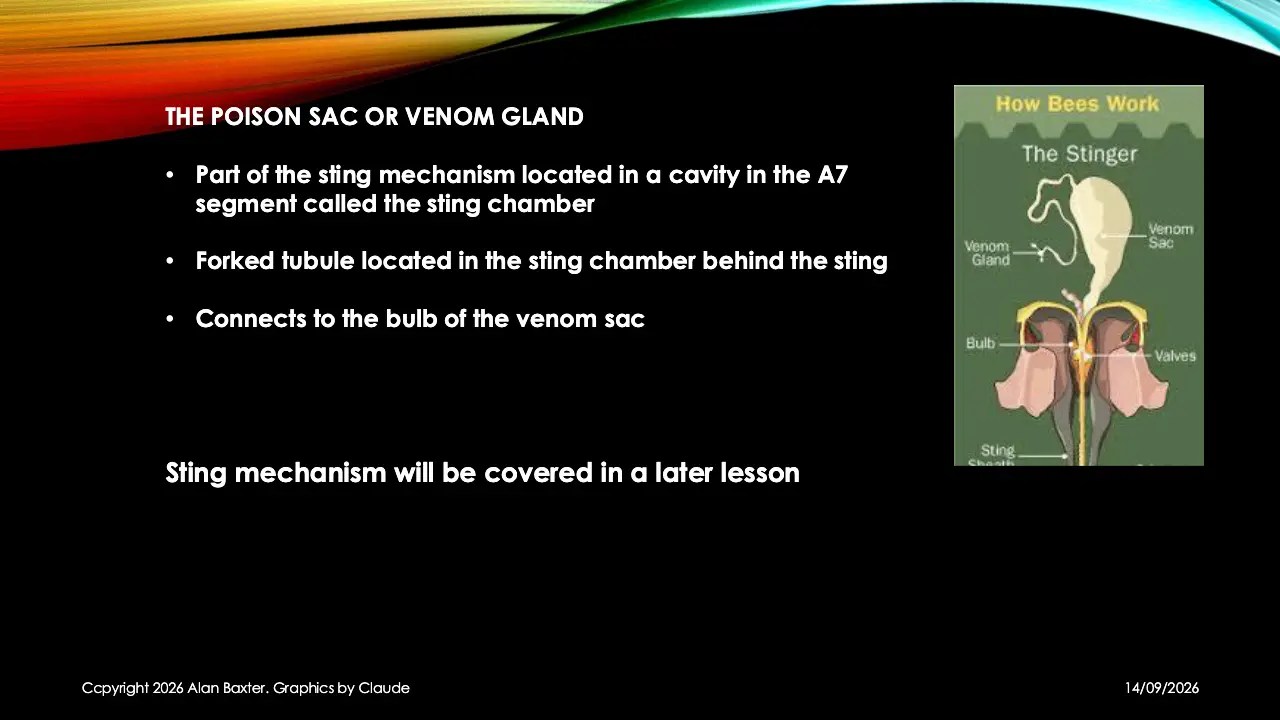
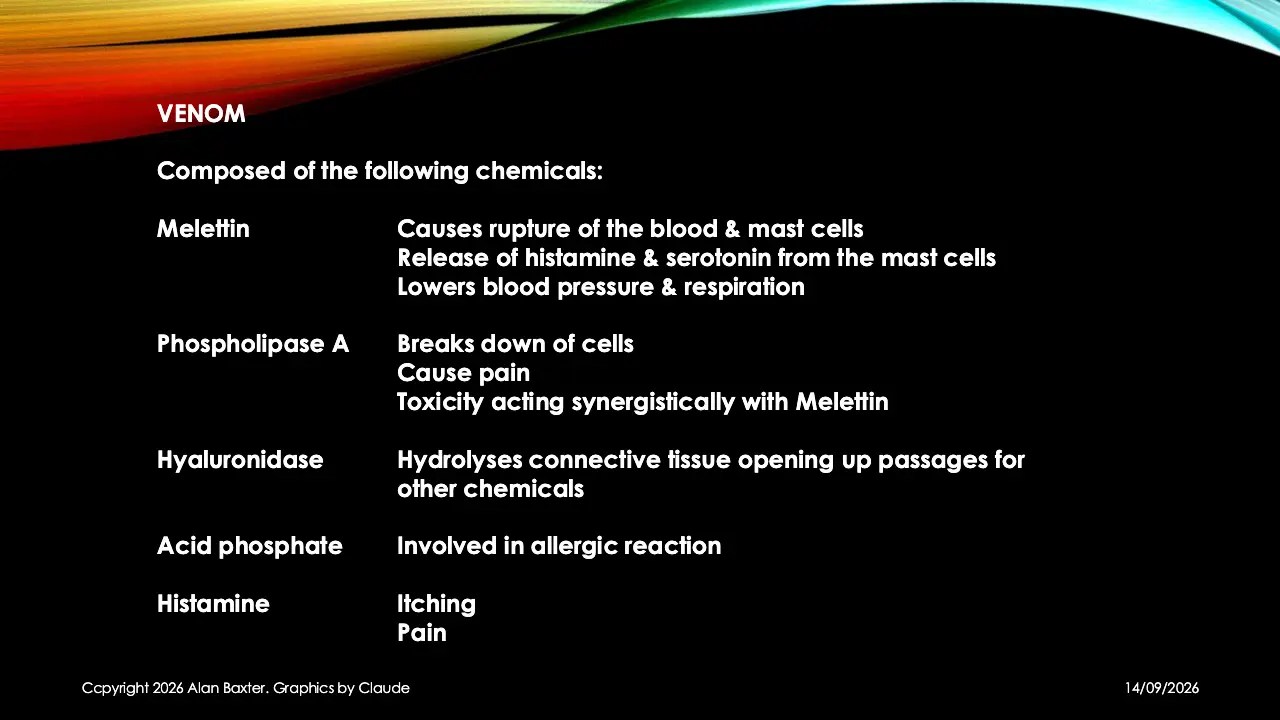
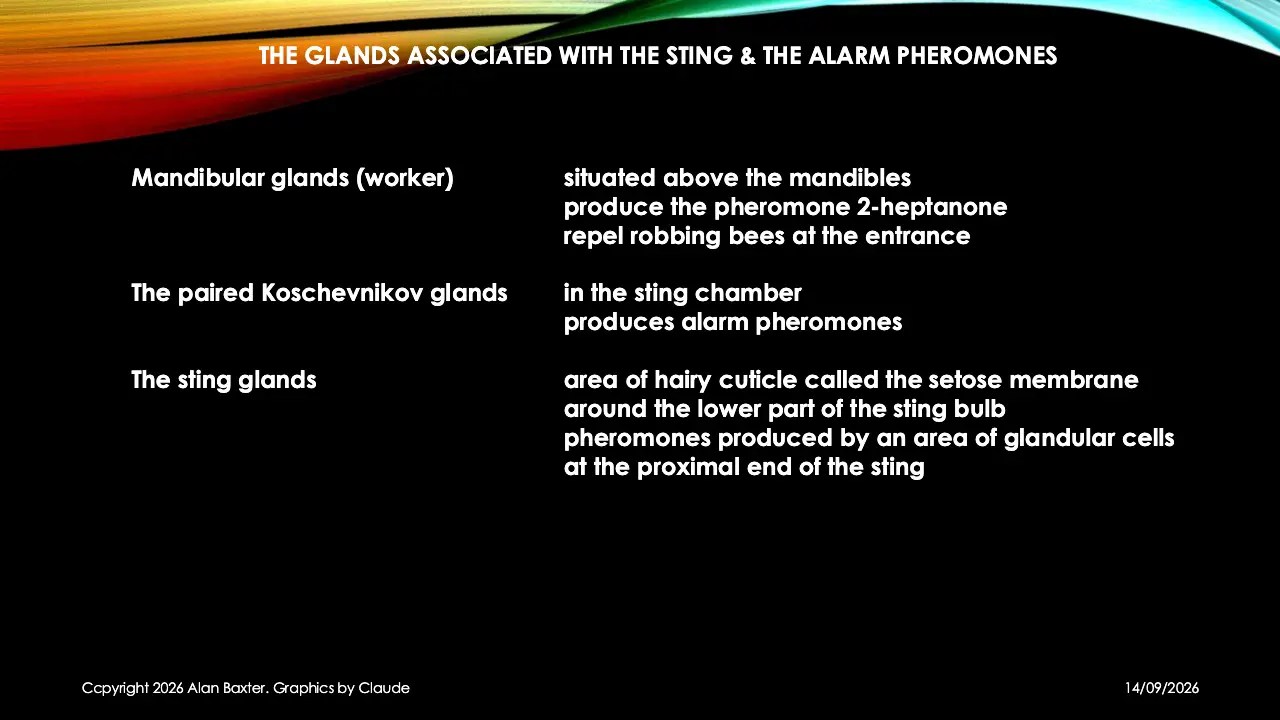
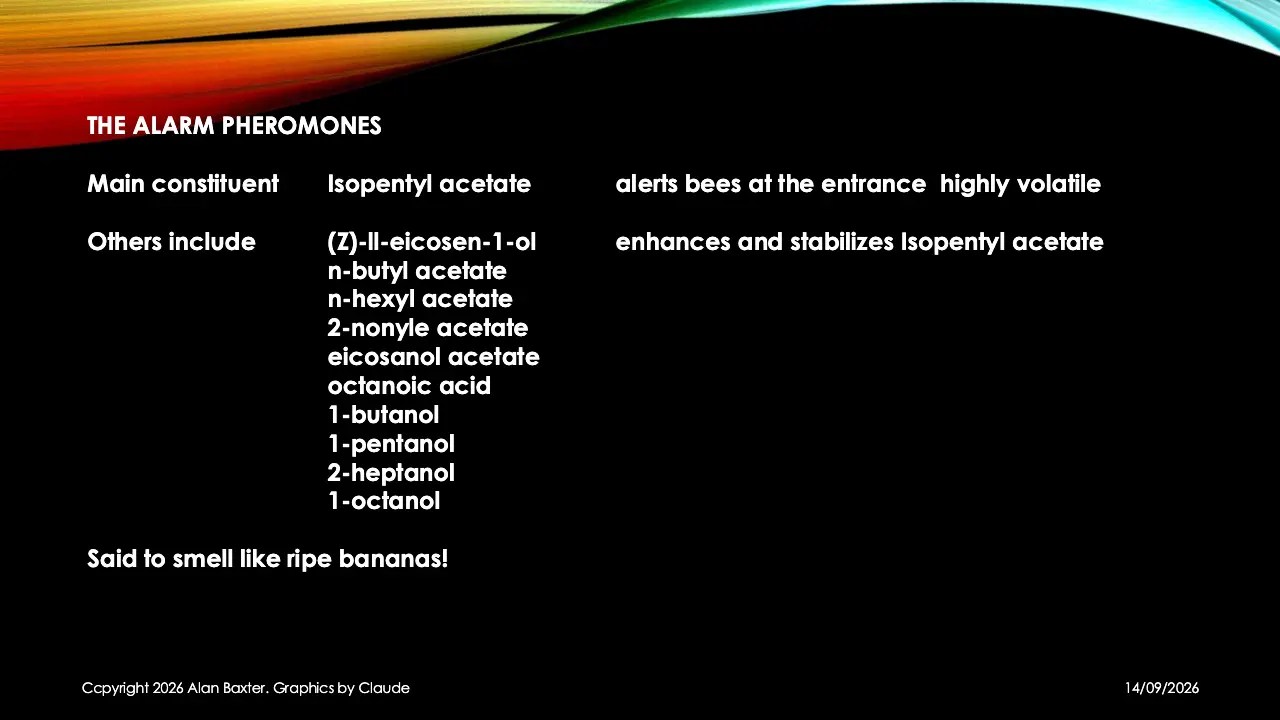
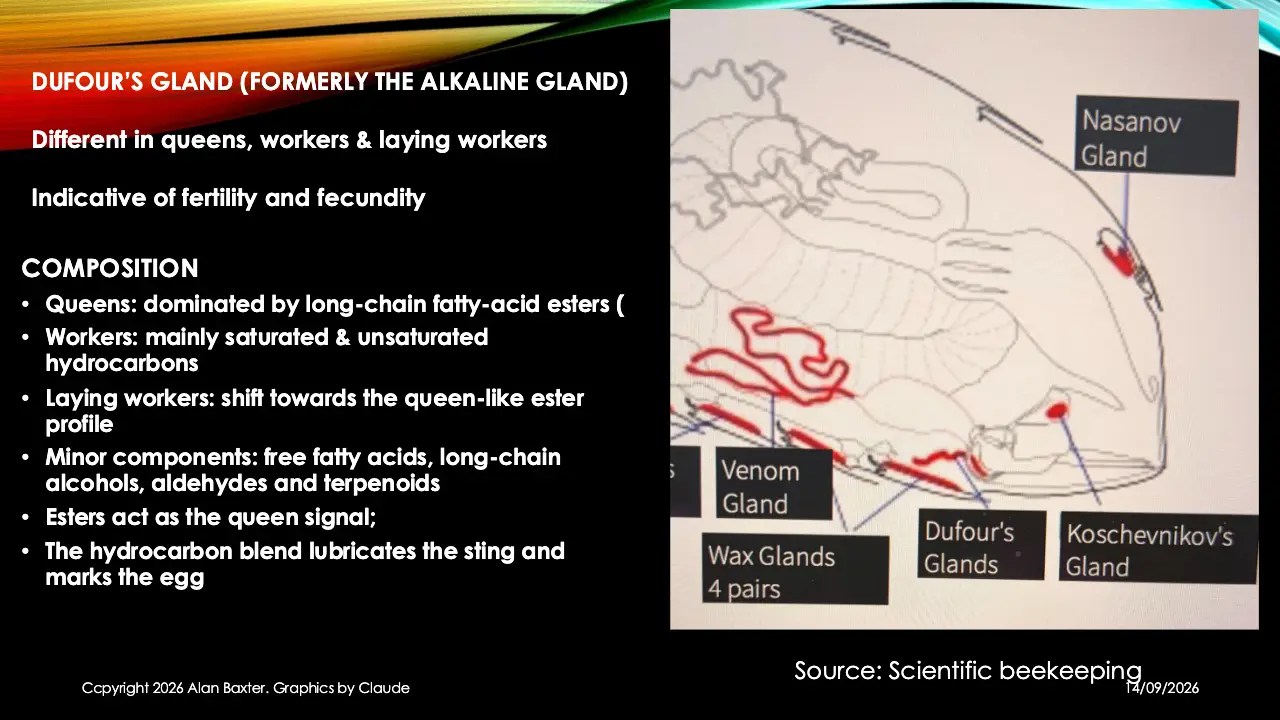
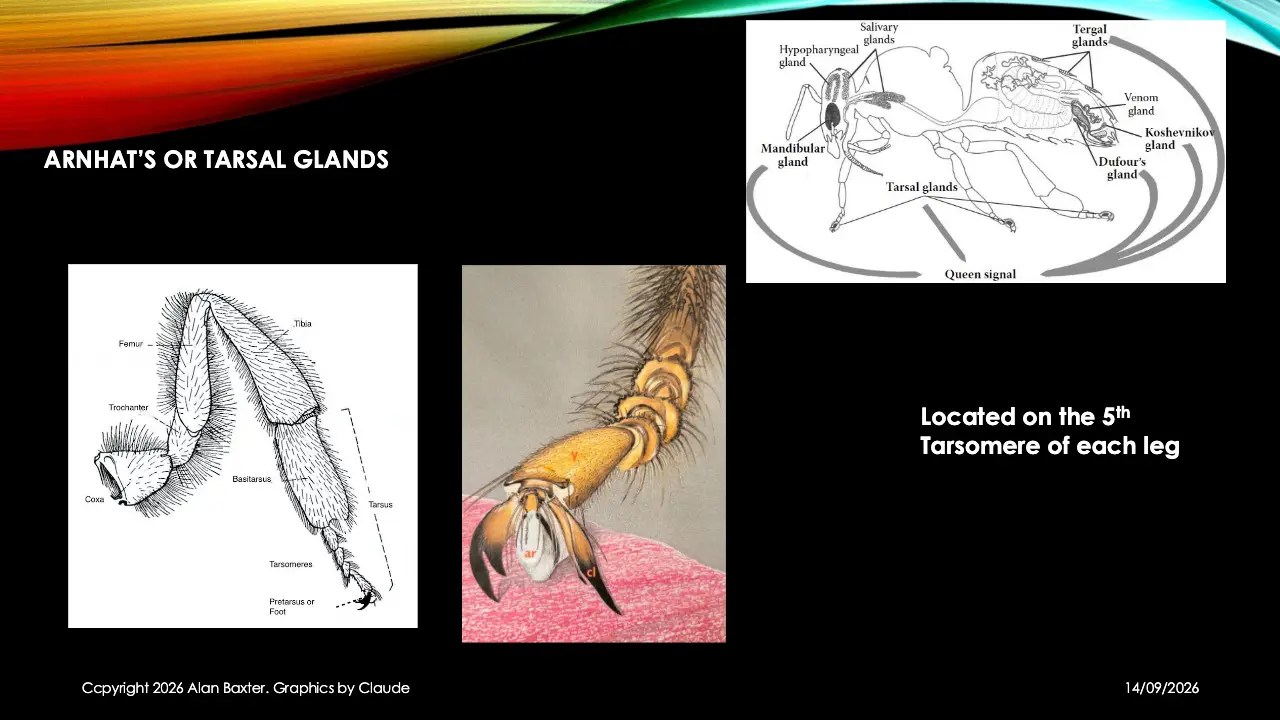
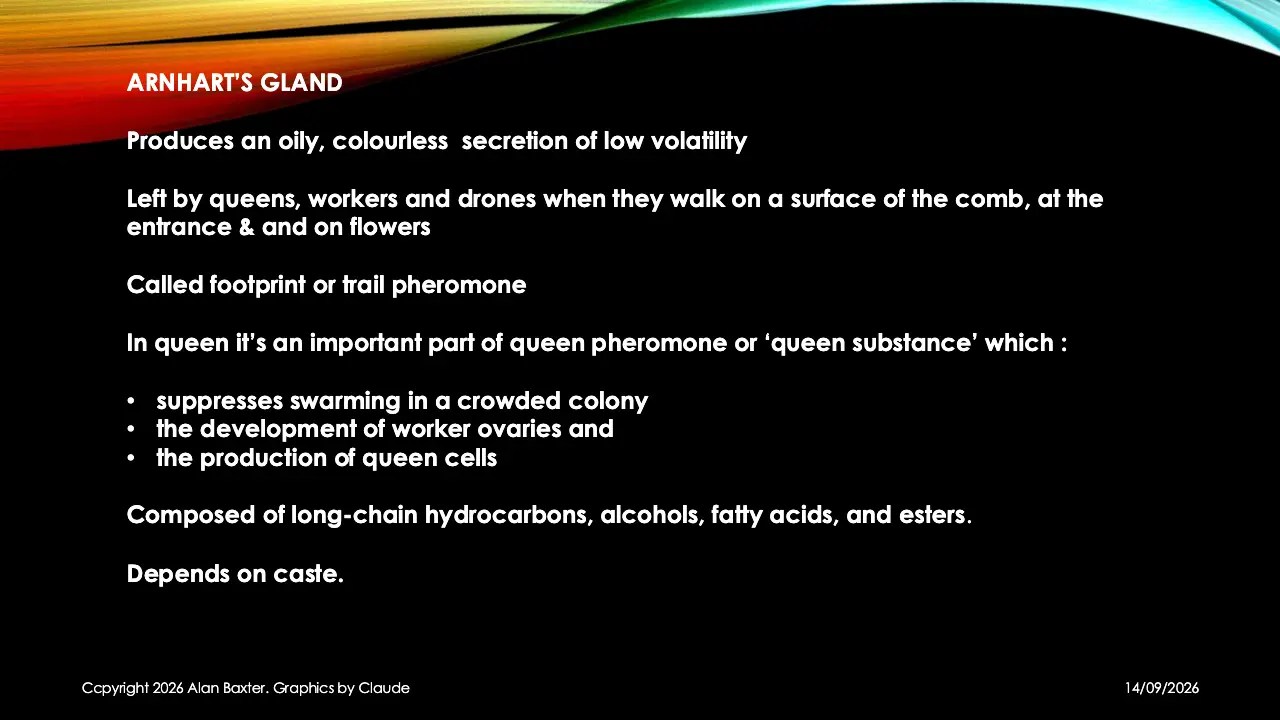
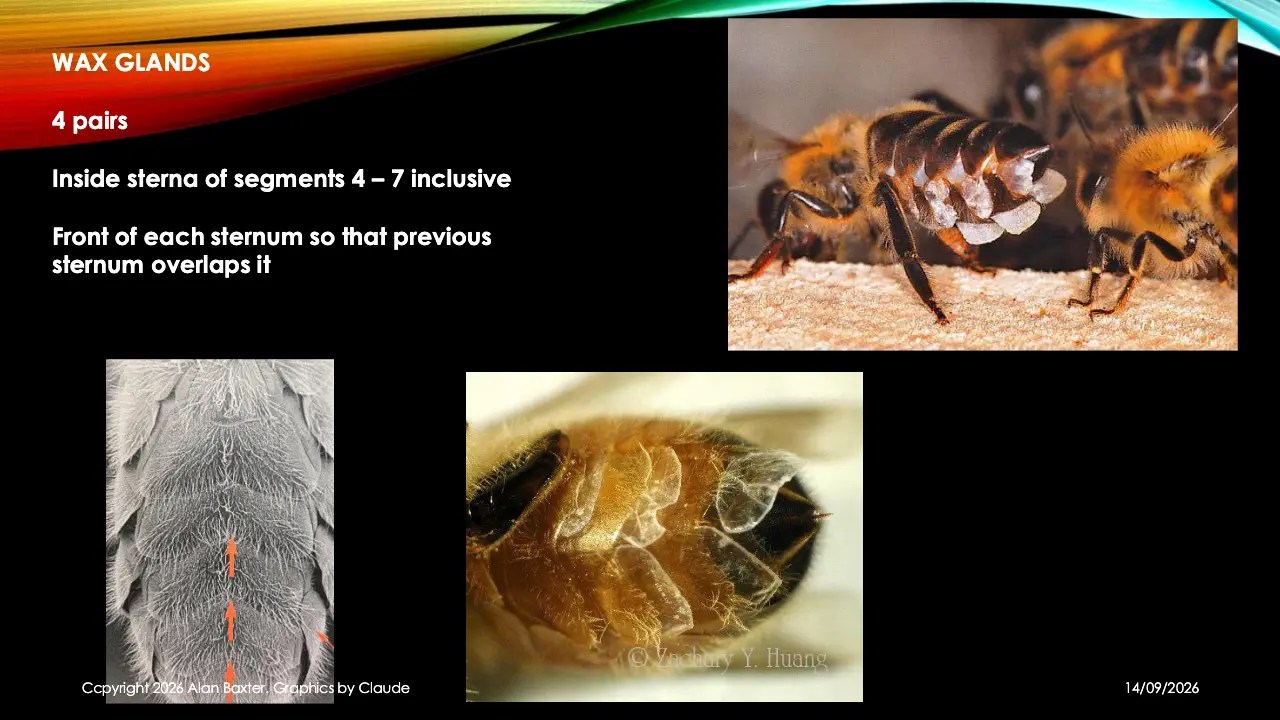
The heart, dorsal and ventral diaphragms and haemolymph; the exocrine glands of queen, worker and drone, their secretions and pheromones. Download the slides (PDF)



















Session 4
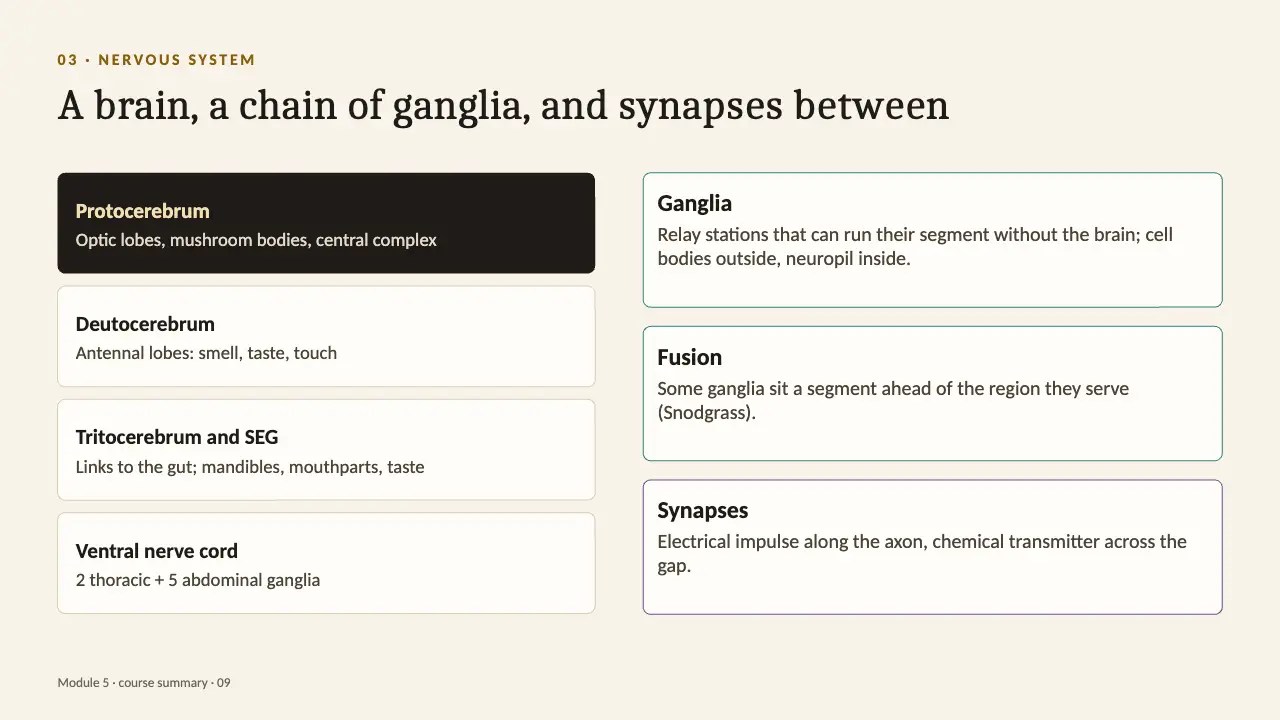
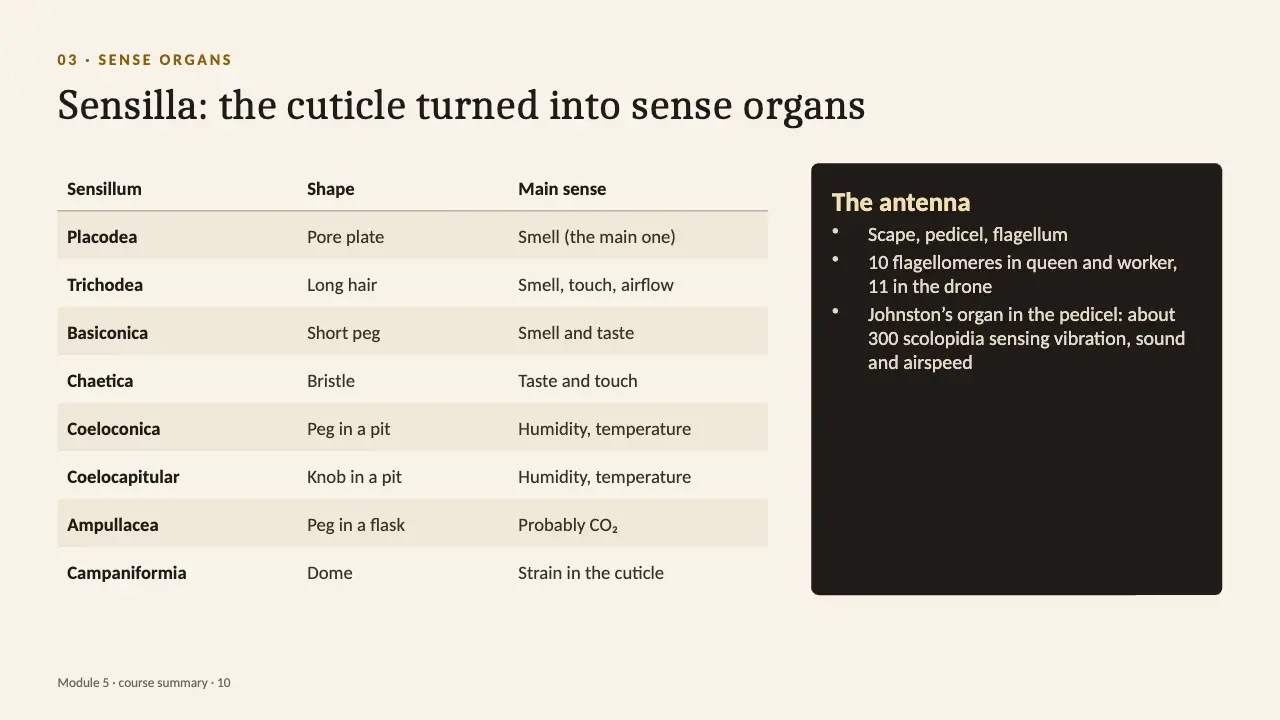
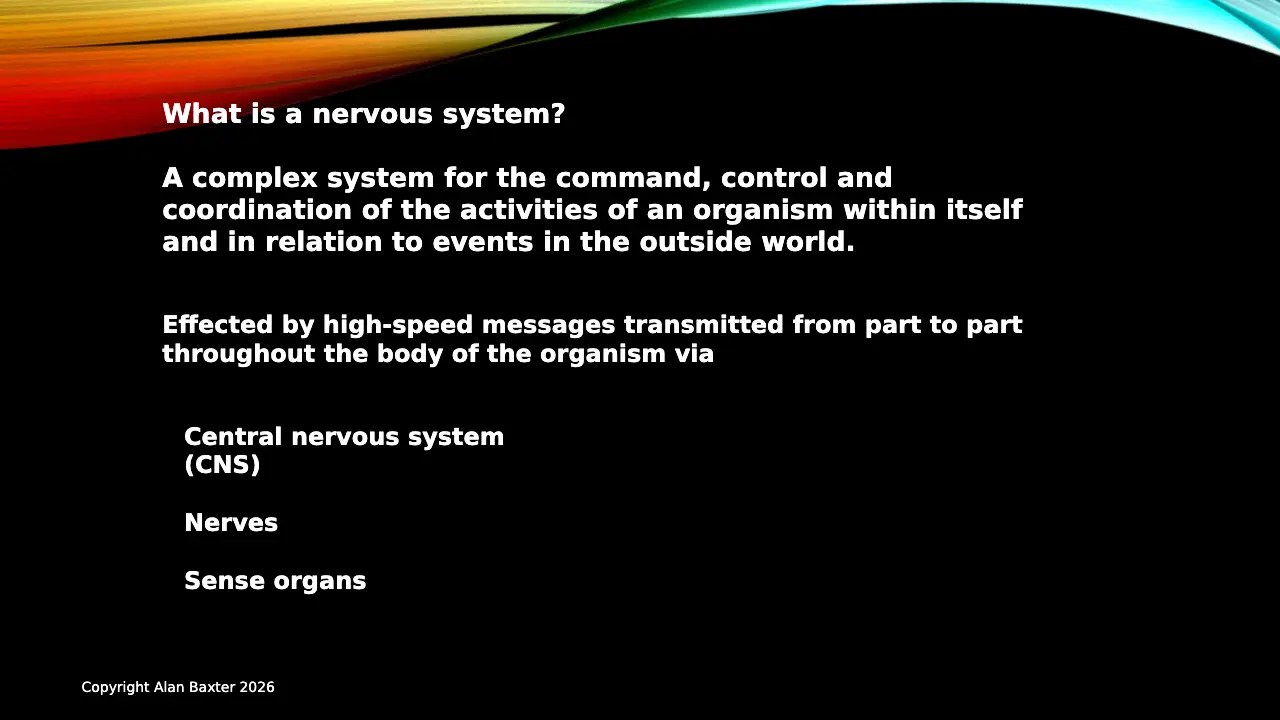
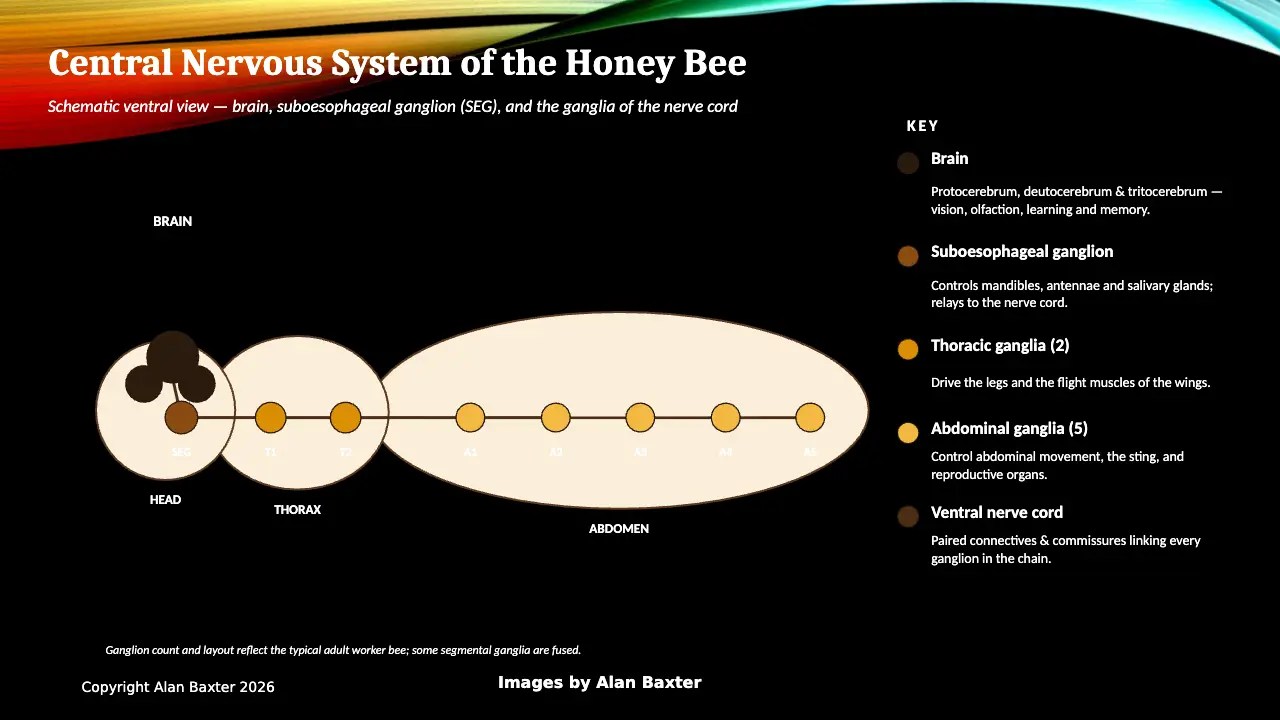
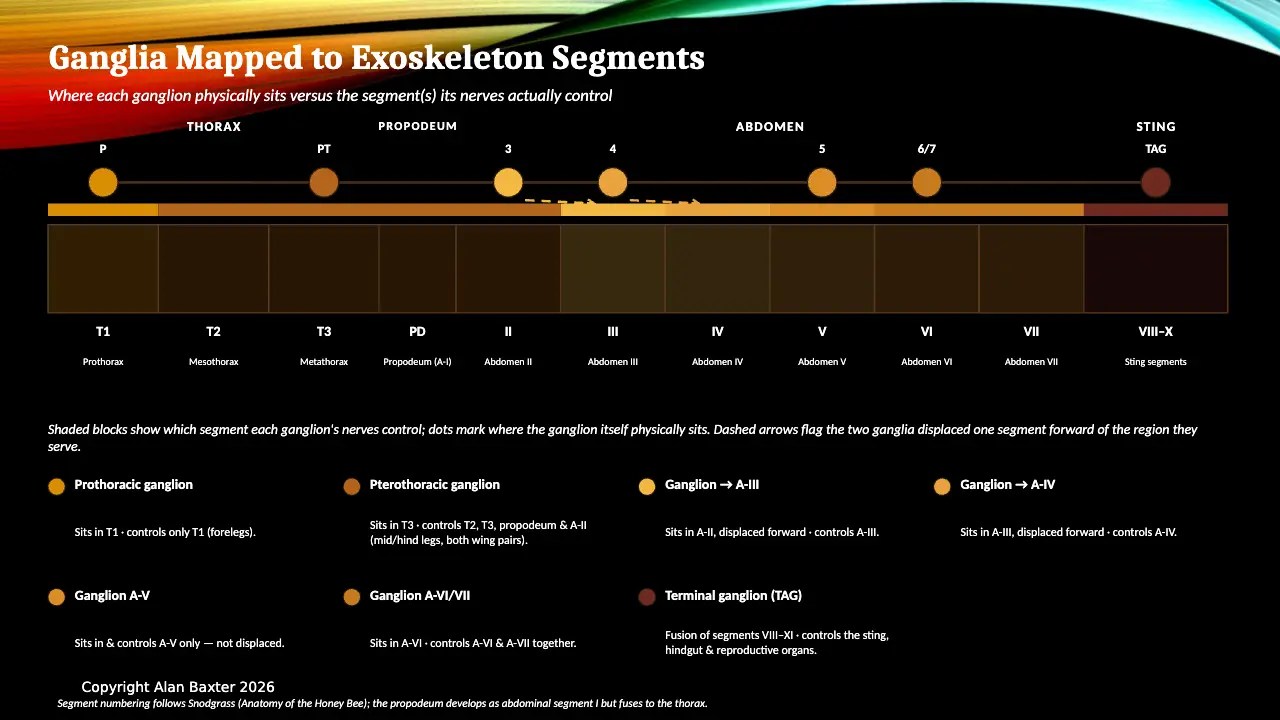
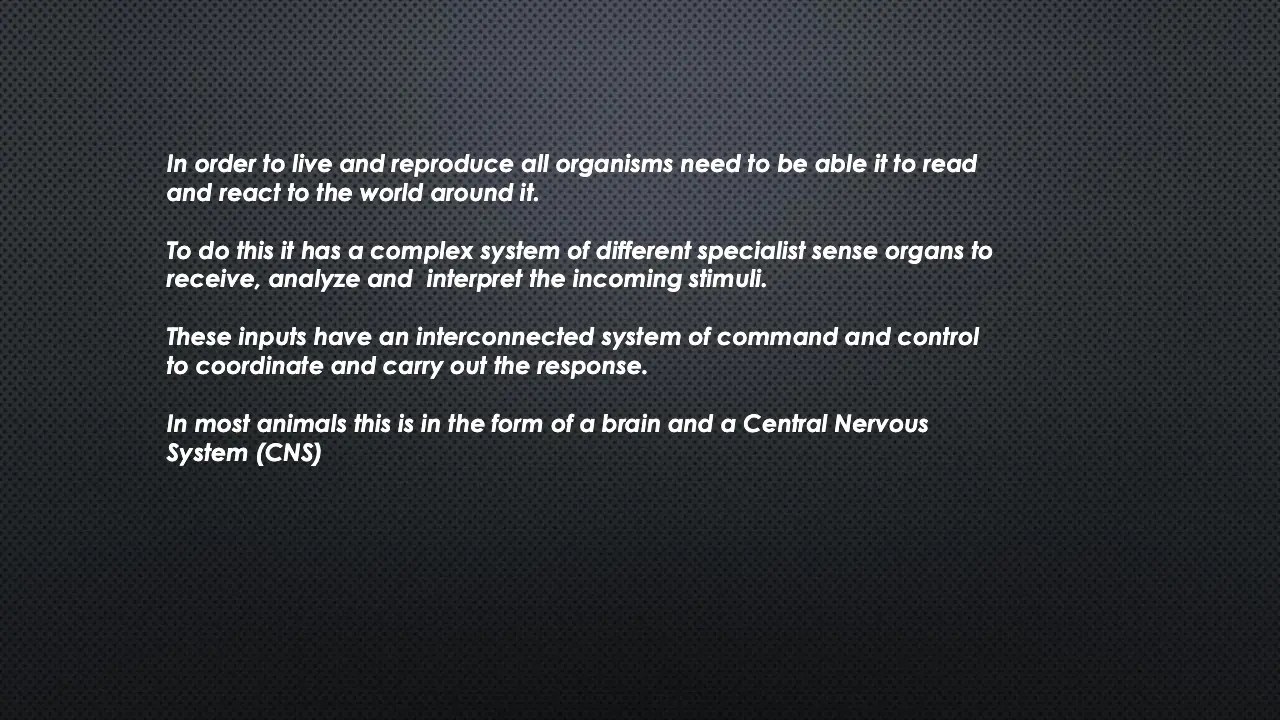
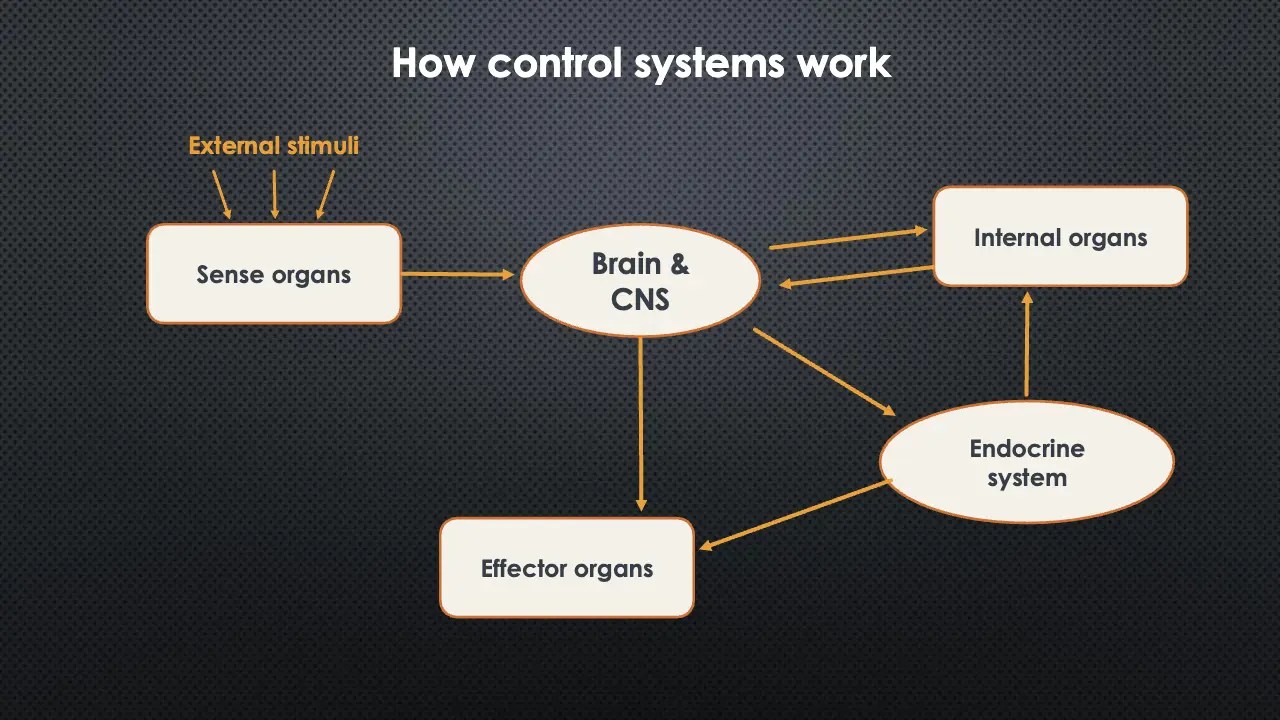
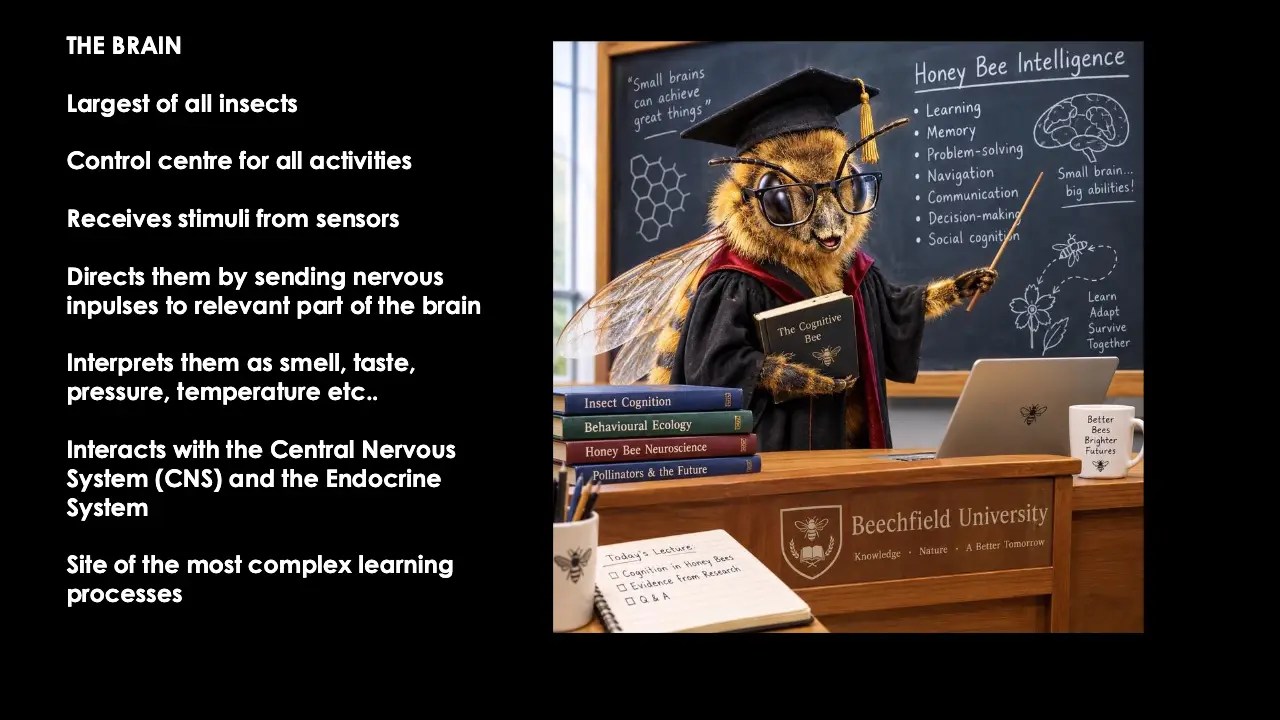
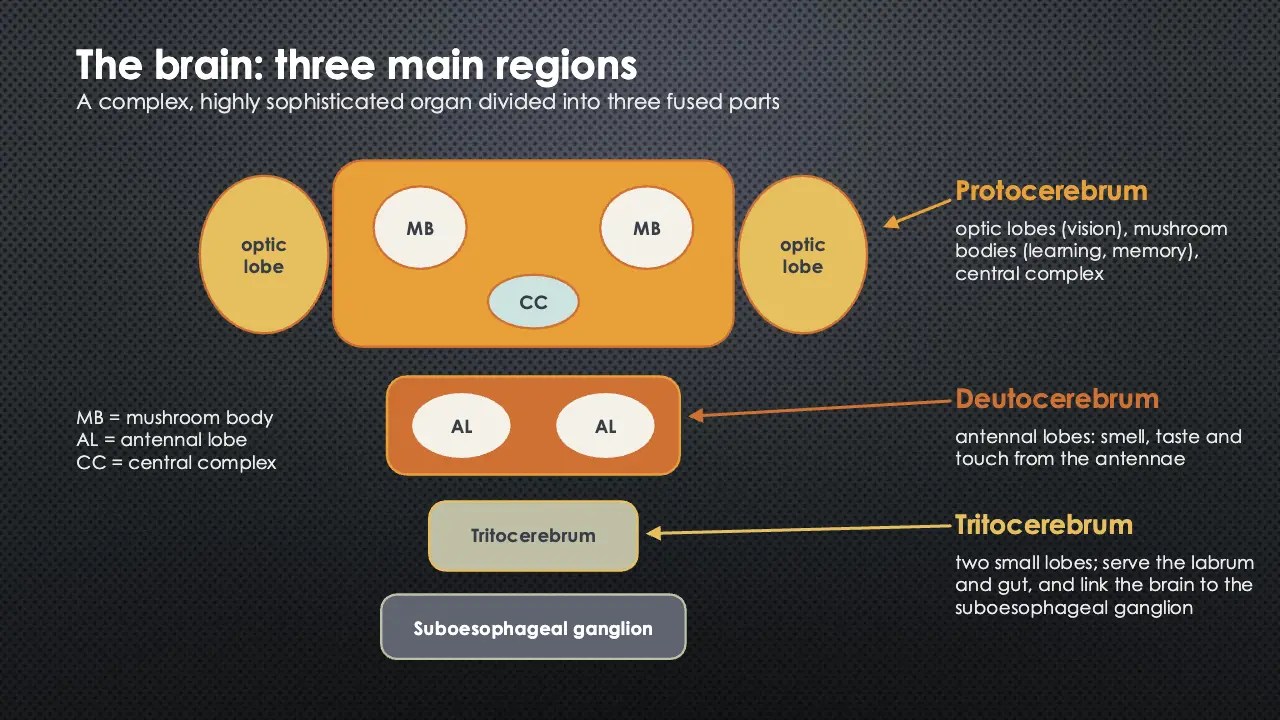
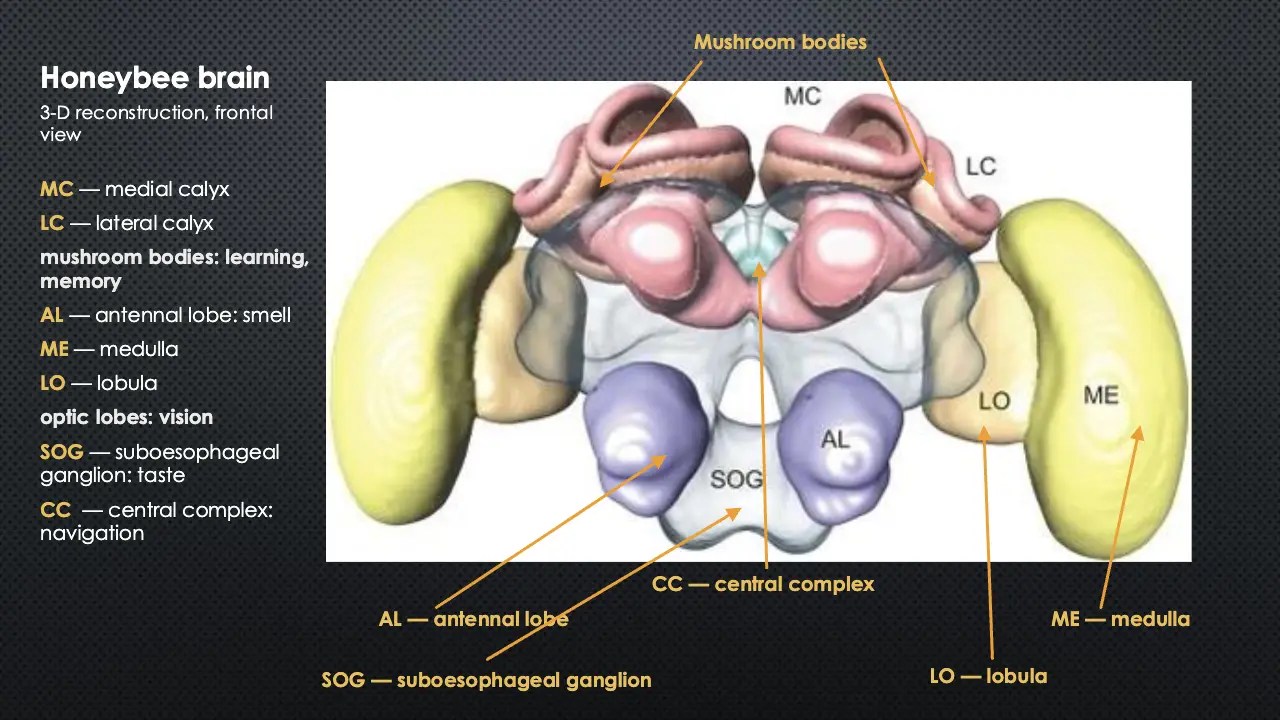
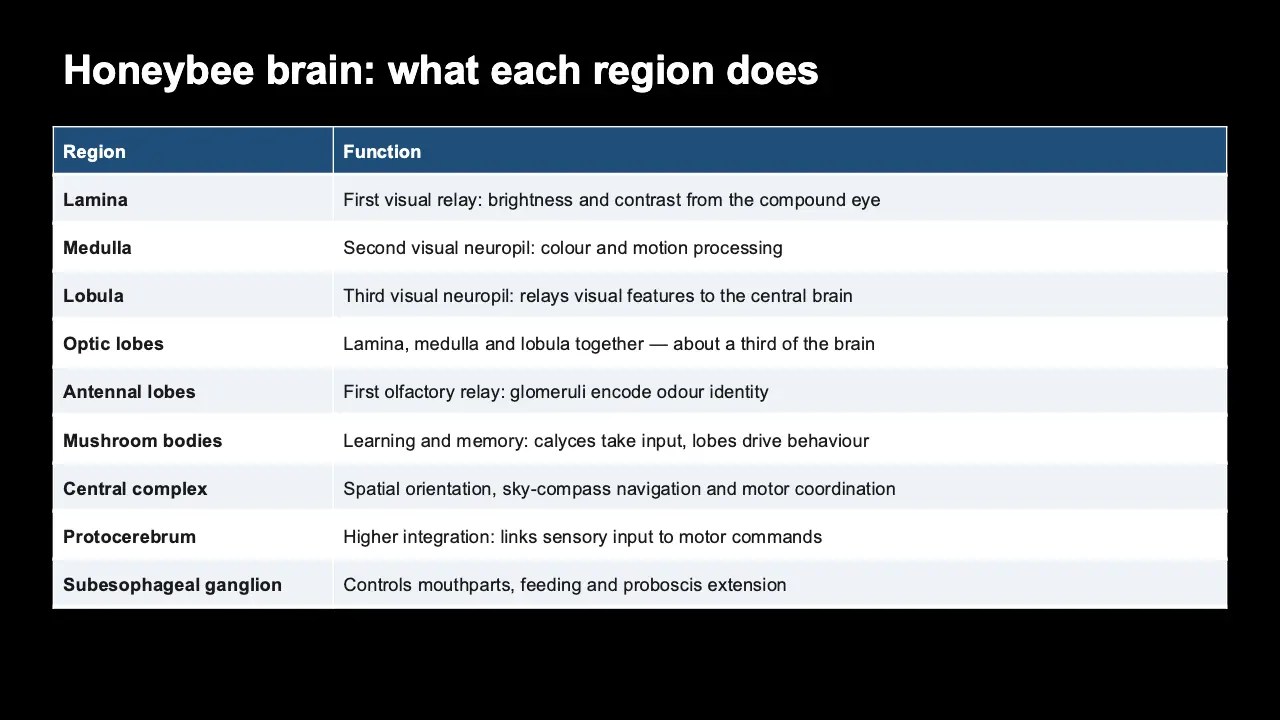
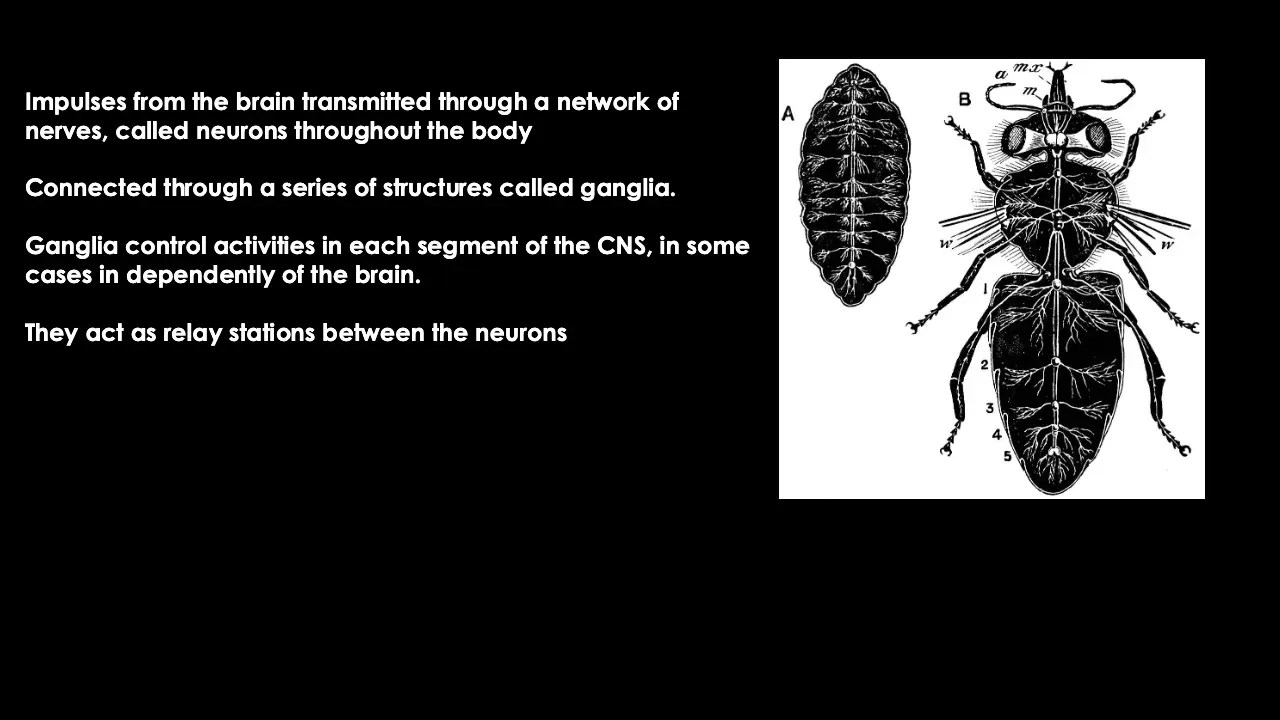
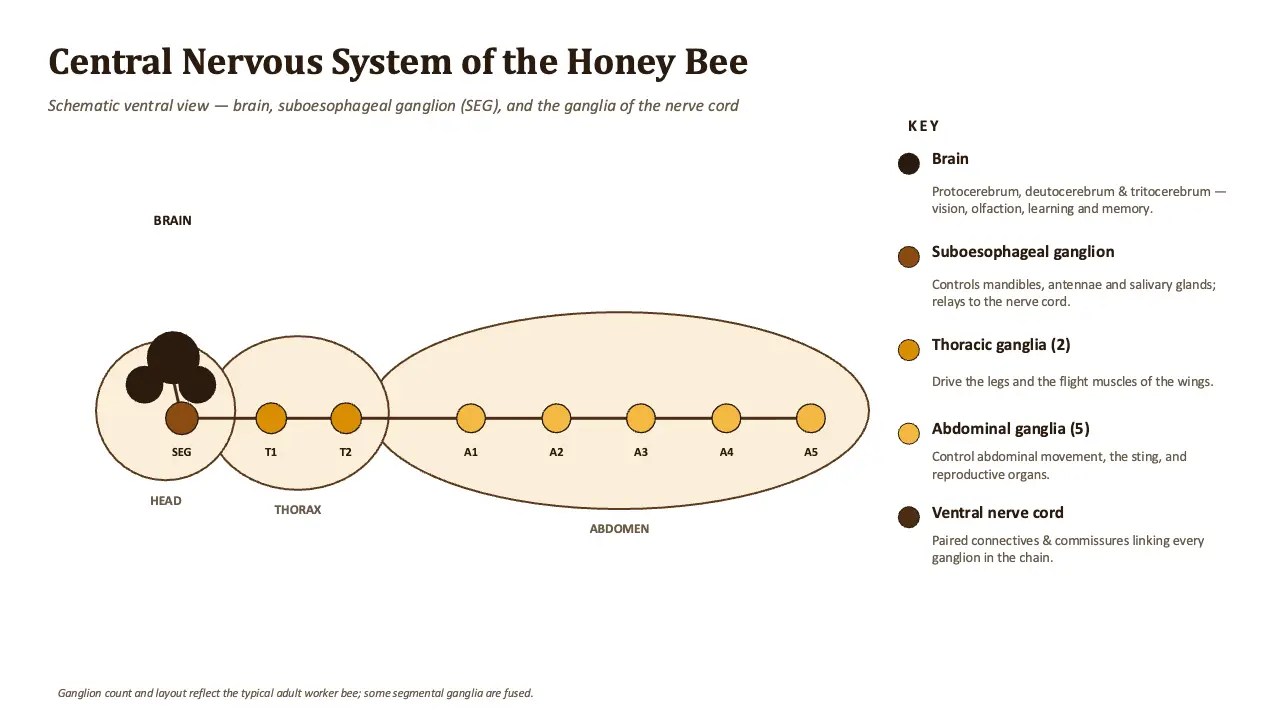
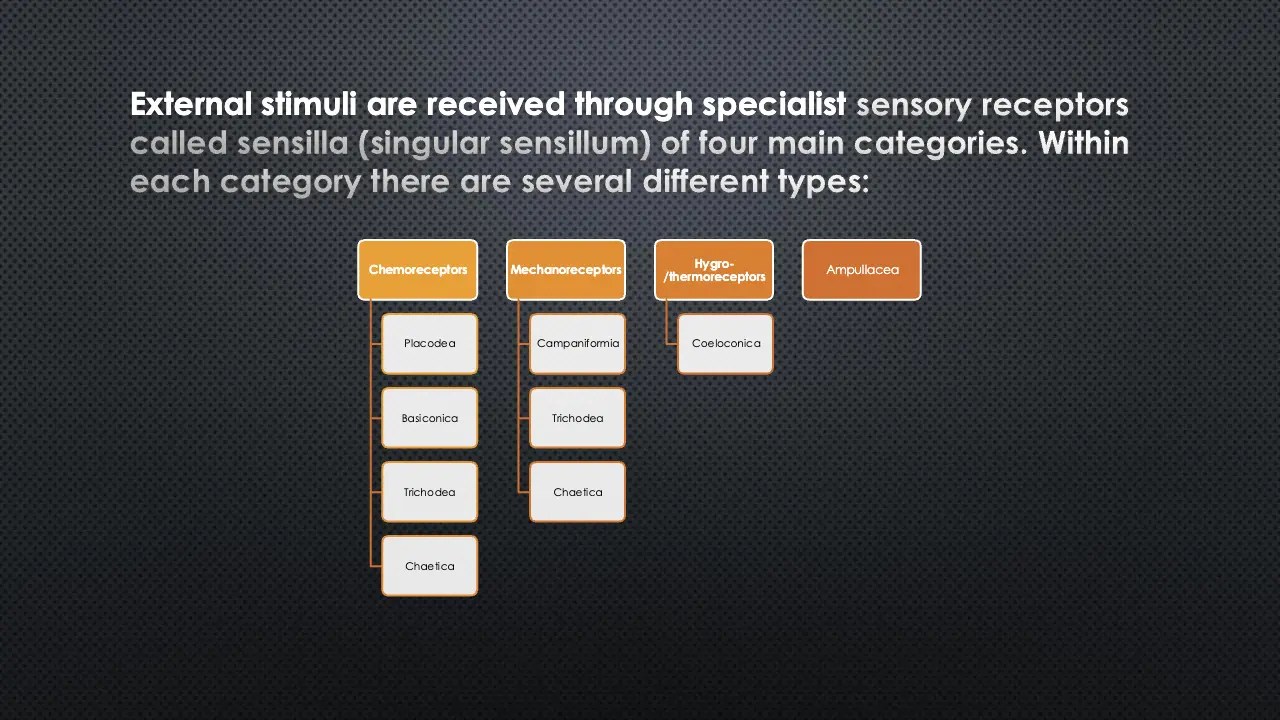
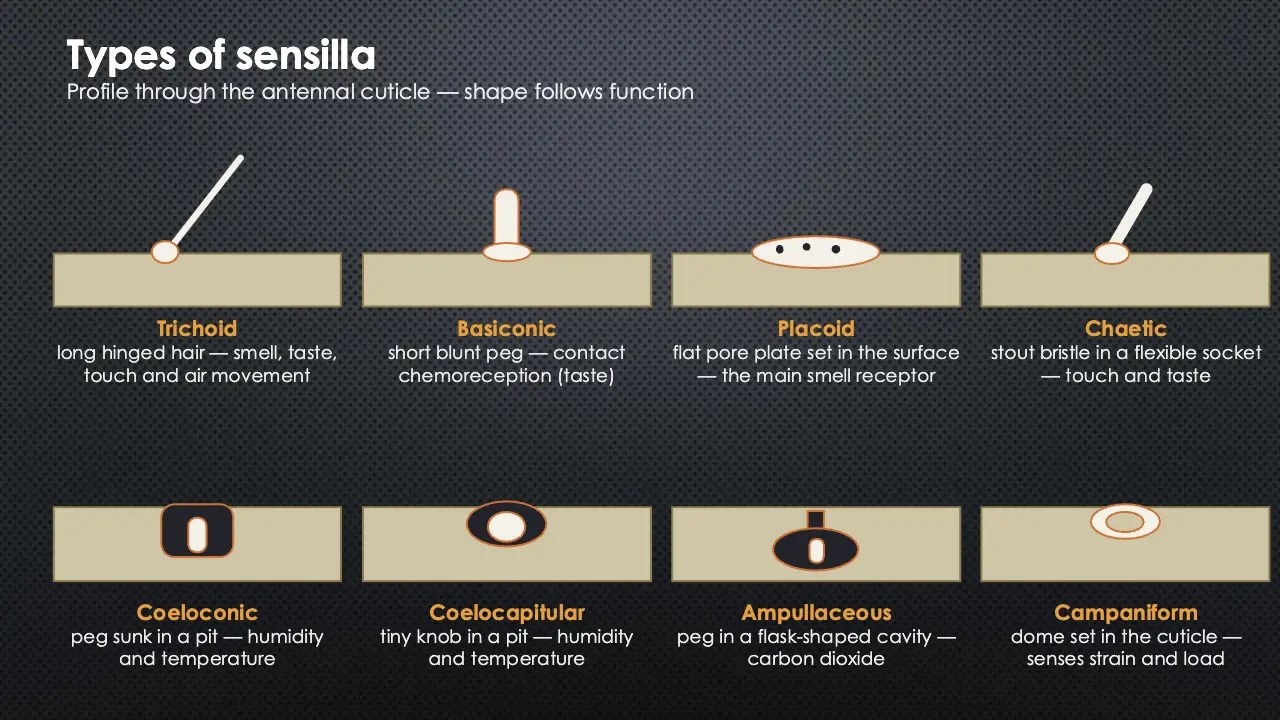
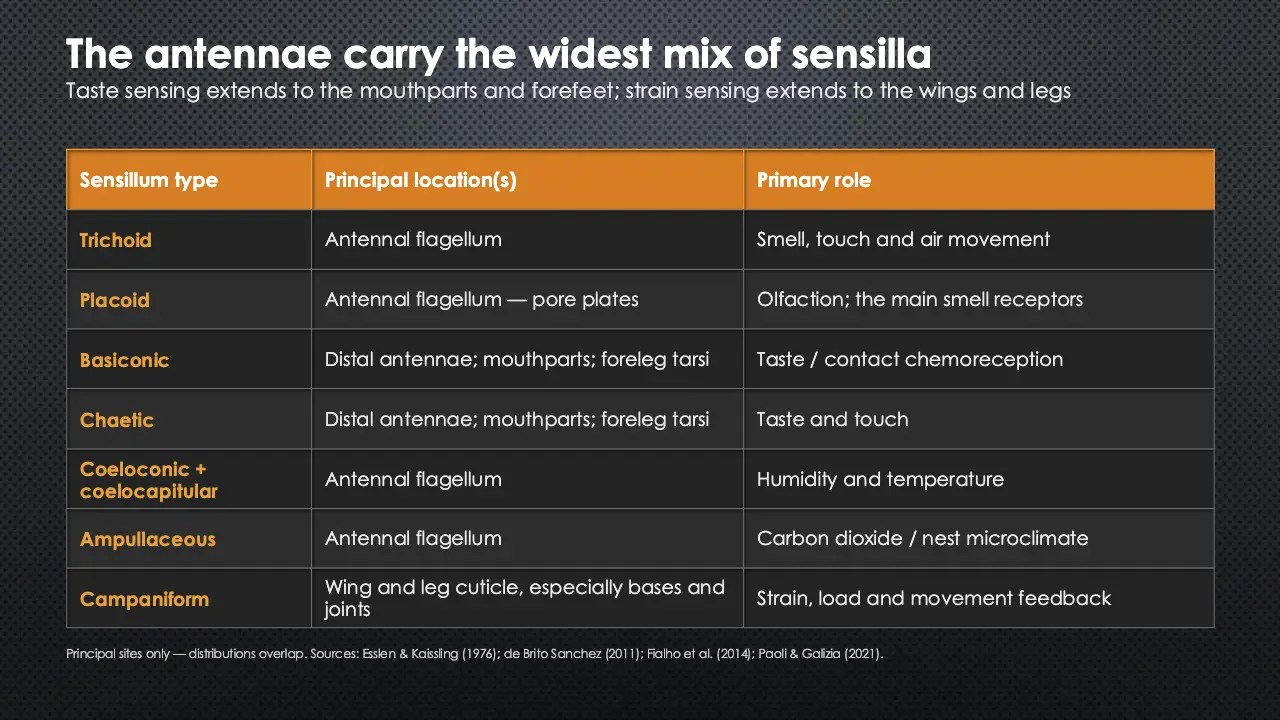
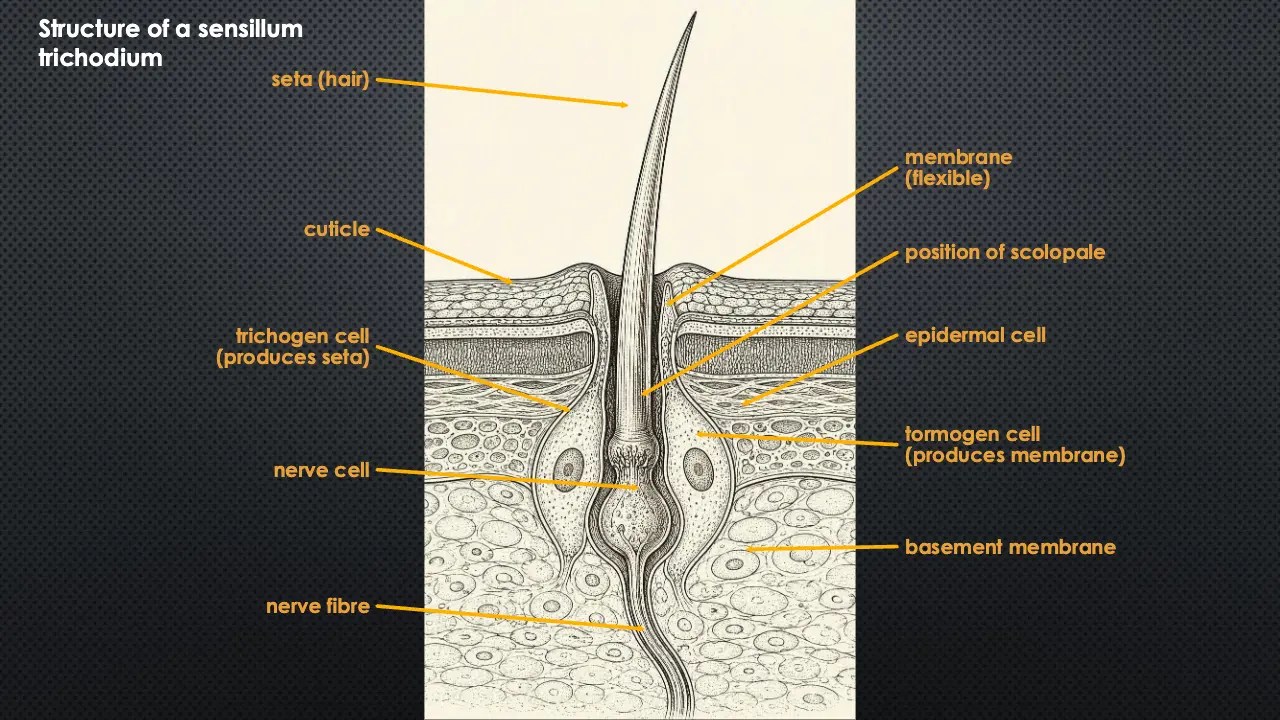
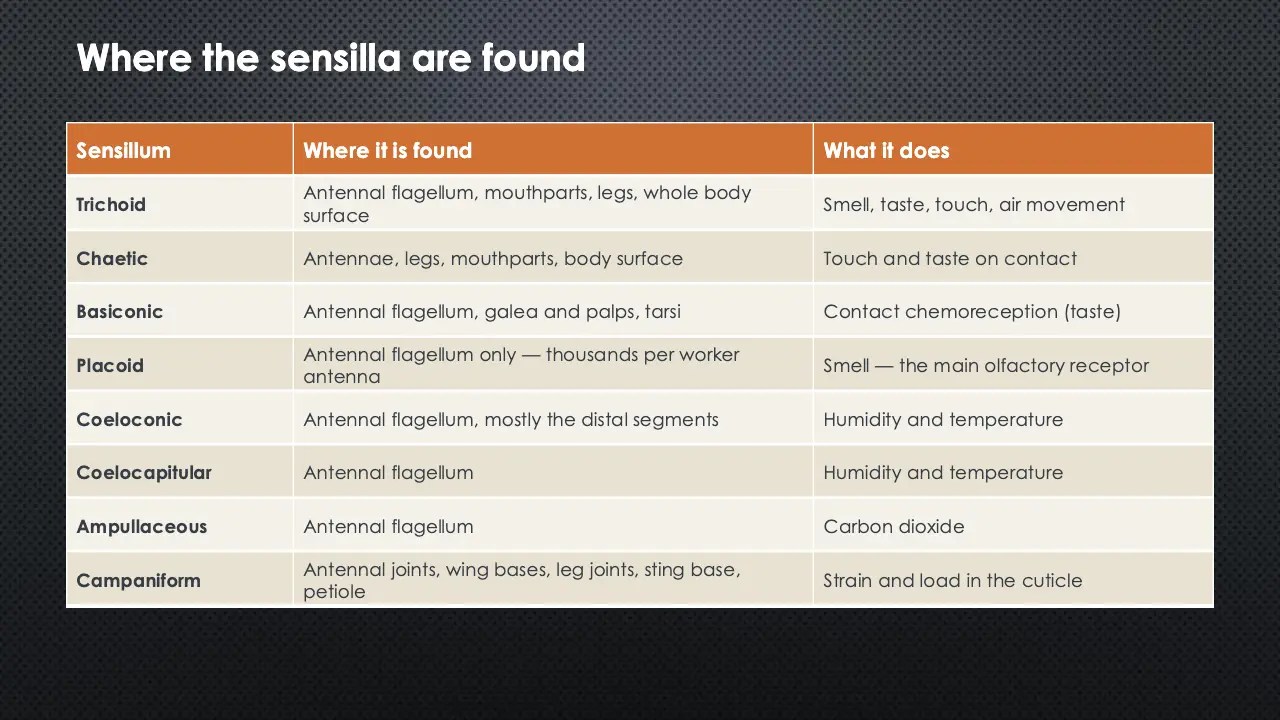
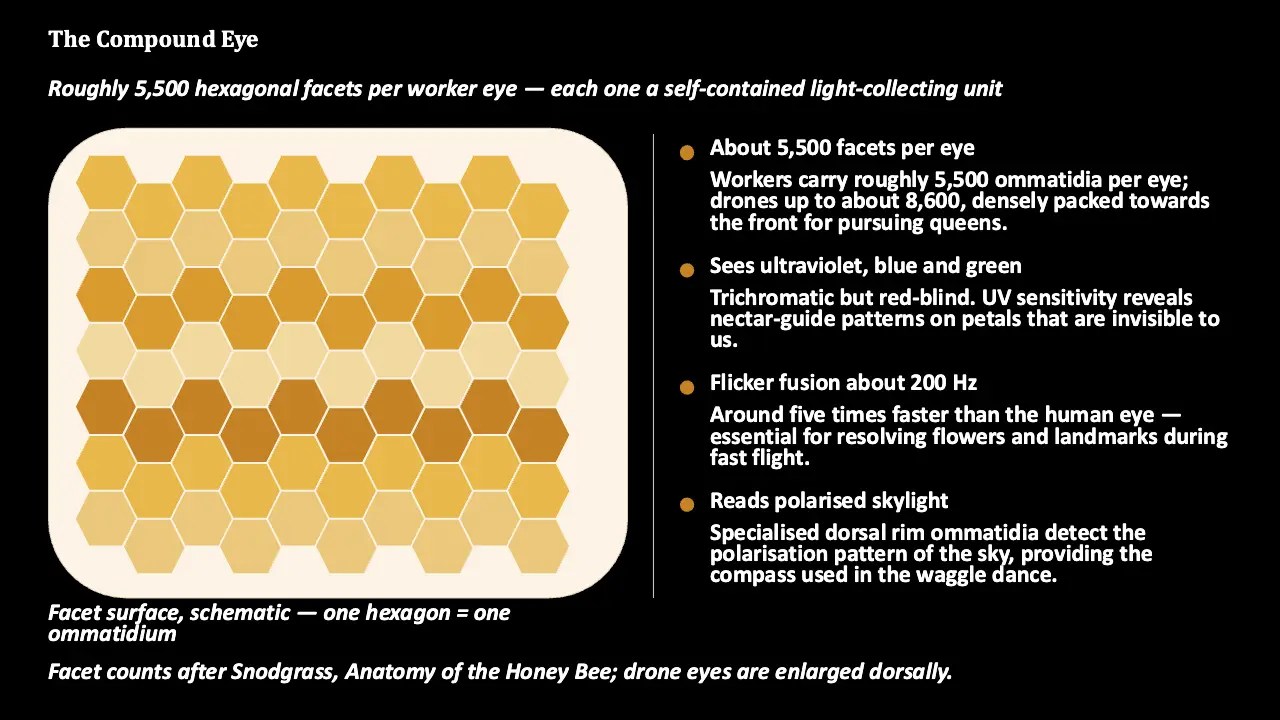
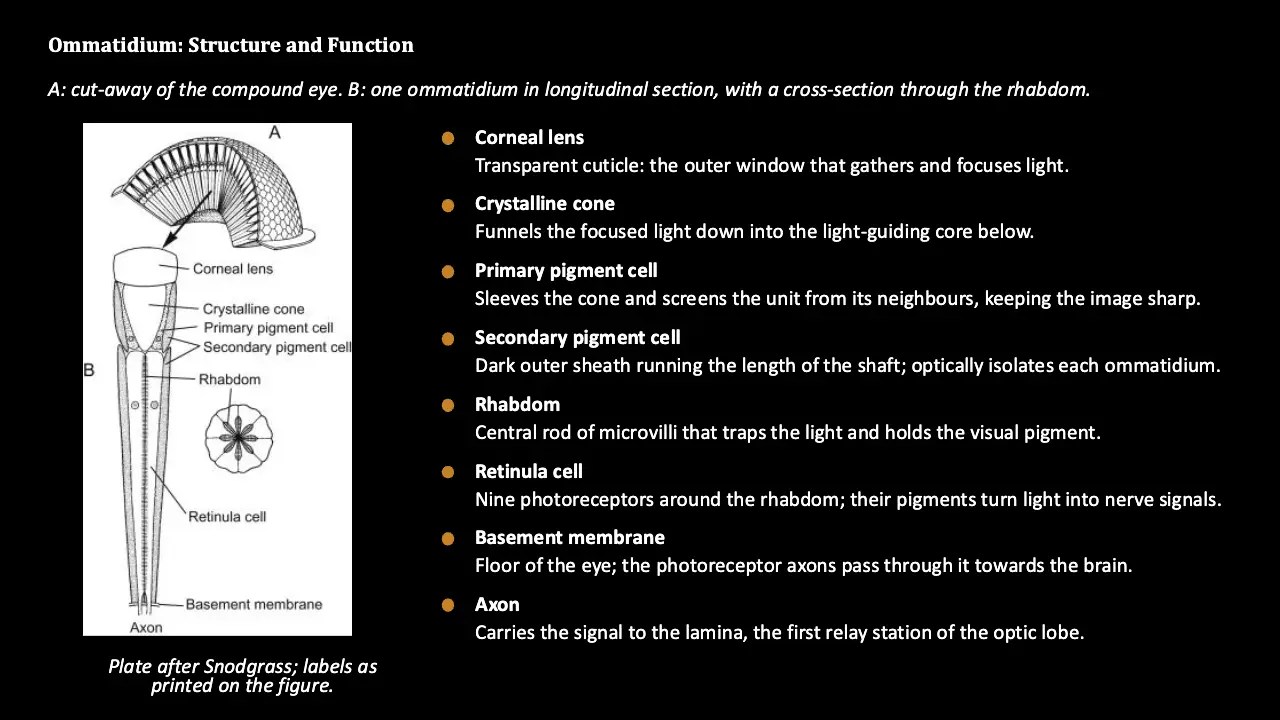
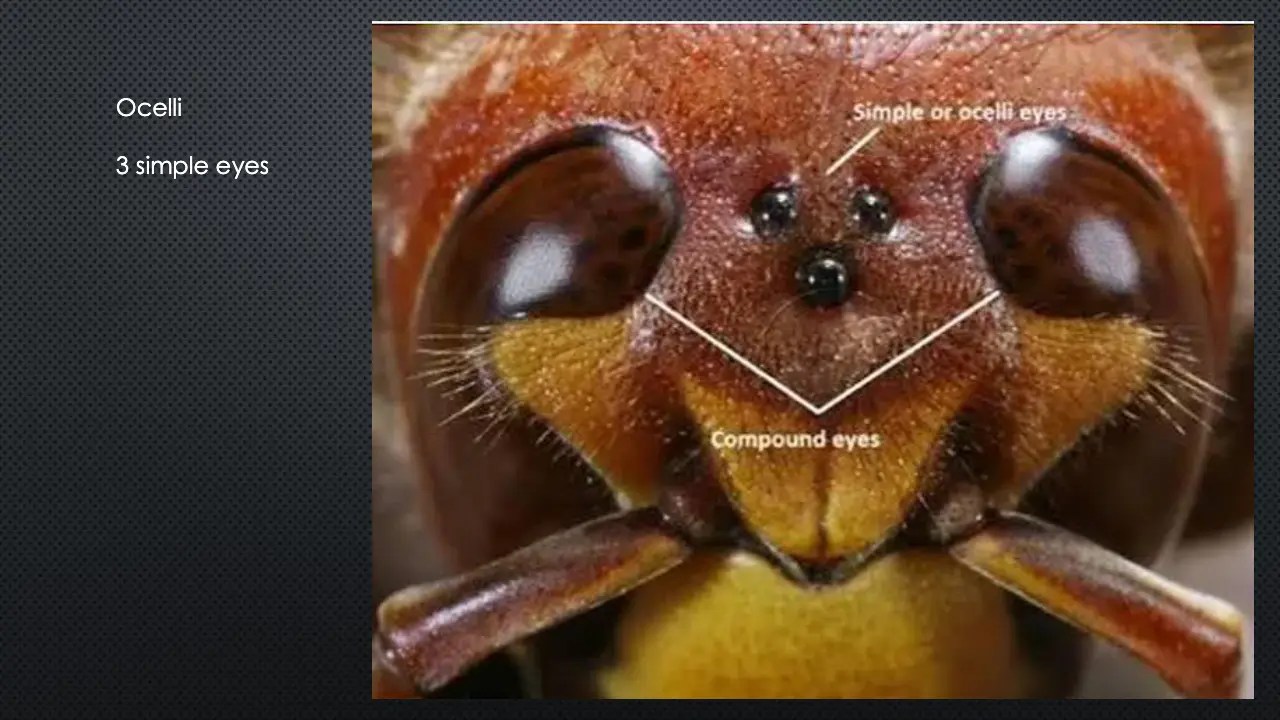
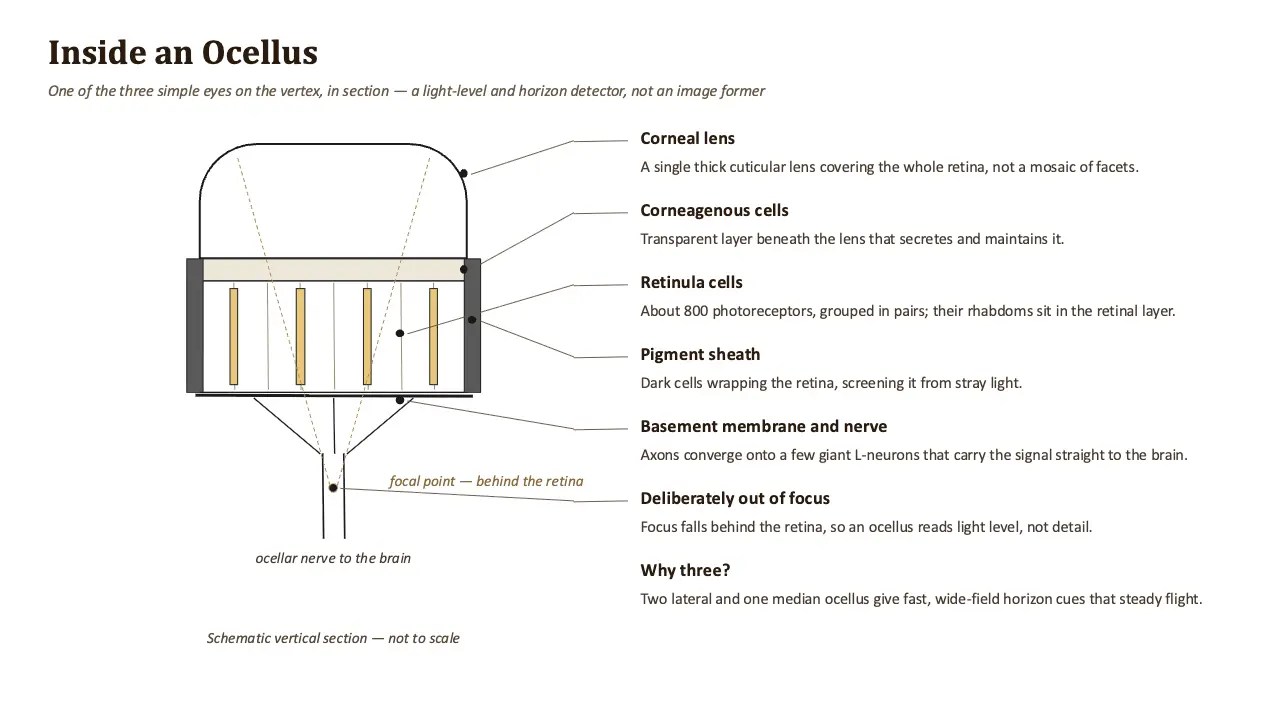
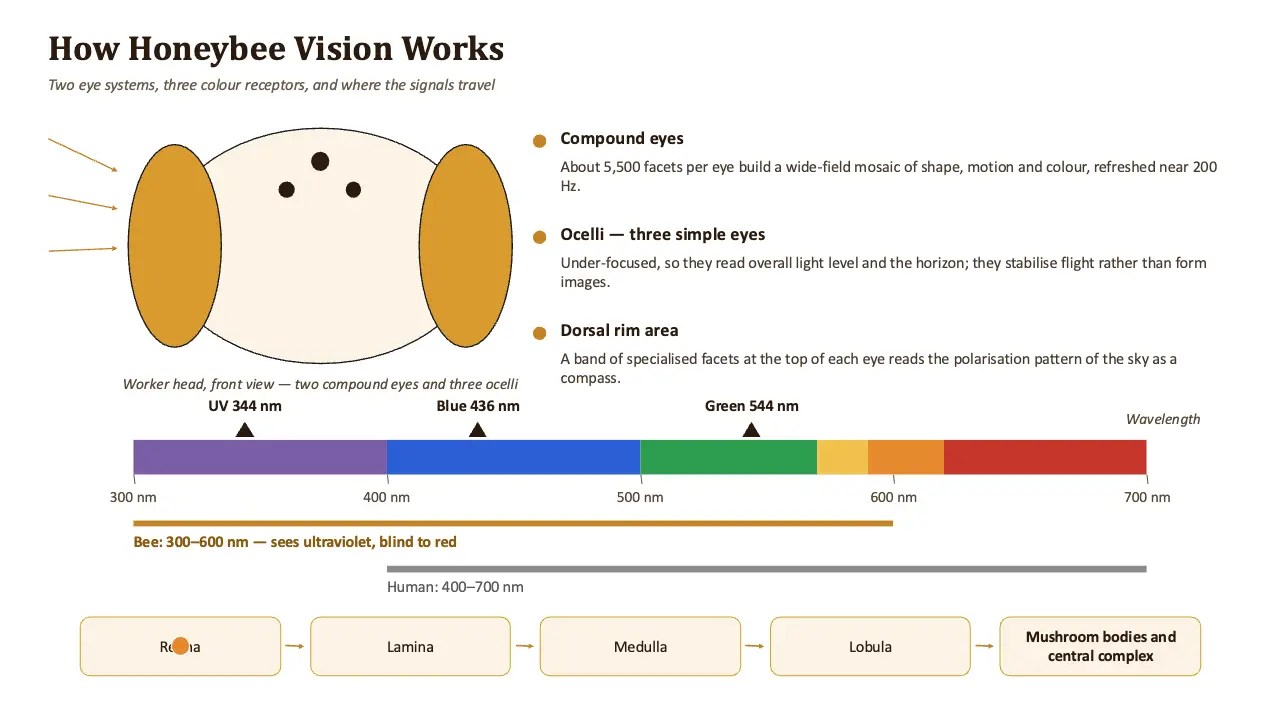
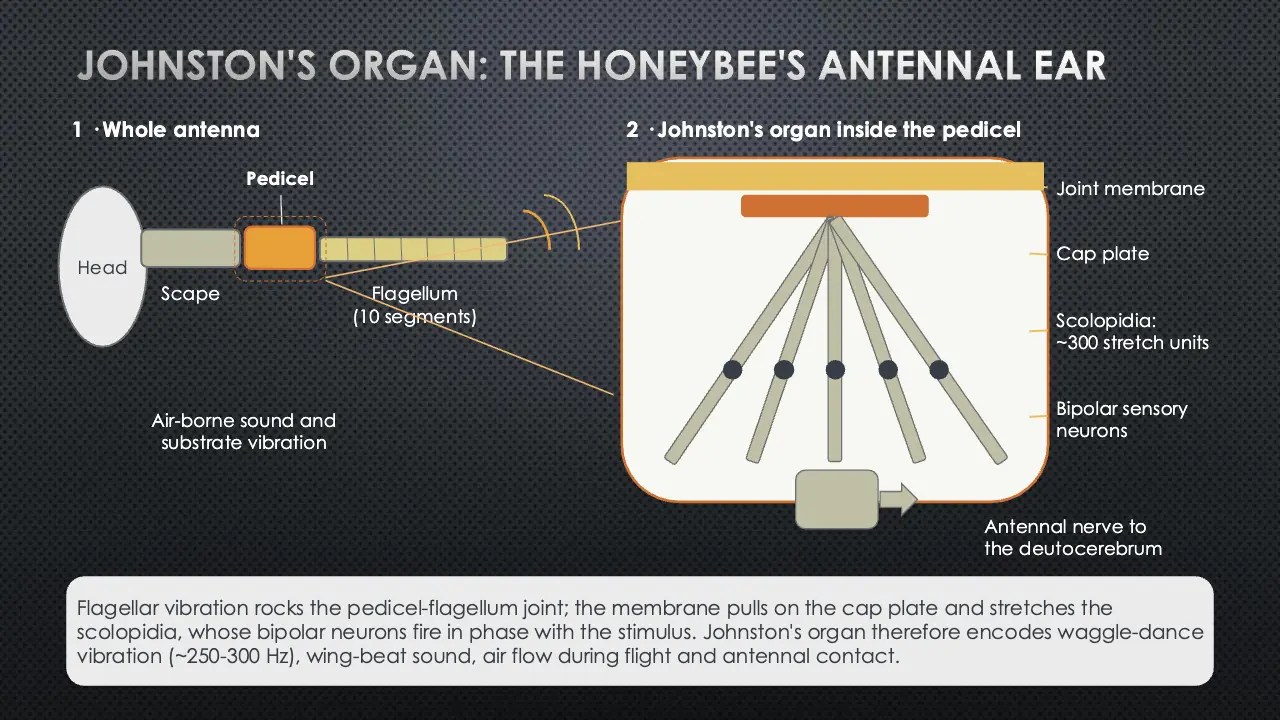
The nervous system and sense organs
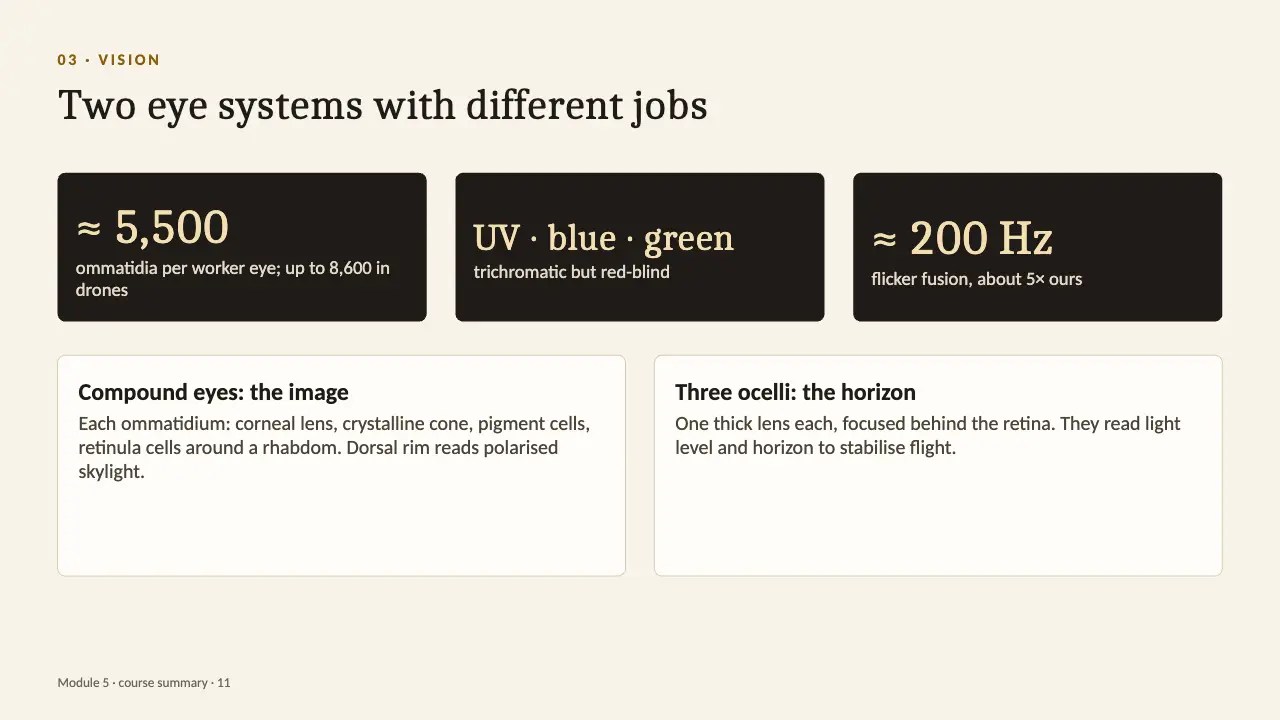
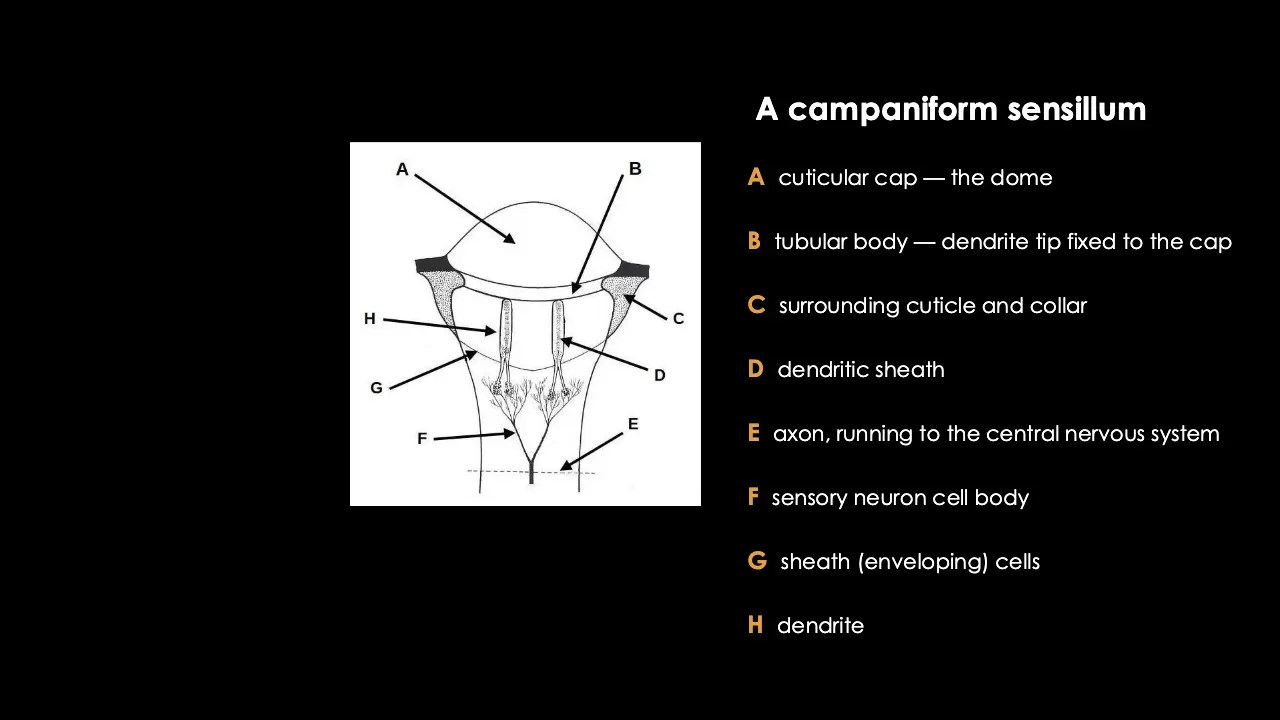
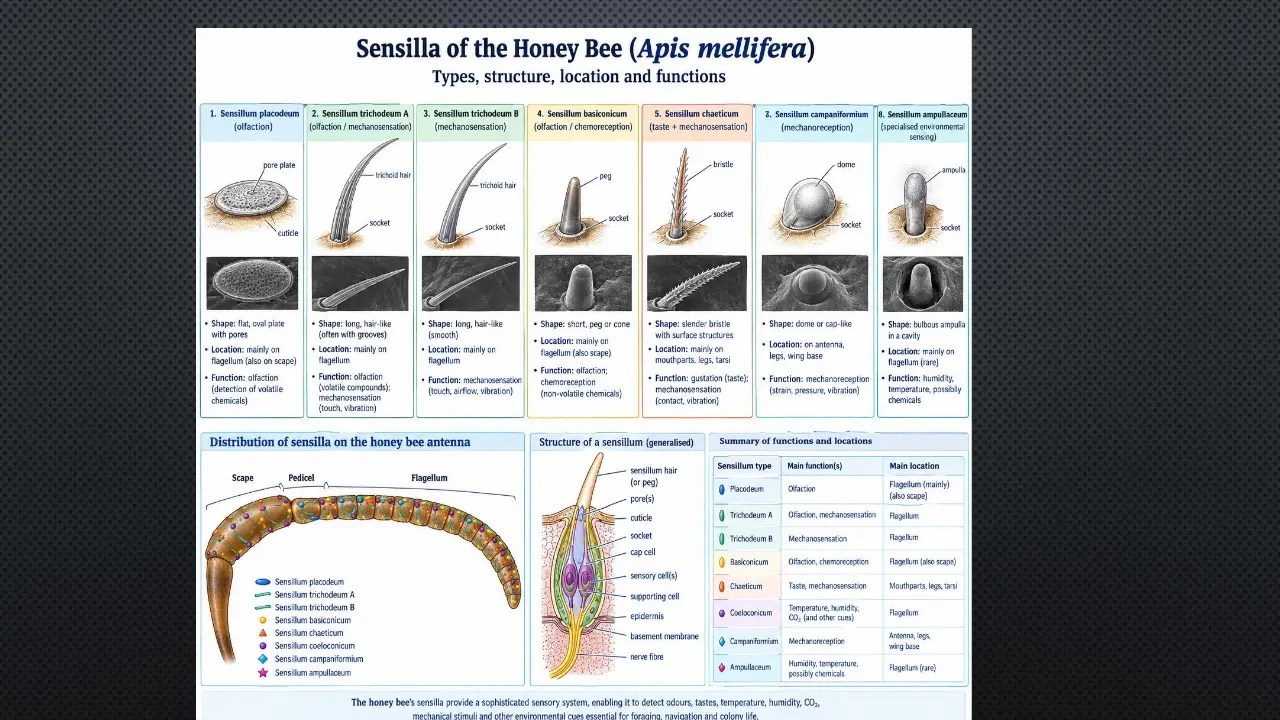
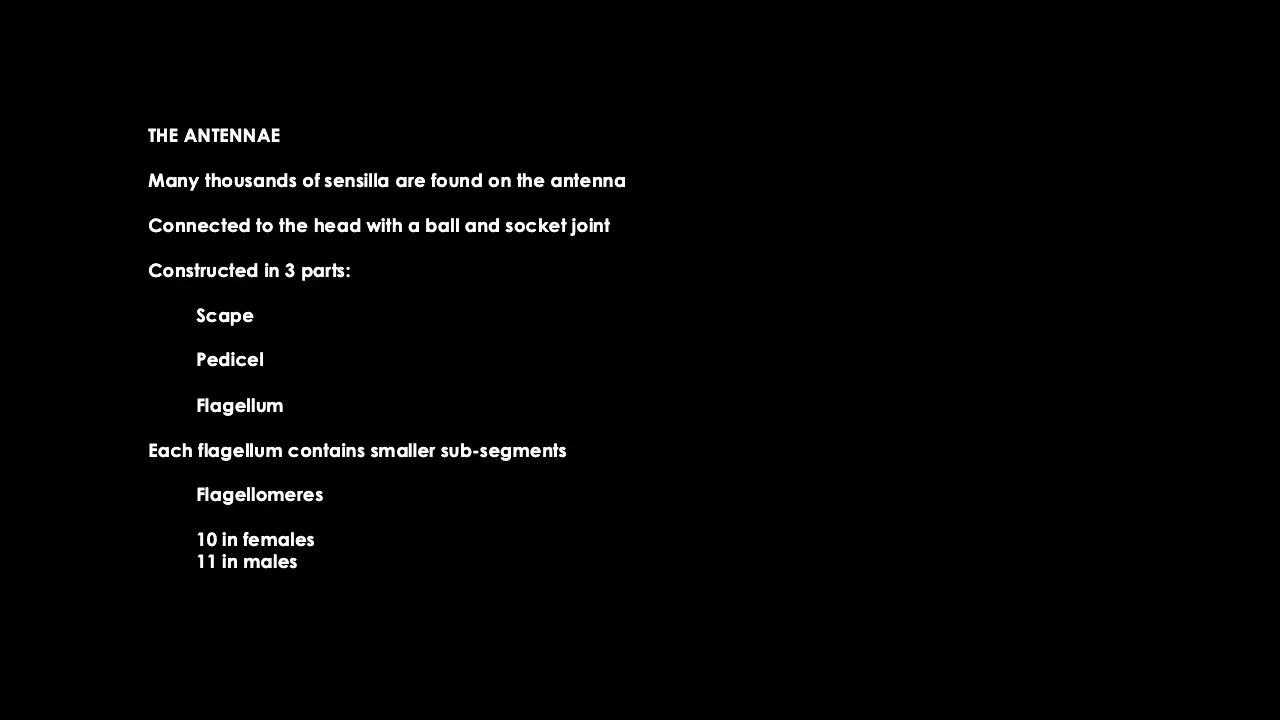
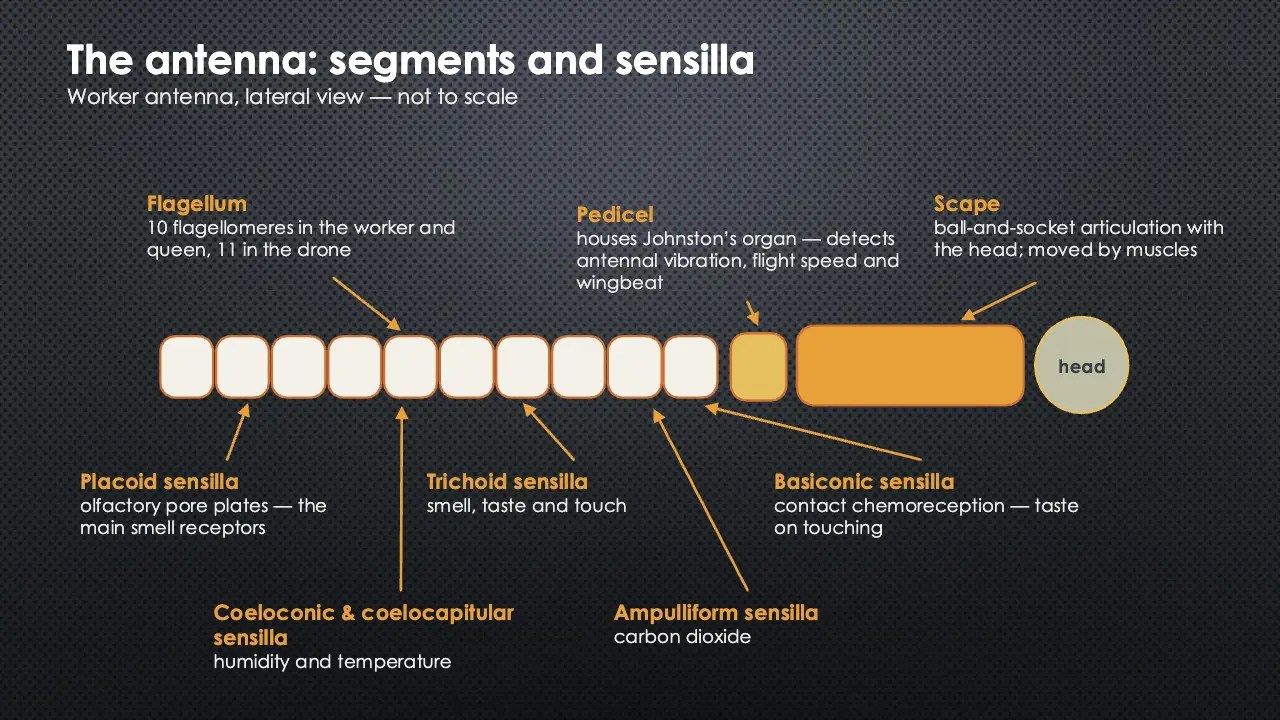
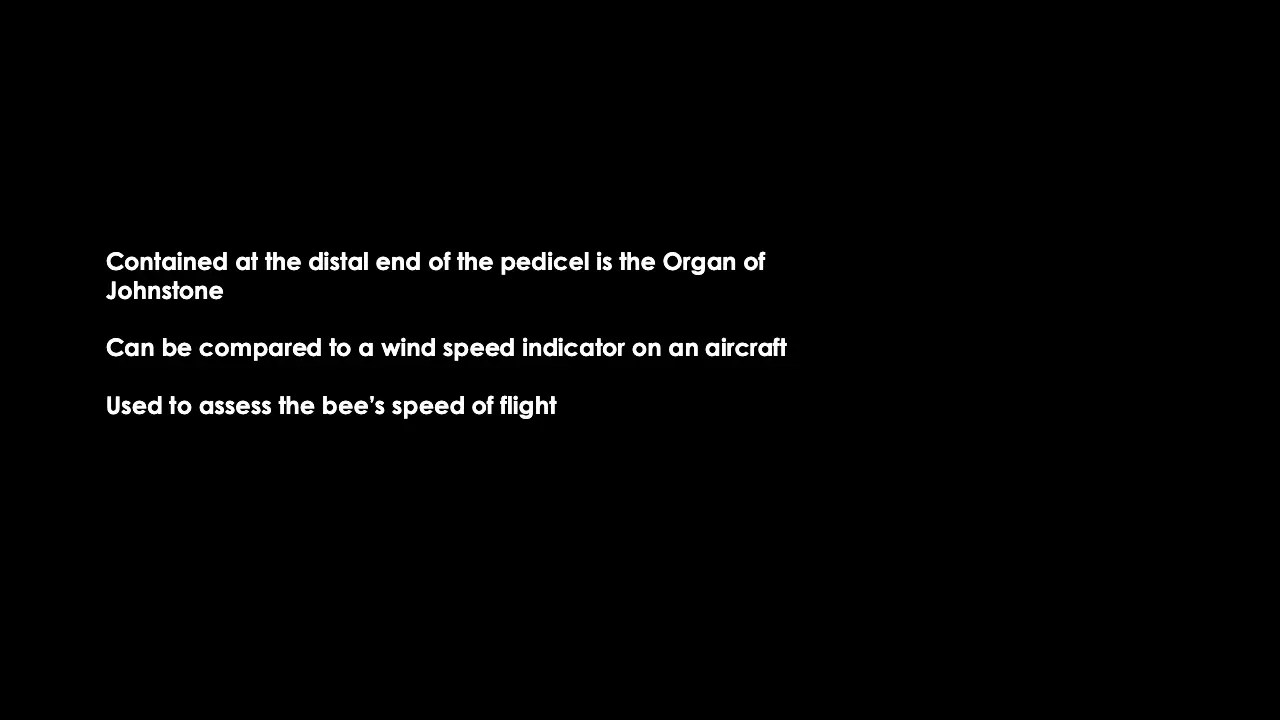
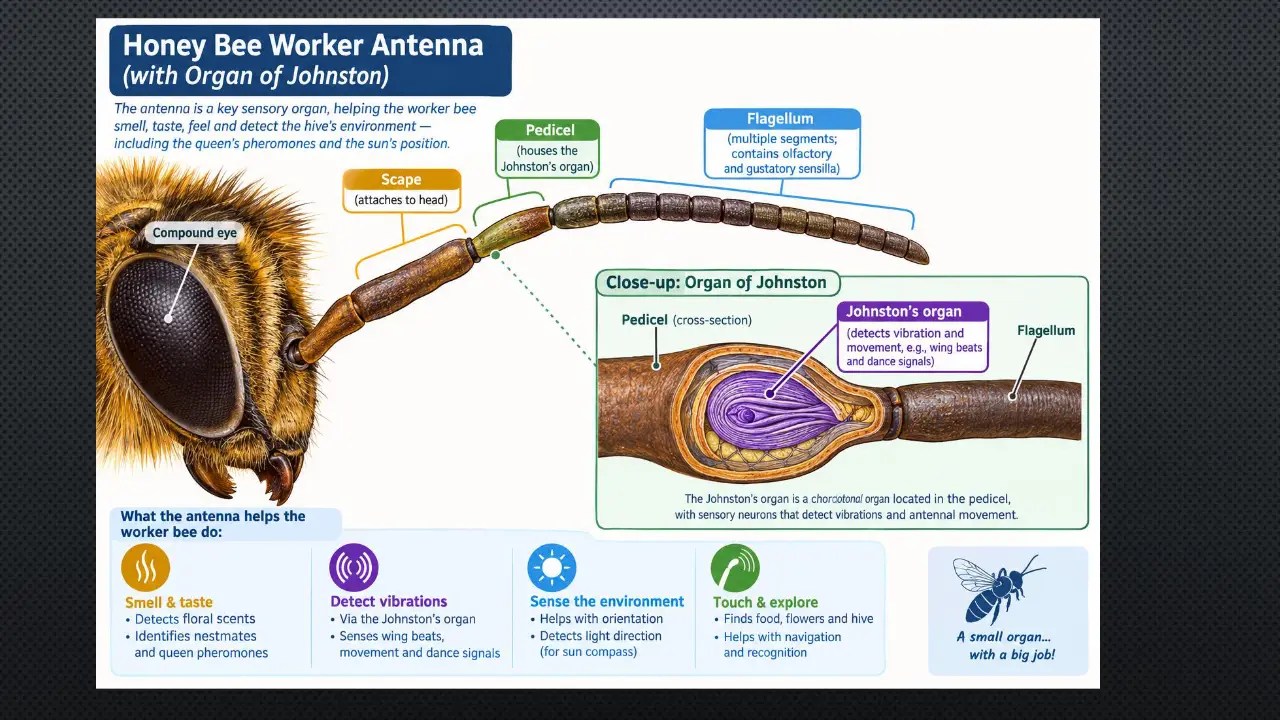
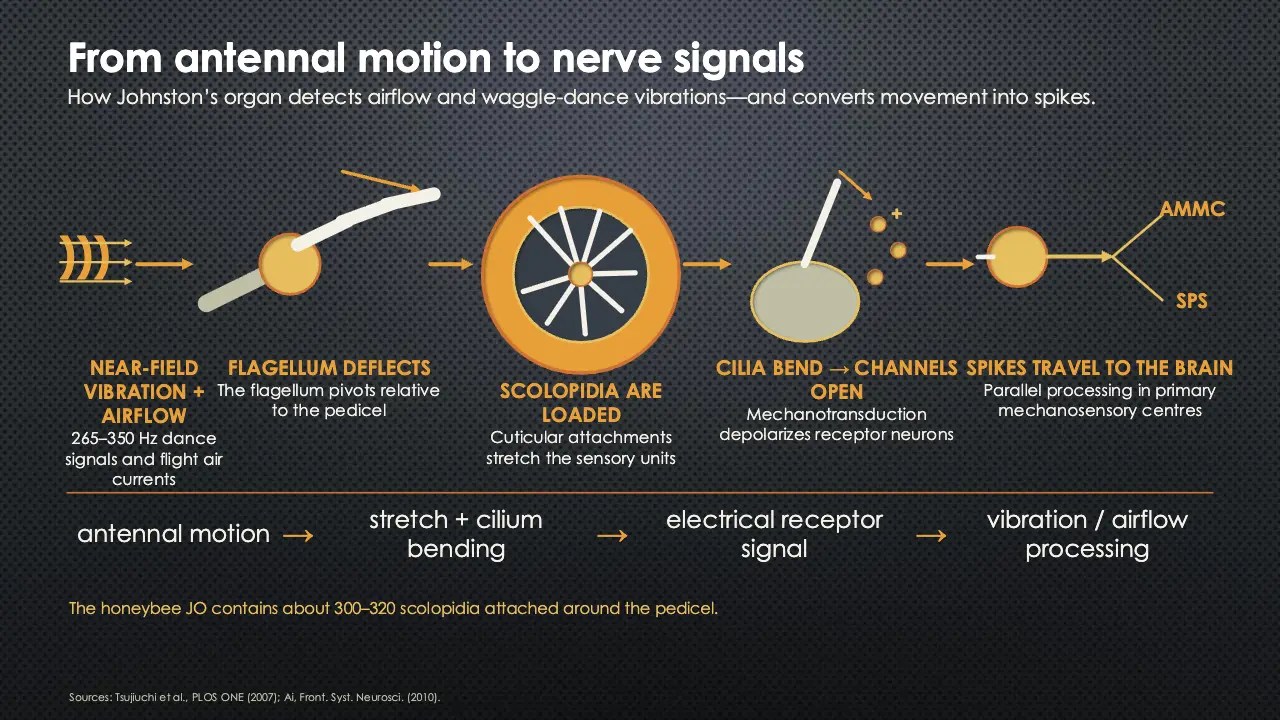
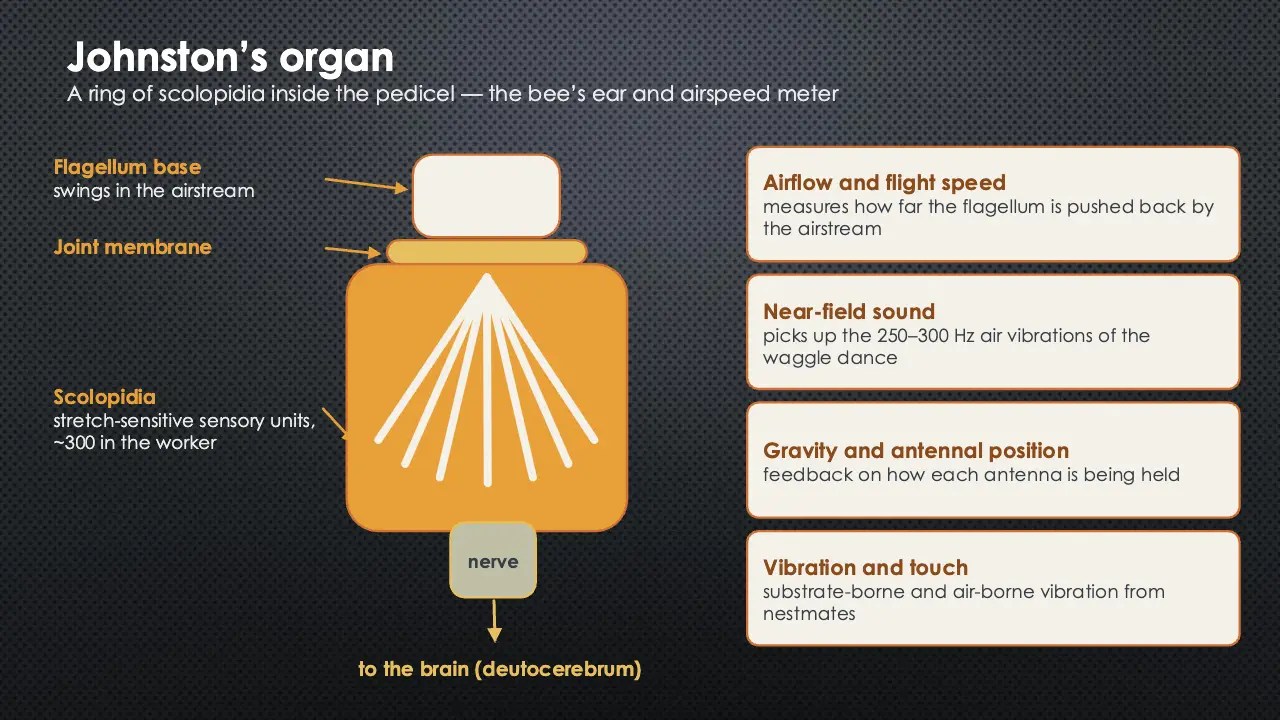
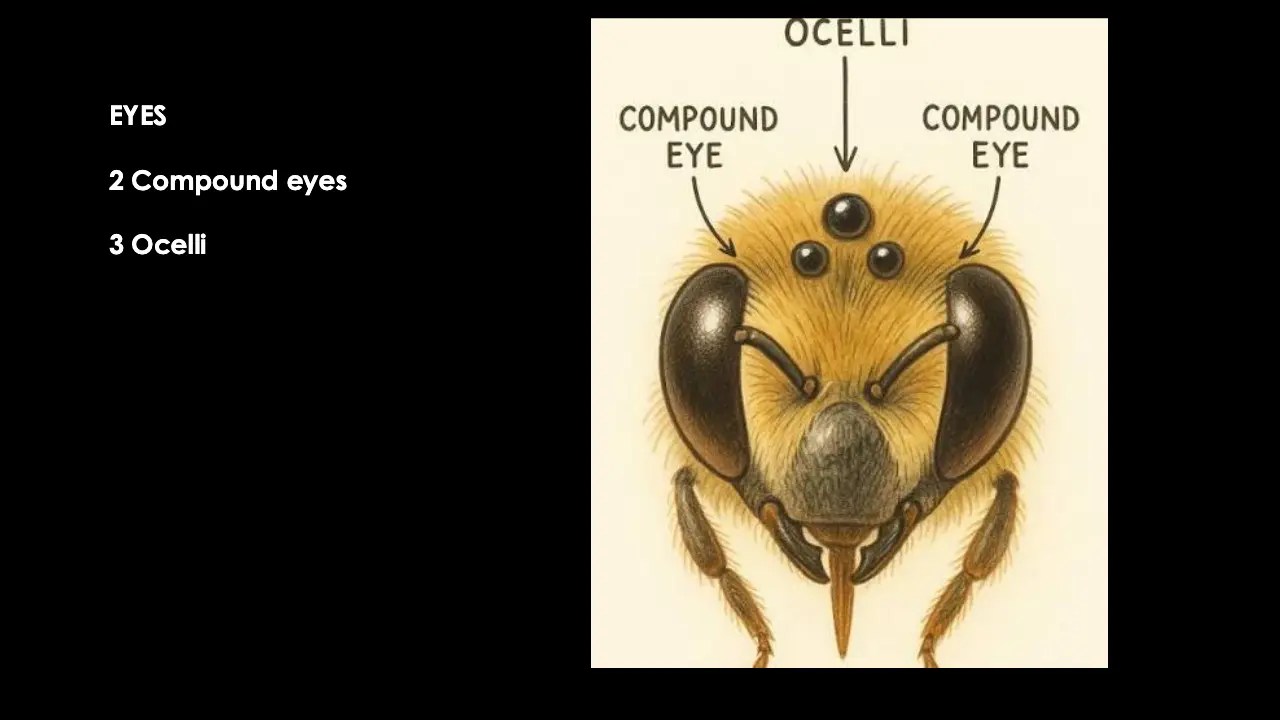
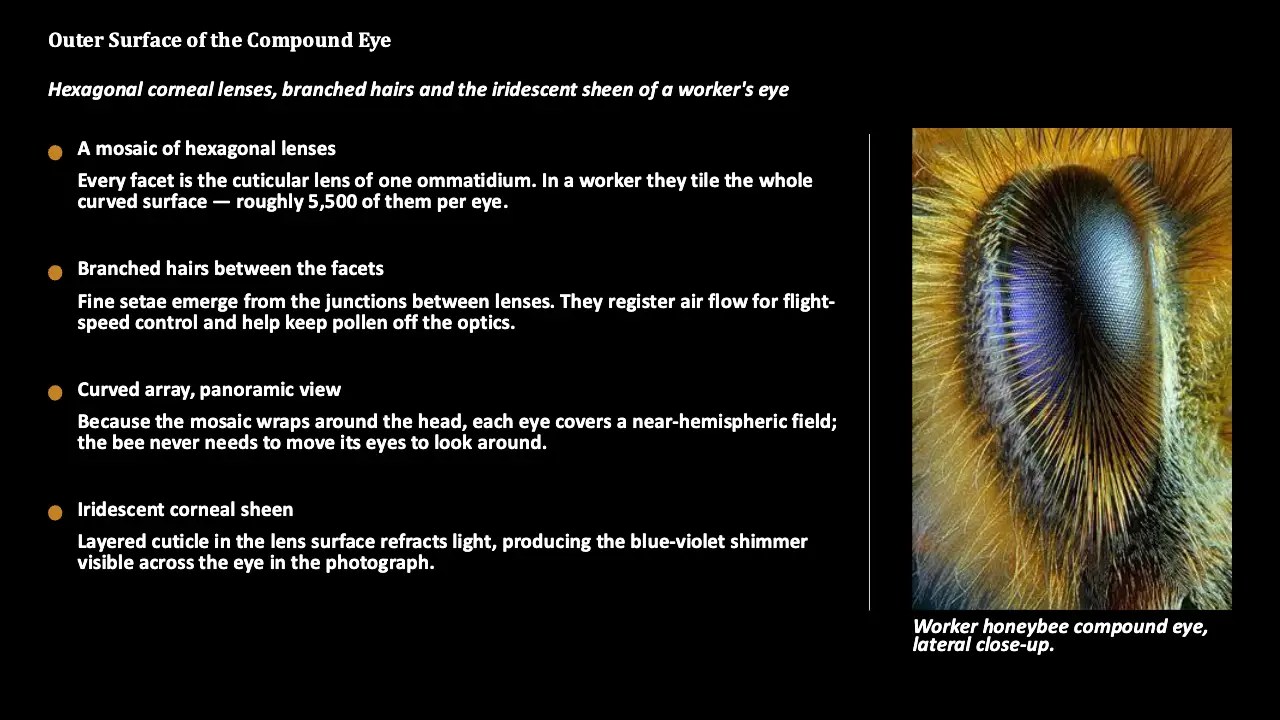
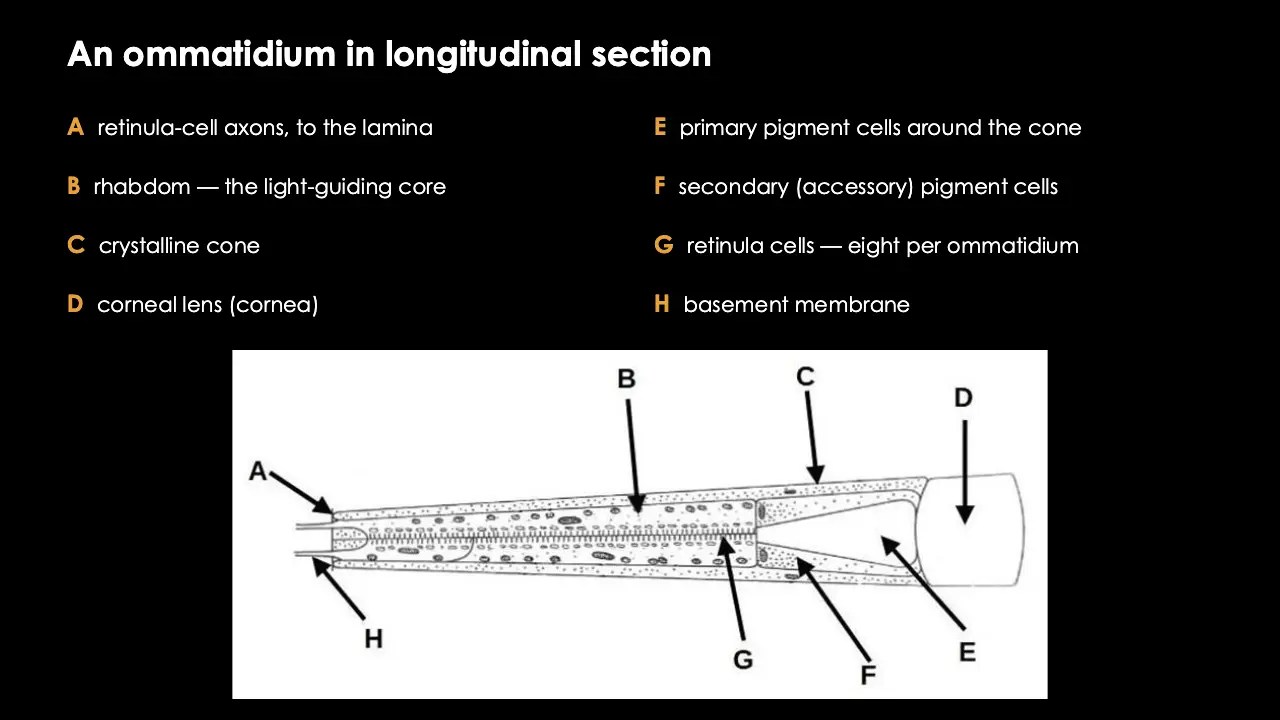
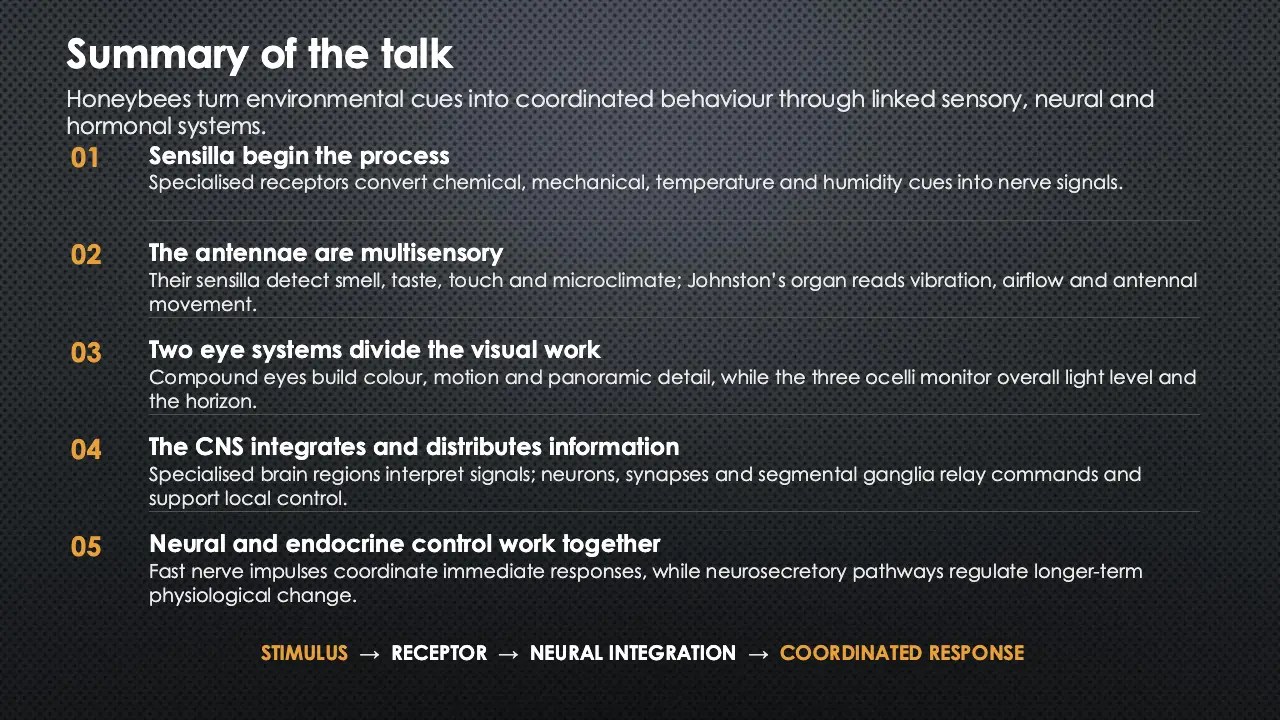
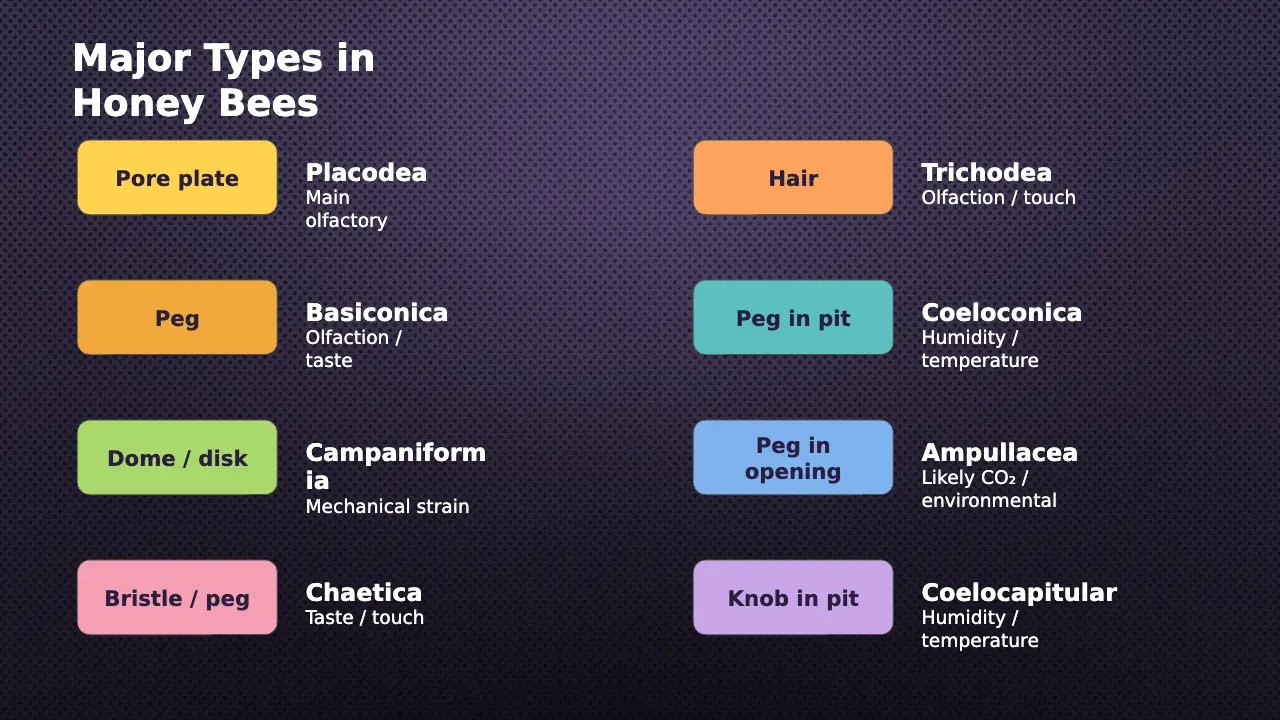
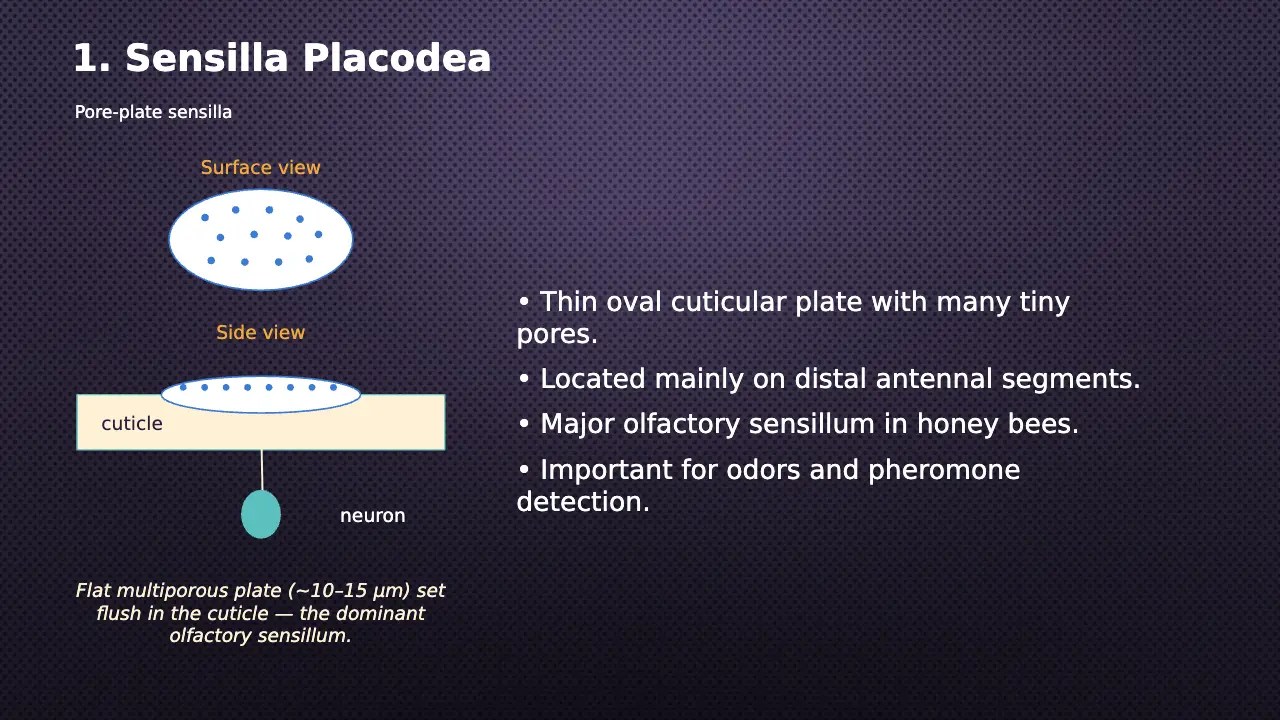
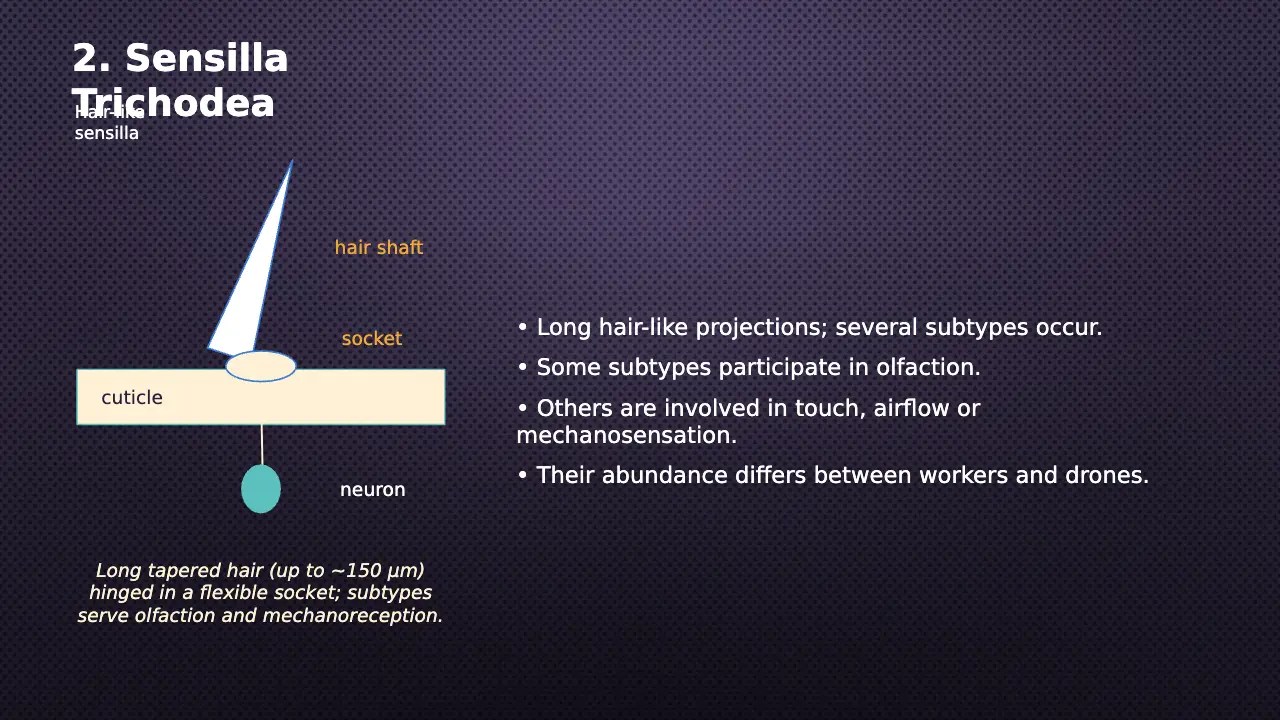
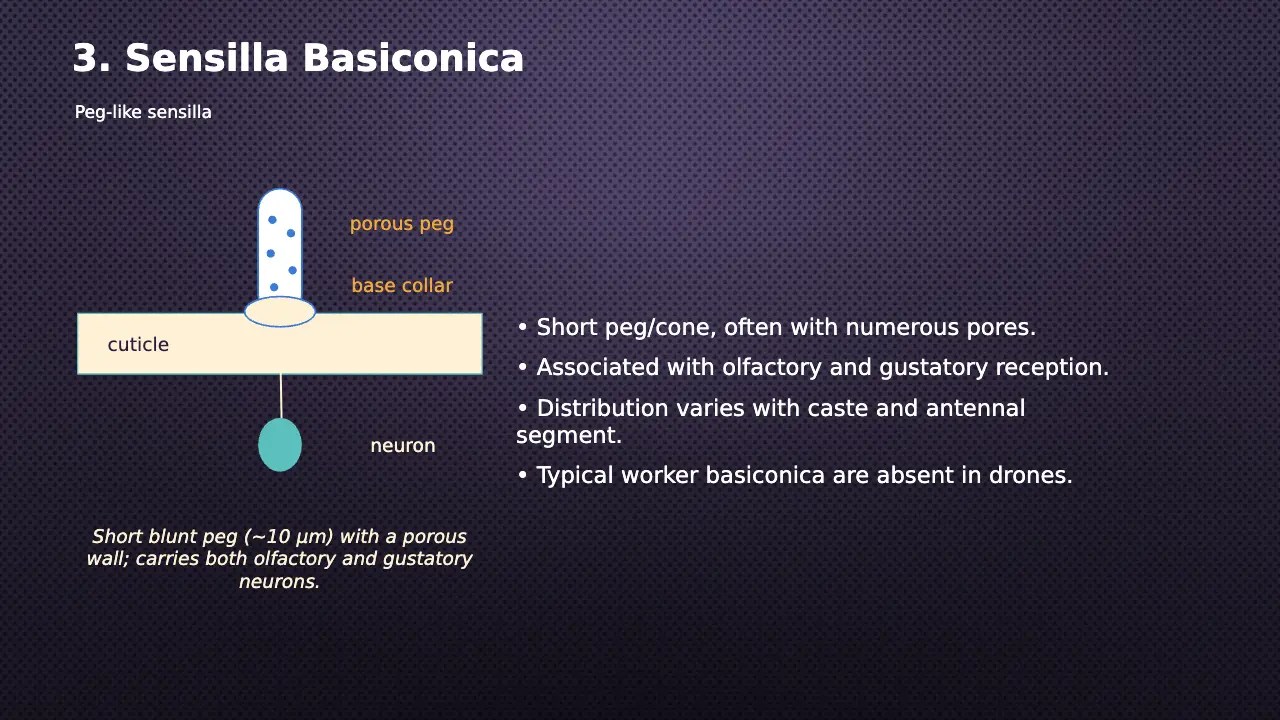
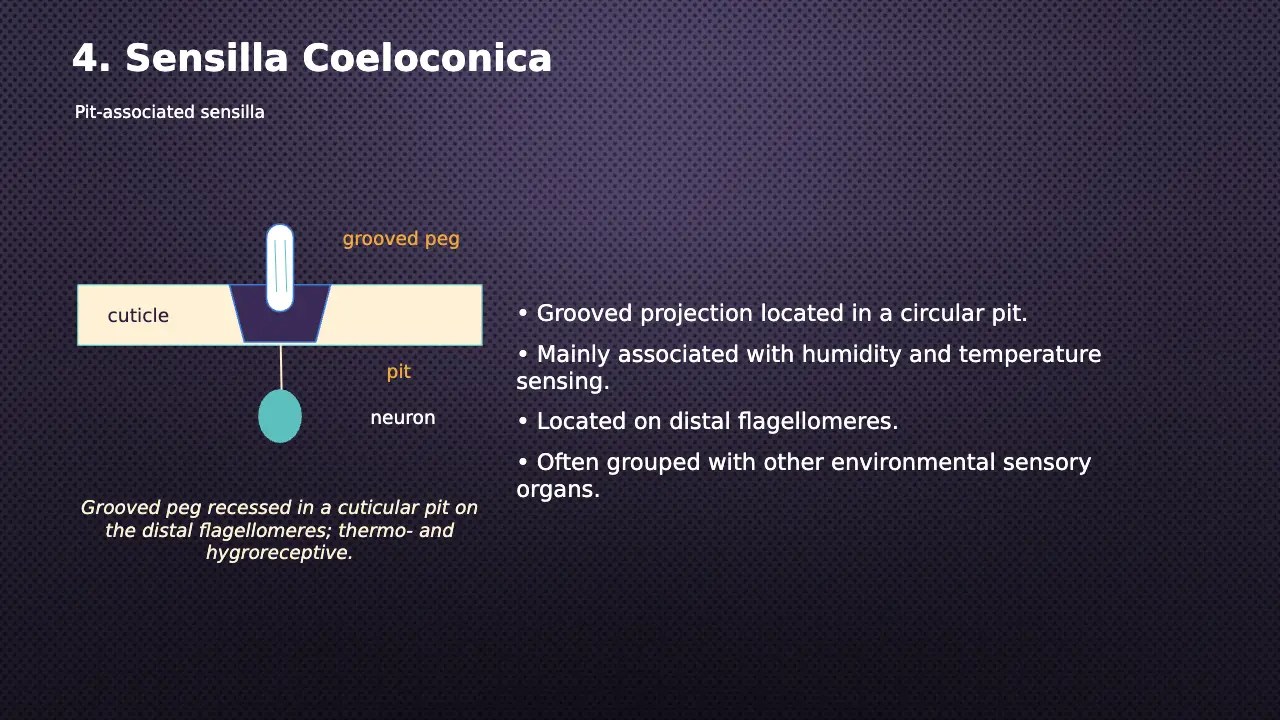
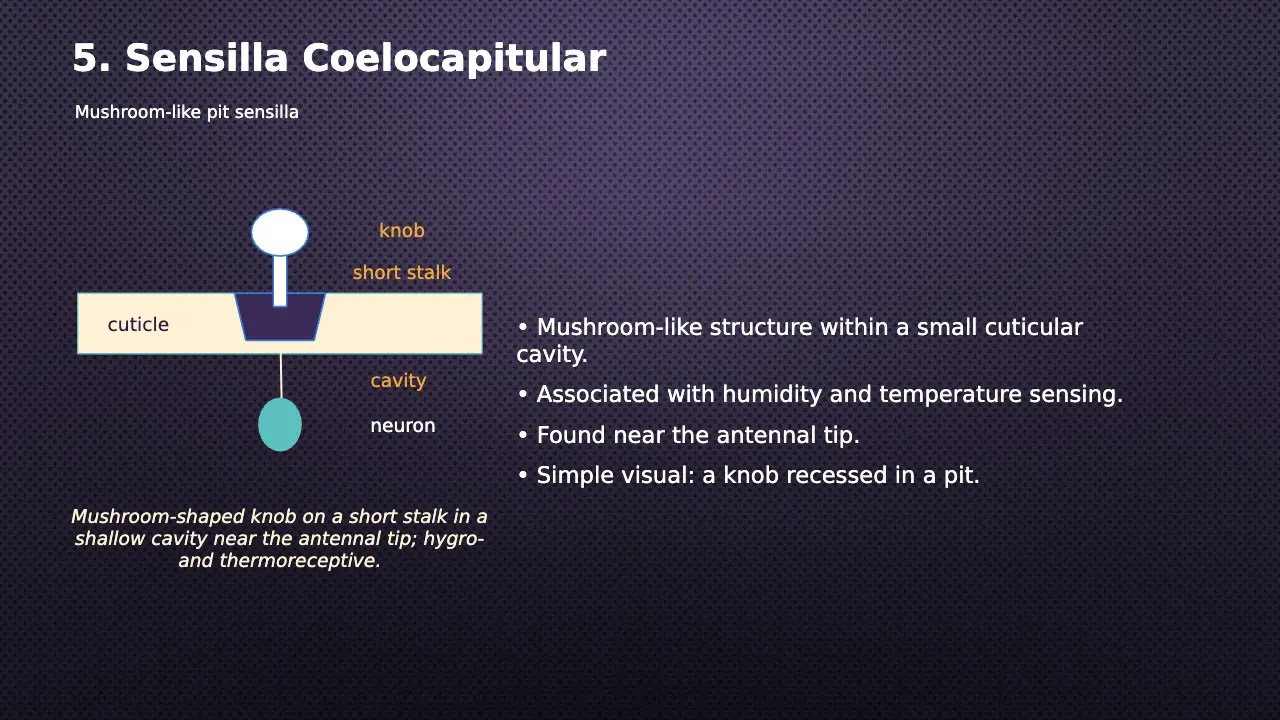
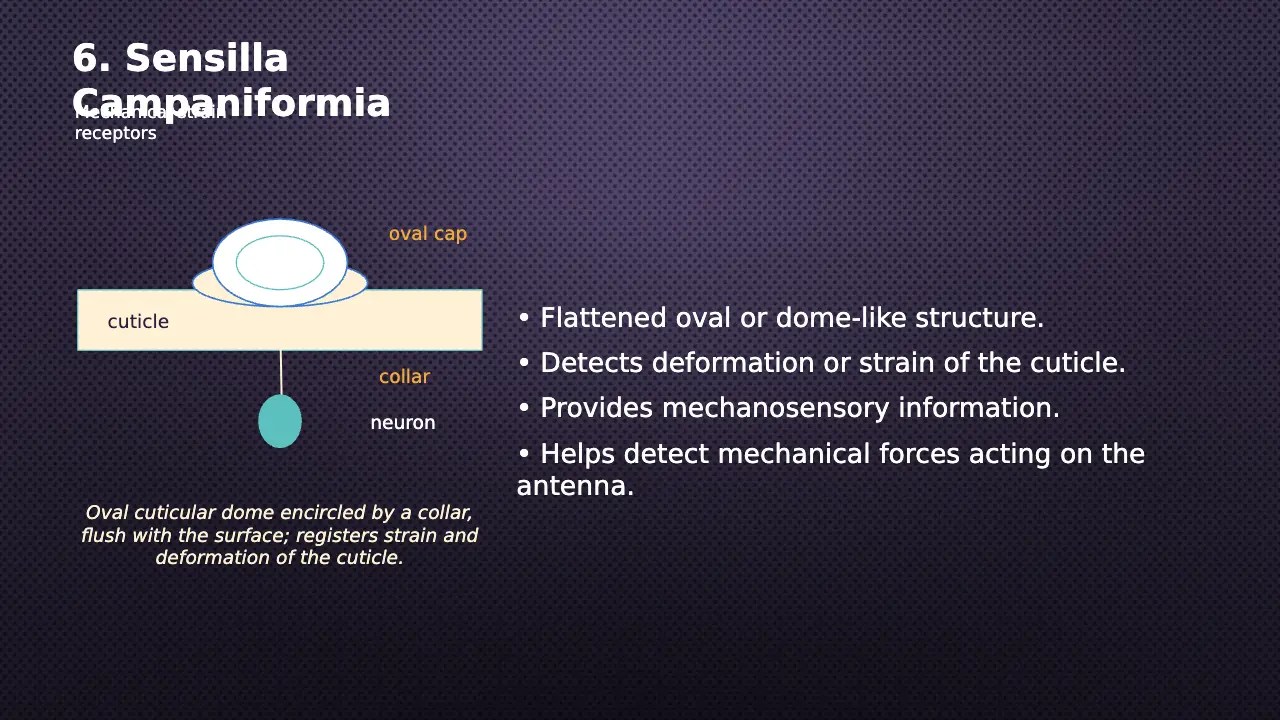
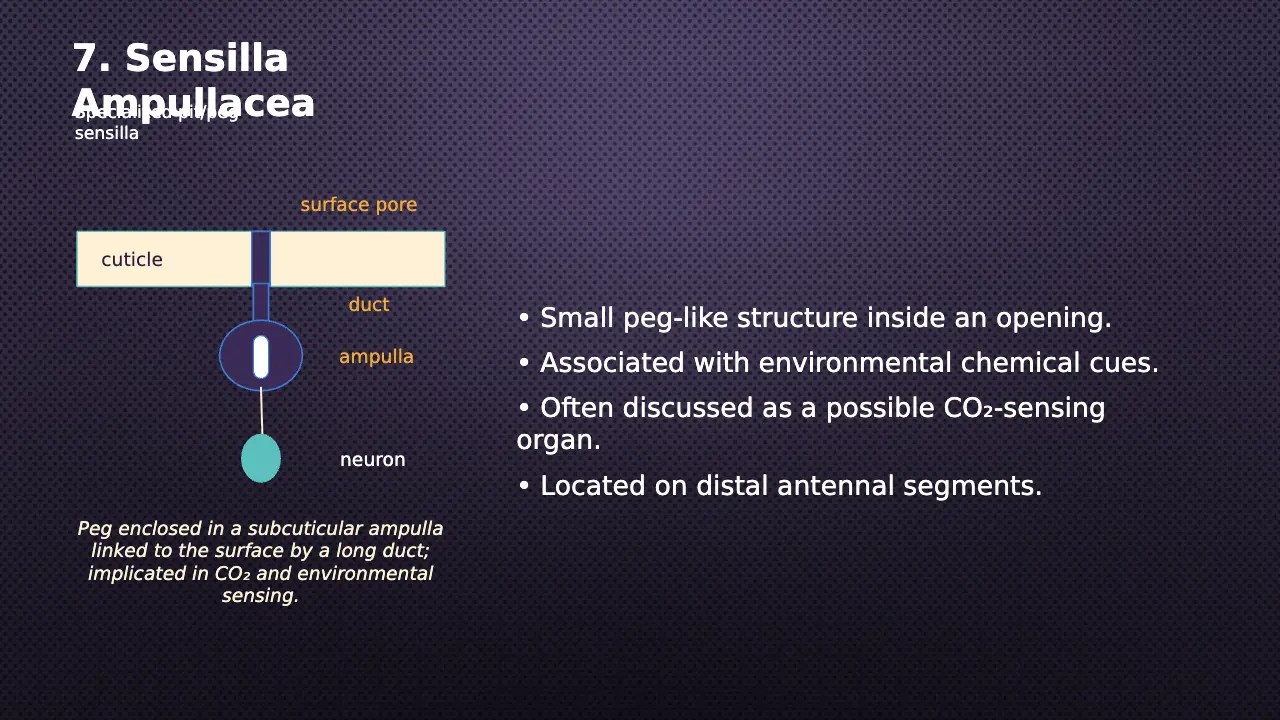
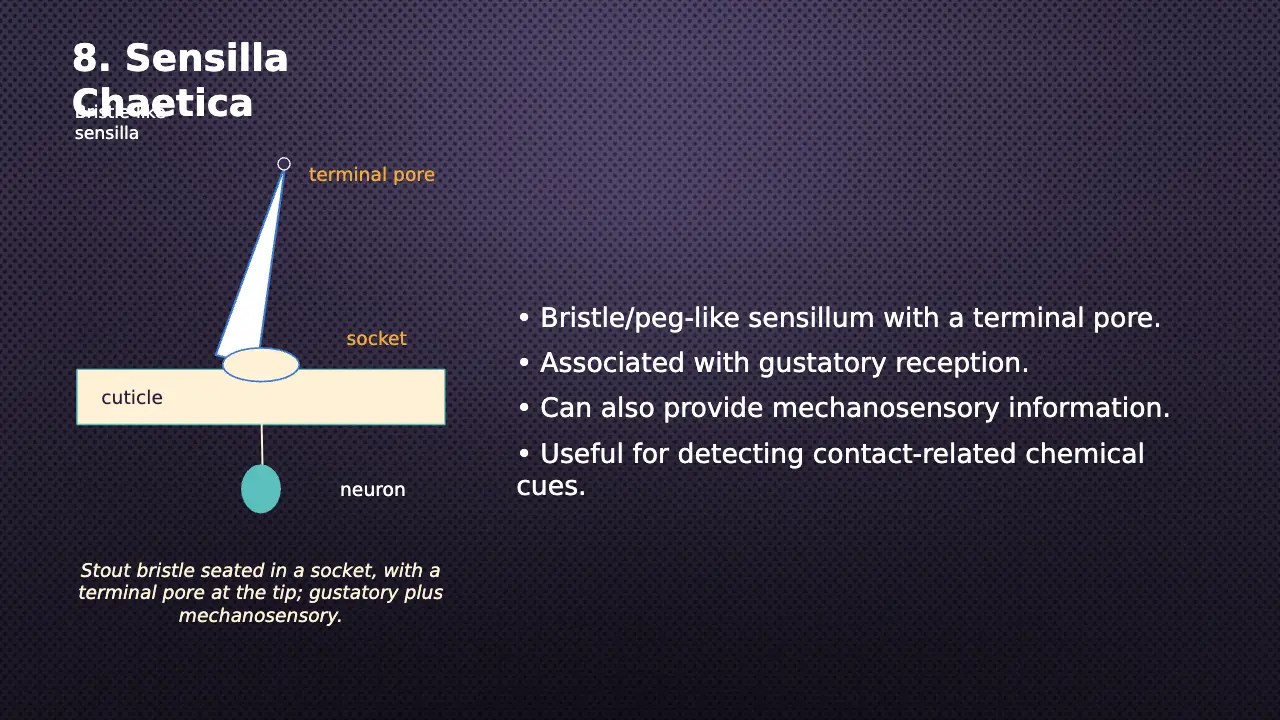
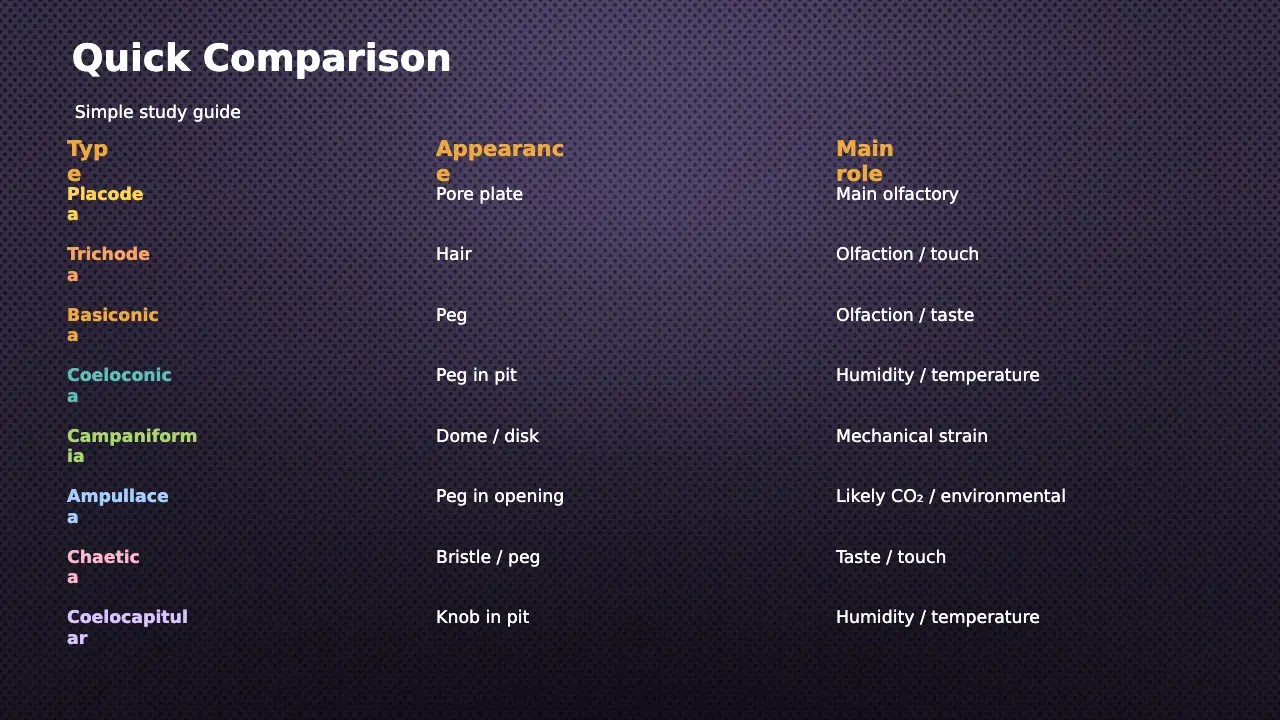
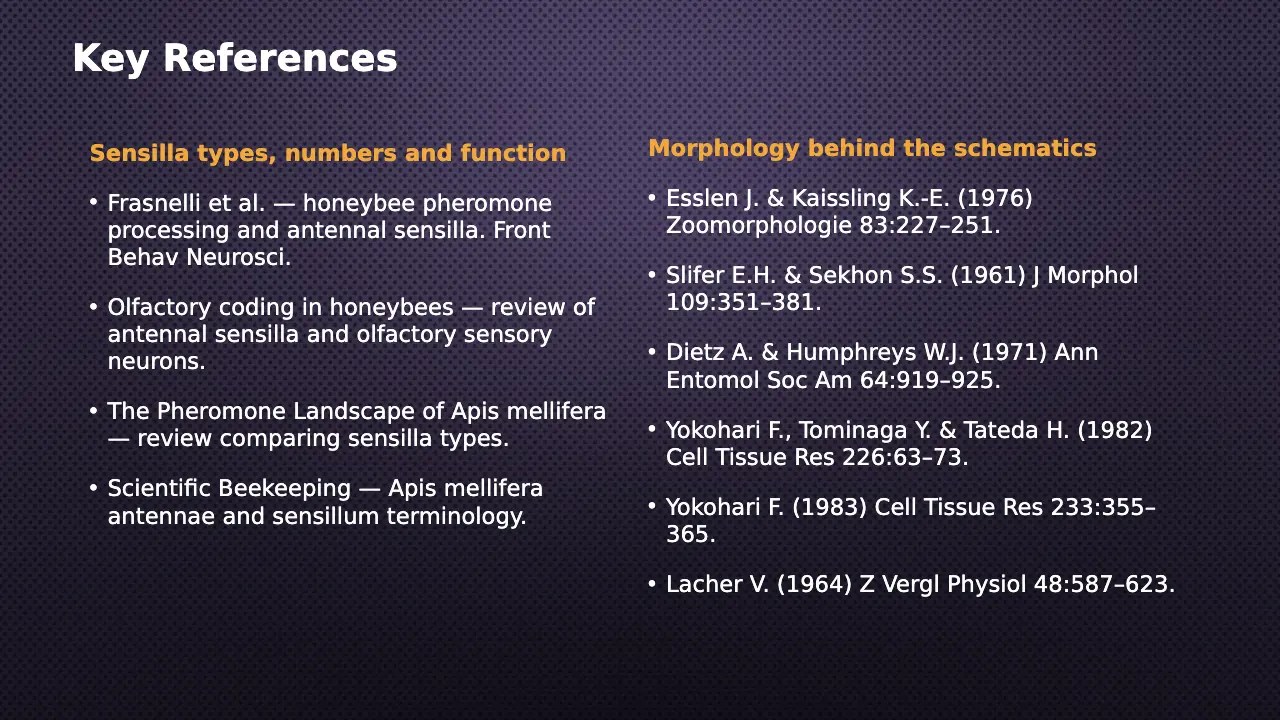
Brain and ventral nerve cord, compound eyes, ocelli, Johnston’s organ and the sensilla. Download the slides (PDF)

Session 5
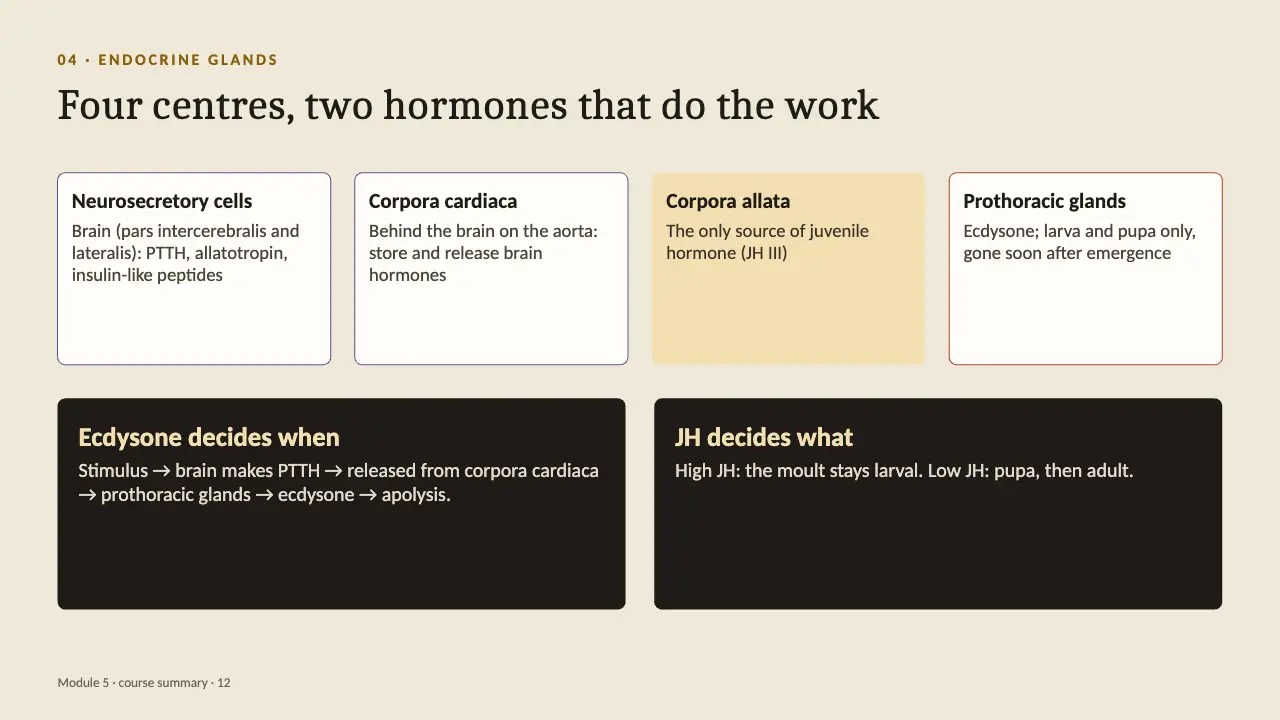
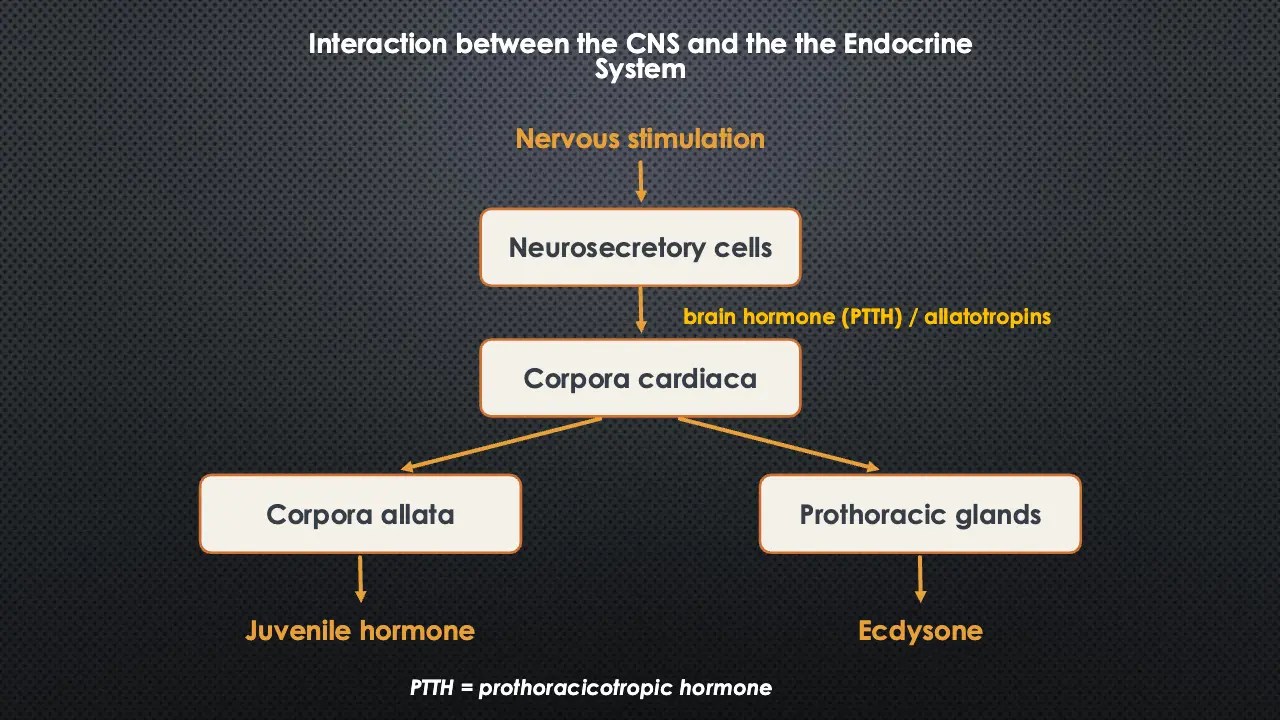
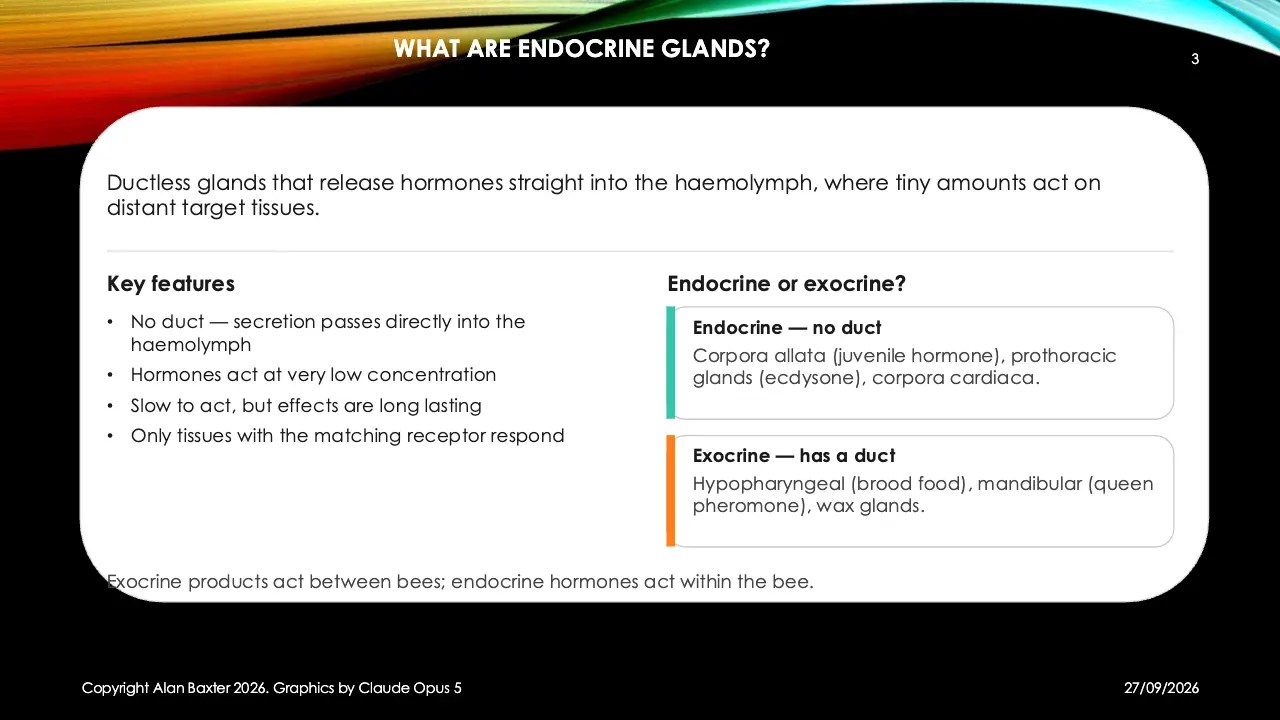
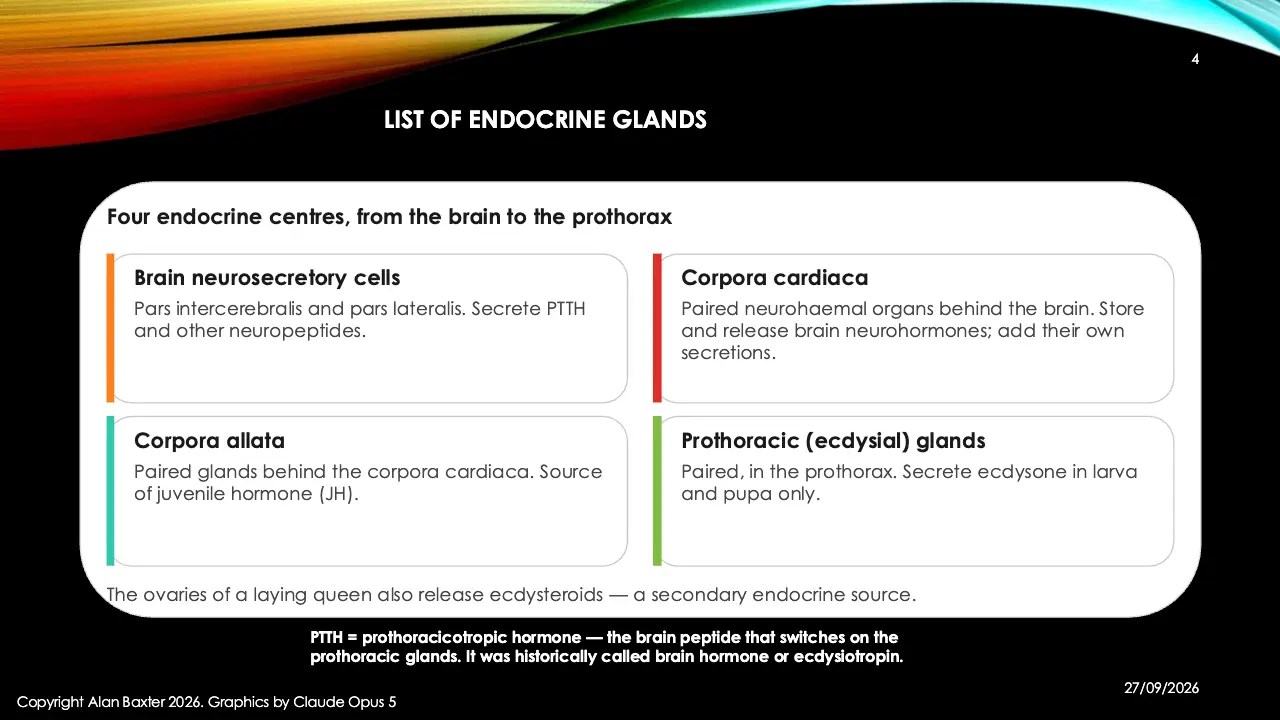
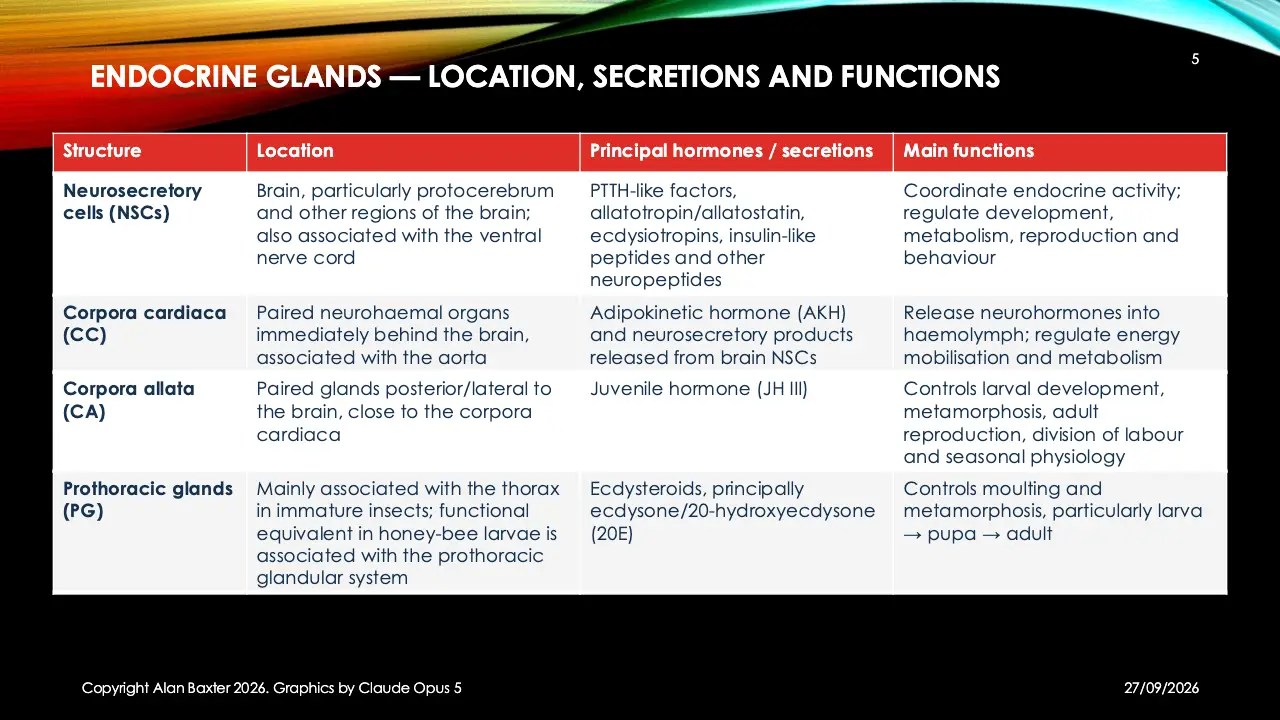
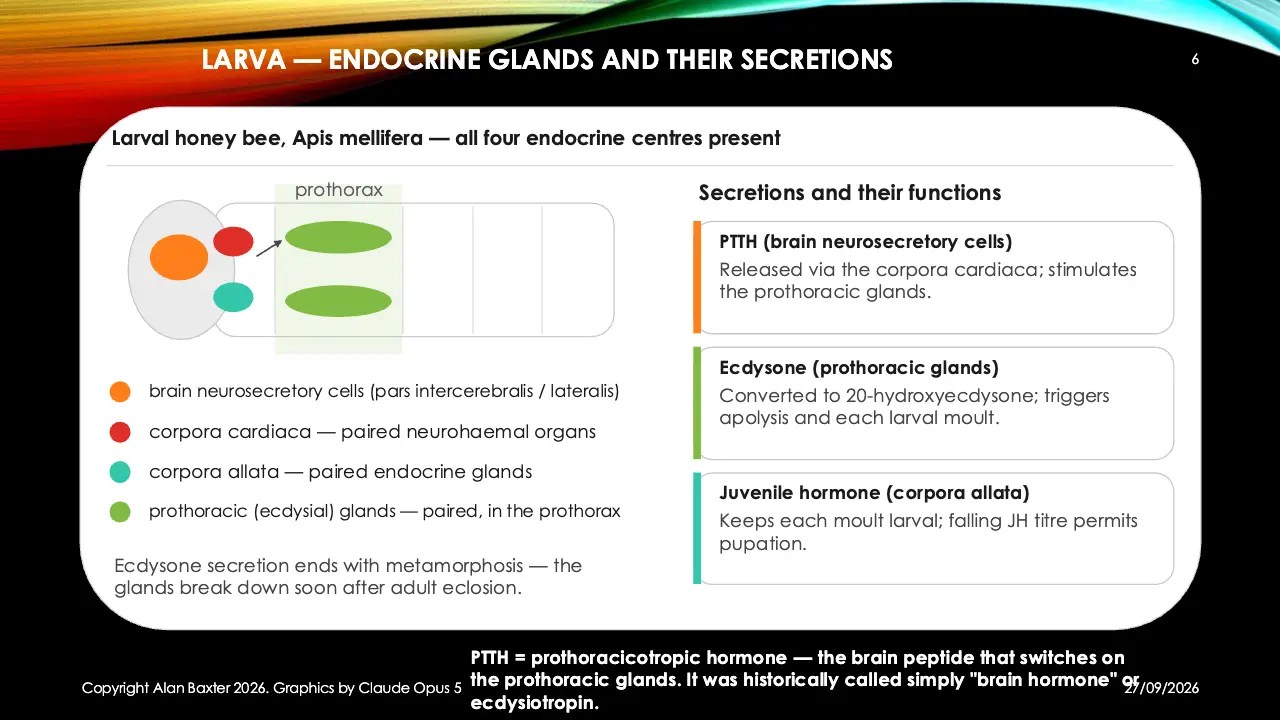
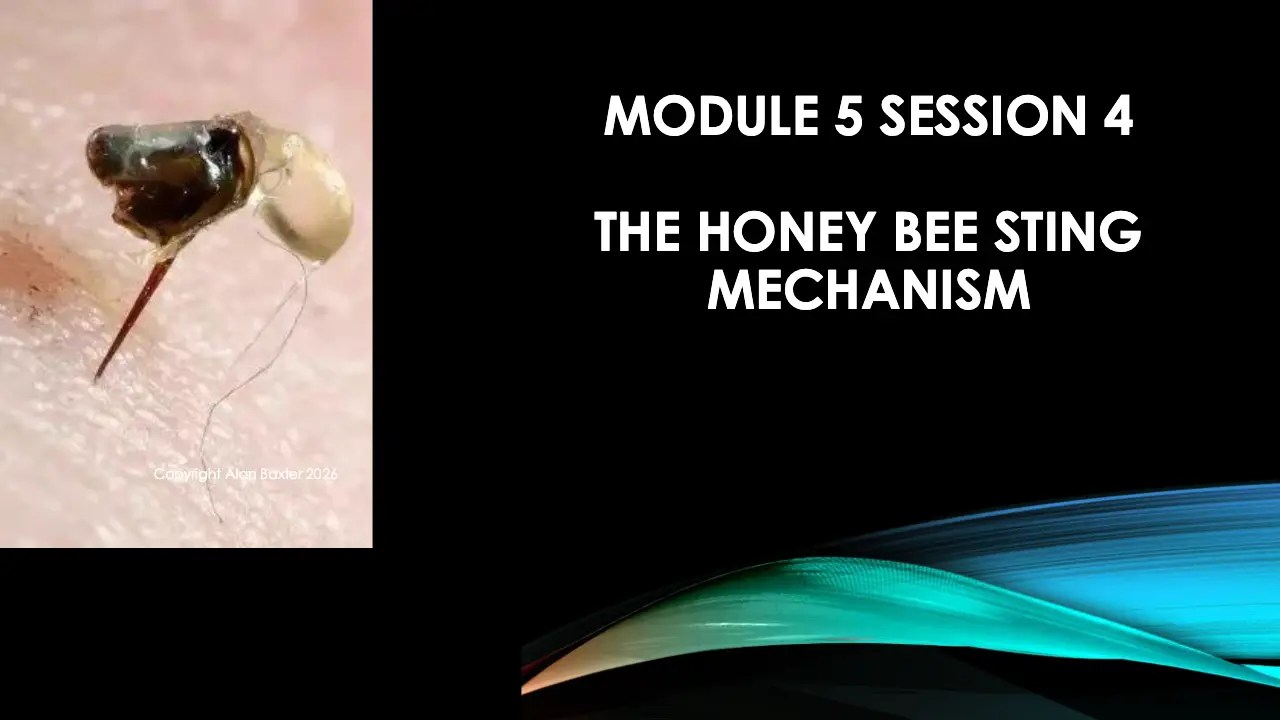
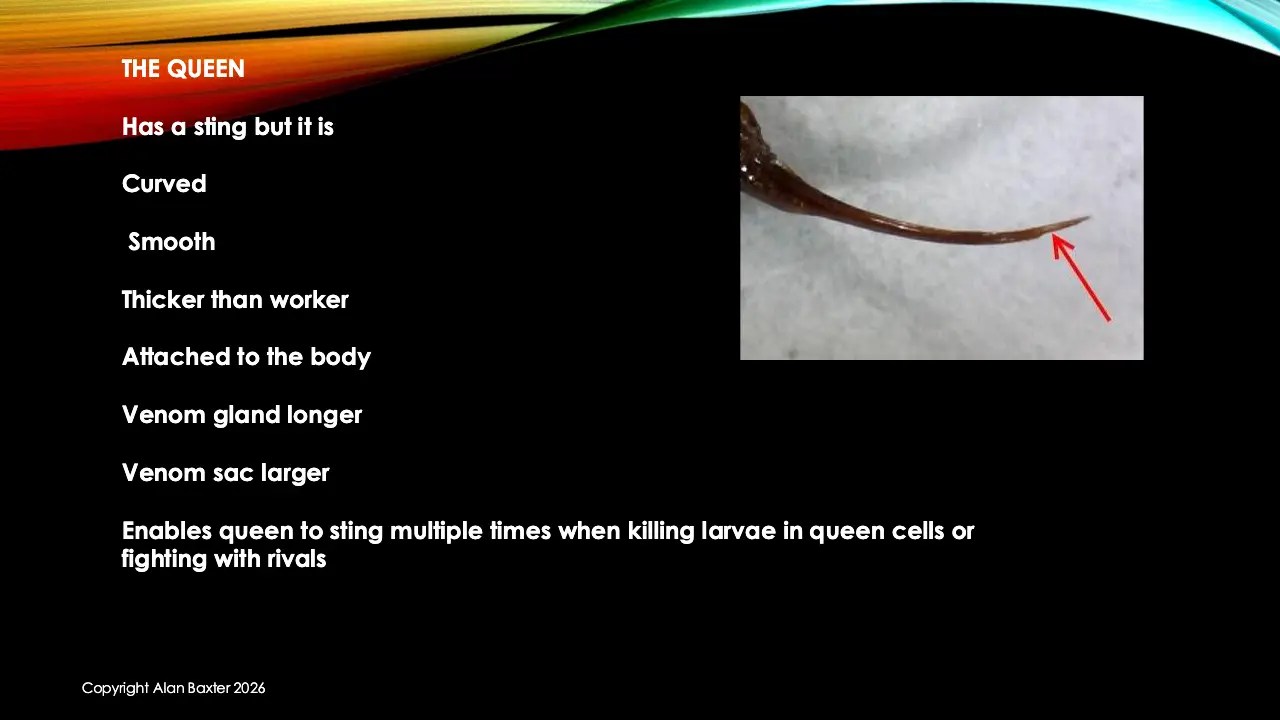
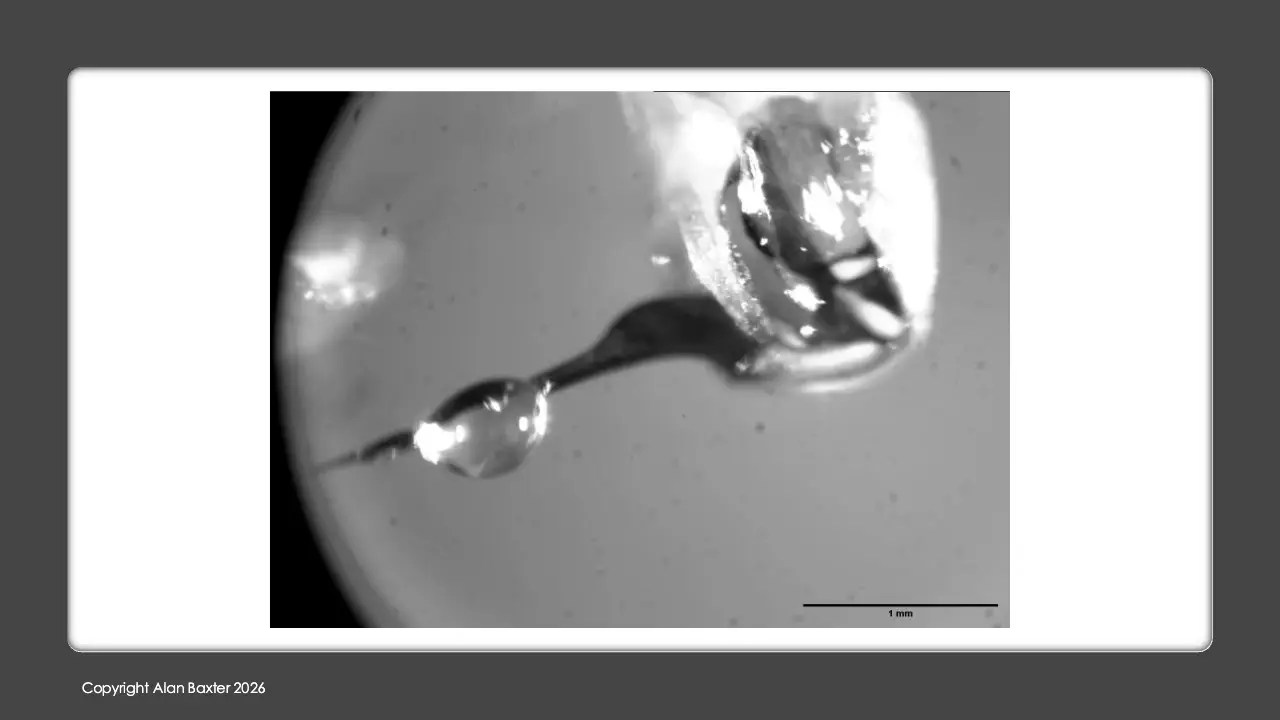
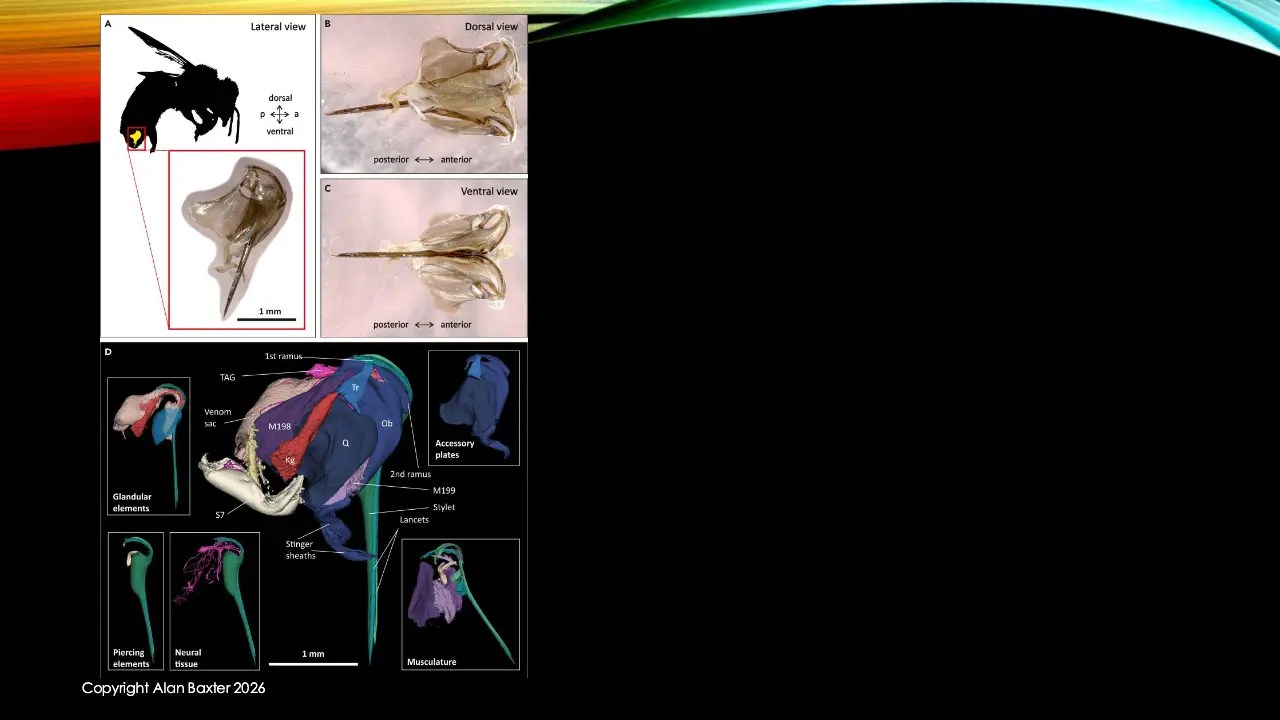
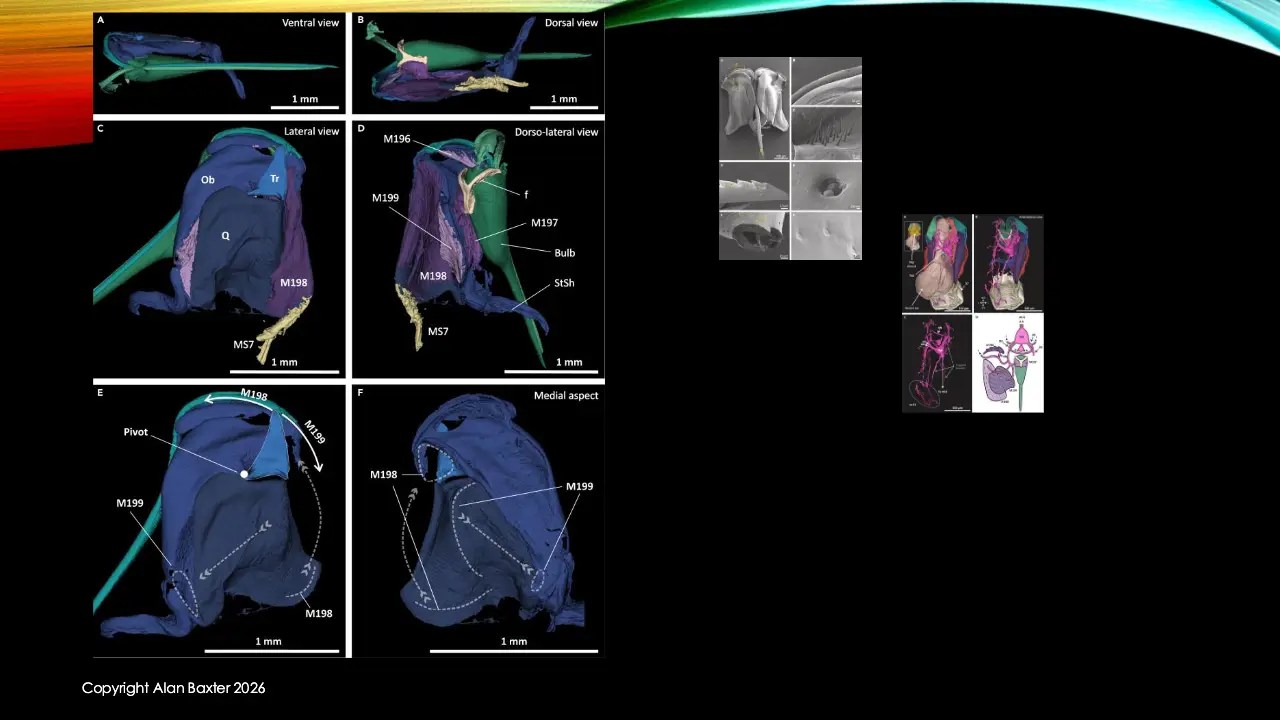
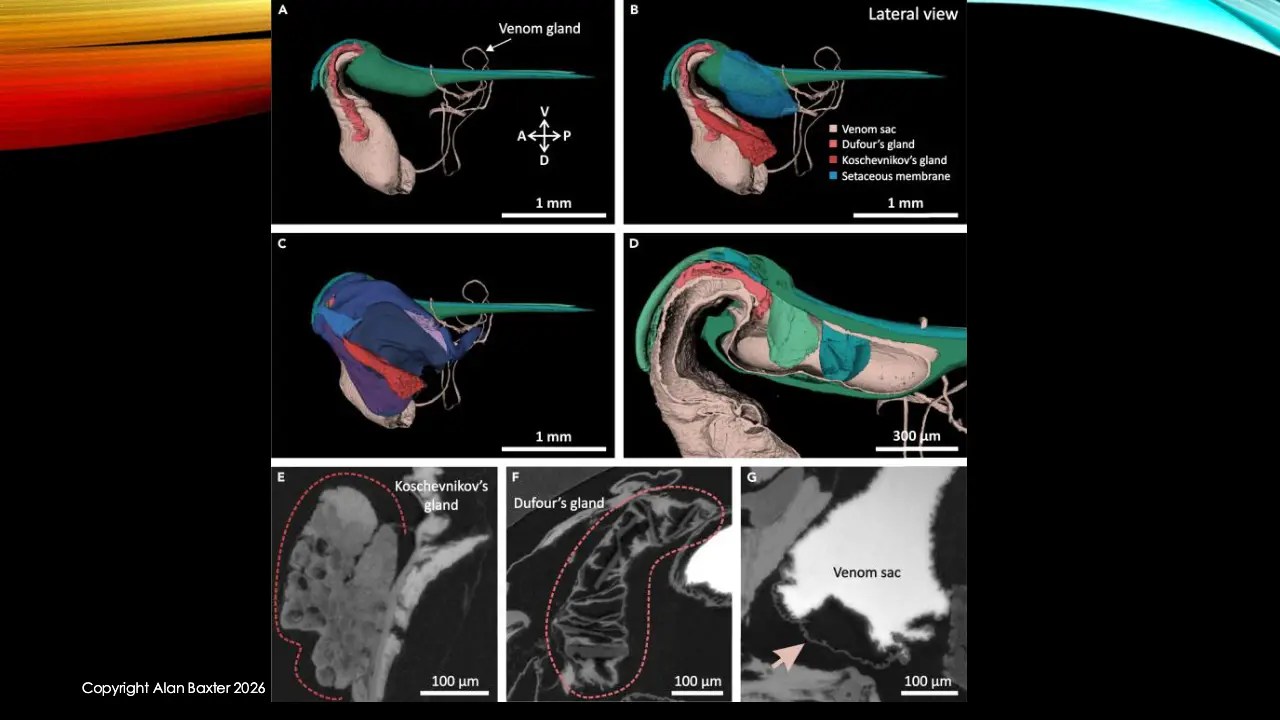
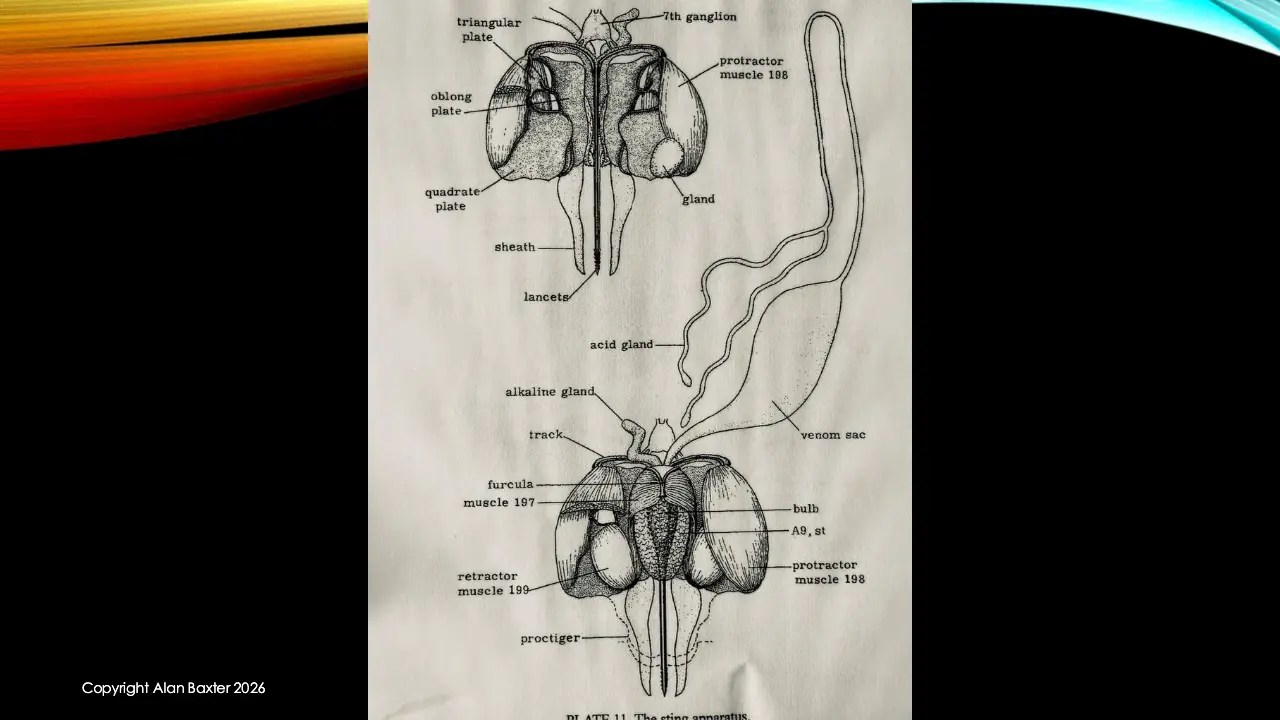
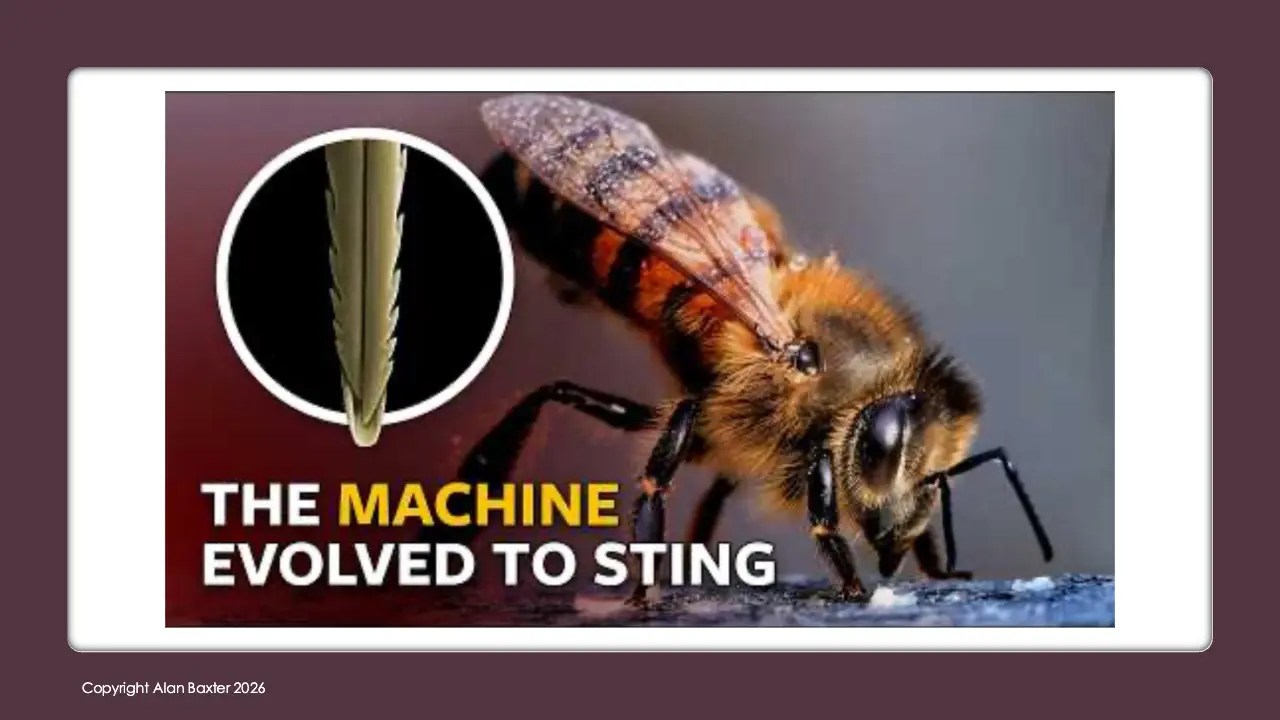
The endocrine glands and the sting
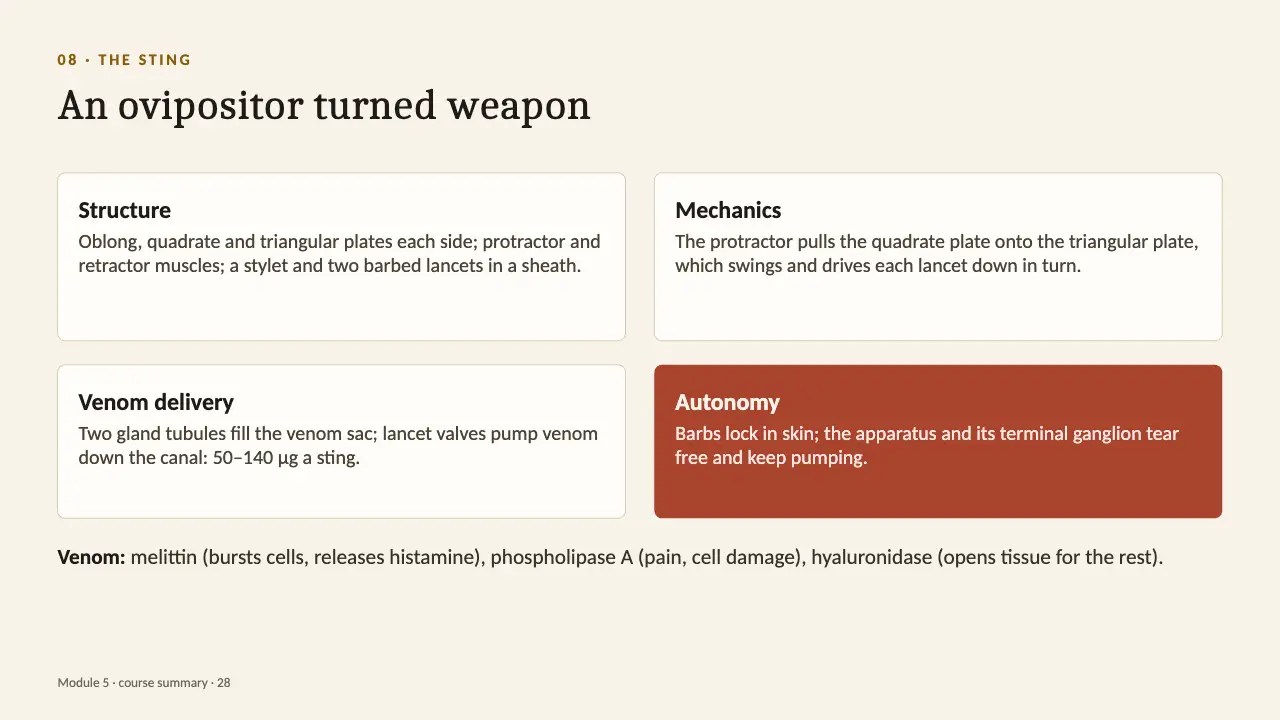
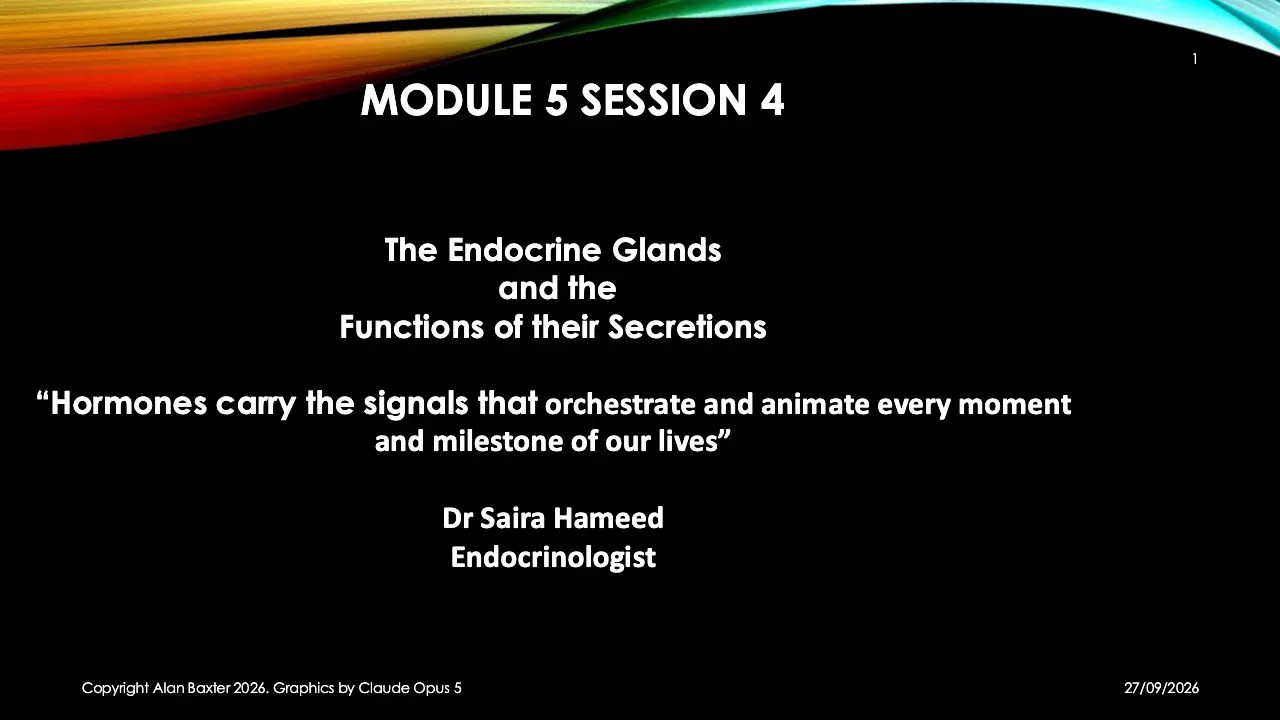
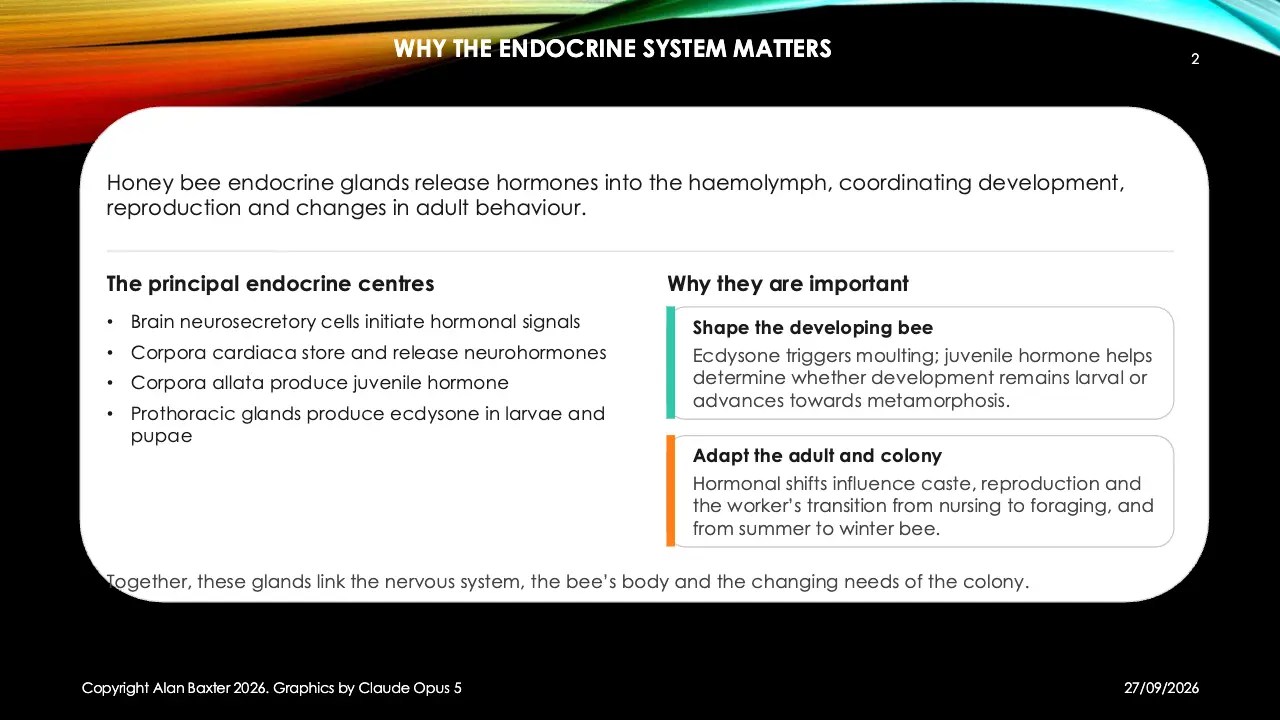
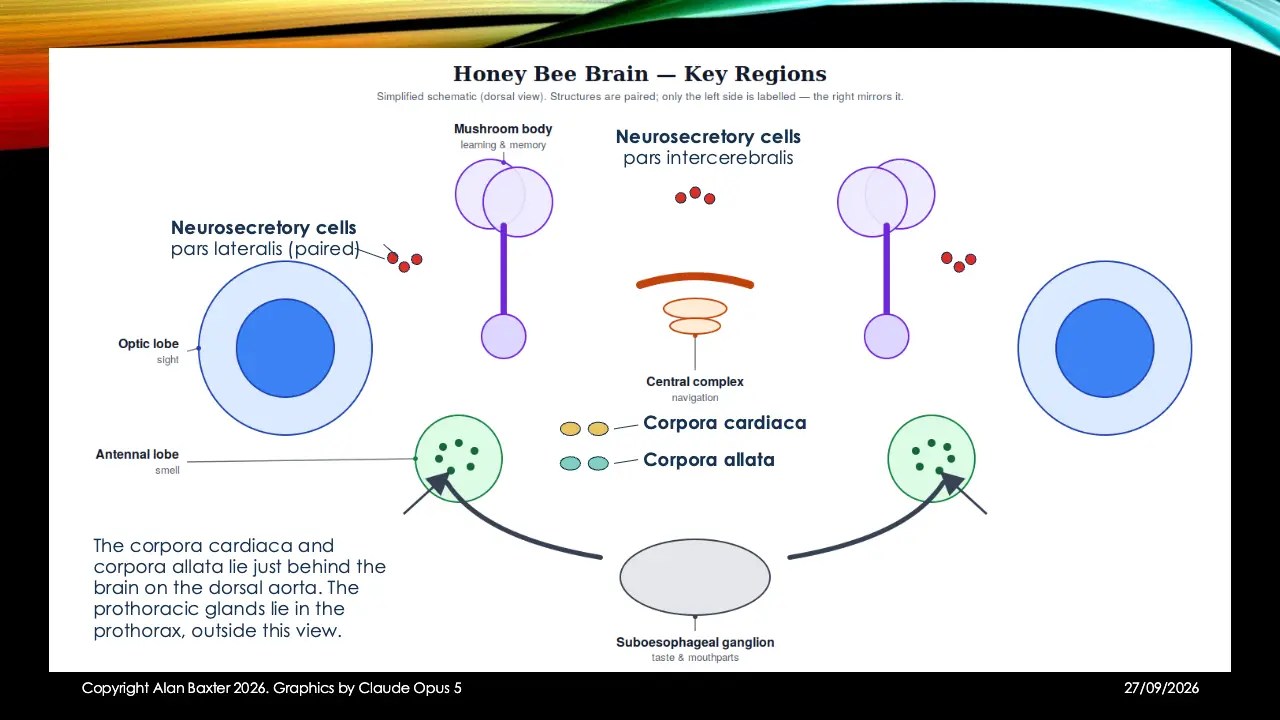
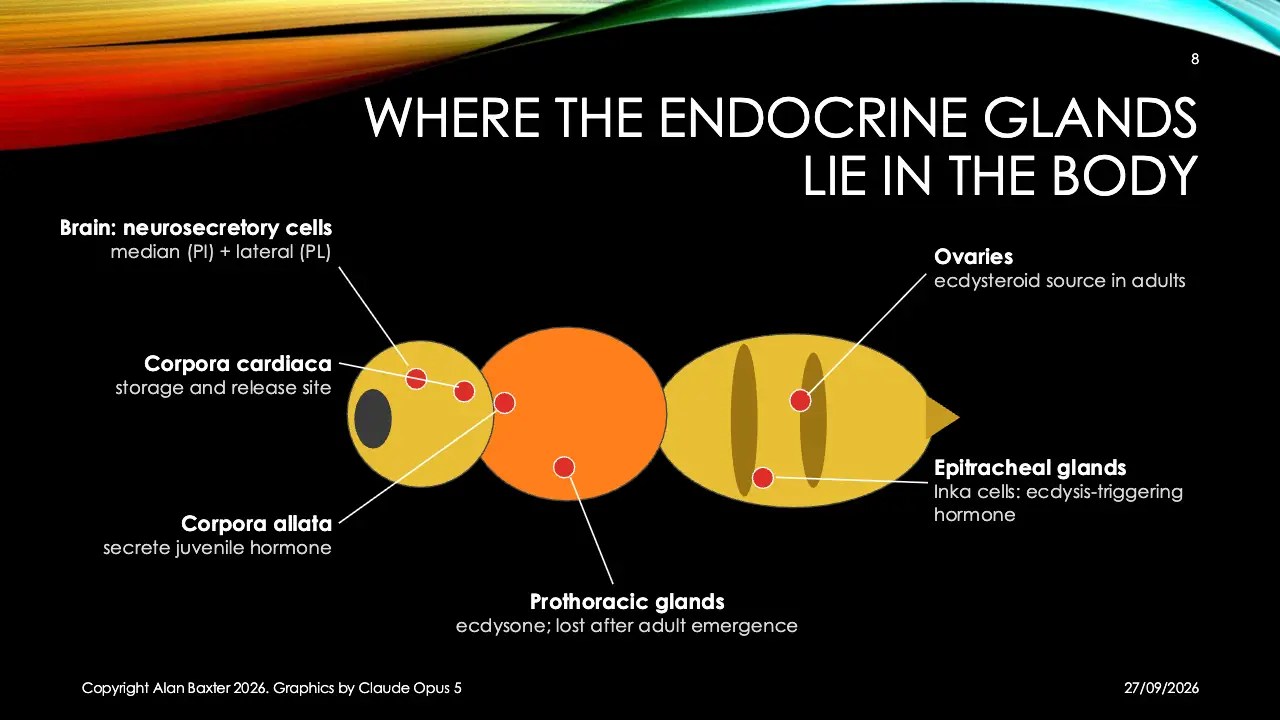
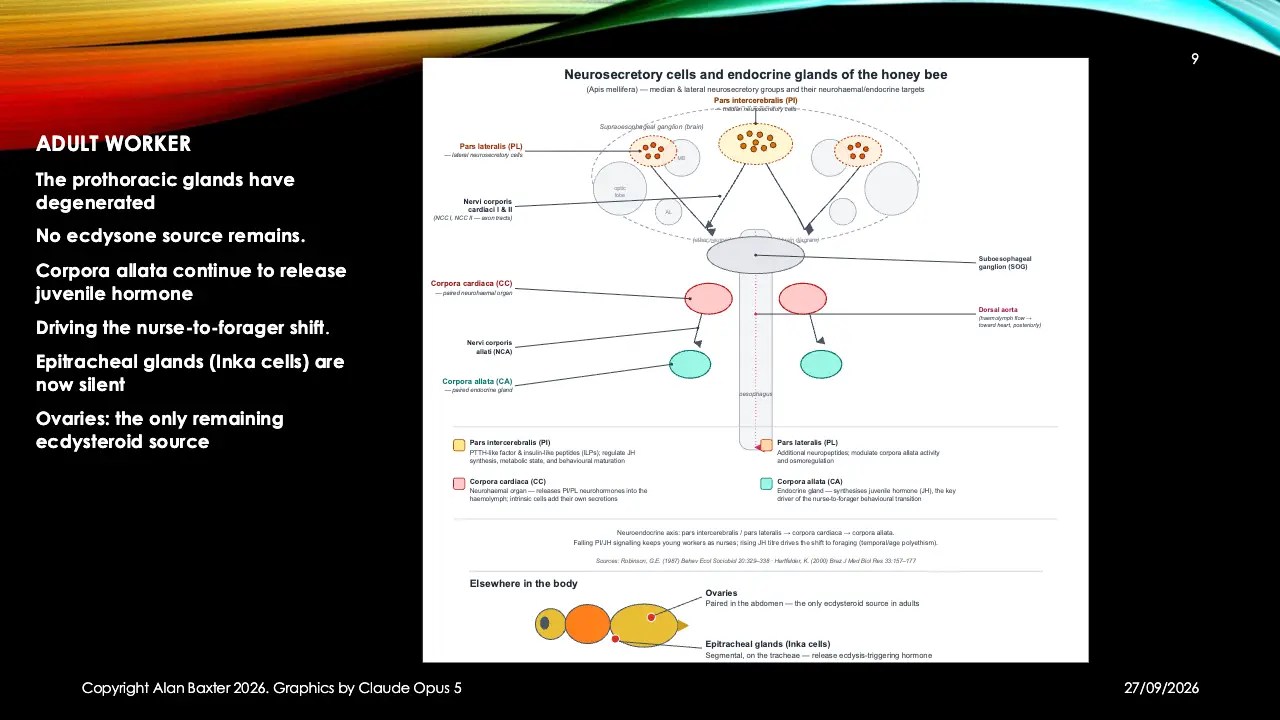
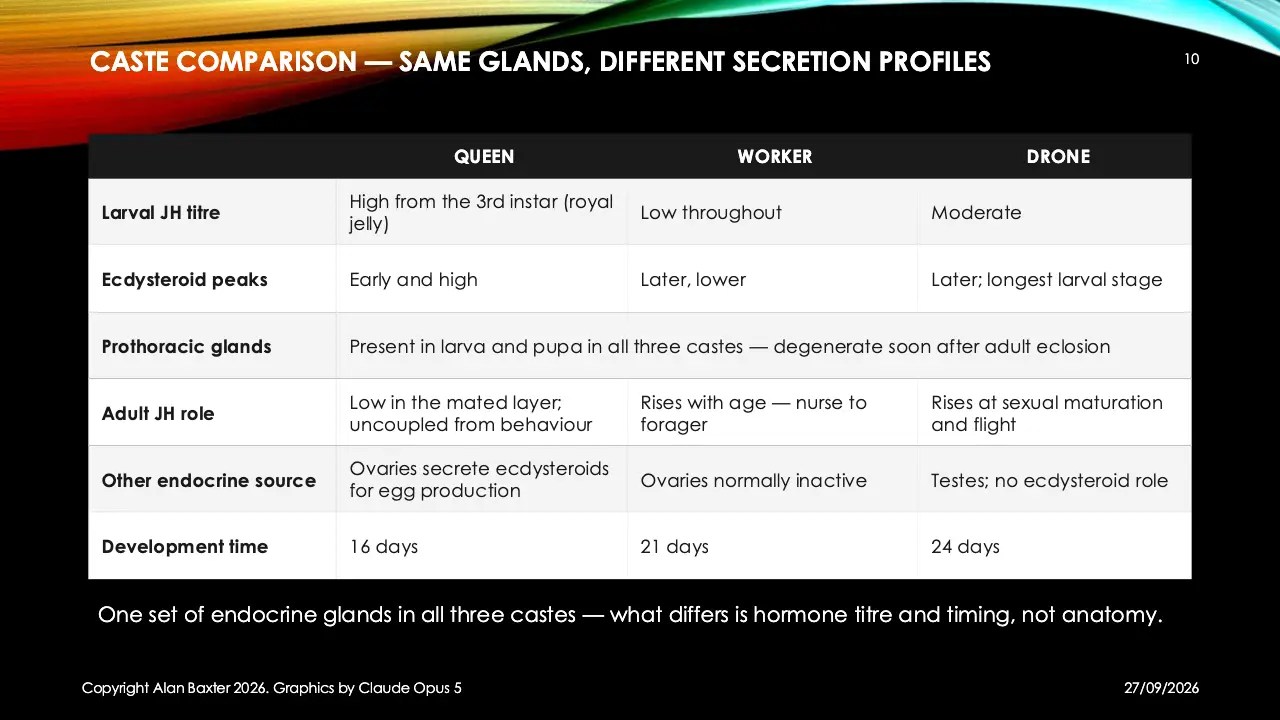
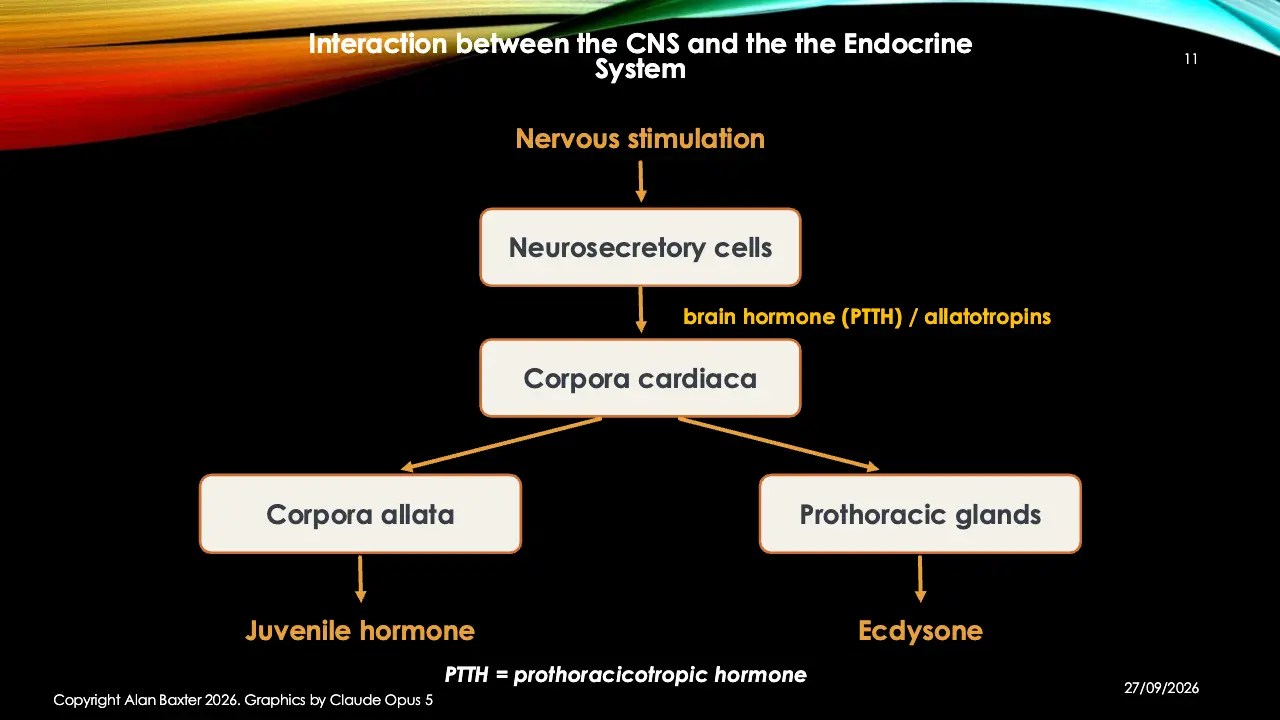
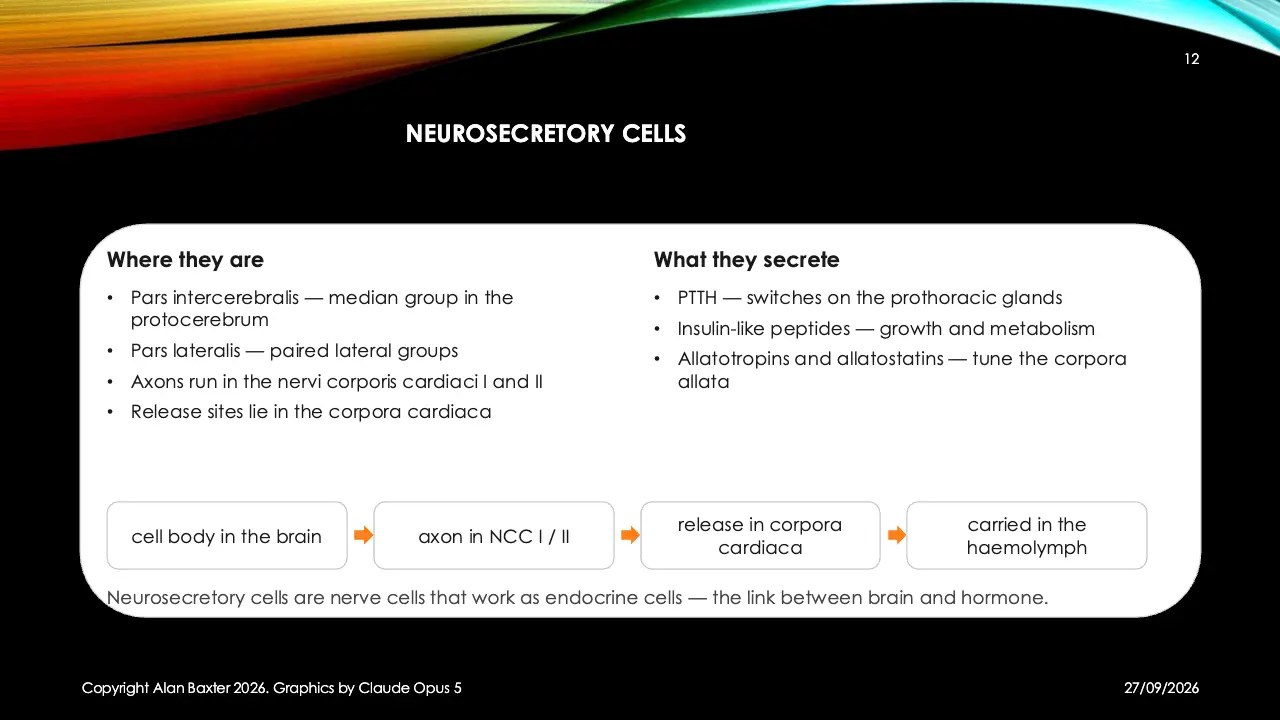
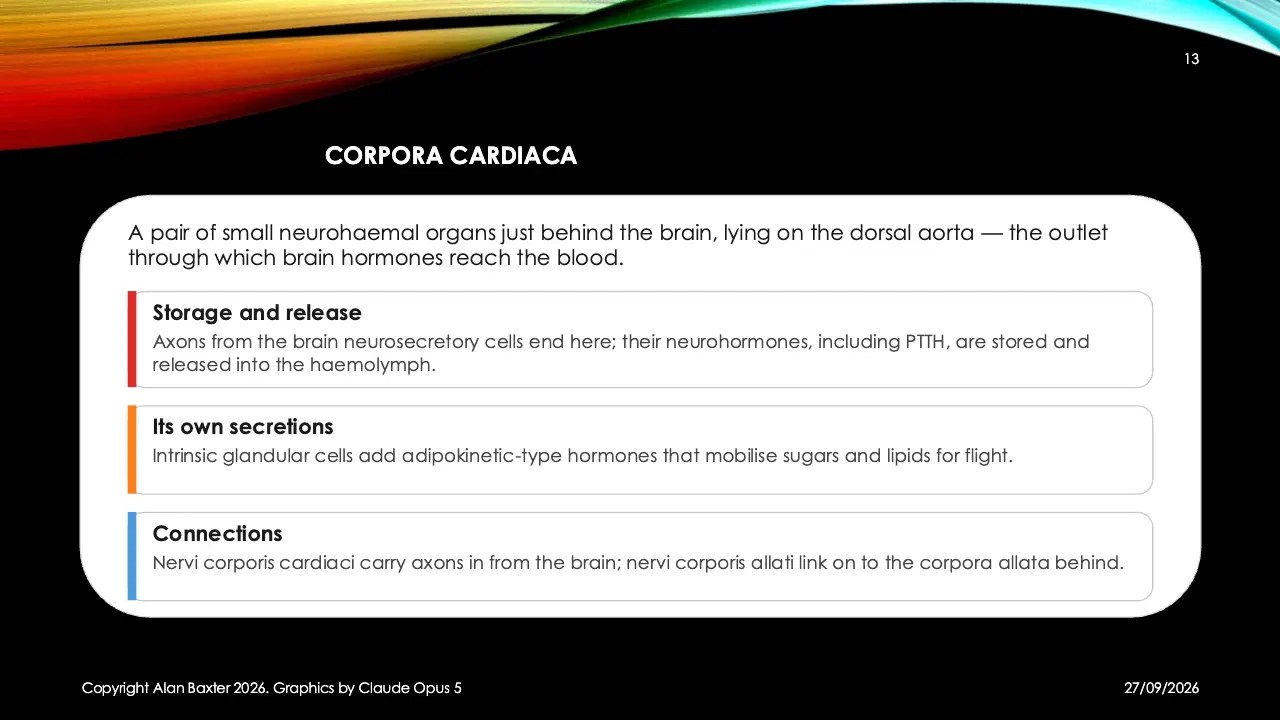
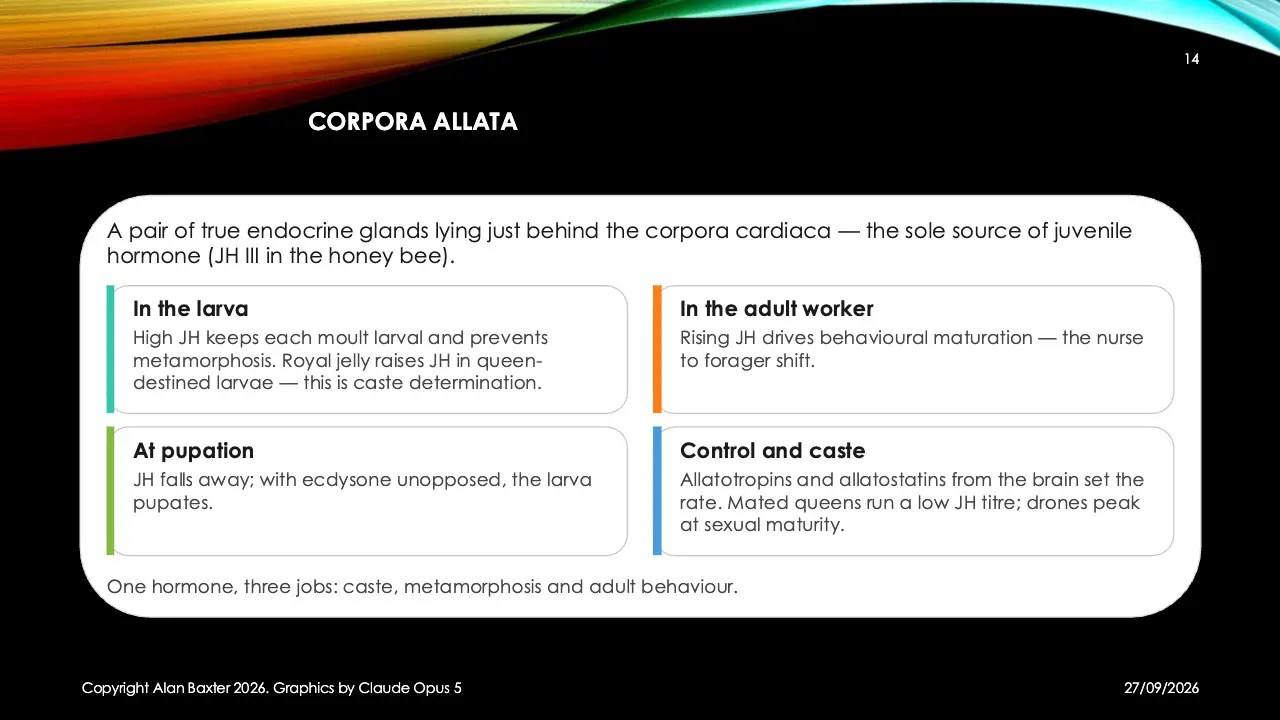
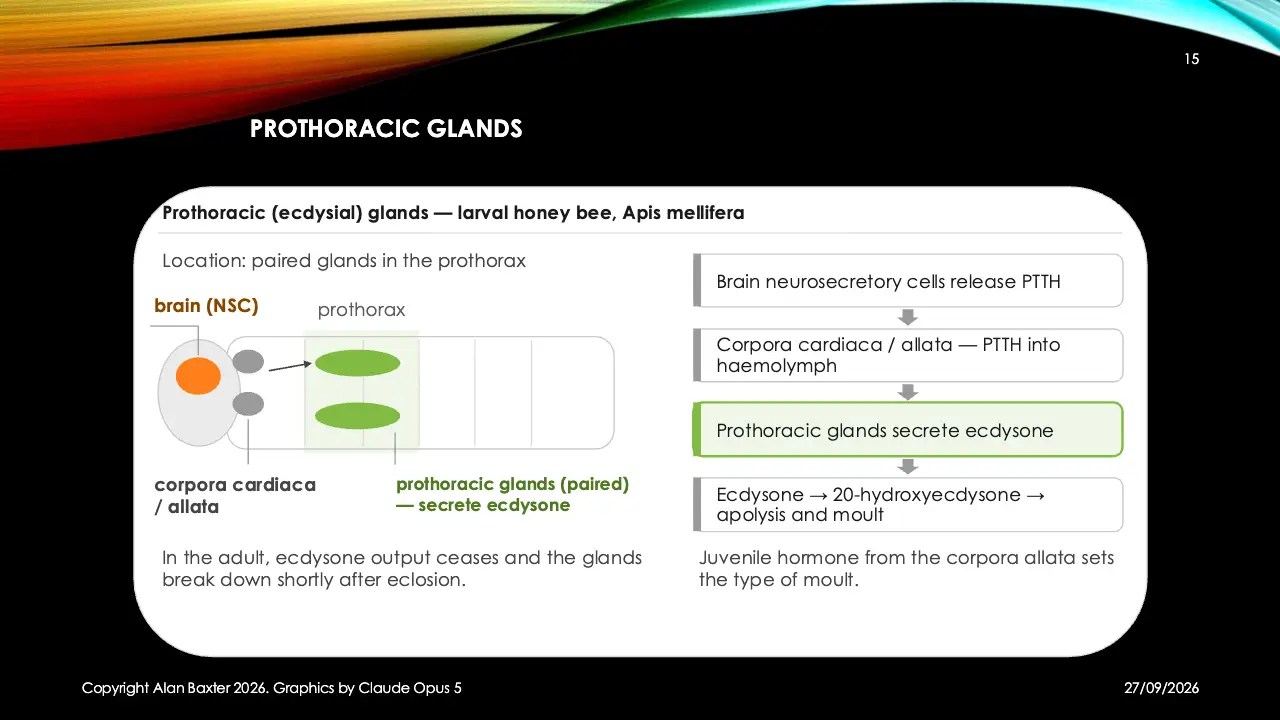
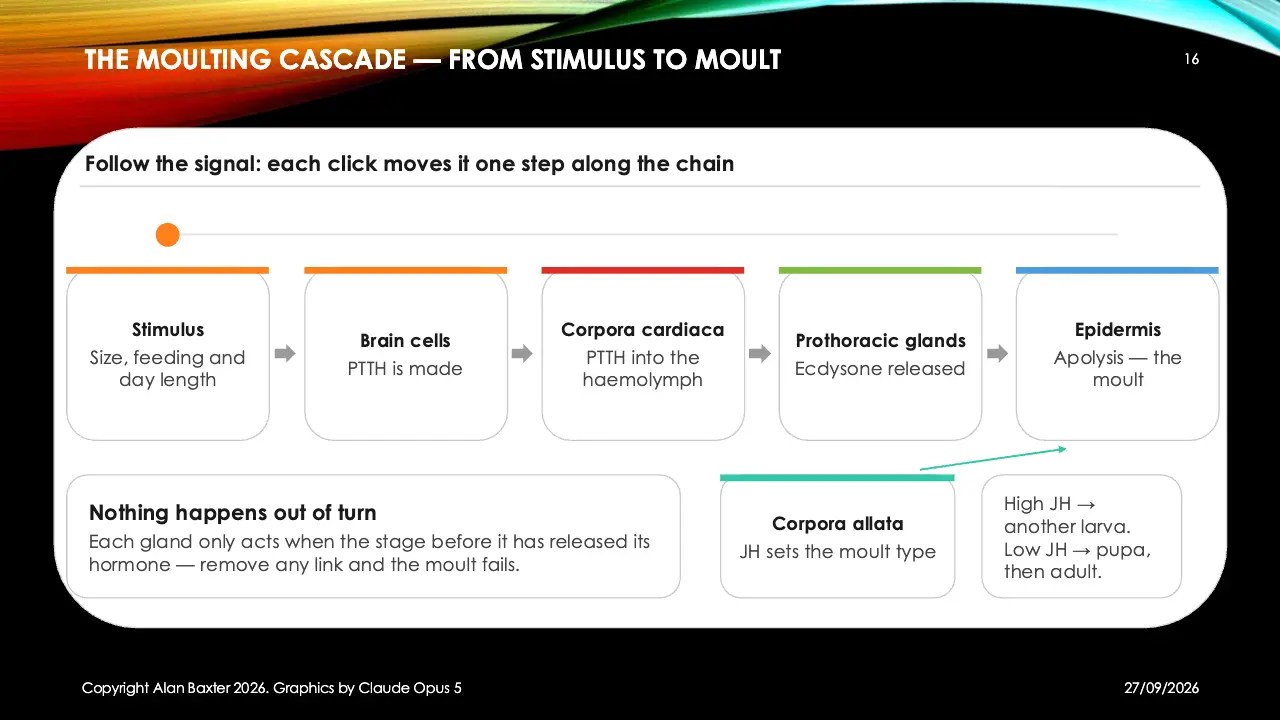
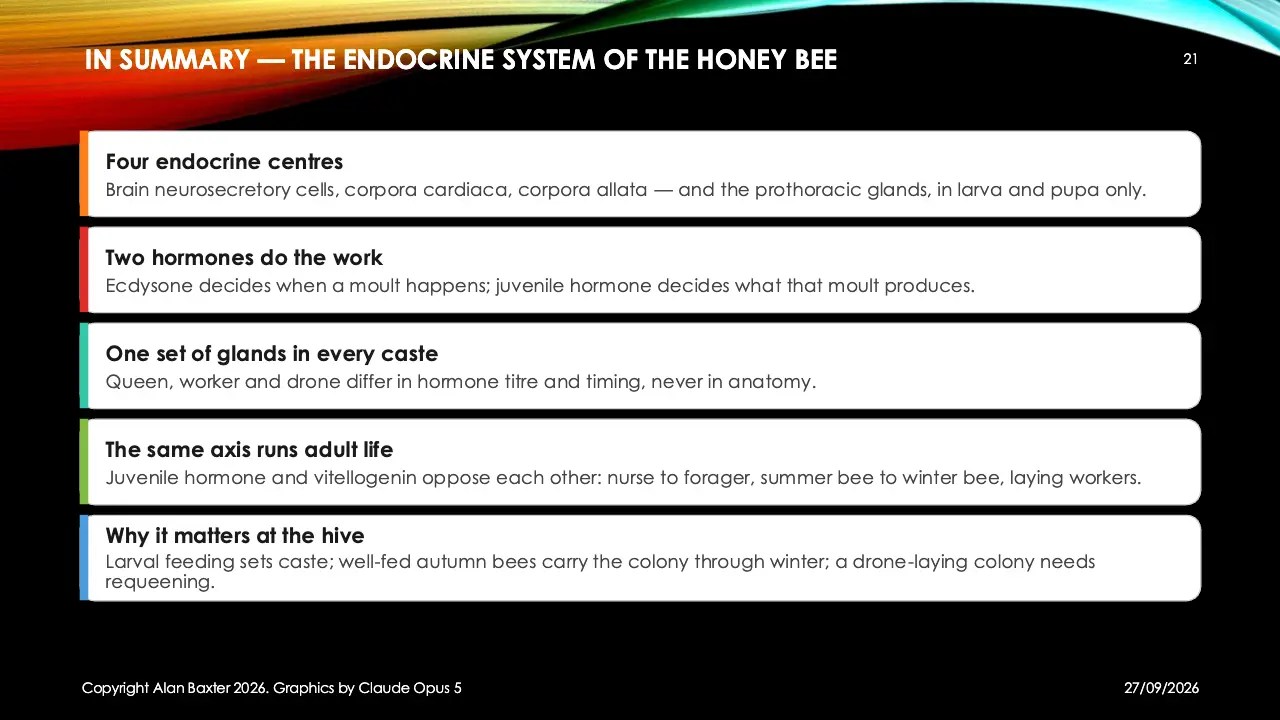
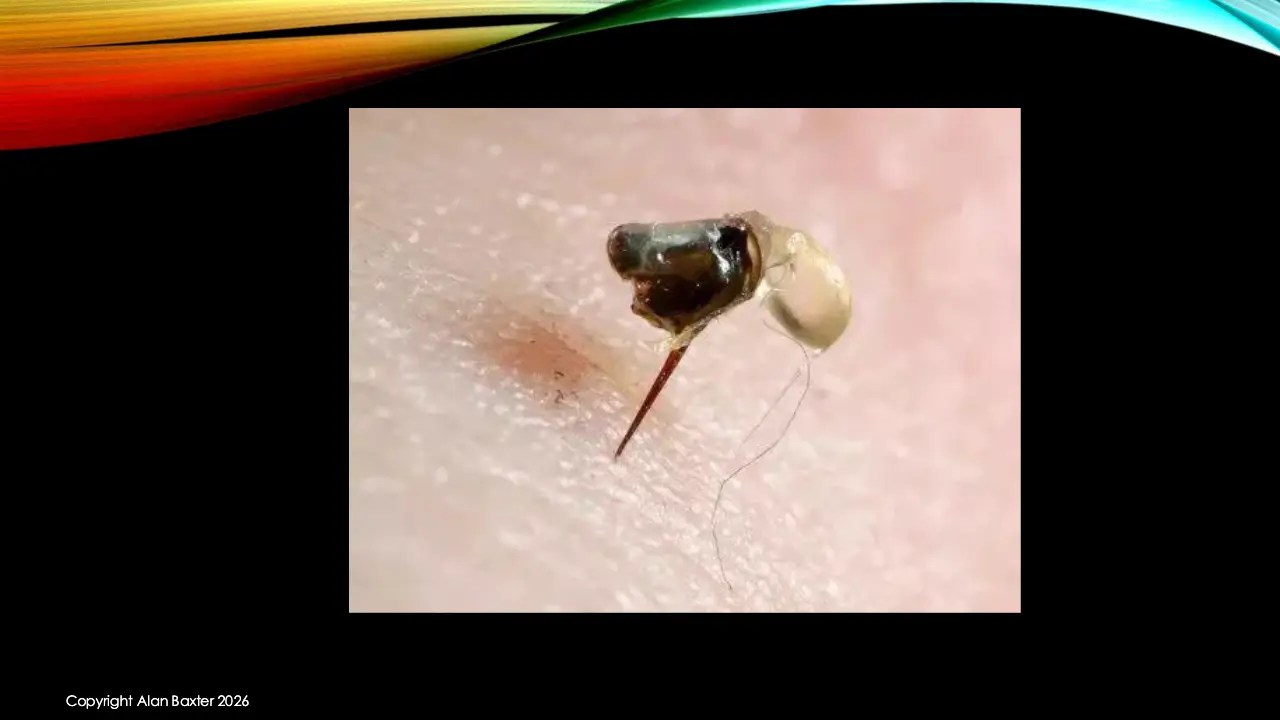
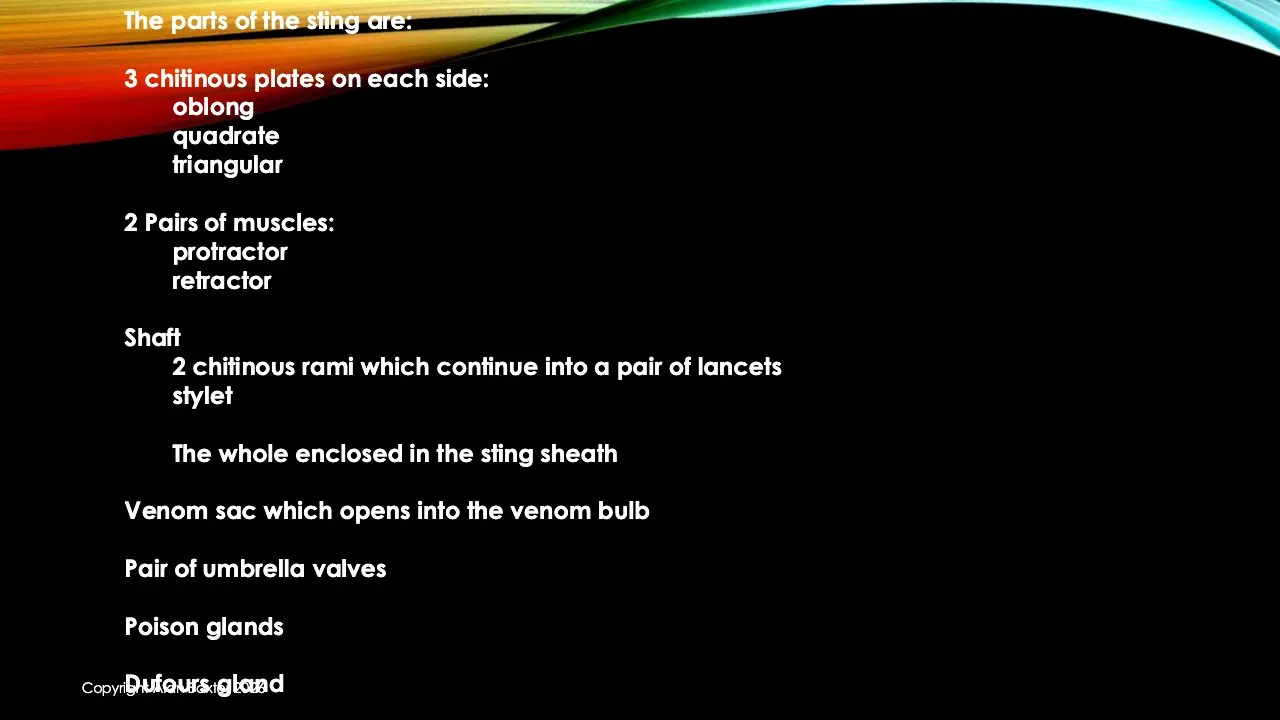
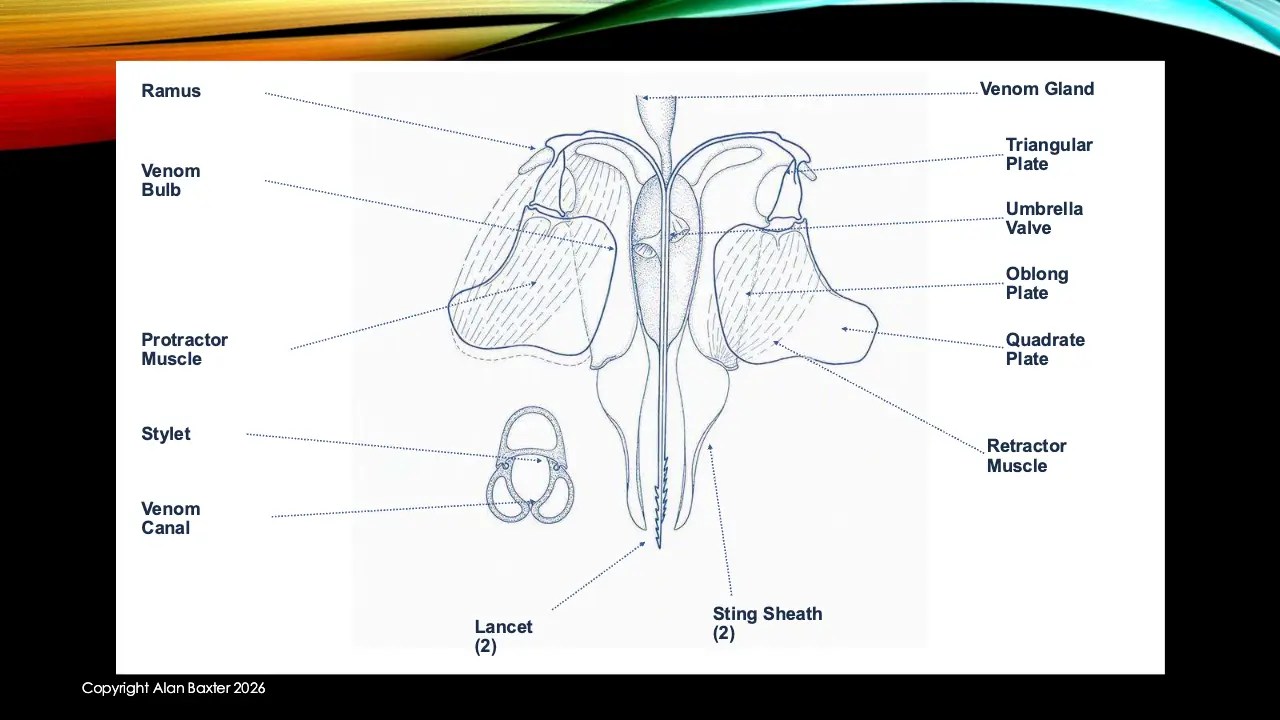
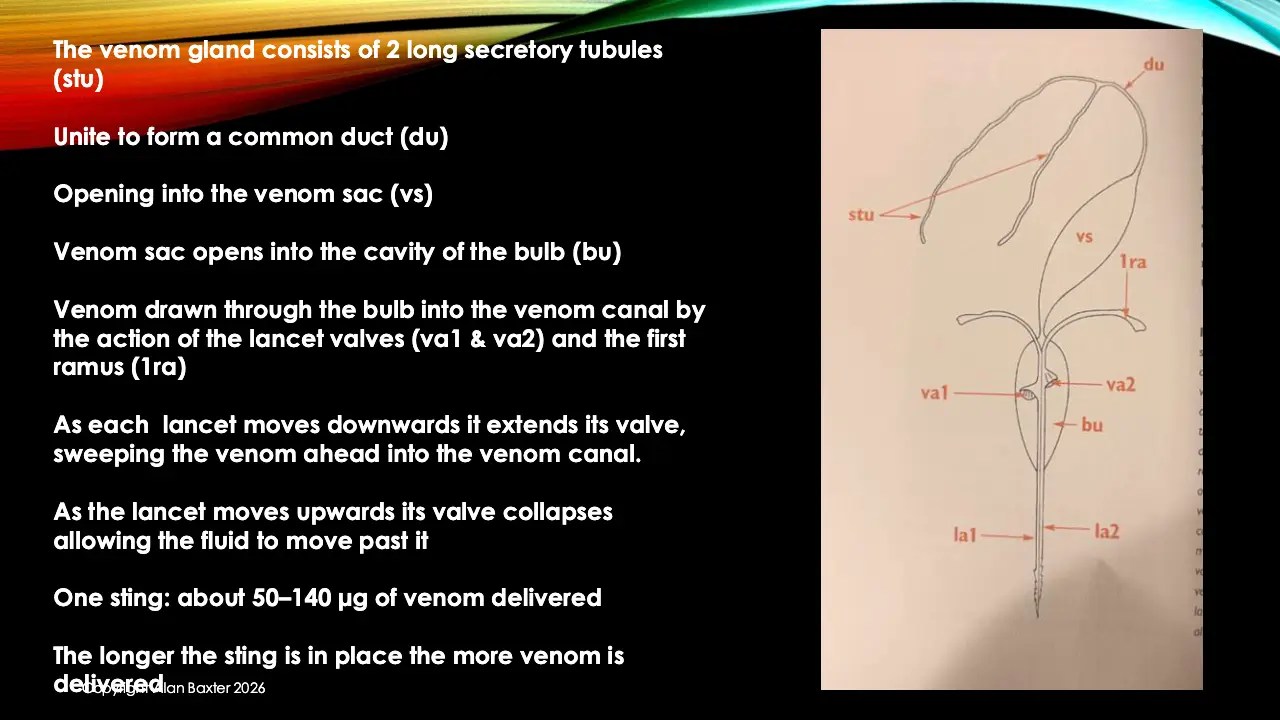
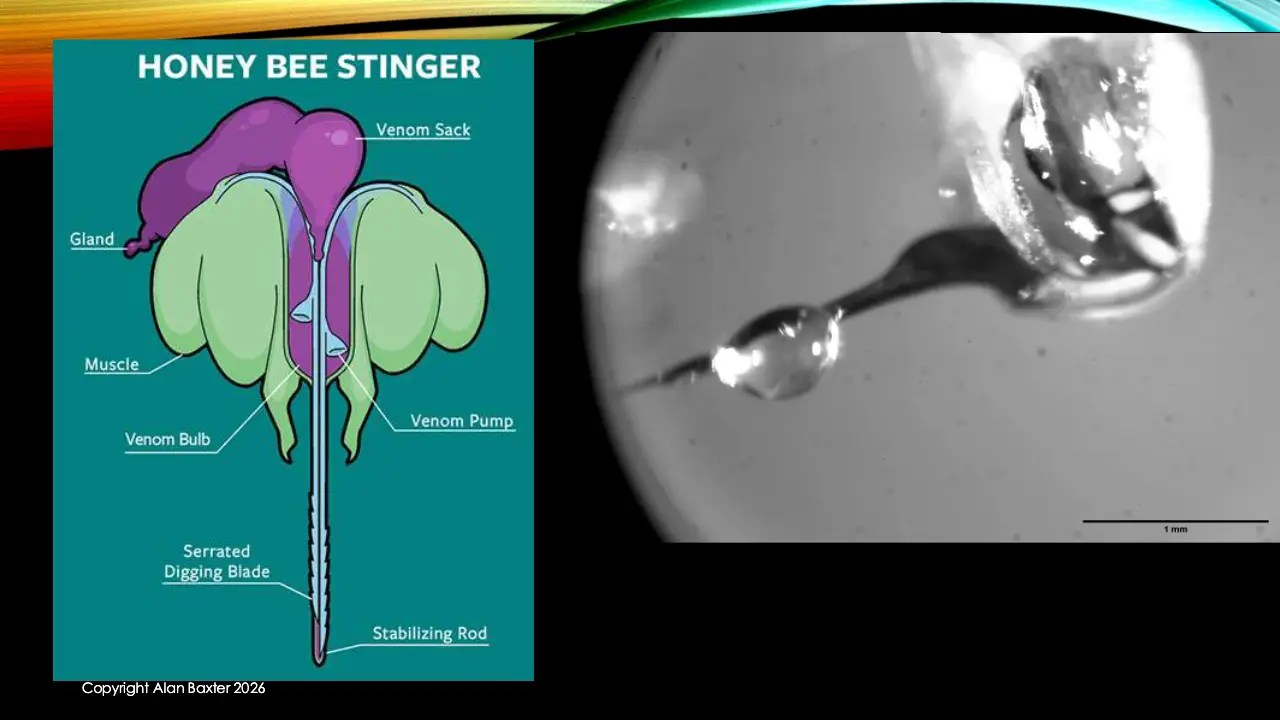
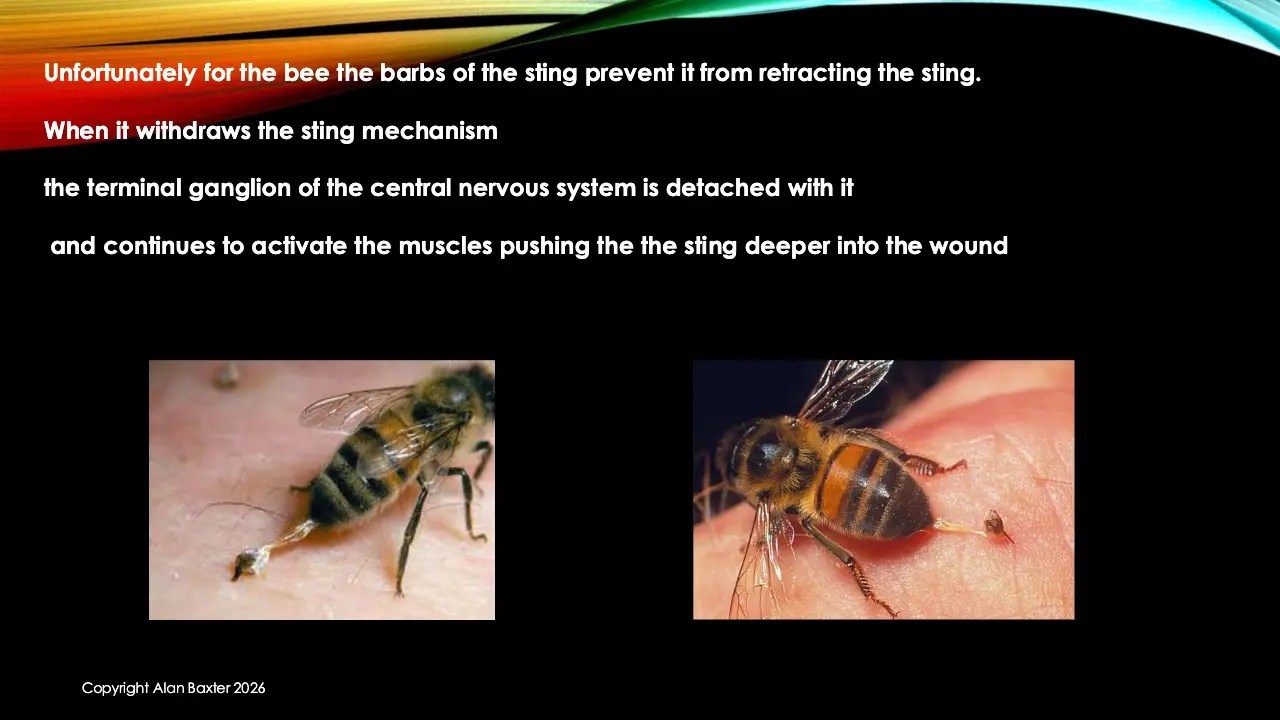
Neurosecretory cells, corpora allata, corpora cardiaca and prothoracic glands; how the sting penetrates skin and delivers venom. Download the slides (PDF)
Session 6
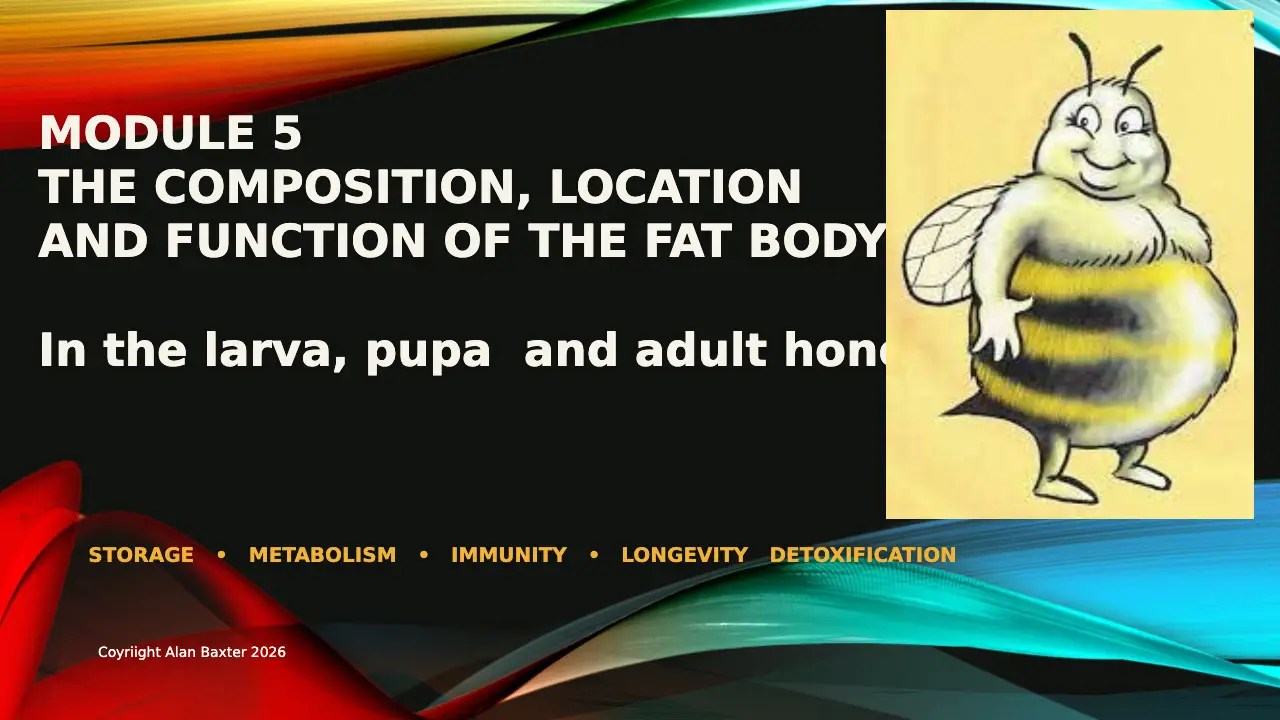
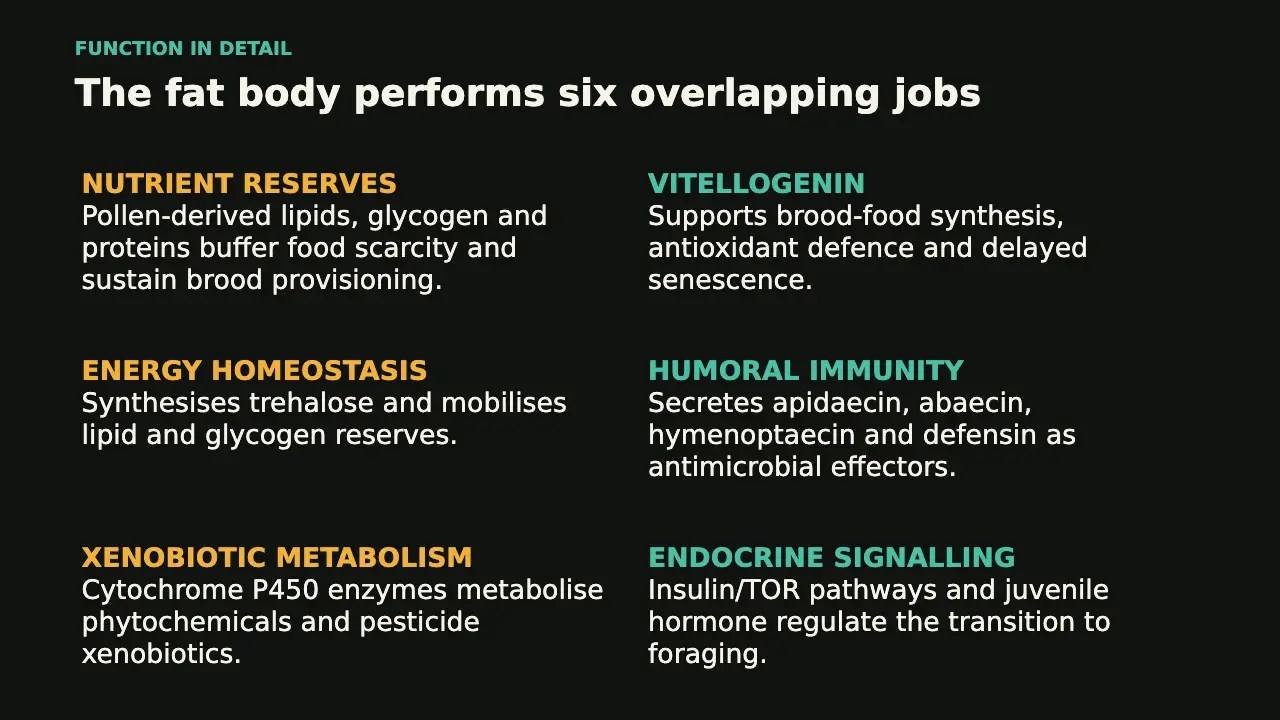
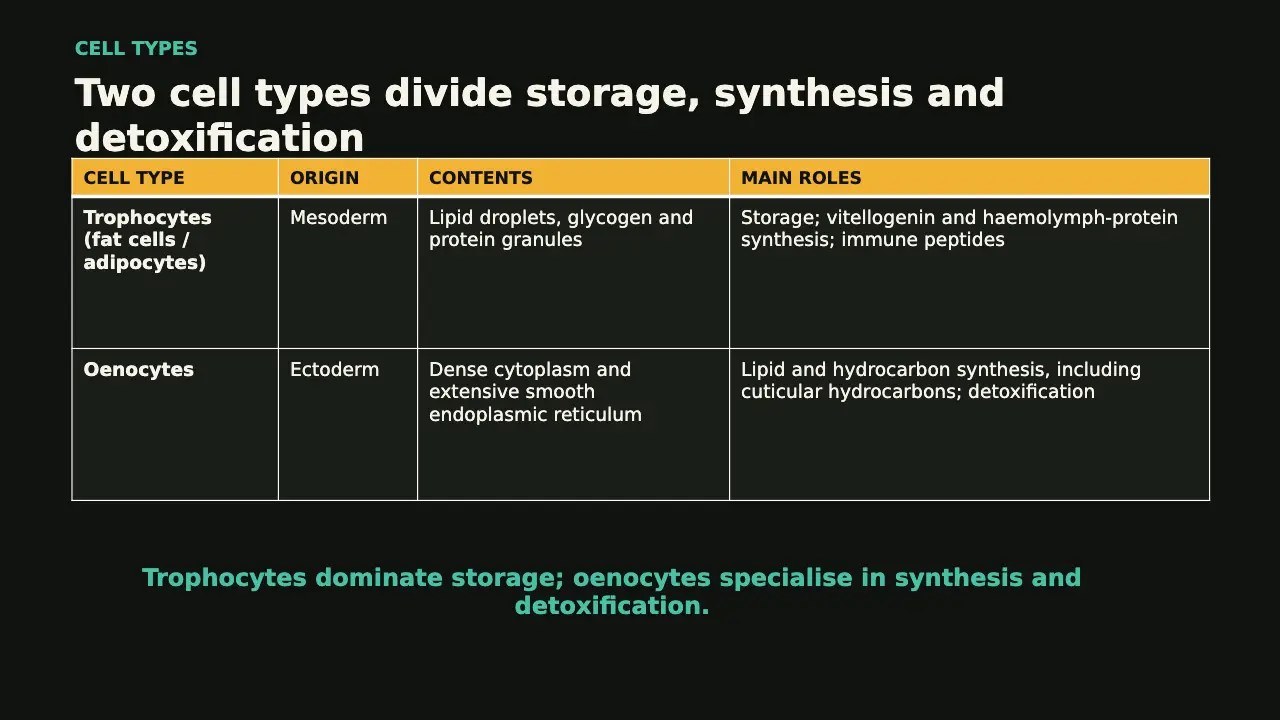
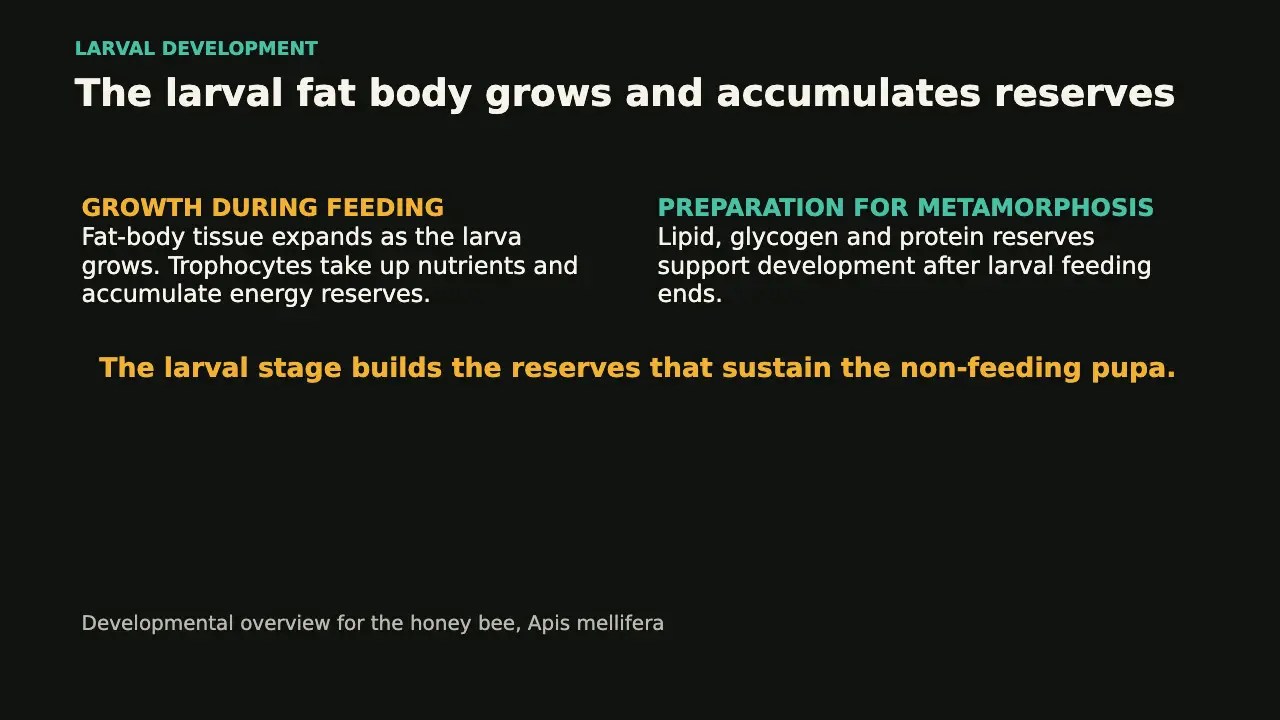
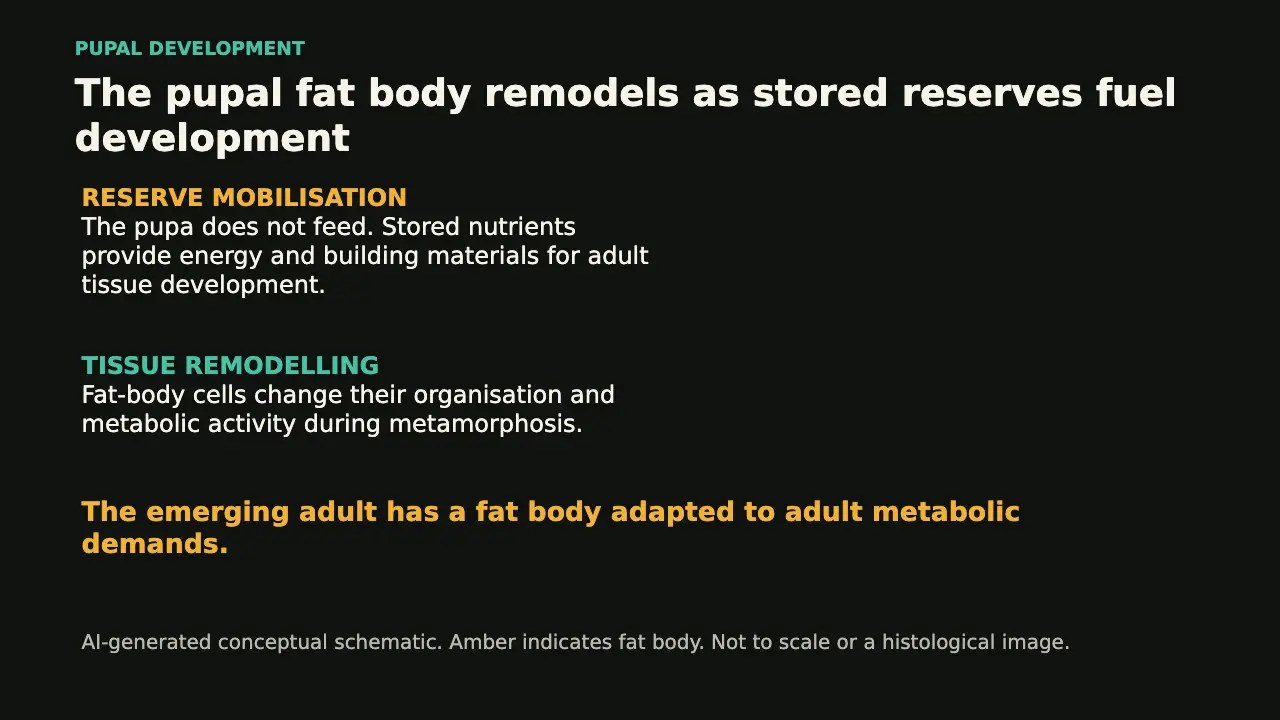
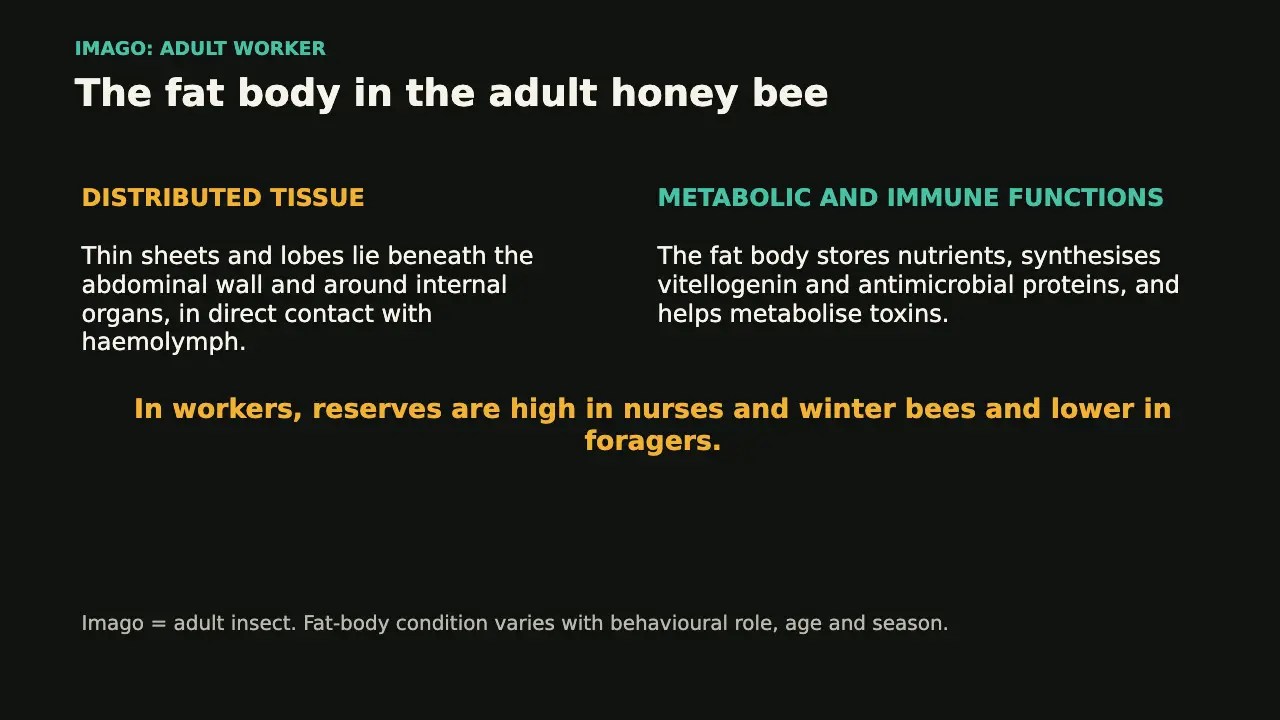
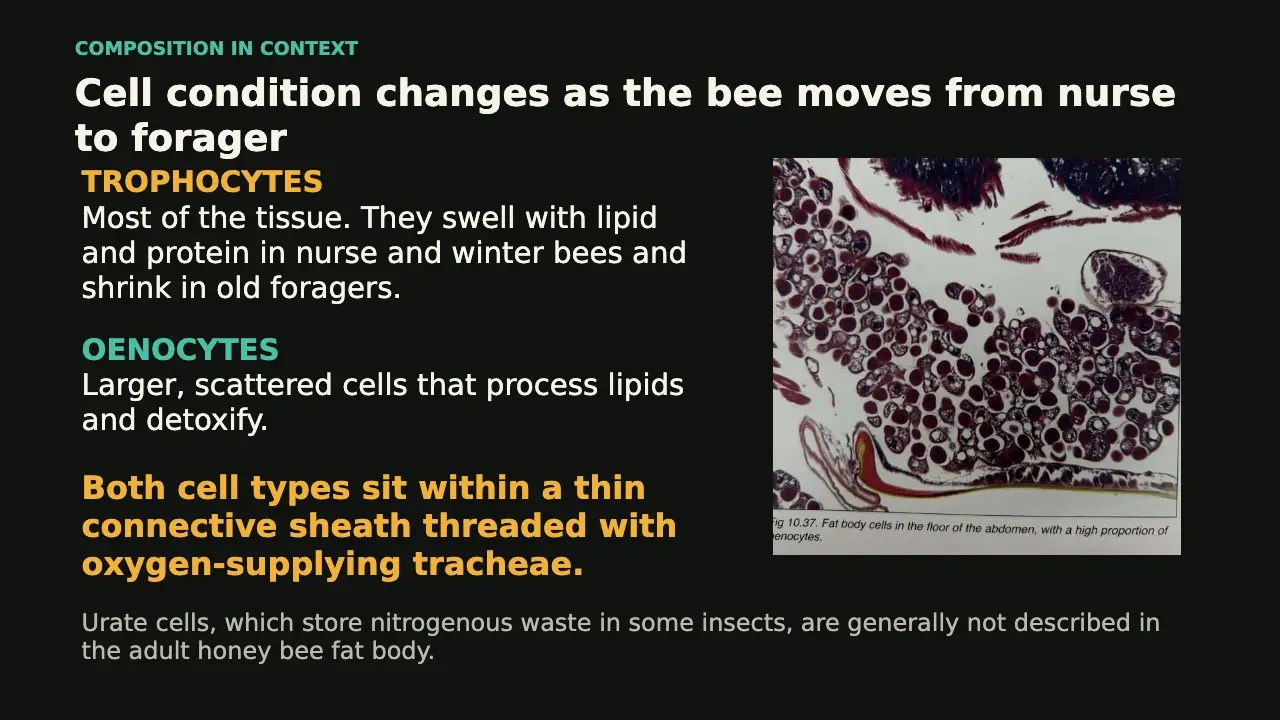
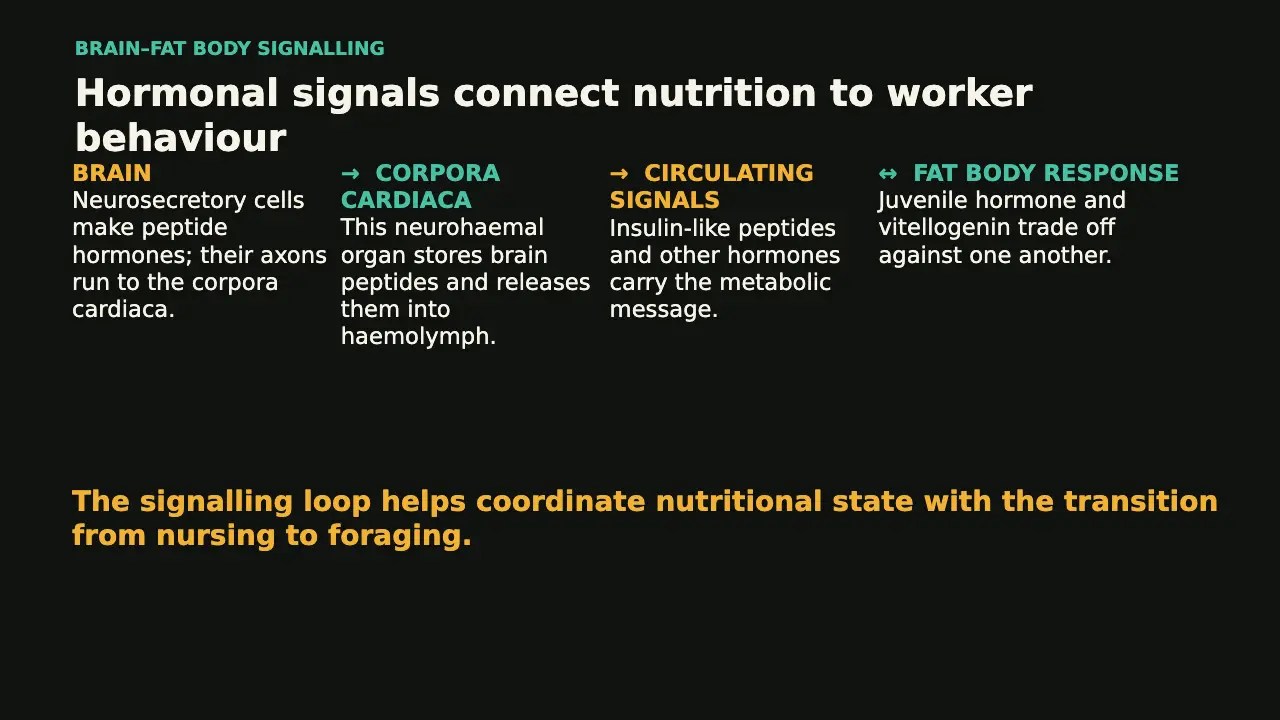
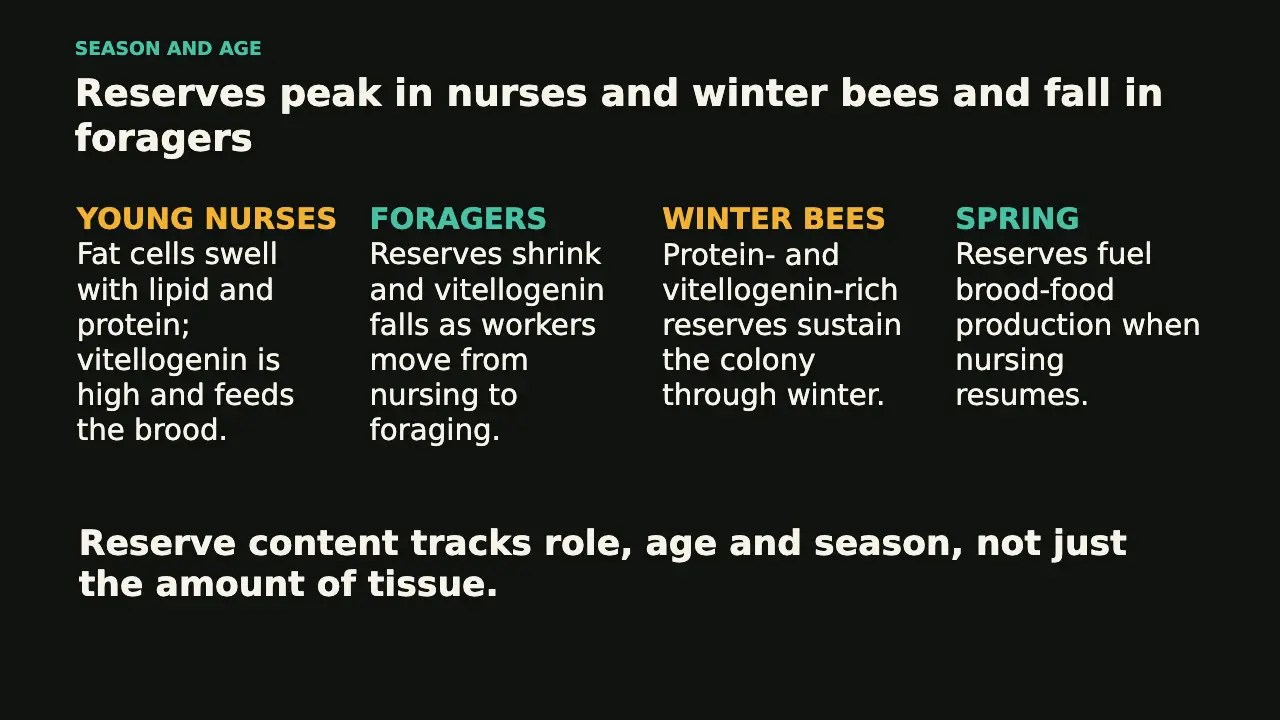
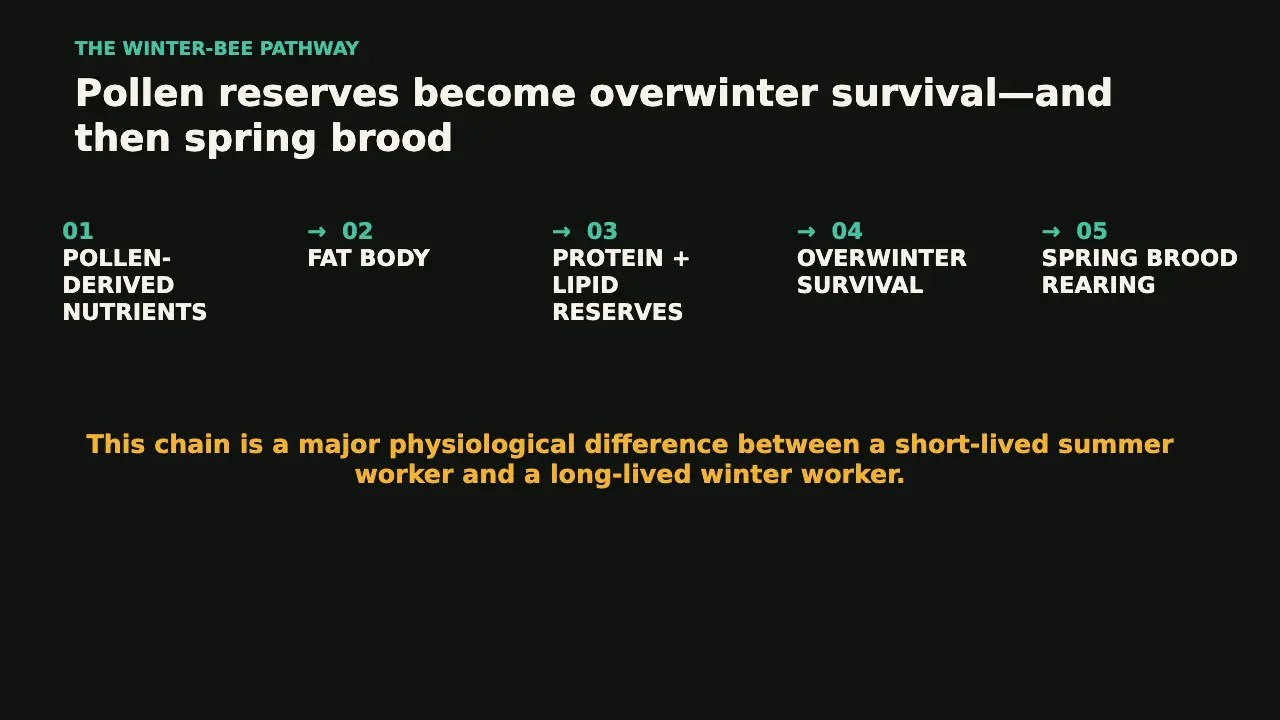
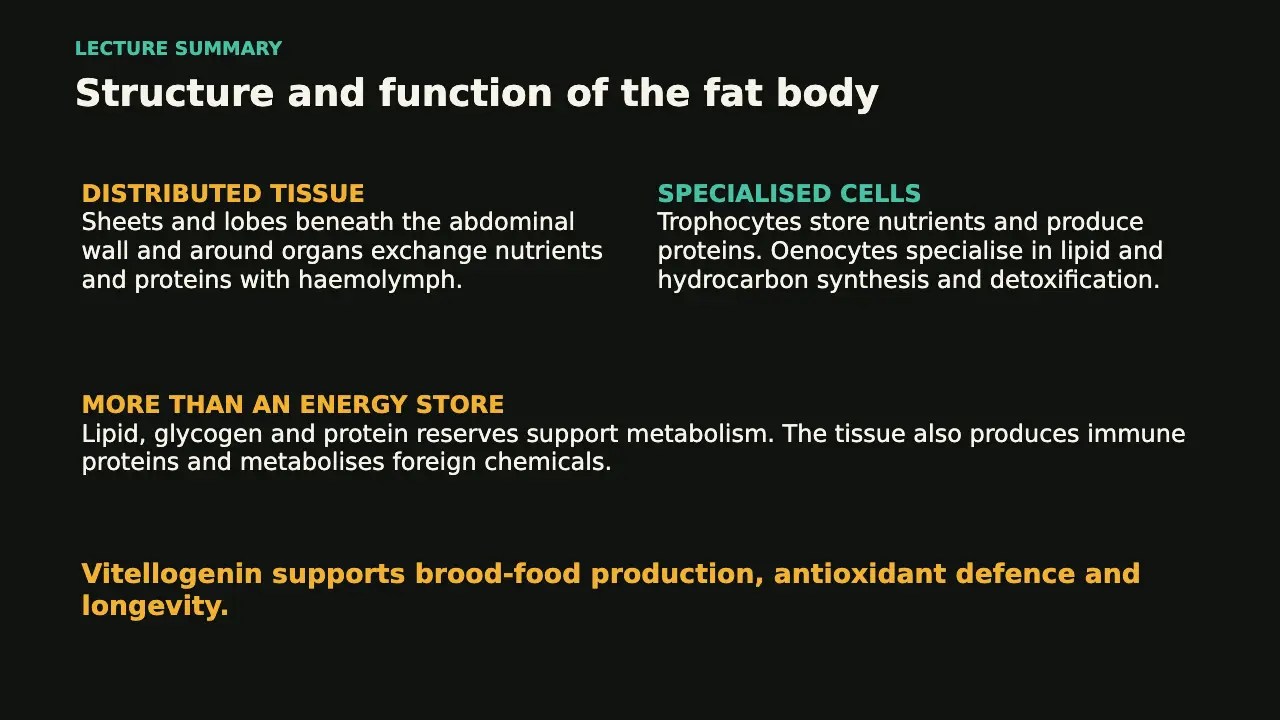
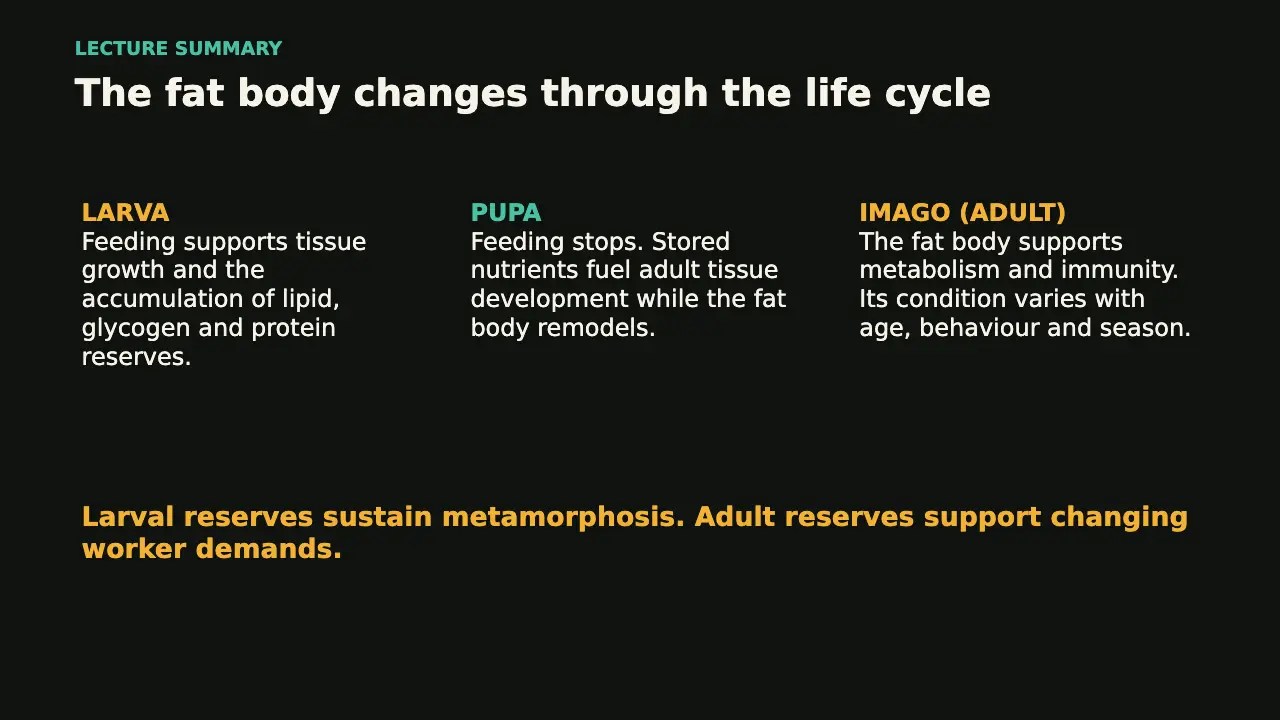
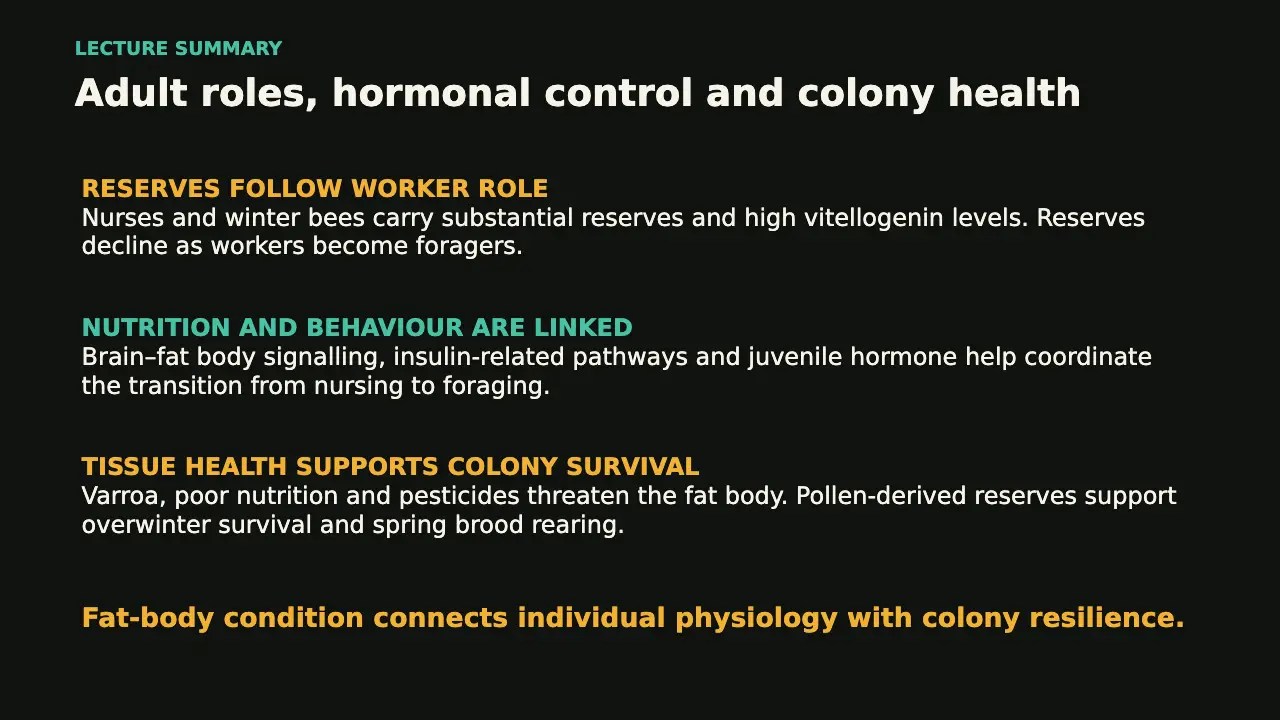
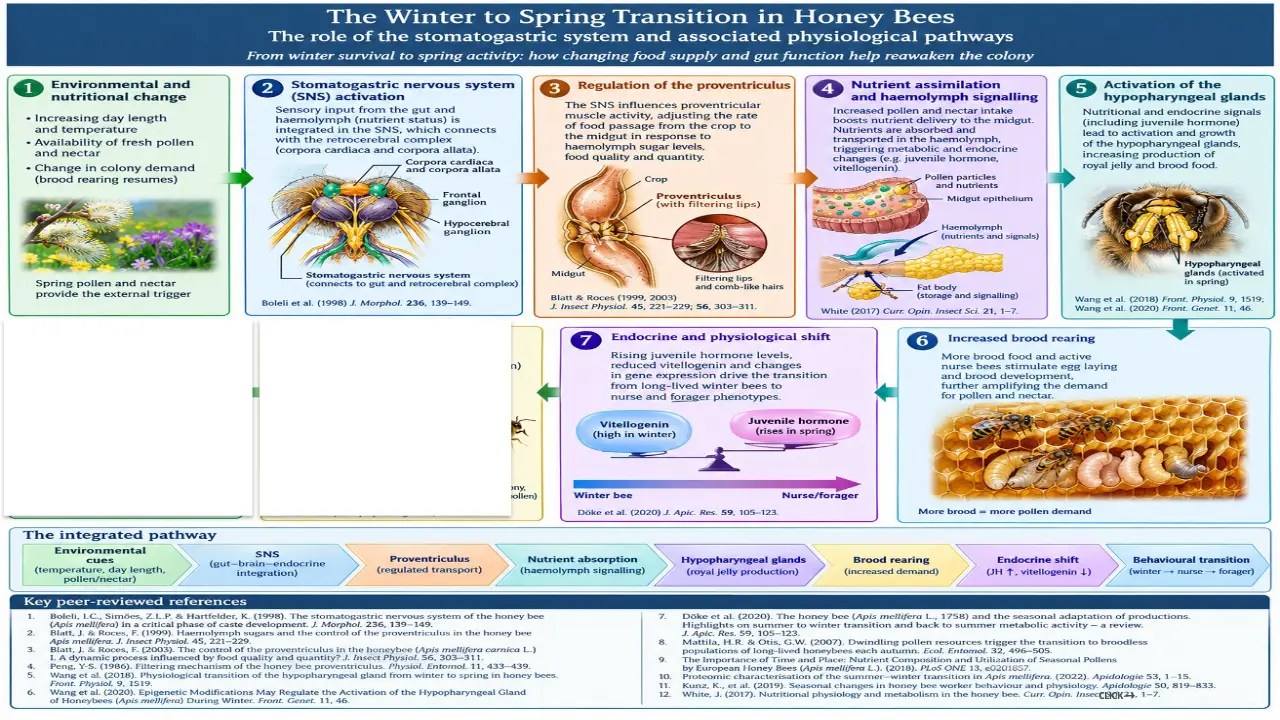
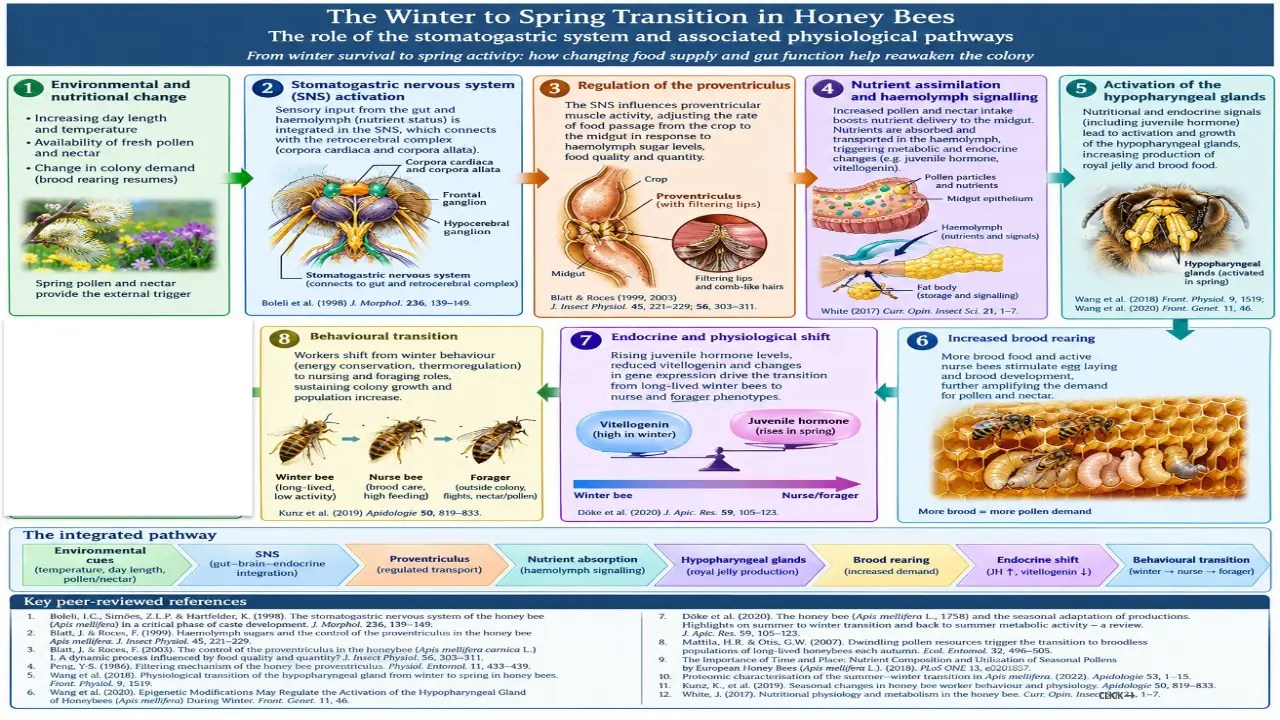
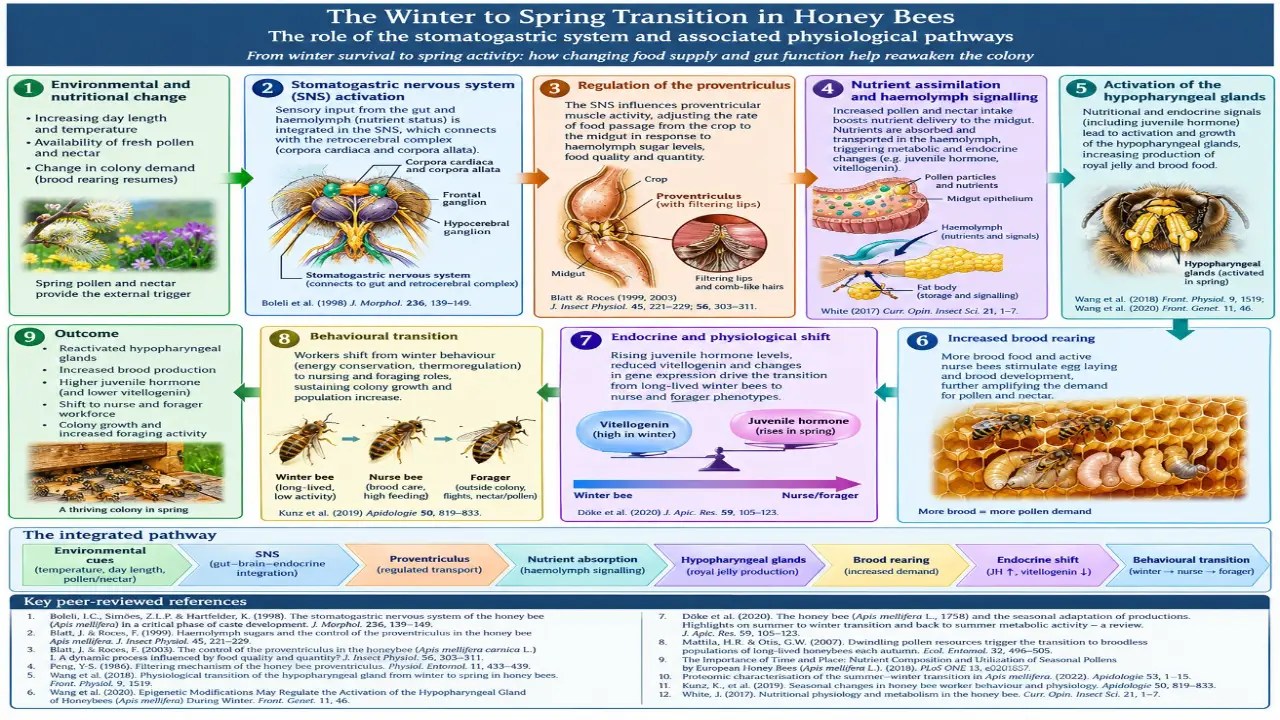
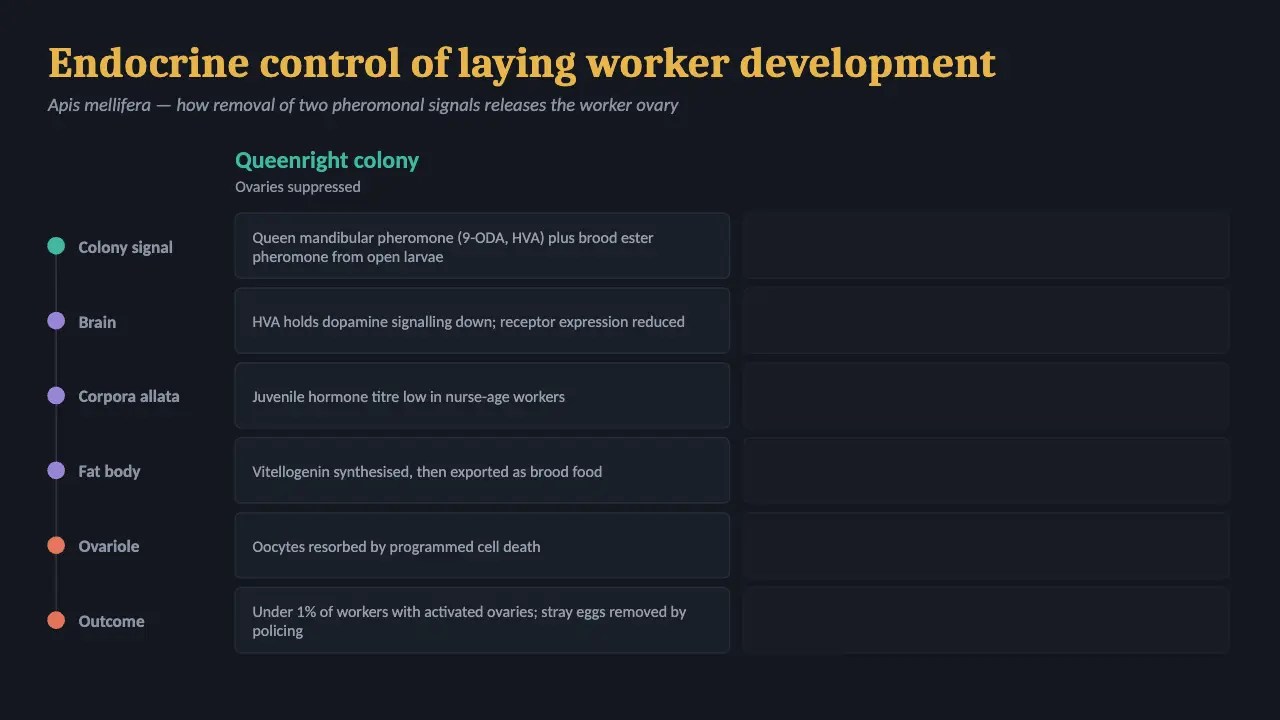
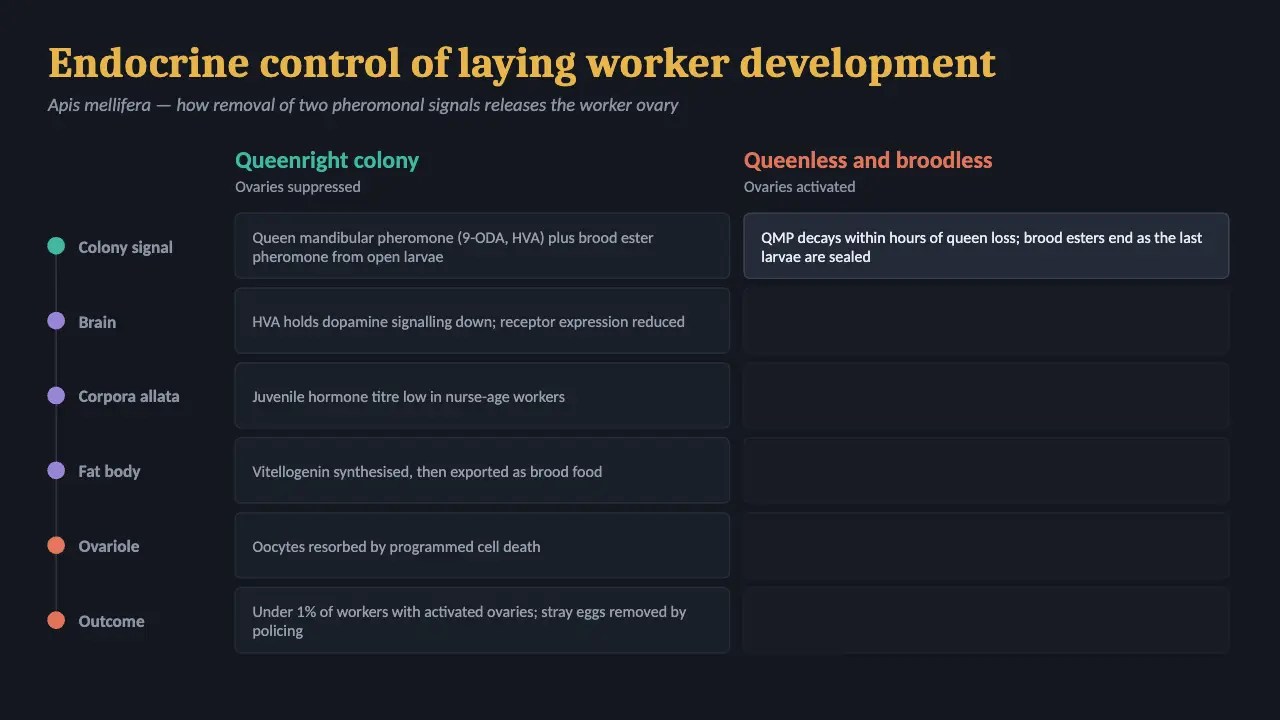
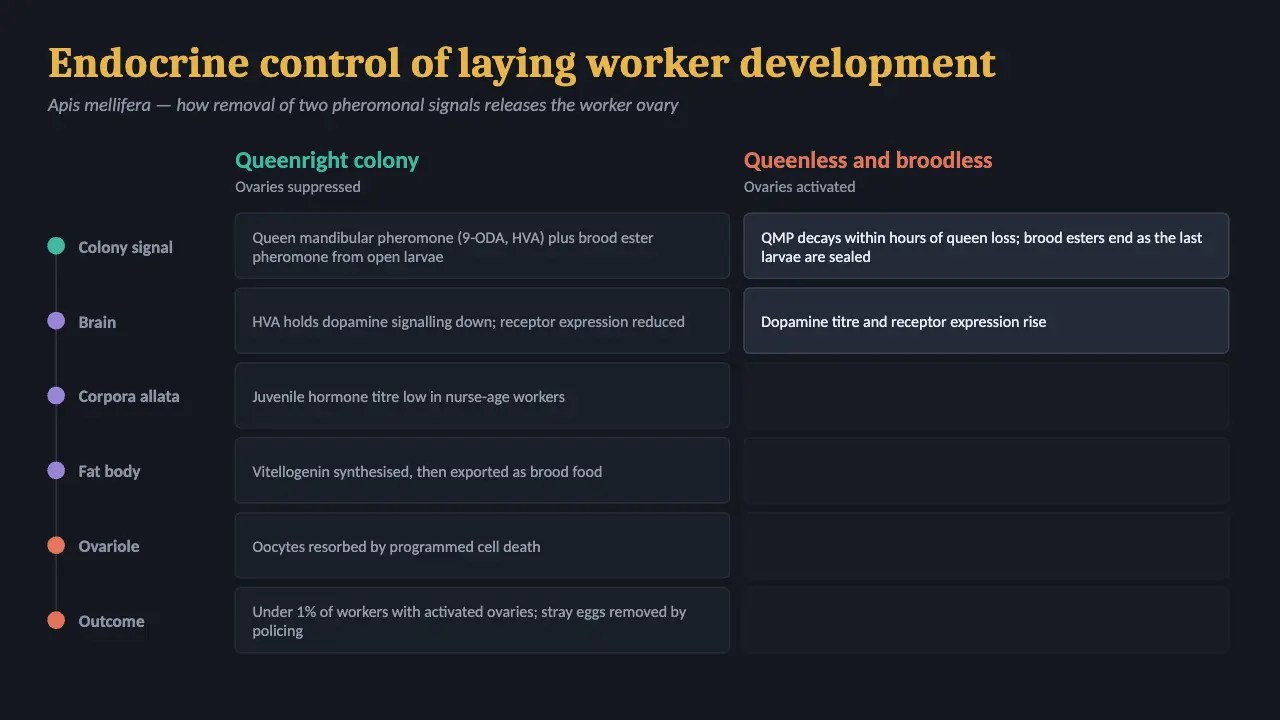
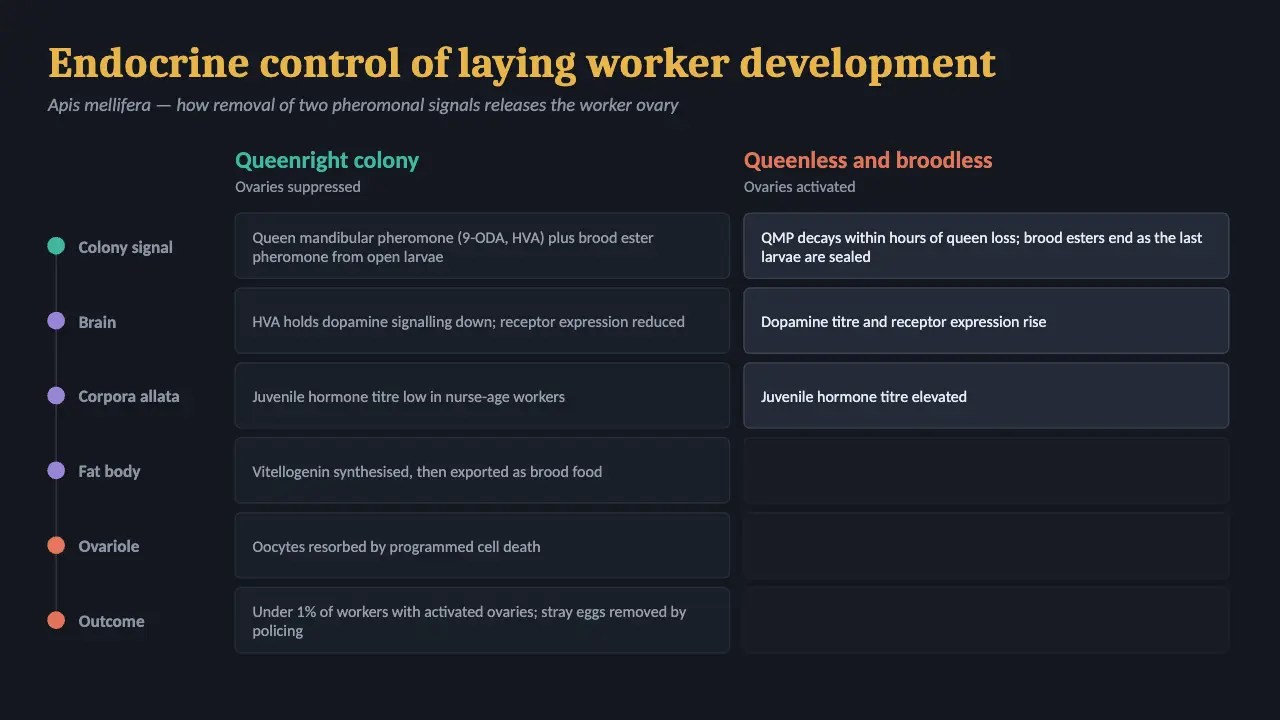
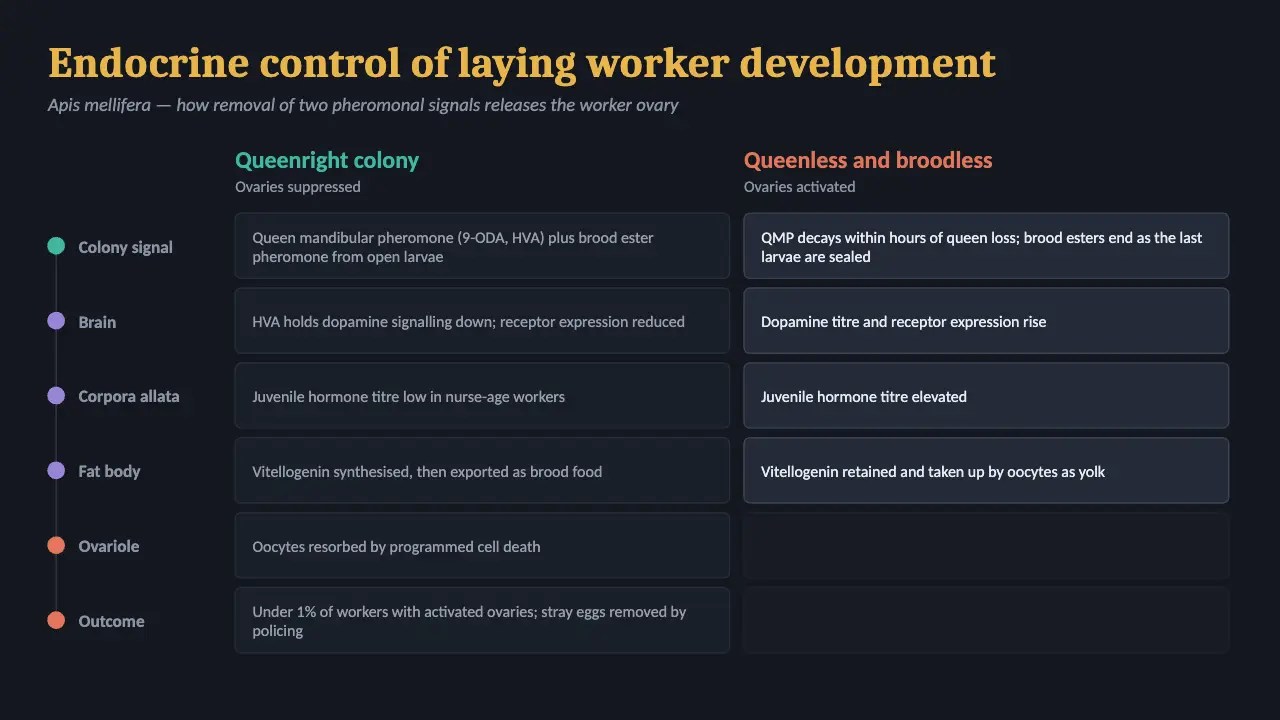
The fat body, summer and winter bees, and laying workers
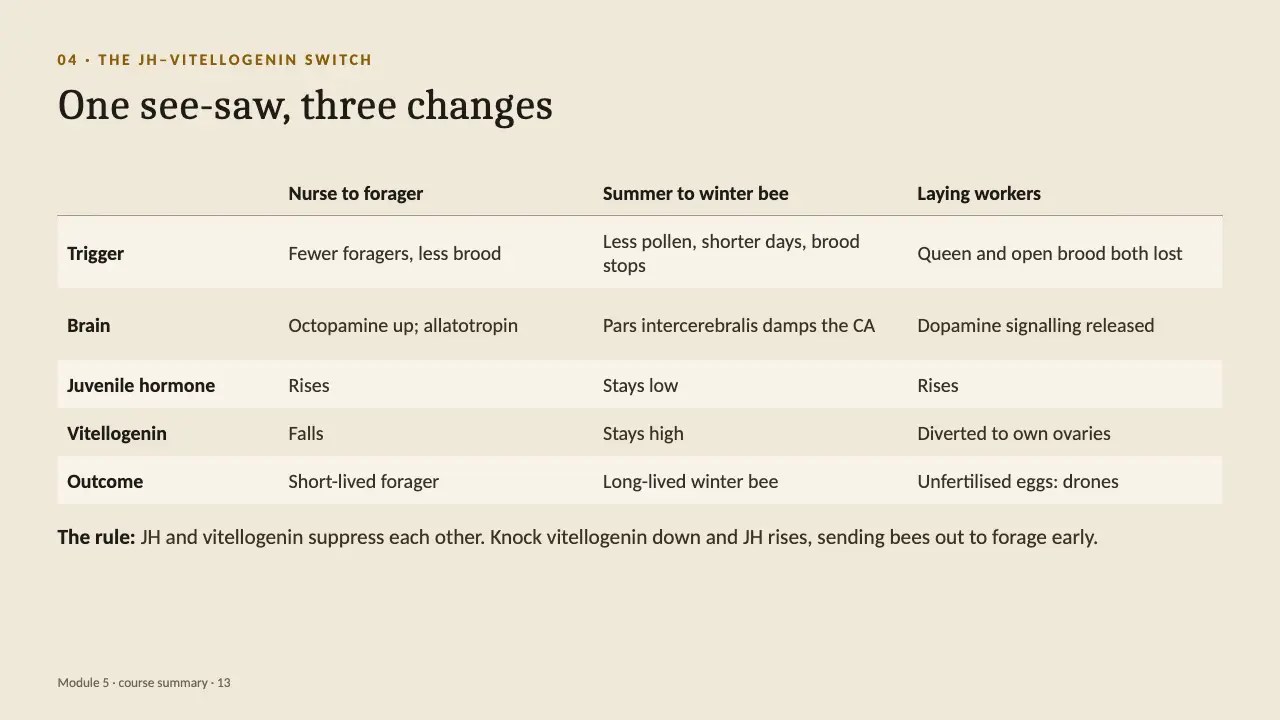
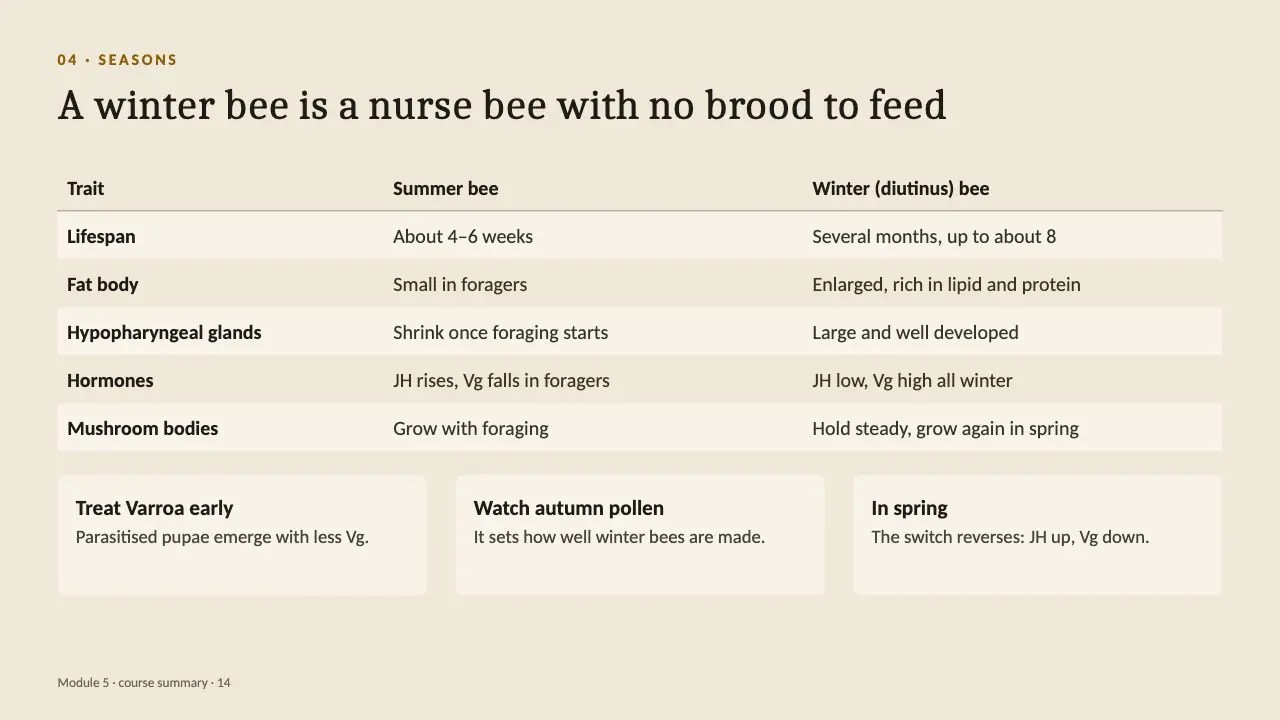
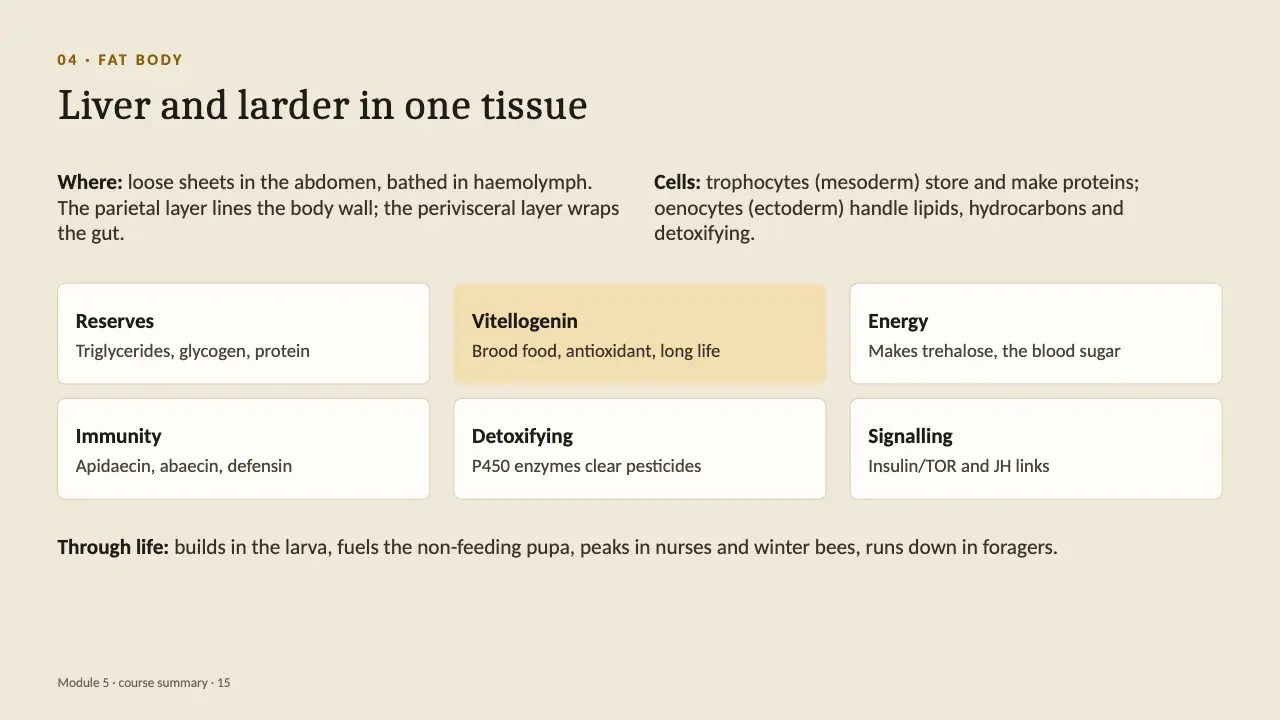
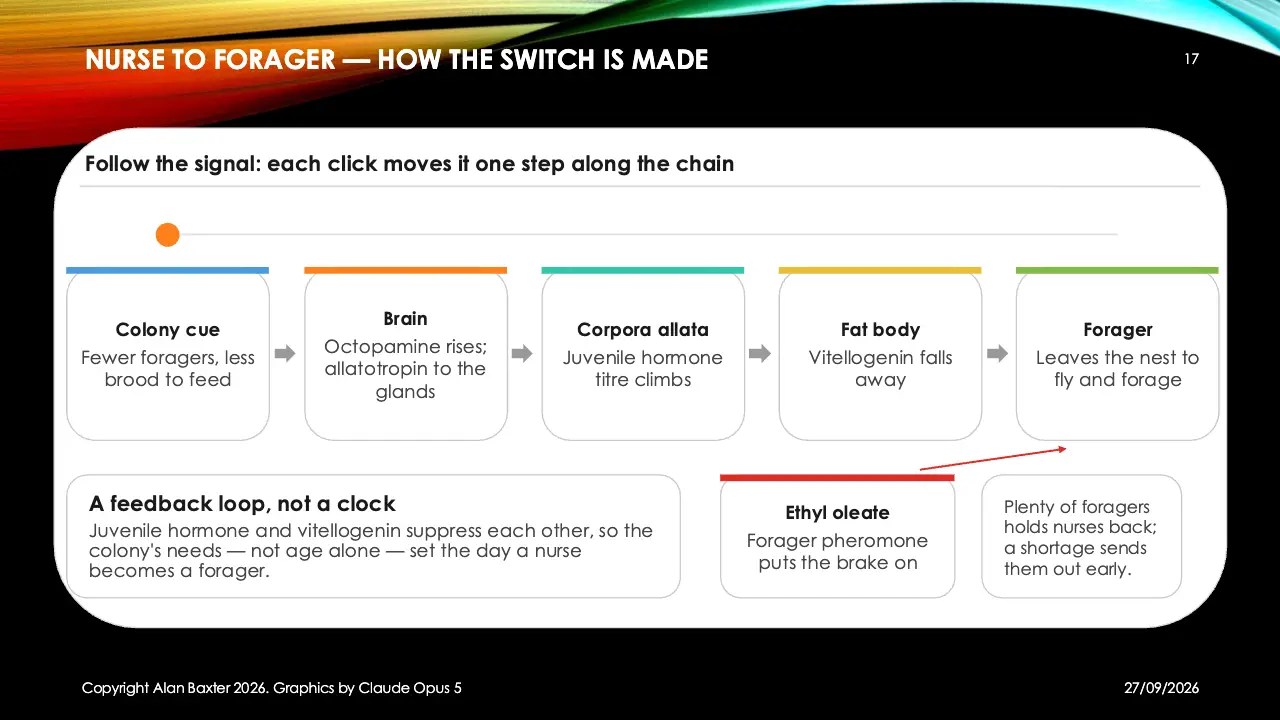
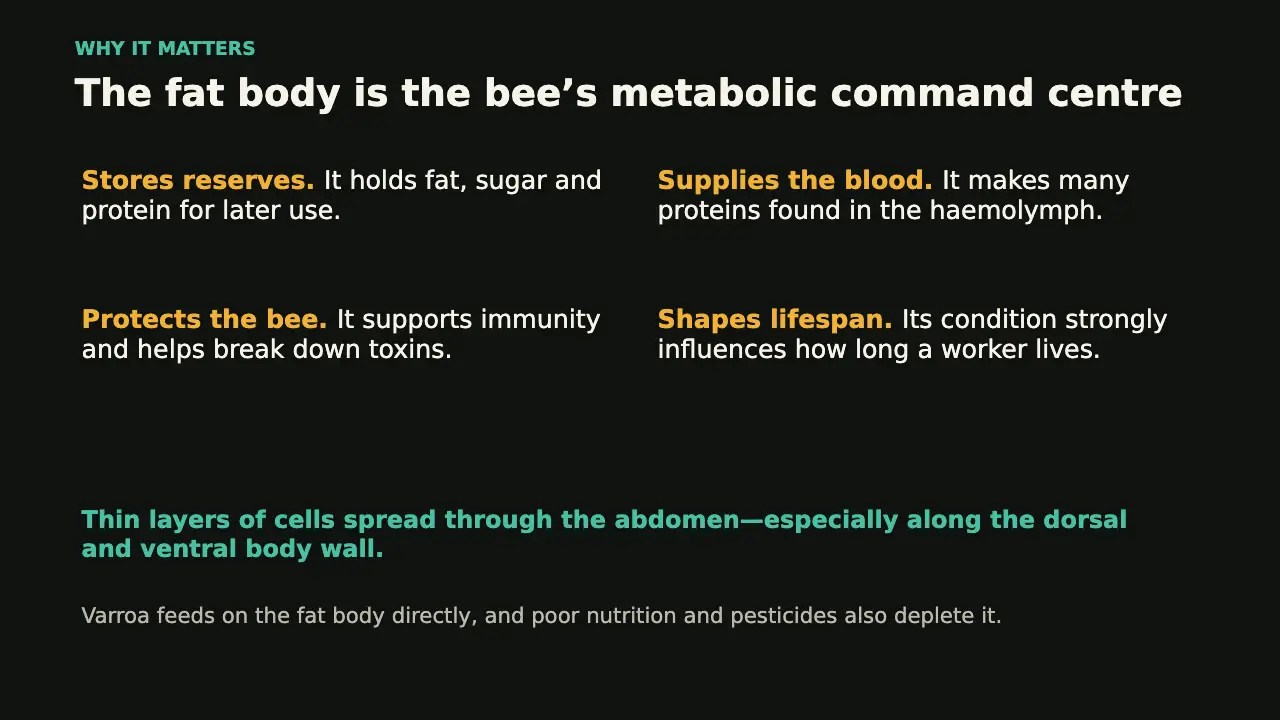
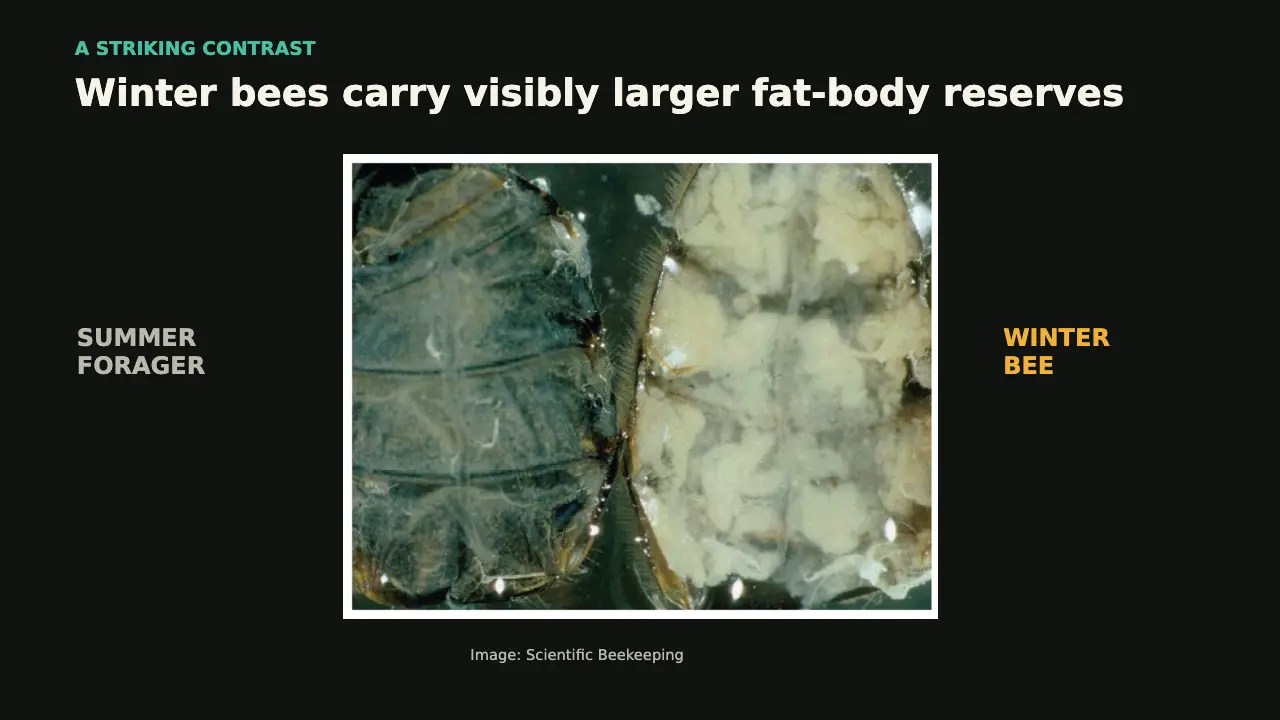
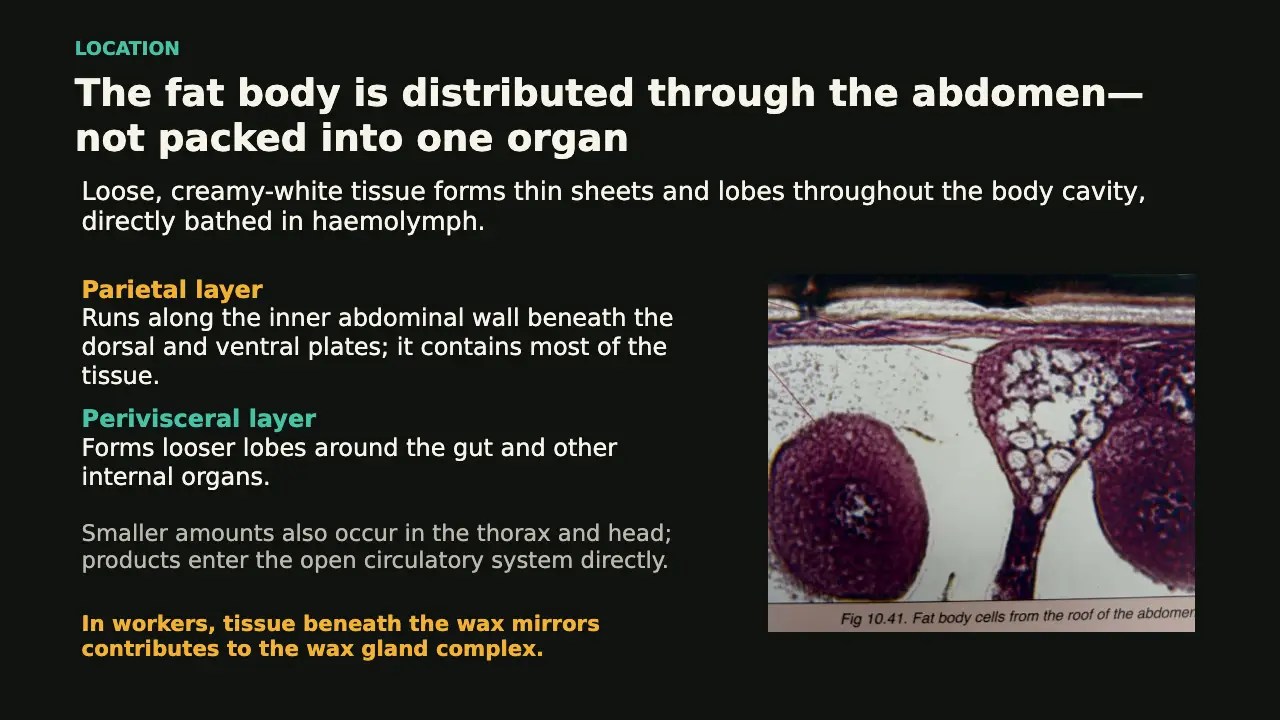
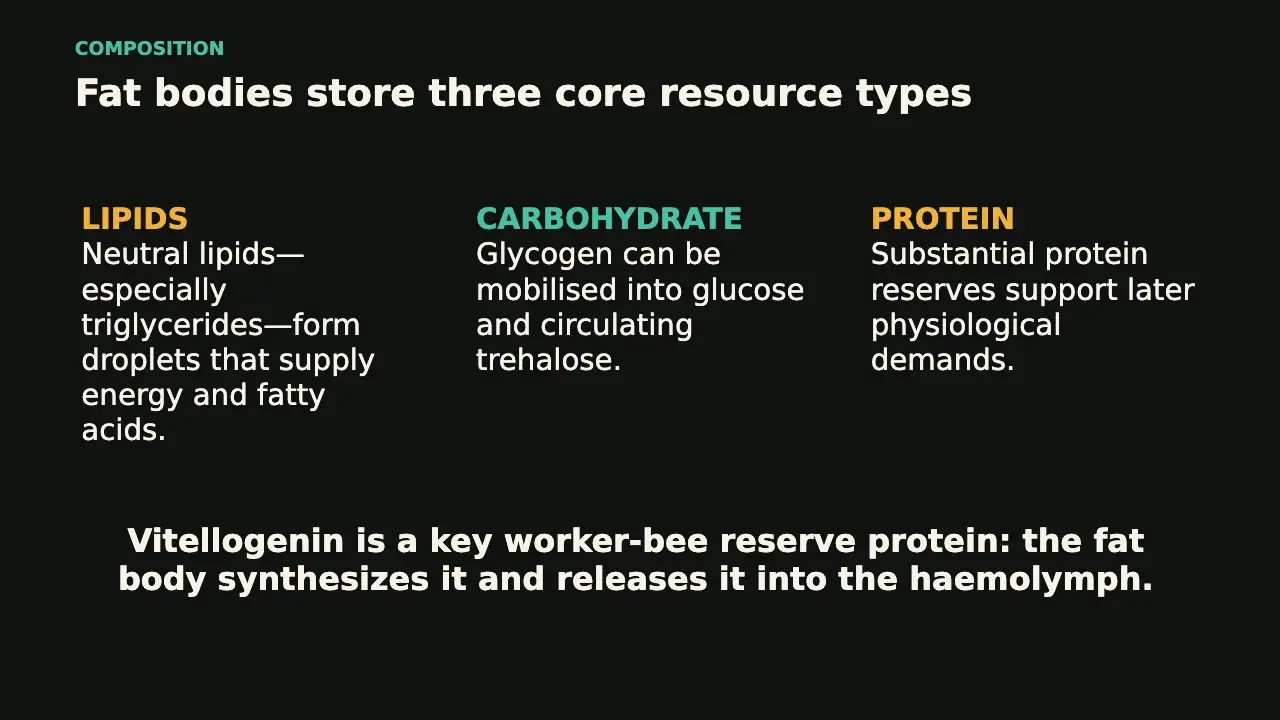
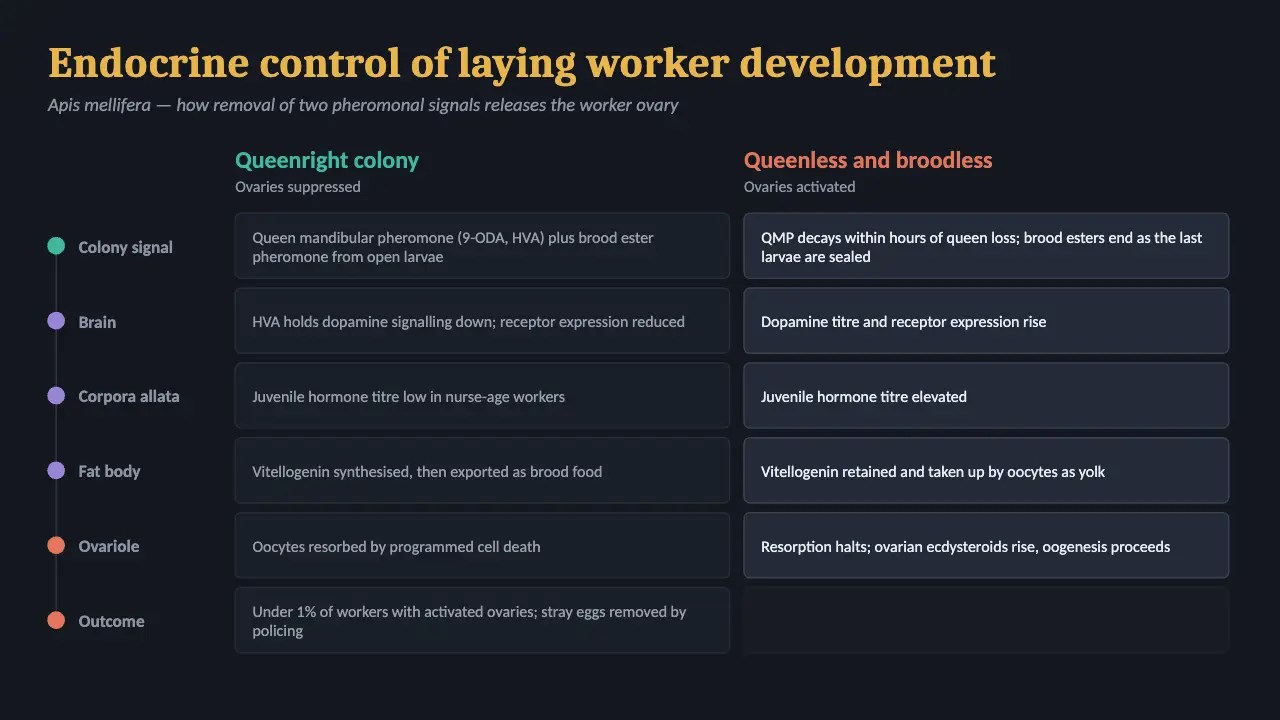
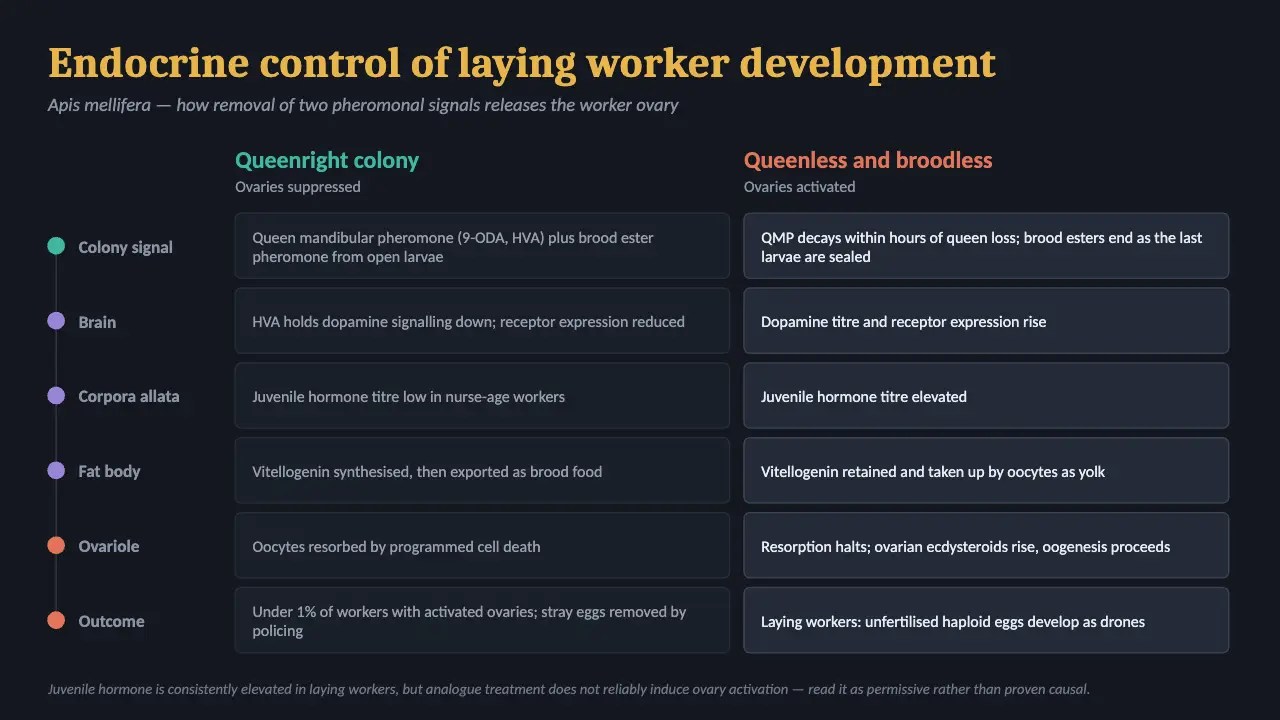
Composition and functions of the fat body; vitellogenin and juvenile hormone; how laying workers differ from normal workers. Download the slides (PDF)

Session 7
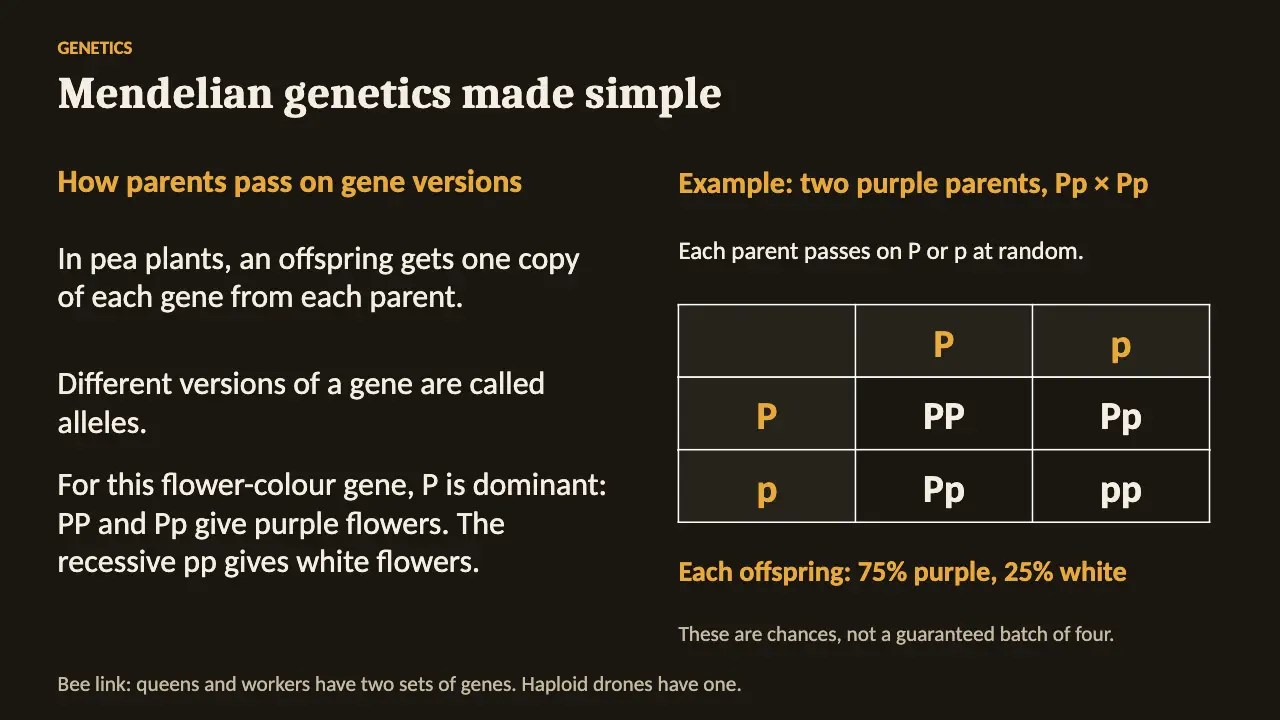
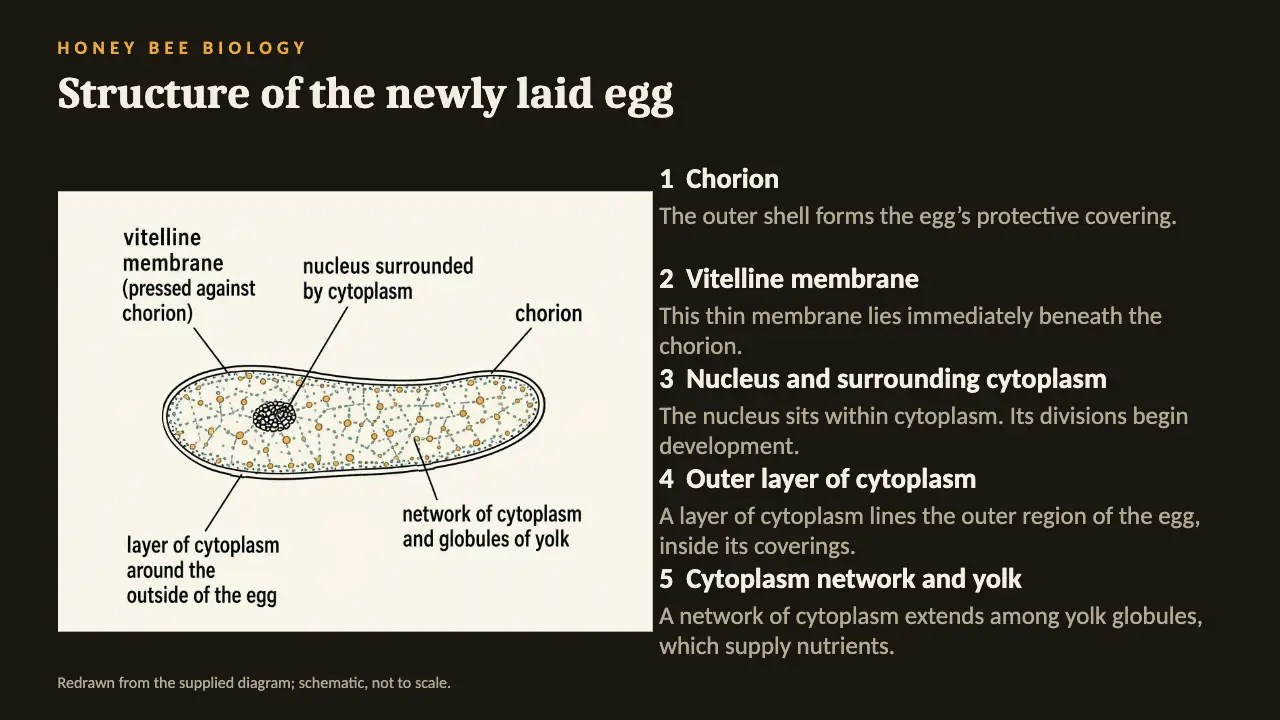
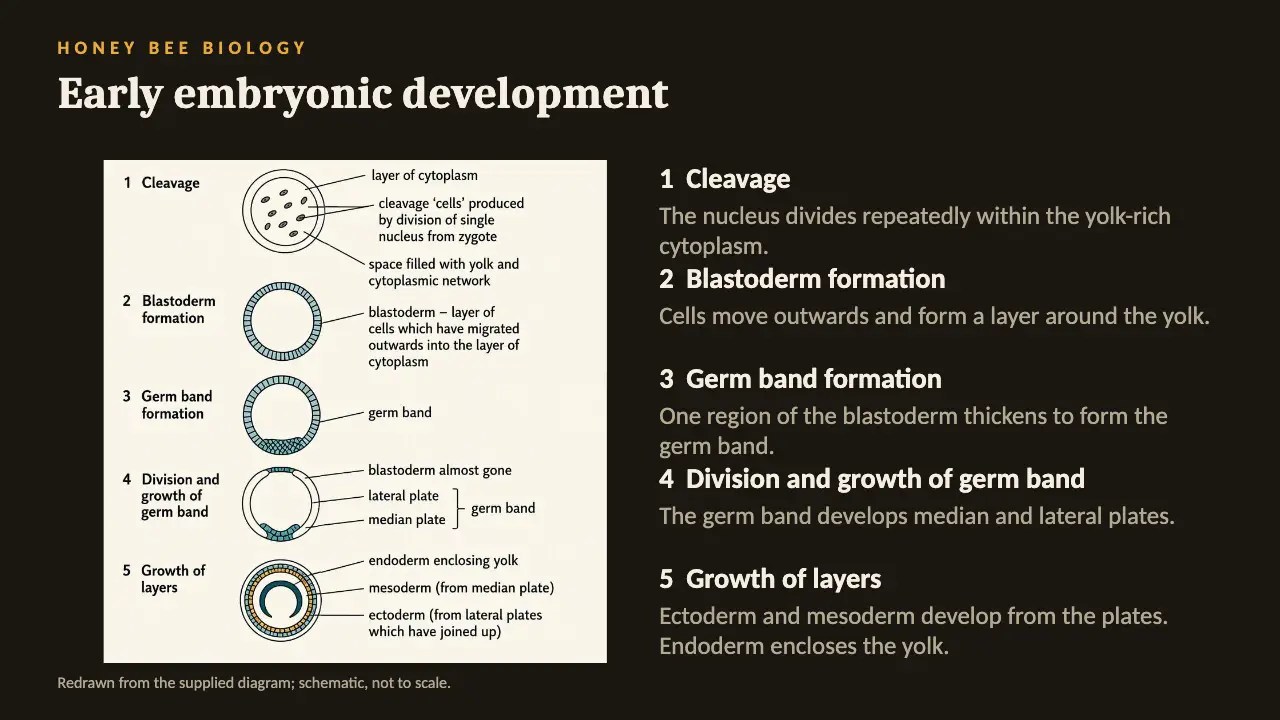
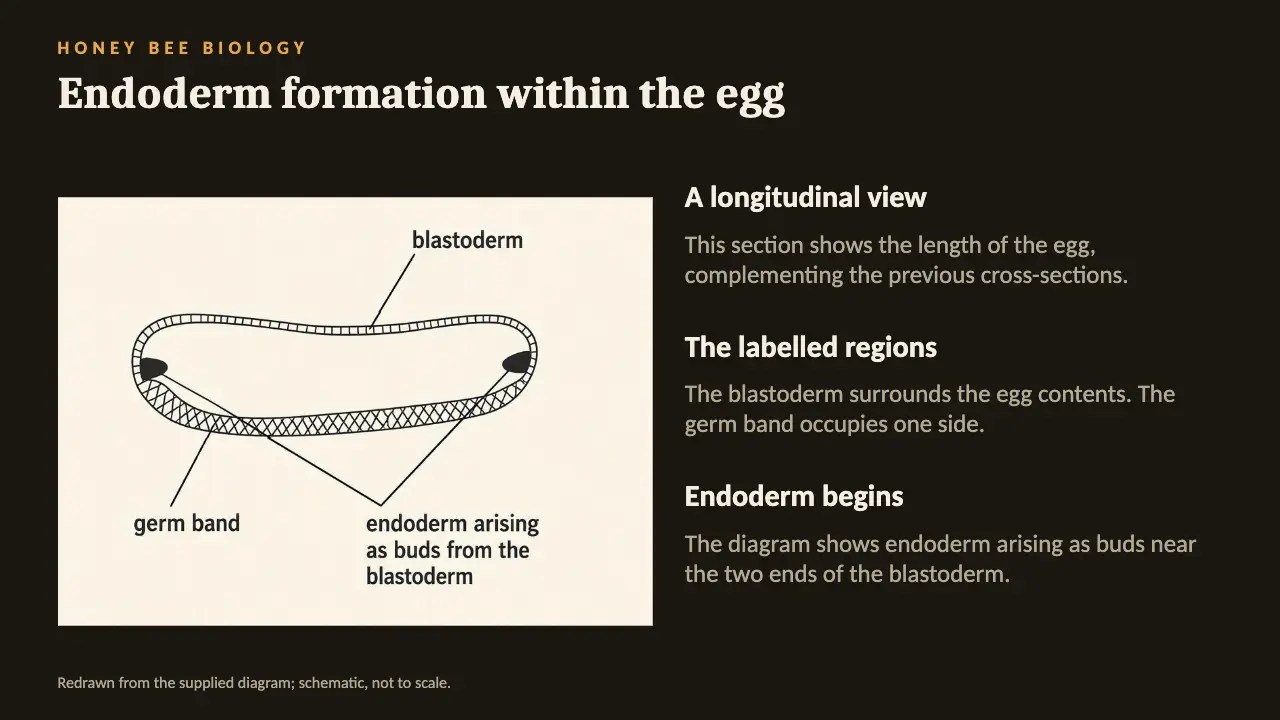
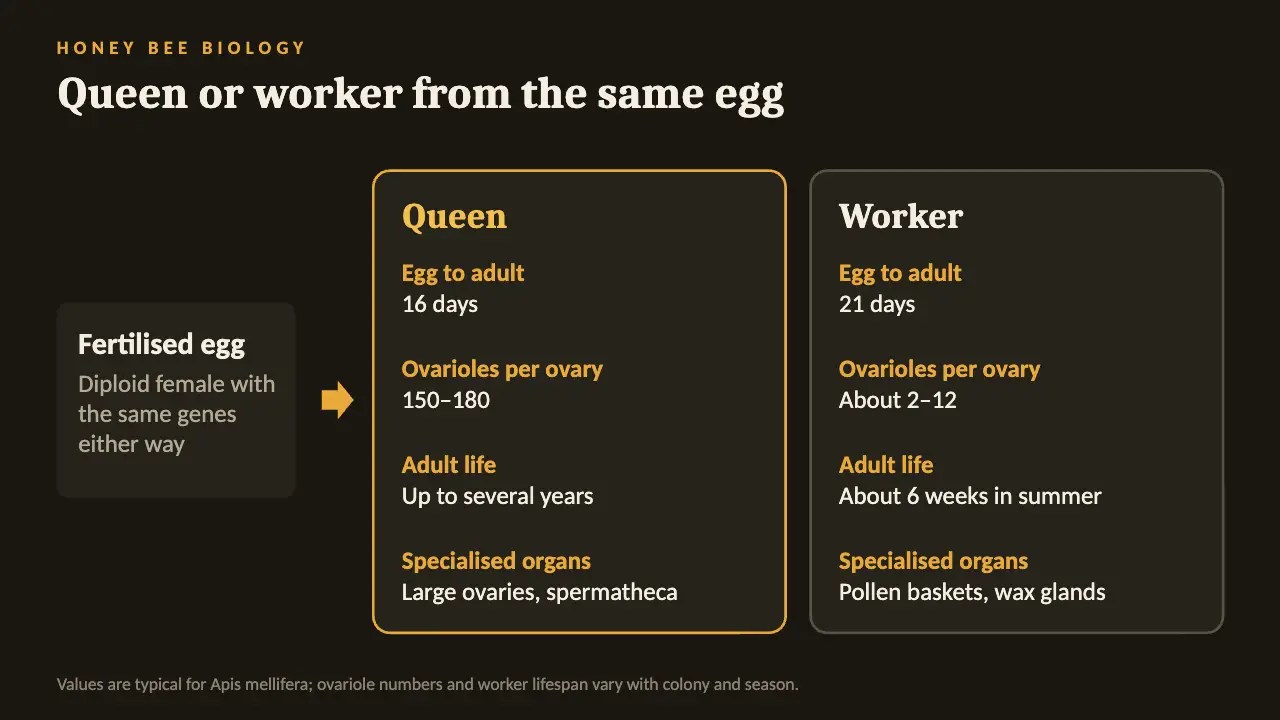
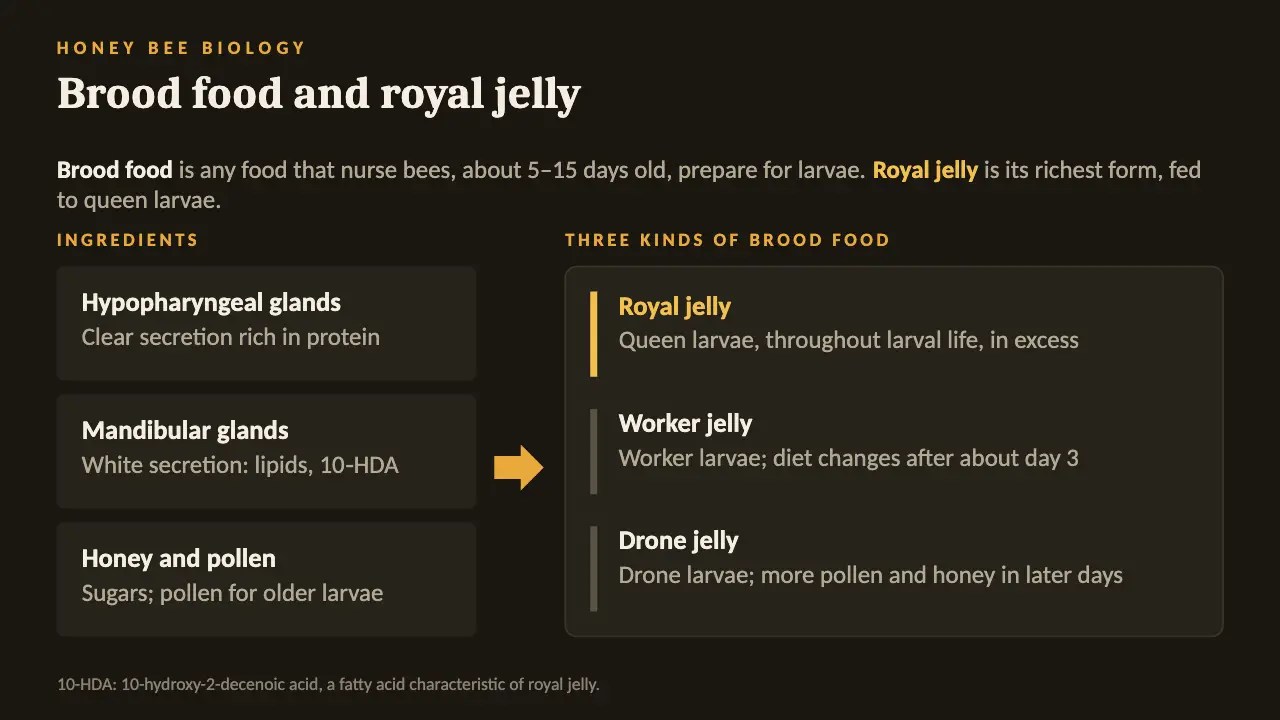
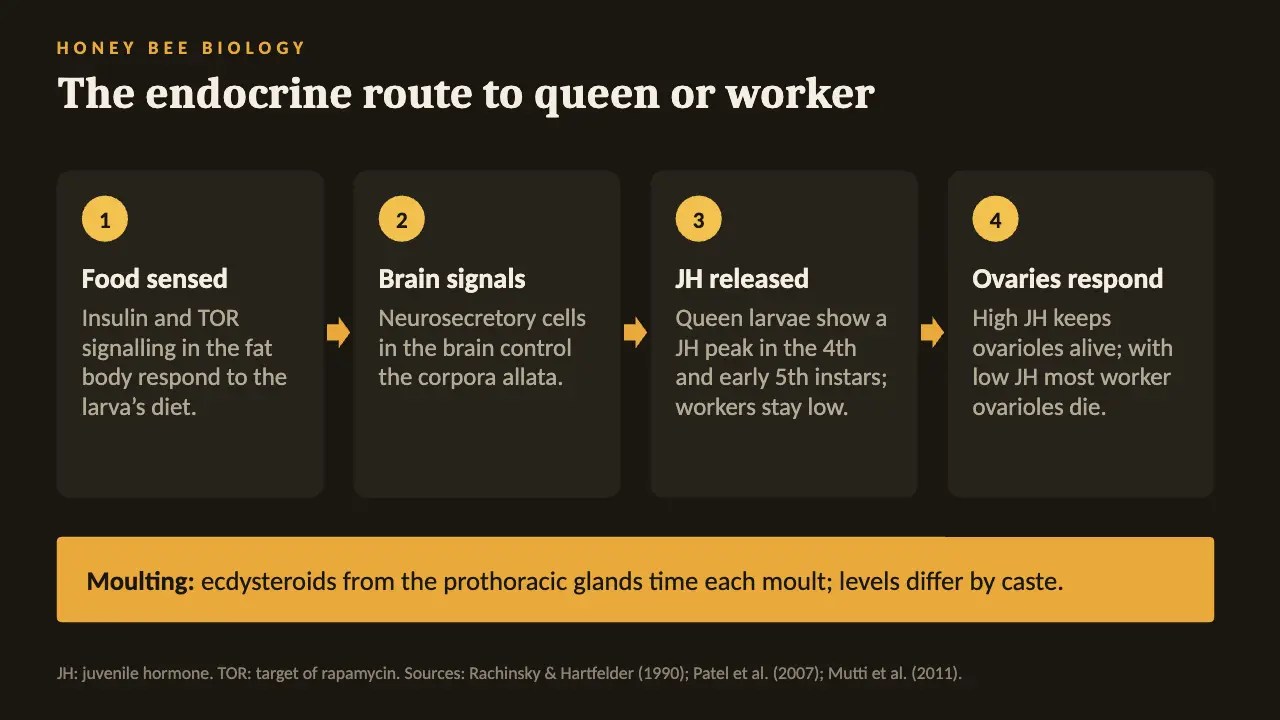
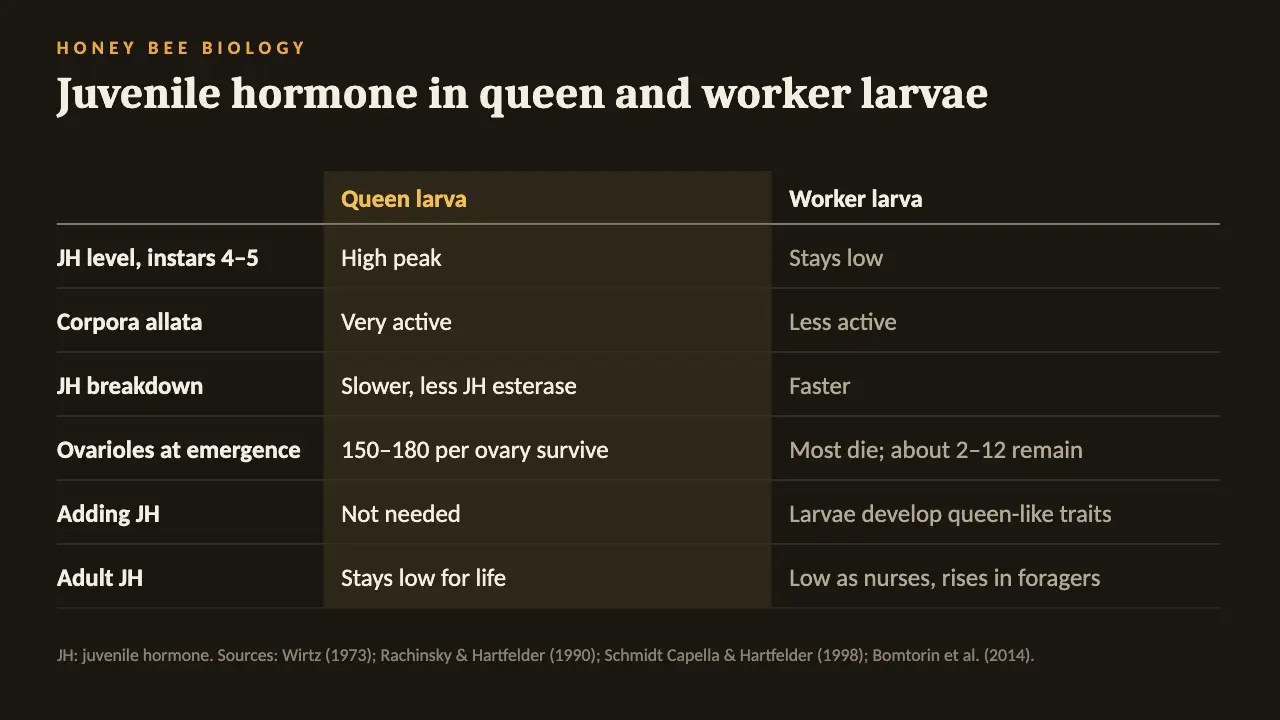
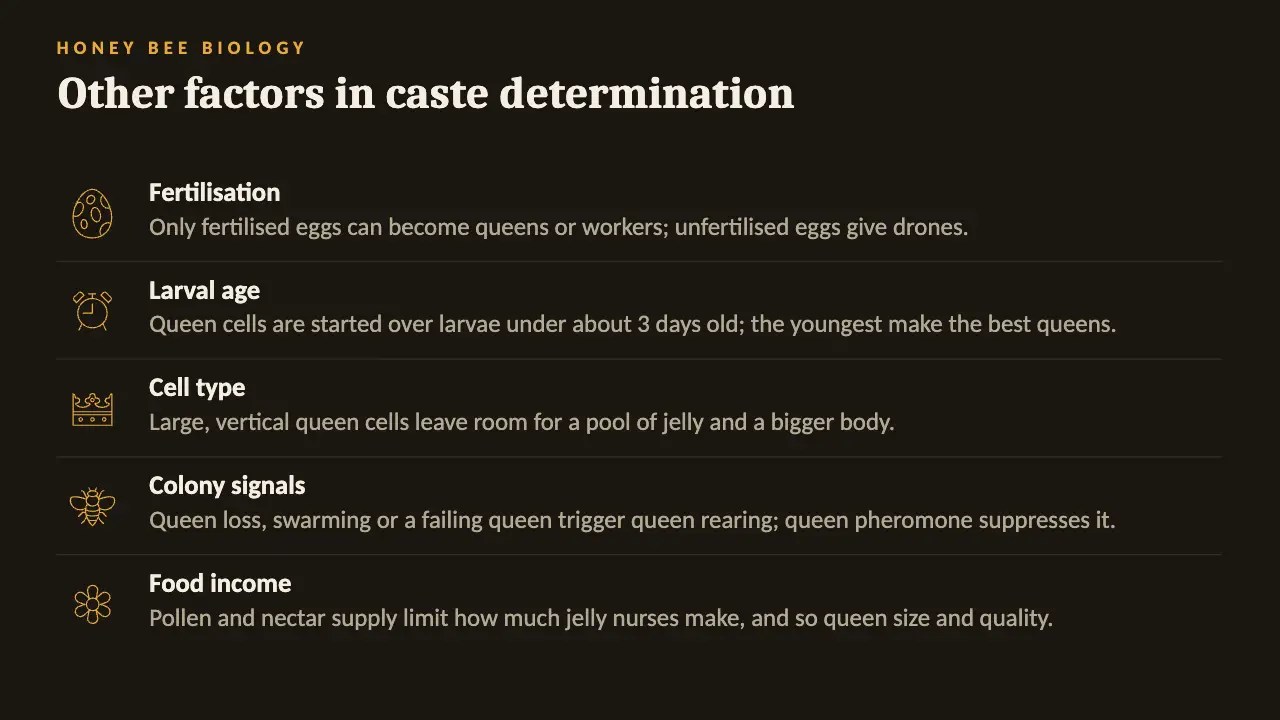
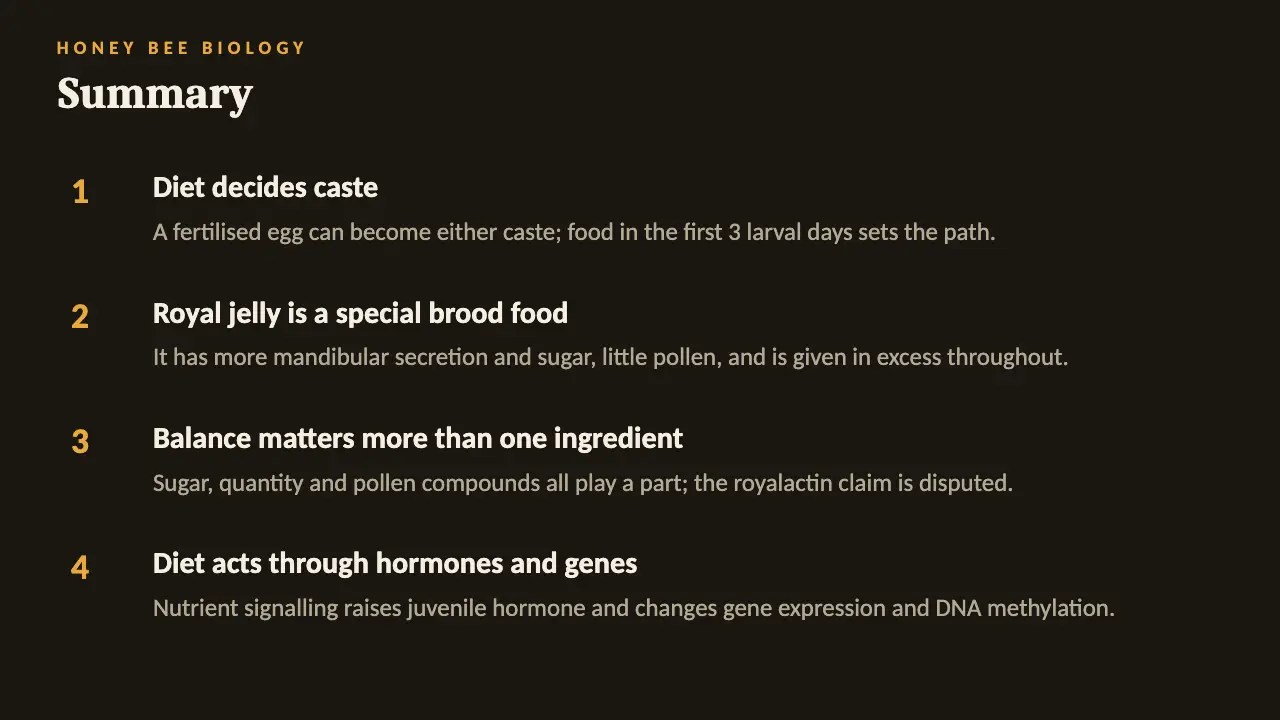
Reproduction, development of the embryo and caste determination
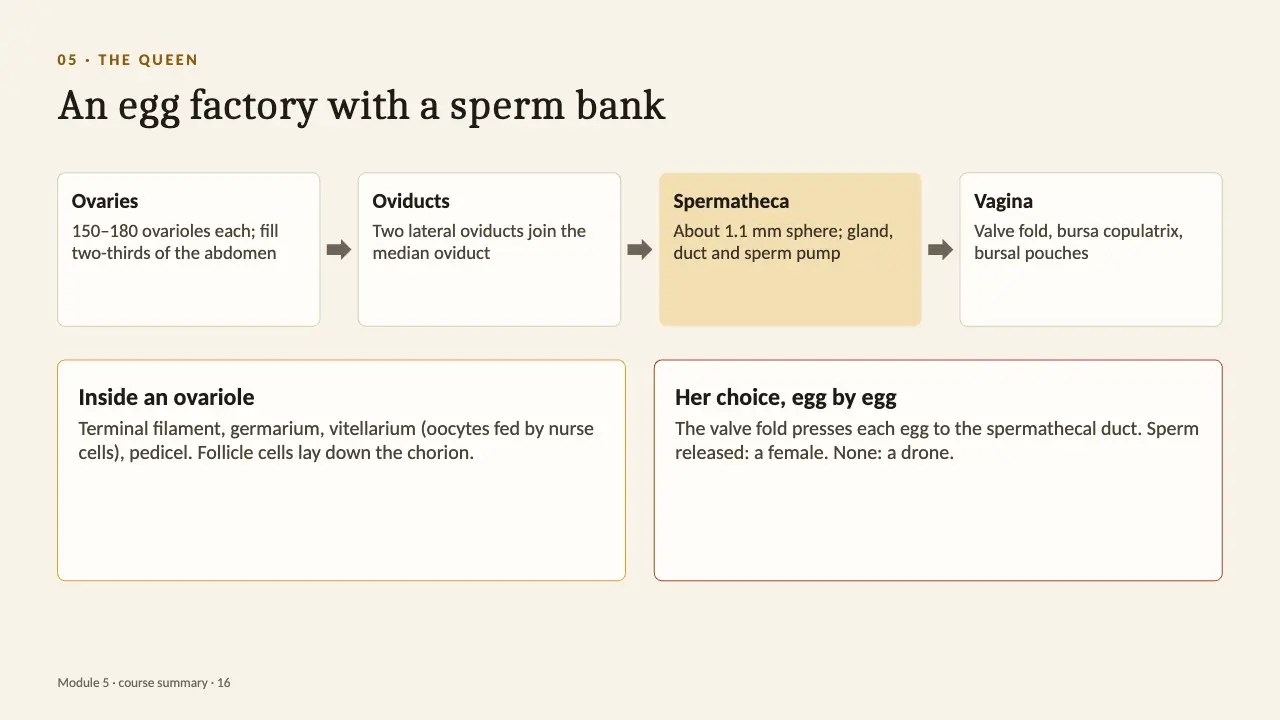
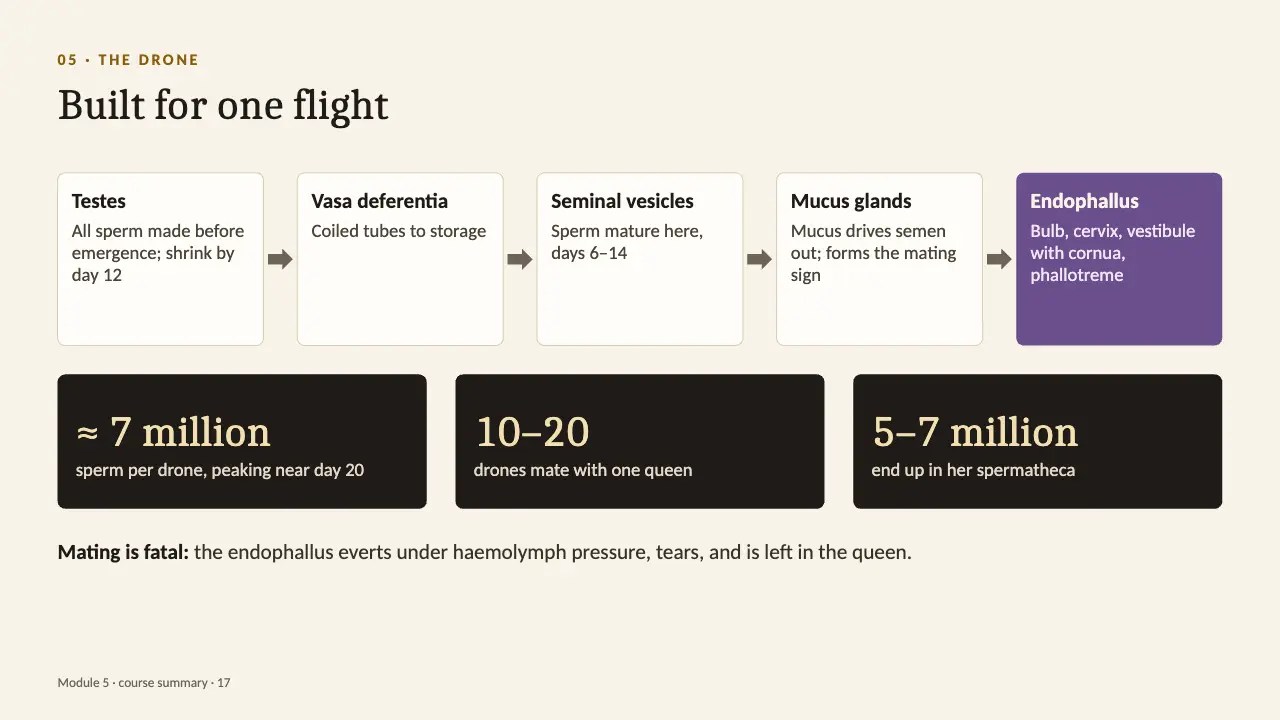
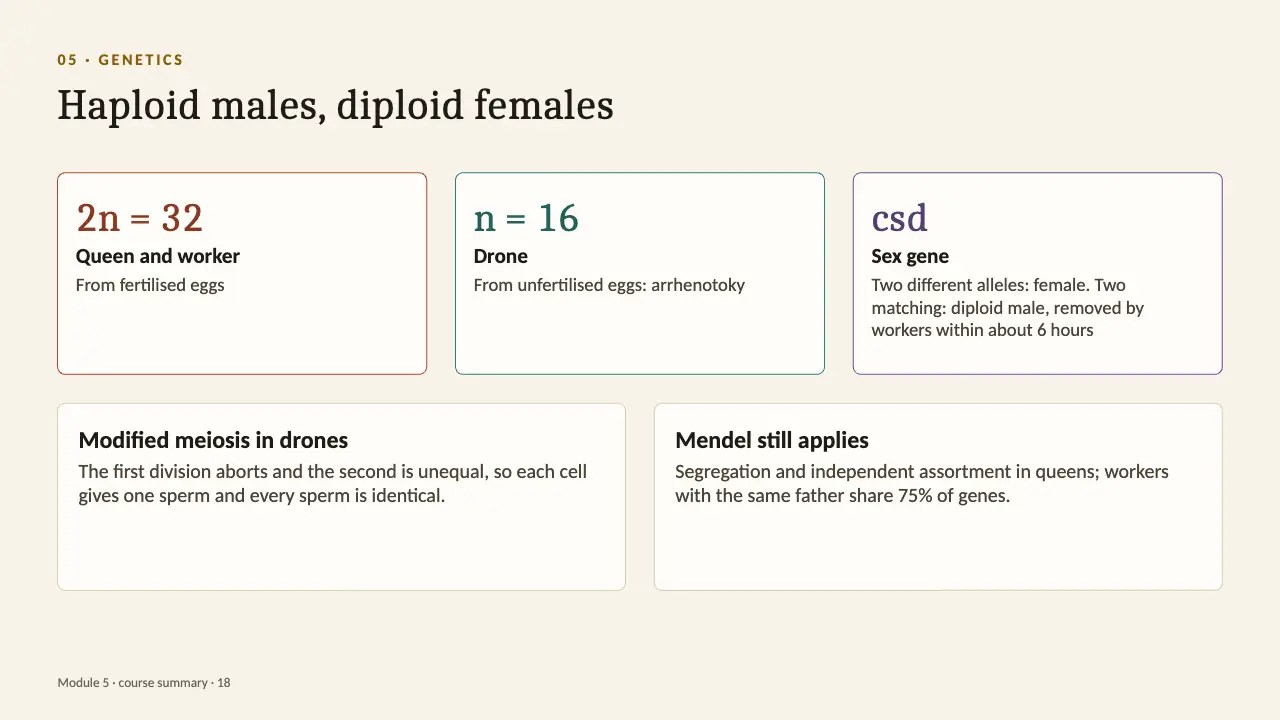
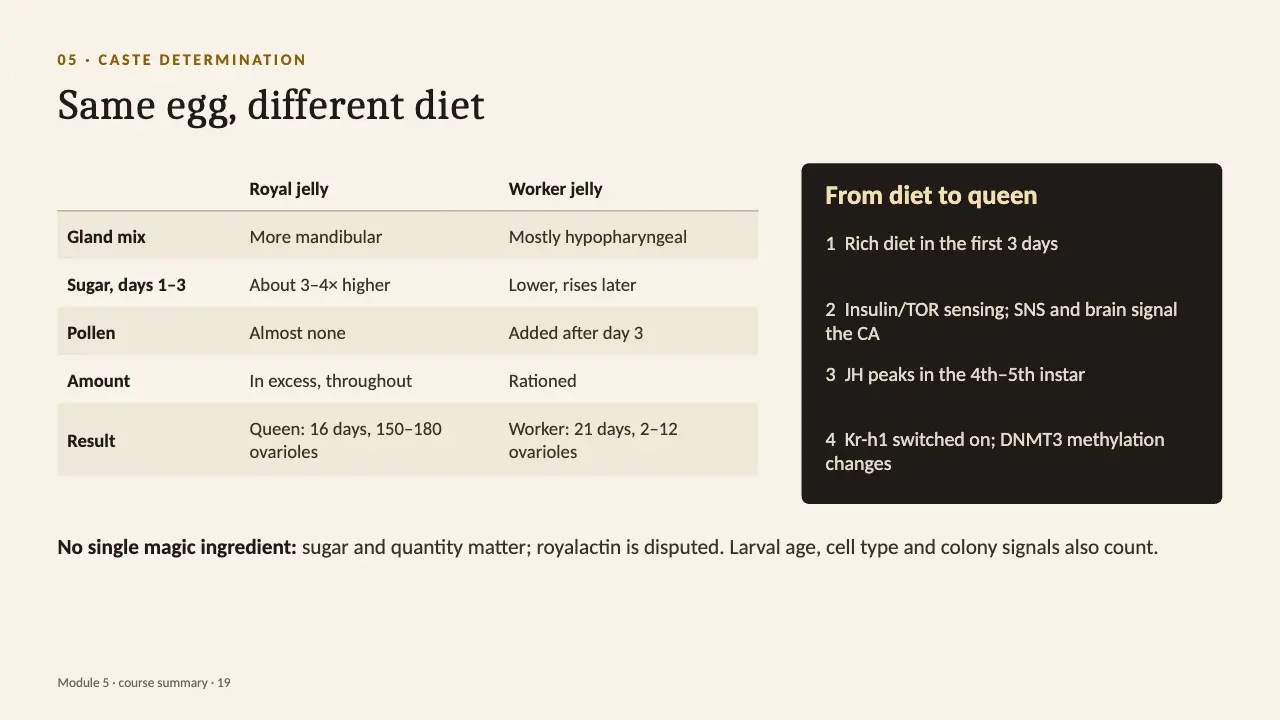
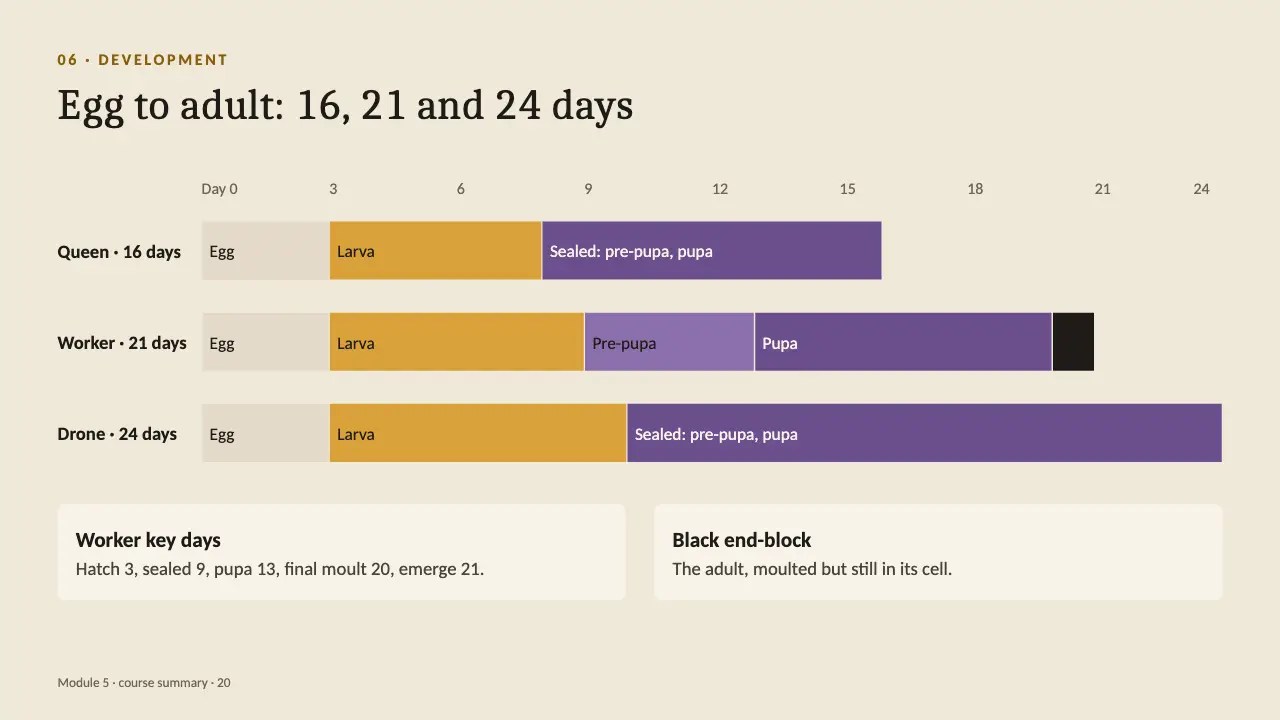
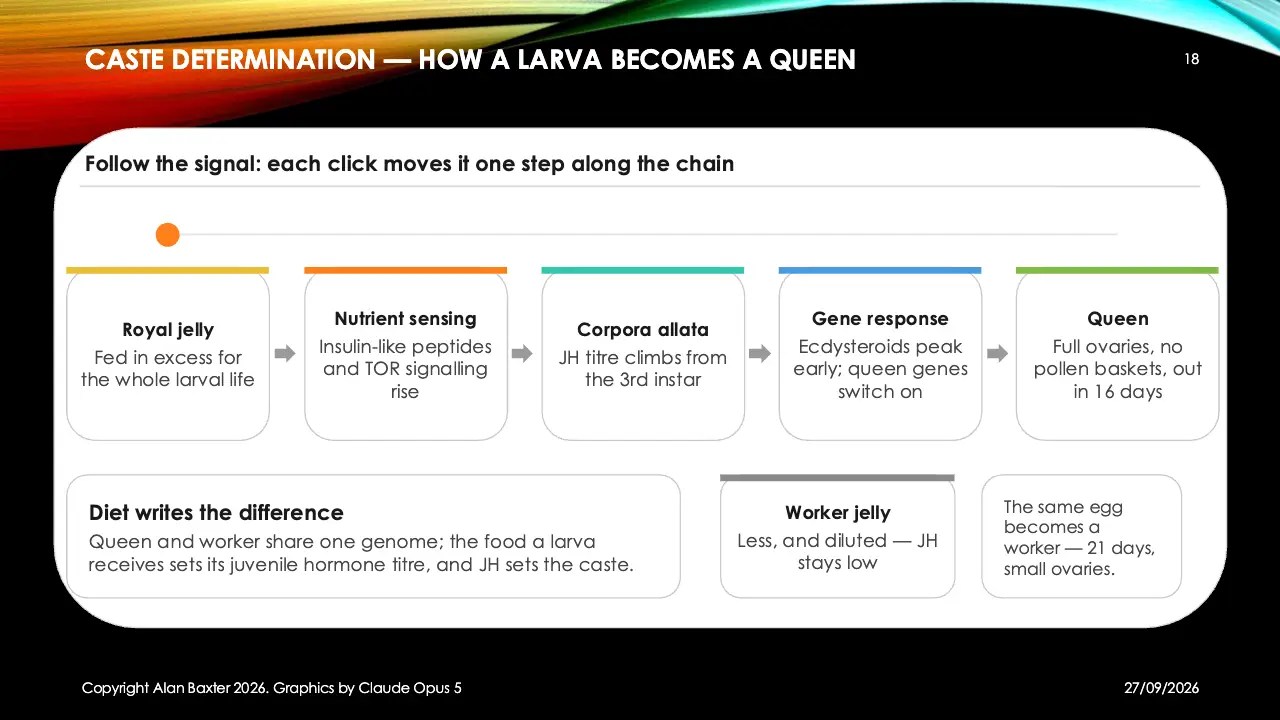
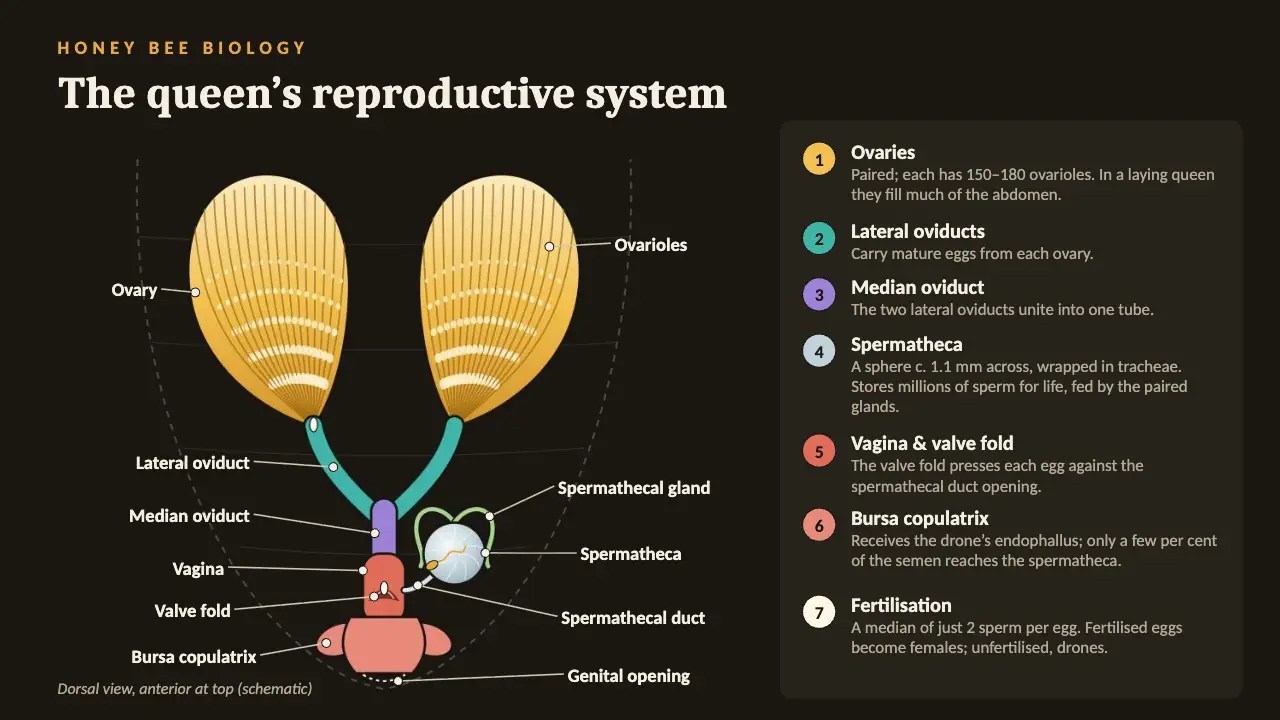
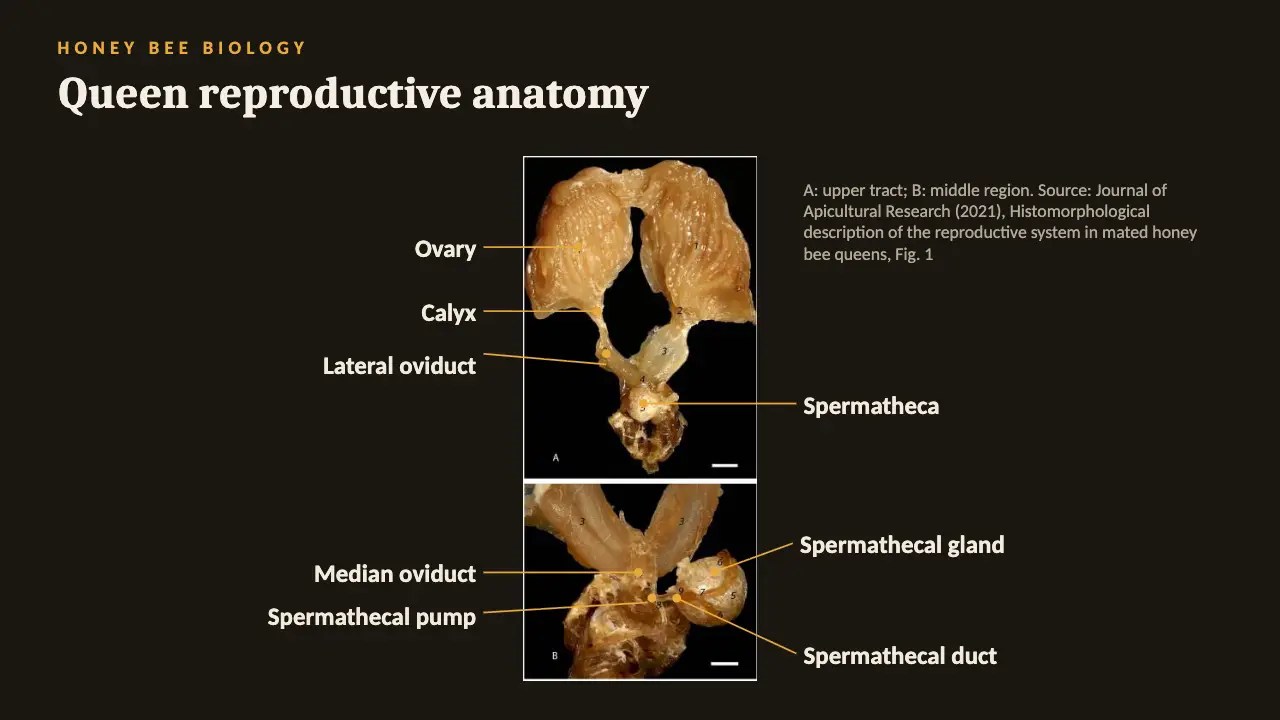
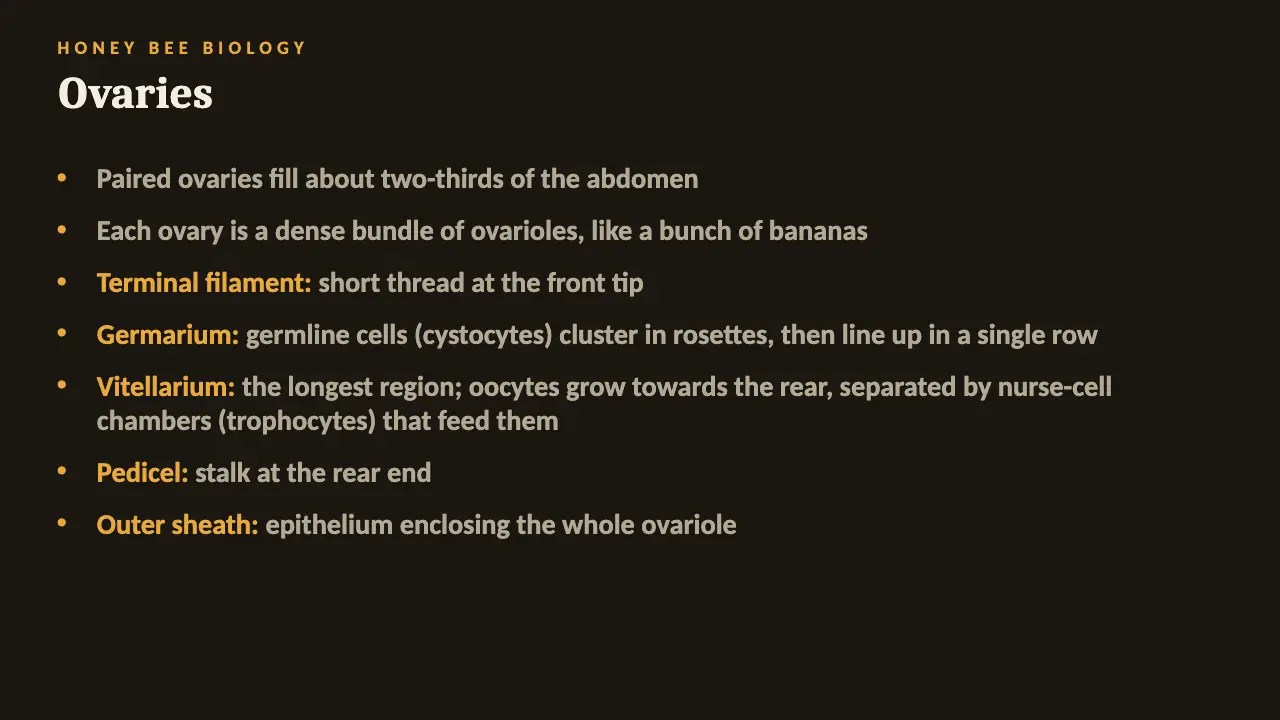
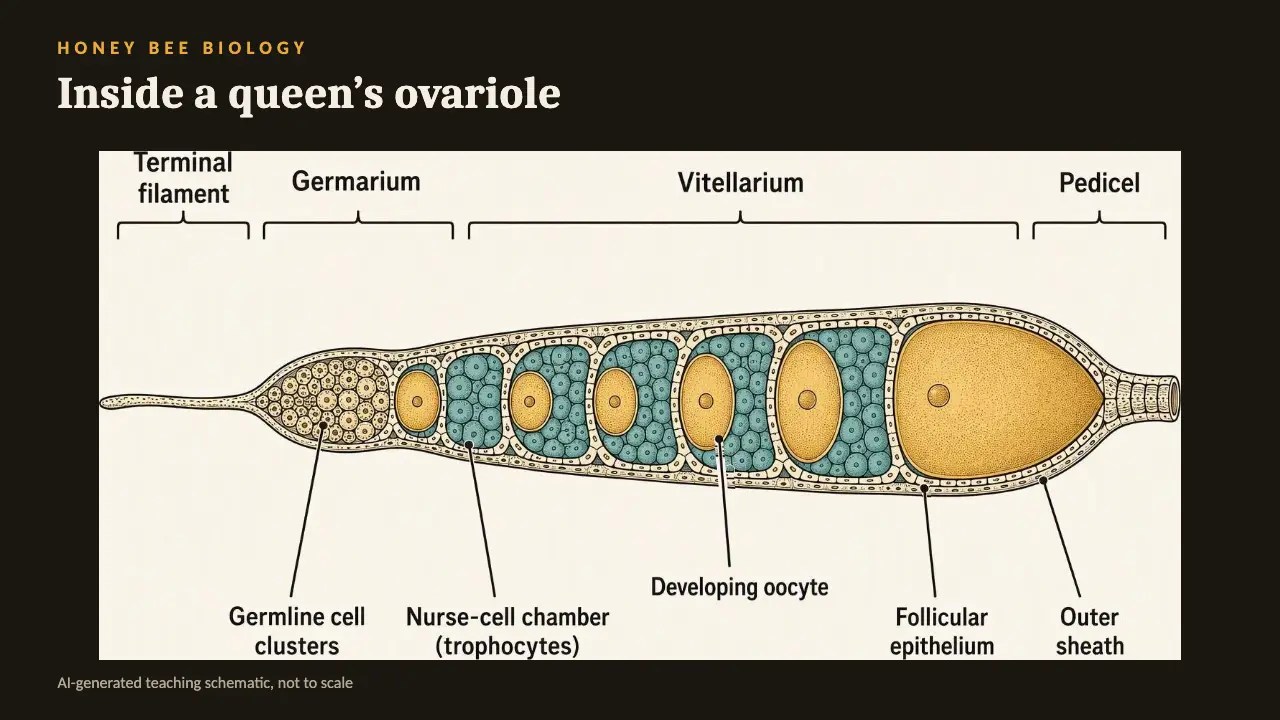
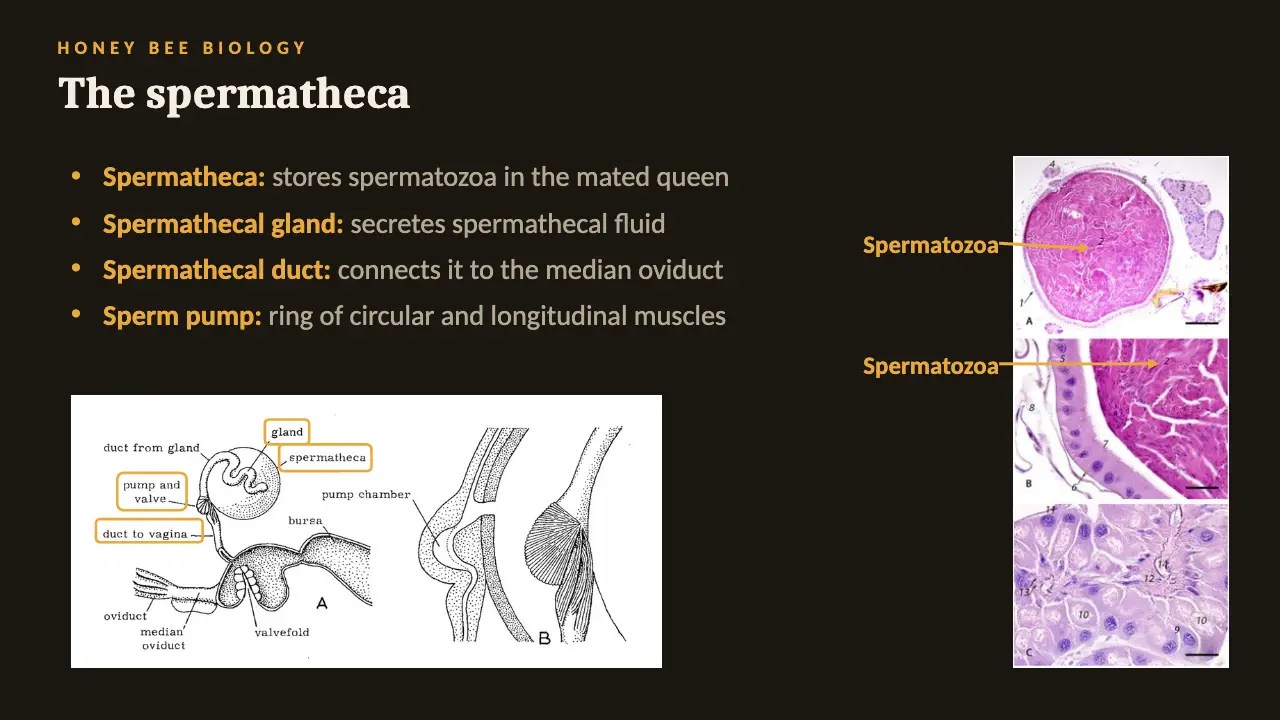
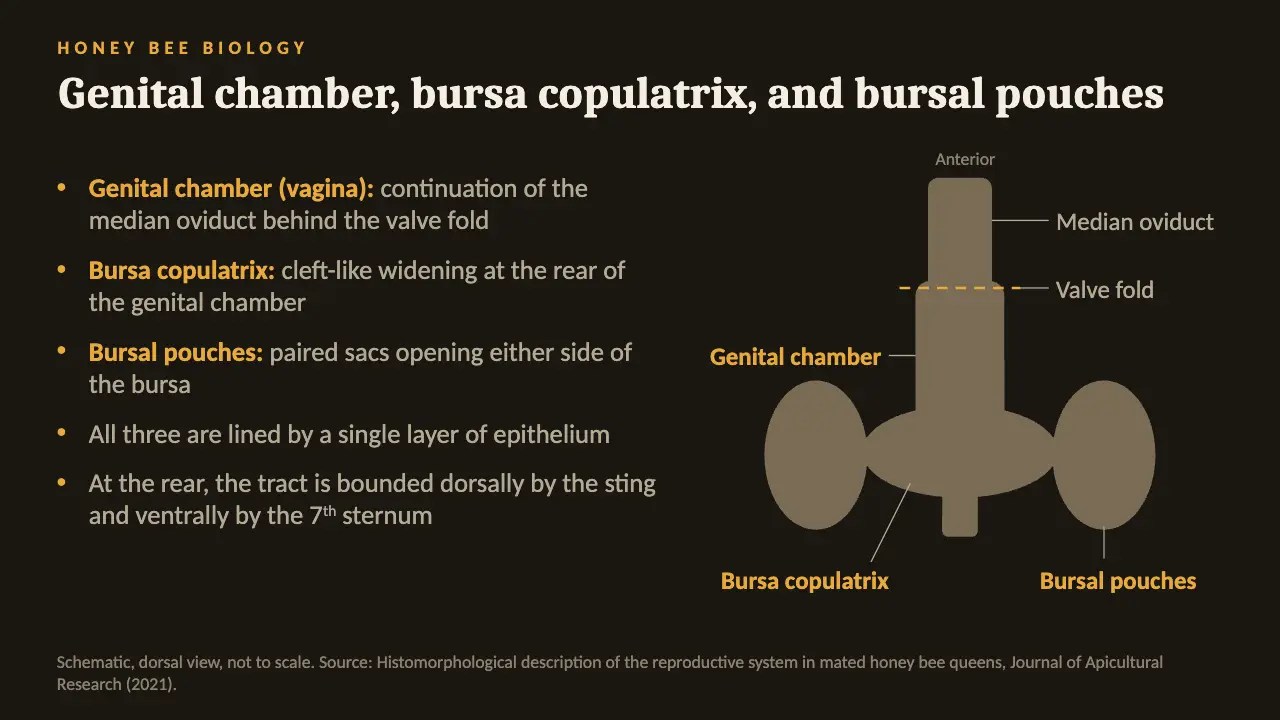
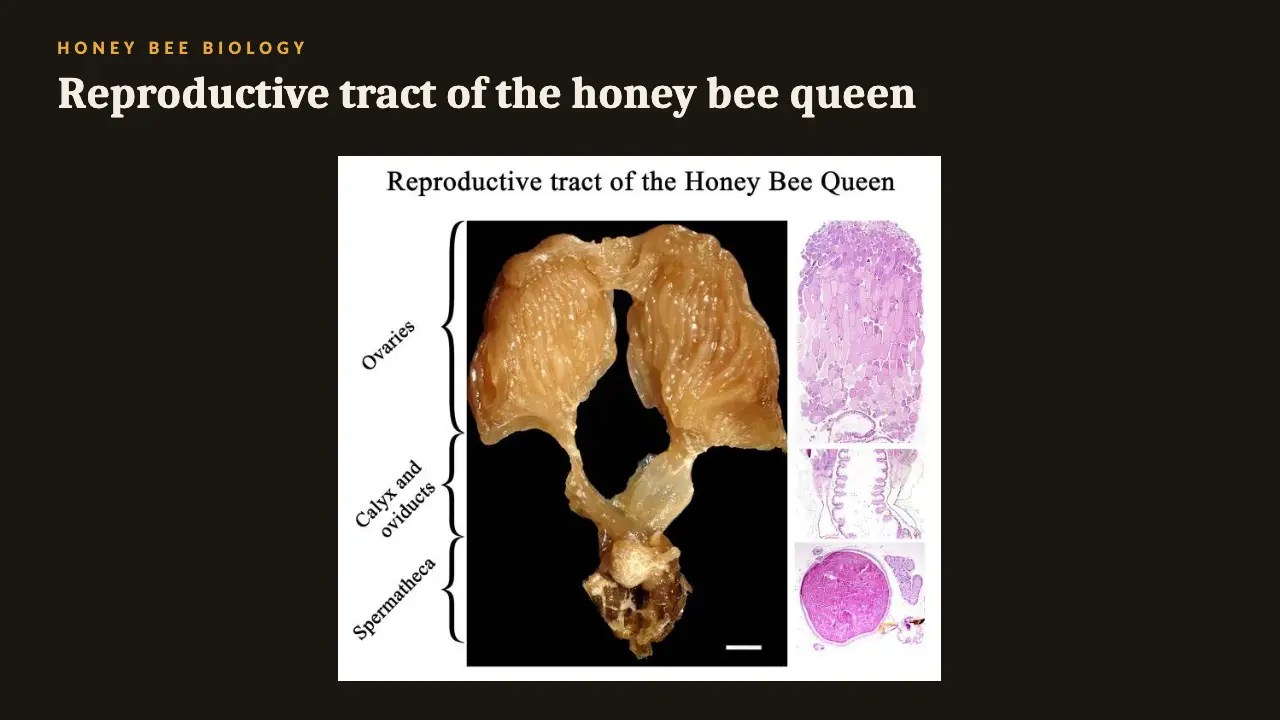
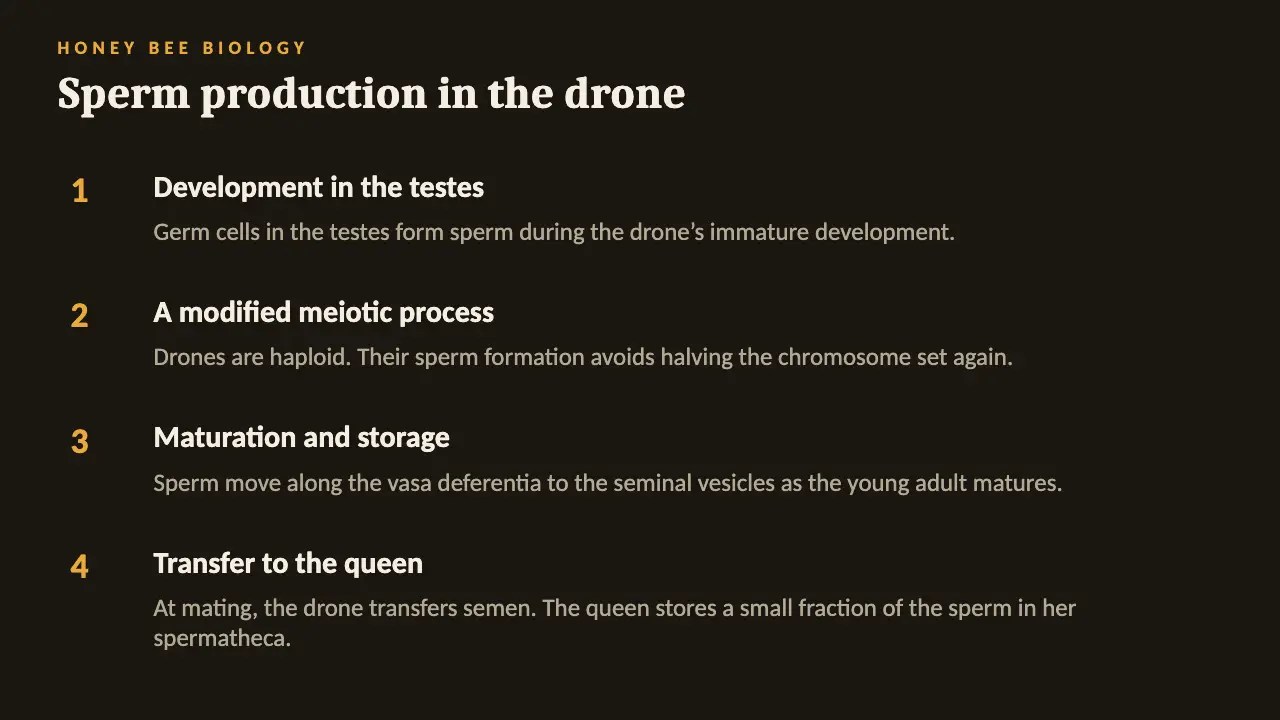
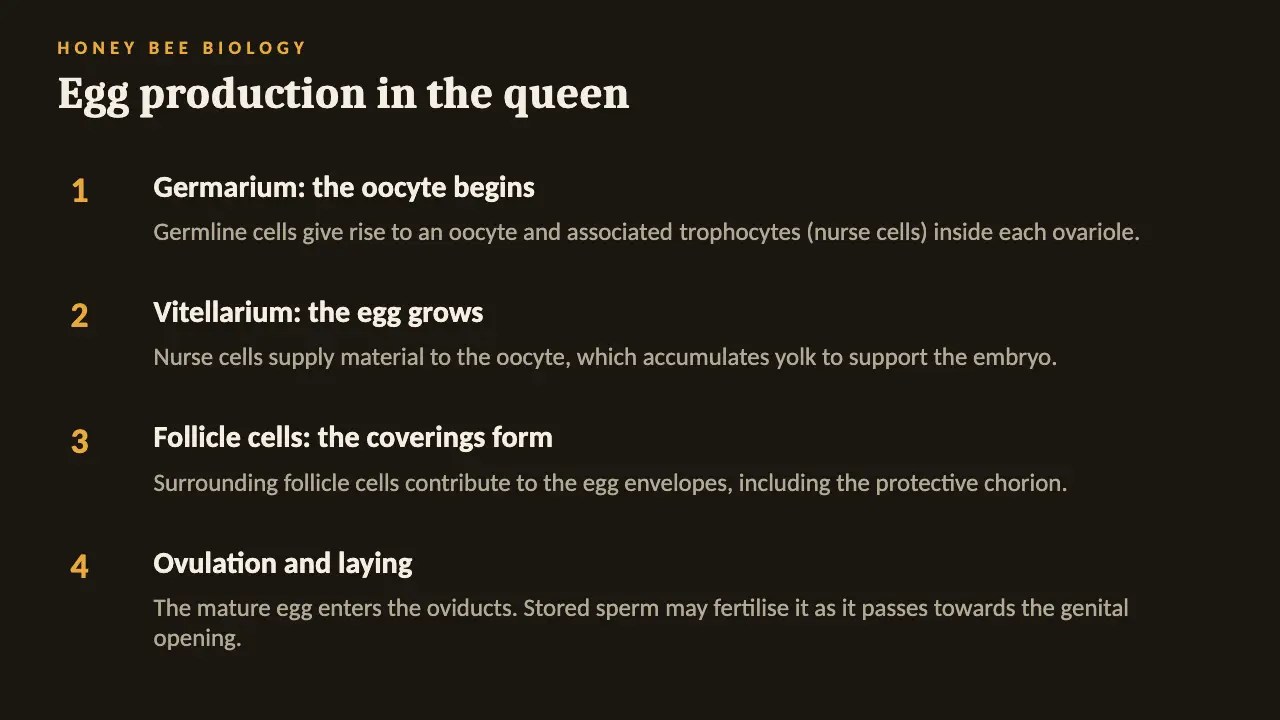
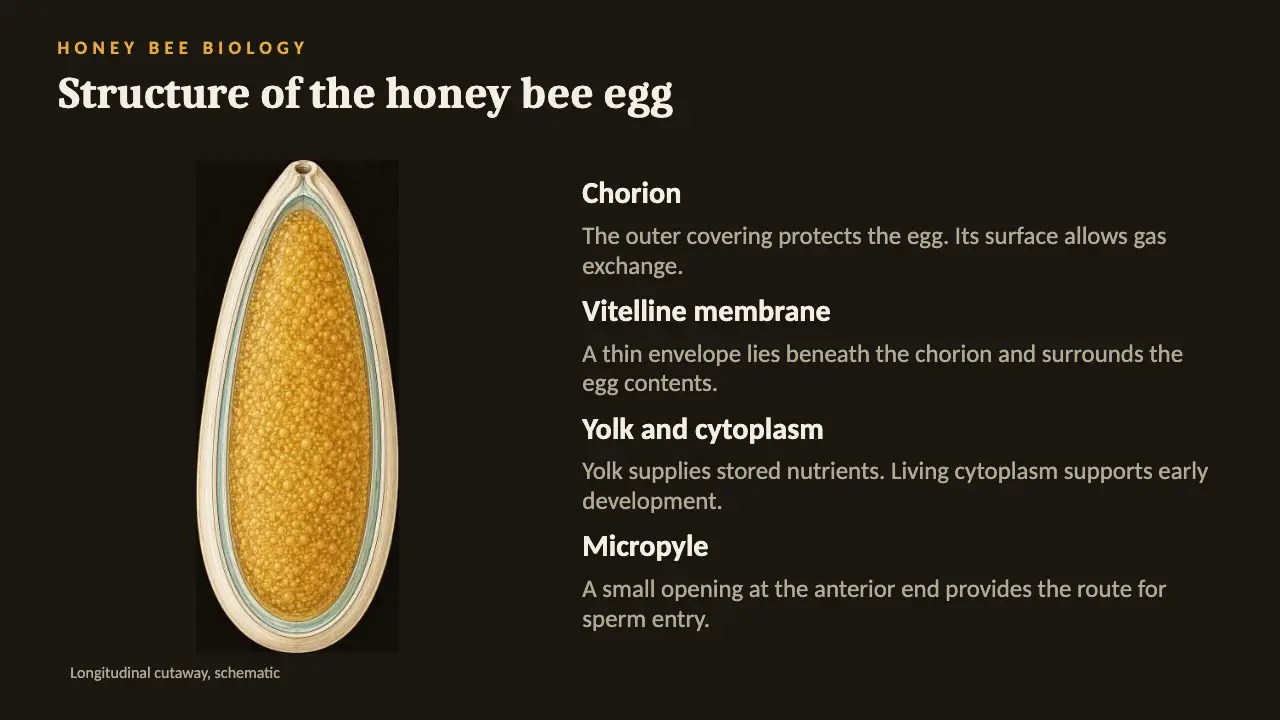
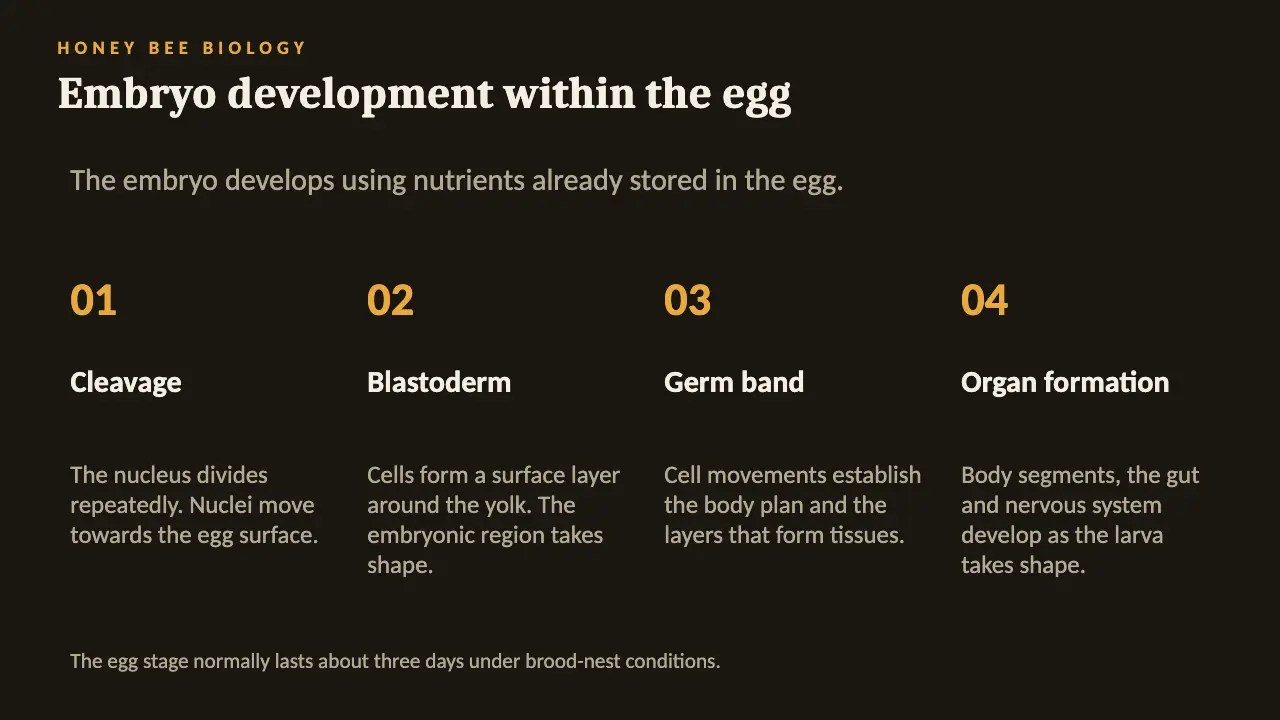
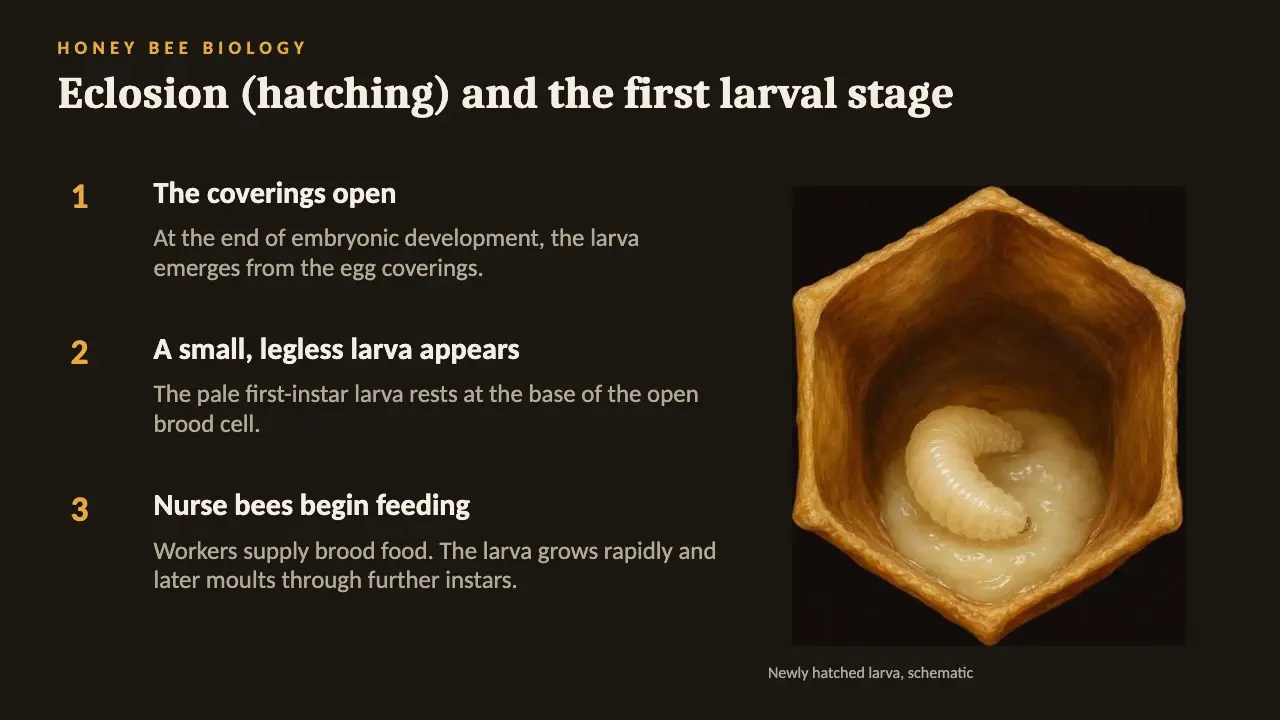
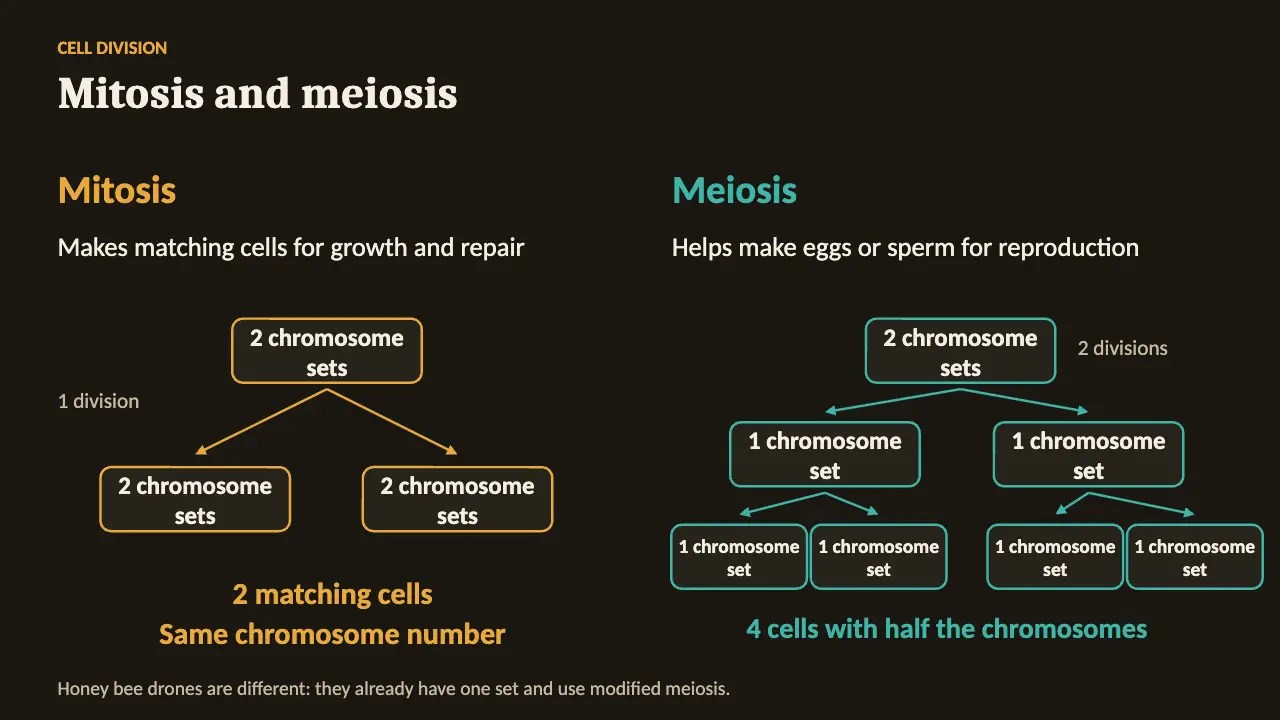
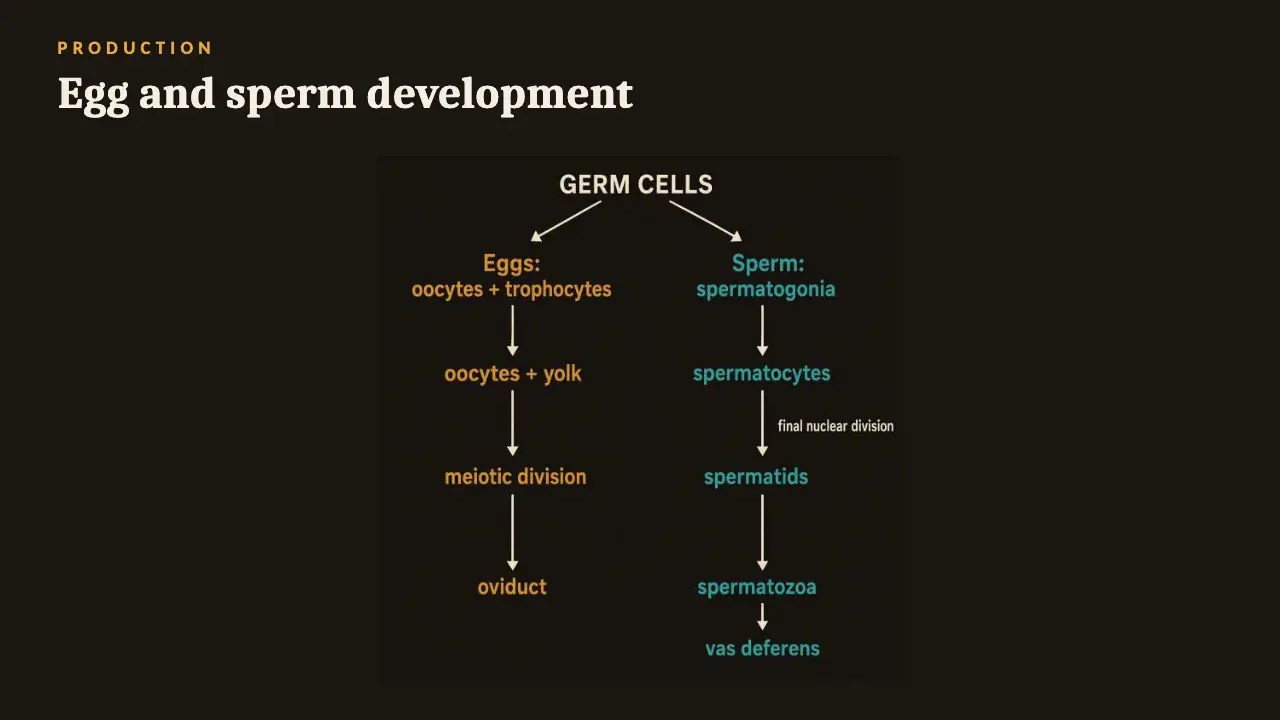
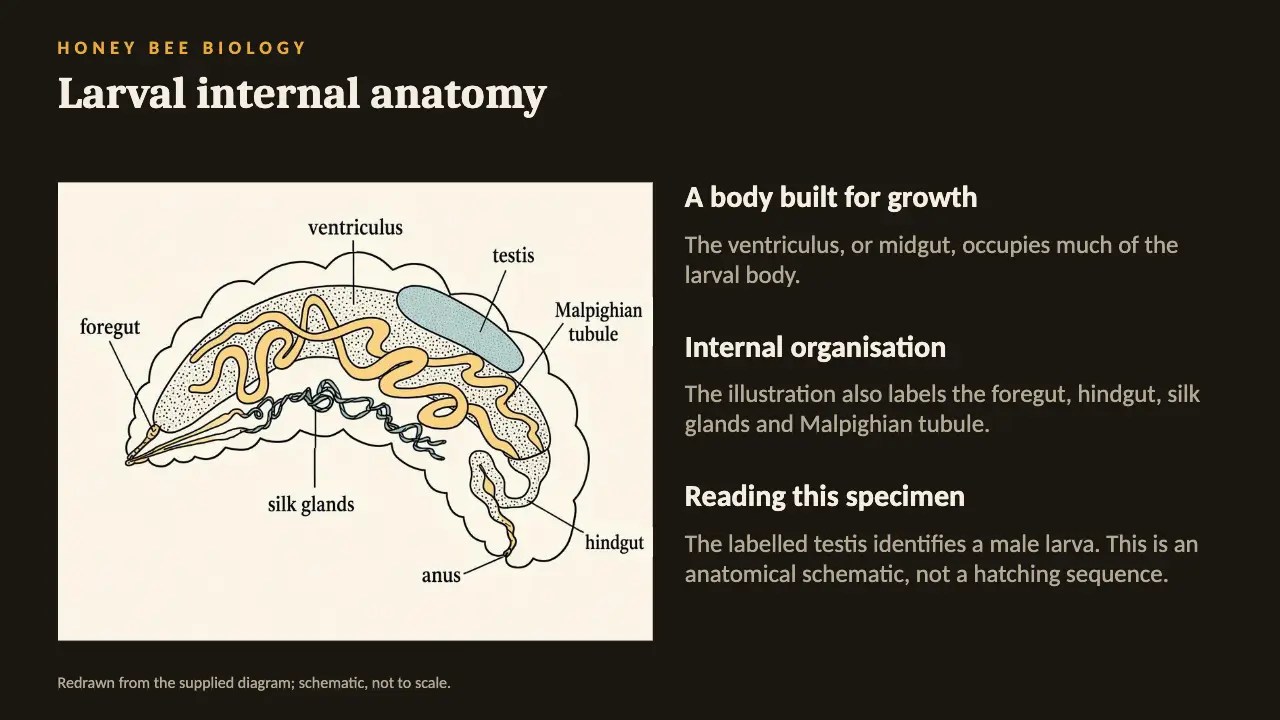
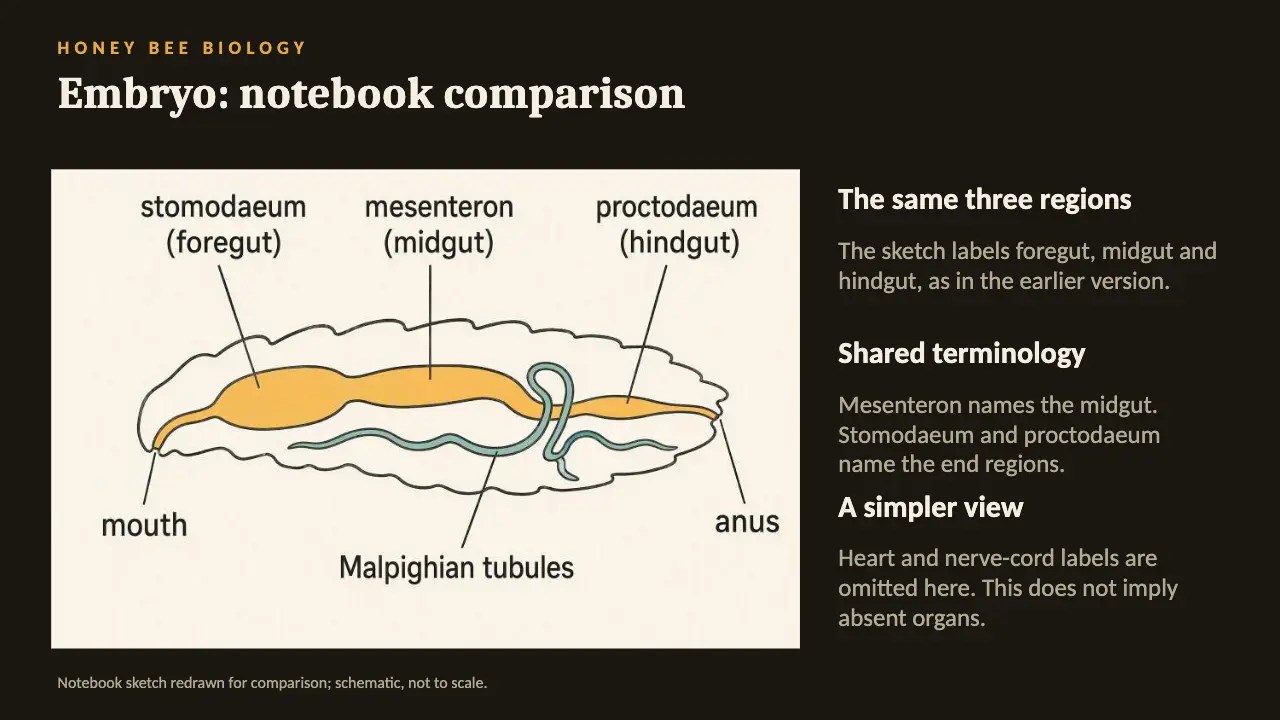
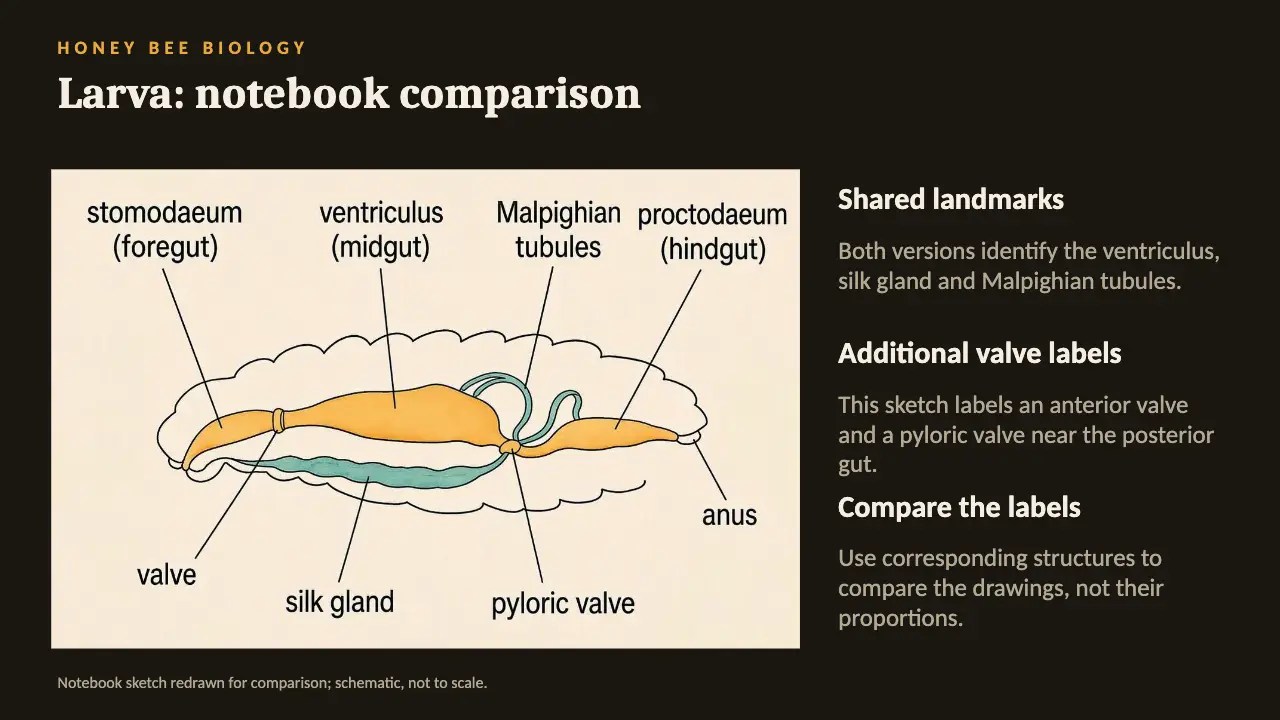
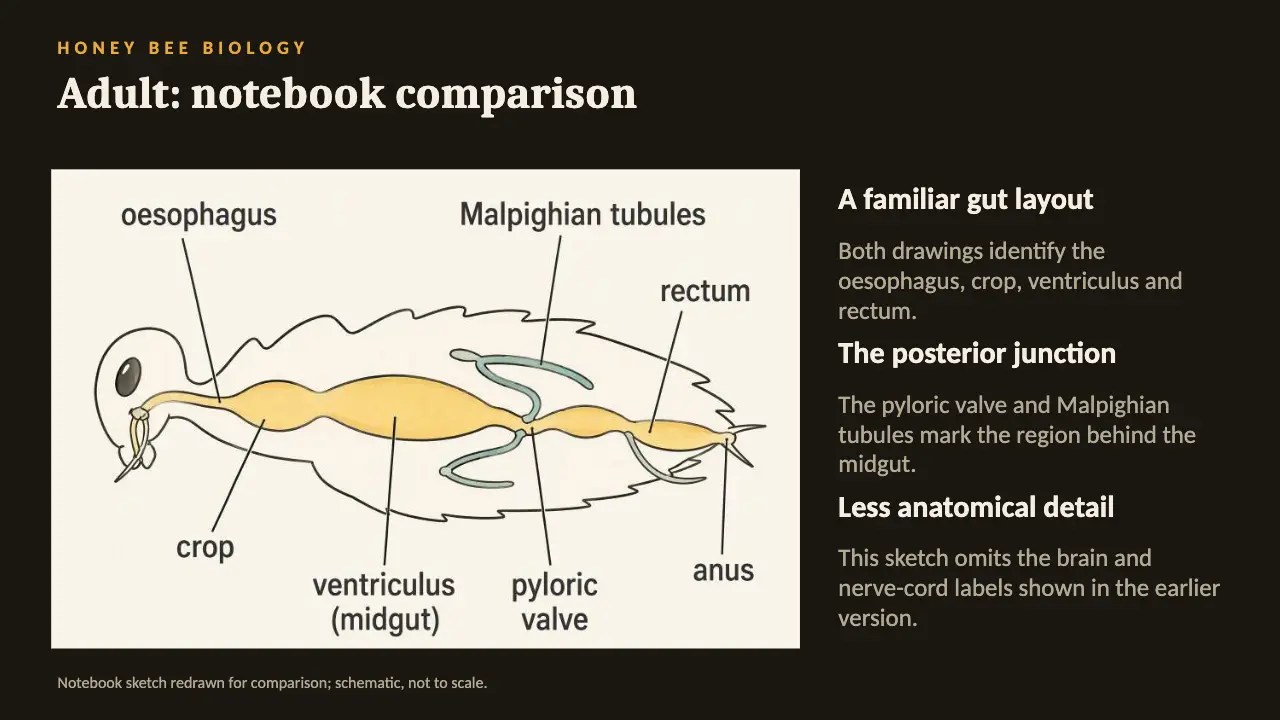
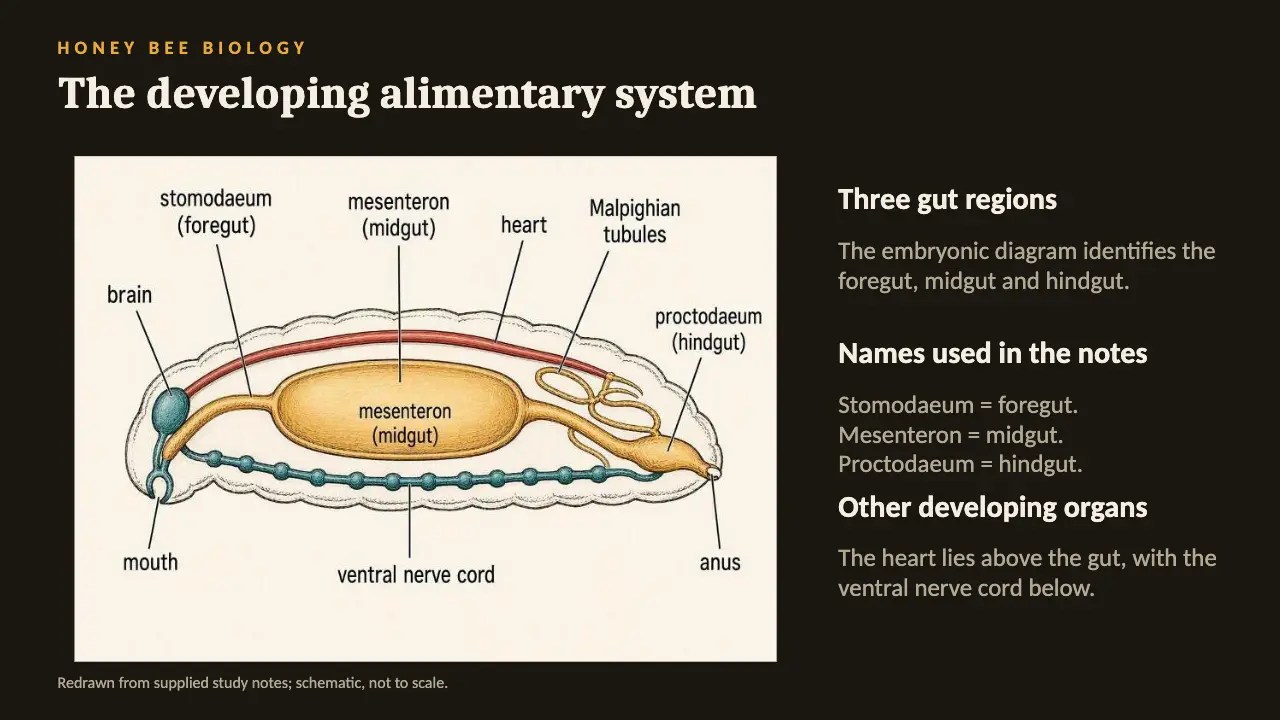
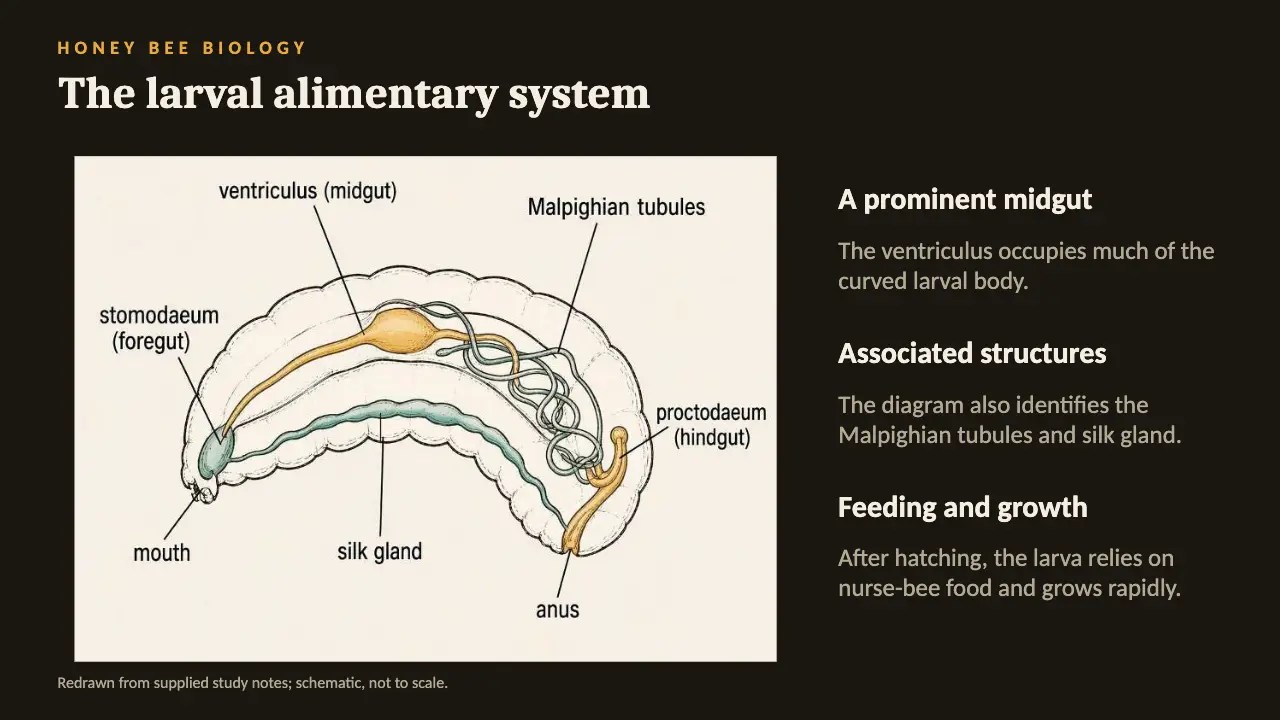
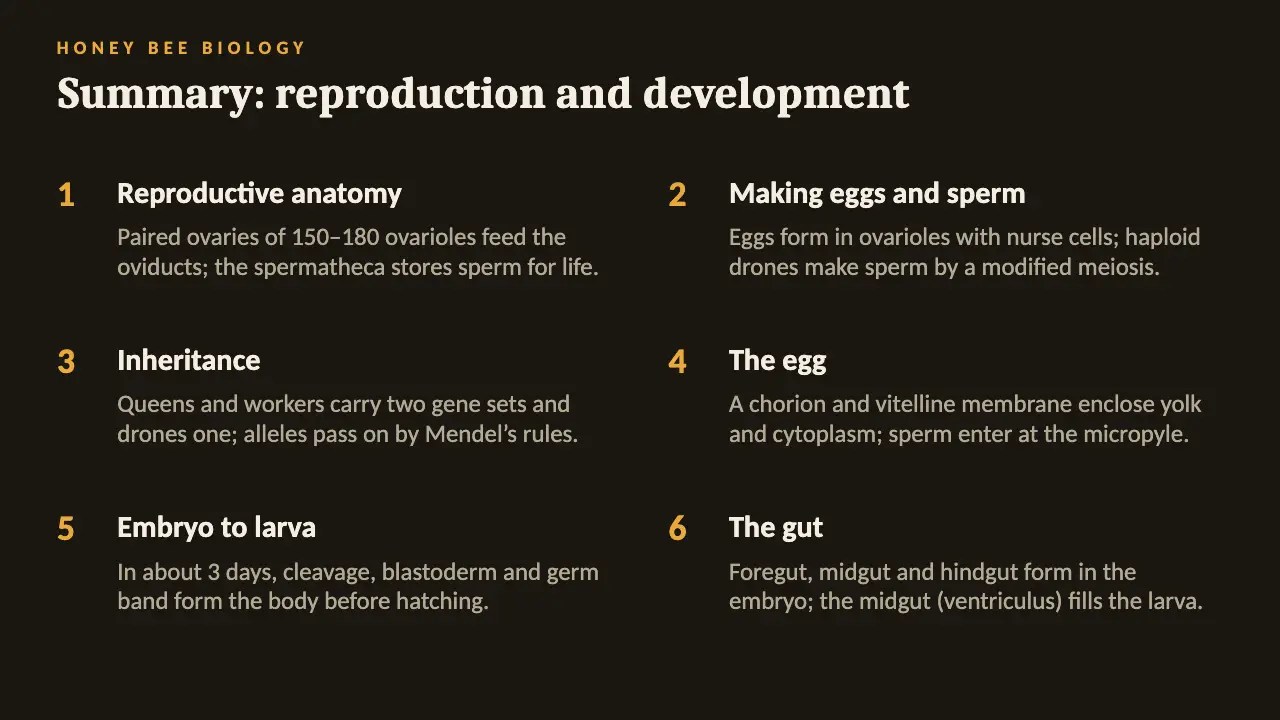
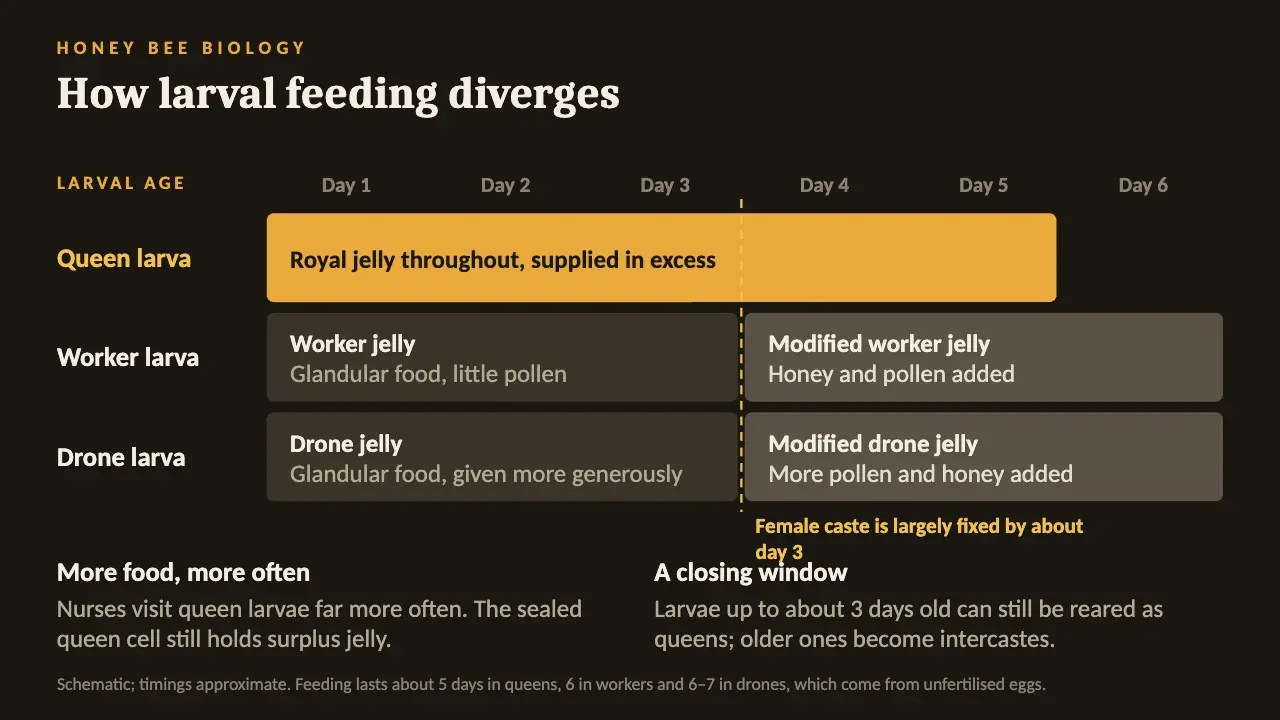
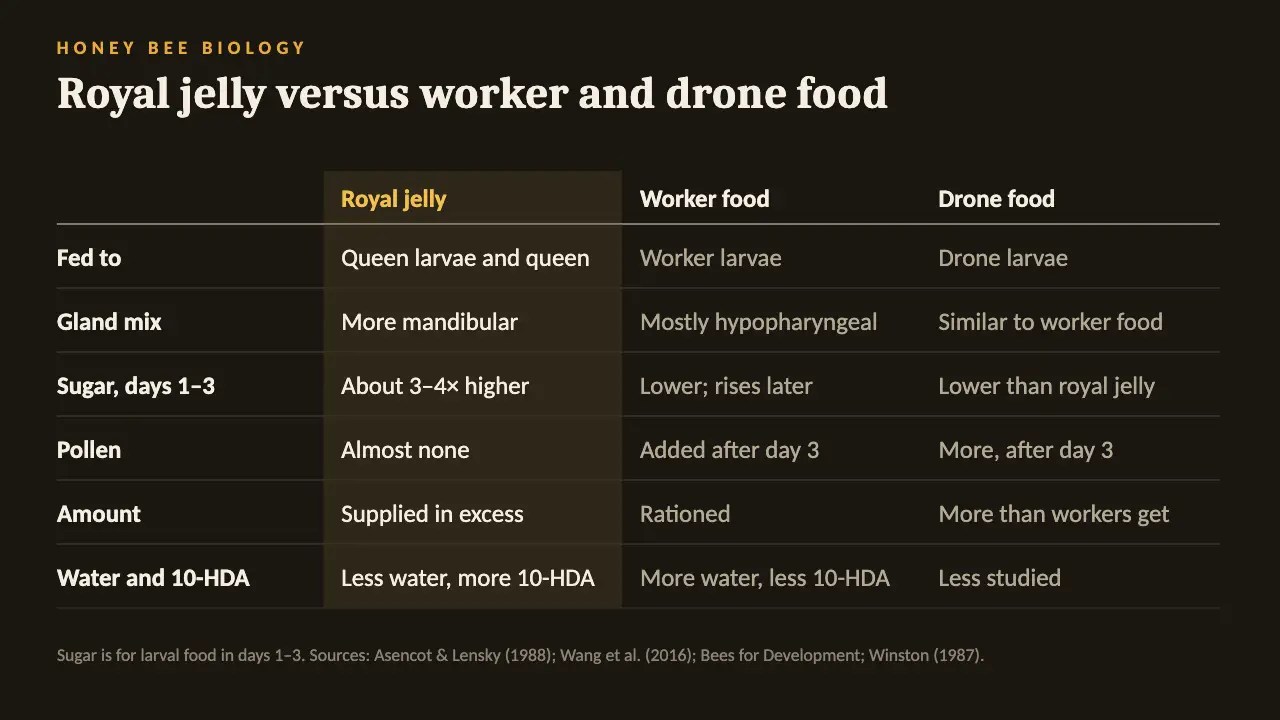
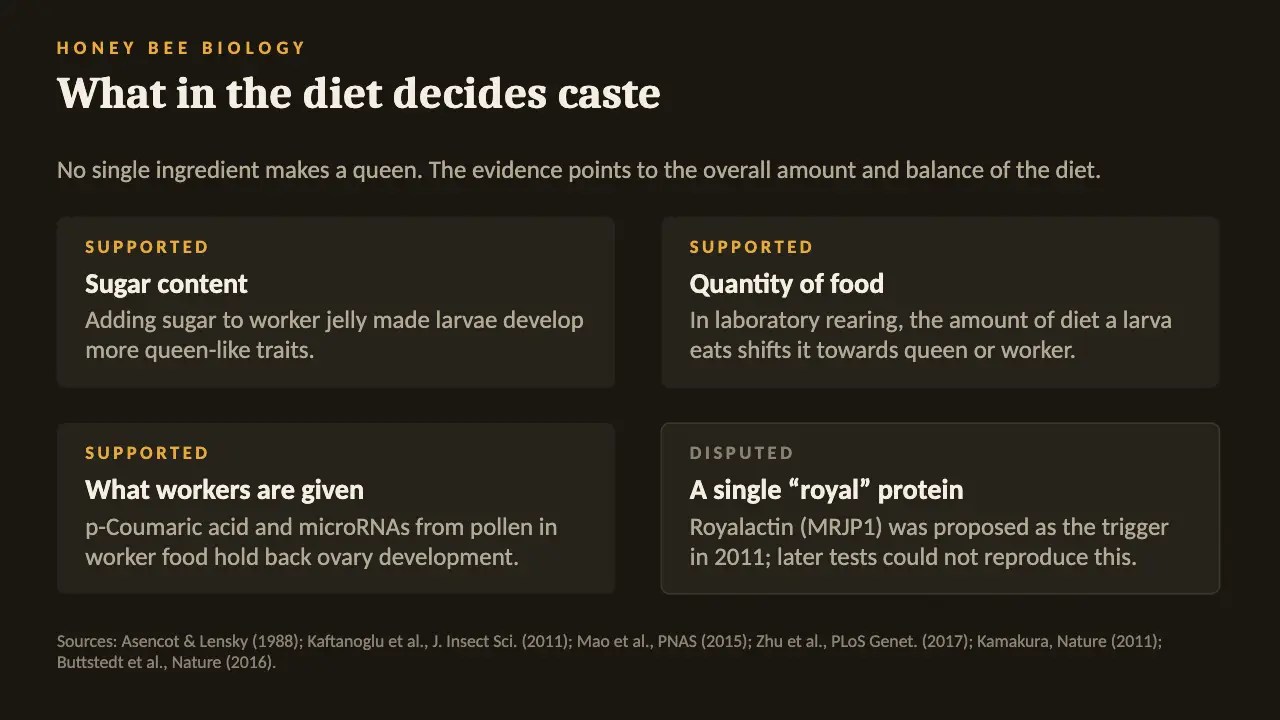
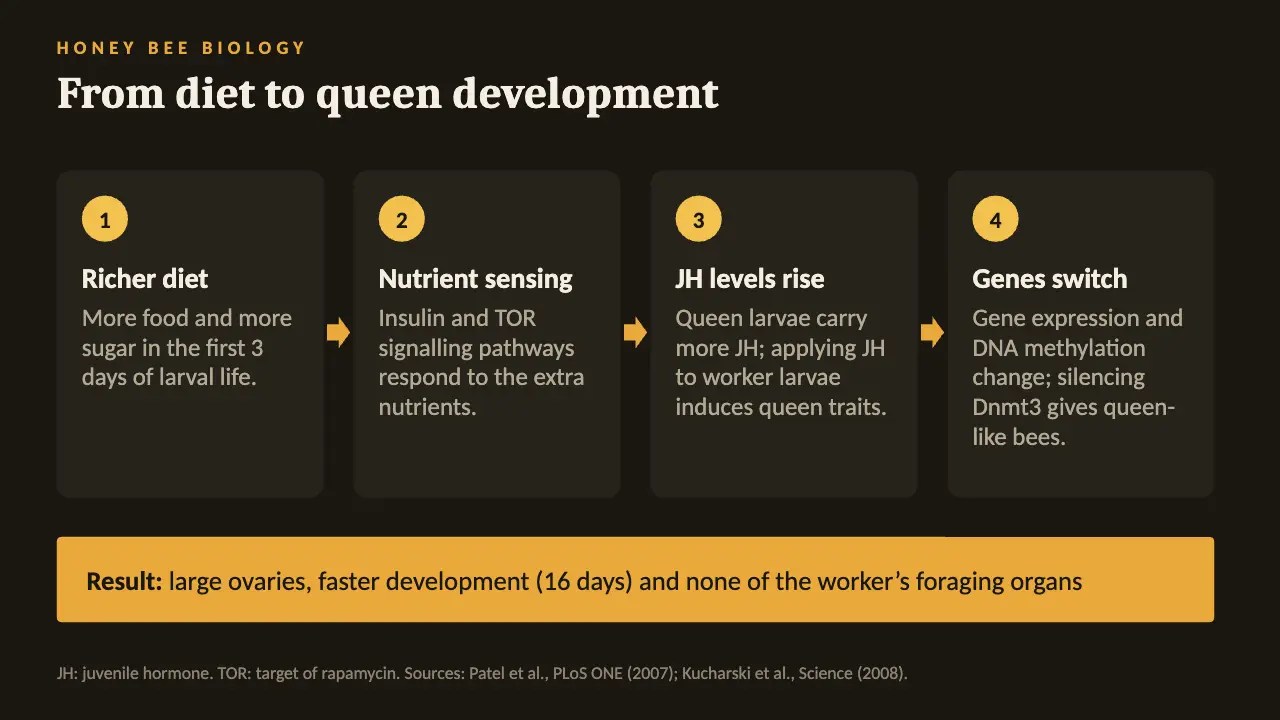
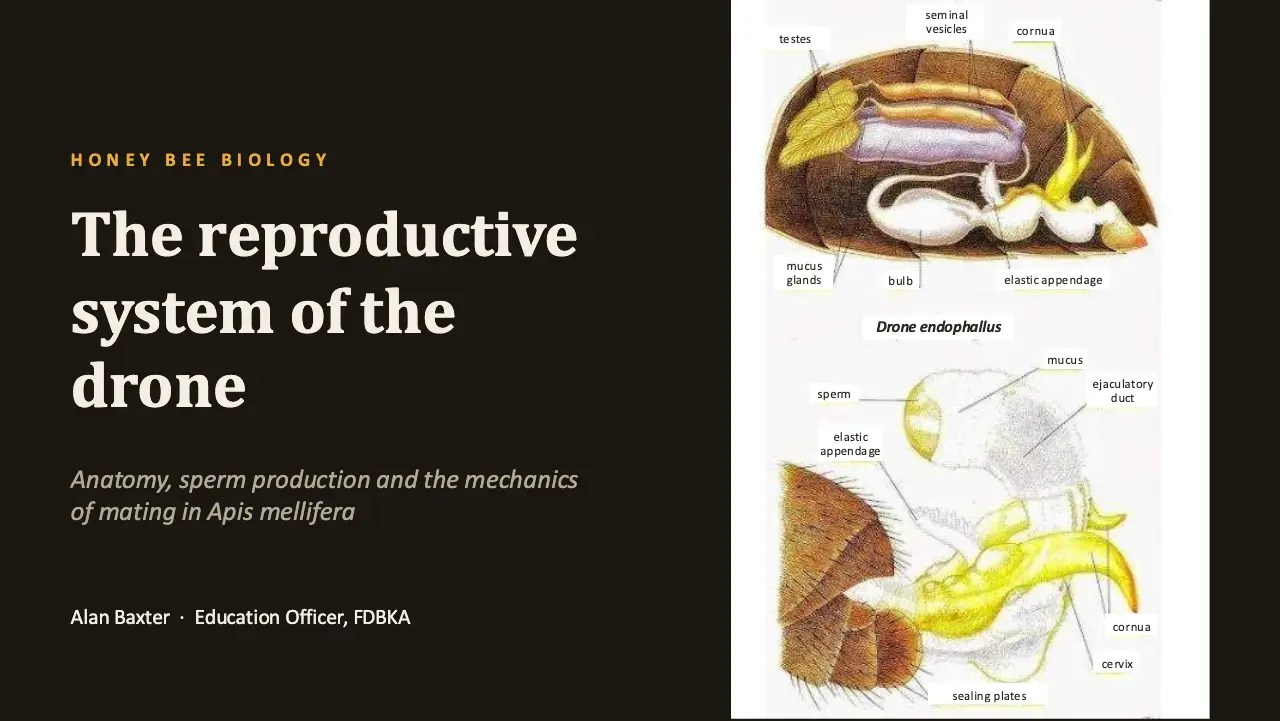
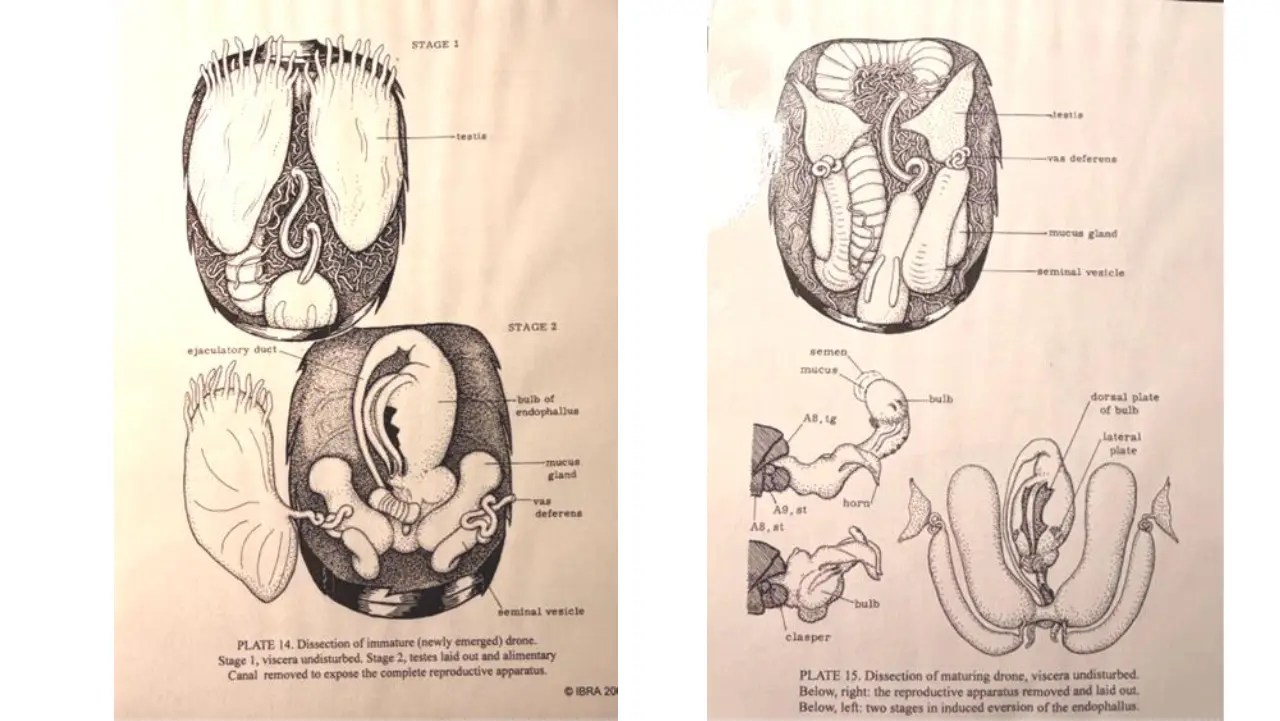
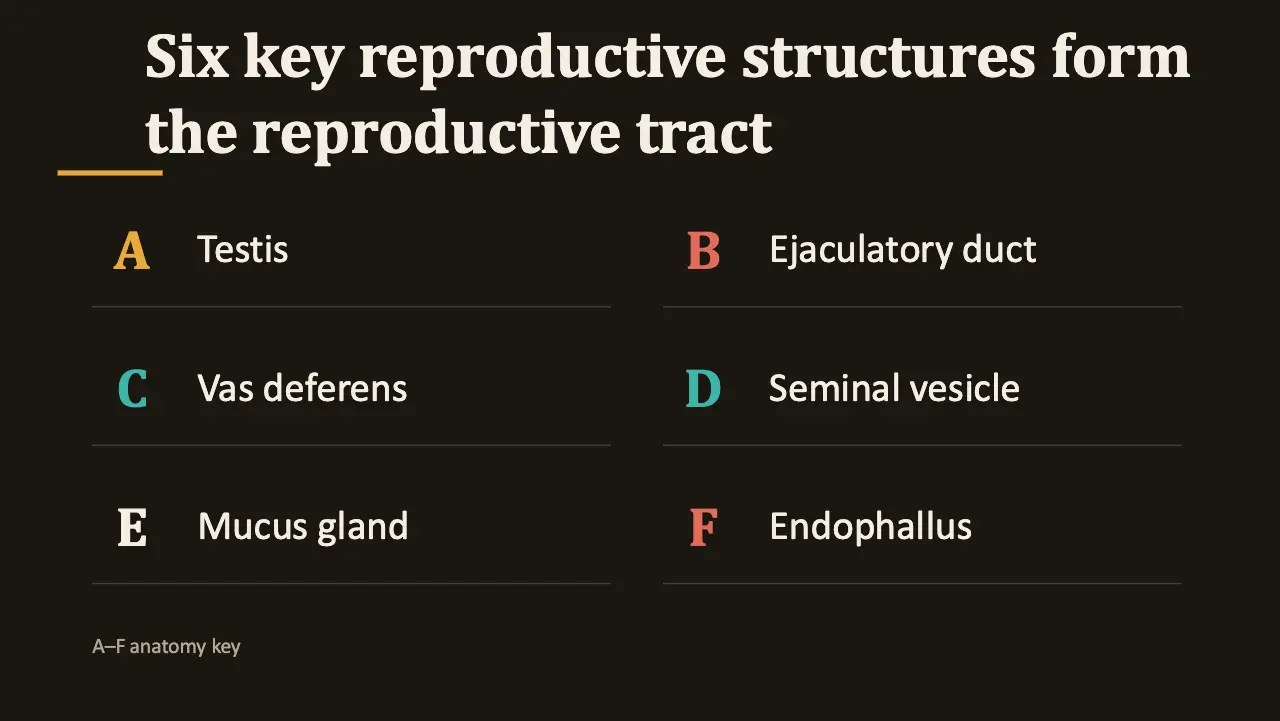
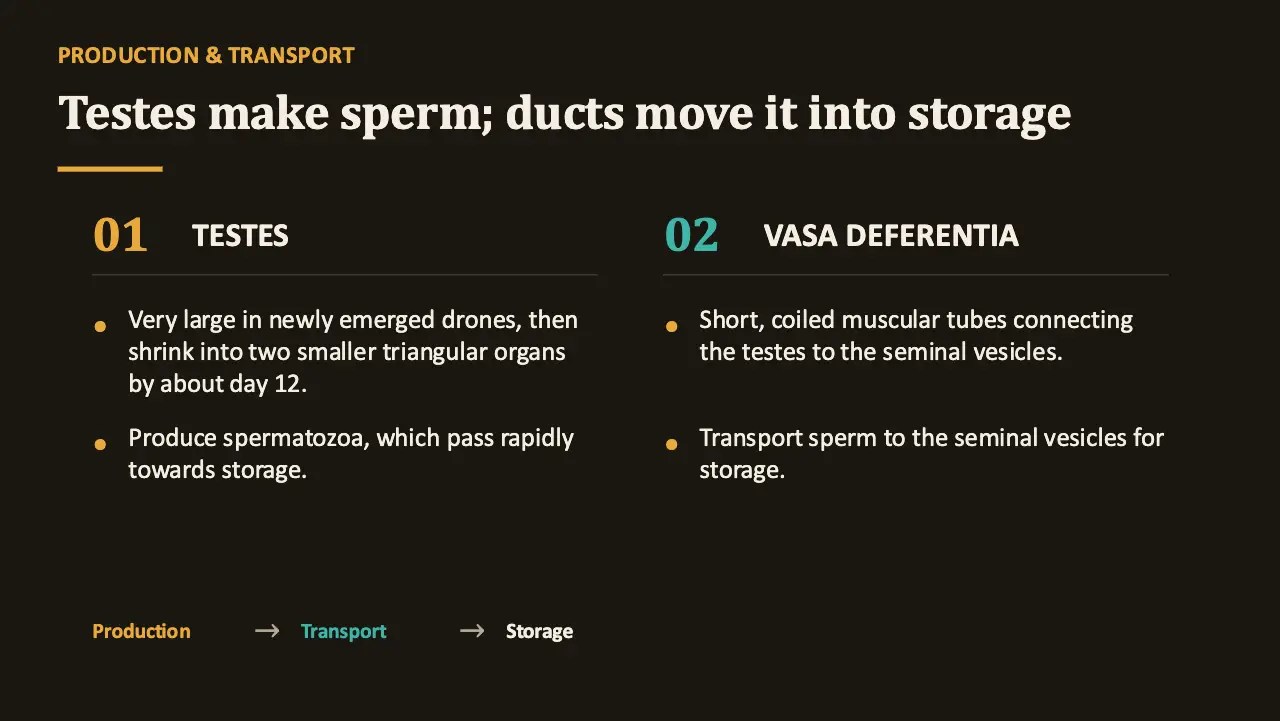
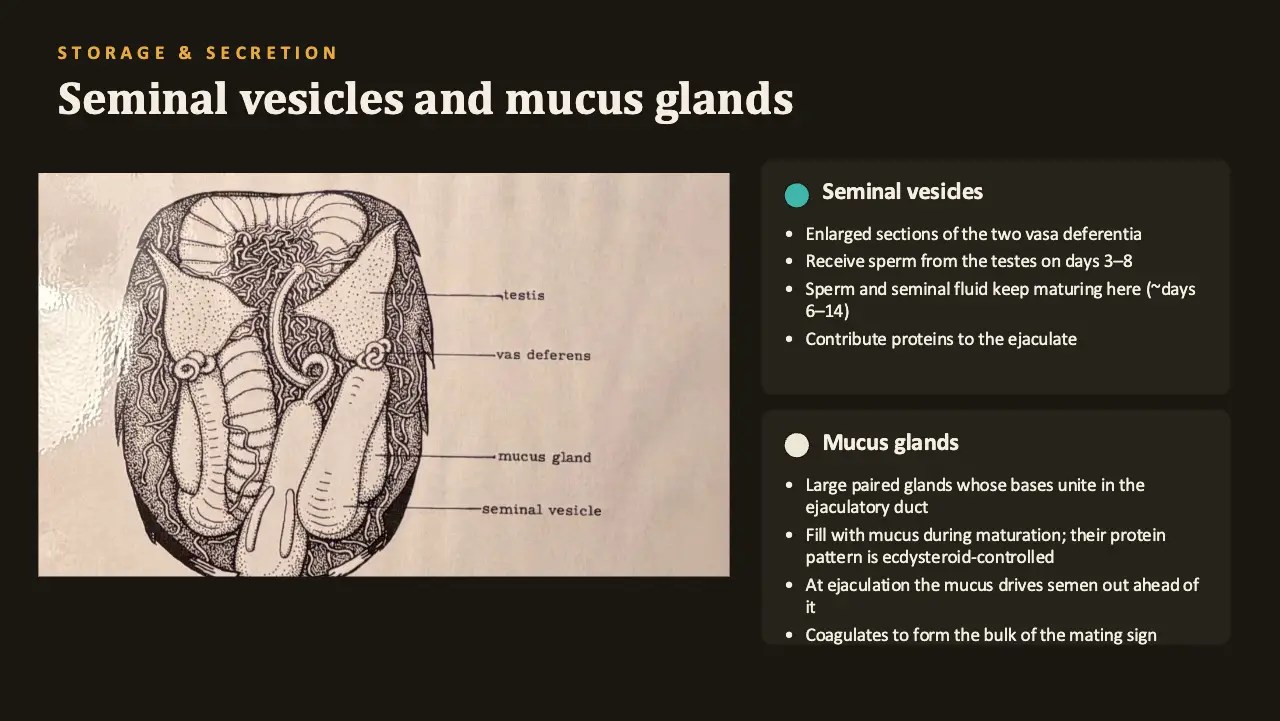
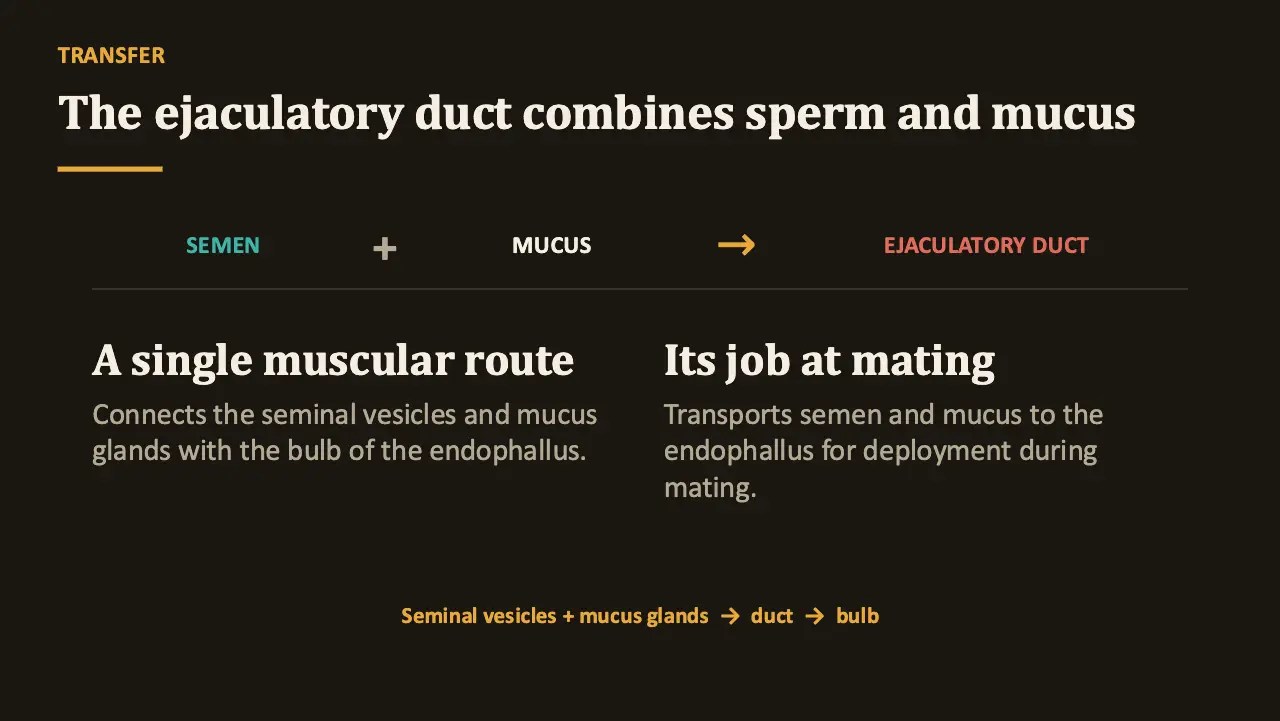
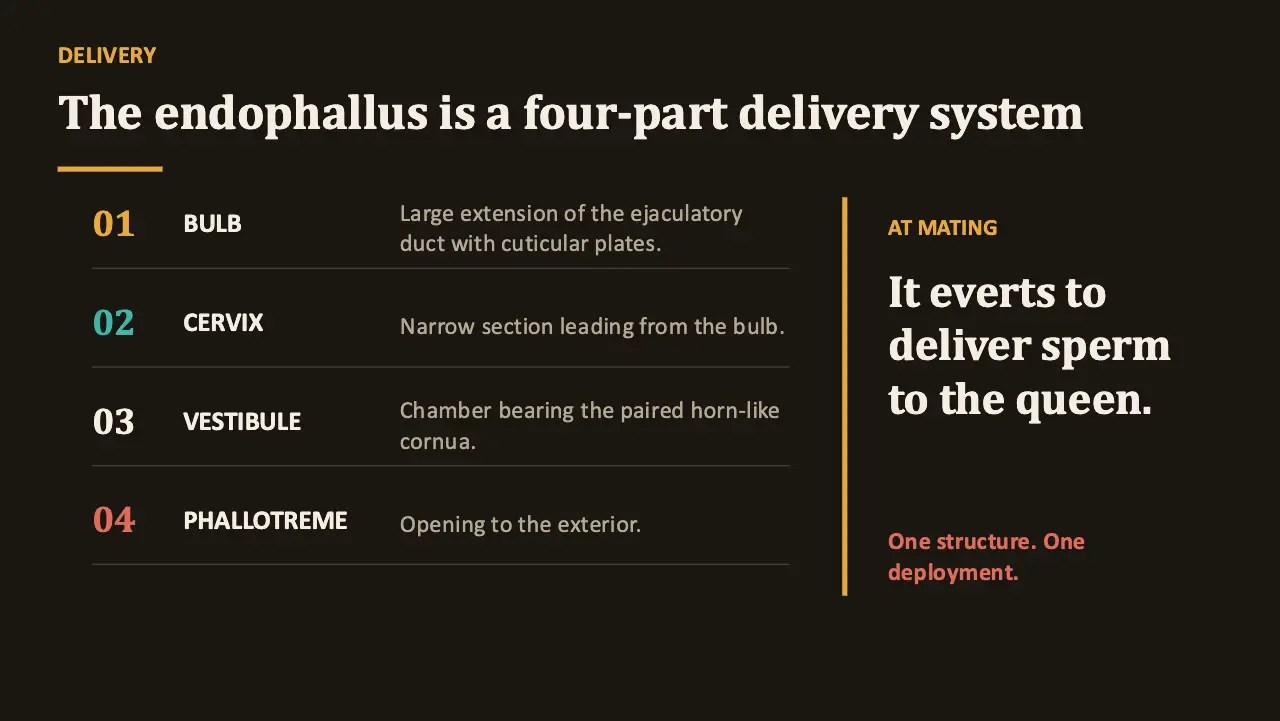
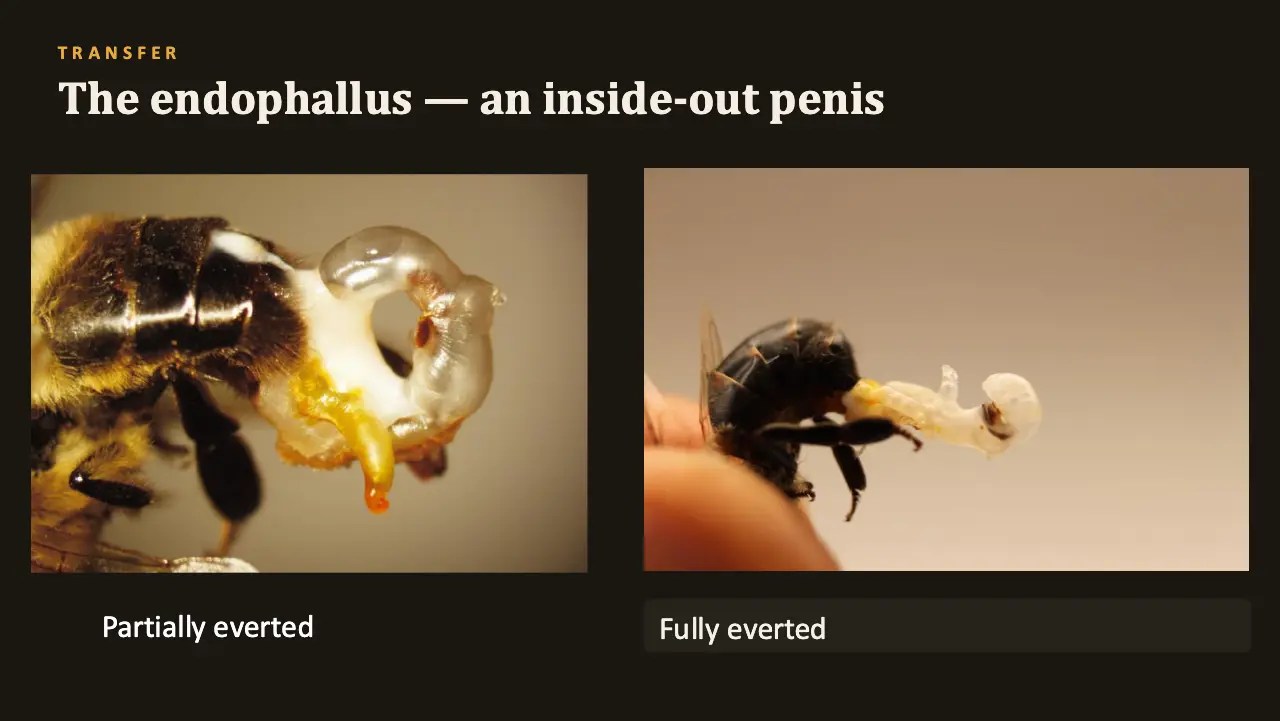
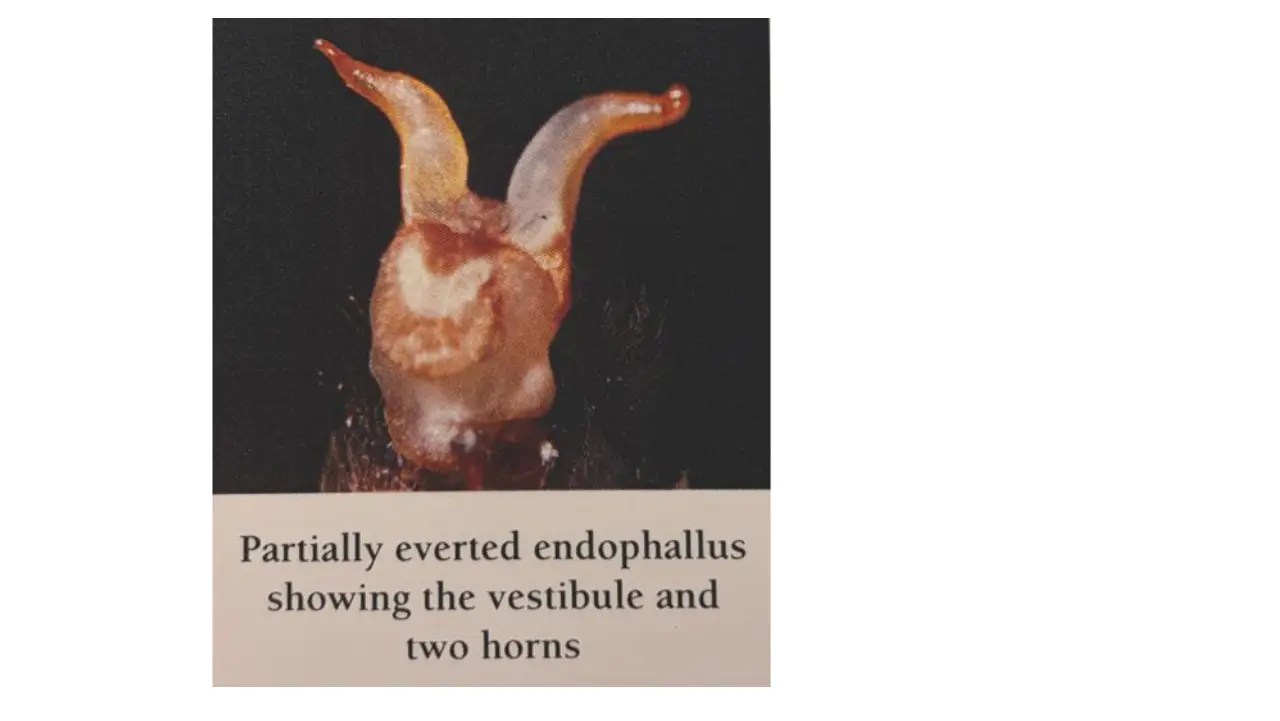
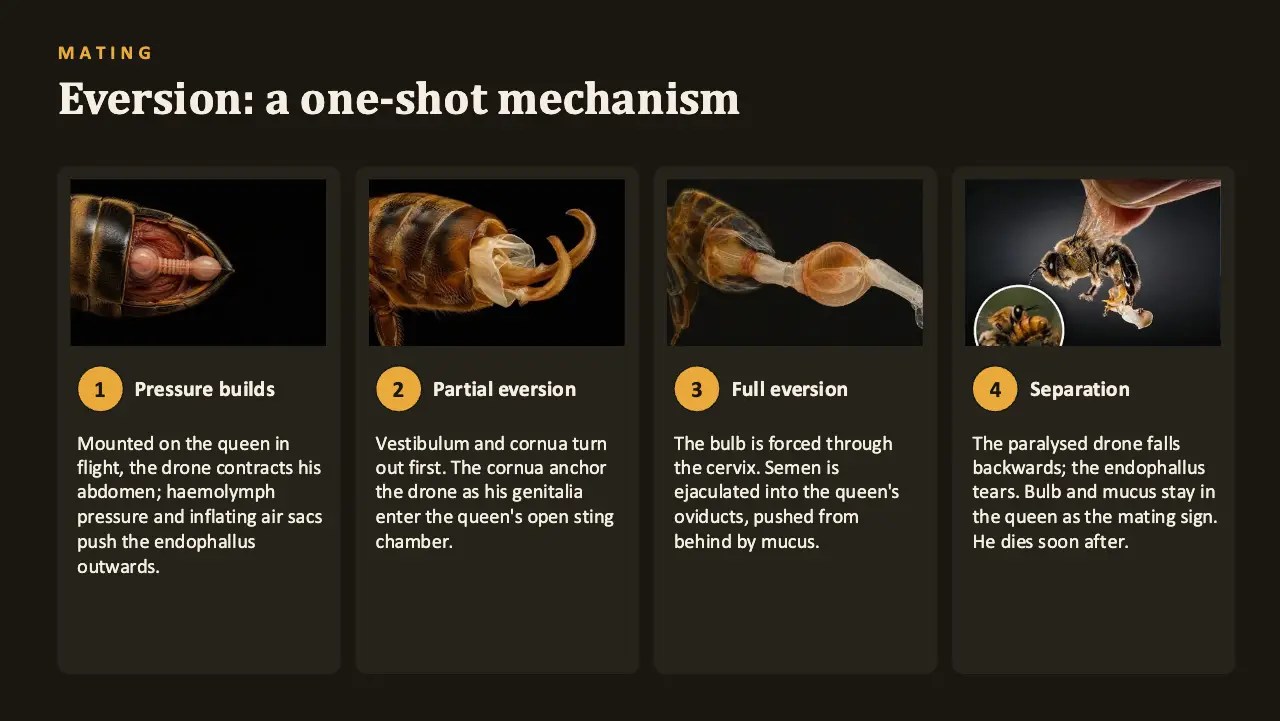
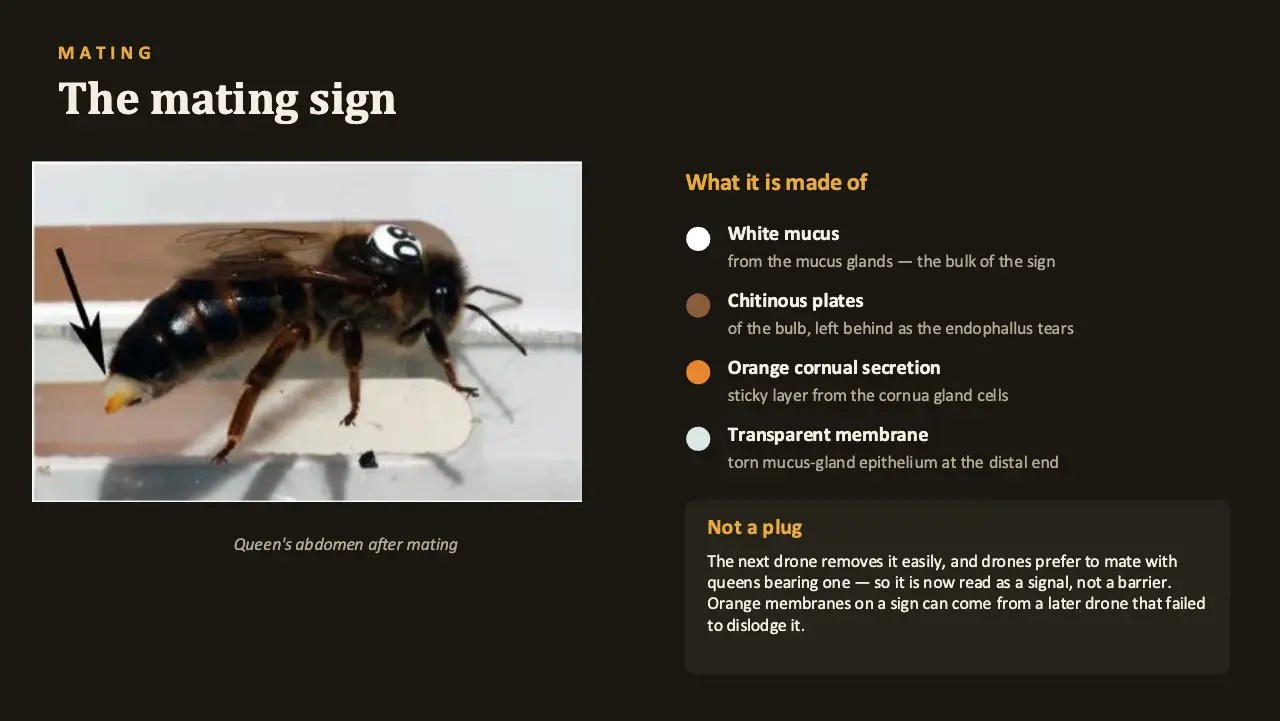
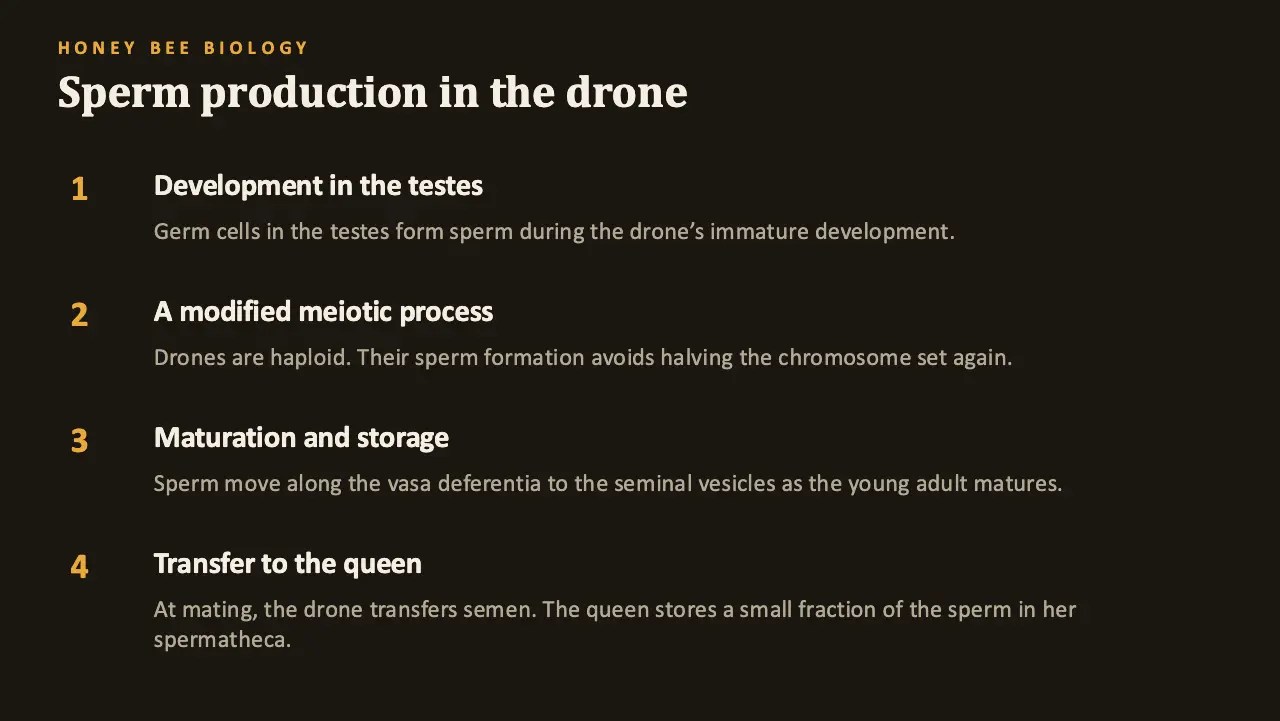
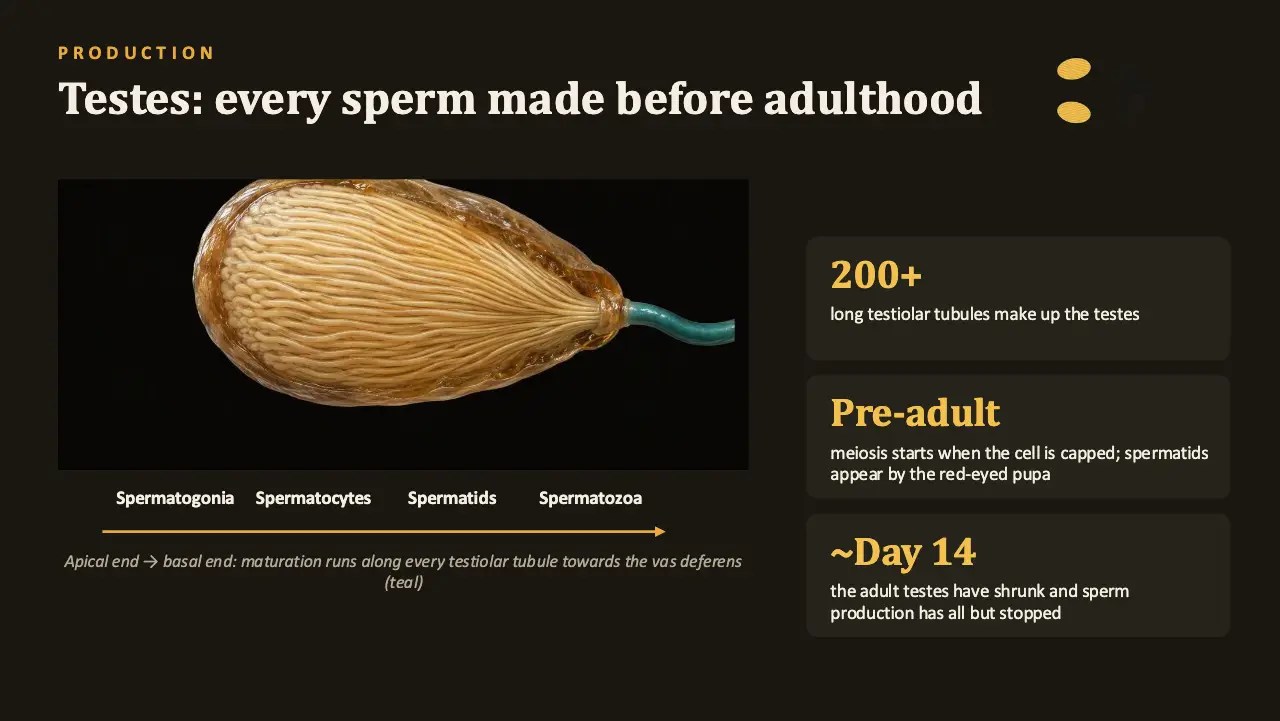
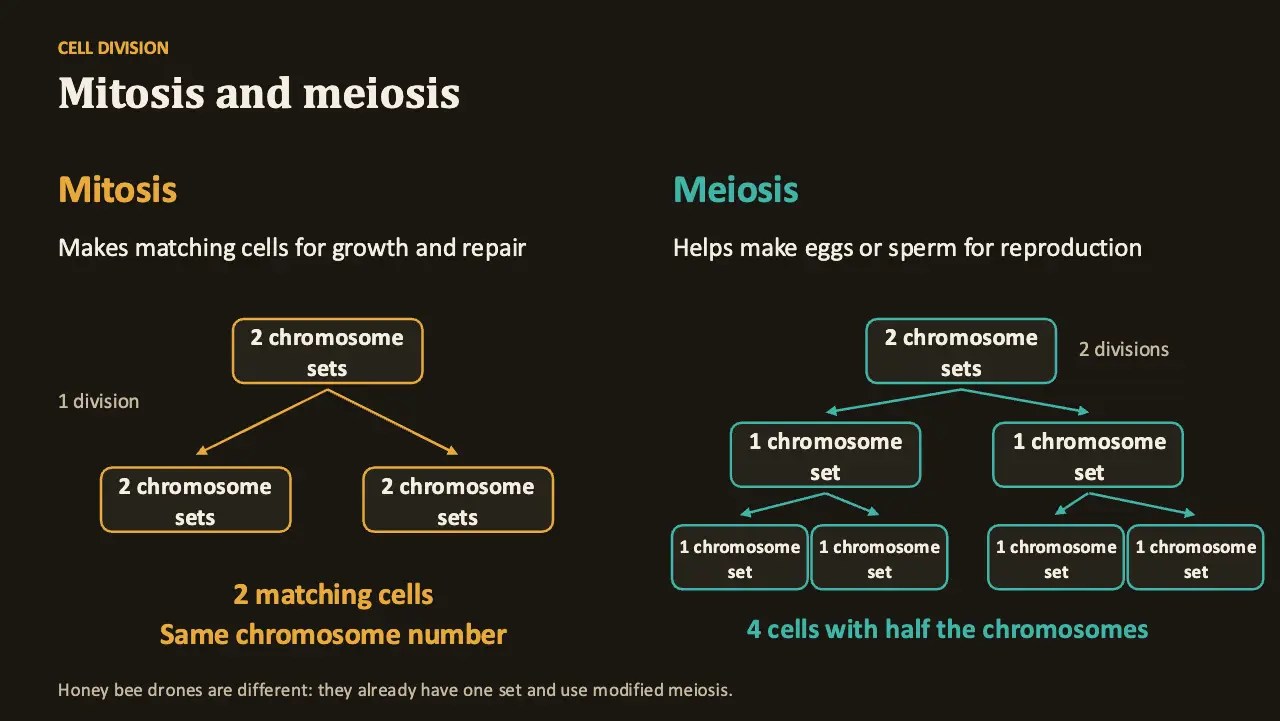
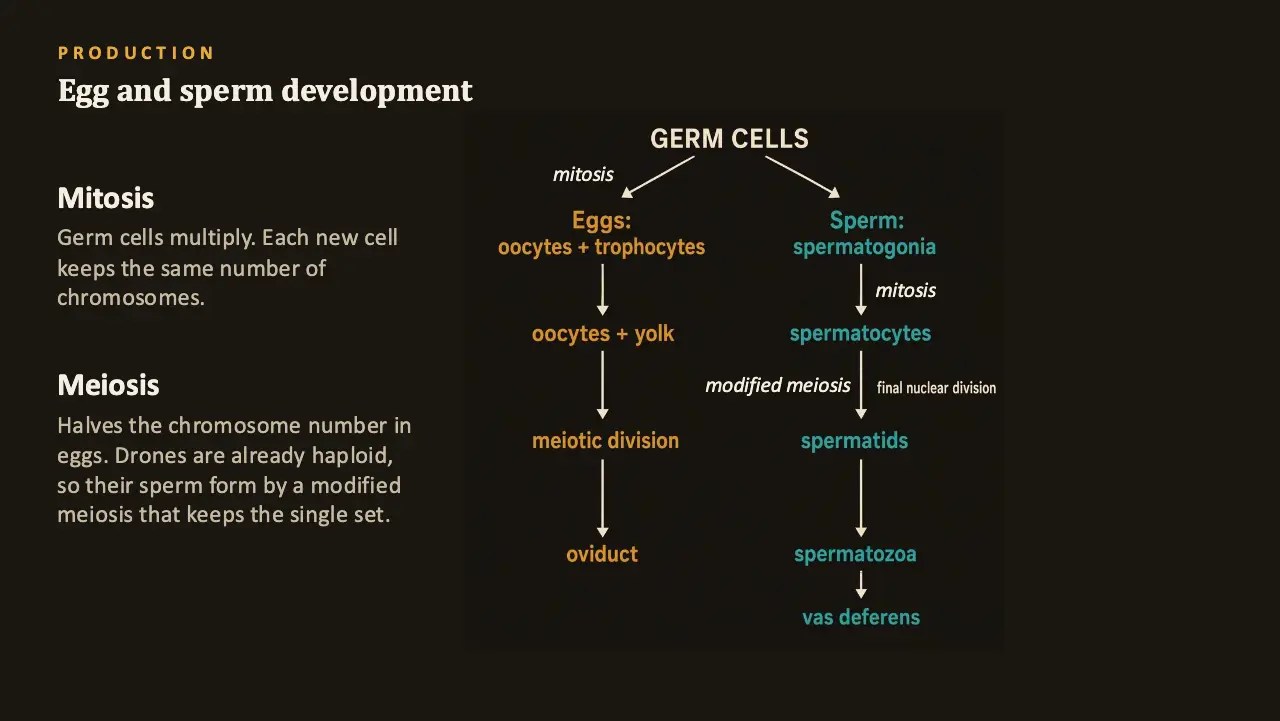
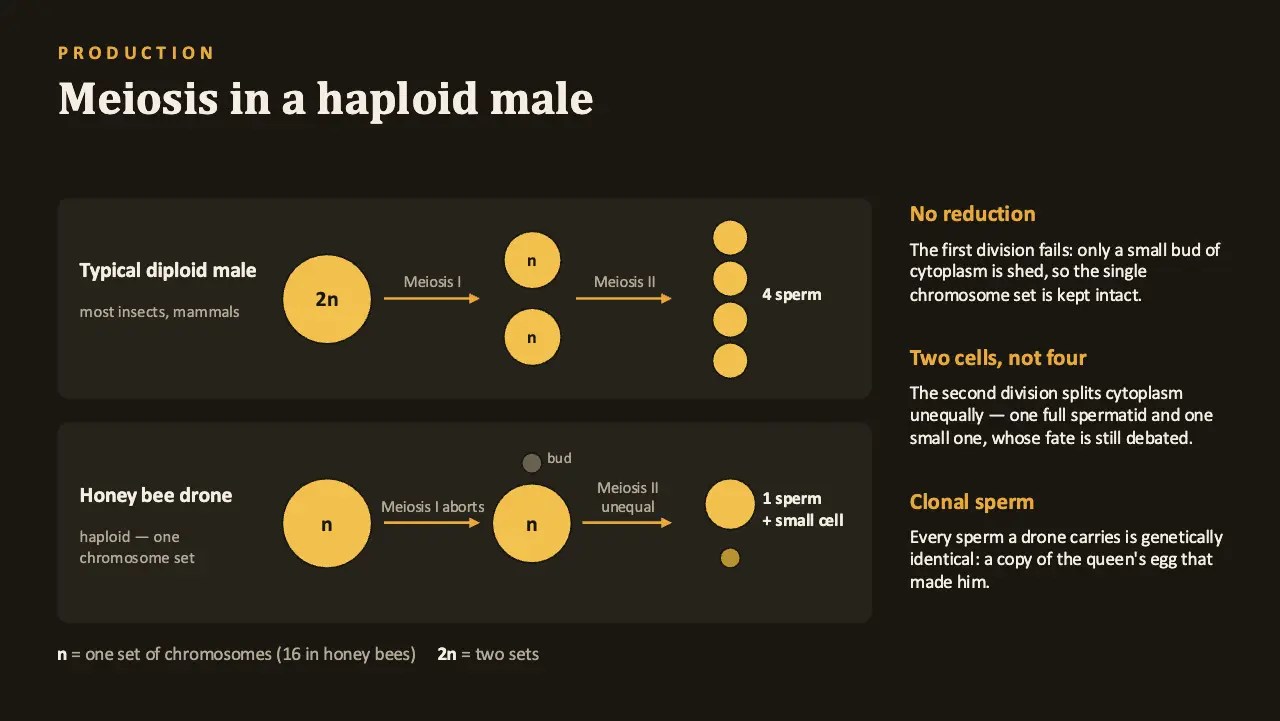
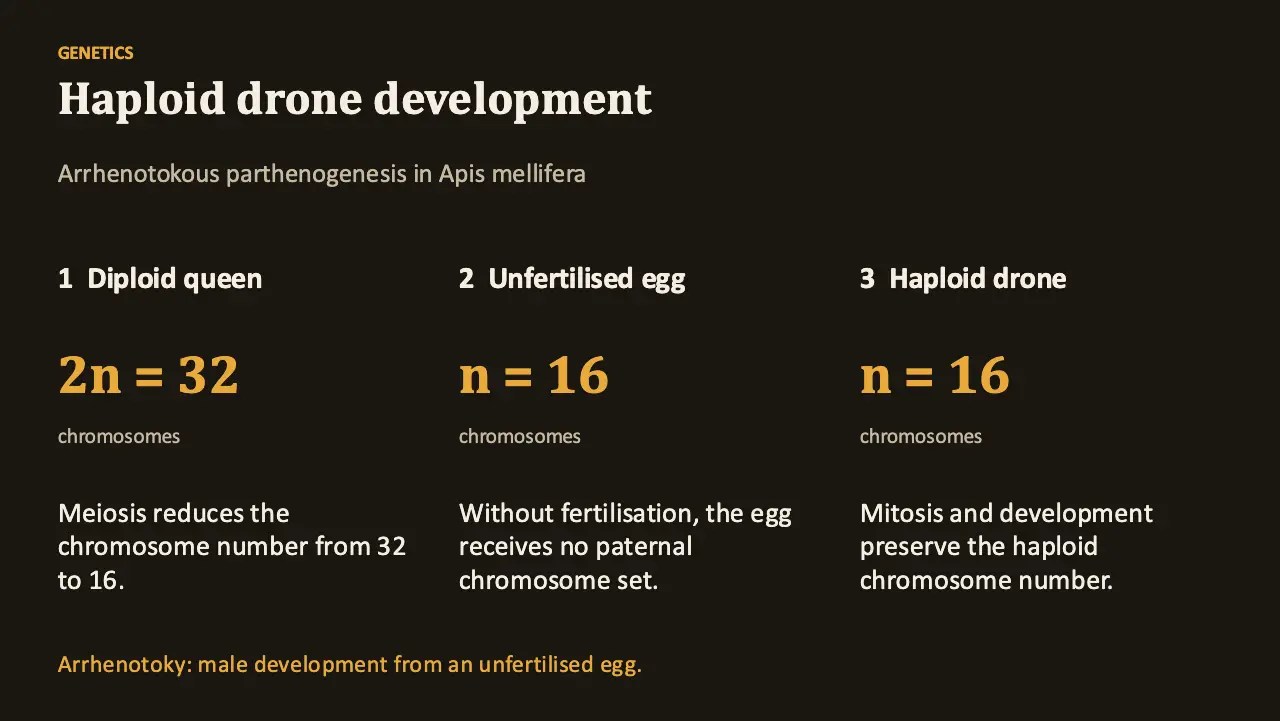
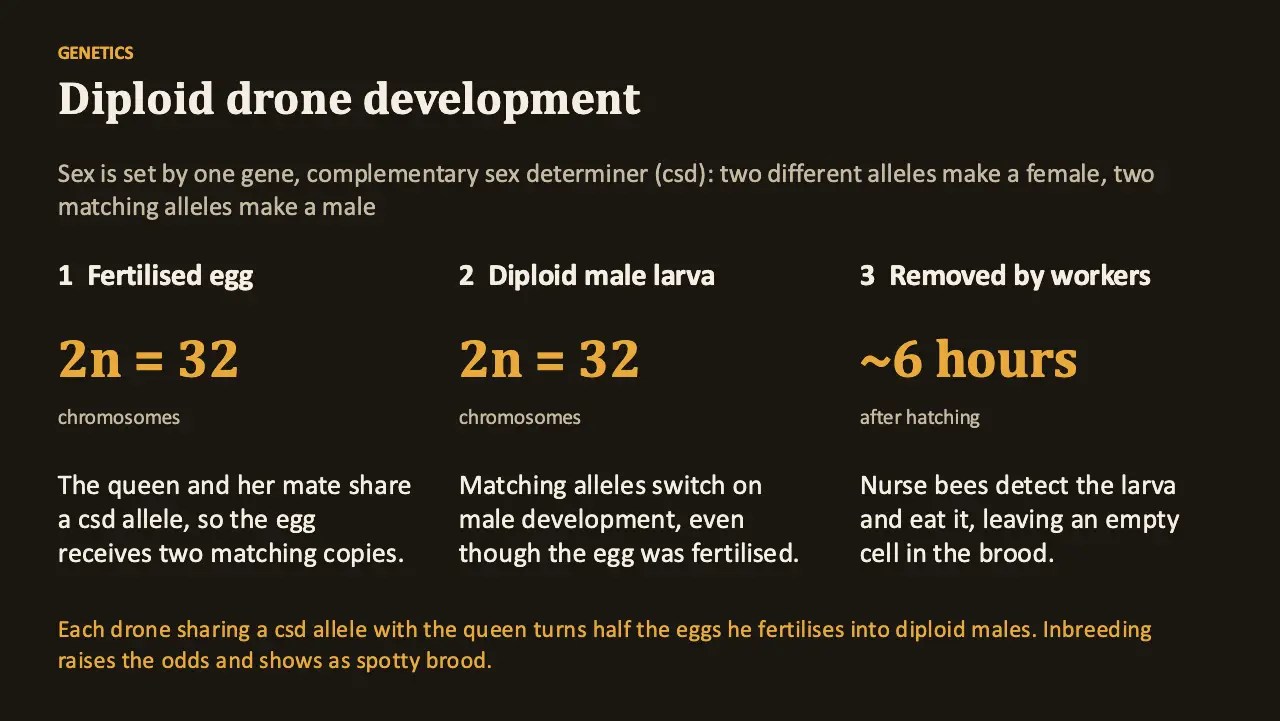
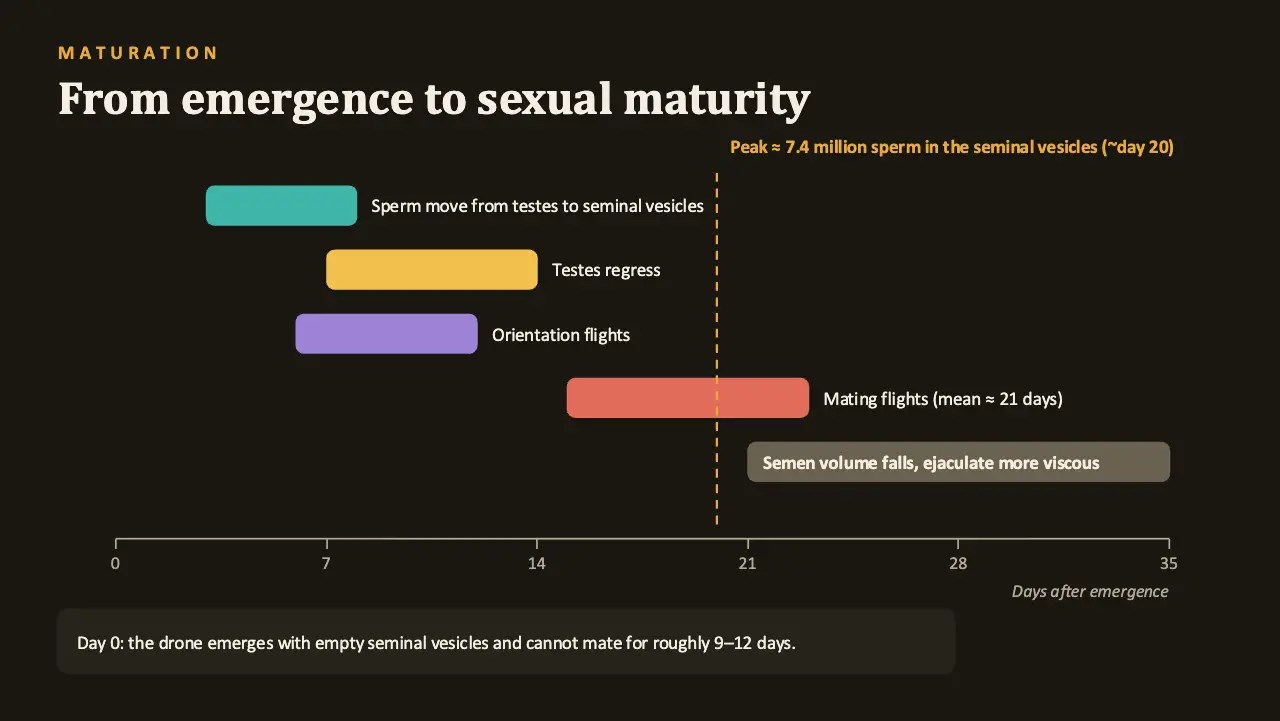
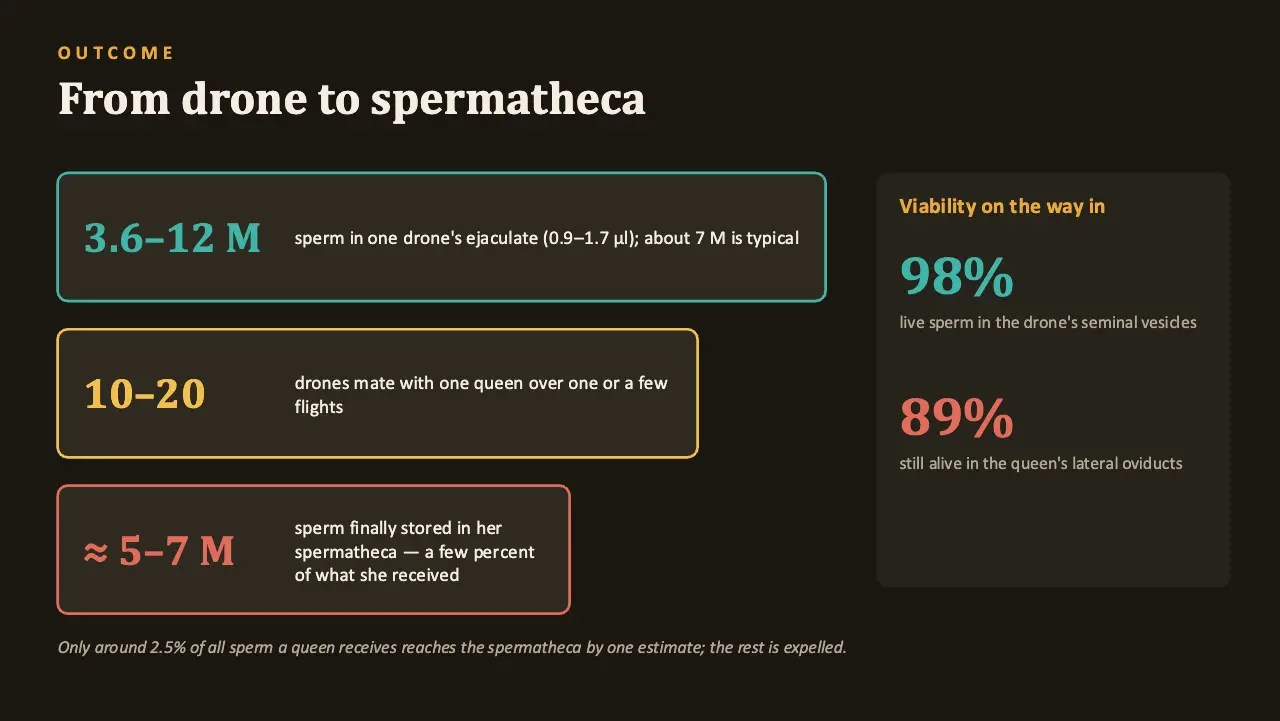
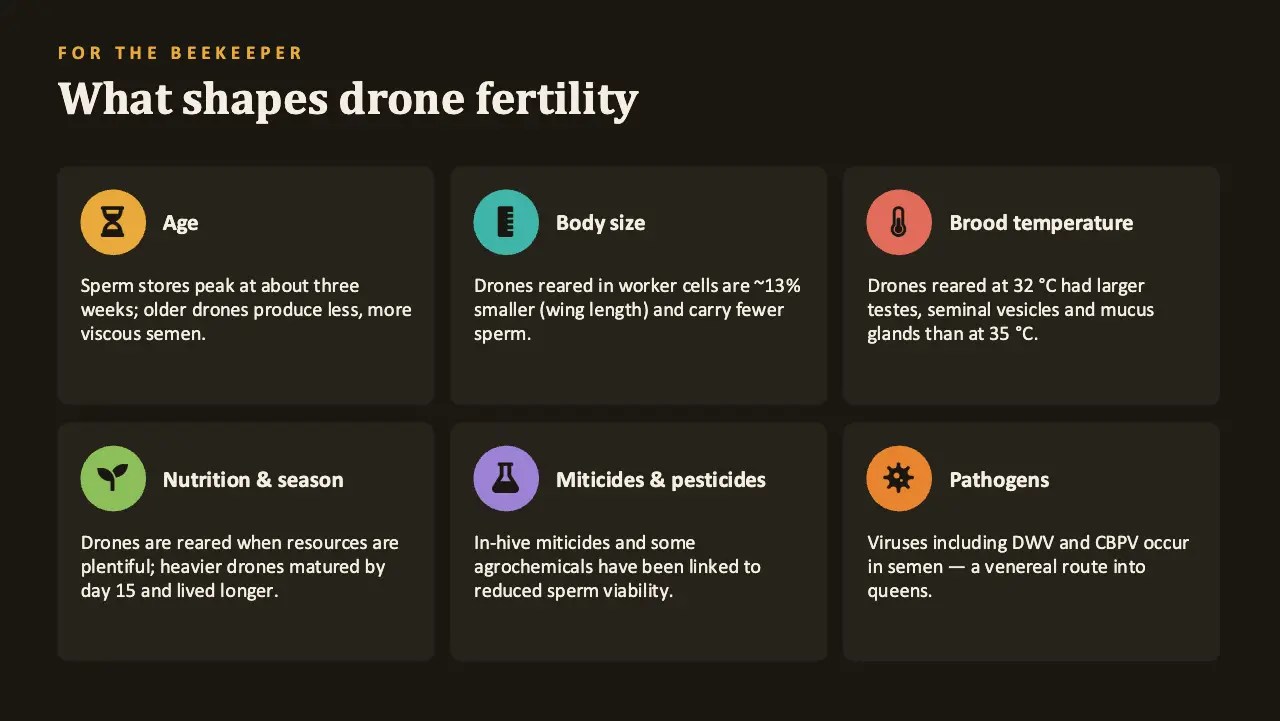
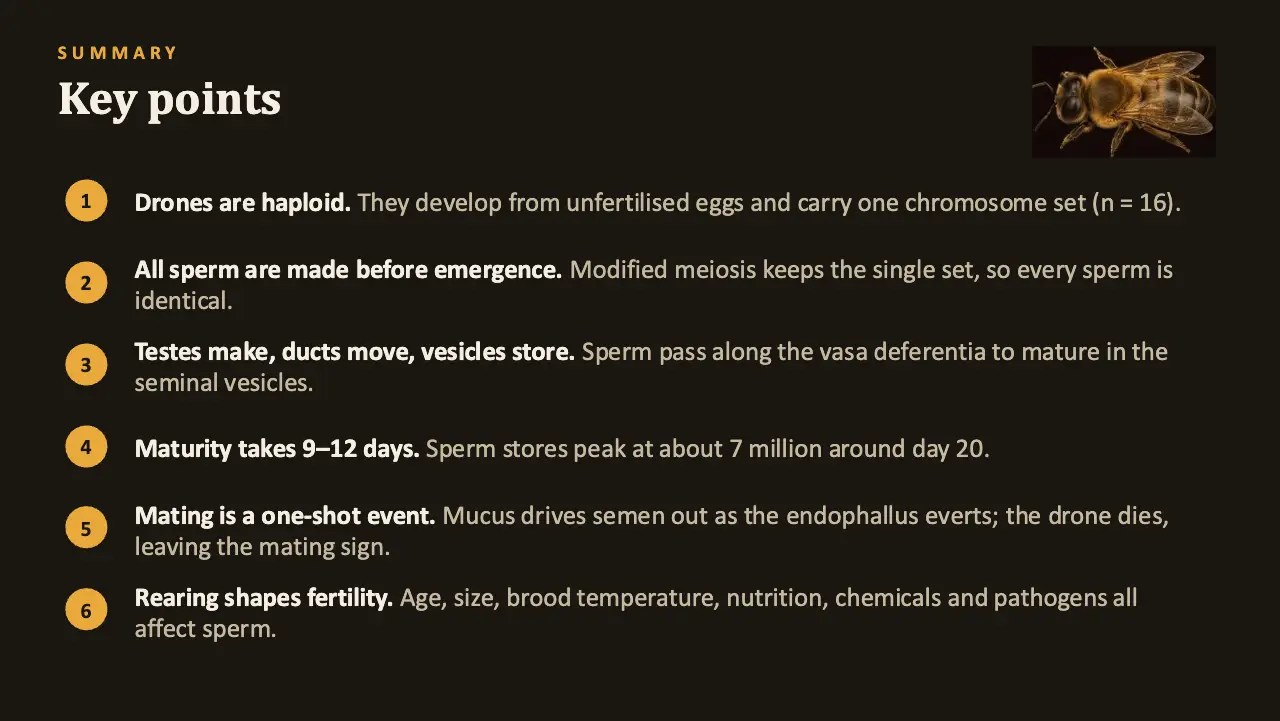
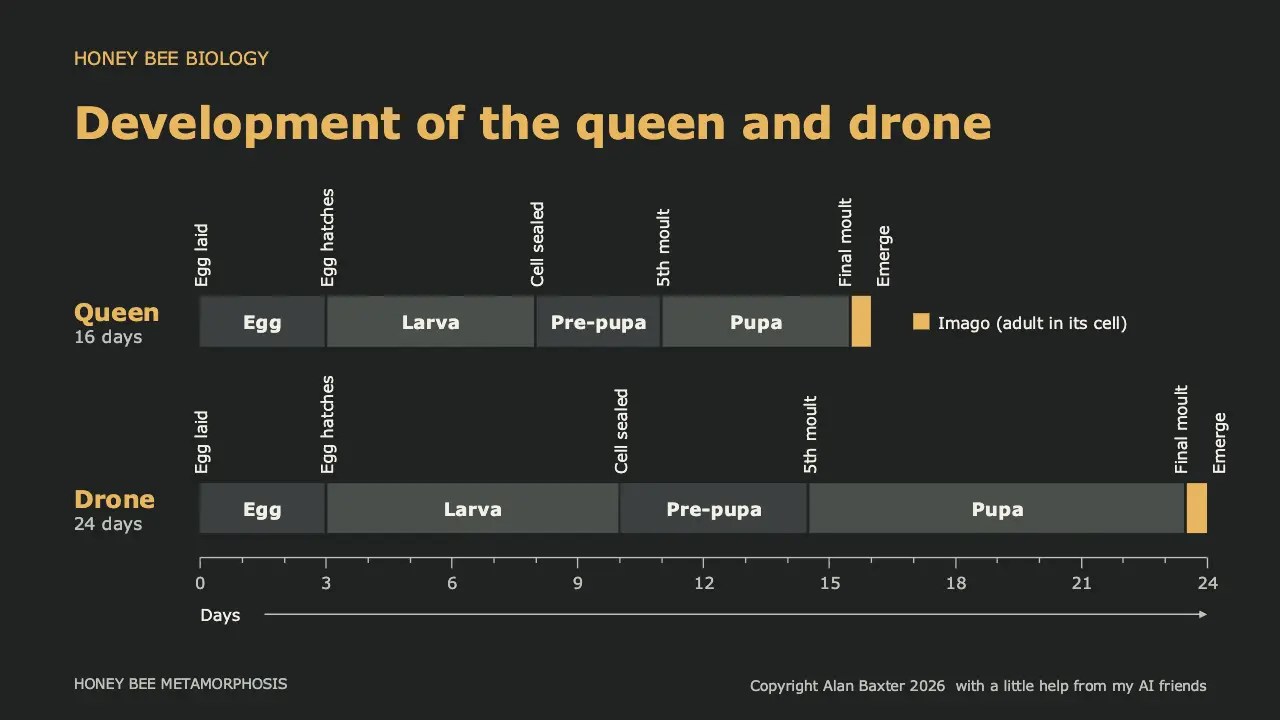
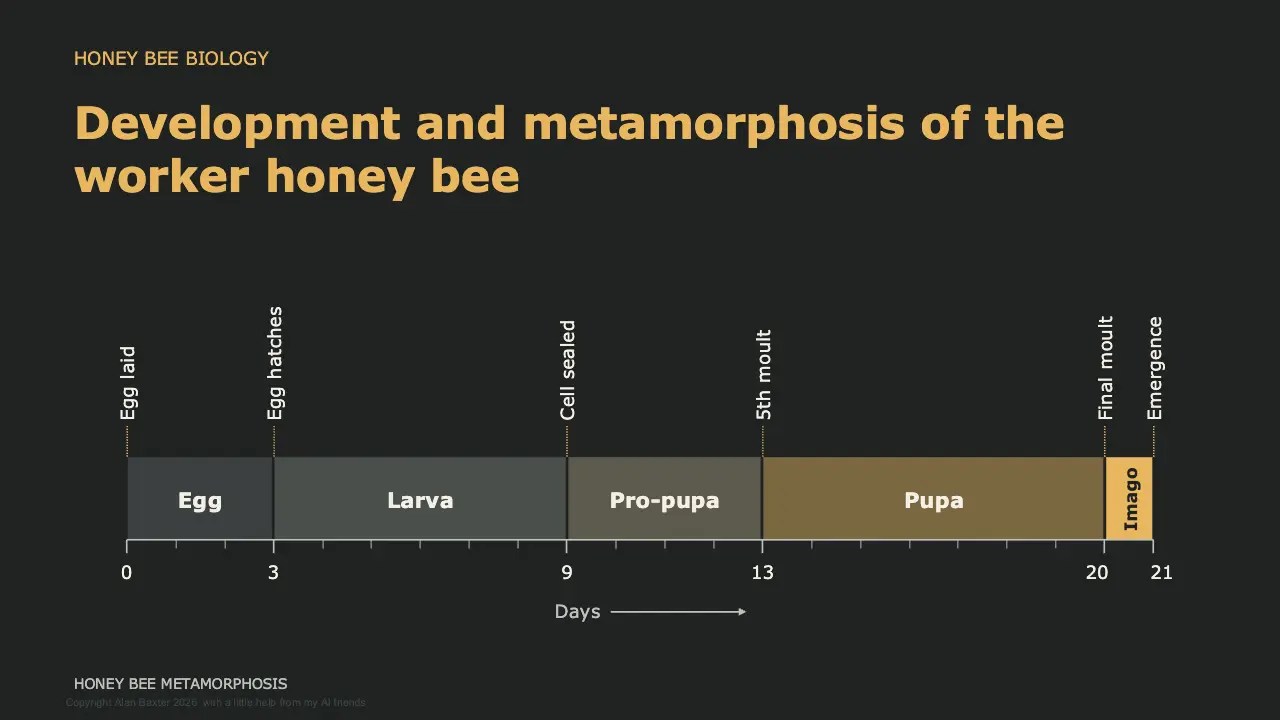
The reproductive systems of queen and drone, eggs and sperm, embryo development and hatching, brood food versus royal jelly. Download the slides (PDF)
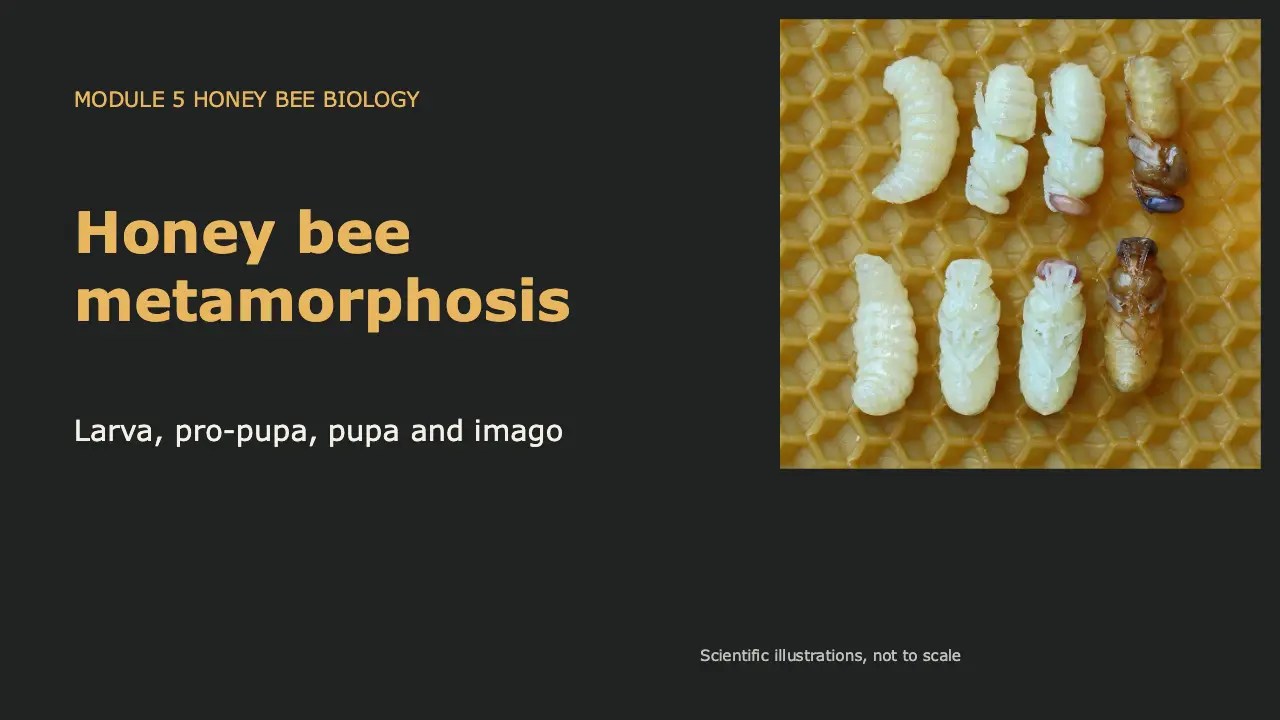
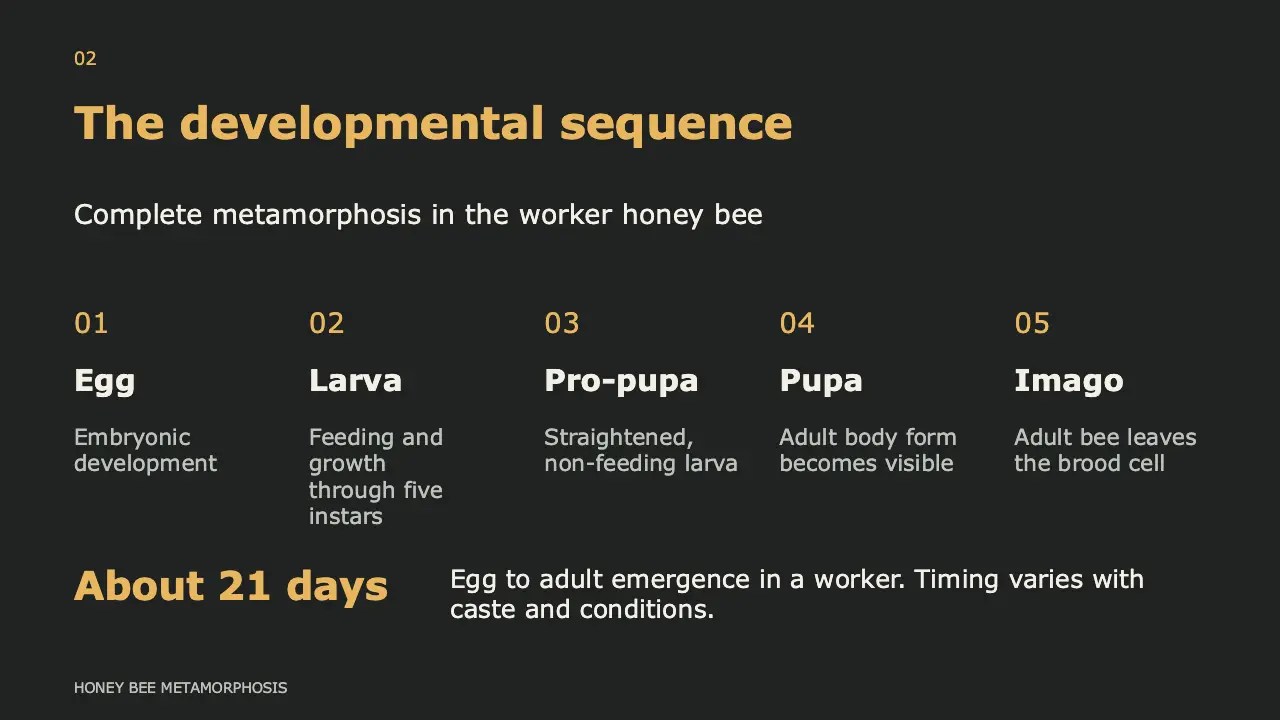
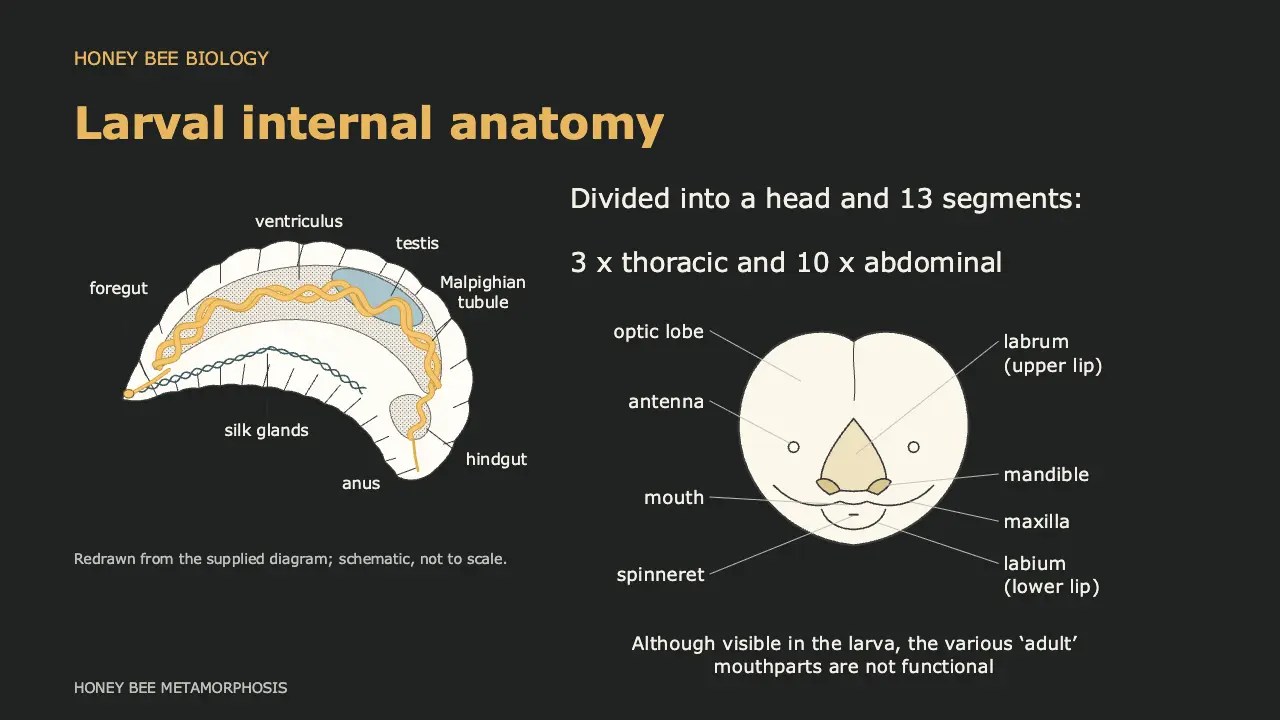
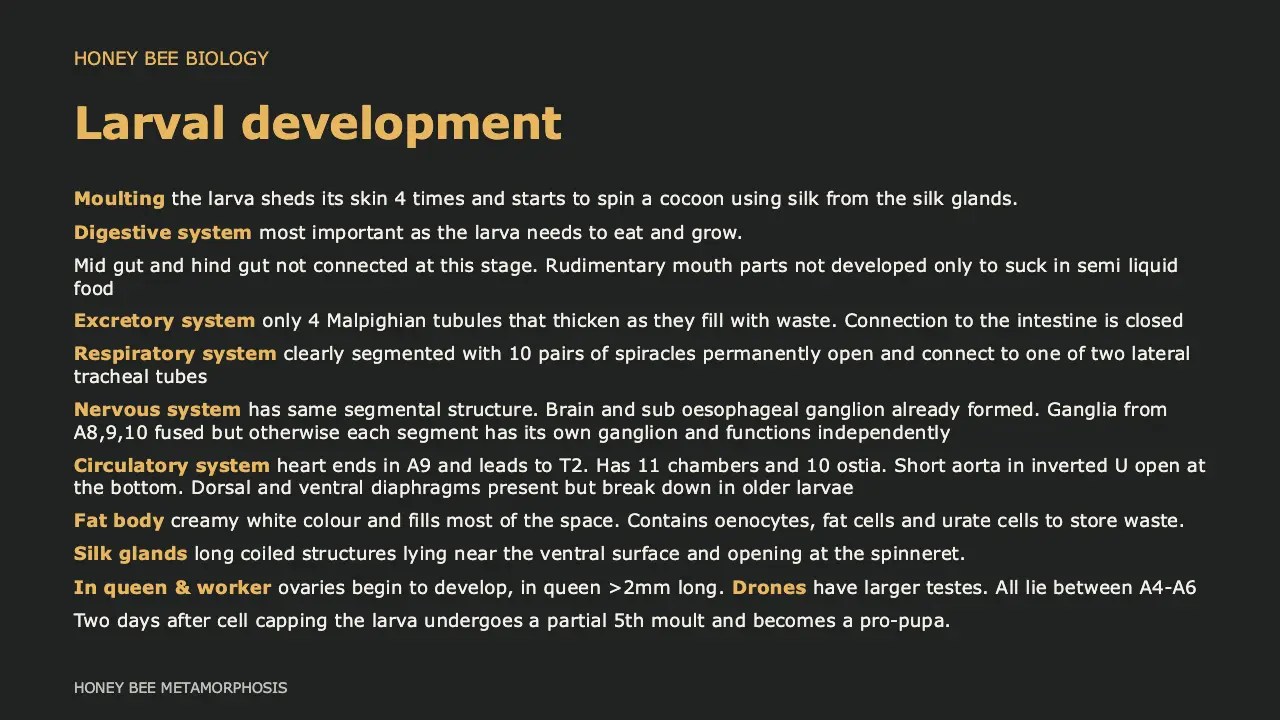
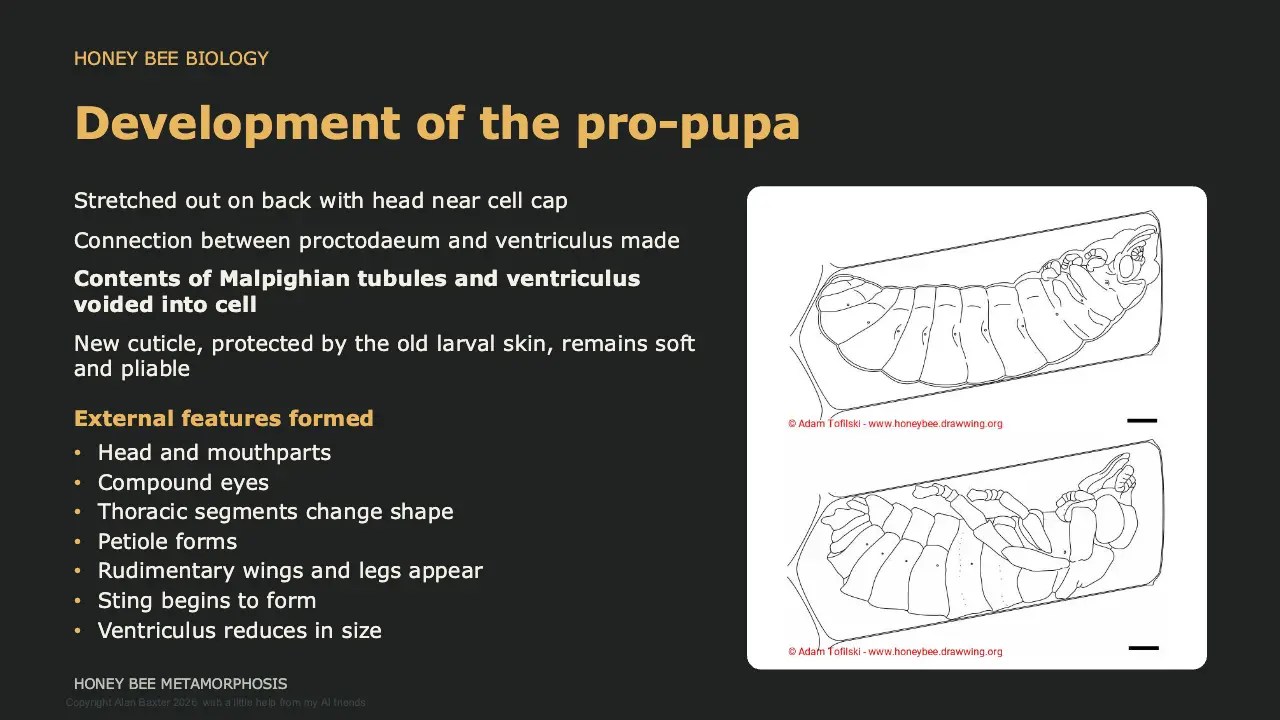
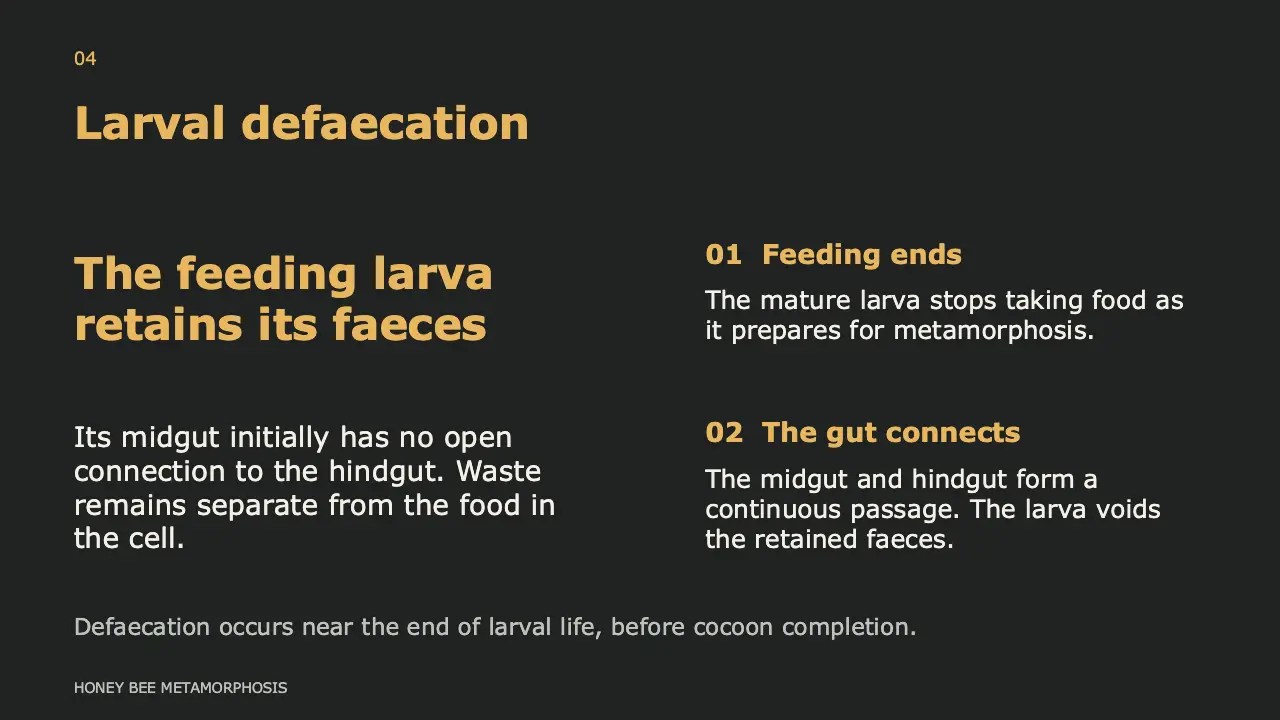
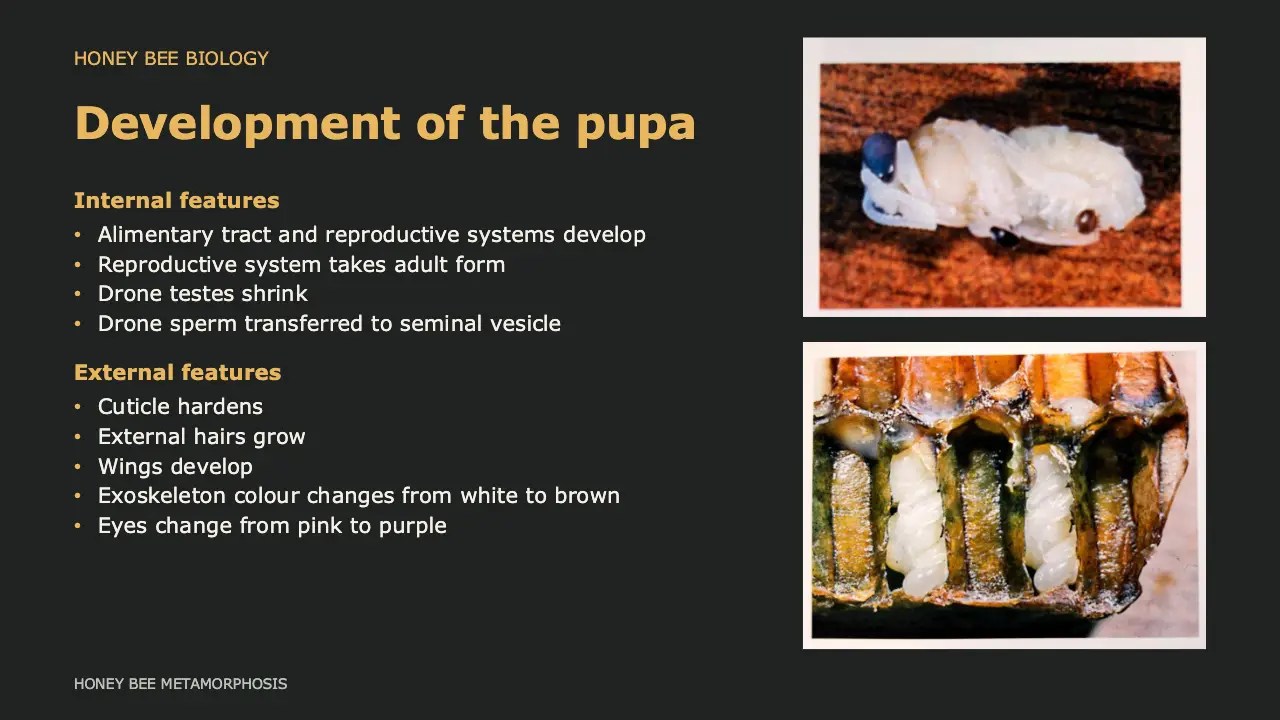
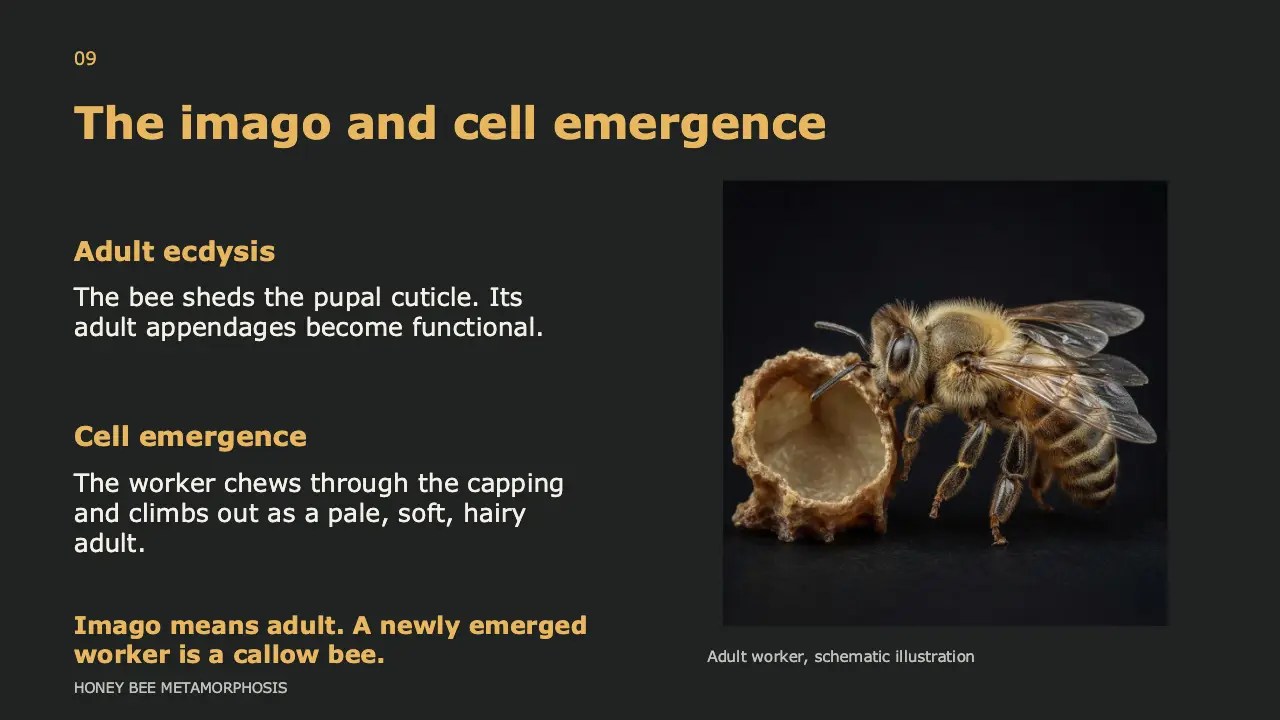
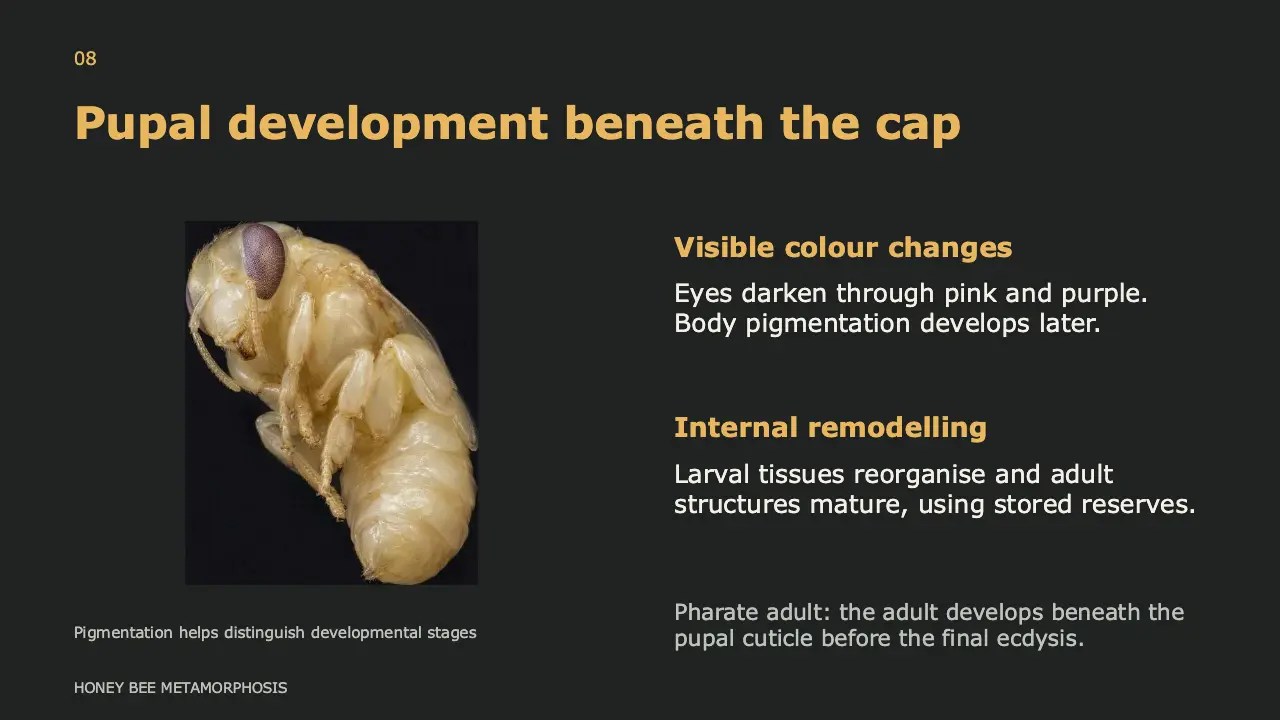
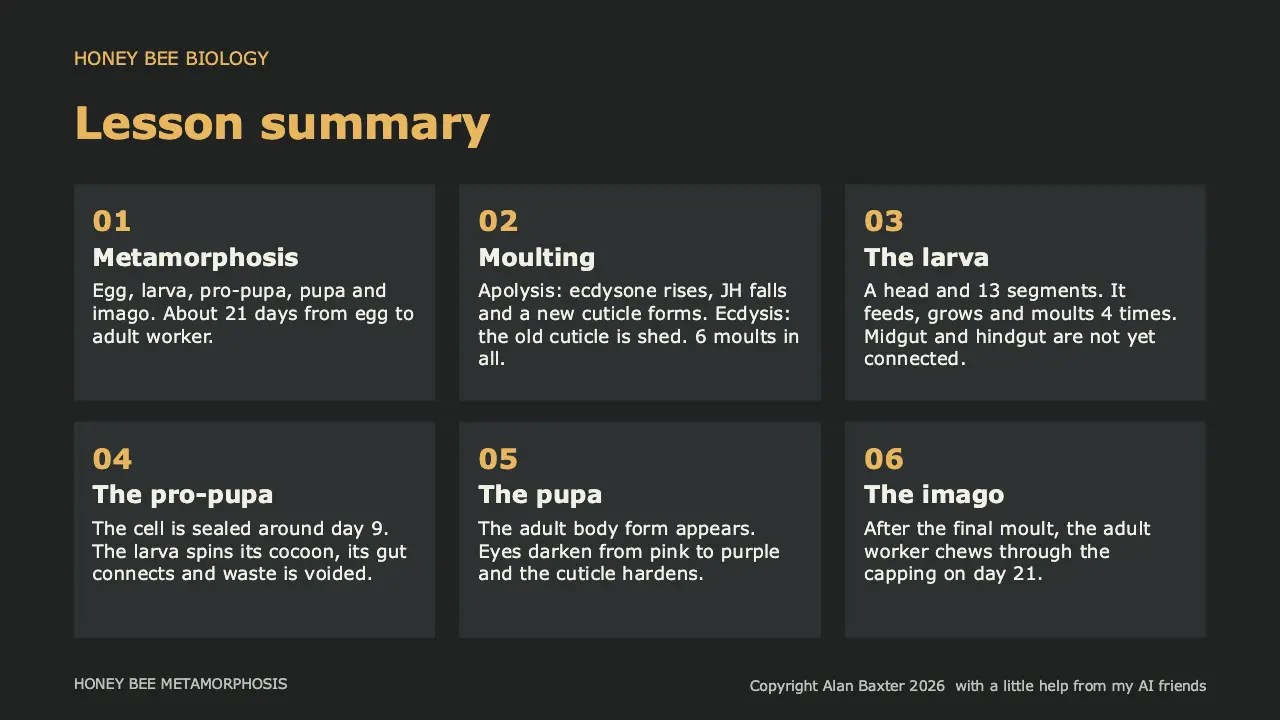
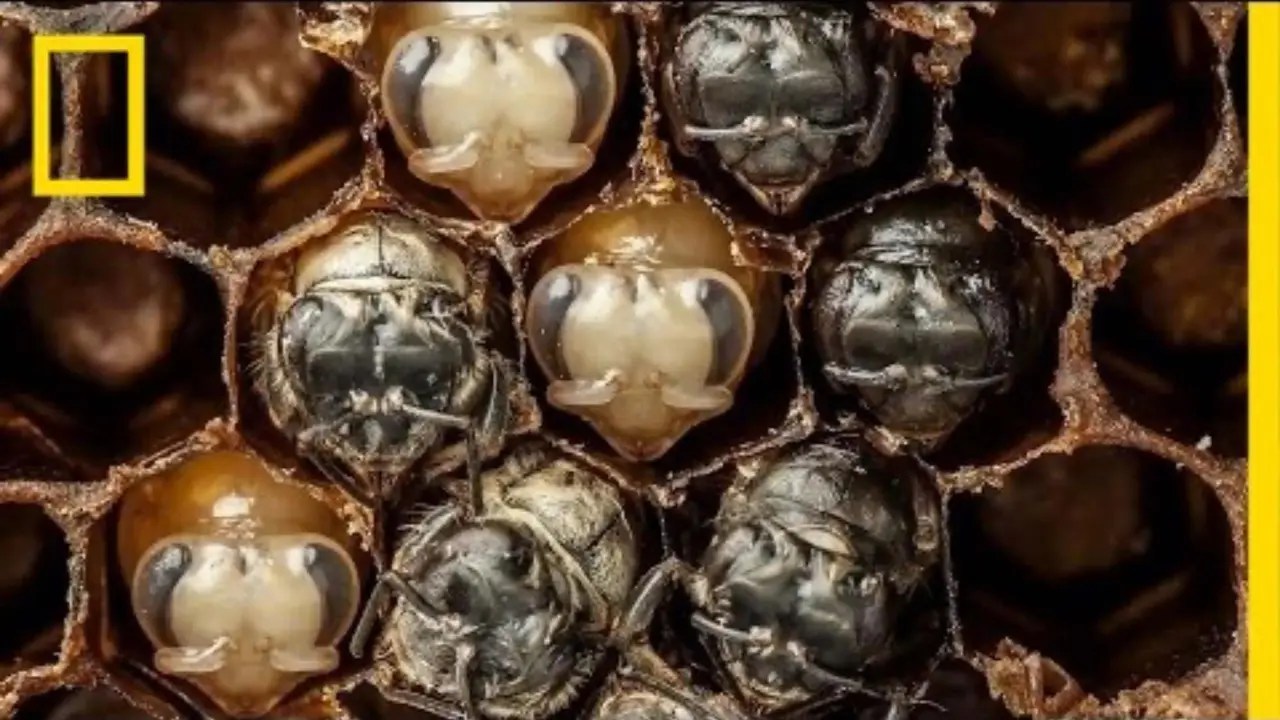
Watch: from egg to adult bee

Session 8
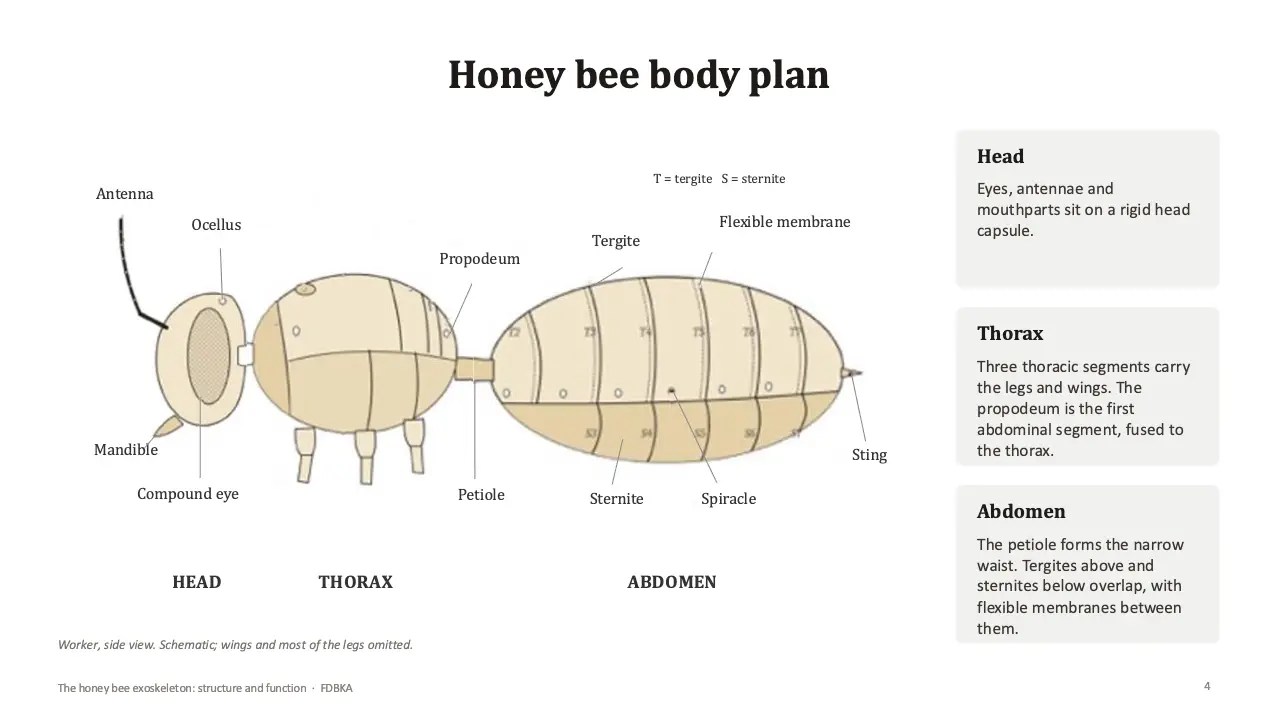
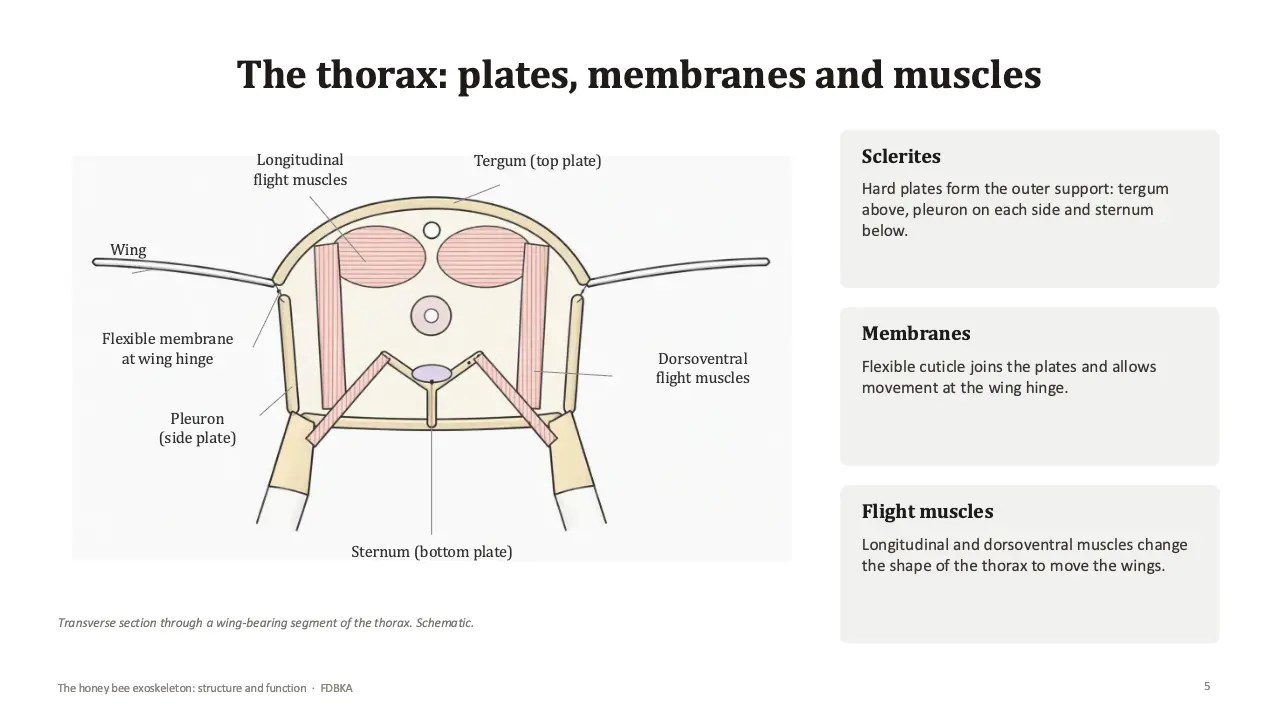
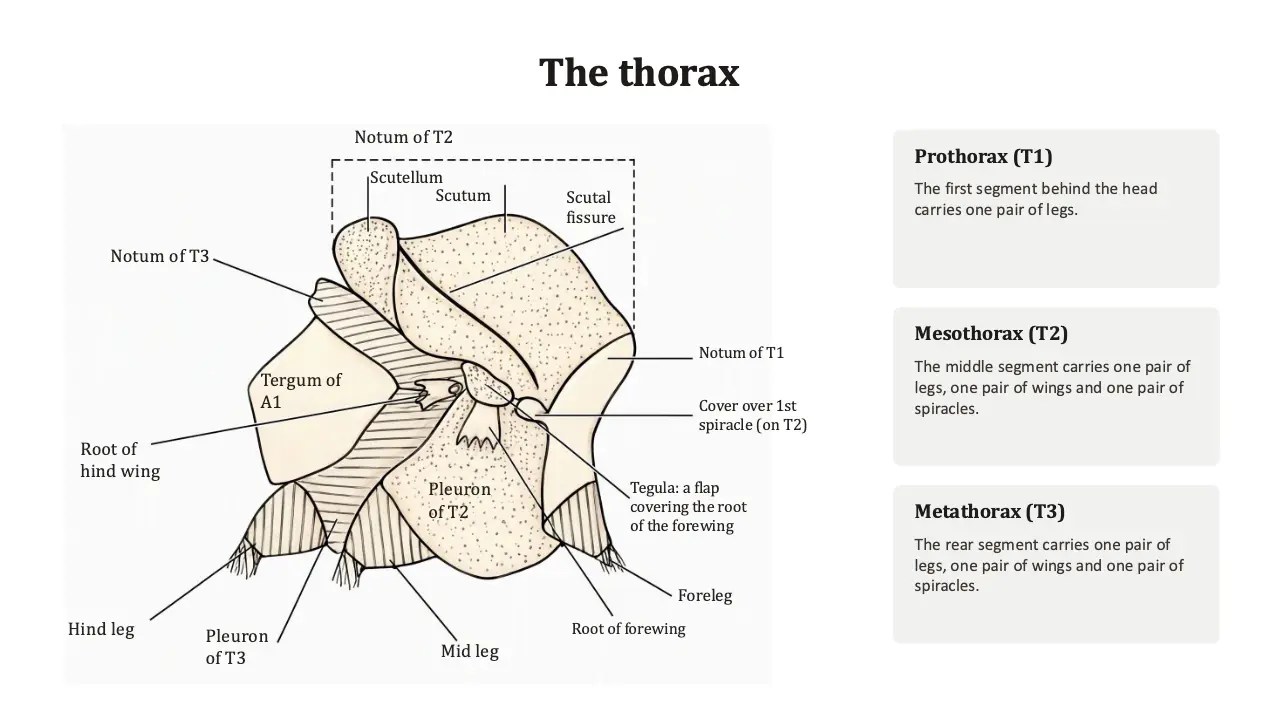
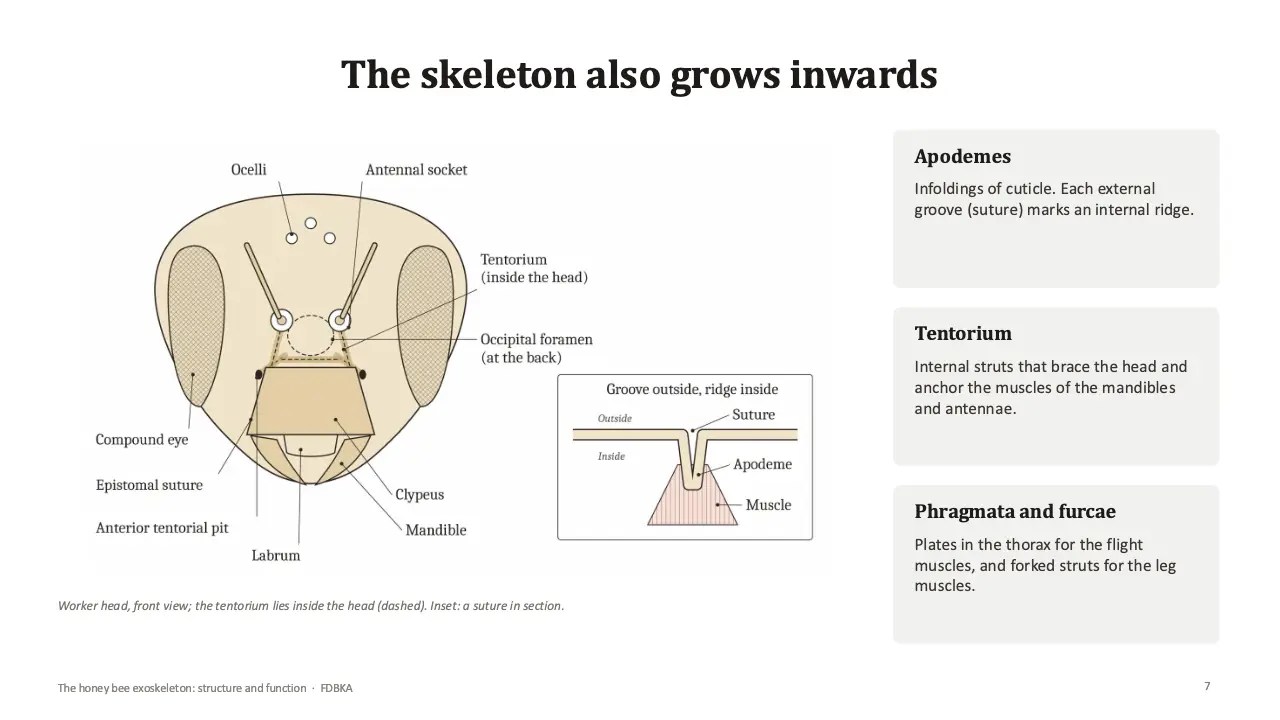
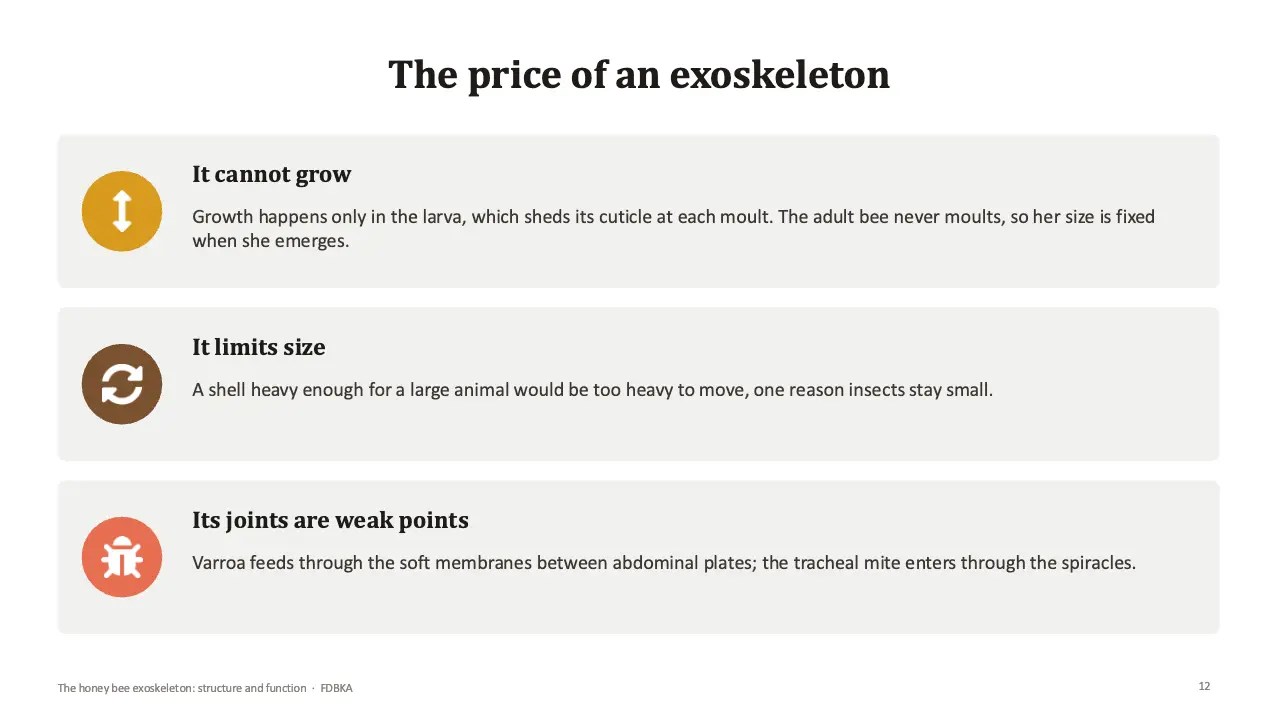
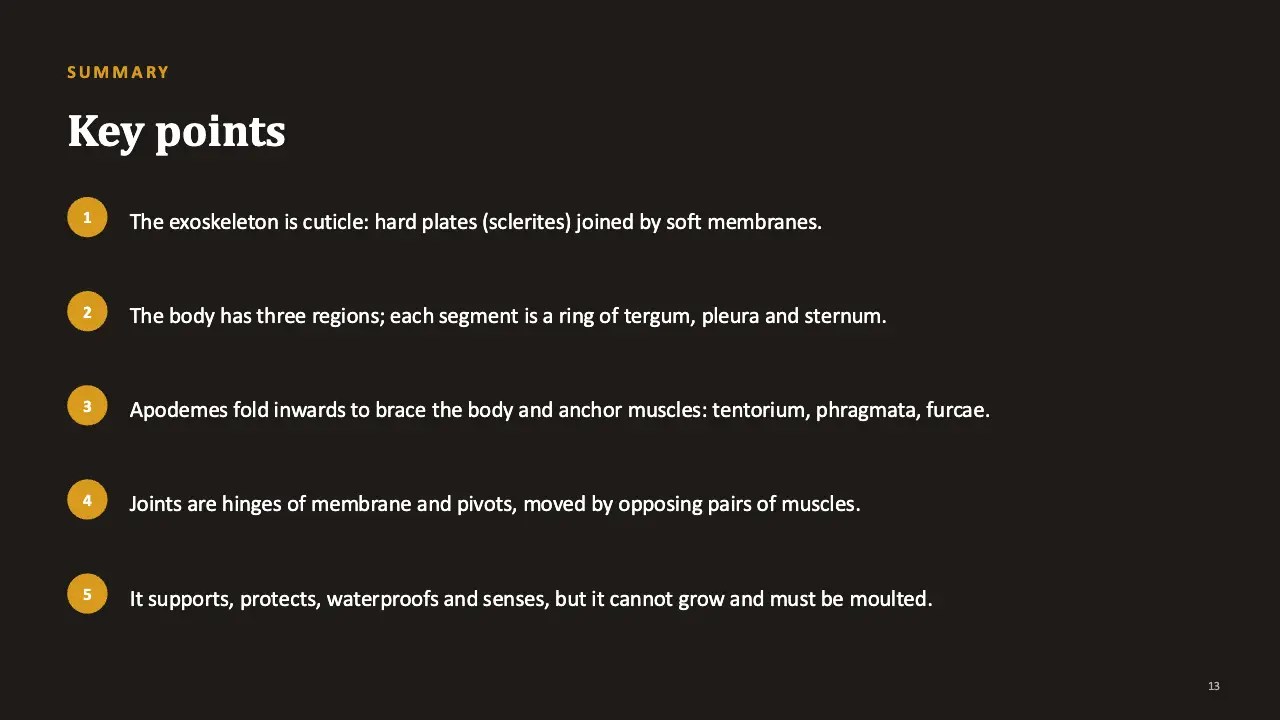
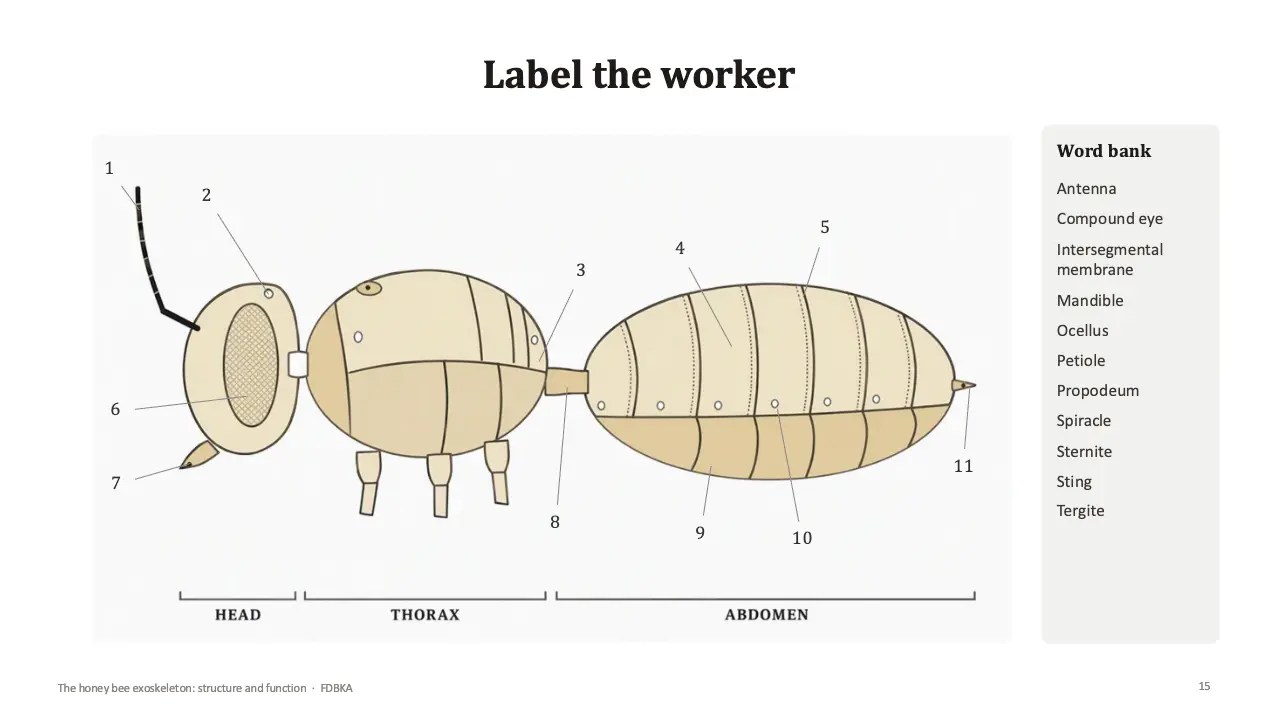
The cuticle, external anatomy and flight
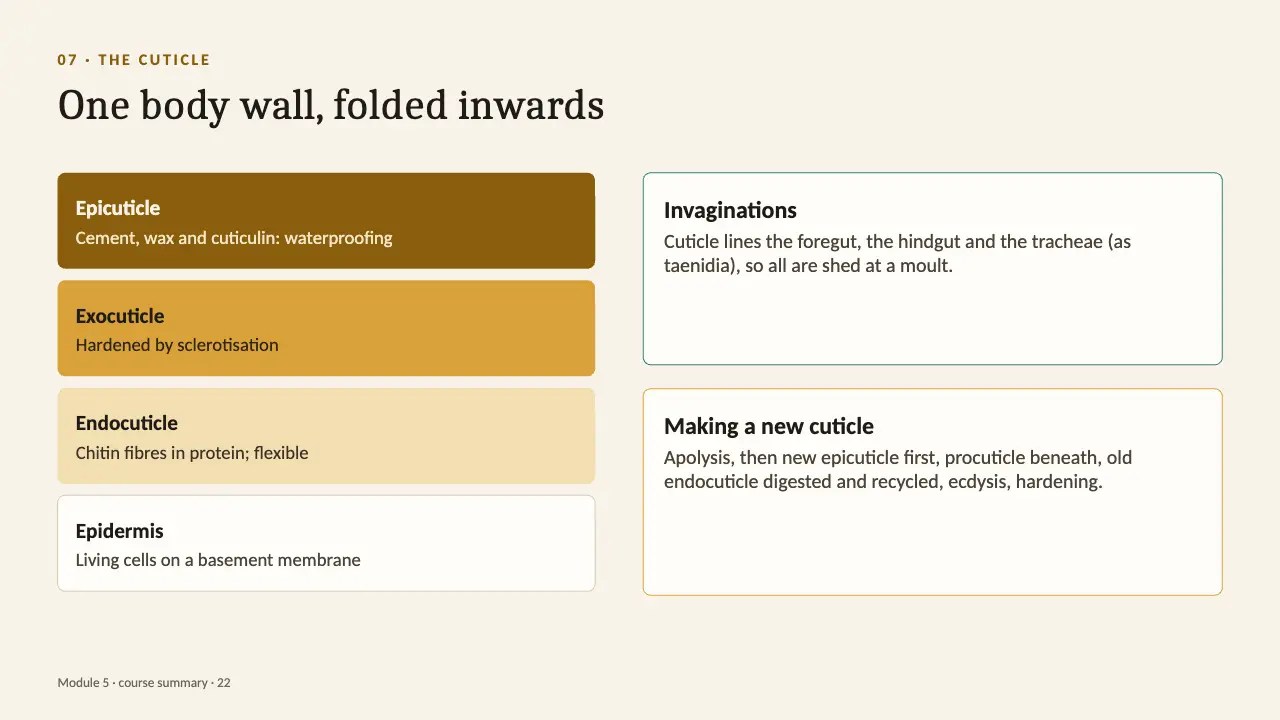
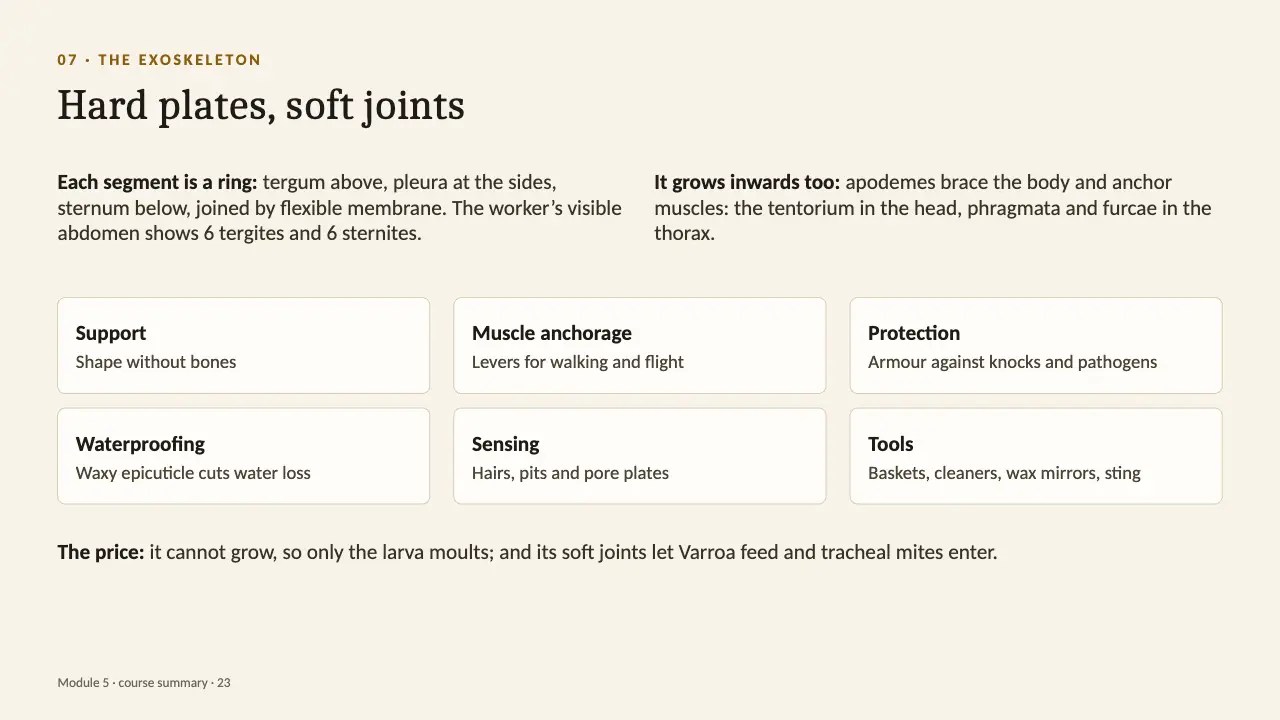
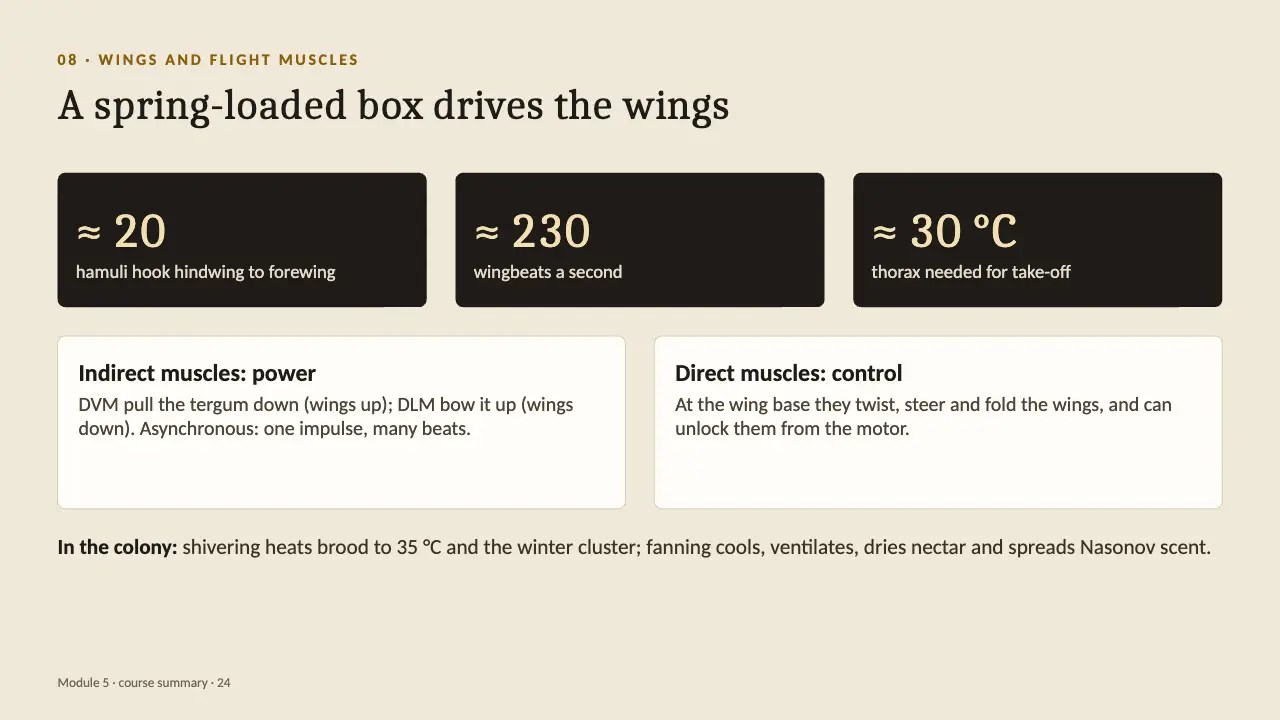
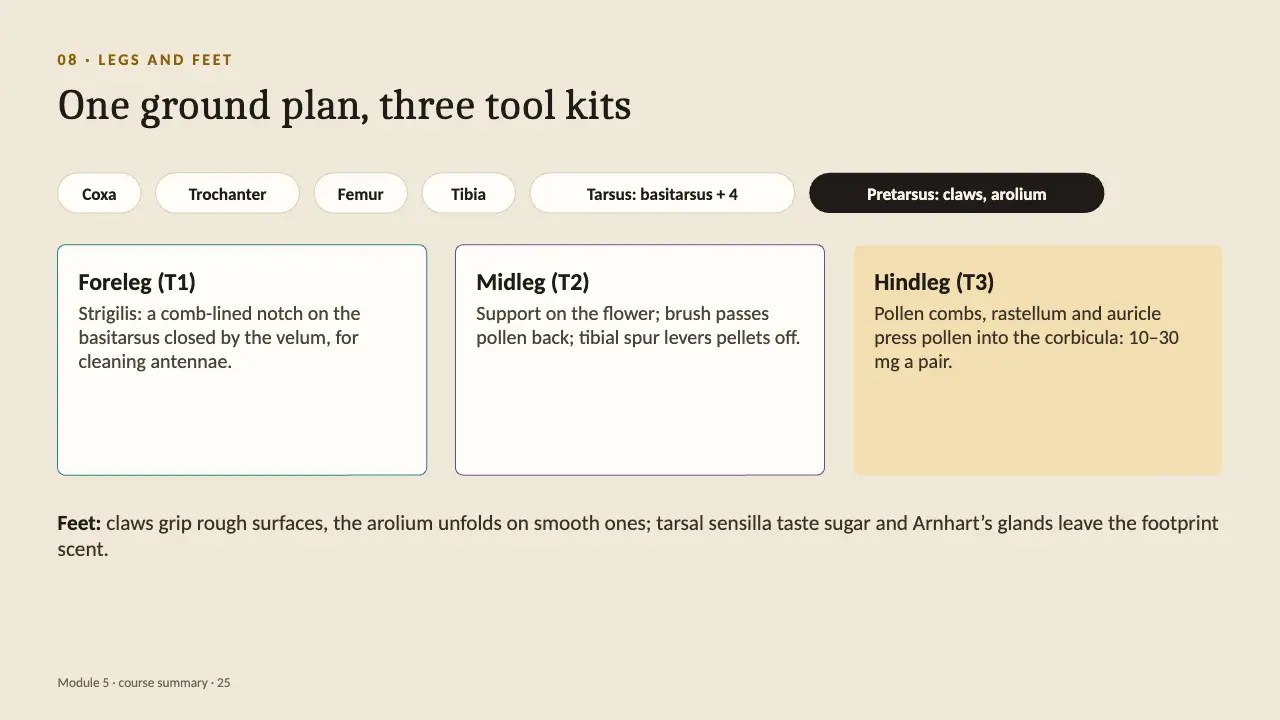
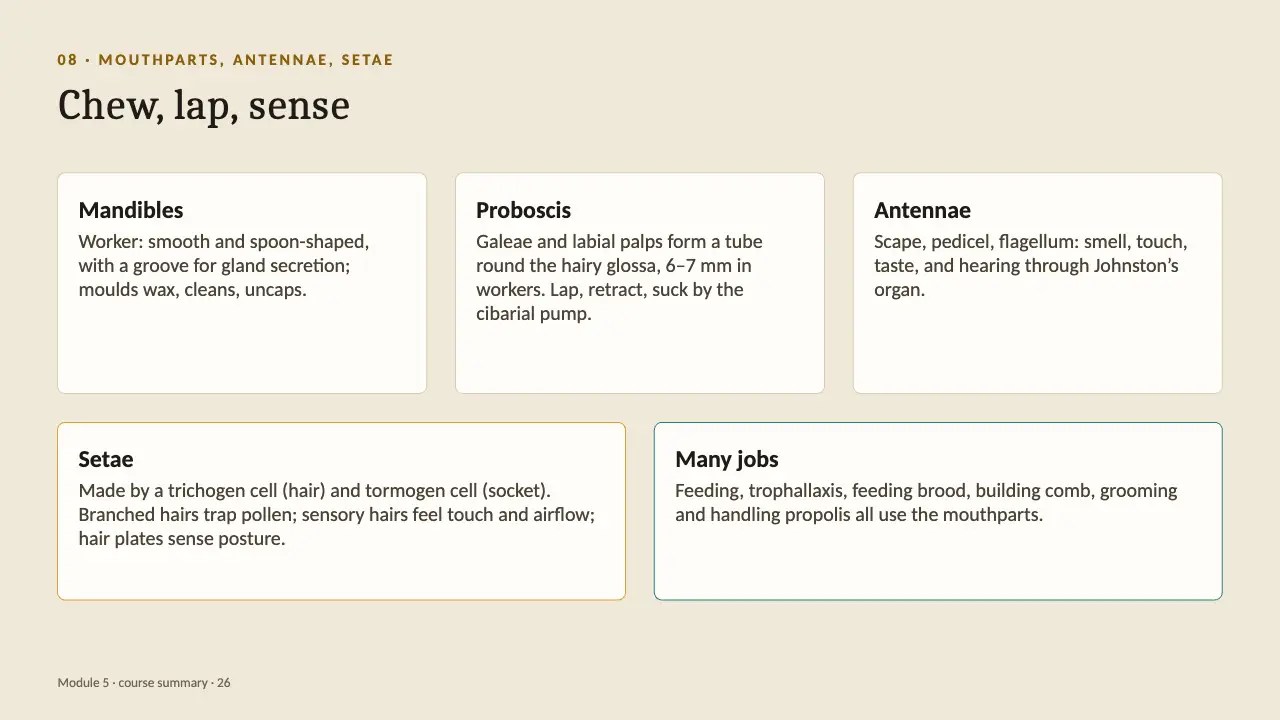
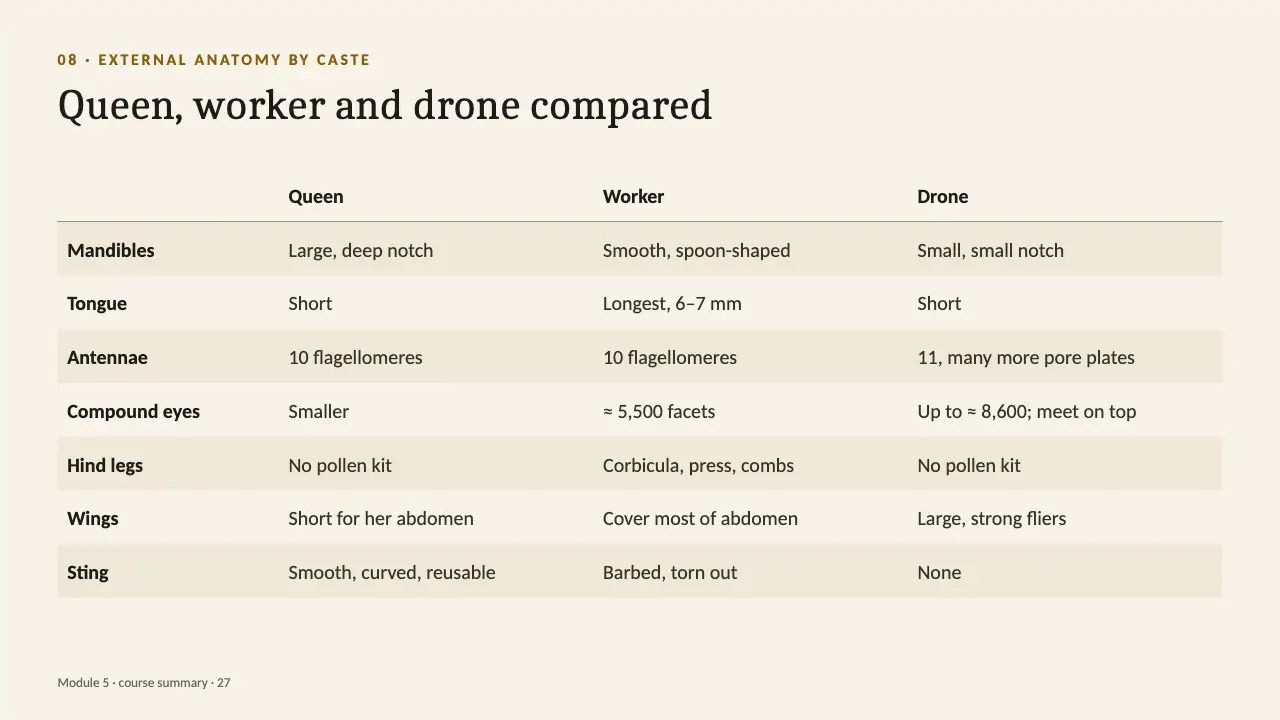
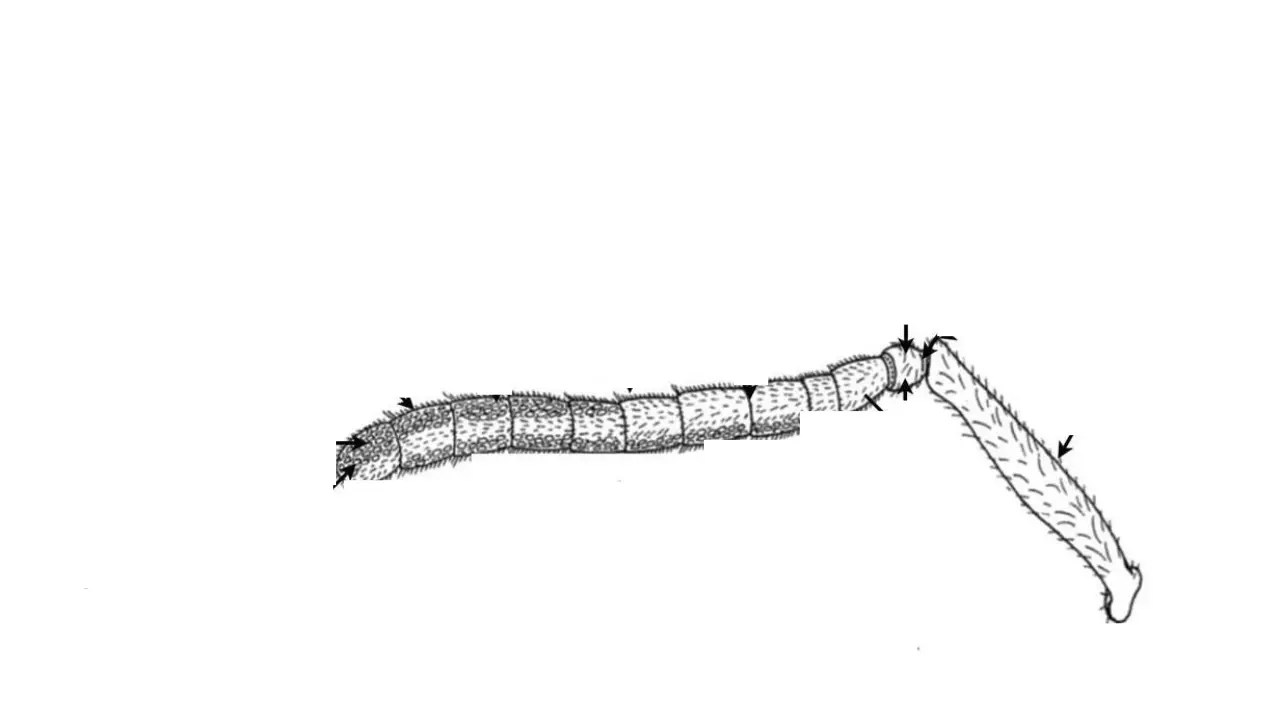
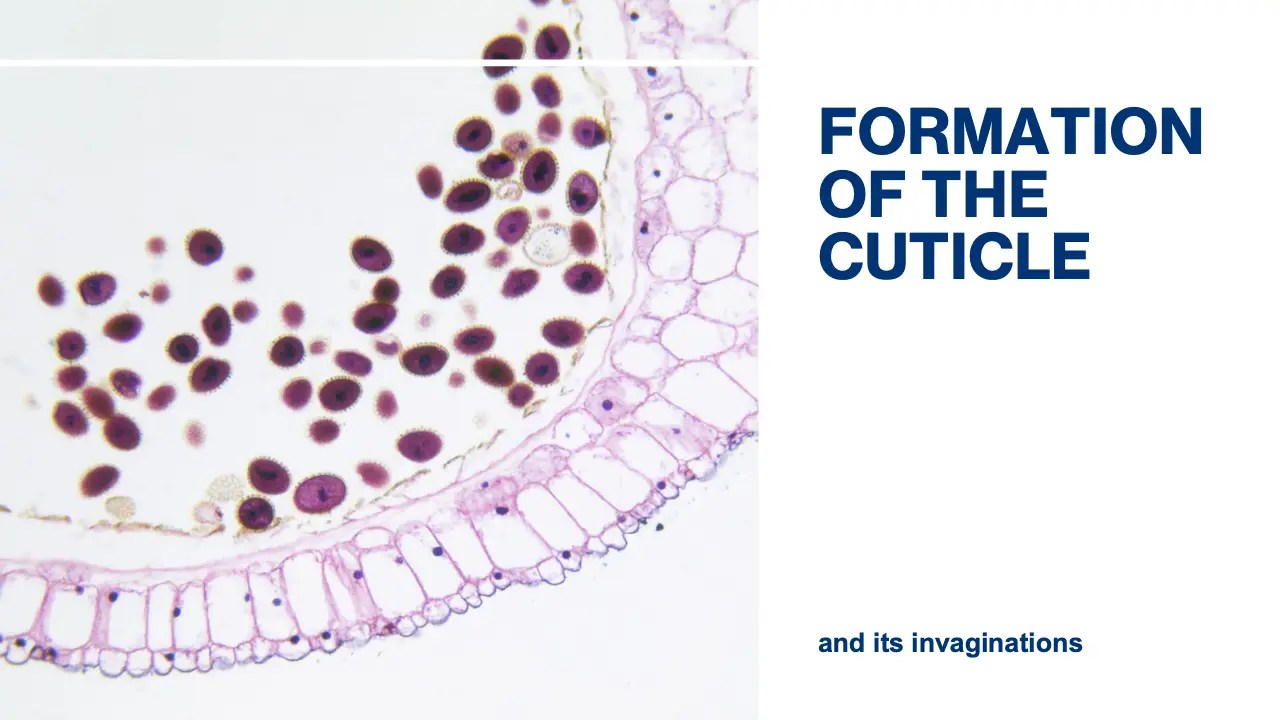
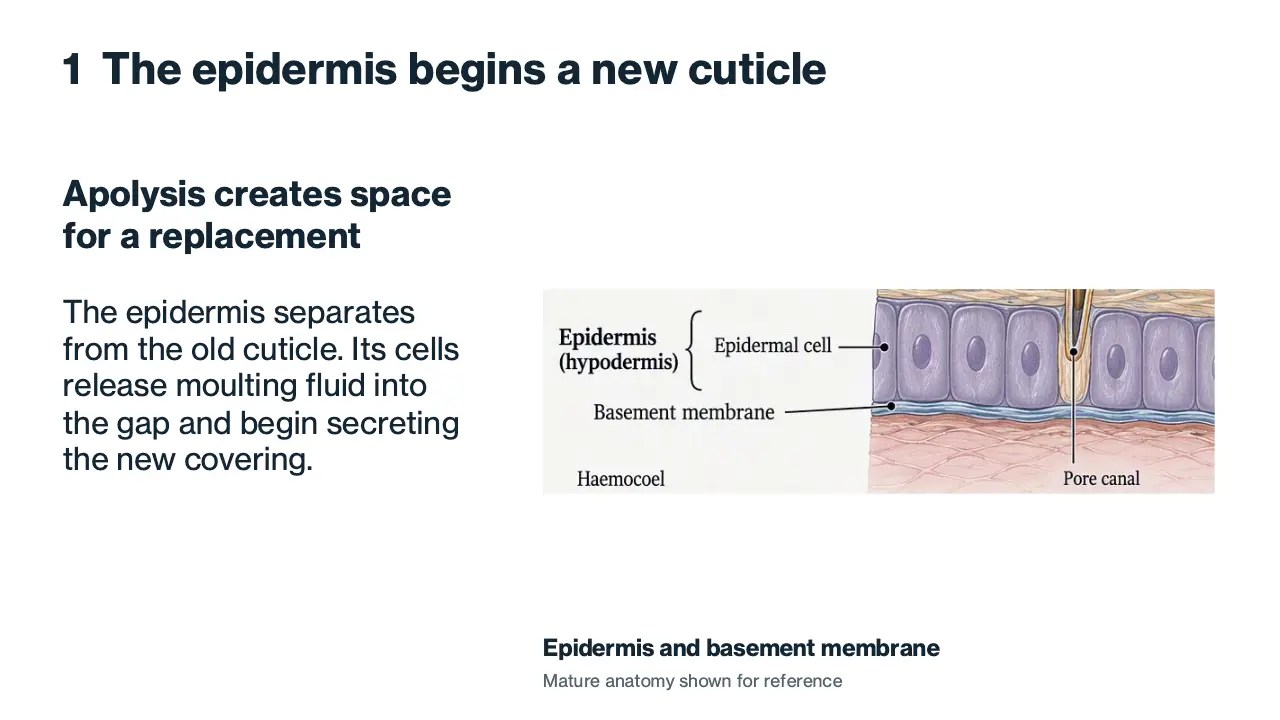
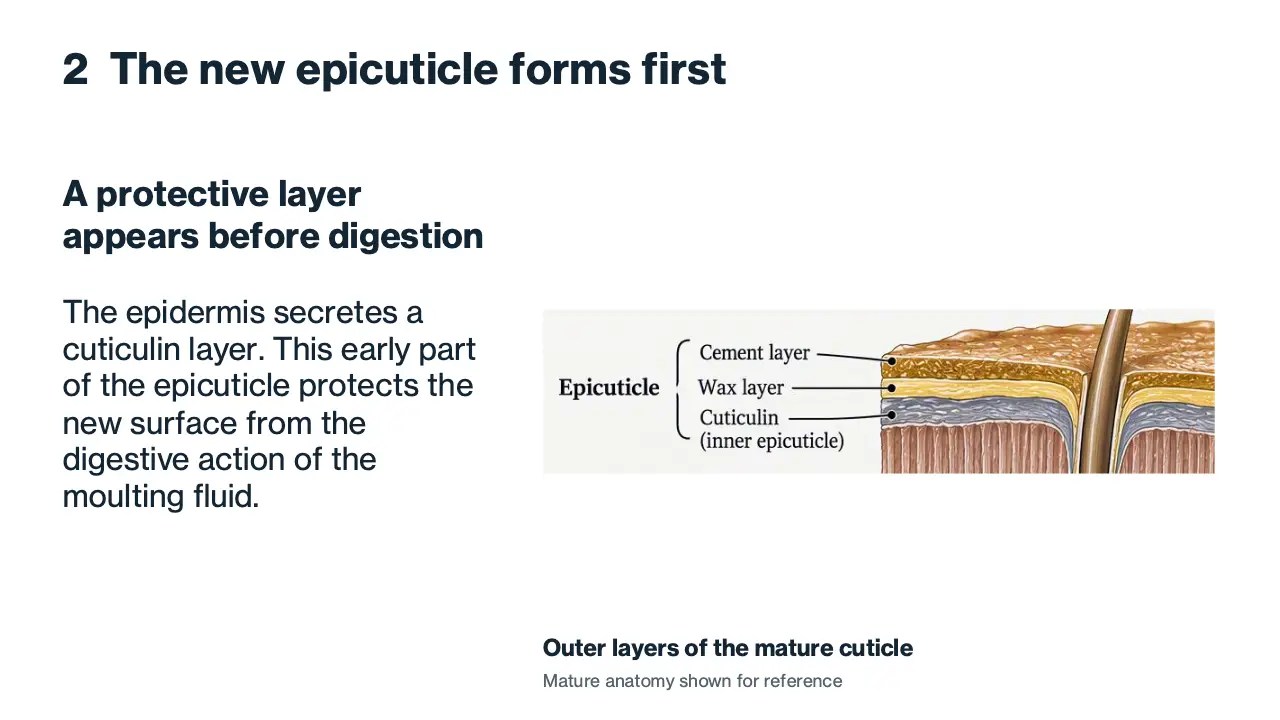
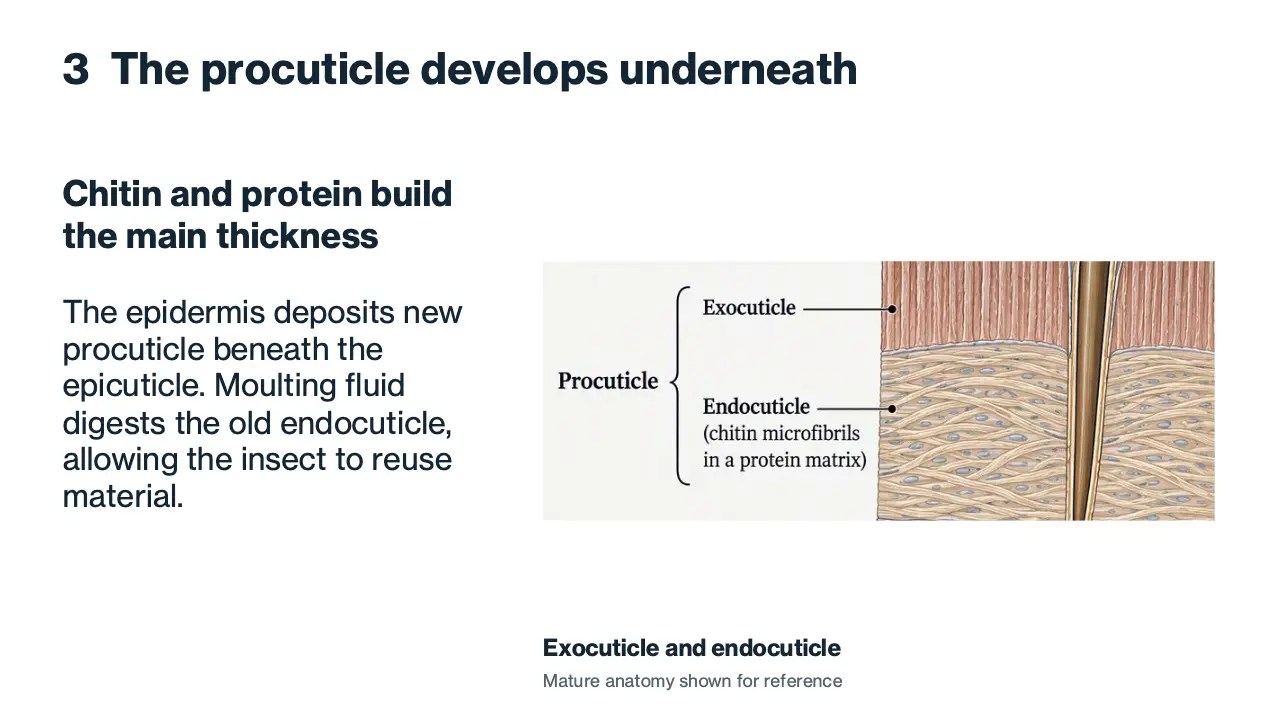
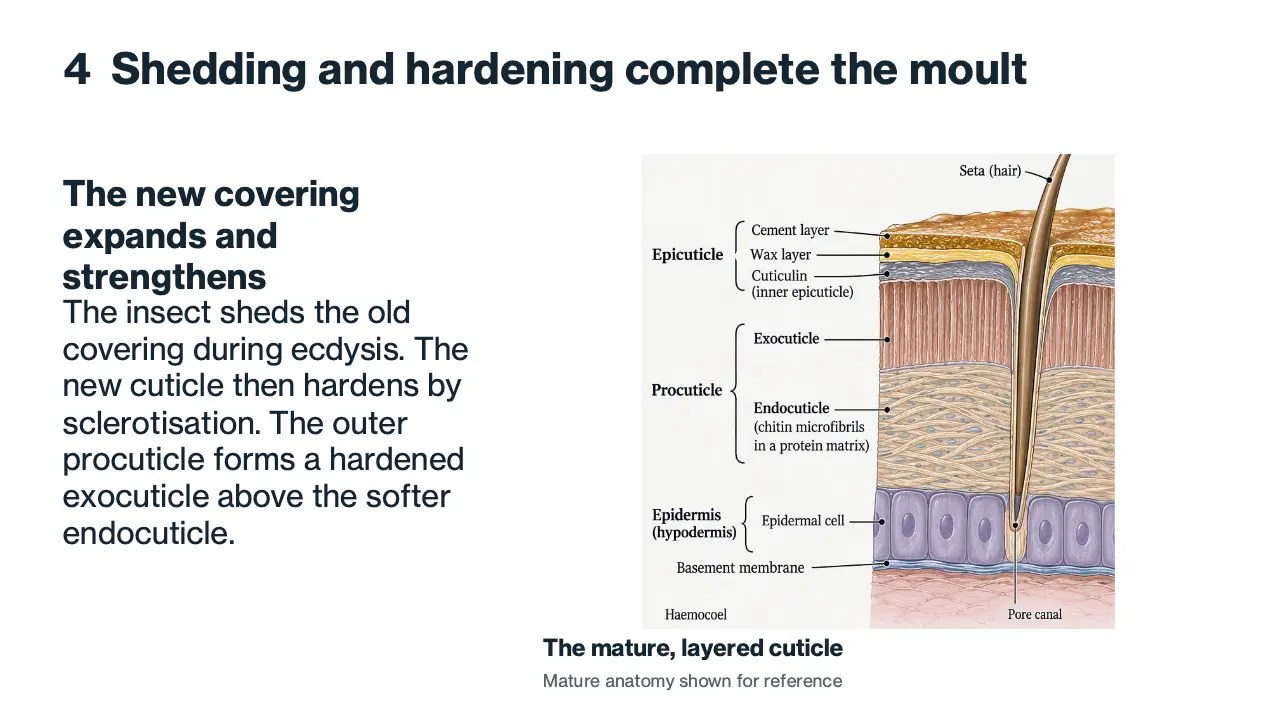
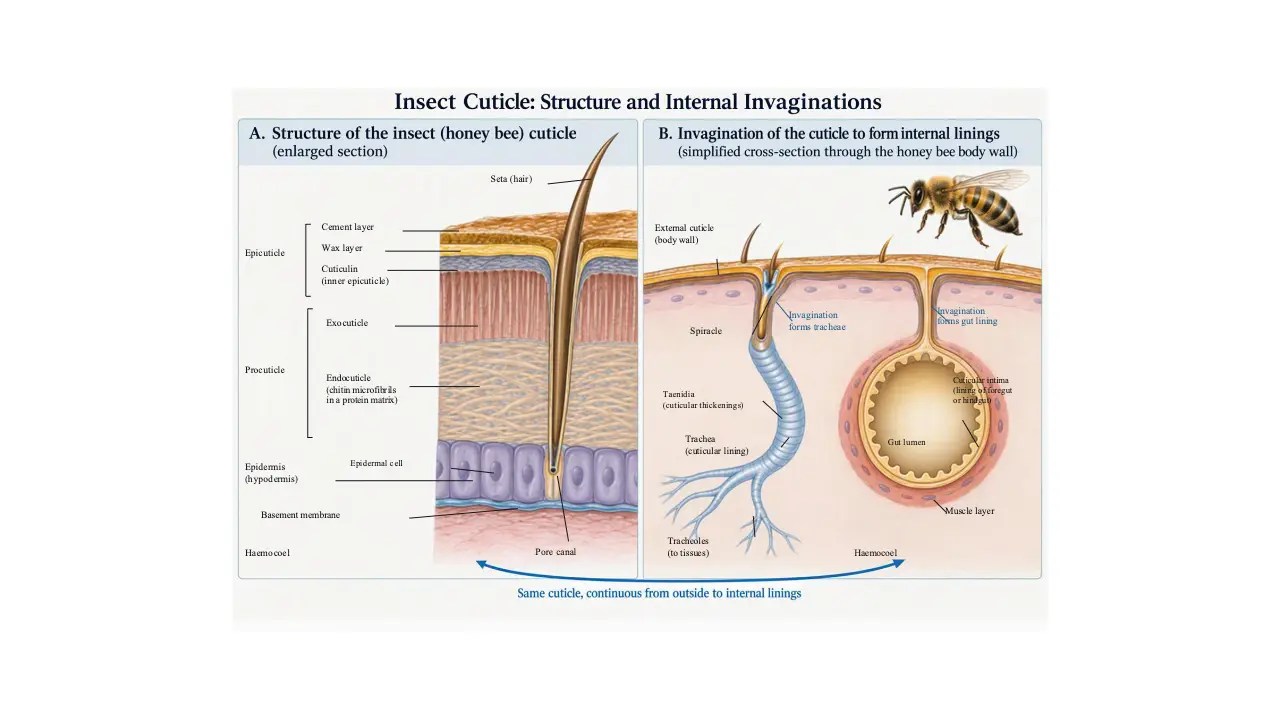
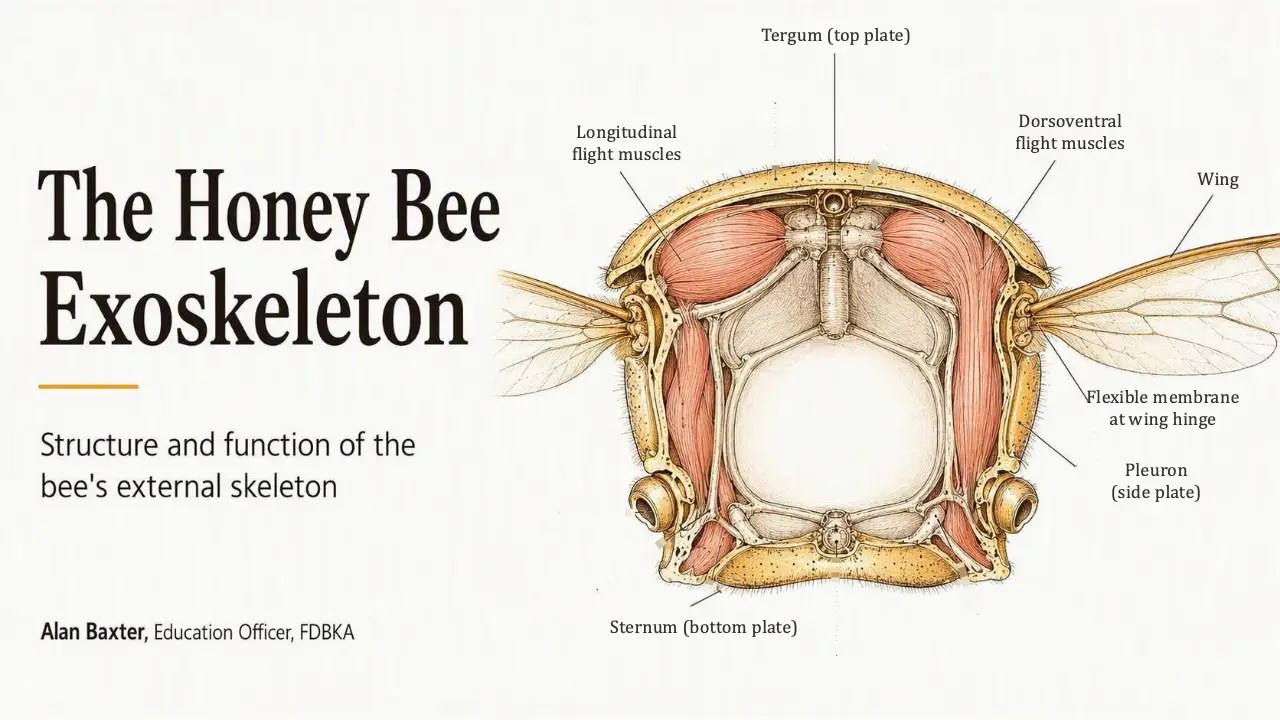
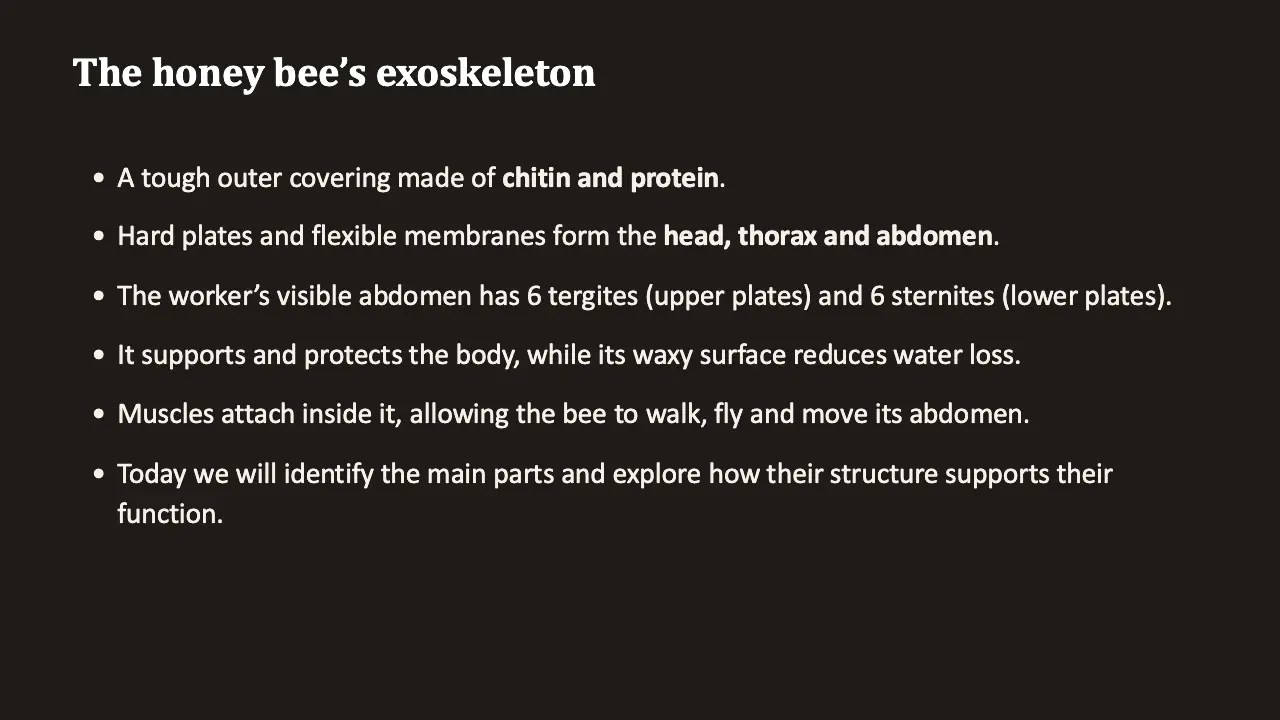
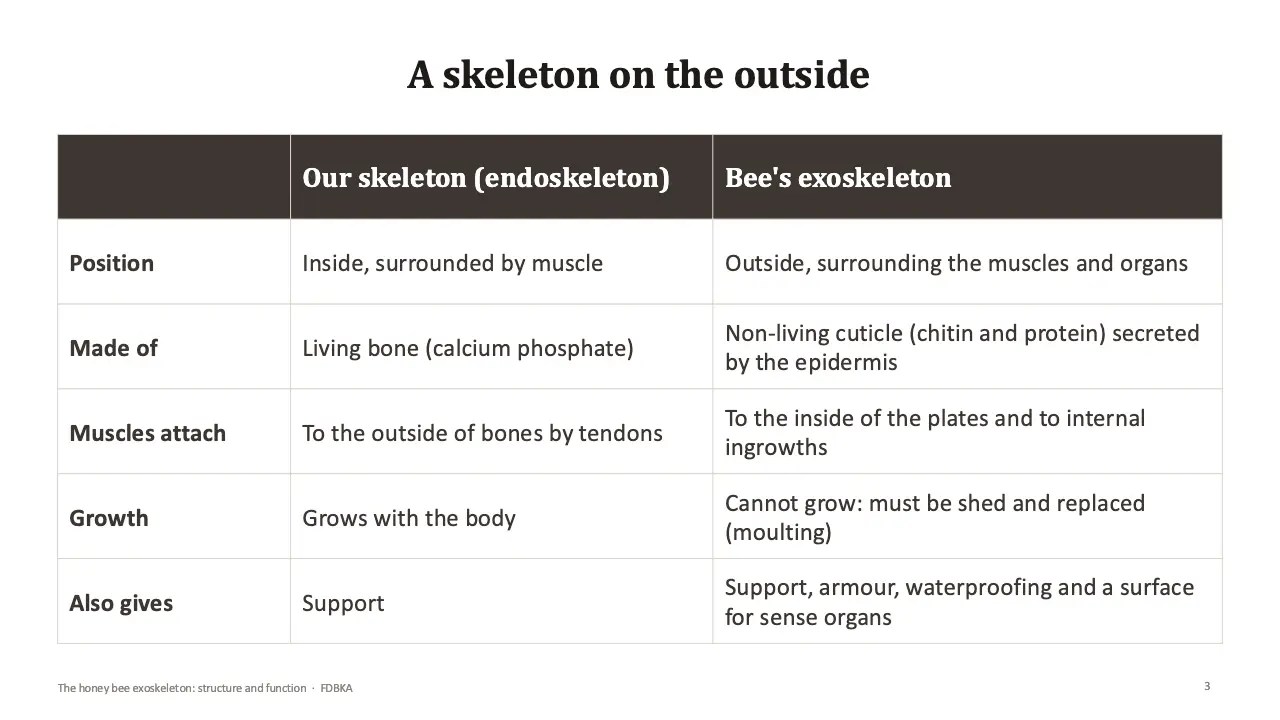
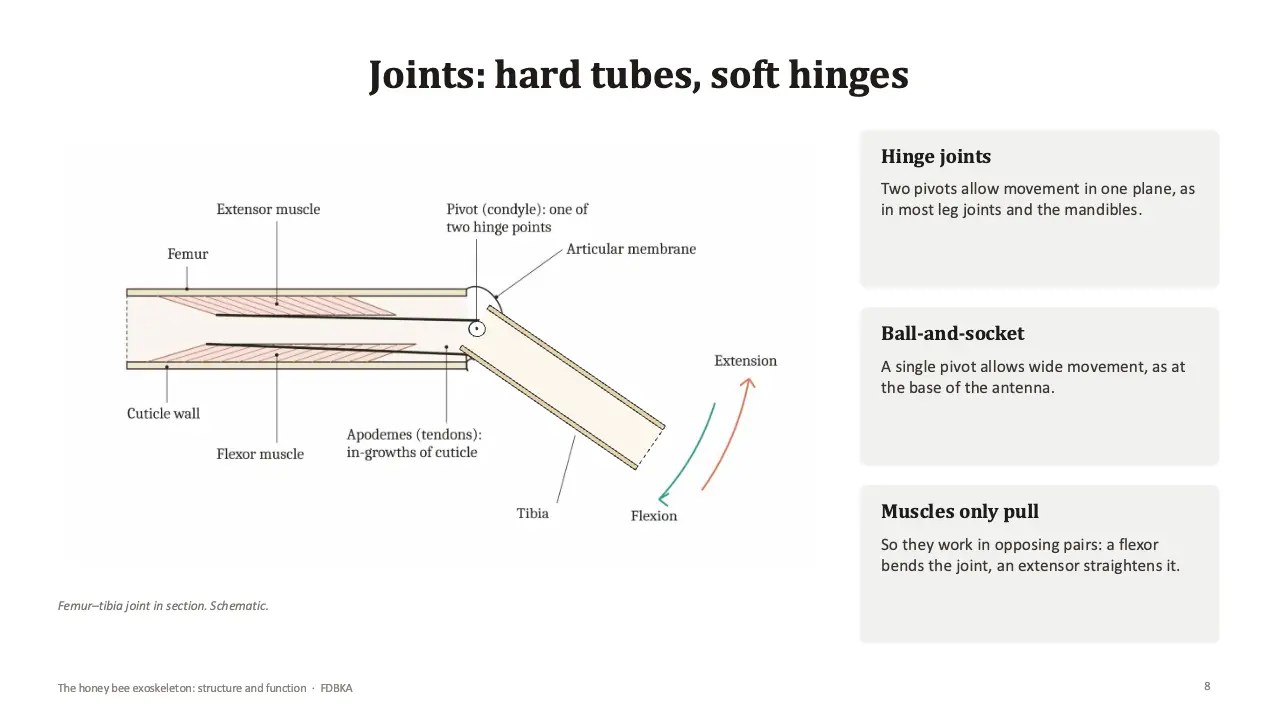
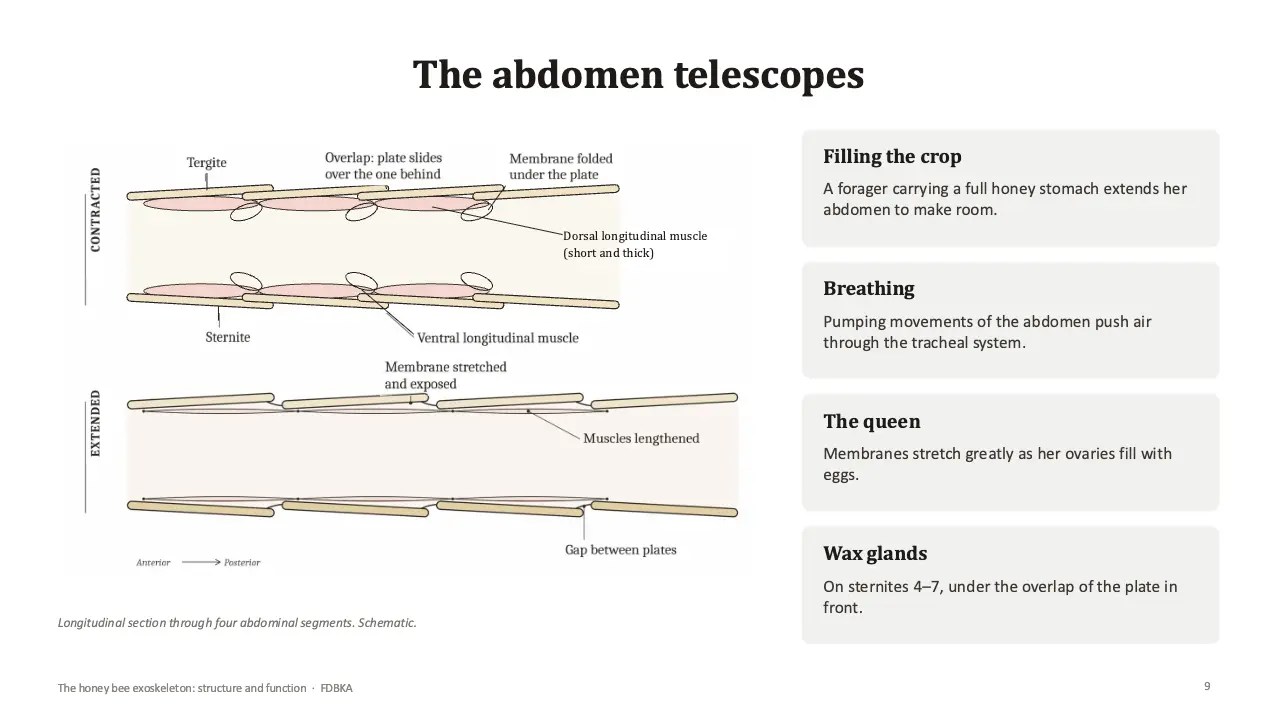
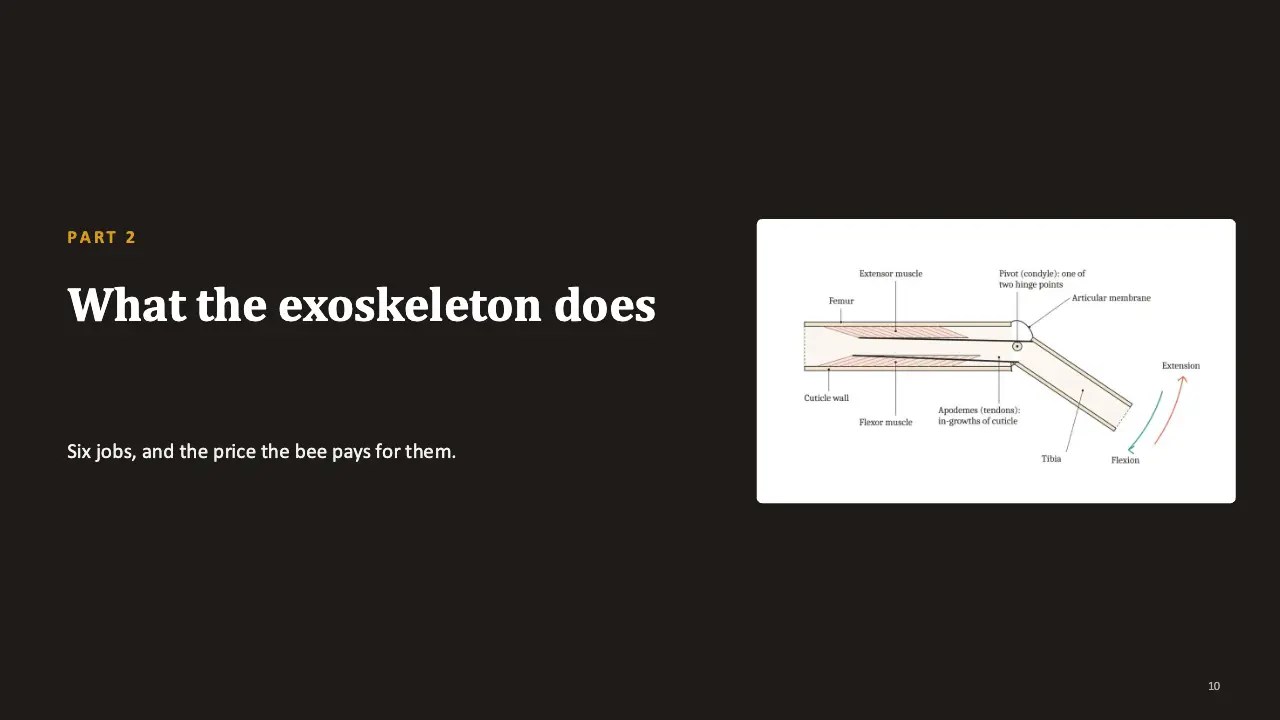
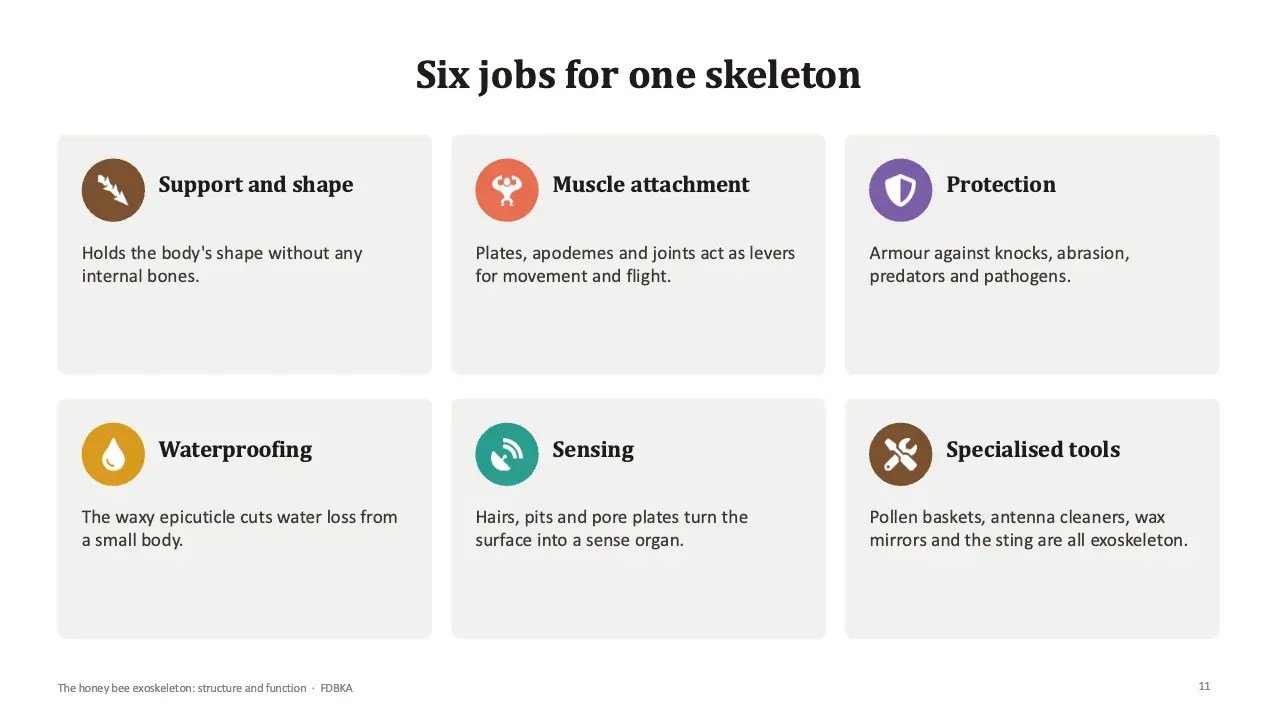
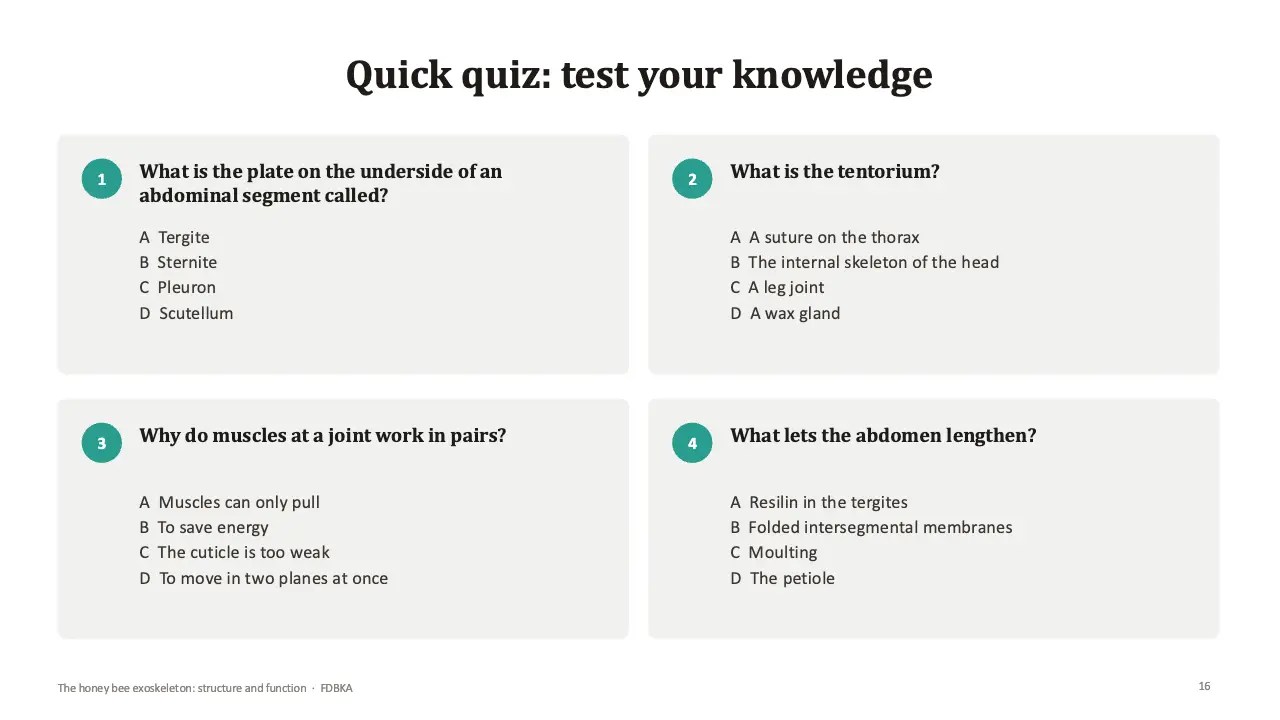
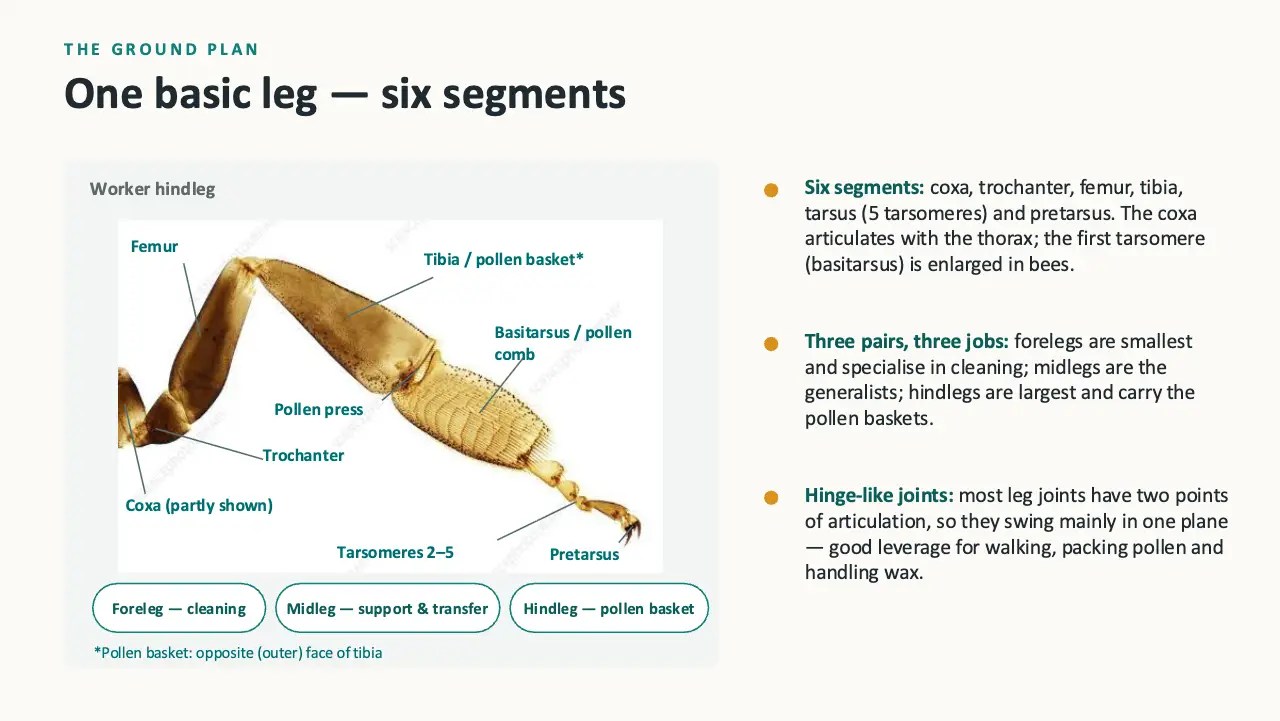
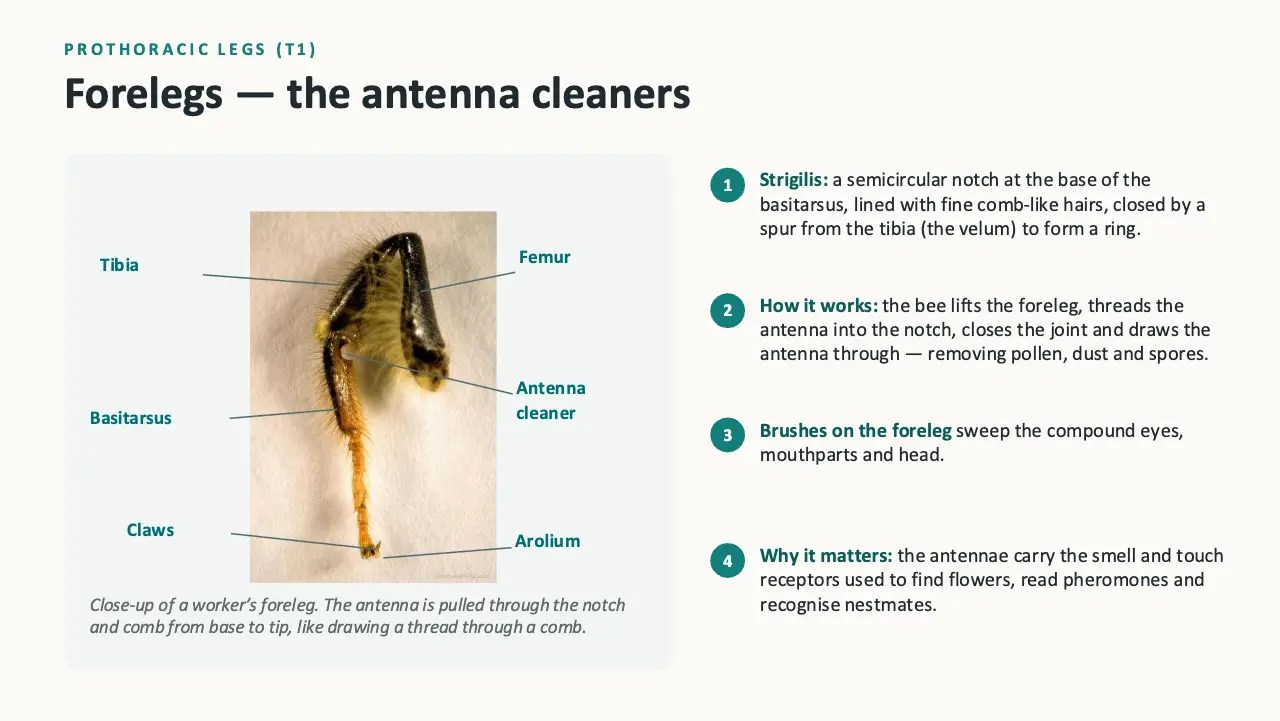
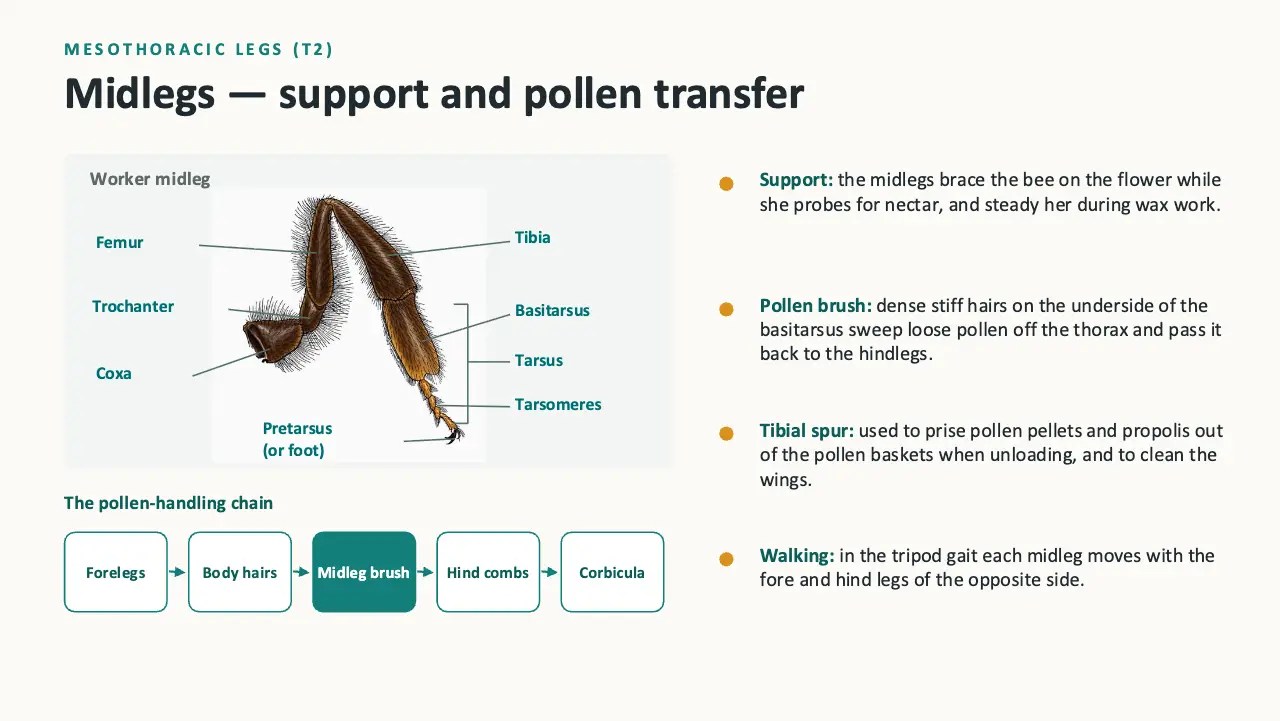
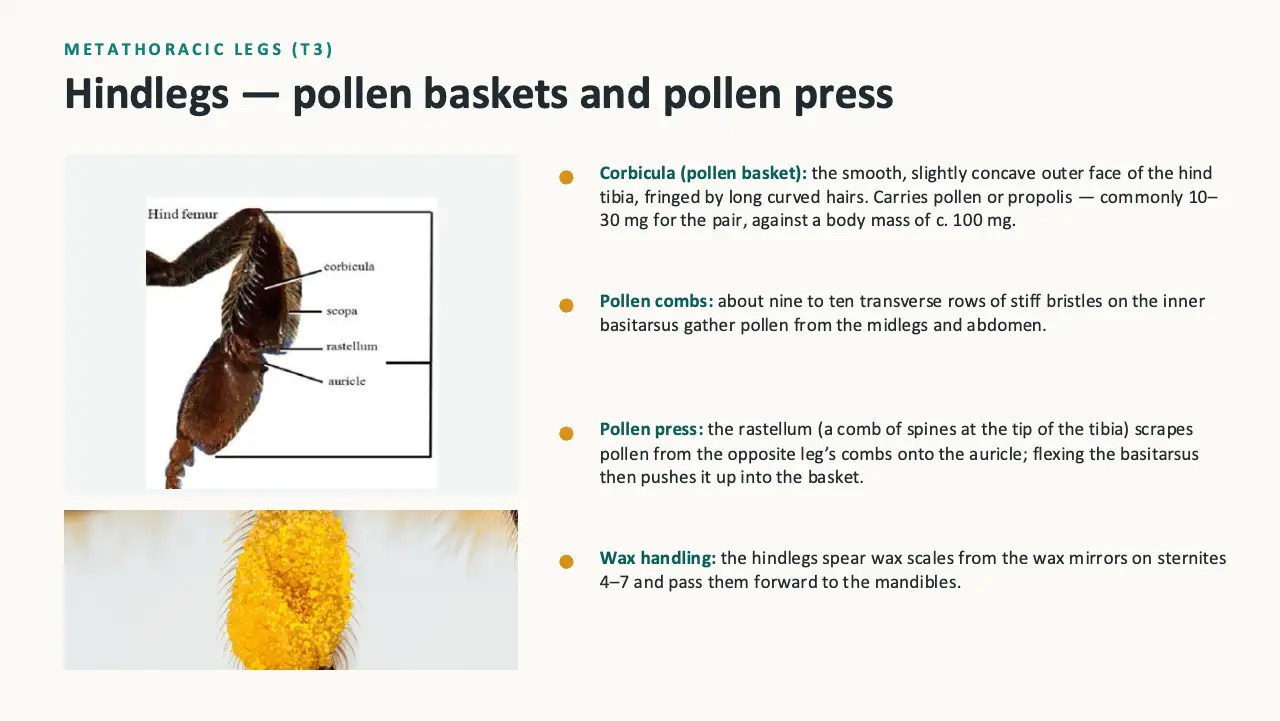
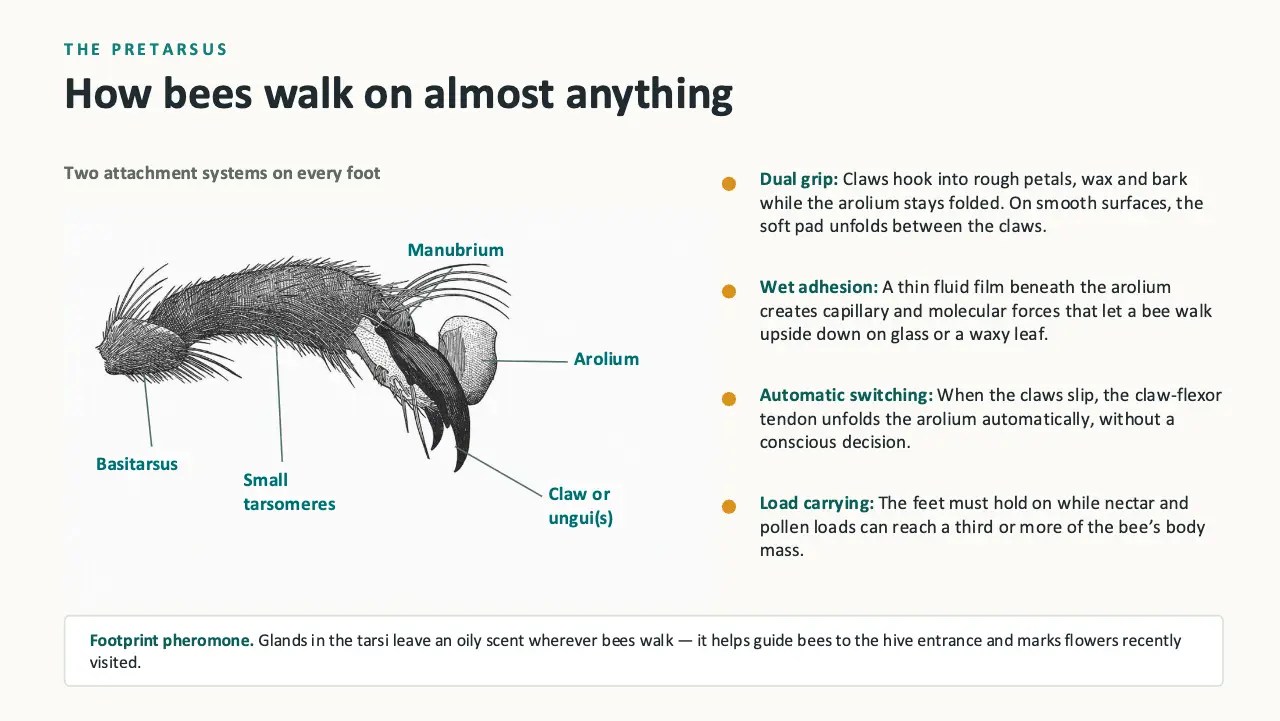
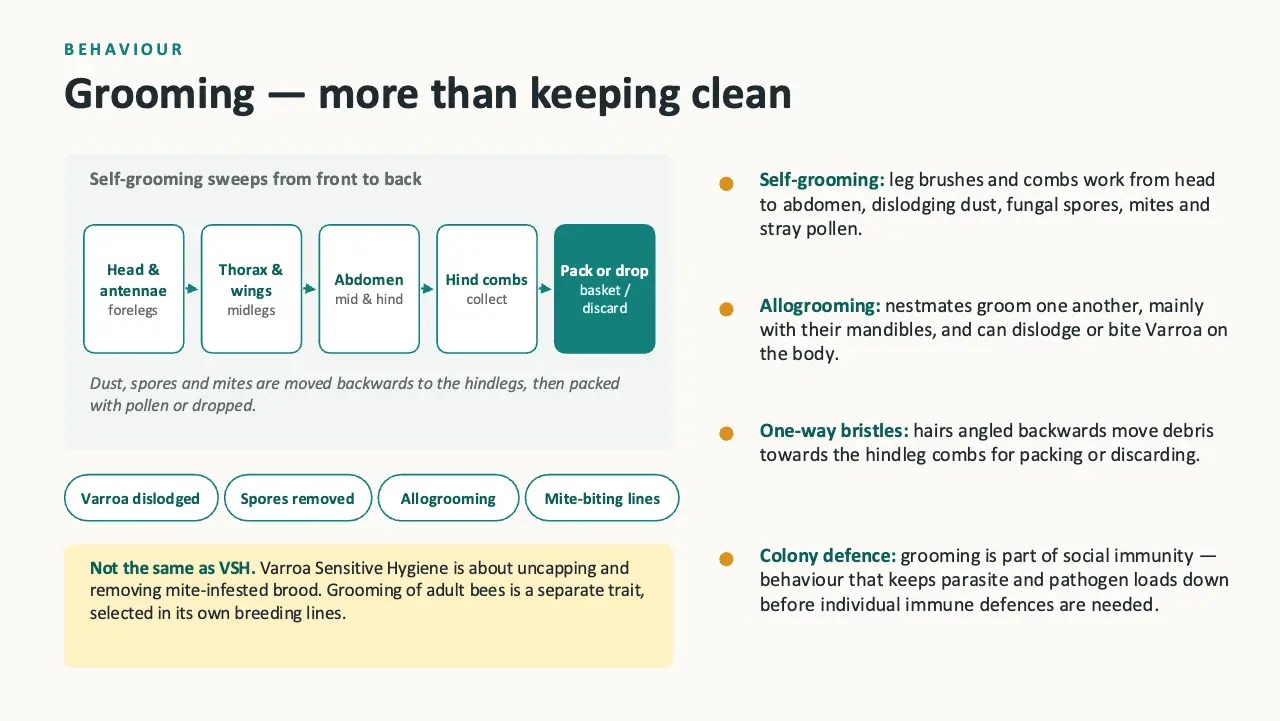
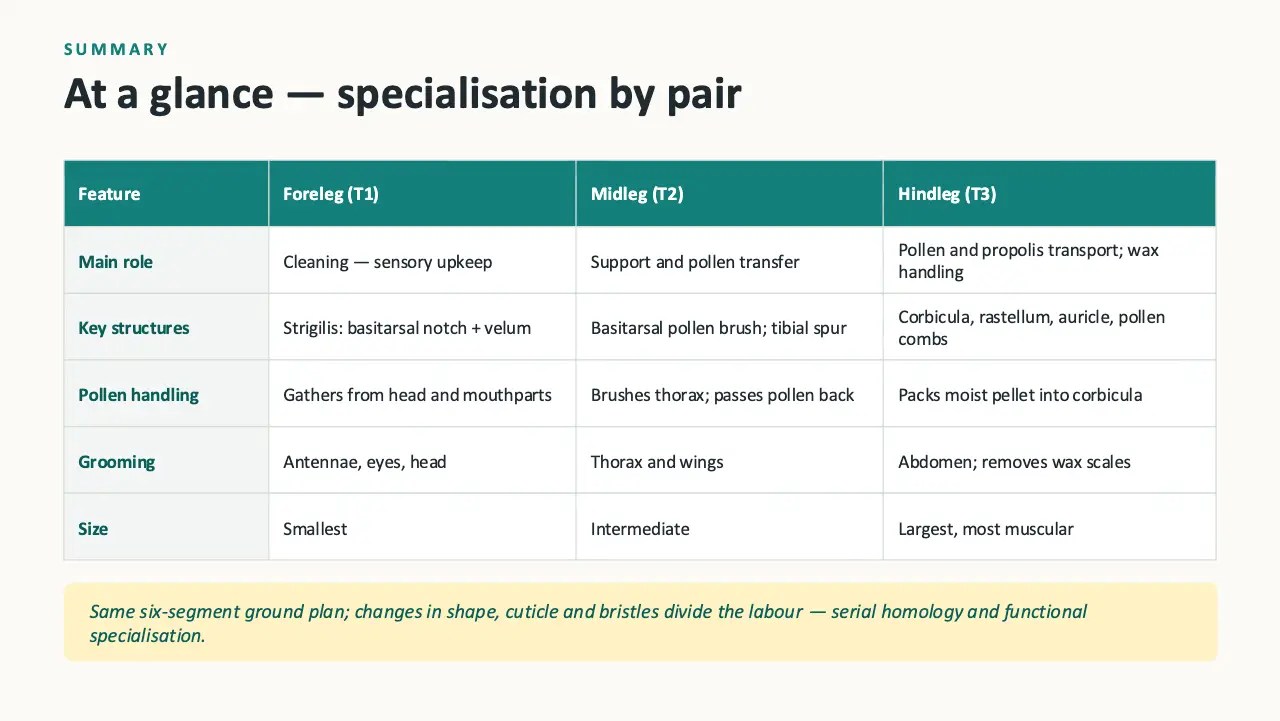
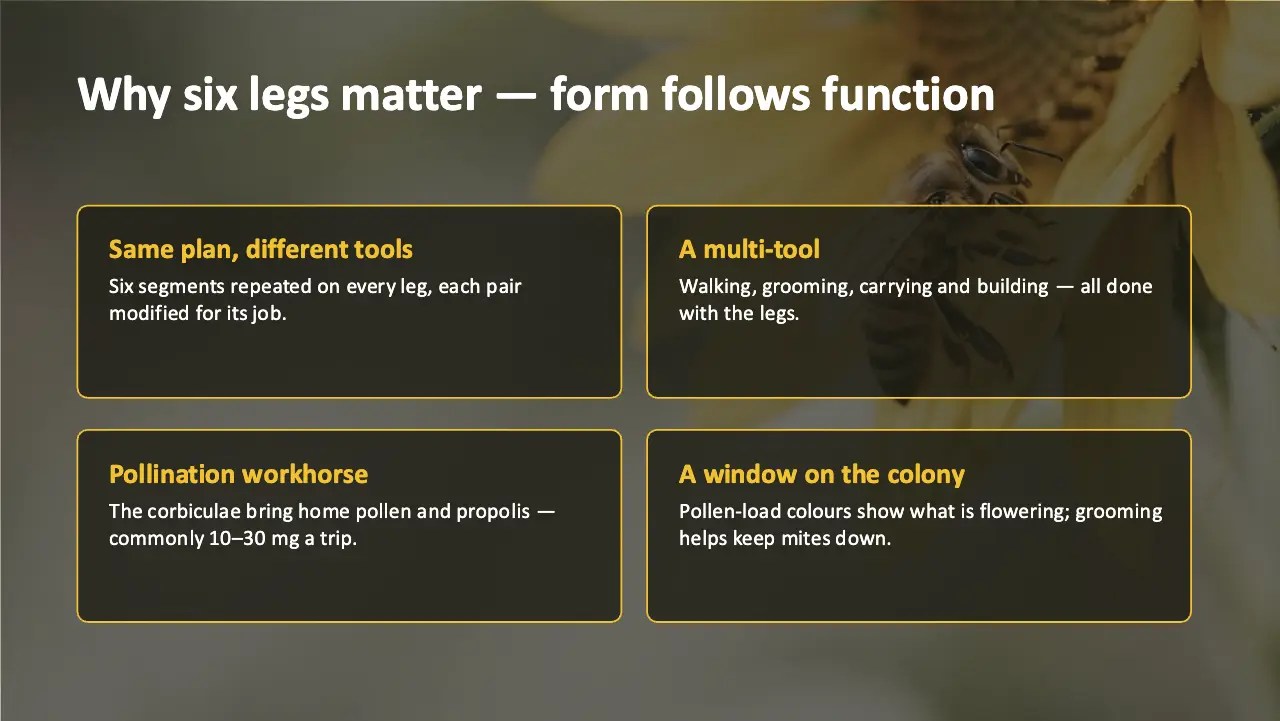
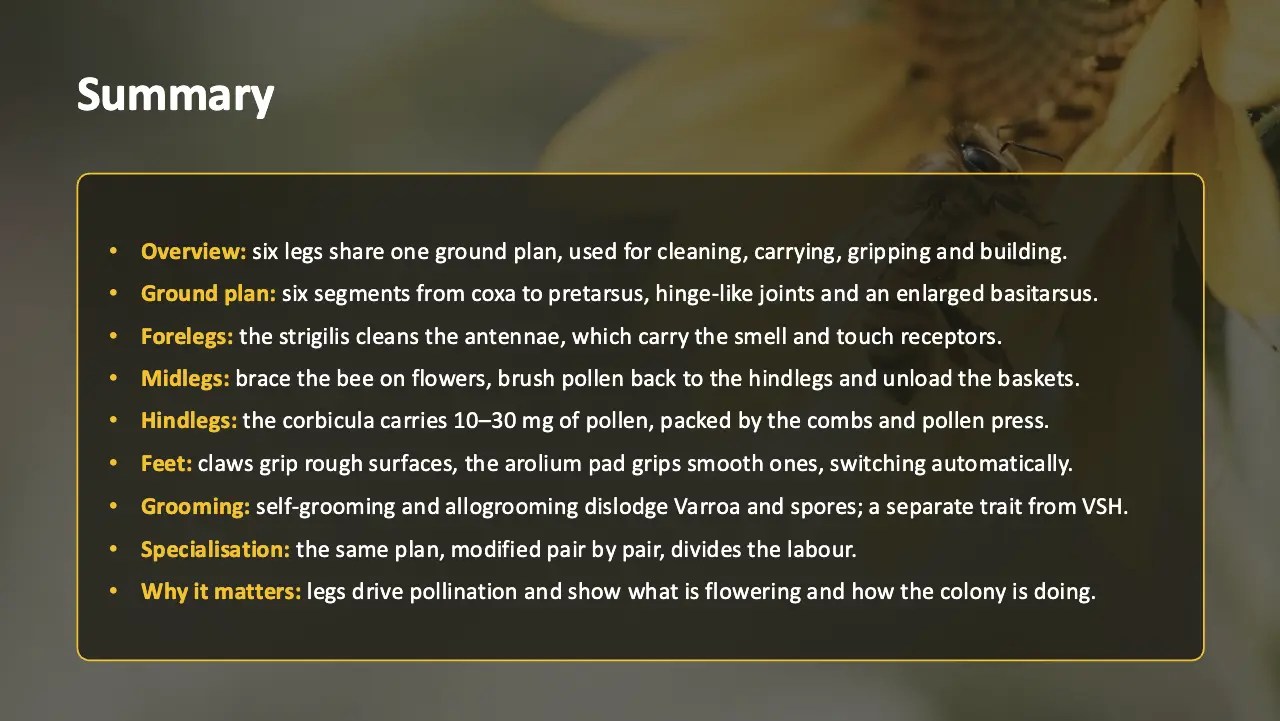
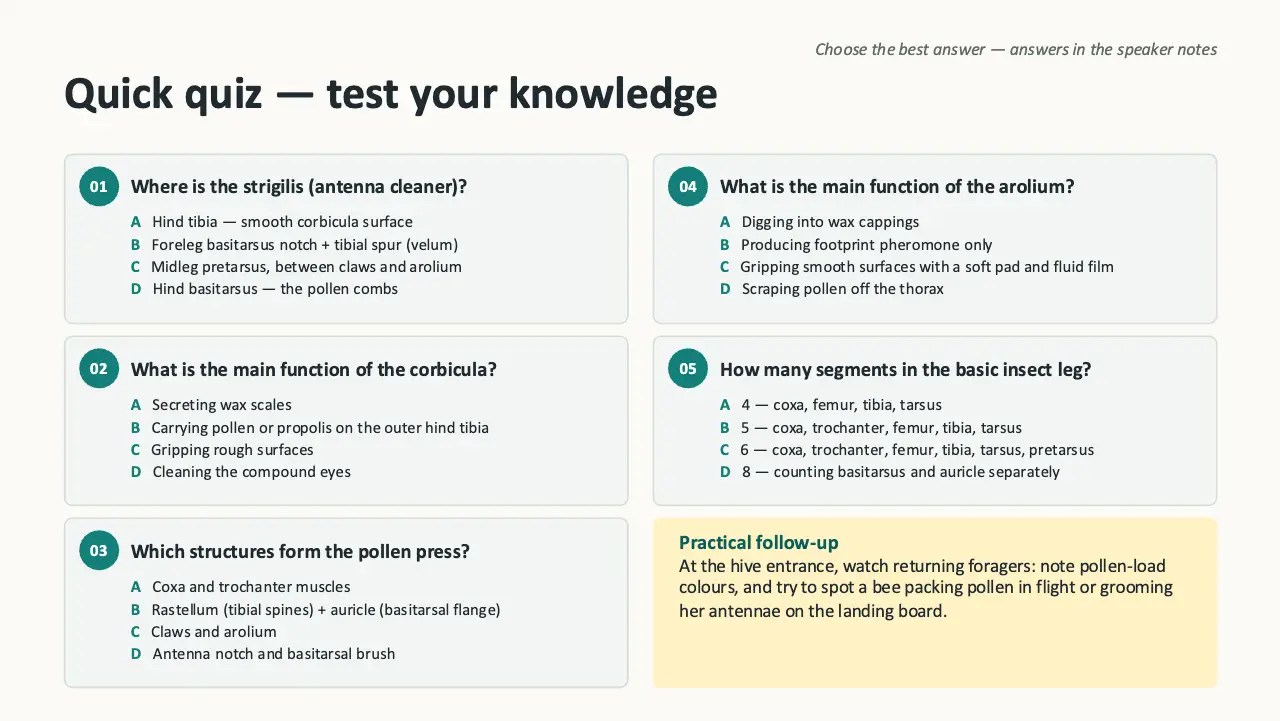
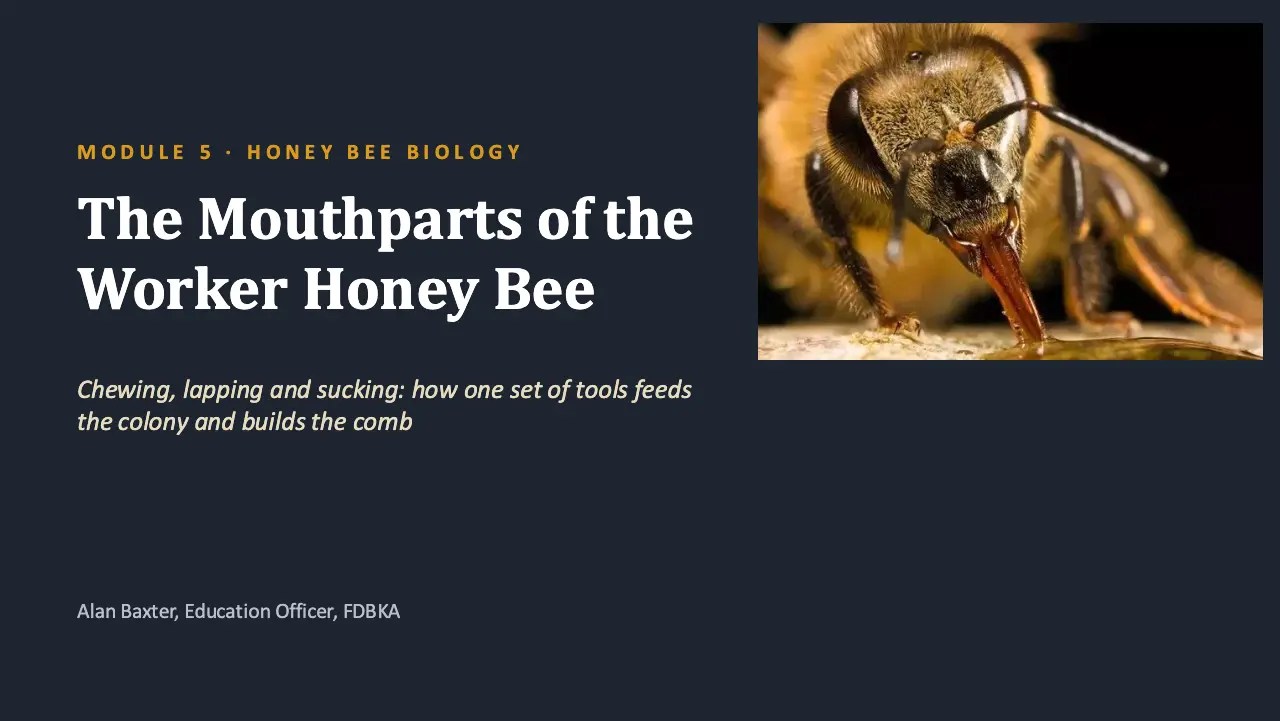
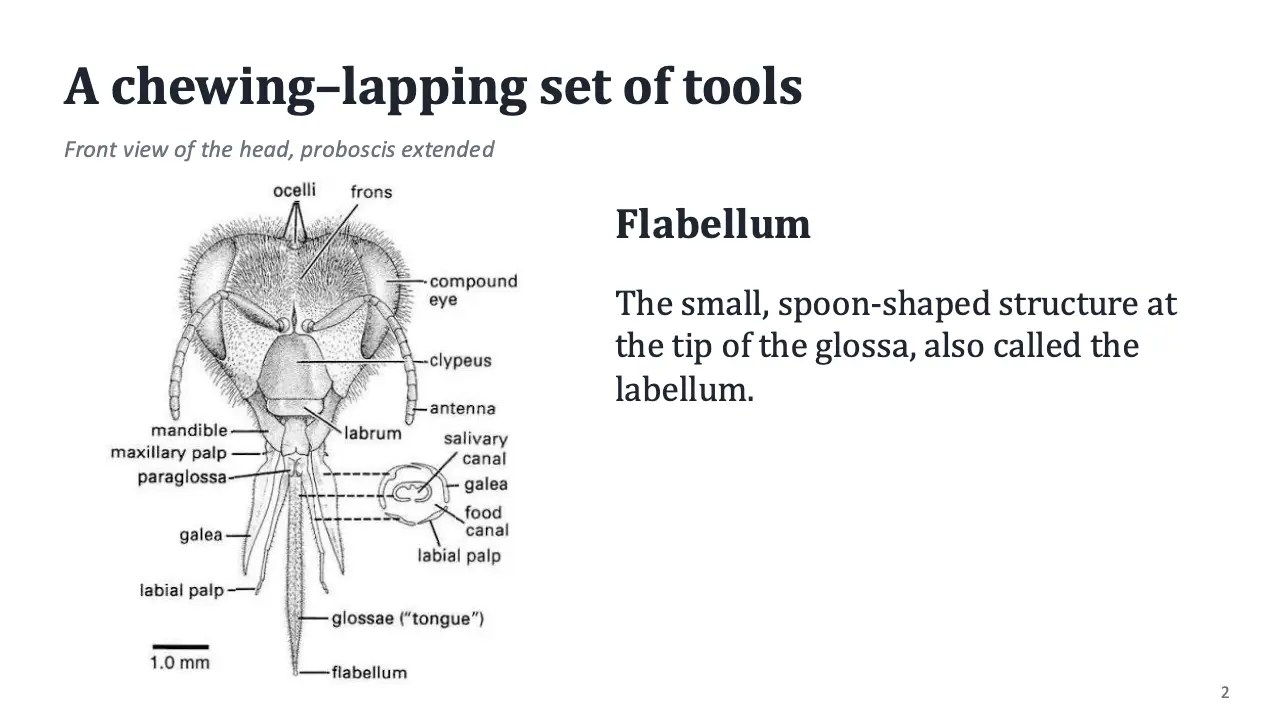
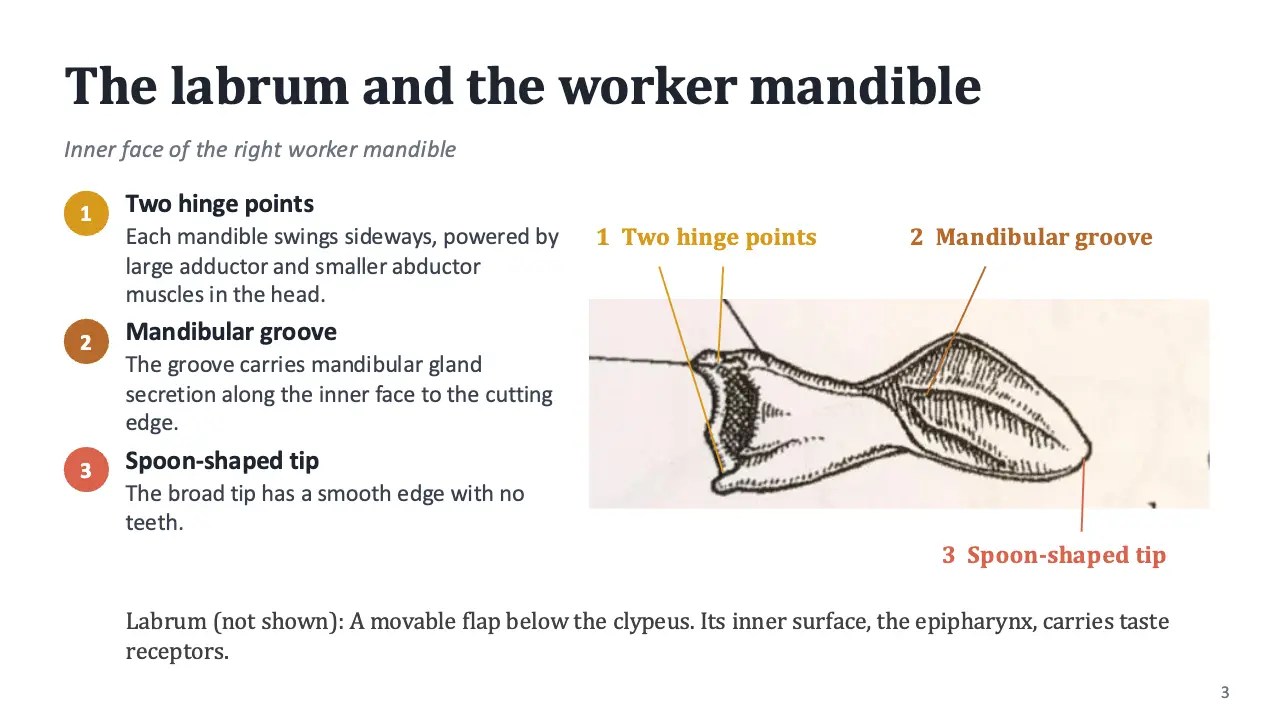
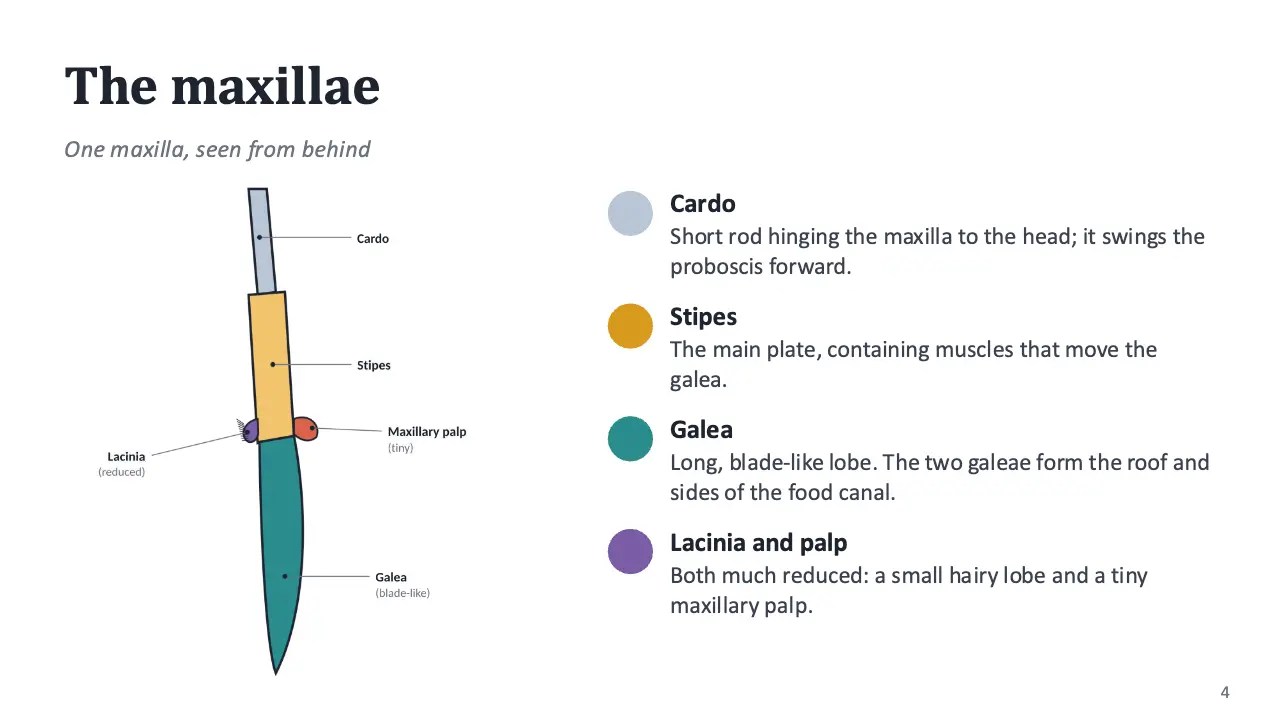
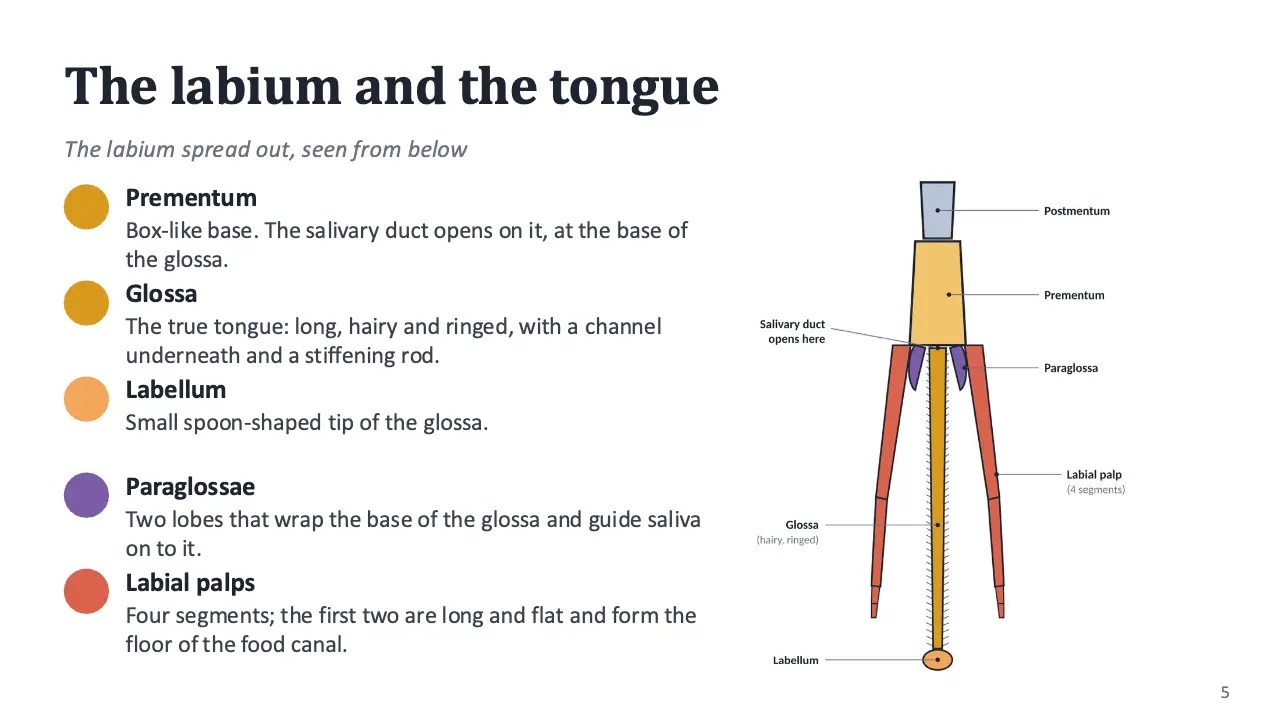
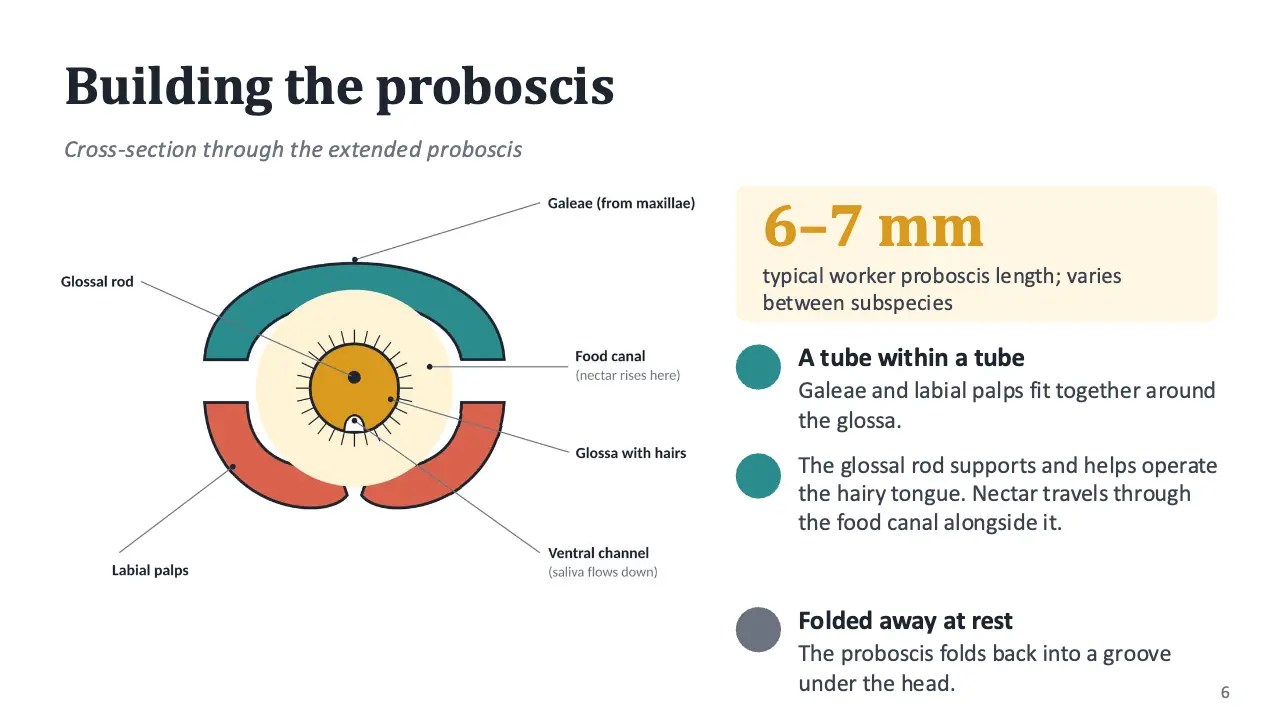
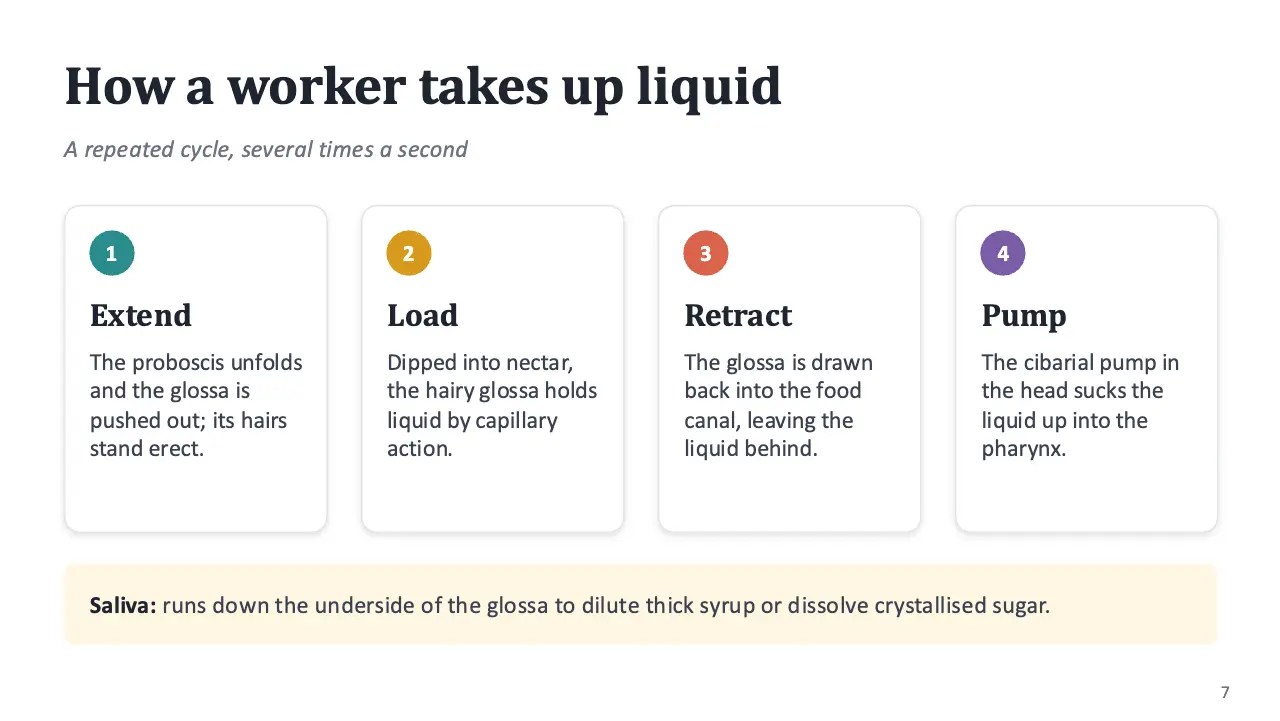
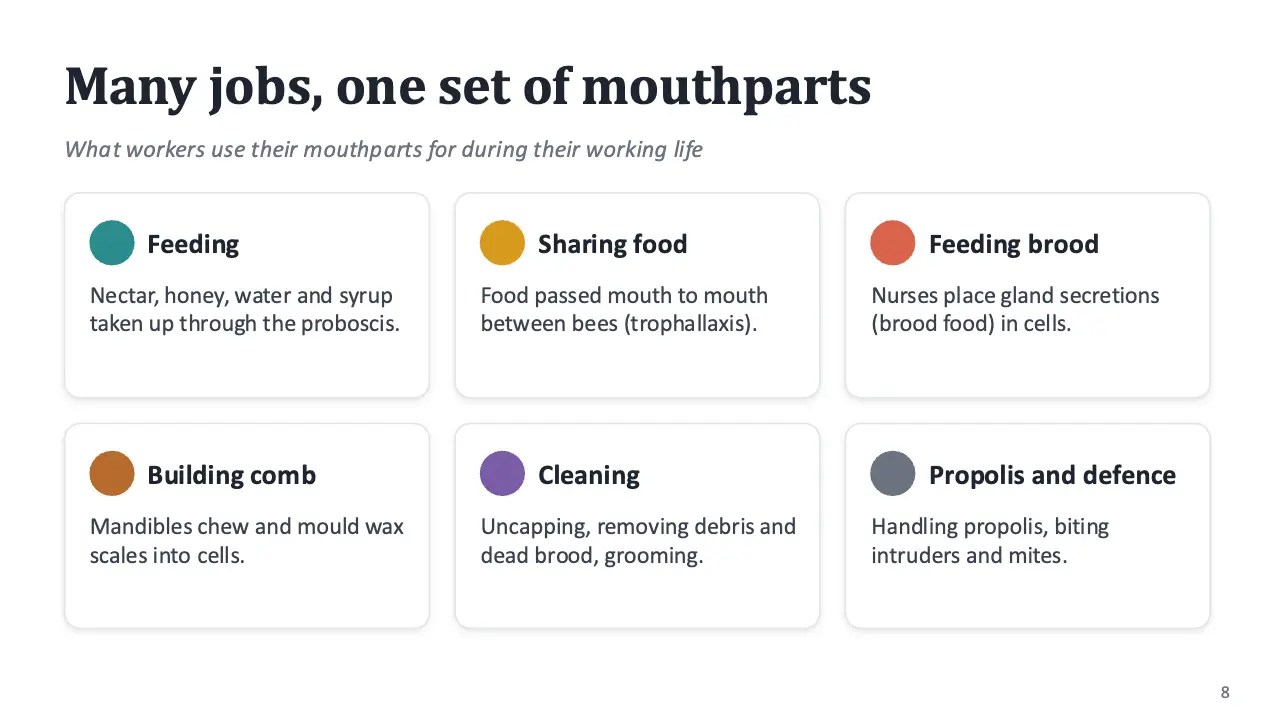
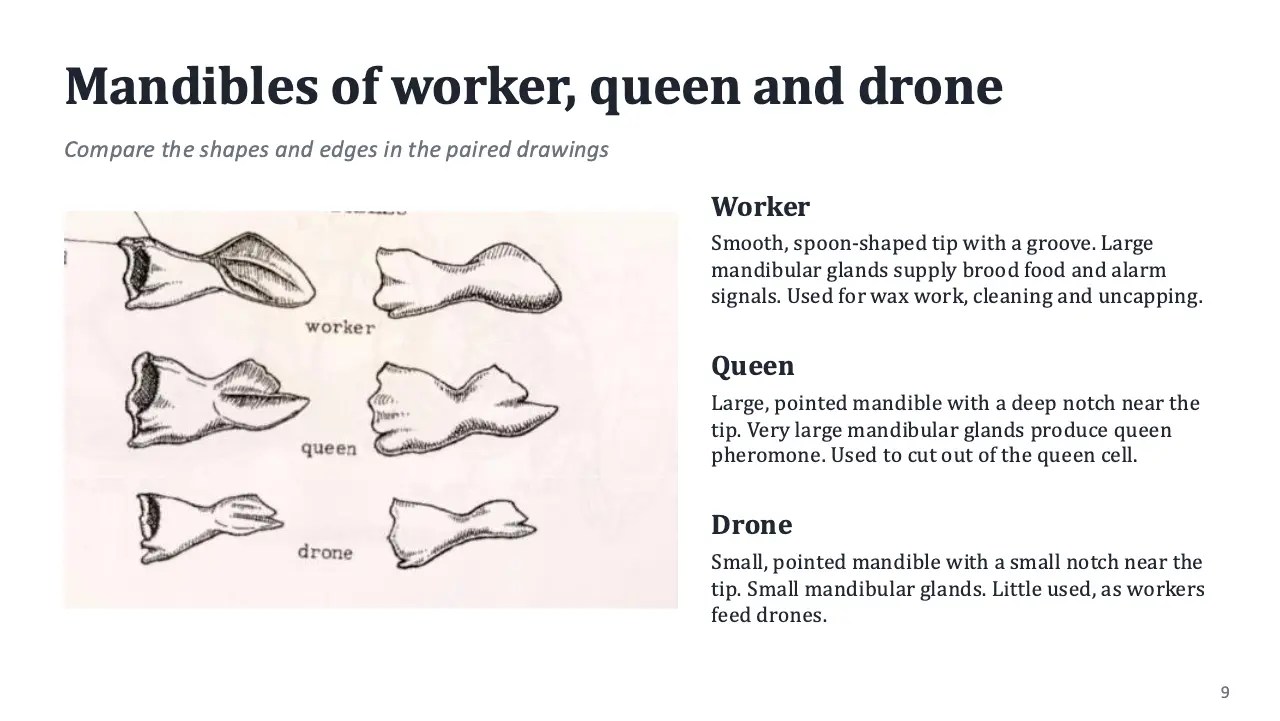
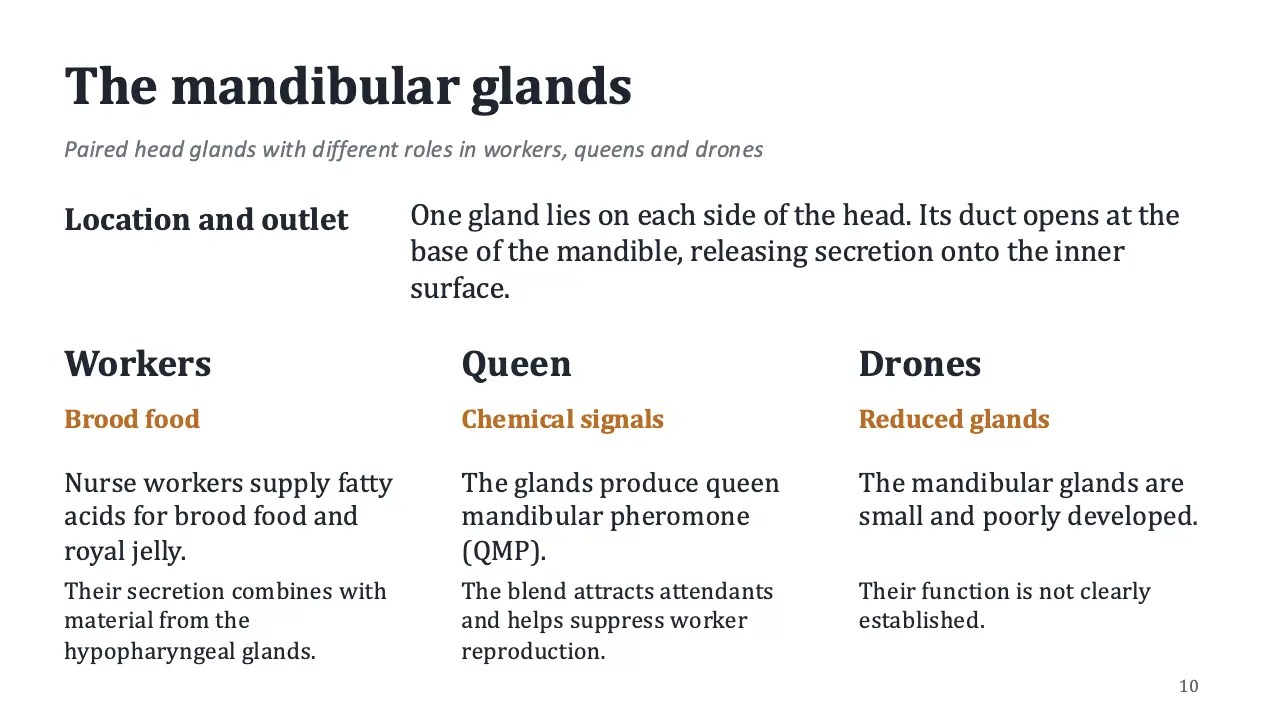
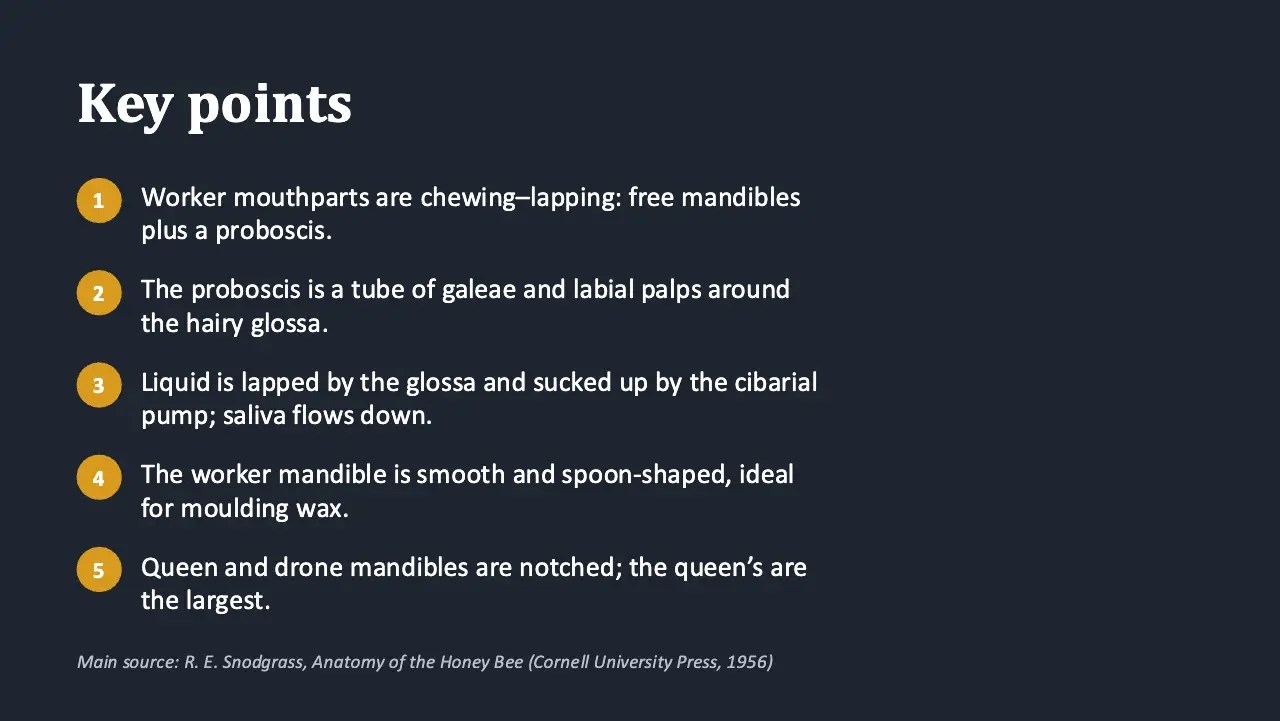
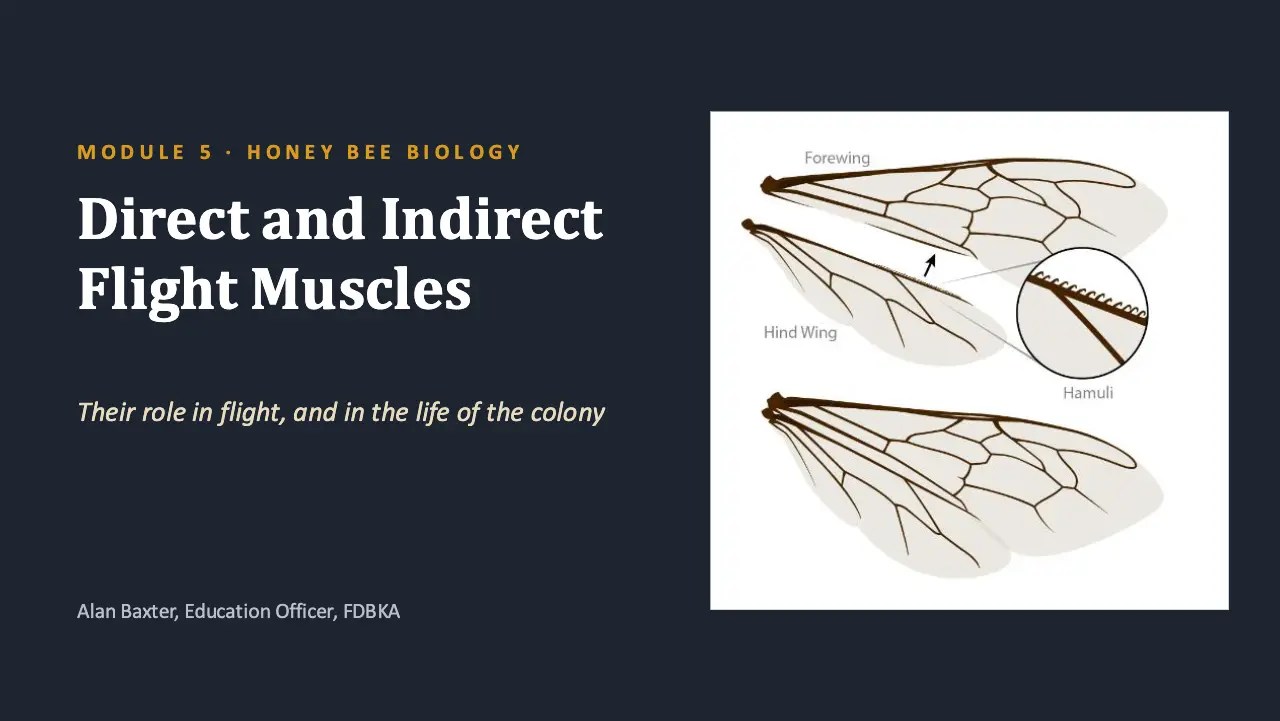
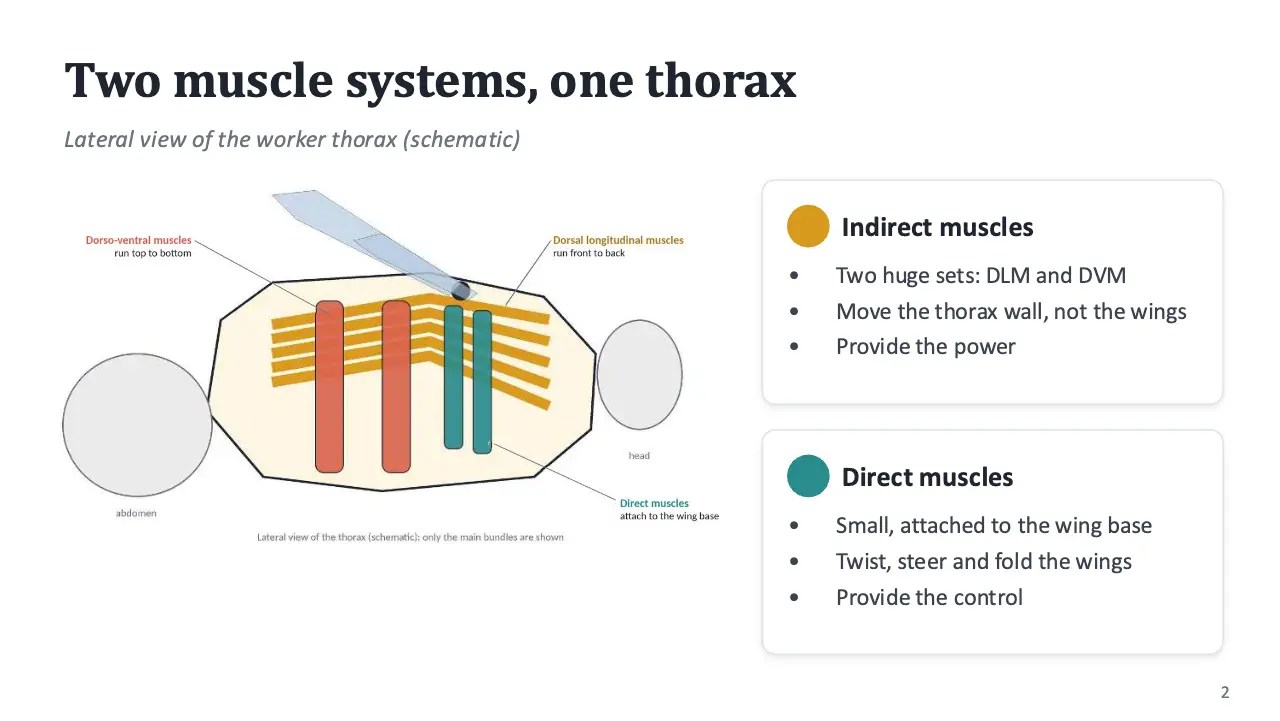
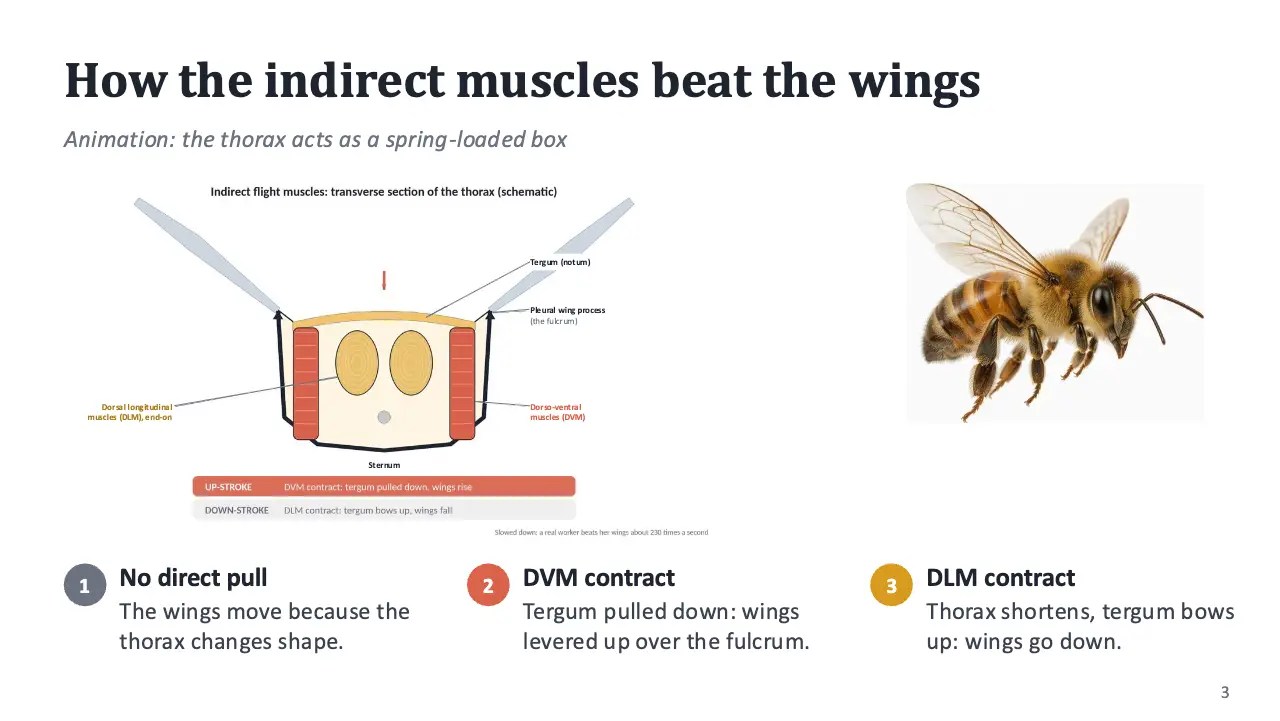
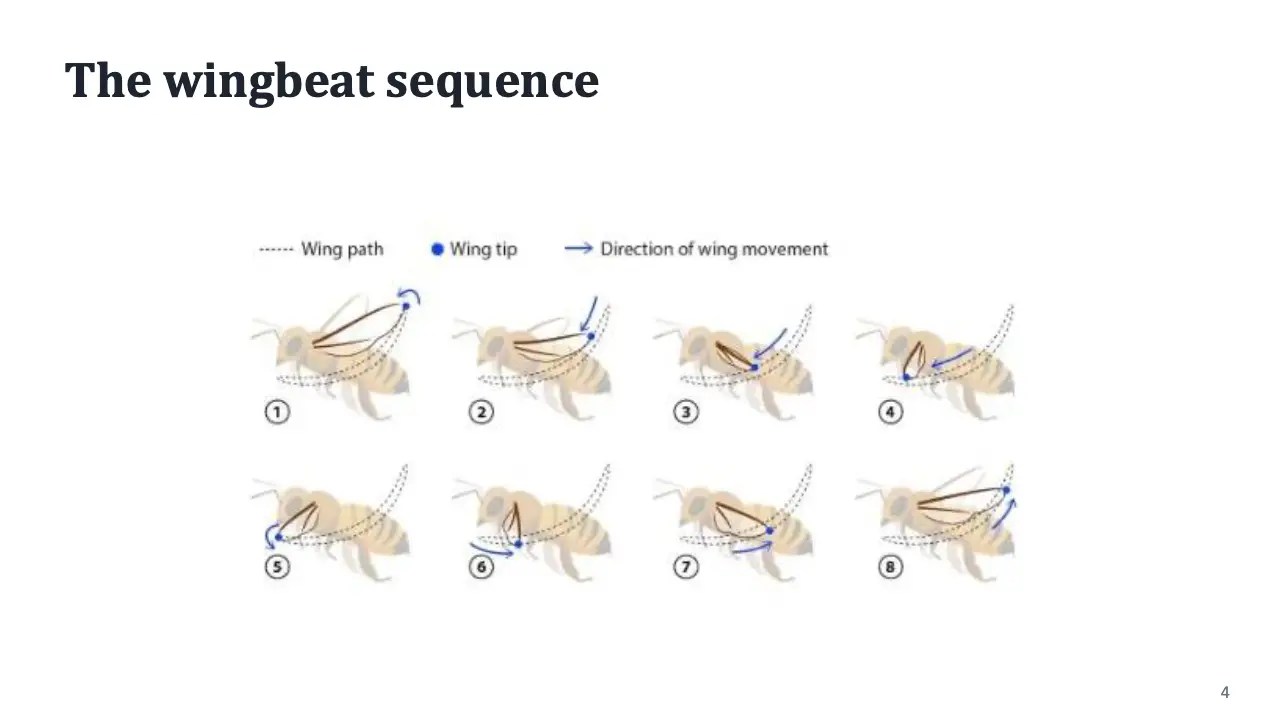
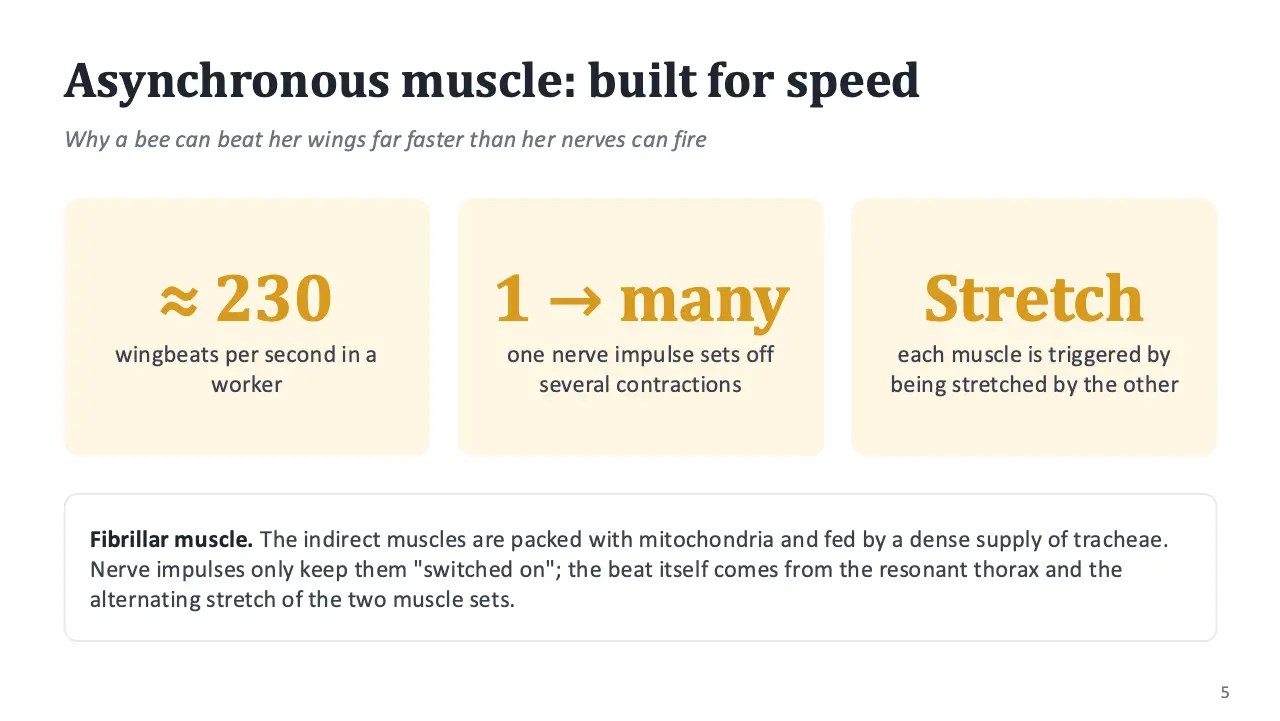
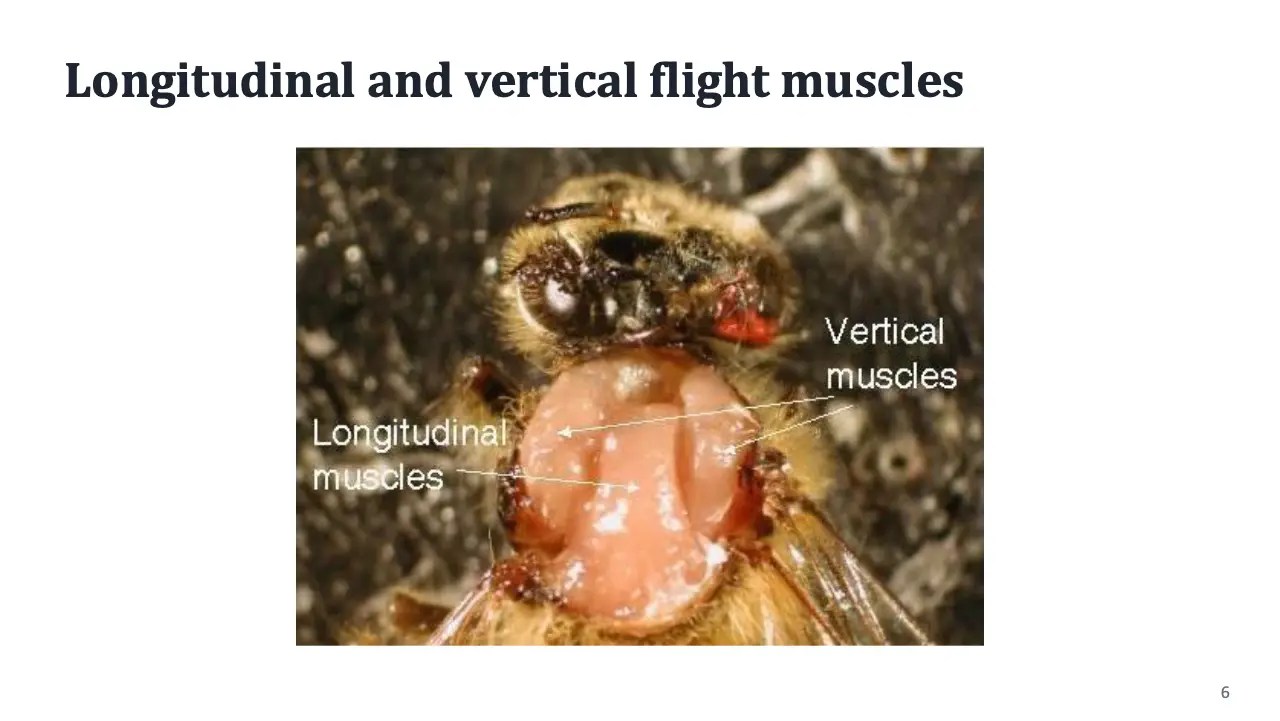
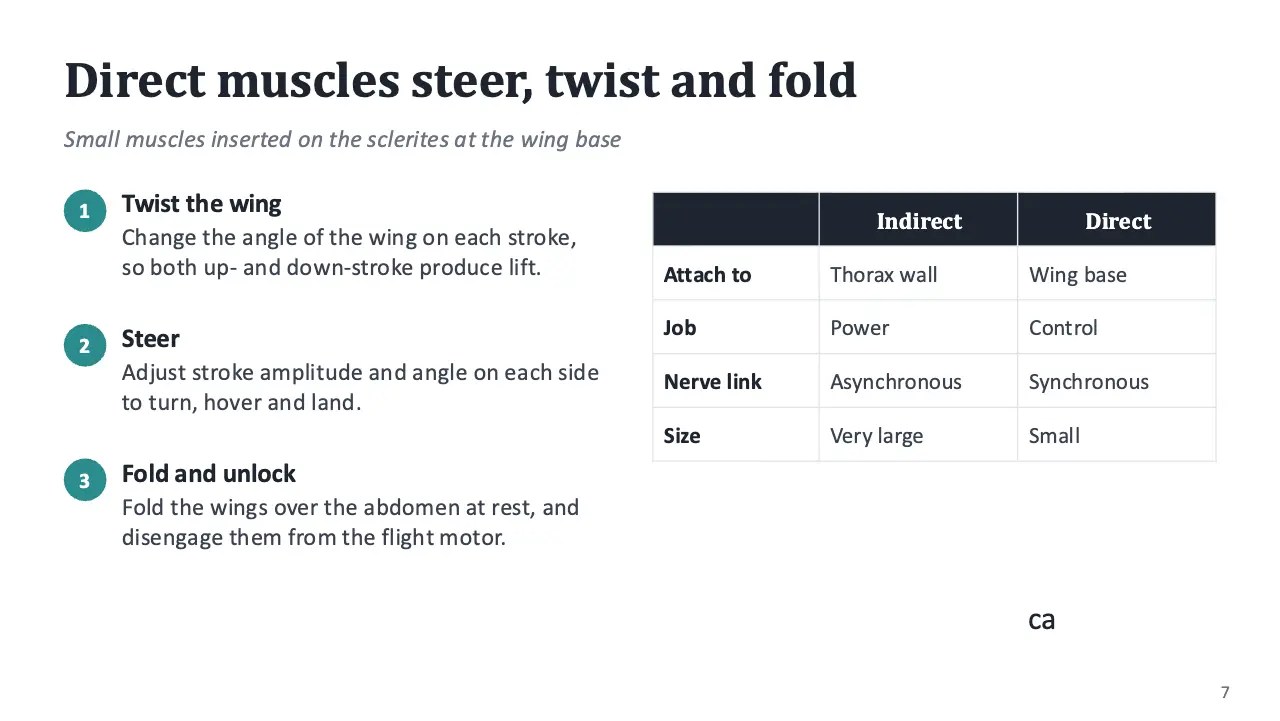
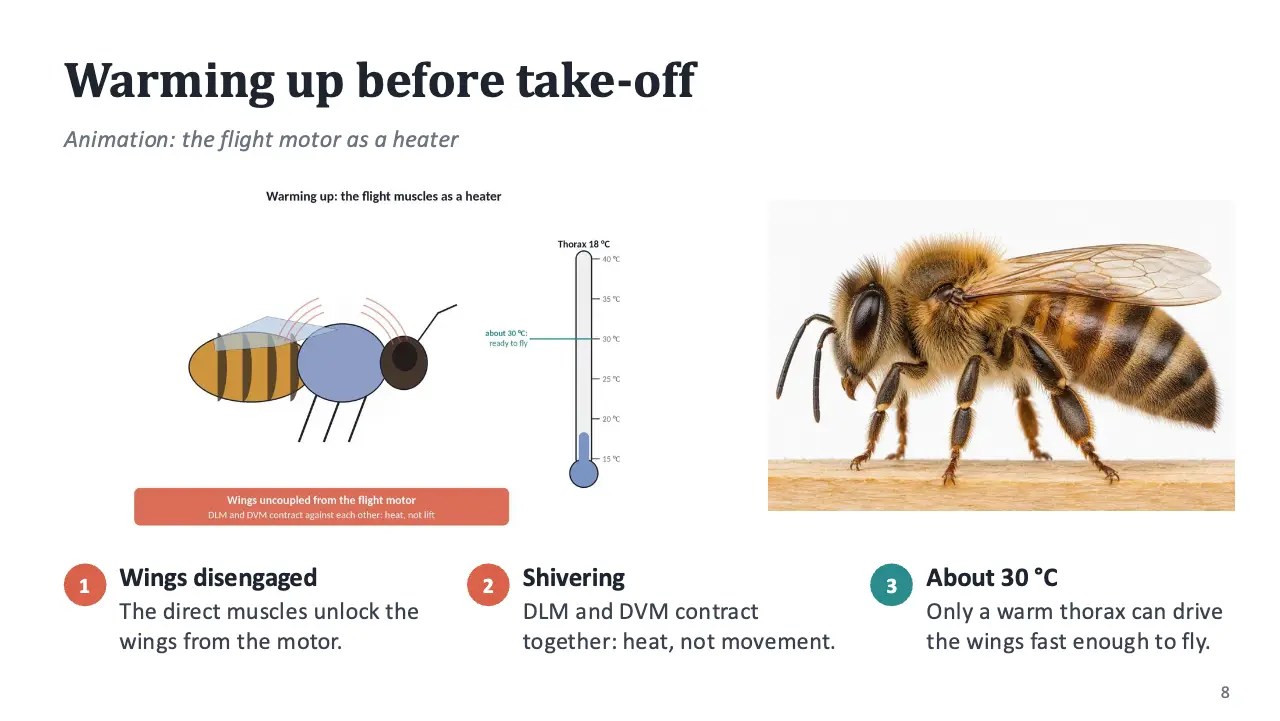
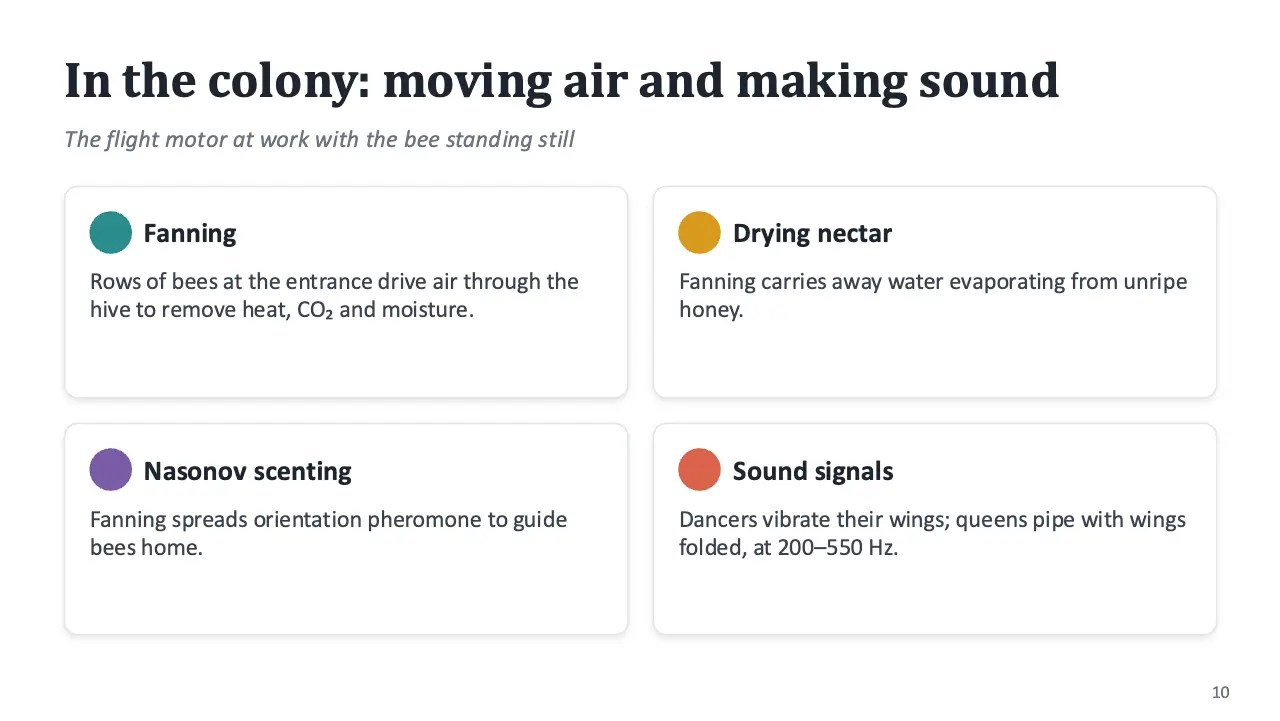
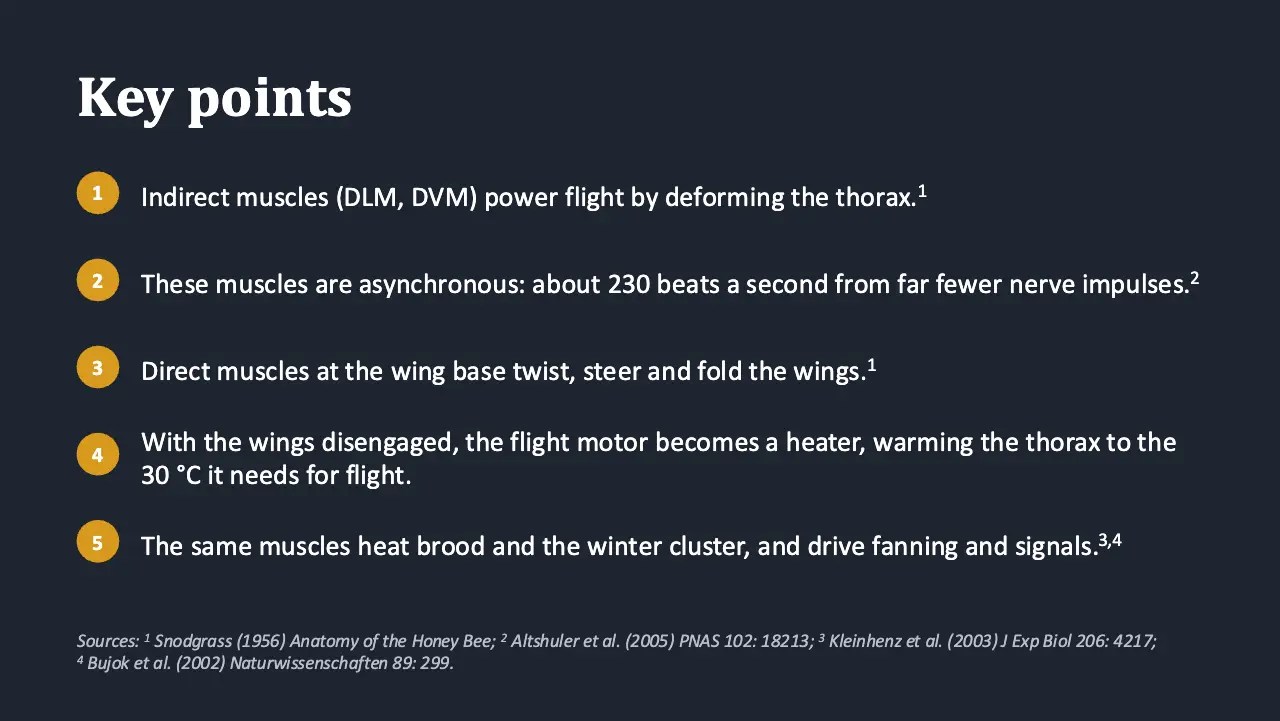
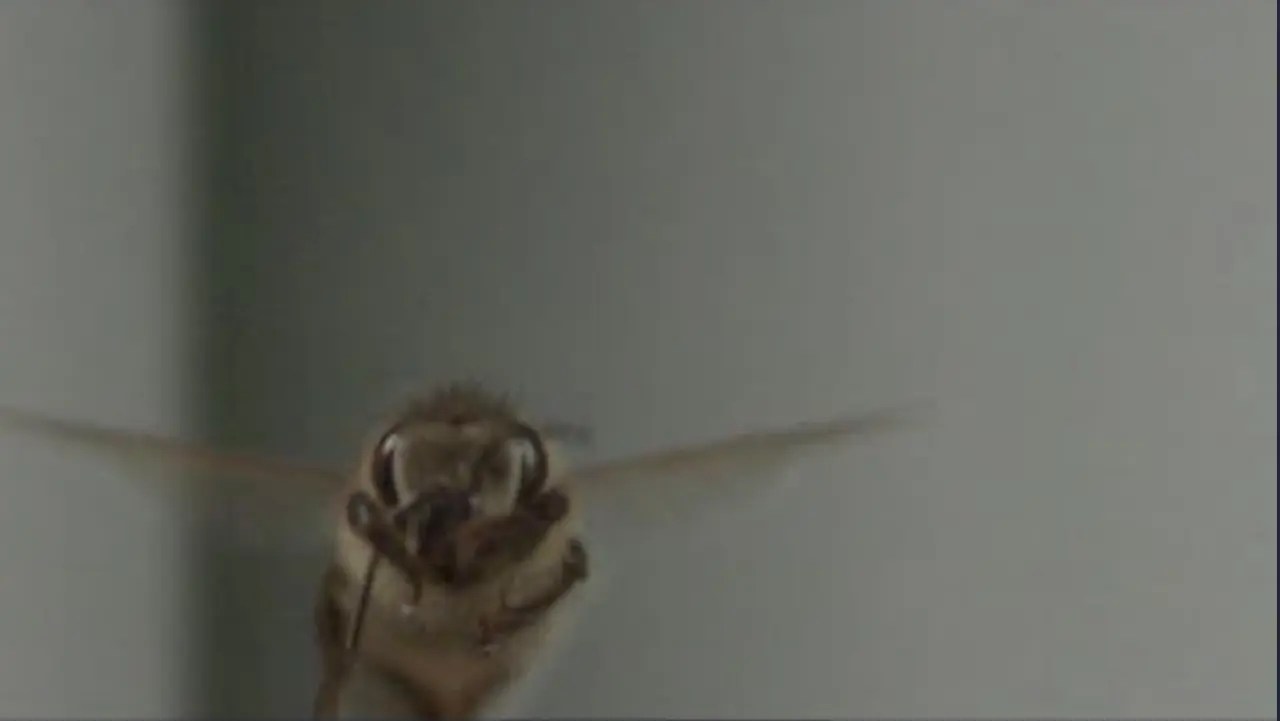
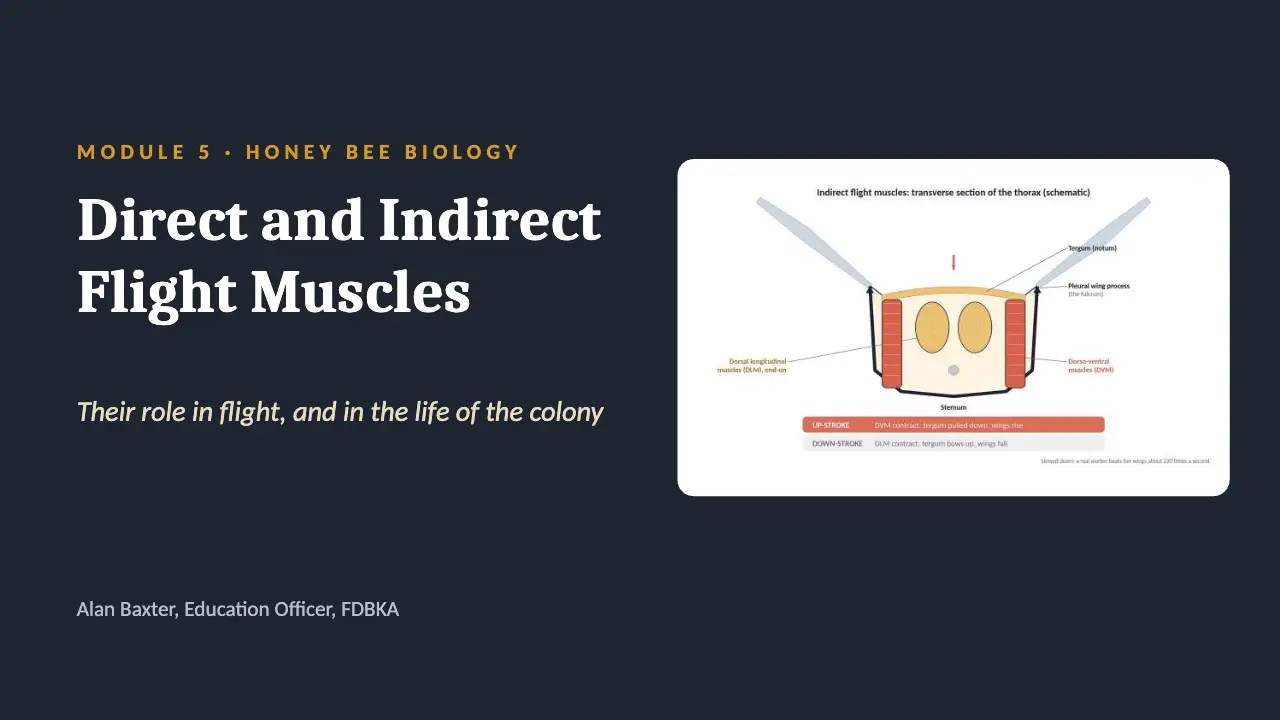
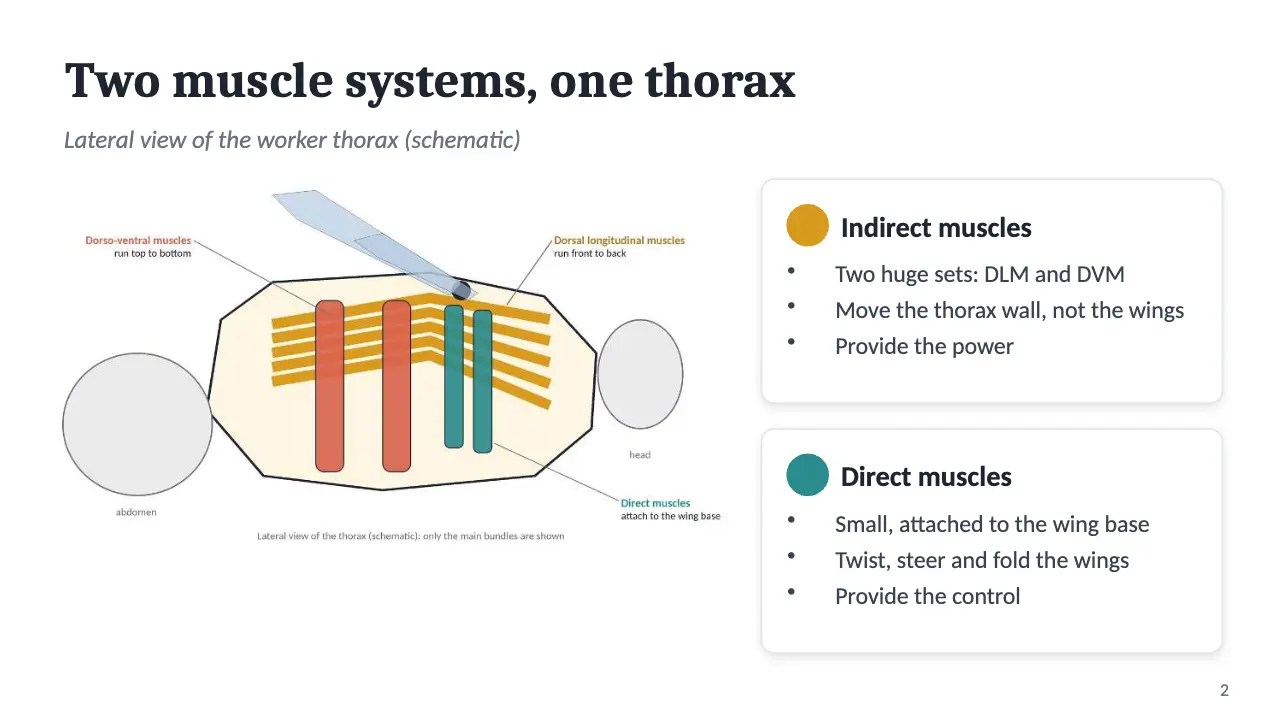
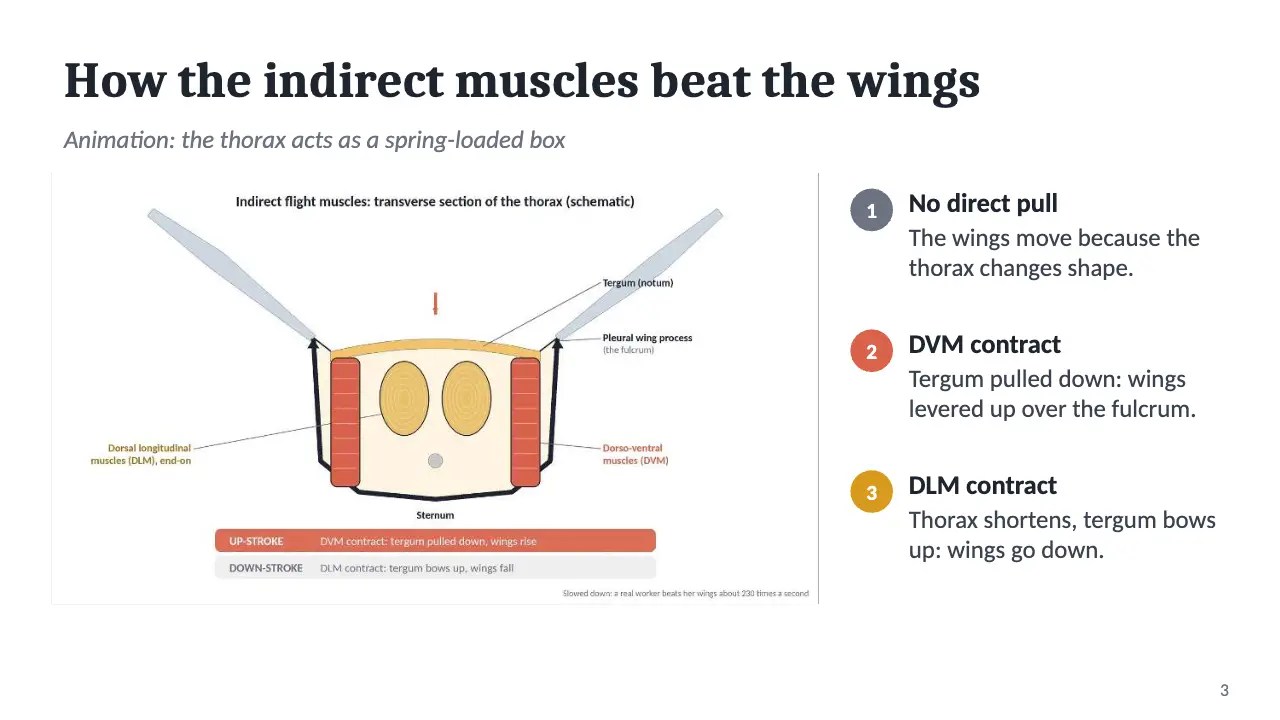
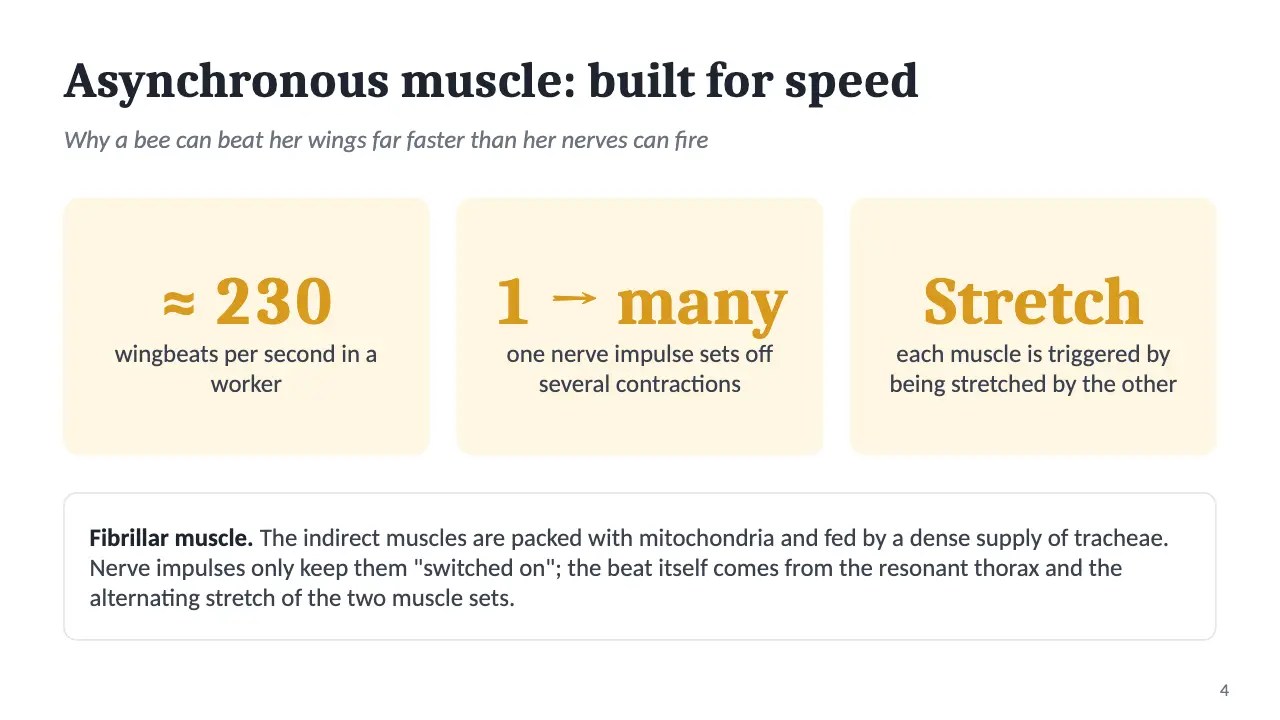
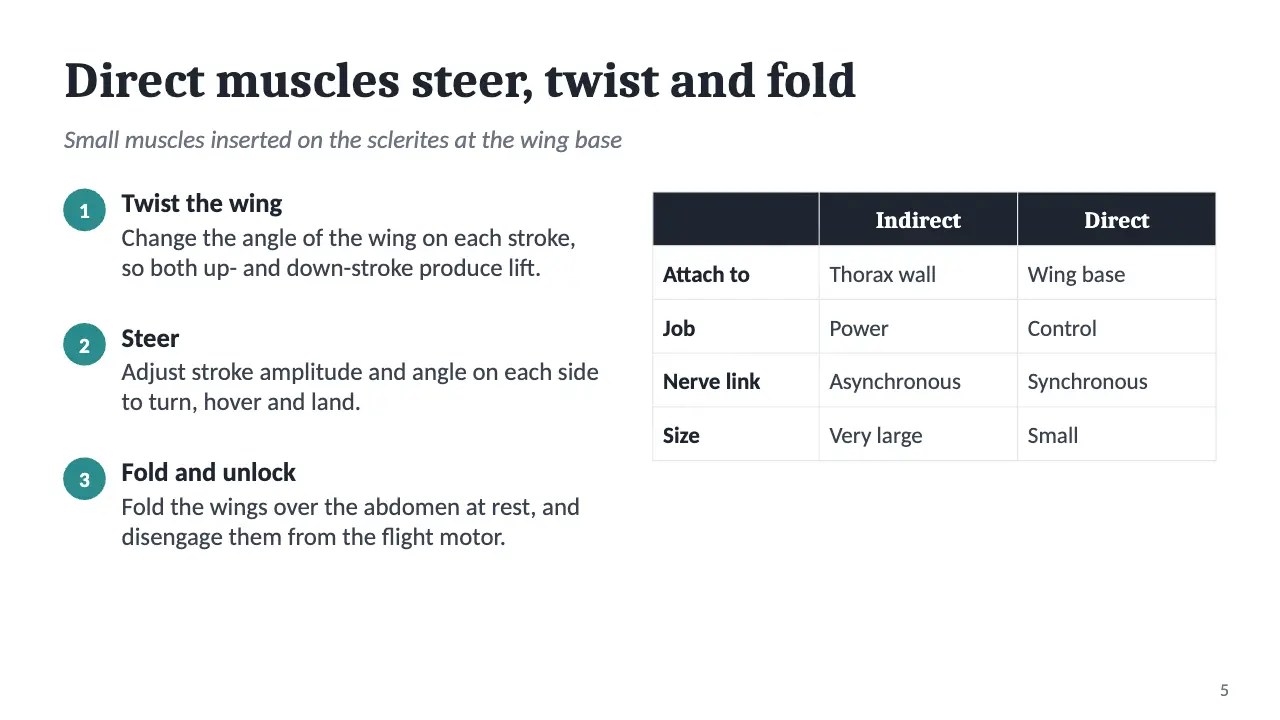
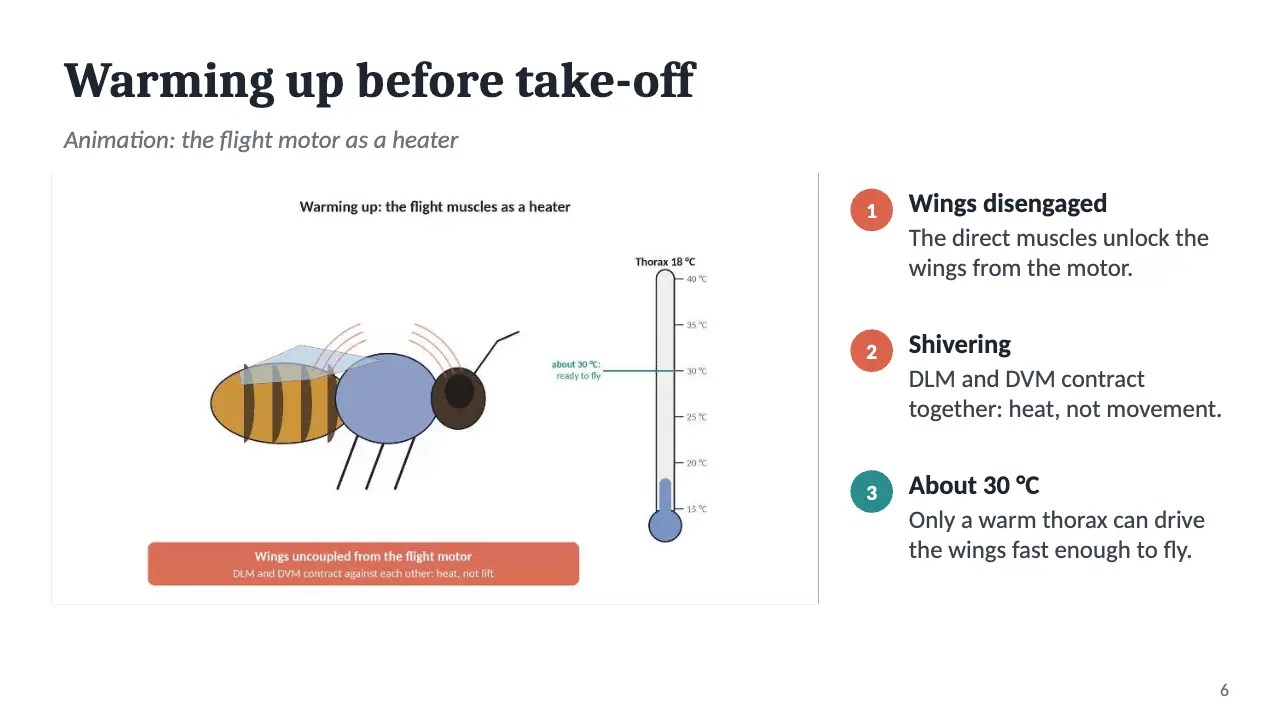
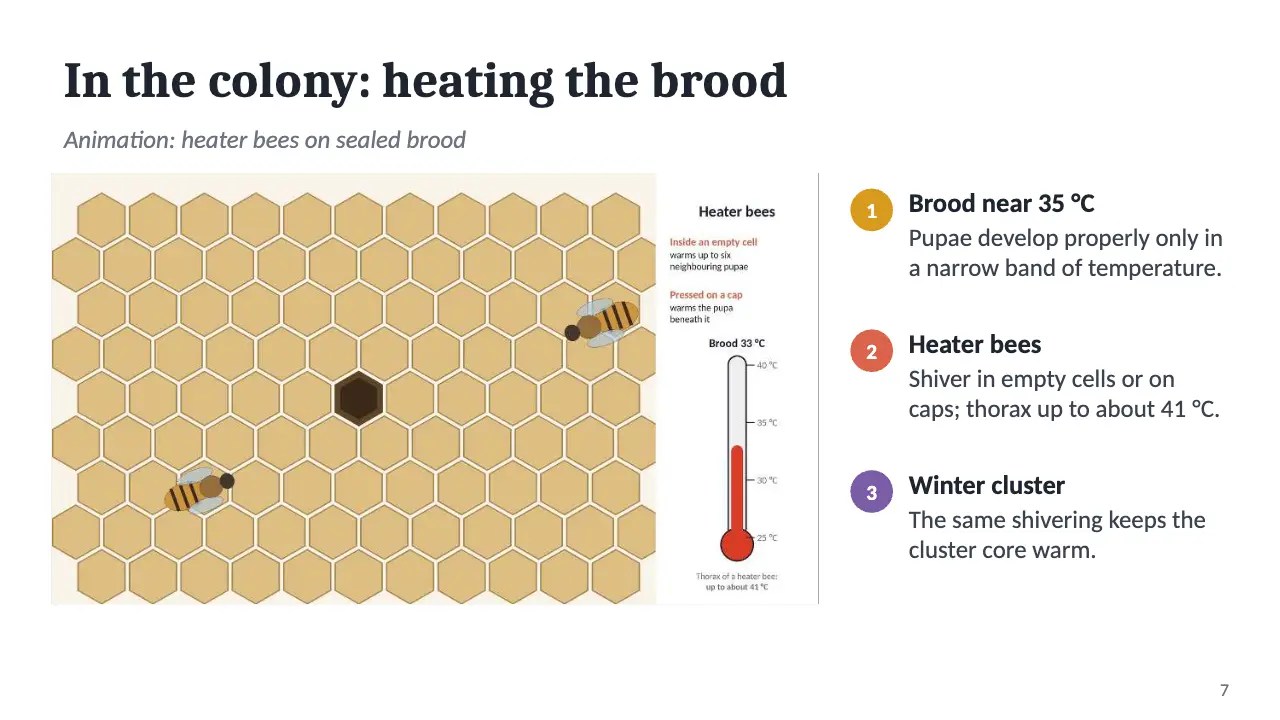
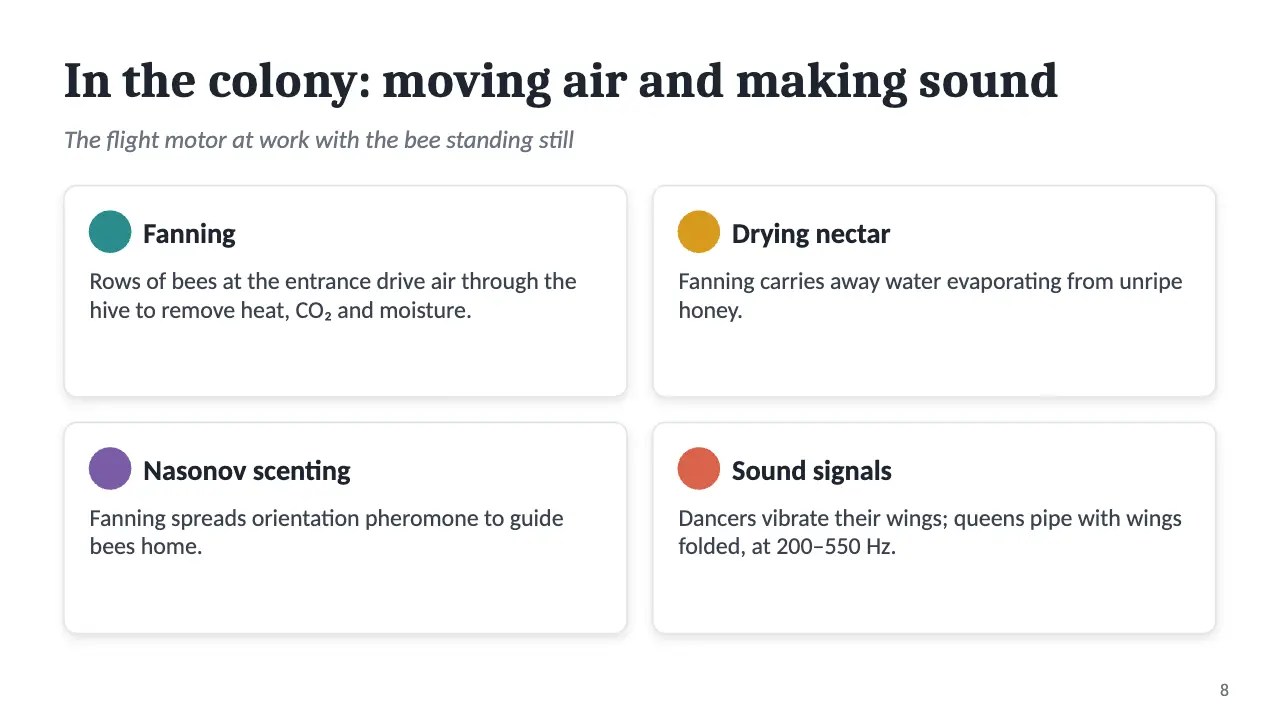
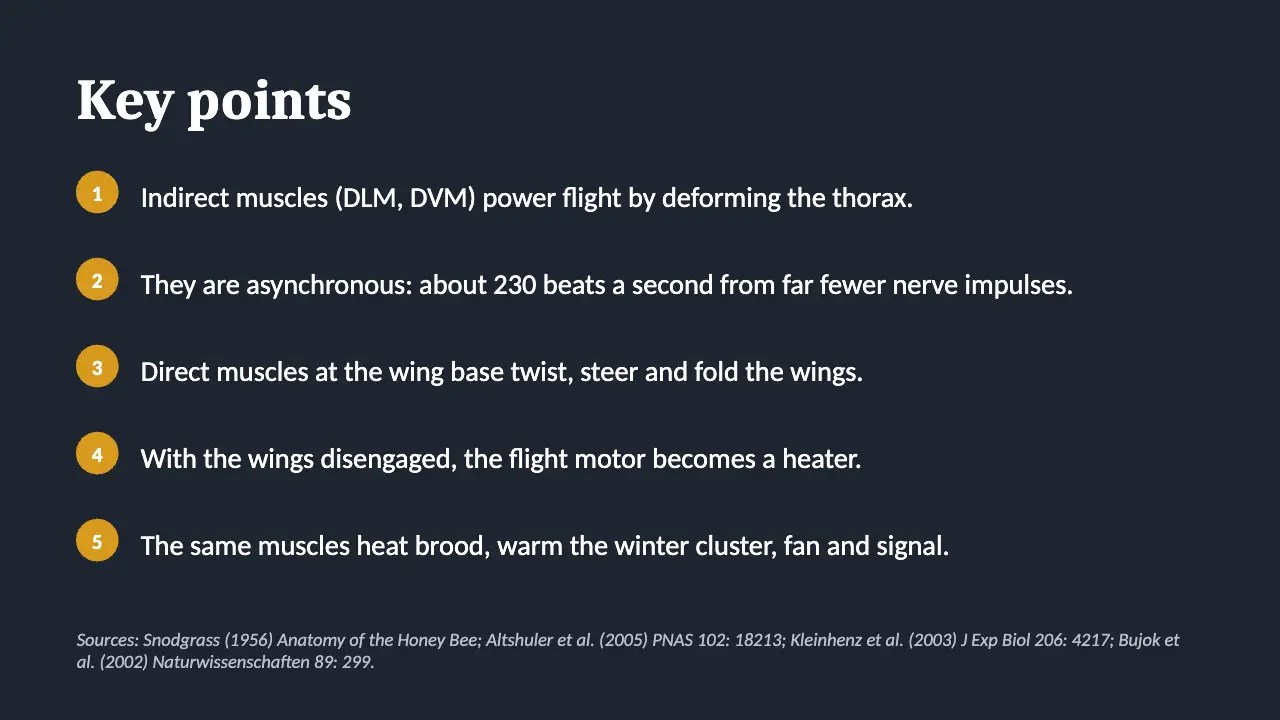
Cuticle structure and its infolding into the gut and tracheae; the exoskeleton, legs, mouthparts, antennae, setae, wings, and direct and indirect flight muscles. Download the slides (PDF)
Revision
Course summary
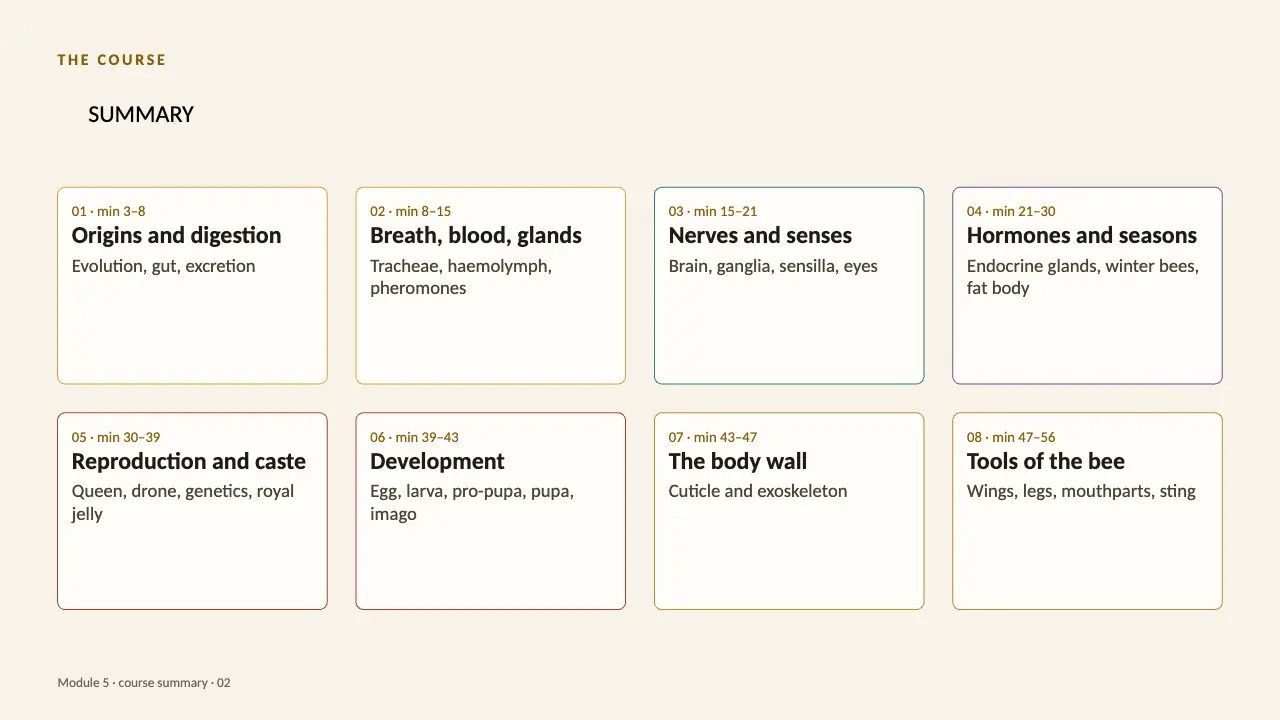
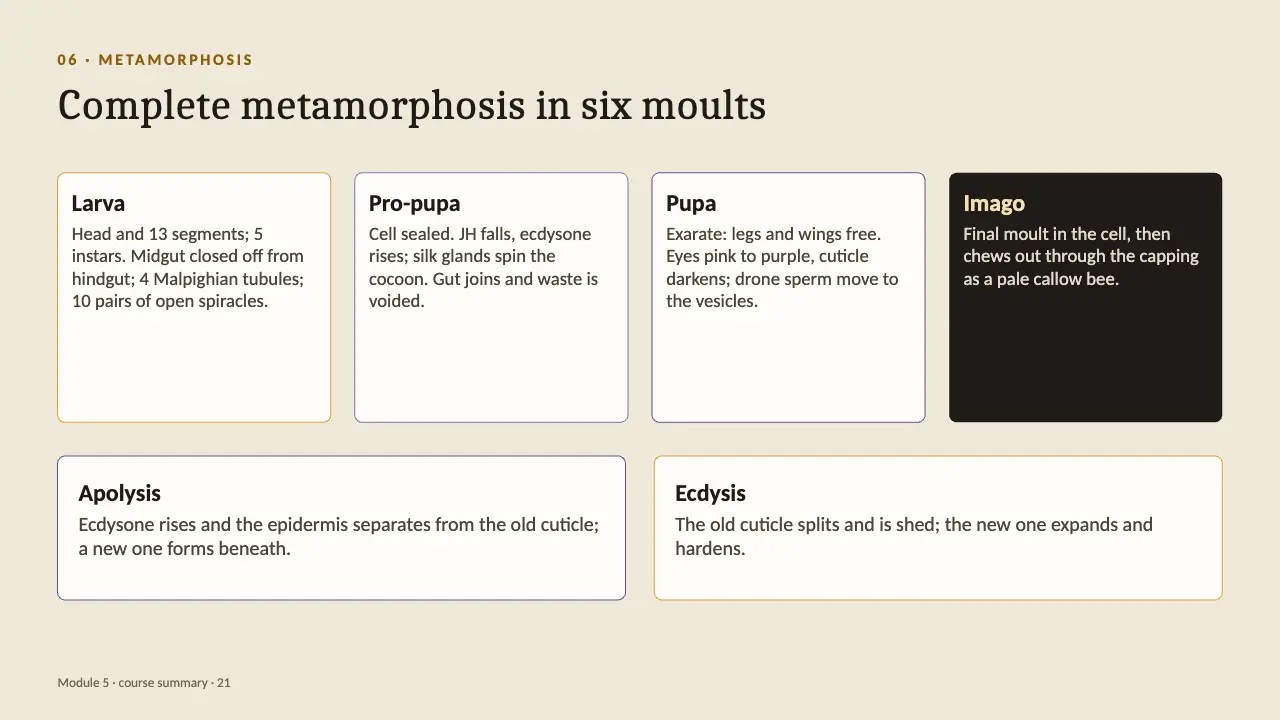
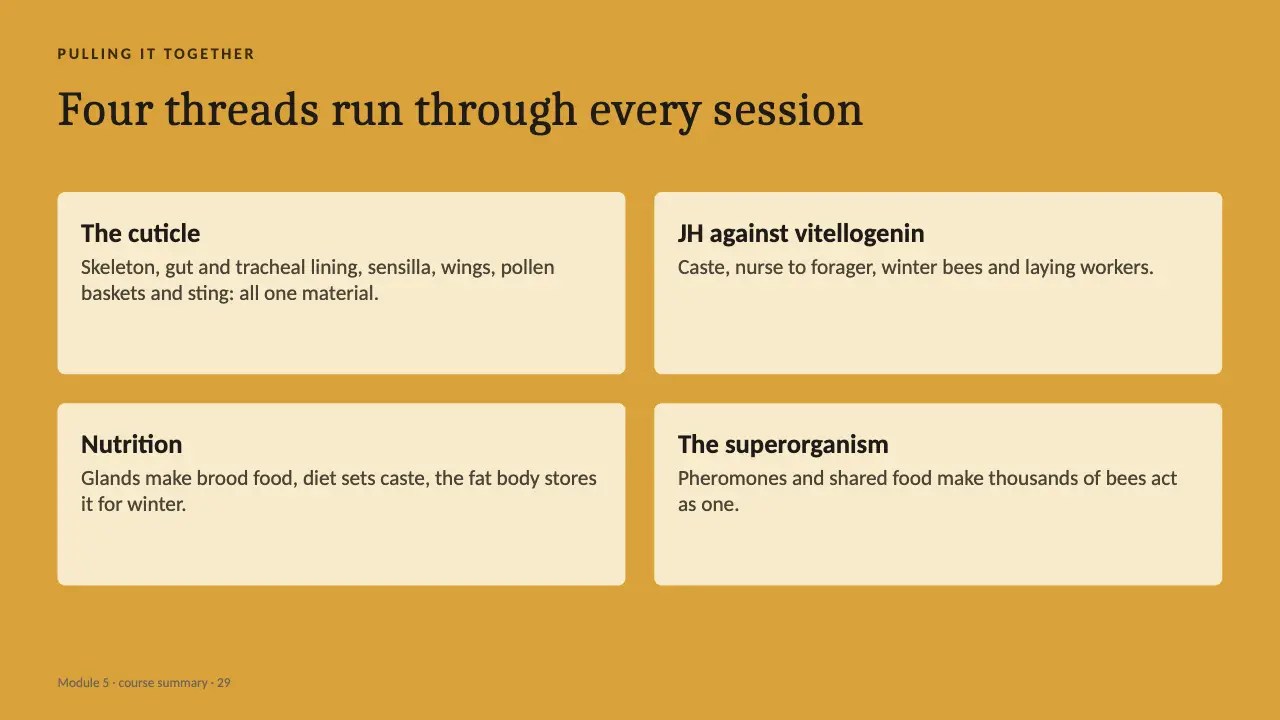
A summary of the whole module for revision before the exam. Download the slides (PDF)