There have been many reports of winter and spring colony losses this year for which there could be any number of causes. One answer to the mysterious death of a previously productive colony is infection with a microsporidian, or spore-forming pathogen, called Nosema.
Two types have been identified in Britain, N.apis and N. ceranae. They are similar in many ways but the main difference between them is the seasonal nature of their impact on colonies. N.apis can almost disappear in summer wheras N. ceranae is active throughout the year and its impact is often more severe as a result.
What does it do?
Nosema affects the ability of the larva and the adult bee to absorb nutrients, shortening its life and preventing the winter bees from surviving until the following spring. They are also unable to produce enough brood food for the larvae resulting either death or a slow buildup of the colony.
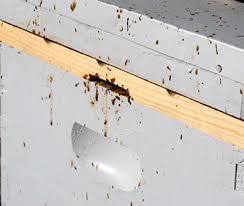
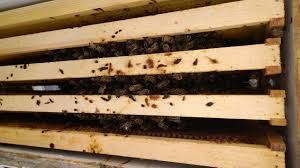
There are often no obvious signs of infection, although occasionally it is accompanied by dysentery, in which case there may be staining around the entrance and on top of the frames.
How do you know you’ve got it?
Diagnosis is by laboratory analysis, but you can carry out a rough test in the apiary:
- Take a few young bees from the centre of the brood nest.
- With forceps pull out the intestines from where they exit the body near the sting area.
- The midgut, which is normally brownish in colour, in the infected bee is white and often distended.
To confirm the infection, take a sample of 30 bees from the centre of the brood nest and euthanize them in the freezer and send them to someone with a microscope for analysis. If you have your own microscope it’s quite simple:
- Cut off the abdomens and crush them in a mortar and pestle. Add a few drops of distilled water and stir.
- Take a drop of the soup and place it on a slide. Allow to dry.
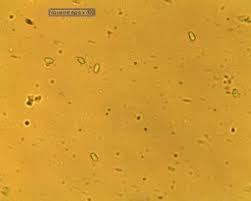
- Examine under a compound microscope at x 400. Nosema spores look like this:
How do you treat it?
There is no specific treatment for Nosema but it can be reduced by strict apiary hygiene, feeding and comb change. A less stressful method is a Bailey Comb Change for a weak colony. In some cases changing the queen can be effective.
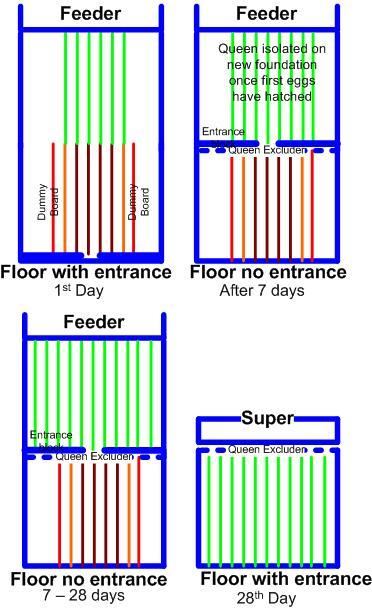
Bailey comb change for a weak colony
- Place a clean brood box beside the colony
- Find the frame with the queen and place in the new brood box
- Add a frame of sterilized drawn comb either side of the frame with the queen
- Add dummy boards either side and centre them
- In the original brood box remove any frames with no brood and destroy the comb
- Centre the remaining frames with dummy boards
- Close the entrance
- Add a Bailey board
- Put the new box on top
- Add a feeder with sugar syrup
- Close the hive
Day 8
- From the original brood box remove all frames with no brood
- From the new box remove the frame that had the queen and place in the lower box
- Centre the frames so they chimney upwards
- Add more frames of drawn comb to the upper box
- Check feed and top up if necessary
Day 15
- Repeat as above
Day 28
- All the brood in the original box will have emerged and the box can be removed
- Put the new box on a new floor on the original stand
- Add any supers
- Close the hive
All the old comb should be burnt and the brood box and frames cleaned and sterilized for reuse.
Alan Baxter
April 2024
Further reading: The Beelistener – Ann Chilcott’s beekeeping site, with articles and research summaries on bee health, varroa and winter survival.


Leave a comment