
When I give talks to Gardening Clubs, WIs, u3a groups etc., people often ask what they can do to help bees and other pollinators throughout the year.
The south coast’s mild winters give pollinators a longer season than most of Britain, so something in flower every month really helps. Buff-tailed bumblebees can stay active through winter here, and honey bees fly on any mild day. For those close to the sea, salt-laden wind, light chalk or sandy soils and dry summers favour tough, drought-tolerant plants.
Here are some ideas:
Winter (December to February)
- Plant winter flowers for bees that fly on mild days: winter heather (Erica carnea), winter-flowering mahonia (Mahonia japonica), winter honeysuckle (Lonicera fragrantissima), sweet box (Sarcococca confusa) and single-flowered hellebores (Helleborus).
- Leave seed heads, hollow stems and leaf litter in place. They shelter hibernating insects, especially queen bumblebees.
- Keep a shallow dish of water with stones in it and thaw it on frosty mornings.
- Plan ahead: order bare-root native hedging plants such as hawthorn (Crataegus monogyna) and blackthorn (Prunus spinosa), which are best planted now.
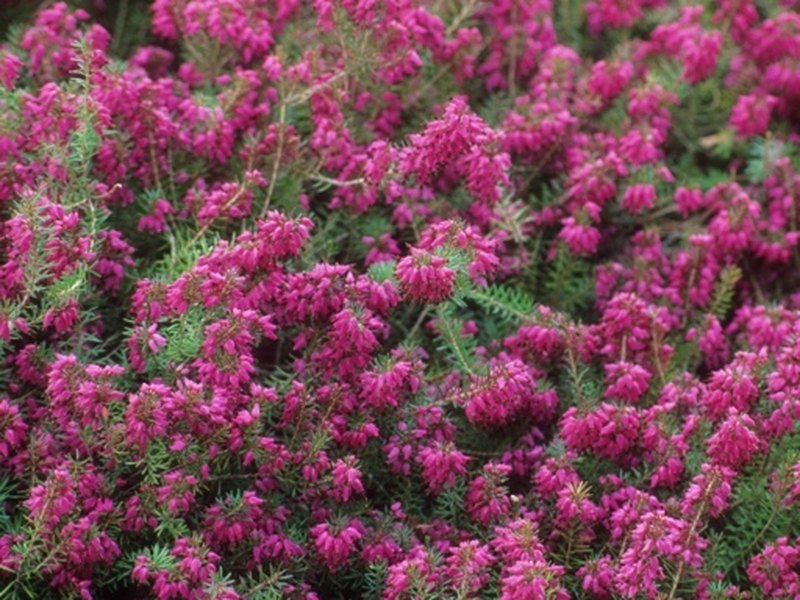
Erica carnea
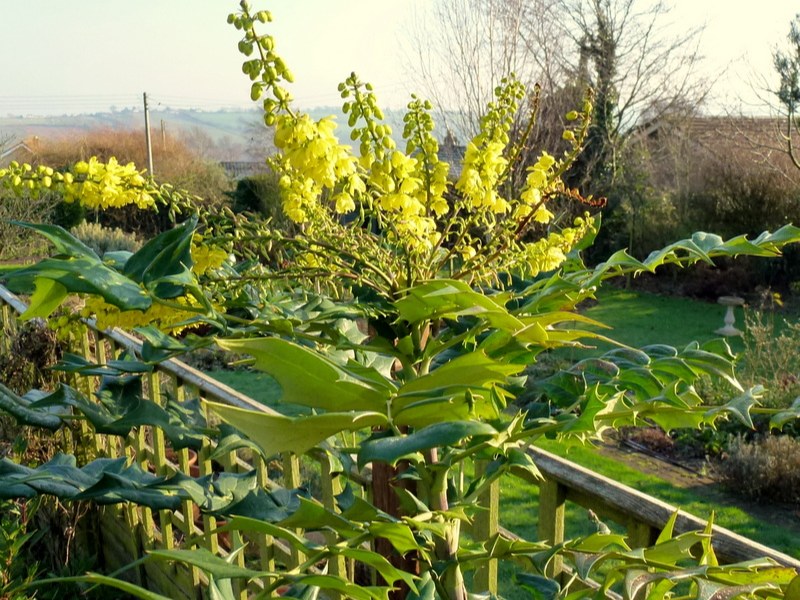
Mahonia japonica
Photo: Jonathan Billinger · CC BY-SA 2.0
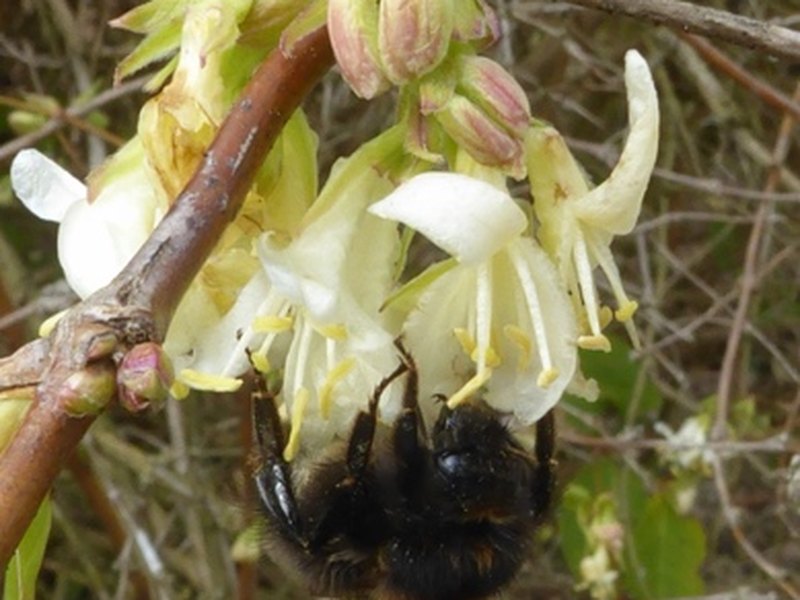
Lonicera fragrantissima
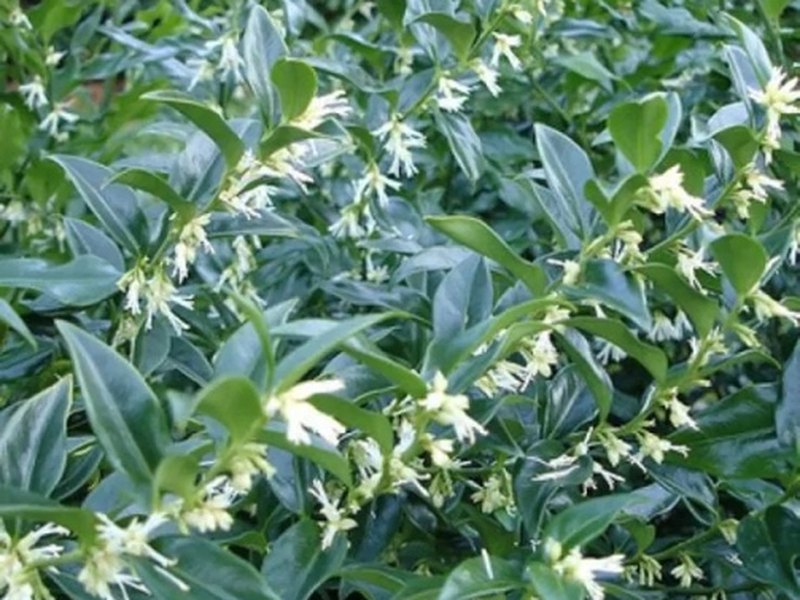
Sarcococca confusa
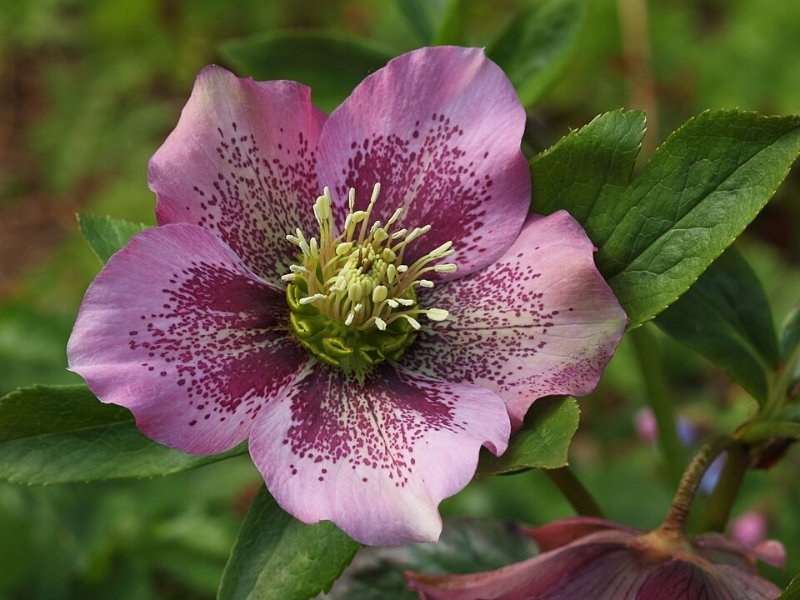
Helleborus orientalis
Photo: D. J. Bergsma · CC BY-SA 3.0
Spring (March to May)
- Early nectar and pollen are especially important now, when colonies are building up. Hazel (Corylus avellana) provides pollen in late winter and early spring. Good sources of nectar and pollen include pussy willow (Salix caprea), crocus (Crocus), lungwort (Pulmonaria officinalis), blackthorn, dandelion (Taraxacum officinale) and fruit trees.
- Mow less often, or leave a patch uncut through May, so dandelions can flower. Continue reduced mowing into summer to allow clover (Trifolium) and self-heal (Prunella vulgaris) to flower too.
- Give solitary bees somewhere to nest: a patch of bare, sunny soil for mining bees, and a bee hotel of hollow stems for mason bees. Only clean or discard tubes once their occupants have emerged. Keep potentially occupied tubes in a sheltered outdoor location; maintenance timing depends on the design and species.
- A grounded bumblebee queen may simply be resting: leave her undisturbed unless she is in danger. If she genuinely needs help, gently move her onto a nearby bee-friendly flower. Use sugar water only as a last resort when no suitable flowers are available.
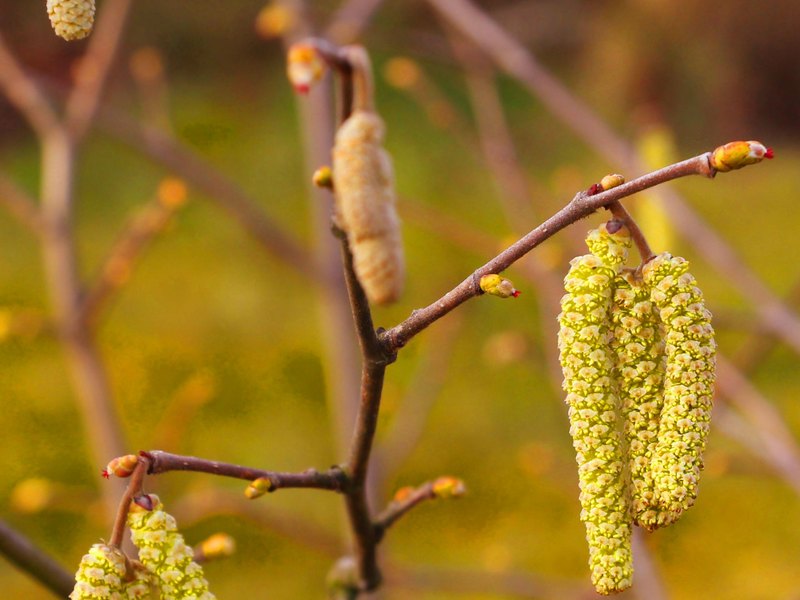
Corylus avellana
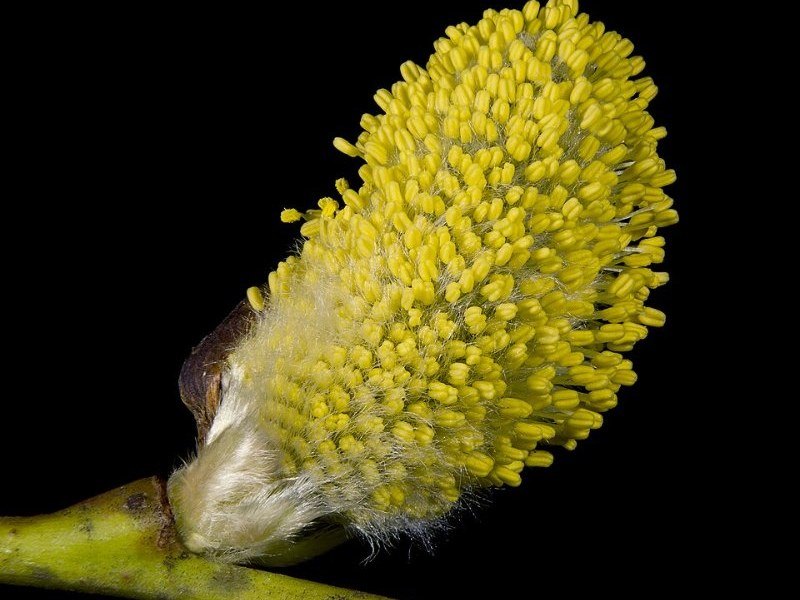
Salix caprea
Photo: Didier Descouens · CC BY-SA 4.0
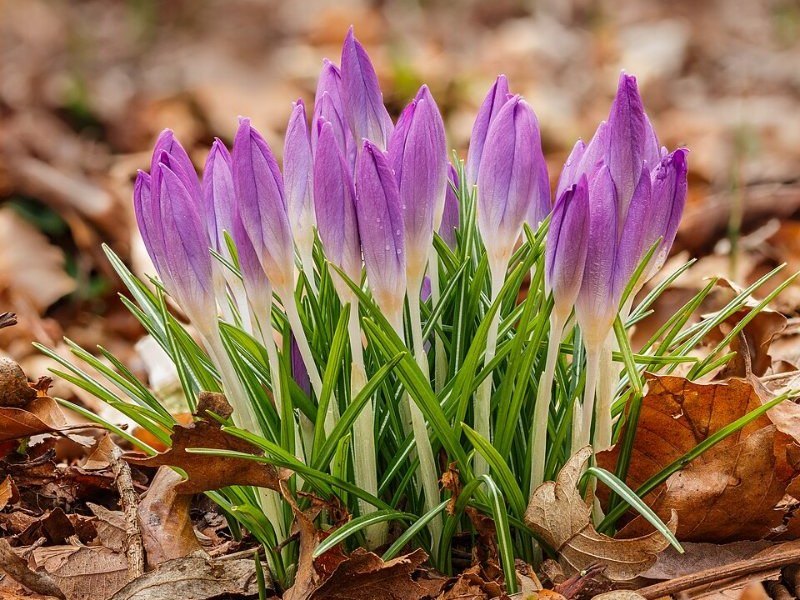
Crocus tommasinianus
Photo: Agnes Monkelbaan · CC BY-SA 4.0
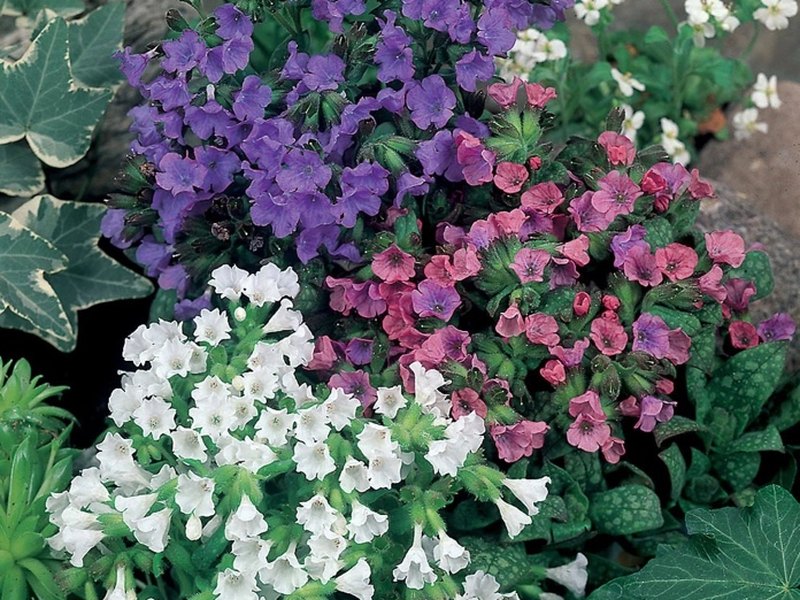
Pulmonaria officinalis
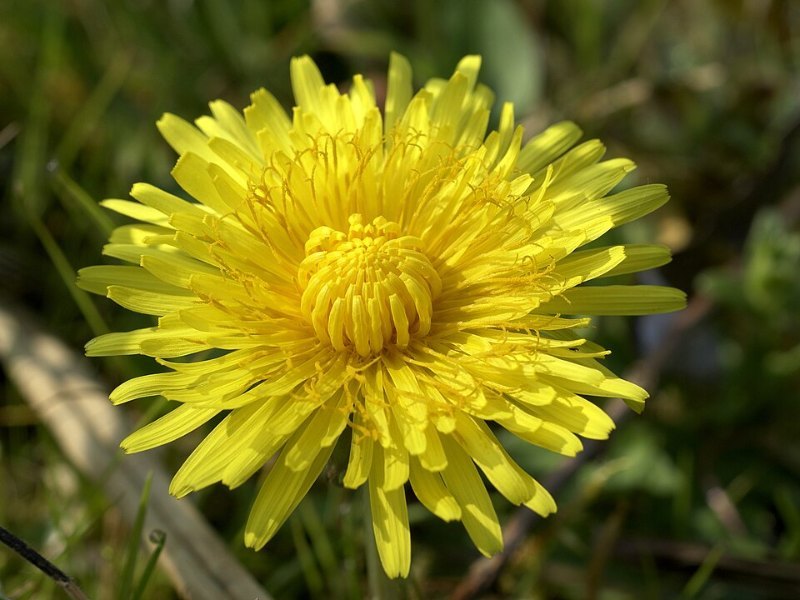
Taraxacum officinale
Photo: Hans Hillewaert · CC BY-SA 3.0
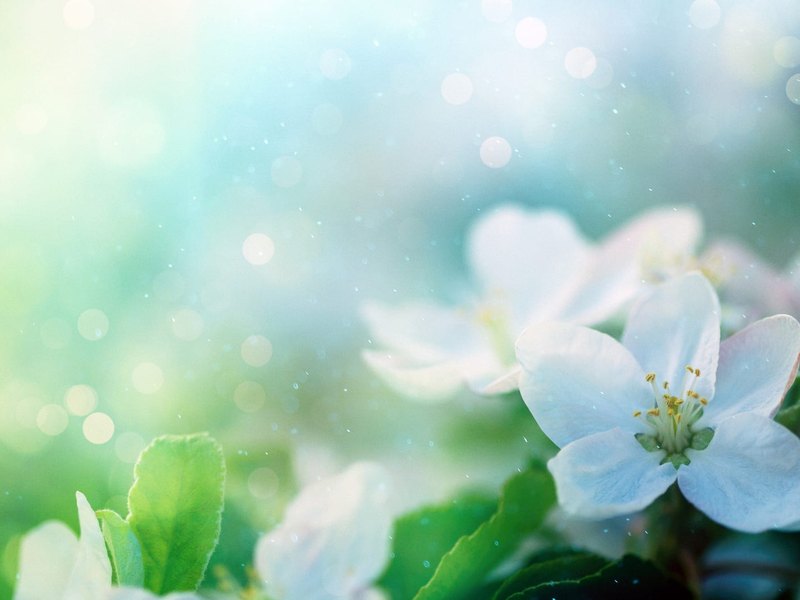
Malus domestica
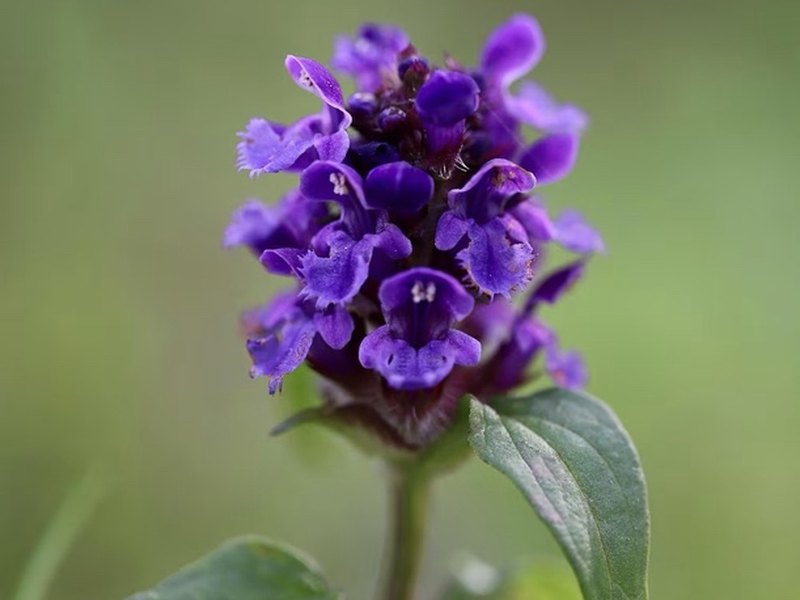
Prunella vulgaris
Summer (June to August)
- Choose plants that handle wind, salt and drought: lavender (Lavandula), rosemary (Salvia rosmarinus), thyme (Thymus), sea holly (Eryngium maritimum), thrift (Armeria maritima), viper’s bugloss (Echium vulgare), escallonia (Escallonia), hebe (Hebe) and catmint (Nepeta).
- Open, single flowers feed far more insects than double or frilly varieties, where the nectar and pollen are hard to reach or missing.
- Let some herbs flower and leave a corner of bramble (Rubus fruticosus agg.). Both are rich in nectar.
- Watch for gaps in flowering throughout summer and plant to fill them, using oregano (Origanum vulgare), knapweed (Centaurea nigra), borage (Borago officinalis) and late lavender.
- Keep a water source topped up during dry spells.
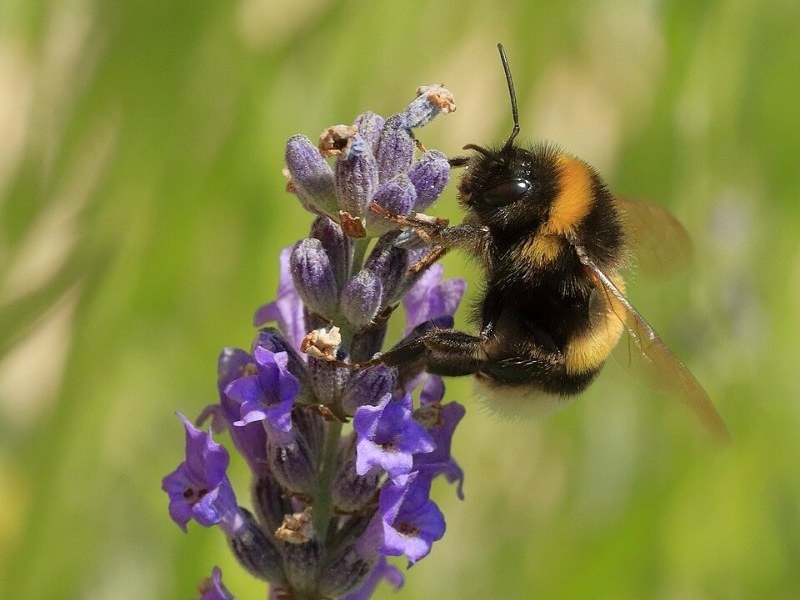
Lavandula angustifolia
Photo: Martin Falbisoner · CC BY-SA 4.0
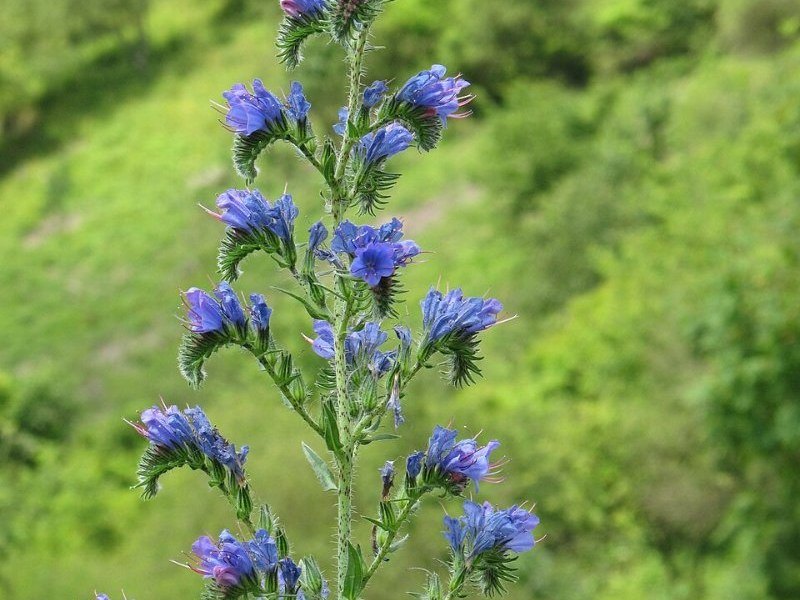
Echium vulgare
Photo: Robert Flogaus-Faust · CC BY 4.0
Autumn (September to November)
- Let ivy (Hedera helix) flower. It is a major autumn source of nectar and pollen, and many bees depend on it.
- Late flowers to grow: Michaelmas daisies (Symphyotrichum), sedum (Hylotelephium), Japanese anemones (Anemone × hybrida), salvias (Salvia), single dahlias (Dahlia) and strawberry tree (Arbutus unedo).
- Leave fallen leaves under hedges and in borders. Many insects overwinter in them.
- Plant spring bulbs now – crocus, snowdrop (Galanthus nivalis), grape hyacinth (Muscari armeniacum) – for early food next year.
- Watch for Asian hornets hunting at hives and on ivy, from late summer into autumn.
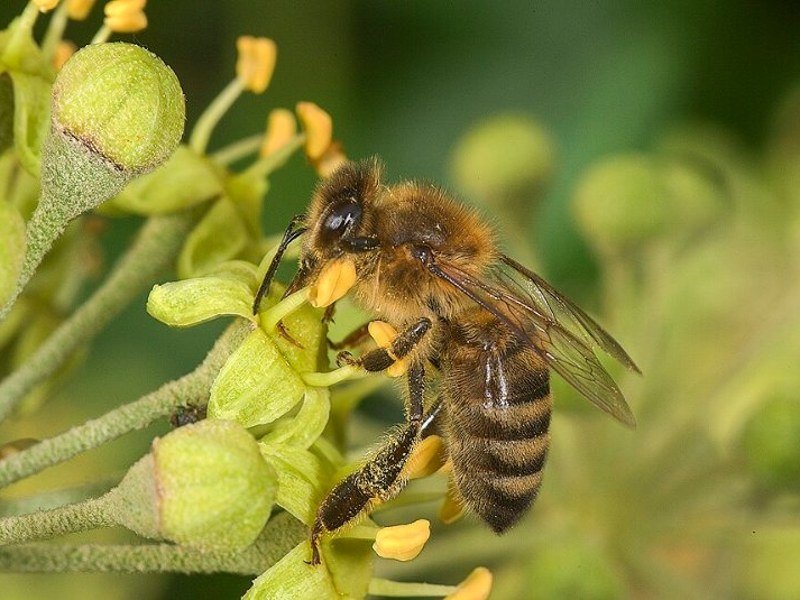
Hedera helix
Photo: Florapic · CC BY-SA 4.0
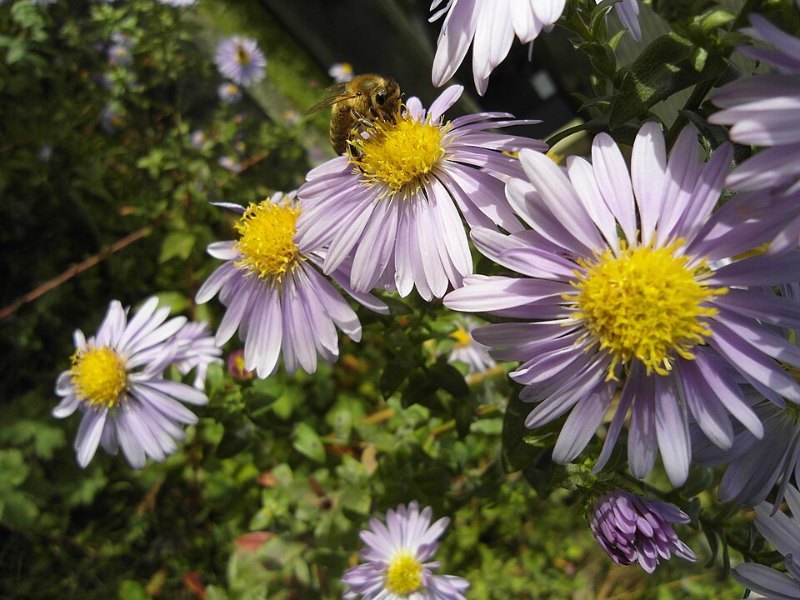
Symphyotrichum
Photo: Uwe W. · CC BY-SA 3.0
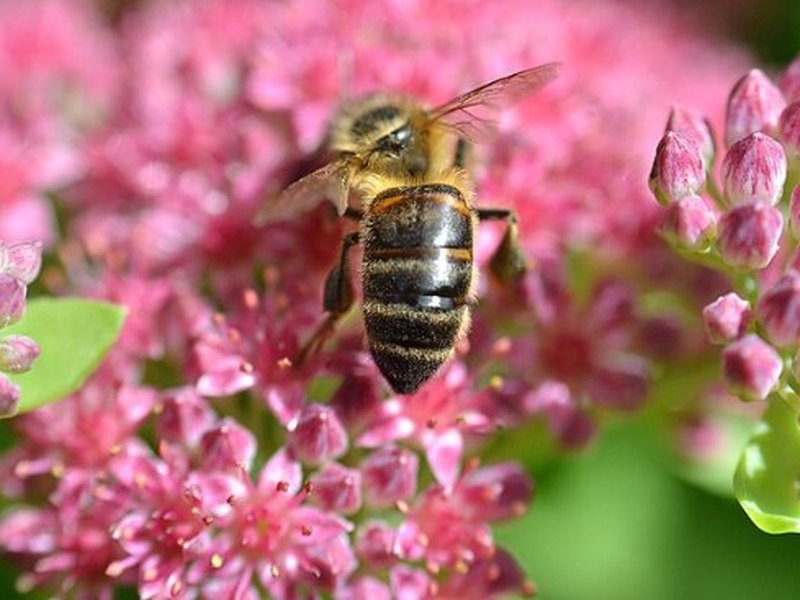
Hylotelephium spectabile
Photo: Conall · CC BY 2.0
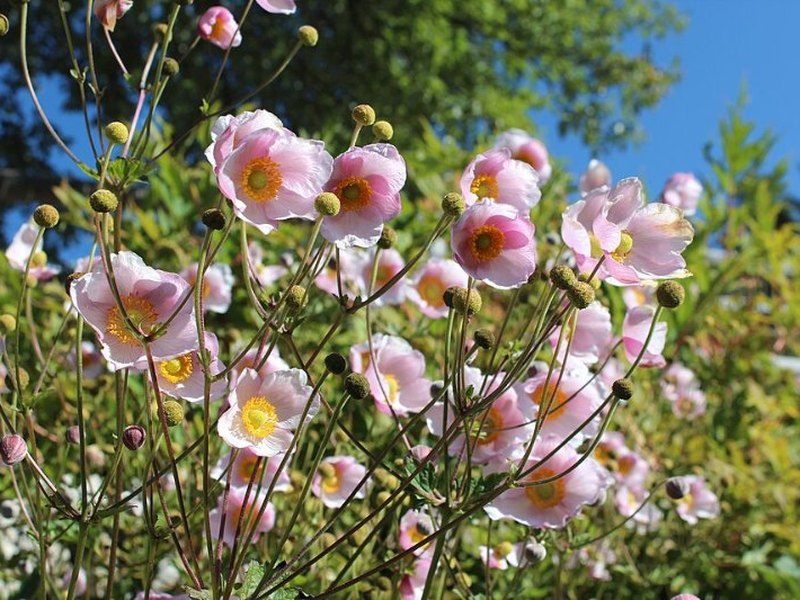
Anemone × hybrida
Photo: Francesco Serra · CC BY-SA 4.0
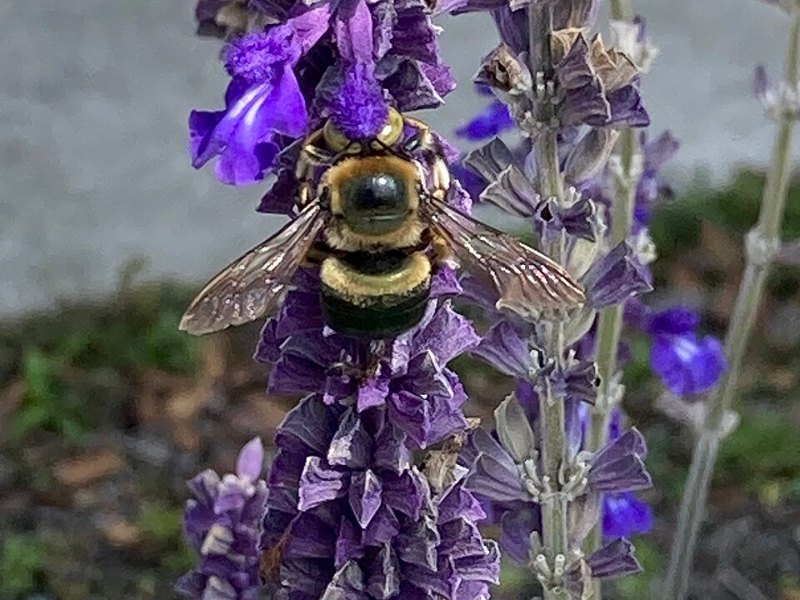
Salvia
Photo: BeckNomen · CC0
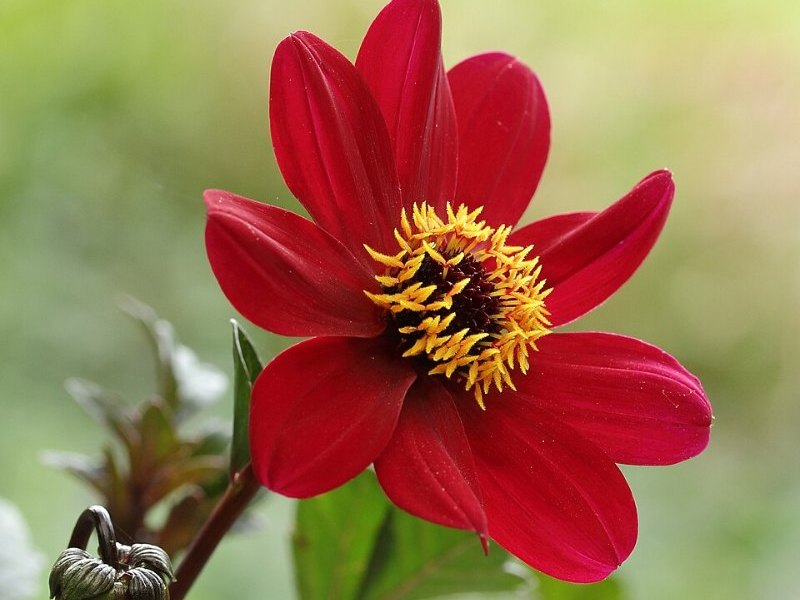
Dahlia ‘Bishop of Auckland’
Photo: D. J. Bergsma · CC BY-SA 3.0
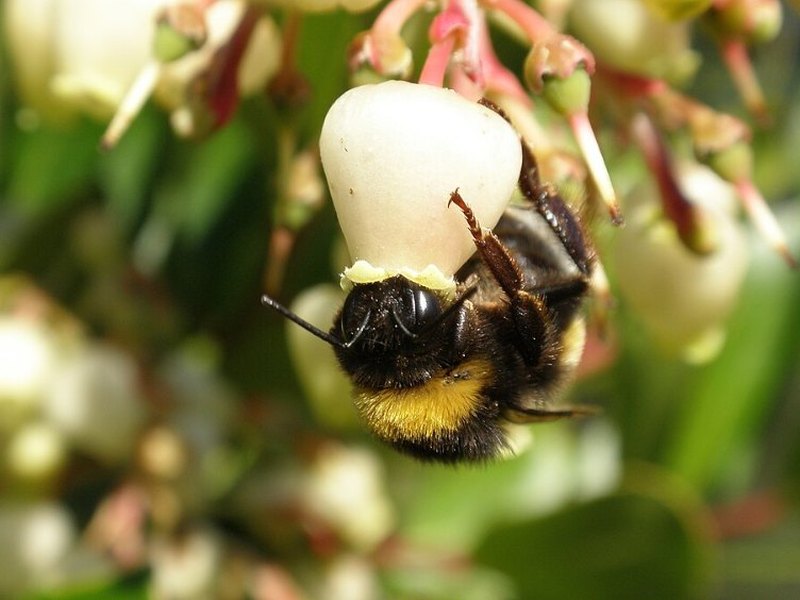
Arbutus unedo
Photo: Dodoïste · CC BY-SA 3.0
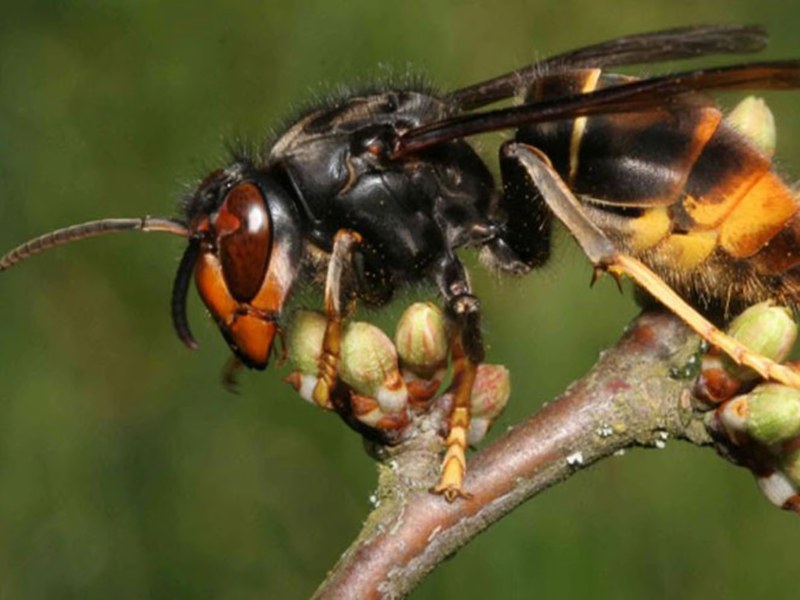
Vespa velutina
All year round
- Avoid insecticides and weedkillers in the garden; use non-chemical alternatives wherever possible. If there is no reasonable alternative to a pesticide, proceed with caution and never spray open flowers.
- Mix native wildflowers with garden plants, and grow in clumps so bees can forage efficiently.
- Turn a small lawn, verge or balcony into habitat. Even a few pots of herbs help.
- Report any suspected yellow-legged Asian hornet (Vespa velutina) with the Asian Hornet Watch app. Don’t approach or disturb a nest.
You don’t need to do everything at once. Start with a few bee-friendly plants, let some flowers and stems stay in place, and build on those small changes season by season.
Sources
Try these sources for more information and advice:
- Woodland Trust — www.woodlandtrust.org.uk
- Royal Horticultural Society — www.rhs.org.uk
- Botanical Society of Britain & Ireland — bsbi.org
Alan Baxter
Cornell Master Beekeeper


Leave a Reply