Happy New Year
WINTER TREATMENT FOR VARROA
Mid-winter is a good time to treat our colonies for varroa as part of an Integrated Pest Management System (IPM).
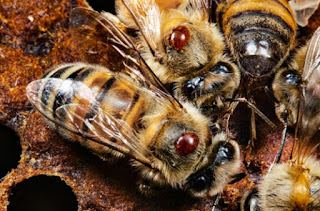
For most of the year Varroa mites live and breed on larvae but in winter, when there is little or no brood, they live and feed on the bodies of the adult bees. This is known as the phoretic stage of the varroa life cycle and it weakens and shortens the lives of the vital winter bees, reducing the colony’s chance of survival until spring.
For treatment we use a chemical called Oxalic Acid which is sold commercially online as Api-bioxal. It comes in powder form and can be administered in several ways:
- In liquid form by the trickle method with a syringe
- By sublimation, which is a posh way of saying you change it from solid state to a vapour.
Trickle method
For this you need a large syringe and some 2:1 sugar syrup. Simply mix the required amount of OA powder with the warm syrup and trickle it gently between the occupied brood frames. For instructions on how to do this See http://bit.ly/3vMn6j6
One downside of this method is the need to open the hives so a mild day is better to avoid chilling the colony.
Dosage
One sachet of 35g dissolved in 500 ml of syrup gives treatment for around 10 beehives.
Sublimation
This requires some more expensive equipment and good PPE. Inhaling the vapour is very dangerous and can inflict permanent damage to the lungs. This year I used a simple device called GasVap which enabled me to carry out the treatments quickly and efficiently. See https://gas-vap.com
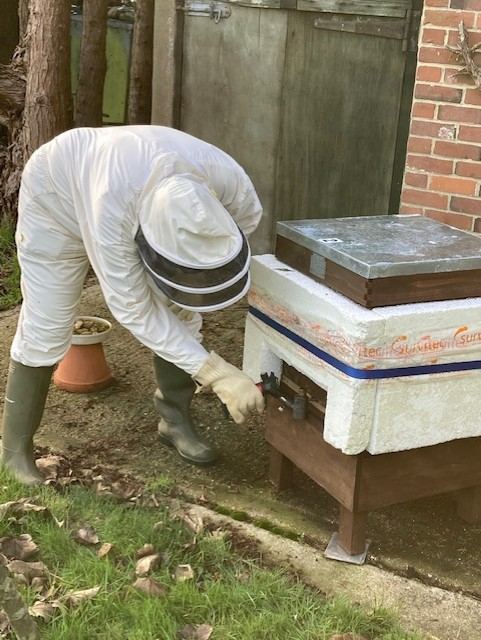
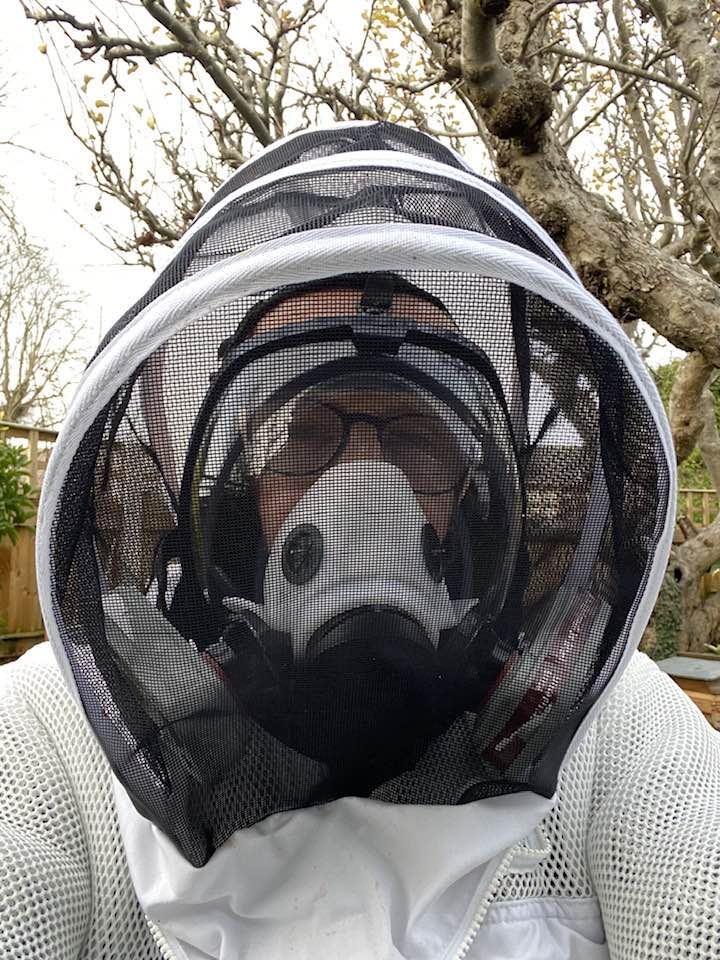
Oxalic Acid applied through the mouse guard / Good PPE is essential
Dosage
The Manufacturer’s recommended dosage 2.3g per hive as a single administration. One treatment per year. It is recommended to follow manufacturer’s instructions in order to achieve maximum sublimation.
These are the amounts and number of treatments specified by the Veterinary Medicines Directorate. However, many beekeepers dispute this and apply a series of two or more doses.
Api-bioxal usually has a relatively short shelf life so if you only have a few colonies, it might be more economical and avoid waste to share the cost with another beekeeper.
Records
All treatments are required to be recorded. The best way to do this is on the Veterinary Medicine Administration Record Form which can be downloaded from the Internet. Records must be kept for 5 years.
Good luck with your treatments and look out for future blogs on the subject of Varroa and how to manage it throughout the year.
by Alan Baxter
Further reading: The Beelistener – Ann Chilcott’s beekeeping site, with articles and research summaries on bee health, varroa and winter survival.


Leave a comment