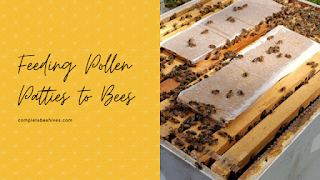
There is a lot of controversy about the feeding of pollen in spring.
We all want to do the best for our bees, including making sure that, having survived the winter, they don’t succumb to spring starvation. We know there is very little forage available, but we see our bees becoming increasingly active on warmer days and we suspect the queens are already laying. Newly-emerged brood will soon be demanding to be fed. Worker larvae need lots of protein and protein comes from pollen, but do they have enough pollen stores and are the foragers finding enough sources of early pollen around? Snowdrop, crocus, willow, hazel….?
So being caring, responsible beekeepers we top up the fondant and add a dollop of pollen mixture to the feed. We are careful to make sure that the product we buy is of good quality and that the ingredients are digestible by the bees without upsetting their tummies.
But is it really a good idea? Or is it even necessary? There are different schools of thought, widely varying in their opinions, but briefly they go like this:
The pro-pollen feeders:
- Feeding pollen will stimulate rapid spring build-up so the colony has a maximum workforce for the spring nectar flow, especially in areas where there is OSR.
- The queen has already started to lay and needs all the help she can get if healthy, well-fed workers are to be produced.
- Let’s give them some just in case and because it’s a ‘good thing’ to do.
The anti-pollen feeders may argue:
- The colony will develop or not in the spring according to the availability of food. This is the way that bees have evolved, to be in synch with the natural rhythm of the seasons.
- If we encourage the queen to start laying early, when the brood emerges there won’t be enough forage to sustain the growing population and more artificial feeding will be needed.
- An early boost in the amount of brood requiring care will outnumber the nurse bees needed to look after them, and the brood will either die of starvation or develop into undernourished, smaller, weaker adults.
- Winter bees nearing the end of their lives, but still needed for colony survival, will be required to do more work than they are capable of and will die earlier, leaving the colony short.
- We want our bees to adapt to changing climatic conditions, and by feeding them artificially we will only delay their ability to evolve, thereby making them more dependent on us.
For me the jury is still out and I’d welcome any thoughts members have on this topic.
by Alan Baxter


Leave a comment