There have been two cases of this virus among FDBKA members’ colonies so far this spring/summer, including one of mine. It may be present in low levels in colonies that show no symptoms until put under stress.
The disease presents in two forms, both of which can be present at the same time:
Type 1 – symptoms include:
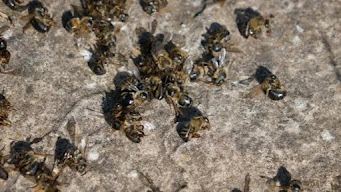
- Large numbers of bees crawling or dead on the ground in front of the hive
- Bees unable to fold their wings, K-wing
- Bees trembling or staggering, unable to fly
- Bees on top of frames not responding to smoke
- Bloated abdomens with possible signs of dysentery
Type 2 – symptoms include:
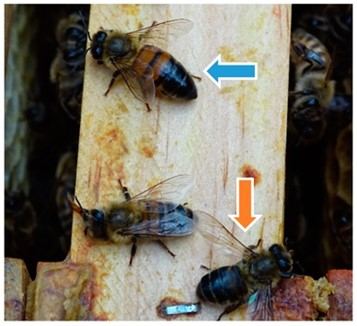
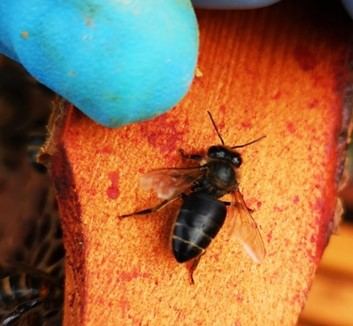
- Hairless, oily looking, almost black workers
- Hairs have been rubbed off by excessive contact in a crowded hive
- Healthy bees fighting to repel infected bees at the entrance
- Sometimes called ‘Black Robber Disease’.
In one of my best colonies from which I was hoping to produce some queens this year I noticed symptoms of both types of CBPV. I took the following action:
- Moved the whole hive to one side
- Scrubbed the stand and the ground underneath clean with soda crystals and bleach mixture
- Moved to another part of the apiary that I use to quarantine swarms
- On a clean stand and floor I placed an empty super to keep the brood box clear of the floor and any falling dead or infected bees
- Fitted an entrance blocker reduced to the smallest space
- Added an extra brood box to give them more space and reduce overcrowding
- Removed for destruction any frames without brood
- Checkerboarded the remaining frames with new frames of drawn comb and foundation
- Replaced the supers which contained some liquid stores and quite a lot of bees
- Added a feeder with sugar syrup to boost their nutrition (fewer foragers bringing in food)
- Destroyed my gloves, washed my boots with soda crystals and bleach mixture
- Washed my bee suit with soda crystals added to the washing powder
- Sterilised my hive tool, washed everything in my inspection tool box and cleaned my smoker, especially the bellows*
- Planned no inspections for another 14 days to avoid stressing the bees.
After 14 days the colony looked much healthier, there were no more than the usual dead bees on the floor or the ground and activity at the hive entrance and inside had returned to normal.
I plan to keep it in quarantine for another 2 weeks then, if all is well, I’ll move it back into the main apiary.
Conclusion
CBPV can seriously weaken a colony and spread rapidly to other colonies by robbing, drifting or by the beekeeper.
Giving it space, fresh bedding, good hygiene and extra food and reducing stress can allow it to recover, especially if it’s strong and well-fed.
As with all diseases, maintaining a low varroa load is an essential part of keeping colonies strong, healthy and disease resistant.
* A plastic disposable shower cap over the bellows is a good way of keeping them clean.
by Alan Baxter
Further reading: The Beelistener – Ann Chilcott’s beekeeping site, with articles and research summaries on bee health, varroa and winter survival.


Leave a comment