The days are getting longer and lighter, birdsong is in the air, there’s a growing sense of the earth awakening, reenergised after a long sleep. The winter bees in the darkness of their hives can feel this change and they are starting to prepare for spring. On milder days they will venture out on cleansing flights and to forage for pollen on Hazel, Willow, Snowdrops, early Crocus and Garrya elliptica. The incoming pollen will stimulate the queen to lay eggs and the winter bees will start to be busy again, feeding the larvae and keeping them warm.
During the coldest days of winter, the colony will have formed a cluster around the queen, maintaining a core temperature of about 18 deg C while they are broodless. The bees on the outside of the cluster or mantle, can tolerate temperatures as low as 8 deg C before they fall off and die. However, once there is brood the colony must raise the temperature of the brood nest to 35 deg C. They generate heat by a sort of shivering where they flex the big powerful flight muscles in the thorax without moving their wings.
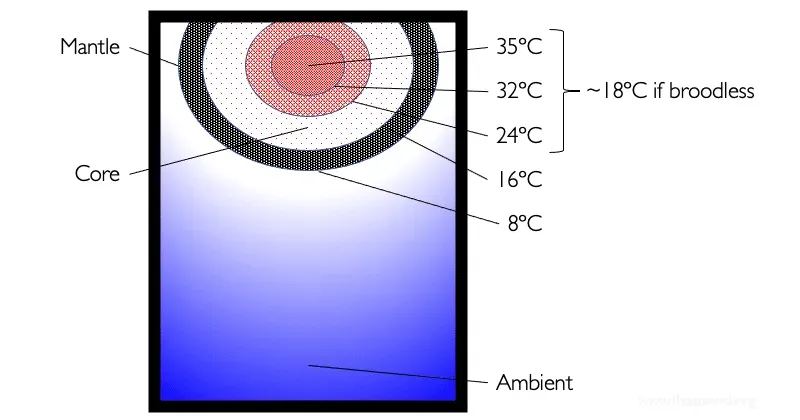
Temperatures of the winter cluster
Some beekeepers note that their colonies are never broodless which puts an extra strain on the winter bees who must keep the brood nest at 35 deg C and feed the young larvae. They eat carbohydrate in the form of honey or sugar as fuel, so it’s important to check the weight of the hives regularly by hefting to make sure they have enough stores.
Apart from ensuring the hives are secure against the storms, checking that they have enough food, and topping up with fondant if required, there’s not much for the beekeeper to do in the apiary. In the bee shed it’s worth checking any stored supers to see if the wax moth treatment needs to be repeated, and all the usual winter jobs of repair and maintenance of equipment, making up new, or refurbishing old frames with fresh foundation ready for the coming season.
Spring is just around the corner and will be upon us before we know it. Look out for the next blog with tips and hints for the coming weeks when we look at the first inspection of the year.
Alan Baxter
25 January 2025


Leave a comment