This article combines a field case study with a summary of current evidence on Chronic Bee Paralysis Virus. It begins with the signs observed in one Hampshire colony, then reviews distribution, pathogenesis, transmission, risk factors, management options, and the later decision to euthanize the colony after recurrence.
In June 2023, while inspecting one of my colonies, I noticed a large number of dead and dying bees on the ground in front of one hive.
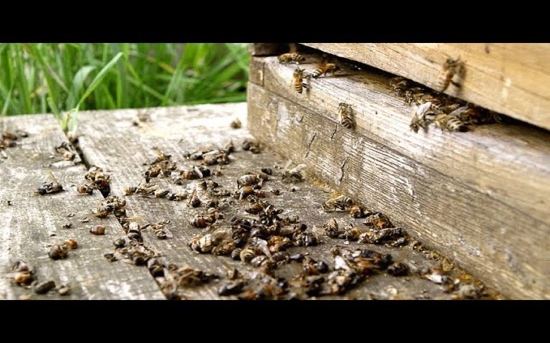
Fig 1 dead and dying bees
Inside on the top bars the bees were shivering and shaking, unable to fly and not reacting to smoke.
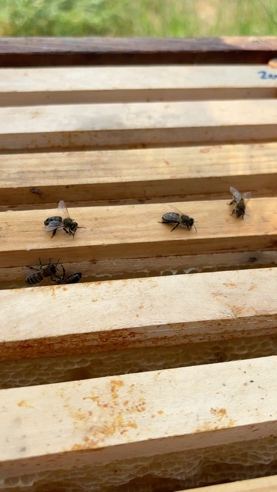
Fig 2 bees on top bar – video by Alan Baxter
A freshly drawn frames with eggs had other bees looking black and shiny
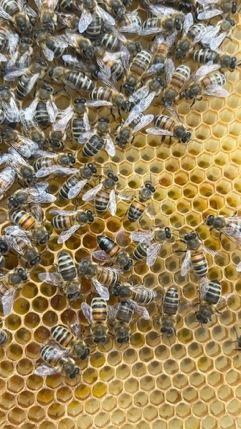
Fig 3 frame of comb with cbp – video by Alan Baxter
Some of the dead and dying bees were being carried away by ants. I did not attach any significance to that at the time, but later research made the observation more interesting.
The signs were classic symptoms of Chronic Bee Paralysis, a disease that has been known for many years and has appeared under names such as Black Robber Disease. It was not until 1963, however, that Bailey and Ball identified and named the causative virus at Rothamsted Research Station in England.
Bailey and Ball also concluded that Chronic Bee Paralysis Virus was almost certainly the cause of Isle of Wight disease, which devastated large parts of the honey bee population at the beginning of the last century and was long attributed to acarine, or thoracic mite, syndrome.
Alarmingly, the Island is only 5 miles from my apiary:
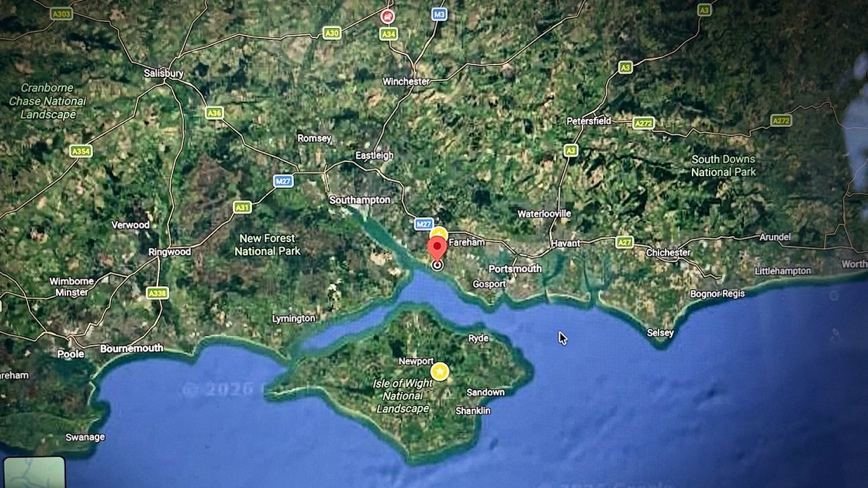
Fig 4 the Solent and IoW
Here is a brief overview of the disease:
- It’s caused by a single-stranded RNA virus of the same name that causes paralysis, abnormal behavior, and death.
- It primarily affects adult honey bees and has been found worldwide in managed and wild bee populations.
- The virus has been reported in ants, notably Formica rufa, which is commonly found in the south of England, and Camponotus vagus which prefers warmer, drier climes.
- Ants may act as a reservoir, carrying high viral loads without suffering any of the symptoms.3
- The virus has been detected in Varroa destructor (Seitz et al 2019) suggesting the mite may contribute to virus spread, although definitive proof of varroa-mediated transmission remains limited (Celle et al 2008).
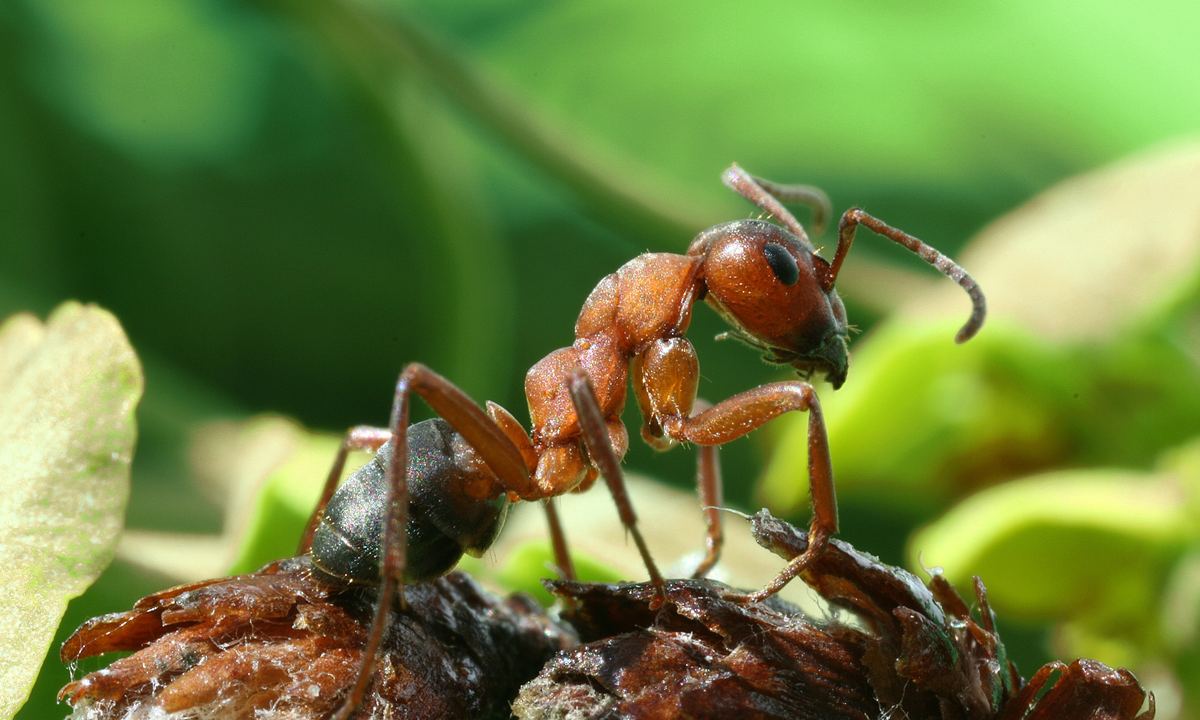
Fig 5 Formica rufa – open source
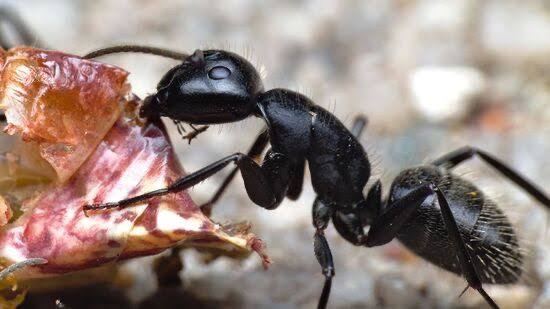
Fig 6 Camponotus vagus – open source
Signs
The disease presents in two forms, both of which can be present at the same time:
Type 1 – signs include:
- Large numbers of bees crawling or dead on the ground in front of the hive
- Bees unable to fold their wings – K-wing
- Bees trembling or staggering, unable to fly
- Bees on top of frames not responding to smoke
- Bloated abdomens with possible signs of dysentery
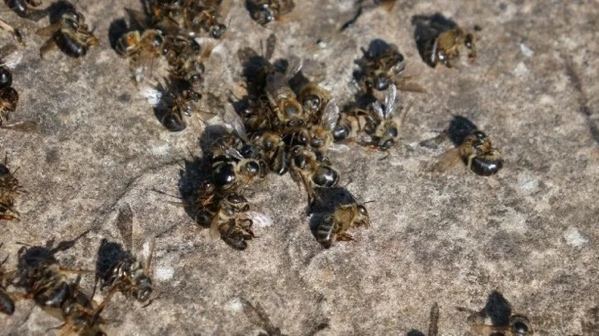
Fig 7 Dead and dying bees on ground
Type 2 – Signs include:
- Hairless, oily-looking, almost black workers
- Hairs that have been rubbed off by excessive contact in a crowded hive
- Healthy bees fighting to repel infected bees at the entrance
- Sometimes called ‘Black robber disease’.
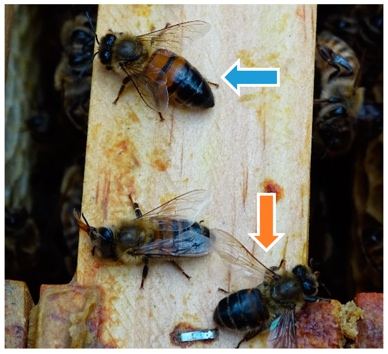
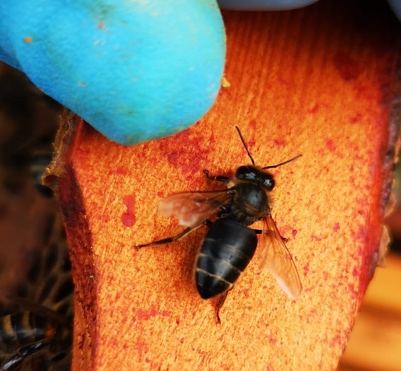
Fig 8 CBP
Nevertheless, it’s the same pathogen, the same disease and the two types usually appear together at the same time
Distribution
A number of studies have established that CBP is an emerging threat. For example, a long-term survey of colonies in England in collaboration with the National Bee Unit demonstrated a significant increase in reported incidents of the disease.
Incidence and distribution in England and Wales between 2007 and 2017 (GE Budge et al 2020).
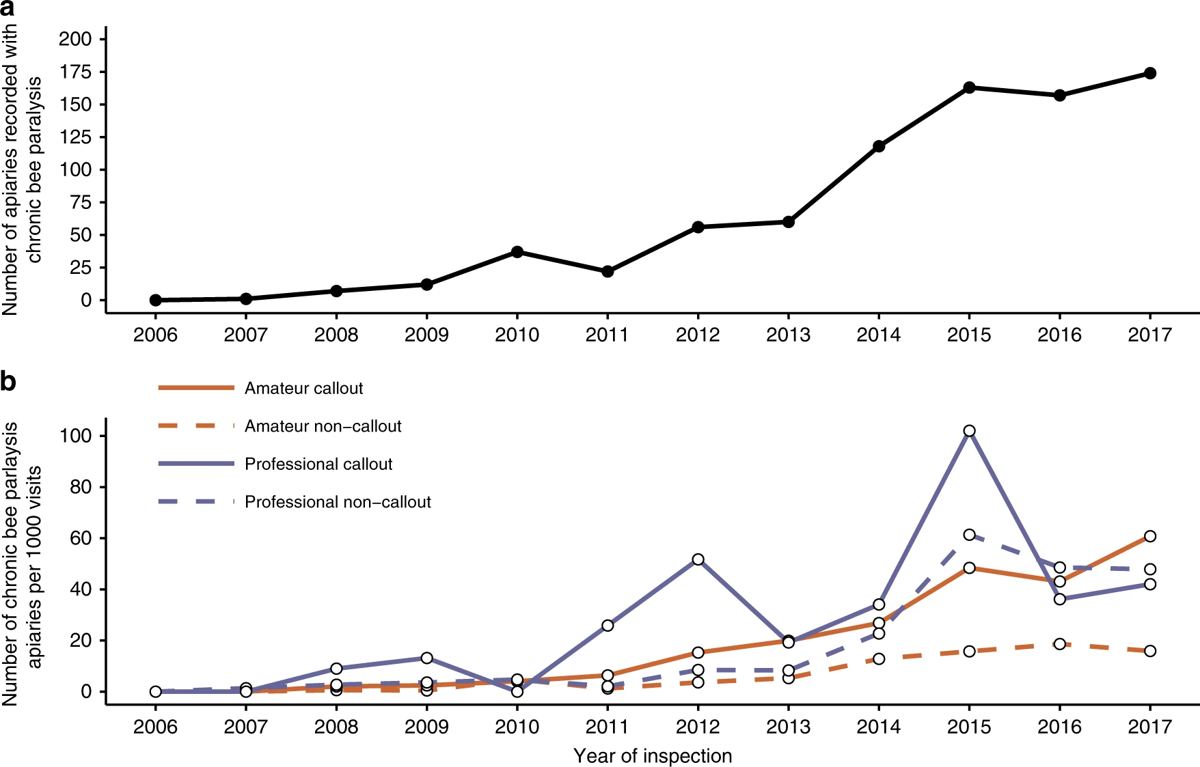
Fig 9 Number of apiaries (per 1000 visits) where chronic bee paralysis was recorded
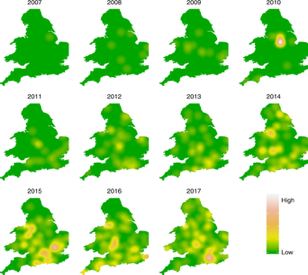
Fig 10 Sporadic clusters of the disease year on year suggesting disease burn out and reintroduction.
Another study in Italy found increasing spread and a rise in risk levels, but that the incidence was decreasing recently, suggesting adaptation and host-pathogen equilibrium.
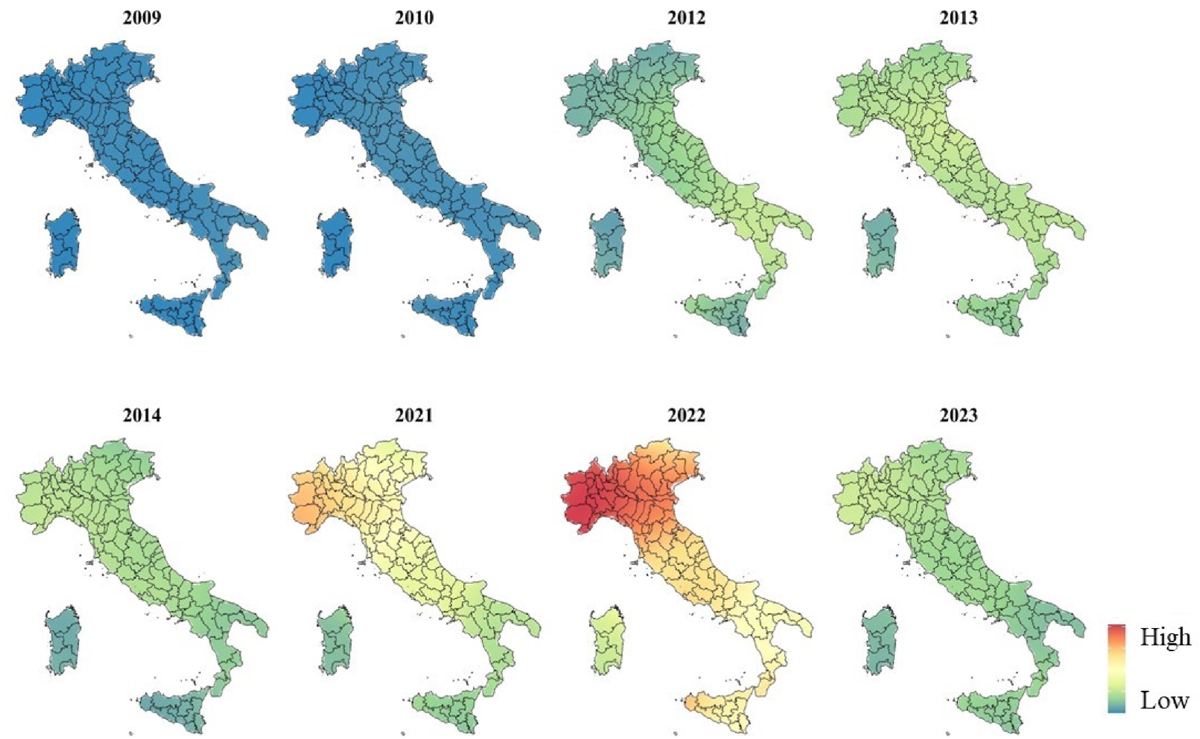
Fig 11 Distribution of Chronic bee paralysis virus (CBPV) in honey bee coloniesls in Italy (Zavatta et al 2024)
So far as can be discovered there are no comparable studies carried out in North America.
Pathogenesis
The disease affects the mushroom bodies and central complex regions of the brain (Ribiere et al 2008) and accumulates heavily in the head and nervous tissues.
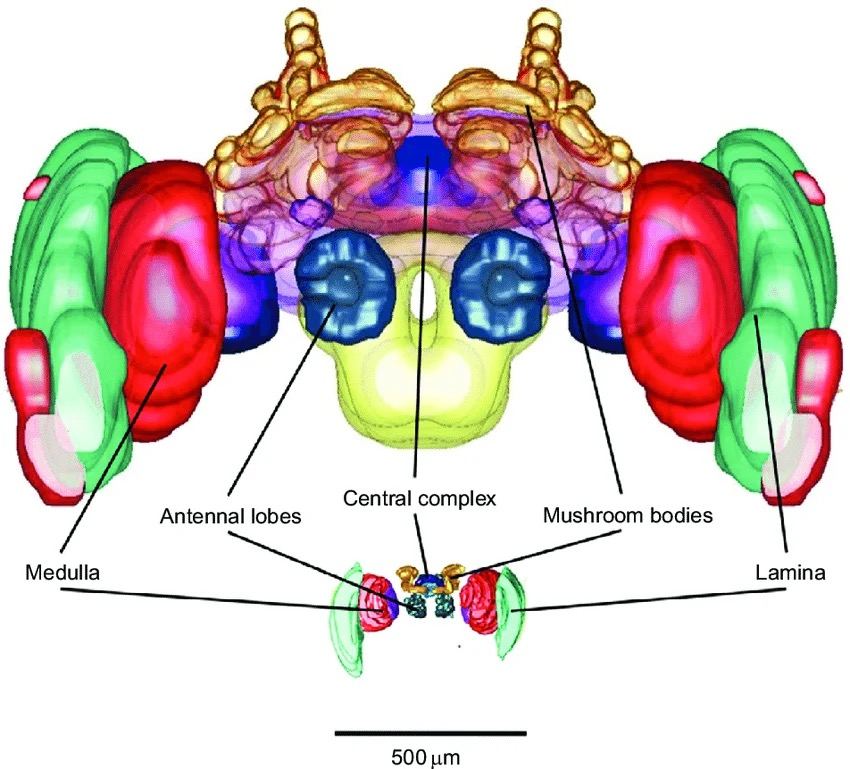
Fig 12 Honey bee brain
Viral replication occurs in brain regions associated with locomotion and orientation and is strongly neurotropic, explaining symptoms such as trembling, circling, crawling, loss of flight, and paralysis. The progression from infection to death is usually rapid.
Another study found that CBP virus exploits host antimicrobial peptides and alters gut microbiota composition to facilitate viral infection (Yachun Deng et al (2024)
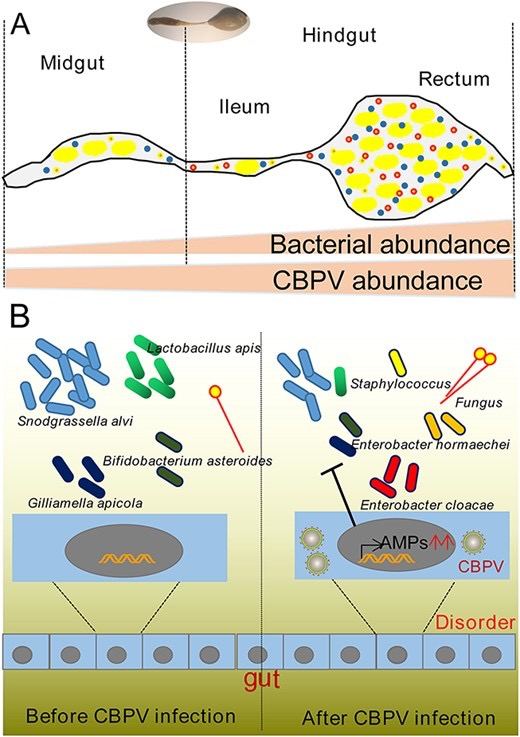
Fig 13 honey bee gut microbiome
Transmission within the colony takes place in the following ways
- Adult bee to bee
- Bees rubbing against each other
- Biting and nibbling
- From the queen’ ovaries
Within and between apiaries
- Pathogen spillover to other species e.g. Bumblebees and to wild colonies
- Robbing and drifting
- Foraging
The virus is not found in brood, comb, honey or pollen (Budge et al 2020)
As beekeepers the risk factors we have to consider are :
- Colony overcrowding
- Apiary overcrowding
- Adverse weather conditions
- Stress from parasites
- Poor nutrition – bad weather, monoculture…
- Scale of operation. Budge et al found that the larger the size of the operation the greater the risk of finding the disease, and those with a history of honey bee imports from other countries also reported more outbreaks than those who sourced their bees in their own country.
- Stress from pesticides (Coulon et al 2019)
Management and control methods that can help to alleviate the symptoms and aid recovery are:
- Good husbandry and strict apiary hygiene to prevent further spread
- Remove highly infectious dead and dying bees from the hive floor and the ground outside
- Provide immediate space e.g. super under brood box to separate the unaffected bees from the dead and dying.
- Feed syrup and pollen supplement to compensate for less foraging
- Change comb to provide a healthier environment.
- Euthanize to prevent further spread.
Case study
Returning to my own experience, here are extracts from my notes during the outbreak that occurred in one of my colonies:
Honey producing colony no FH8
2023
- Overwintered colony with 2021 queen no 11/21
- Normal spring build-up
- 10 April – varroa test alcohol wash <2%
- 17 April – given overwintered new queen no7/22
- 30 May – 2 supers of spring honey extracted
- 17 June there were 7 frames of brood 10 seams of bees and 2 supers
- Large number of dead bees on ground covered with ants
- Fighting at the entrance between guard bees and incoming bees with black abdomens
Actions taken
- Moved the whole hive to one side.
- Scrubbed the stand and the ground underneath clean with soda crystals and bleach mixture.
- Moved to another apiary that I use to quarantine swarms.
- On a clean stand and floor I placed an empty super to keep the brood box clear of the floor and any falling dead or infected bees.
- Fitted an entrance blocker reduced to the smallest space
- Added an extra brood box to give them more space and reduce overcrowding
- Removed for destruction any frames without brood
- Checkerboarded the remaining frames with new frames of drawn comb and foundation.
- Replaced the supers which contained some liquid stores and quite a lot of bees
- Added a feeder with sugar syrup to boost their nutrition (fewer foragers bringing in food)
- Destroyed my gloves, washed my boots with soda crystals and bleach mixture
- Washed my bee suit with soda crystals added to the washing powder.
- Sterilized my hive tool, washed everything in my inspection tool box and cleaned my smoker, especially the bellows.
- Fed sugar syrup and pollen supplement to stimulate the production of winter bees.
- 30 July ©24kg honey not extracted, left tor bees
- Varroa test with alcohol wash 4% treated with MAQS
The colony appeared to recover and was routinely treated with Oxalic Acid by GasVap on 2 December 2023.
2024
- 2 April –tested for varroa – < 3%
- 11 May- Bailey comb change (complete change of all comb)
- 30 July – tested for varroa – 3%
- Removed 4 supers for extraction, left 2 for bees
- Treated for varroa with Formic Pro
- 1 September- tested for nosema – negative
- 8 September- stimulative feeding for queen to lay winter bees*
- 30 September – 7 seams of bees + 4 frames capped stores + 1 full super
- 7 December – treated for varroa – Oxalic Acid by GasVap
All seemed to be well and I was confident that the colony had recovered.
But now we come to 2025. In April, I noticed the spring build-up was slow compared to other similar colonies, so I tested for nosema, which was negative. I did a varroa count by CO2 which found 6 mites in 300 bees.
In case the queen was failing I gave them a new overwintered queen. Then on 2 May I saw dead bees on ground & on hive floor, bees fighting at entrance, bees in brood box shivering & crawling on top of frames. There was no queen and a single supersedure cell
I was faced with a number of options, none of which were appealing to say the least.
Decision points
I could treat the colony as in 2023 but add an extra brood chamber with separate entrance to keep the healthy bees away from the sick and dying.
This would offer a slight chance of success if taken quickly, but no guarantee of longer-term recovery.
It would carry the risk of infecting other colonies by drifting, robbing, foragers on flowers and drones mating.
Which left the nuclear option of euthanizing the colony for the greater good of mine and other beekeepers’ apiaries, and any free-living colonies in the area. And this is what I decided to do.
I confess that it was a very hard decision to take, and I sincerely hope I never have to do it again.
To sum up
CBP is a highly infectious disease of the nervous system of insects (not just honey bees). In particular it:
- Rapidly devastates colonies and spreads to and between entire apiaries
- Transmitted by direct contact, in trophallaxis, nibbling and orally in feces
- Passed to other colonies and apiaries through drifting, robbing, mating and foraging
- May be transmitted by other carriers such as ants and, possibly, by varroa
- Affects workers, queen and drones
- Dead and dying bees are still highly infectious
- Management and control can mitigate at a low level of infection but there is no guarantee of recovery
- Euthanasia may be necessary for severe infections and to protect other colonies
Final thought on euthanasia
There is something about the superorganism that we call a honey bee colony that seems to be so much greater than the sum of its parts.
Killing It felt like destroying an ‘intelligence’, a society of sentient beings, with a finely tuned structure in which every member acts entirely for the benefit of the whole and never in the interest of the individual.
Can’t we so-called civilized humans learn lessons from that!
Footnotes 2026
Since writing this case study I’ve learnt a number of important lessons:
- It’s a pollen dearth that stimulates queens to lay winter bees (Mattila & Otis 2007).
- Only nurse bees consume pollen efficiently (Crailsheim et al 1992).
- Nurse bees are spatially concentrated in the brood nest and show limited movement away from their brood care zone.
- Protein supplements are mainly eaten by bees older than 14 days.
- Pollen supplements placed on the top bars of brood frames are not consumed by the nurse bees for which they are intended (Kleckner et al 2026)
- The composition of pollen is complex and variable, for example;
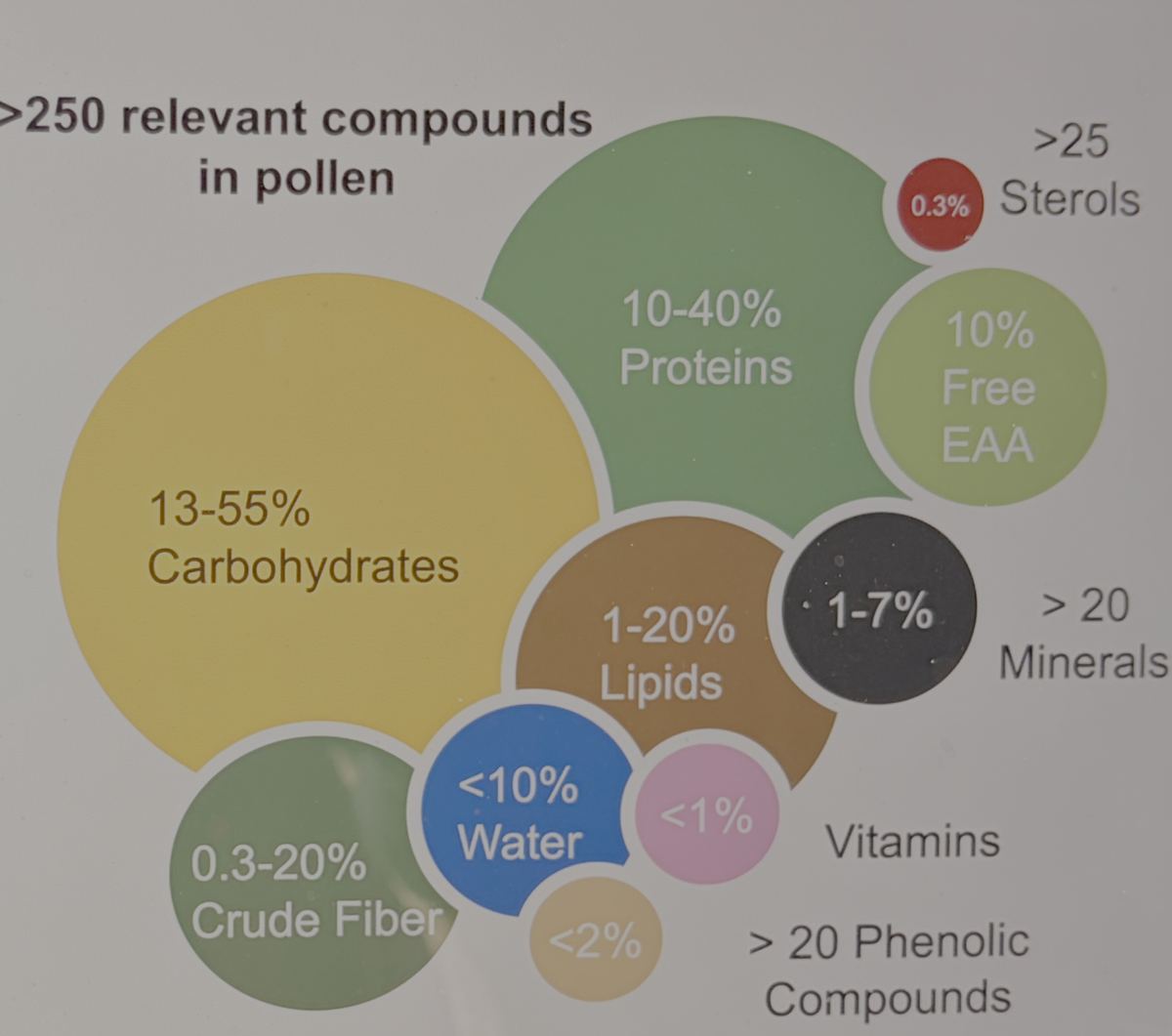
- Pollen supplements are deficient in many of these complex nutrients.
- Although supplements stimulate brood production, the nurse bees have to raid their pollen stores to make up the shortfall potentially leading to winter malnutrition and larval cannibalism (Schmickel & Crailsheim 2002 )
I was doing them no favours with early autumn stimulative feeding!
Alan Baxter
Cornell Master Beekeeper 2026
Hampshire
England
30 June 2026
Further reading: The Beelistener – Ann Chilcott’s beekeeping site, with articles and research summaries on bee health, varroa and winter survival.
References
Bailey, L., Gibbs, A.J., & Woods, R.D. (1963). Two viruses from adult honey bees (Apis mellifera Linnaeus). Virology, 21(3), 390–395. 10.1016/0042-6822(63)90200-9
The Beelistener (Ann Chilcott): The biggest beekeeping myth busted by Bailey
Budge GE, Simcock NK, Holder PJ, Shirley MDF, Brown MA, Van Weymers PSM, Evans DJ & Rushton SP. Chronic bee paralysis as a serious emerging threat to honey bees.
Zavatta L, Bortolotti L, Catelan D, Granato A, Guerra I, Medrzycki P, Mutinelli F, Nanetti A, Porrini C, Sgolastra F, Tafi E, Cilia G. Spatiotemporal evolution of the distribution of Chronic bee paralysis virus (CBPV) in honey bee colonies in Italy.
Seitz, K., Buczolich, K., Dikunová, A. et al. A molecular clone of Chronic Bee Paralysis Virus (CBPV) causes mortality in honey bee pupae (Apis mellifera). Sci Rep 9, 16274 (2019). https://doi.org/10.1038/s41598-019-52822-1
Celle O, Blanchard P, Olivier V, Schurr F, Cougoule N, Faucon JP, Ribière M. Detection of Chronic bee paralysis virus (CBPV) genome and its replicative RNA form in various hosts and possible ways of spread. Virus Research. 2008;133(2):280–284. DOI: 10.1016/j.virusres.2007.12.011.
Yanchun Deng, Sa Yang, Li Zhang, Chenxiao Chen, Xuefen Cheng, Chunsheng Hou, Chronic bee paralysis virus facilitate viral infection, The ISME Journal, Volume 18, Issue 1, January 2024, wrae051,
Ribière et al. (2008) "In situ hybridization assays for localization of the chronic bee paralysis virus in the honey bee (Apis mellifera) brain” Published in the Journal of Virological Methods.
Click to access Fact_10_Chronic_Bee_Paralysis_Virus.pdf
Mattila, H.R. & Otis, G.W. (2007). Dwindling pollen resources trigger the transition to broodless populations of long-lived honeybees each autumn. Ecological Entomology 32: 496–505.
Kleckner, K., Noordyke, E.R., Prouty, C. & Ellis, J.D. (2026).
“Not the nurses: old honey bee workers of resource-handling age primarily interact with and consume pollen substitute patties.” Journal of Economic Entomology, 2026, toag155. Published online 13 June 2026. DOI: 10.1093/jee/toag155.
Schmickl, T. & Crailsheim, K. (2002).
How honeybees (Apis mellifera L.) change their broodcare behaviour in response to non-foraging conditions and poor pollen conditions. Behavioral Ecology and Sociobiology, 51, 415–425.
DOI: 10.1007/s00265-002-0457-3


Leave a comment