Varroa infestation, and the effects of the viruses transmitted, are the main causes of winter losses and must be treated at the right times of the year: get the timing wrong and the winter bees which are essential for the survival of the colony, will be compromised. (Martin S J 2001)4
Mite infestations during August are much more damaging than similar infestations earlier in the year because:
- In spring and summer colonies compensate for worker losses through continuous brood production.
- During autumn egg laying slows down, the brood nest contracts and not enough replacement workers are produced to replace losses.
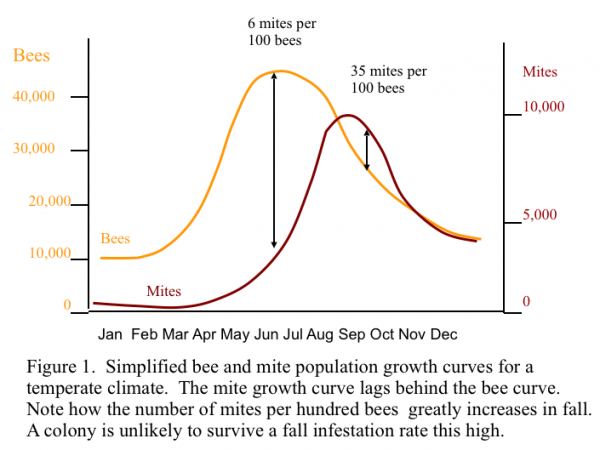
Source: Scientific Beekeeping
The winter bees are overwhelmed by the varroa, and infected with viruses, and are unlikely to survive.
Beekeepers often look for reasons why they lose colonies in winter and often blame the weather, saying it’s been too cold or too wet, but in most cases varroa, and the viruses it vectors, is the cause.
Size Matters
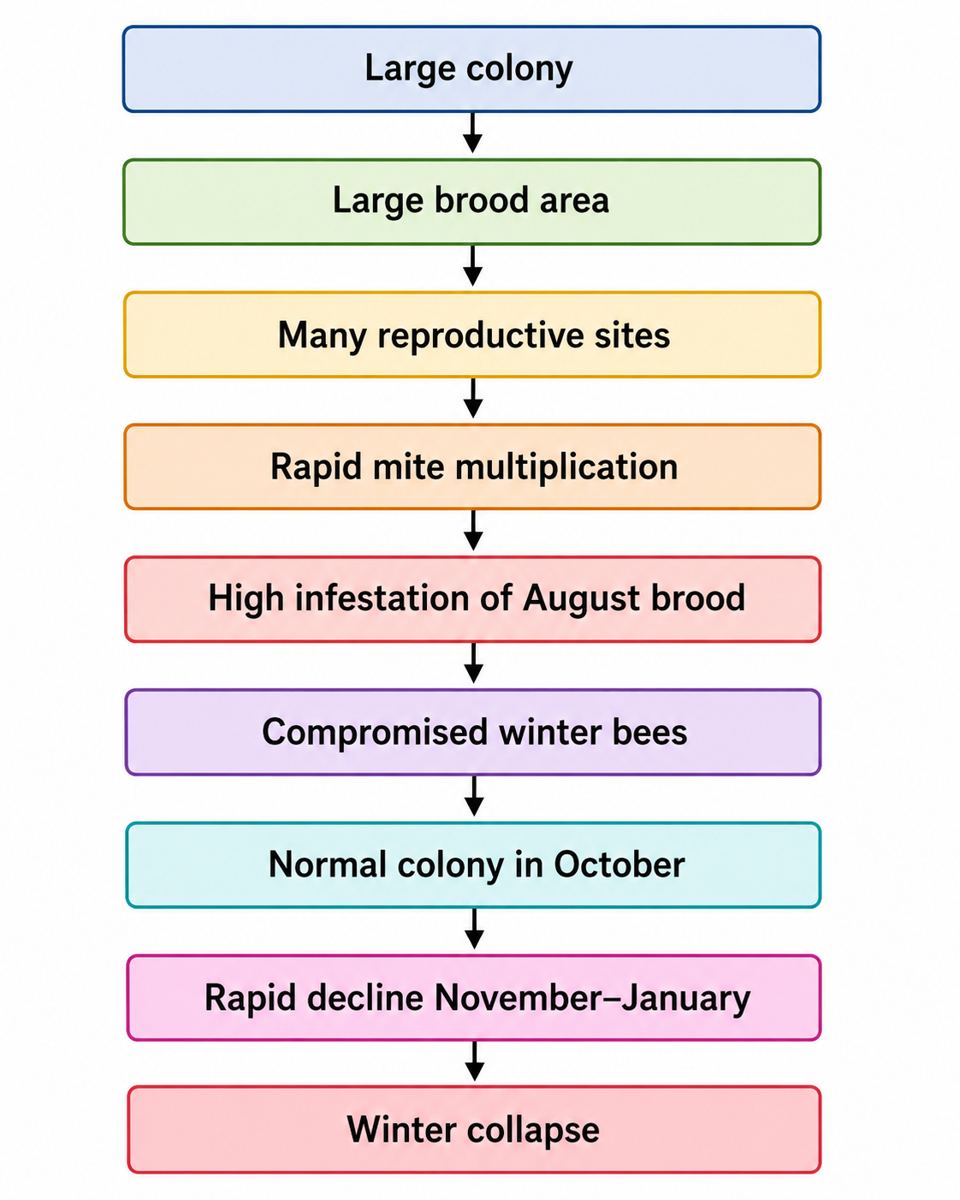
We’re encouraged to build big, strong colonies, but paradoxically, it’s the big, strong, healthy-looking ones that can be the most vulnerable.
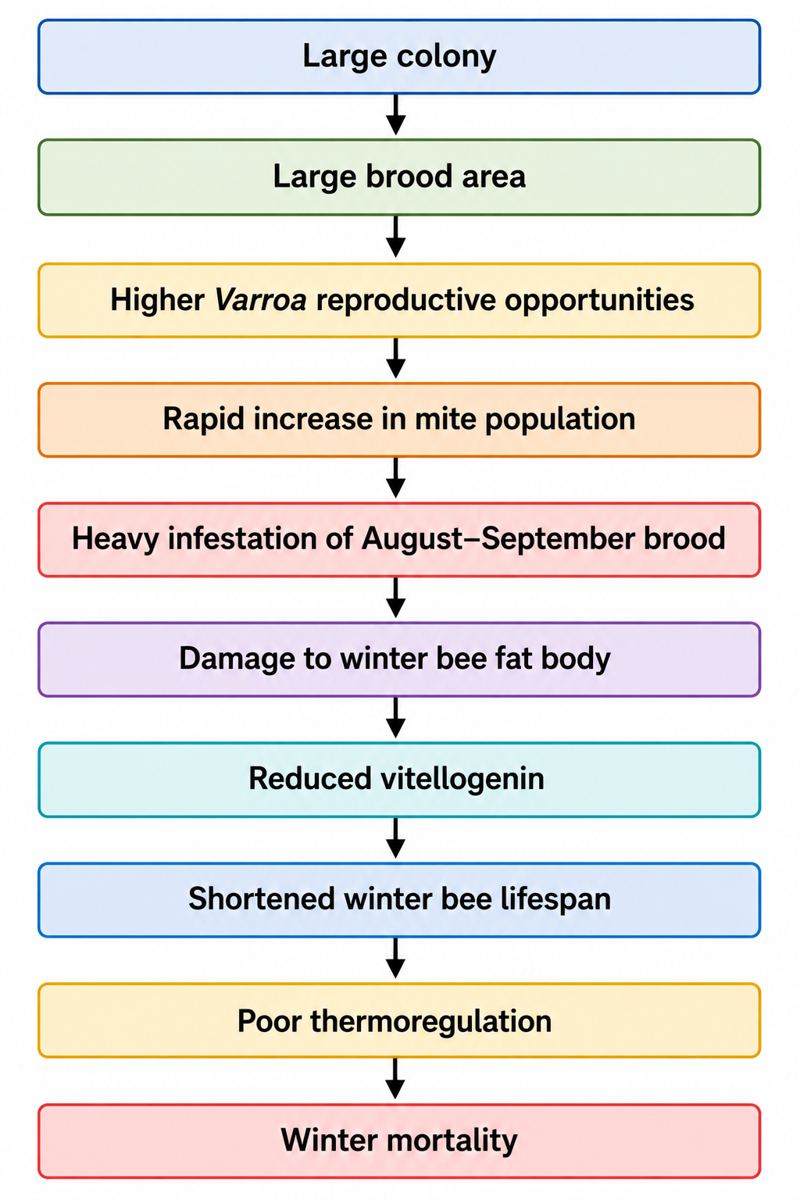
One of the major research findings is that having large colonies is no guarantee of winter survival. Large colonies have greater brood area, longer brood season and more drone brood. All of these favour the rapid increase in the varroa population and the viral load (van Dooremalen & van Langevelde 2021)
Consequently, large colonies with a lot of brood can experience exponential increases in mite populations during July and August with increased viral loads and progressive damage to the winter bees.
This can lead to a sudden, unexpected collapse in the winter months
Why Timing of Treatment Is Critical
The objective of late-summer treatment is not primarily to save the current adult bees, it is to protect brood destined to become winter bees.
If treatment is delayed, mites may be removed successfully, but many winter bees have already developed under heavy parasitism and the damage is irreversible.
This may explain why colonies treated "successfully" in autumn may nevertheless die during winter.
Practical Implications for Beekeepers
The evidence supports several important management principles:
- Do not judge Varroa levels by colony strength alone.
- Large colonies can harbour very high mite populations while appearing healthy.
- Monitor mites accurately by alcohol wash or sugar shake in mid- to late summer rather than relying on visual signs or counting the mites on the varroa board.
- Treat before the onset of winter bee production so that August–September brood develops with minimal mite exposure.
- Reduce reinfestation risk, especially in apiaries with many colonies by simultaneous monitoring and treatment where possible.
- Aim to protect the winter bees, not simply to maximize colony size entering winter.
Overall conclusion on varroa
The consensus from experimental and field studies is that winter survival is determined less by the number of bees present in autumn than by the physiological quality of the winter bees produced during August and September. Large colonies provide abundant brood that accelerates Varroa population growth. If mite populations are not reduced before winter bee production begins, these colonies may appear exceptionally strong in late summer while simultaneously producing a cohort of compromised winter bees with reduced longevity. The result is the characteristic pattern of sudden winter collapse despite an apparently healthy colony only weeks earlier.
Although the bee population is decreasing the varroa load continues to rise exponentially and the untreated colony can soon be overwhelmed, with fatal results. Apart from weakening the adult bees and shortening their lives, varroa can cause them to suffer from a variety of serious virus infections including Deformed Wing Virus (DWV),
Treatment
For treating the mites in the reproductive phase there are numerous approved products on the market, some containing natural ingredients such as Formic Acid, Thymol and essential oils. Others are composed of manufactured chemicals including Amitraz, Flumethrin and Tau Fluvalinate. Artificial or ‘hard’ chemicals are effective but carry the risk of the varroa developing resistance and can accumulate in the comb.
Further reading: The Beelistener – Ann Chilcott’s beekeeping site, with articles and research summaries on bee health, varroa and winter survival.


Leave a comment