
Uncategorised
-
Winter Preparation 2026
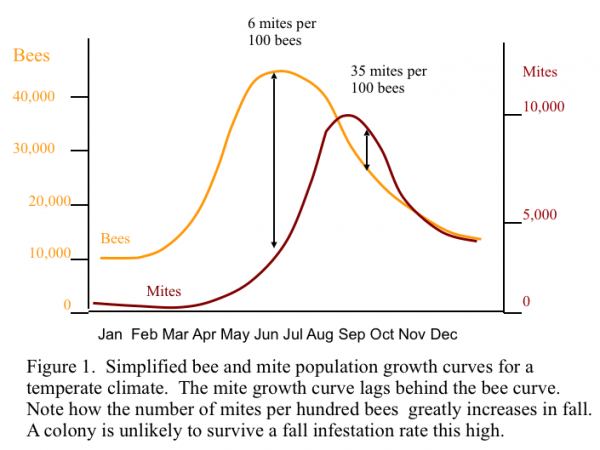
“In the world of the honey bee there are only 2 seasons, winter and preparing for winter” Anon Introduction The honey bee colony builds up to its maximum foraging force in July for the summer flow when it must accumulate enough food stores to last for the next 7 or 8 months. The population of…
-
Swarm Collection Good Practice Guide
Introduction The NBU stresses that swarms of unknown origin can carry disease or pests. Swarms should be treated as potentially infected until proven otherwise. Newly collected swarms should be kept separate from existing colonies. Ideally place them in a quarantine or isolation apiary. This reduces the risk of spreading diseases such as: American Foulbrood European…
-
Winter Is Upon Us
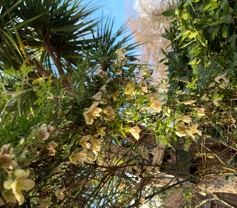
Winter is upon us, and we have tucked up our colonies for the colder weather. Here on this corner of the south coast we enjoy a little microclimate, sheltered by the South Downs to the north, the Isle of Wight to the south-west and the moderating influence of the Solent. Frost and snow are rare…
-
Introduction to Queen Rearing
The session was held in my home/queen rearing apiary, where all the equipment is on hand, instead of the teaching apiary. This is to be the last opportunity to rear queens as I’ve already noticed a drop in the number of drones and the amount of drone brood in all my colonies. Half a dozen…
-
NDB Course 2025
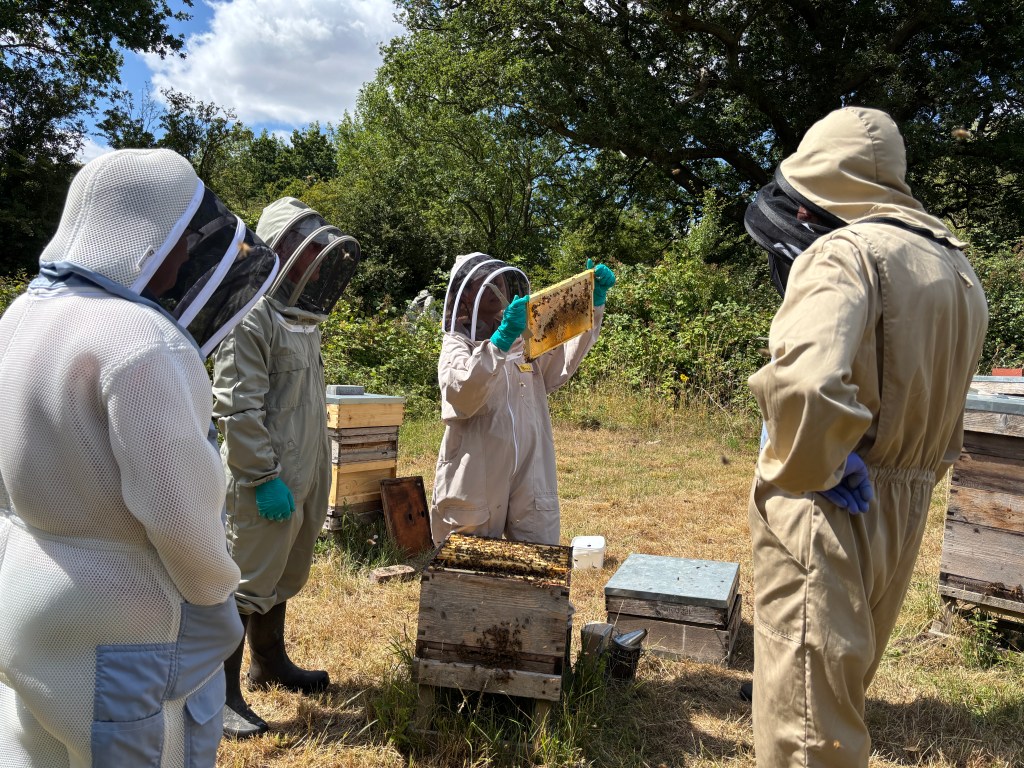
BLOG – NDB COURSE 2025 The Examination Board for the National Diploma in Beekeeping was established in 1954 to meet the need for a beekeeping qualification above the level of those awarded by the British Beekeepers Association and is the highest level beekeeping qualification available in Britain. The NDB Board holds an annual 5-day advanced…
-
Summer 2025
We’re into July already and the summer flow is full on with Bramble and Lime in bloom. The warm, sunny weather has helped to stimulate nectar production, and plants or trees with deep roots can still find plenty of moisture. Other sources may soon start to suffer from drought stress and stop producing nectar unless…
-
Dealing with an Aggressive Colony
In early May one of the colonies in my teaching apiary started to display excessive defensive behaviour, following and stinging people for about 100 metres from the hive. I practice a zero-tolerance policy for this kind of behaviour for the following reasons: It is very unpleasant for me and for the people who come to…
-
Queen Trapping
Correction, 8 November 2026: the statement about oxalic acid and open brood has been clarified. See Correction. Queen trapping is a technique used to induce a brood break in a colony to control the Varroa mite population. Over a period of 36 days, the queen is trapped on a series of frames that are used…
-
Snowflakes Not Survivors: Do We Mollycoddle Our Bees Too Much?
The first bees evolved around 60 million years ago. Since then, they have survived massively destructive events, including meteorites hitting the earth with mass extinction of species such as the dinosaurs, great geological upheavals, ice ages and more. The secrets of the success of the honey bee are its genetic diversity, its ability to adapt…
-
Shook Swarm
Association Colony The colony that was kindly donated by David Marsden, a former FDBKA member, has completed its quarantine. It has been treated with Oxalic Acid for phoretic varroa and passed a health and temperament assessment before being moved to the Training Apiary 10 days ago. This is the same procedure as for a collected…

